
Table of Content
How much does a 3PL cost? For a typical small ecommerce order, the answer is often somewhere around $5 to $15 per order before product cost. Heavy items, fast shipping, complicated kits, remote destinations, and high return rates can push it well above that range.
That quick answer is useful for a napkin calculation. It is not enough for choosing a warehouse.
A 3PL invoice is rarely one clean line called “fulfillment.” It may include receiving, storage, pick and pack, packaging, postage, software, account management, kitting, returns, minimum charges, and special-project labor. One provider bundles five of those items. Another separates every touch. The second quote can look cheaper right up until the invoice arrives wearing a fake mustache.
This guide explains how 3PL pricing works in 2026, what Shopify brands commonly pay, and which fees deserve a second look. It also includes a full example for a supplement brand shipping 1,000 orders per month. Near the end, we will answer the questions ecommerce sellers keep raising on Reddit: Is $12 per order normal? Are monthly minimums fair? Do 3PLs mark up shipping? And when does outsourcing actually make sense?
Short answer: A small Shopify brand should budget for the complete cost per delivered order, not only the pick fee. Ask every 3PL to quote the same SKU data, monthly volume, destination mix, service level, and return process. Then compare the total monthly bill under a normal month, a slow month, and a peak month.
What Is a 3PL, and What Are You Paying For?
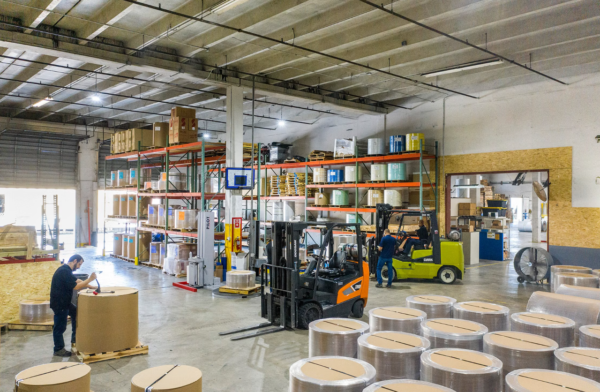
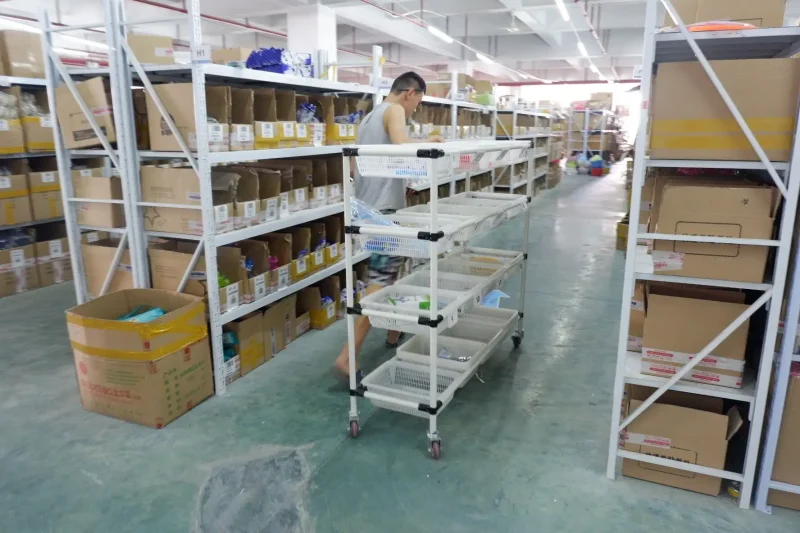
A third-party logistics provider, or 3PL, stores inventory and performs logistics work for another business. For a Shopify brand, that usually means receiving bulk inventory, placing it into warehouse locations, syncing Shopify orders, picking products, packing parcels, buying shipping labels, sending tracking data back to Shopify, and handling returns.
A 3PL is not the same thing as Shopify. Shopify holds the storefront and order data. The 3PL handles the physical inventory. Shopify’s official fulfillment options guide explains that merchants can fulfill orders themselves, use third-party fulfillment services, or combine methods.
If you are still unsure where a 3PL ends and a 4PL begins, FriendDropshipping’s 3PL vs 4PL guide covers the difference. In plain language, a 3PL executes warehouse and transportation work. A 4PL more broadly coordinates several logistics partners and supply-chain functions.
The Basic 3PL Cost Formula
Use this formula for a monthly estimate:
Total monthly 3PL cost = onboarding + receiving + storage + pick and pack + packaging + shipping + software + account fees + kitting + returns + surcharges + special projects + monthly minimum shortfall
Then calculate:
3PL cost per shipped order = total monthly 3PL cost / shipped orders True 3PL cost per delivered order = (total monthly 3PL cost + reships + loss and damage expense) / successfully delivered orders
The second formula is the honest one. A cheap parcel that never arrives is not cheap. It is a refund with tracking.
How Much Does a 3PL Cost Per Order in 2026?
The table below gives broad US ecommerce planning ranges. These are not universal rates. Product size, warehouse location, order volume, labor, service level, and contract terms can move the numbers in either direction.
|
3PL Fee
|
Common Planning Range
|
Typical Billing Method
|
|
Onboarding and integration
|
$0-$1,000+
|
One-time project
|
|
Receiving
|
$25-$65 per hour, or per pallet/carton
|
Each inbound shipment
|
|
Pallet storage
|
$20-$60+ per pallet
|
Monthly
|
|
Shelf storage
|
$8-$20+ per shelf
|
Monthly
|
|
Bin storage
|
$3-$15+ per bin
|
Monthly
|
|
First-item pick and pack
|
$1.75-$4.50
|
Per order
|
|
Additional item pick
|
$0.20-$1.00+
|
Per unit or SKU
|
|
Standard packaging
|
Included to about $1.50
|
Per order
|
|
Custom packaging application
|
$0.20-$2.50+
|
Per order or touch
|
|
Small-parcel domestic shipping
|
Roughly $4.50-$12+
|
Per parcel
|
|
Return processing
|
$3-$10+ before postage
|
Per return
|
|
Kitting and assembly
|
$0.20-$3+ or hourly
|
Per unit/project
|
|
Account or software fee
|
$0-$500+
|
Monthly
|
|
Monthly minimum
|
$0-$2,000+
|
Monthly commitment
|
ShipBob publishes an illustrative fulfillment pricing model with examples such as $40 per pallet, $10 per shelf, $5 per bin, and receiving charged by time. ShipBob clearly says those figures are examples rather than a guaranteed rate card. That caveat matters. Most established 3PLs produce a custom quote because a tiny jewelry box and a beanbag chair do not belong in the same pricing row.
What Is a Good 3PL Cost per Order?
A “good” cost is one that leaves enough contribution margin while meeting the promised delivery experience. For a compact one-item order, an all-in domestic fulfillment cost of $7-$12 may be competitive. For a heavier product, $12 can be excellent. For a two-ounce item shipping locally, it may be high.
Judge the quote against five things:
-
Product dimensions and billable weight
-
Average shipping zone
-
Units and SKUs per order
-
Delivery speed
-
Error, loss, and return performance
Without those inputs, asking whether $9 is expensive is a bit like asking whether 90 is fast. Miles per hour? Kilometers? A sleepy tortoise? Context first.
3PL Pricing Breakdown: Every Fee Shopify Brands Should Know

3PL Onboarding and Shopify Integration Fees
Onboarding may include account setup, warehouse-management-system configuration, Shopify integration, SKU import, shipping rules, user training, test orders, and inventory migration. Simple Shopify connections may be free. Complex enterprise integrations, EDI, wholesale routing, or custom API work can cost much more.
Ask whether the setup fee covers:
-
Shopify connection and testing
-
SKU and barcode setup
-
Shipping-method mapping
-
Order-hold rules
-
Bundle configuration
-
Returns portal setup
-
Branded packing-slip templates
-
Historical data import
-
Staff training
-
A named implementation manager
Do not rush the test order. Send orders with one item, multiple items, a discount bundle, a canceled order, an address change, and an out-of-stock SKU. Five careful test orders are cheaper than 500 creative mistakes.
3PL Receiving Fees
Receiving begins when inventory reaches the warehouse. Staff unload cartons or pallets, check the shipment, count or scan inventory, record discrepancies, and put goods away.
The same inbound shipment can be cheap or expensive depending on how it arrives. Ten neatly labeled cartons containing one SKU are easy. Ten cartons containing six mixed SKUs, no packing list, and barcodes that do not scan are a warehouse escape room.
Questions to Ask About Receiving Costs
-
Is receiving billed hourly, per carton, per pallet, or per unit?
-
Is there a minimum receiving charge?
-
How many labor hours are included?
-
Does the warehouse count cartons or individual units?
-
Are damage photos included?
-
What does barcode labeling cost?
-
Are lot numbers and expiration dates captured?
-
What happens if the advanced shipping notice is wrong?
-
Are unscheduled deliveries surcharged?
For supplements, cosmetics, food, and other controlled inventory, detailed receiving may be worth paying for. FriendDropshipping’s Supplement Fulfillment service includes workflows for batch and expiry handling. A plain carton count cannot replace lot-level inventory records.
3PL Storage Fees
Storage is usually charged by the bin, shelf, pallet, cubic foot, or cubic meter. Some providers take a daily snapshot and invoice the monthly average. Others charge for the maximum space used during the month.
The true storage cost per unit depends on sell-through.
Storage cost per unit sold = monthly storage fees / units sold during that month
Suppose six pallets cost $40 each per month. Storage is $240. If the brand sells 2,000 units, the storage allocation is $0.12 per unit. If it sells only 300, storage becomes $0.80 per unit. Same warehouse. Same pallets. Very different economics.
Why Slow-Moving SKUs Make 3PL Storage Expensive
Warehouses earn money when inventory flows. Old stock occupies a location but creates little handling revenue. Many 3PLs therefore add aging or long-term storage fees.
Before sending inventory, classify SKUs as:
|
Inventory Group
|
Suggested Action
|
|
Fast sellers
|
Keep enough safety stock for lead-time variation
|
|
Seasonal sellers
|
Set a clear exit date and promotional plan
|
|
New tests
|
Send a small first batch
|
|
Slow sellers
|
Bundle, discount, liquidate, or move
|
|
Dead stock
|
Dispose, return, donate, or remove before aging fees grow
|
Paying to store a product nobody wants is not fulfillment strategy. It is a small monthly memorial service.
3PL Pick and Pack Fees
Pick and pack is the warehouse labor required to retrieve products and prepare the order. Pricing may include the first item and charge extra for additional units or SKUs.
Common models include:
|
Pick-and-Pack Model
|
How It Works
|
Best Fit
|
|
First pick plus additional picks
|
Base fee for first item, smaller fee for extras
|
Typical DTC orders
|
|
Per-order flat fee
|
One fee within defined limits
|
Simple one-SKU brands
|
|
Per-unit fee
|
Every unit is charged
|
Multi-unit orders with standard handling
|
|
All-in fulfillment fee
|
Pick, pack, packaging, and shipping bundled
|
Brands wanting predictable order cost
|
|
Hourly project labor
|
Staff time billed by hour
|
Rework, relabeling, unusual assembly
|
Clarify whether “additional item” means another physical unit or another unique SKU. Three identical bottles may be priced differently from three different products.
Packaging Material and Branded Fulfillment Costs
Basic mailers and cartons may be included in the fulfillment fee. Custom boxes, printed tissue, inserts, dividers, stickers, protective material, and premium tape often cost extra.
There are usually four packaging costs:
-
Packaging production
-
Freight into the 3PL
-
Packaging storage
-
The labor touch required to use it
A custom box that costs $0.55 at the printer may add $0.80-$1.20 to the real order cost after the other layers. That does not make it a bad choice. It simply means the unboxing experience needs a job: improving conversion, protecting the product, raising average order value, or encouraging repeat purchase.
FriendDropshipping’s Customization and Private Pack service supports custom boxes, labels, inserts, and branded shipping materials for ecommerce fulfillment.
3PL Shipping Rates and Carrier Markups
Shipping is often the largest line item. The rate depends on:
-
Warehouse origin
-
Customer destination and zone
-
Actual weight
-
Dimensional weight
-
Residential delivery
-
Shipping speed
-
Fuel and peak surcharges
-
Remote-area fees
-
Signature or insurance
-
Product restrictions
Some 3PLs pass negotiated carrier rates through without a markup. Others add a margin or technology fee. Either model can work if the quote is clear. A provider may earn margin on shipping but offer a rate below what the merchant could negotiate alone.
Ask to see:
-
Base postage
-
Fuel surcharge
-
residential and delivery-area surcharges
-
peak surcharge
-
3PL markup or service fee
-
insurance
-
signature fees
-
address-correction fees
-
dimensional-weight divisor
Do not compare your 3PL rate with a carrier’s public retail counter price. Compare it with the rate your business could actually buy for the same service and volume.
Dimensional Weight: The Tiny Measurement That Creates a Big Bill

Carriers commonly charge the greater of actual weight and dimensional weight.
Dimensional weight = package length x width x height / carrier divisor
If a manufacturer adds half an inch to each side of a box, the parcel may cross a size or weight tier. A popular 2026 Reddit discussion described a seller discovering that a packaging change had added roughly $1.50 per unit in FBA fees. That is an anecdote, not a universal rate, but the operational lesson is solid: remeasure every production run and compare billed dimensions with approved packaging.
3PL Return Processing Fees
A return may require label creation, inbound postage, receiving, inspection, photography, repacking, restocking, quarantine, refurbishment, or disposal.
Ask the 3PL to quote each return path:
|
Return Outcome
|
Warehouse Work
|
Possible Costs
|
|
Unopened and resellable
|
Inspect, scan, restock
|
Return receiving and storage
|
|
Opened but usable
|
Inspect, rebag or rebox
|
Labor plus packaging
|
|
Damaged
|
Photograph, quarantine, report
|
Labor, storage, disposal
|
|
Wrong item sent
|
Investigate, reship, restock
|
Error remedy and freight
|
|
Restricted product
|
Quarantine or destroy
|
Special handling and disposal
|
For low-value products, paying return postage and processing may cost more than the item. The sensible policy may be refund without return. Decide that rule before customer support improvises it at 11:47 p.m.
Kitting, Bundling, and Special Project Fees
Kitting includes subscription boxes, multipacks, gift sets, product bundles, samples, and promotional inserts. The warehouse may charge per touch, per completed kit, or by labor hour.
Ask whether kits are assembled in advance or built when an order arrives. Pre-kitting can lower order-processing time but converts flexible components into fixed kits. On-demand kitting preserves flexibility but may cost more per order.
3PL Software and Account Management Fees
Some 3PLs include warehouse software, reporting, support, and integrations. Others charge monthly technology or account fees. The value depends on what the software actually does.
Useful features include:
-
Live inventory by warehouse
-
Shopify order and tracking sync
-
Lot and expiry visibility
-
Shipping-rate selection
-
Order holds and edits
-
Bundle logic
-
Returns management
-
Billing detail
-
SLA reporting
-
Inventory forecasting
Software that gives you a beautiful dashboard and no way to explain an invoice is mostly interior decoration.
Monthly Minimum 3PL Fees
A monthly minimum guarantees the 3PL a baseline amount of revenue. If your activity fees do not reach that level, you pay the difference.
ShipMonk’s official pricing page explains one approach: projected monthly order volume is multiplied by the first-item pick fee, then reduced by 20% to establish a monthly minimum. Other providers use different formulas.
Example:
-
Monthly minimum: $1,000
-
Qualifying activity fees in a slow month: $720
-
Minimum shortfall charged: $280
Minimums are not automatically unfair. A warehouse reserves space, labor, support, and system capacity for the account. The question is whether the minimum fits your realistic slow month.
Complete 3PL Cost Example for a Shopify Supplement Brand
Let us calculate a real-looking monthly bill. The numbers are illustrative planning figures, not a quote from any named 3PL.
Brand and Product Assumptions
The Shopify brand sells one bottle of collagen gummies per order.
|
Input
|
Assumption
|
|
Monthly shipped orders
|
1,000
|
|
Average units per order
|
1.15
|
|
Monthly units shipped
|
1,150
|
|
Average selling price
|
$34.00
|
|
Packed shipping weight
|
11 oz
|
|
Packed dimensions
|
4 x 4 x 6 in
|
|
Inventory footprint
|
4 pallets average
|
|
Inbound deliveries
|
1 monthly shipment
|
|
Return rate
|
3%, or 30 orders
|
|
Destination
|
Contiguous United States
|
|
Service target
|
Tracked standard domestic delivery
|
Monthly 3PL Pricing Calculation
|
Cost Item
|
Calculation
|
Monthly Cost
|
|
Receiving
|
4 hours x $40
|
$160.00
|
|
Storage
|
4 pallets x $40
|
$160.00
|
|
First-item pick and pack
|
1,000 orders x $2.65
|
$2,650.00
|
|
Additional unit picks
|
150 units x $0.45
|
$67.50
|
|
Packaging
|
1,000 orders x $0.35
|
$350.00
|
|
Postage
|
1,000 parcels x $7.10 average
|
$7,100.00
|
|
Software/account fee
|
Monthly
|
$99.00
|
|
Return processing
|
30 returns x $4.00
|
$120.00
|
|
Special projects/reserve
|
Monthly estimate
|
$100.00
|
|
Total monthly 3PL cost
|
$10,806.50
|
$10,806.50 / 1,000 shipped orders = $10.81 per shipped order
Now assume 985 orders are successfully delivered without requiring a reship: $10,806.50 / 985 delivered orders = $10.97 per delivered order
That seventeen-cent difference looks small. Across 100,000 annual orders, the distinction between shipped and successfully delivered can become rather loud.
What Is Not Included in This 3PL Cost?
The $10.81 does not include:
-
Product manufacturing cost
-
Bulk freight into the 3PL
-
Import duty and customs fees
-
Shopify plan
-
Payment processing
-
Advertising
-
Product refunds
-
Regulatory or product testing
-
Customer-service labor
-
Insurance beyond any stated warehouse coverage
If the gummies cost $6.20 landed into the warehouse, the product-plus-3PL cost becomes approximately $17.01 per order before the other business expenses.
Slow-Month 3PL Cost Example
Suppose orders fall from 1,000 to 400, while four pallets remain in storage. Postage and pick fees fall, but storage and software do not. If the contract also has a $1,000 qualifying-fee minimum, the effective cost per order can rise.
|
Metric
|
1,000-Order Month
|
400-Order Month
|
|
Fixed/semi-fixed receiving, storage, software
|
$419
|
$419
|
|
Pick, packaging, and average shipping
|
$10,167.50
|
Approx. $4,067
|
|
Returns/projects estimate
|
$220
|
Approx. $100
|
|
Approximate total
|
$10,806.50
|
$4,586
|
|
Approximate cost per order
|
$10.81
|
$11.47
|
The exact slow-month result depends on minimum rules and storage. The lesson is simple: ask every 3PL to model your low season, not only the sales forecast everyone feels cheerful about.
Amazon MCF vs Traditional 3PL Pricing in 2026

Amazon Multi-Channel Fulfillment can fulfill Shopify and other off-Amazon orders. Its pricing bundles picking, packing, and shipping, while storage and certain surcharges remain separate.
Amazon’s official 2026 MCF rate card lists a standard three-business-day fee of $8.61 for a one-unit, large-standard item weighing over 8 to 12 ounces, effective January 15, 2026. Amazon also states that a 3.5% fuel and logistics-related surcharge applies to US MCF fulfillment fees from May 2, 2026, and other fees may apply.
For an eligible 11-ounce bottle in that size tier: $8.61 x 1.035 = about $8.91 fulfillment fee
Storage is extra. The item must also meet Amazon’s size and preparation rules. A traditional 3PL quote might show a $2.65 pick fee and $7.10 postage separately, totaling $9.75 before packaging. Amazon’s $8.91 bundled rate can look attractive in that example.
But do not stop there. Compare:
-
Storage cost and aging rules
-
Receiving and prep requirements
-
Branding and packaging flexibility
-
Peak fees
-
Multi-unit discounts
-
returns
-
remote-area surcharges
-
support model
-
inventory shared with FBA
-
product eligibility
Amazon says its 2026 US MCF rates increased by an average of $0.30 per unit, while eligible merchants may receive preferred pricing. Rates can change, so check the current calculator rather than preserving this paragraph in a spreadsheet forever.
US 3PL Cost vs China 3PL Cost for Shopify Brands
A US 3PL and a China 3PL solve slightly different problems.
|
Factor
|
US 3PL
|
China 3PL
|
|
Customer delivery
|
Usually faster for US customers
|
Cross-border delivery is usually longer
|
|
Inventory commitment
|
Bulk stock imported before sale
|
Can support smaller replenishment or direct shipping
|
|
Product sourcing
|
Usually limited
|
Close to factories and packaging suppliers
|
|
Domestic postage
|
Competitive local parcel rates
|
International small-parcel rates
|
|
Customs
|
Bulk import before storage
|
Parcel-level or route-specific import process
|
|
Factory communication
|
Separate responsibility
|
May be coordinated by sourcing/fulfillment partner
|
|
Custom packaging
|
Available, often task-based
|
Close access to packaging production
|
|
Best fit
|
Proven demand and fast local delivery
|
Testing, sourcing, private label, global DTC, flexible inventory
|
A US warehouse can be worth a higher operational cost if two-day or four-day delivery improves conversion and repeat purchase. A China 3PL can be better for a brand still testing products, combining goods from several factories, or serving several countries without pre-positioning stock everywhere.
FriendDropshipping offers a 3PL Fulfillment Service alongside sourcing, quality control, custom packaging, and international shipping. Its Shipping Solution supports multiple small-parcel and bulk-freight channels. The useful part is not just renting shelf space. It is connecting factory communication with the warehouse work that follows.
What Shopify Sellers on Reddit Ask About 3PL Costs
Reddit is useful because sellers describe the awkward invoice questions that polished sales pages skip. It is not a rate database. Posts vary by country, product, volume, and year, and some replies come from 3PL owners promoting their own services. Treat the discussions as questions to investigate, not price scripture.
Is $12 per Order a Normal 3PL Cost?
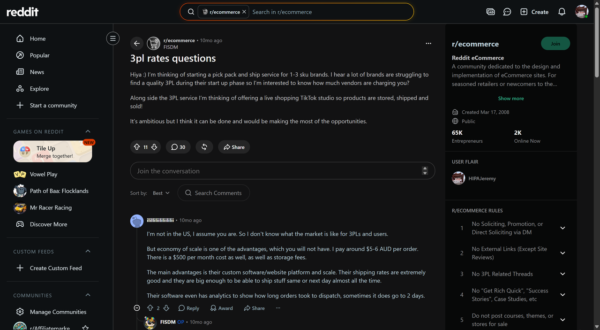
In a 2025 r/ecommerce discussion about 3PL rates, one commenter reported an all-in average near $12 per shipped item for collectibles and toys. Other replies mentioned pick-and-pack ranges around $1-$4 before shipping and storage.
Is $12 normal? It can be. If it includes packaging, postage, storage, management, and value-added services, it may be reasonable. If it covers only warehouse handling for a two-ounce item, it is probably expensive.
Ask what is inside the $12.
Why Will a 3PL Not Quote Me Without Dimensions and Volume?
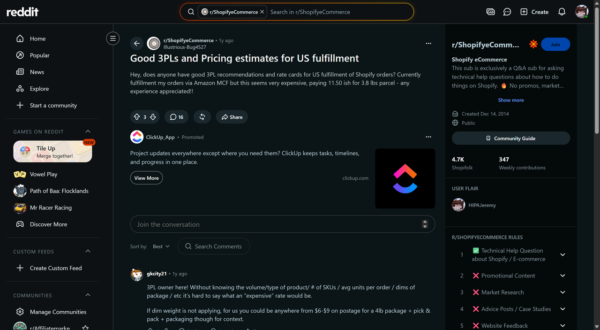
In a Reddit thread asking for US Shopify fulfillment estimates, respondents pointed out that product type, volume, SKU count, units per order, dimensions, and destination are needed before calling a rate expensive.
That is not the sales team being difficult. Those inputs determine labor and shipping. A serious quote request should include at least 30 days of order data and packed SKU dimensions.
Are 3PL Monthly Minimums Normal?
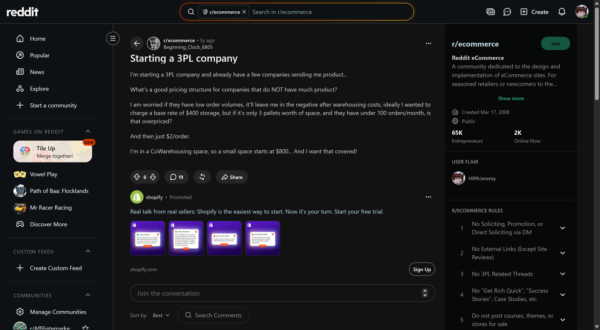
Yes. They are especially common when a provider reserves account-management time, warehouse locations, labor, and technology for smaller clients. A Reddit discussion about starting a 3PL includes operators discussing monthly minimums when activity fees are too low to support the account.
The better question is whether the minimum matches your slow season. Negotiate a ramp period, seasonal minimum, or tiered plan if volume is still growing.
Do 3PLs Mark Up Shipping Rates?
Some do. Some pass through the carrier rate. Some bundle the margin into an all-in fee. In a r/shopify discussion about 3PL shipping charges, sellers debated shipping transparency and the importance of understanding the contract and invoice.
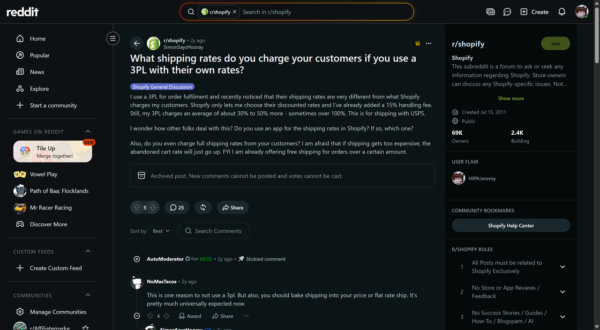
A markup is not automatically bad. The provider negotiated the carrier account, maintains the technology, and manages claims. Hidden markup is the problem. Ask for the carrier service, billed weight, base postage, surcharges, and any 3PL margin.
When Is a 3PL Worth It Instead of Self-Fulfillment?
Reddit discussions often return to the same trade-off: self-fulfillment may cost less in cash at low volume, while a 3PL releases time and supports consistent dispatch as the brand grows.
Calculate your internal cost honestly:
Self-fulfillment cost per order = labor + rent + equipment + packaging + postage + software + errors + management time / orders
If the founder packs 300 orders monthly in 60 hours and values that time at $35 per hour, labor alone equals $7 per order. The “free garage” is looking less free now.
Can a Half-Inch Packaging Change Really Raise 3PL Costs?
Yes. It can increase dimensional weight, move a parcel into another carrier tier, require a larger box, or consume more storage space. One high-engagement 2026 FBA discussion centered on sellers discovering cost changes after packaging dimensions moved products into higher fee tiers.
The numbers in any Reddit story belong to that seller. The practice applies broadly: measure packaged goods after each production run, store approved dimensions, and audit billed measurements.
Hidden 3PL Fees to Put Into Your 2026 Budget
The most expensive fee is often the one missing from the sales spreadsheet.
|
Potential Extra Fee
|
When It Appears
|
What to Ask
|
|
Inbound appointment fee
|
Delivery arrives without booking
|
What is the receiving SOP?
|
|
Container unloading
|
Floor-loaded import container
|
Is unloading hourly or fixed?
|
|
Palletization
|
Loose cartons need pallets
|
Are pallets and wrap included?
|
|
Barcode labeling
|
Units lack scannable codes
|
Price per label and application?
|
|
Inventory count
|
Cycle count or discrepancy
|
Are routine counts included?
|
|
Order change/cancel fee
|
Order changes after release
|
What is the cutoff?
|
|
Address correction
|
Carrier corrects destination
|
Who pays, and how is it shown?
|
|
Peak surcharge
|
Holiday volume or carrier peak
|
Which dates and services?
|
|
Packaging material
|
Standard supplies not included
|
Rate card by size?
|
|
Long-term storage
|
Inventory ages past threshold
|
When does aging begin?
|
|
Return inspection
|
Returned product needs grading
|
Is photography included?
|
|
Disposal/removal
|
Unsellable or excess stock
|
Per unit, carton, or pallet?
|
|
B2B/EDI fee
|
Wholesale order requirements
|
Cost per order or document?
|
|
Insurance
|
Inventory or parcel coverage
|
Limits and exclusions?
|
|
Account minimum
|
Low activity month
|
Which charges count toward it?
|
Request a complete accessorial rate card. If the 3PL says a fee “almost never happens,” ask for the rate anyway. Almost never has an odd sense of timing.
How to Compare 3PL Quotes Apples to Apples
Create one standardized data sheet and send it to every provider.
Shopify 3PL Request-for-Quote Data
|
Data Point
|
Example
|
|
Monthly orders
|
1,000 average; 400 low; 2,500 peak
|
|
Number of active SKUs
|
8
|
|
Units per order
|
1.15
|
|
Orders with multiple SKUs
|
12%
|
|
Packed dimensions/weight
|
File by SKU
|
|
Destination split
|
70% East/Central US, 30% West
|
|
Required speed
|
Standard 3-5 business days
|
|
Inbound profile
|
Four pallets monthly
|
|
Storage average and peak
|
Four pallets / ten pallets
|
|
Returns
|
3%
|
|
Special handling
|
Lot/expiry, branded insert, subscription bundle
|
|
Channels
|
Shopify, Amazon, TikTok Shop
|
Then calculate three scenarios:
-
Normal month
-
Slow month
-
Peak month
Do not choose a 3PL from the normal month alone. The contract has to survive February and Black Friday without becoming a different animal.
3PL Quote Comparison Scorecard
|
Evaluation Area
|
Weight
|
What to Compare
|
|
Total delivered cost
|
25%
|
Full cost under all three volume scenarios
|
|
Shipping performance
|
15%
|
Dispatch SLA, delivery, loss, tracking
|
|
Inventory accuracy
|
15%
|
Count process, discrepancy rate, visibility
|
|
Integration and data
|
10%
|
Shopify sync, bundles, returns, reporting
|
|
Operational fit
|
10%
|
Product type, lot, expiry, fragile or sensitive handling
|
|
Support
|
10%
|
Named contact, response time, escalation
|
|
Scalability
|
5%
|
Peak capacity and additional locations
|
|
Contract flexibility
|
5%
|
Minimums, term, termination, inventory removal
|
|
Value-added services
|
5%
|
Kitting, custom packaging, QC, sourcing
|
|
Total
|
100%
|
How to Reduce 3PL Costs Without Wrecking Customer Experience

Reduce Package Size Before Negotiating Postage
Packaging optimization often creates a cleaner saving than arguing over a ten-cent pick fee. Test smaller mailers and cartons without reducing protection.
Improve Inbound Carton Organization
Send one SKU per carton where practical, use scannable barcodes, provide accurate carton counts, and submit inbound notices on time. Easy receiving usually means cheaper receiving.
Increase Units per Order
Multipacks and bundles can spread postage and the first-pick fee across more revenue. Calculate extra picks, larger packaging, and dimensional weight before launching the offer.
Remove Slow Inventory
Review aging every month. A discount today can be cheaper than six months of storage and a disposal fee later.
Negotiate With Real Data
Bring shipped order history, destination zones, dimensions, average units, and forecast. “We will be huge soon” is not a volume tier.
Audit Invoices and Dimensions
Compare quoted fees with billed fees. Review weight adjustments, storage counts, accessorials, returns, and minimum shortfalls. A recurring $0.25 error across 10,000 orders is $2,500, which is no longer pocket lint.
Use a Hybrid Fulfillment Model
Keep proven products in a US warehouse while shipping test products from China. Use local stock for major markets and cross-border fulfillment for long-tail countries. Hybrid fulfillment can reduce inventory risk without giving up fast delivery everywhere it matters.
When a China 3PL and Private Agent Can Cost Less Overall
Traditional 3PLs begin when inventory reaches the warehouse. Shopify brands sourcing from China often have problems earlier: finding the factory, comparing product quality, negotiating price, arranging packaging, checking production, and moving goods into storage.
If those steps are managed separately, the seller may pay a sourcing agent, inspection company, packaging supplier, freight forwarder, and 3PL. The lowest warehouse fee can sit inside a surprisingly expensive chain.
FriendDropshipping combines China-based Sourcing and Fulfillment, Quality Control, custom packaging, warehousing, and shipping. This model can suit Shopify brands that want one personal agent to coordinate the factory and fulfillment sides.
Where FriendDropshipping Can Create Savings
-
Comparing several factories instead of accepting one catalog price
-
Negotiating product cost as volume grows
-
Confirming real factory stock and production timing
-
Consolidating goods from different suppliers
-
Checking products before they enter inventory
-
Producing and storing custom packaging in China
-
Selecting shipping routes by product and destination
-
Supporting direct fulfillment or bulk movement to an overseas warehouse
-
Reducing communication handoffs between supplier and 3PL
The cheapest warehouse is not always the cheapest supply chain. If one partner prevents a $2 product overpayment, catches defective stock, or avoids sending the wrong packaging into a 3PL, that saving may exceed the pick-fee difference.
FriendDropshipping is included first in its guide to the best 3PL companies in China for brands needing hands-on sourcing, private label, quality control, and fulfillment support.
Questions to Ask Before Signing a 3PL Contract
-
What is included in the quoted fulfillment fee?
-
Which services are billed separately?
-
Is postage marked up?
-
What is the dimensional-weight divisor?
-
Is storage based on average, maximum, or end-of-month use?
-
What counts toward the monthly minimum?
-
Are there onboarding, software, or account fees?
-
How are additional units and SKUs charged?
-
What are the receiving standards and surcharges?
-
What happens during peak season?
-
What is the same-day shipping cutoff?
-
How are errors, losses, and damaged goods reimbursed?
-
Can I use custom packaging?
-
How are returns inspected and billed?
-
Can the system handle bundles, subscriptions, lots, and expiration dates?
-
How can I export my data?
-
How much does inventory removal cost?
-
What is the contract term and termination notice?
-
Who is my day-to-day contact?
-
Can I speak with two current clients that resemble my business?
Get the answers in writing. A warm sales call is lovely. It does not override the rate card.
Conclusion: What Should a Shopify Brand Pay for a 3PL in 2026?
Most small and midsize Shopify brands should plan for a total 3PL fulfillment cost of roughly $5-$15 per order before product cost, then replace that rough range with SKU-level calculations. Lightweight one-item orders may land near the bottom. Heavy parcels, remote zones, premium delivery, bundles, returns, and special handling move toward the top or beyond it.
The 3PL cost is not just pick and pack. Add receiving, storage, packaging, postage, technology, minimums, returns, kitting, surcharges, and exception handling. Calculate cost per shipped order and cost per delivered order. Run a slow-month and peak-month model before signing.
Reddit discussions show why sellers get frustrated: quotes can be hard to compare, shipping markups may be unclear, minimums hurt small brands, and tiny dimension changes can damage margins. Those concerns are real. The answer is better data and a complete rate card, not hunting for one magical per-order number.
For brands sourcing in China, compare the whole supply chain as well. A China 3PL or private agent that coordinates factories, quality checks, packaging, storage, and shipping may reduce costs that never appear on a traditional warehouse quote.
The best 3PL is not always the cheapest line on the spreadsheet. It is the partner that delivers the correct order, on time, at a predictable total cost, and answers the phone when the tidy spreadsheet meets real life.
FAQs About 3PL Costs
1. How much does a 3PL cost per order?
A common planning range is about $5-$15 per order before product cost. Small, lightweight domestic orders may cost less, while heavy products, fast shipping, remote destinations, custom packaging, and returns can cost more.
2. What is included in 3PL pricing?
Typical charges include receiving, storage, pick and pack, packaging, shipping, software, returns, and special projects. Some 3PLs bundle these services. Others itemize each fee, so compare the total monthly cost.
3. How much are 3PL pick and pack fees?
Many ecommerce 3PLs charge roughly $1.75-$4.50 for the first item, then $0.20-$1 or more for additional items. Volume, product size, packaging, automation, and handling complexity affect the quote.
4. How much does 3PL storage cost?
Broad planning ranges are around $3-$15 per bin, $8-$20 per shelf, and $20-$60 or more per pallet each month. Location, season, storage method, inventory age, and facility type can change the price.
5. Do 3PLs charge monthly minimums?
Many do, especially for accounts that require dedicated support or reserved capacity. If activity fees fall below the minimum, the brand pays the shortfall. Ask which charges count toward it and negotiate around realistic low-season volume.
6. Do 3PL companies mark up shipping?
Some pass carrier rates through, some add a disclosed margin, and some bundle postage into an all-in fee. A markup is not automatically unreasonable if the final rate is competitive. Ask for transparency on service, billed weight, surcharges, and margin.
7. Is $12 per order expensive for a 3PL?
It depends on what is included. If $12 includes pick and pack, packaging, domestic postage, storage allocation, and support, it may be competitive. If it is only the handling charge for a tiny one-item order, it is likely high.
8. Is a 3PL cheaper than self-fulfillment?
Not always at very low volume. Include your own labor, rent, equipment, packaging, postage, software, errors, and management time. As volume grows, a 3PL can become cheaper or more valuable because it returns time and adds capacity.
9. At what order volume should I use a 3PL?
There is no fixed threshold. Many brands start comparing providers around 200-500 monthly orders, but product margin and operational complexity matter more than one number. A high-value product may support 3PL costs earlier.
10. How does dimensional weight affect 3PL costs?
Carriers may bill the greater of actual weight and dimensional weight. A light but bulky parcel can therefore cost more than expected. Measure the packed product, confirm the carrier divisor, and audit warehouse measurements.
11. What are the most common hidden 3PL fees?
Common extras include onboarding, container unloading, unscheduled receiving, barcode labeling, packaging, order changes, address corrections, peak surcharges, long-term storage, return inspection, disposal, inventory removal, and minimum shortfalls.
12. How much does Amazon MCF cost for Shopify orders in 2026?
Amazon MCF fees depend on size, weight, speed, and units per order. Its January 2026 US rate card lists $8.61 for a one-unit large-standard item over 8 to 12 ounces using standard three-business-day service, before the applicable 3.5% fuel and logistics surcharge and separate storage or other fees.
13. Is a China 3PL cheaper than a US 3PL?
A China 3PL may provide lower sourcing and inventory-entry costs, but international delivery can take longer. A US 3PL usually offers faster US delivery but requires bulk import and local stock. Compare total landed and delivered cost under both models.
14. Can a 3PL integrate directly with Shopify?
Yes. Many 3PL systems sync Shopify orders, inventory, fulfillment status, and tracking. Confirm support for bundles, subscriptions, split shipments, order edits, returns, lots, and expiration dates if those features matter to your store.
15. How can FriendDropshipping help reduce 3PL costs?
FriendDropshipping can compare Chinese factories, negotiate product prices, confirm stock, coordinate packaging, inspect goods, store inventory, connect Shopify orders, and compare shipping routes. This can reduce handoffs and costs that sit outside a traditional warehouse quote.
Want to get the best price from the manufacturer? Fulfill your orders fast and stable?

I’m Cassiel, assist you grow your Shopify business rapidly, start with your order fulfillment quickly now.
Join to newsletter.
Follow us and get more knowledge.