
US Warehouse Fulfillment for Ecommerce Brands
Move selected products into US inventory, then release individual customer orders from a warehouse in California or New Jersey. Connect China-side product preparation with an agreed American stock, packing and delivery plan—without moving every SKU before demand is proven.

What Does US Warehouse Fulfillment Include?
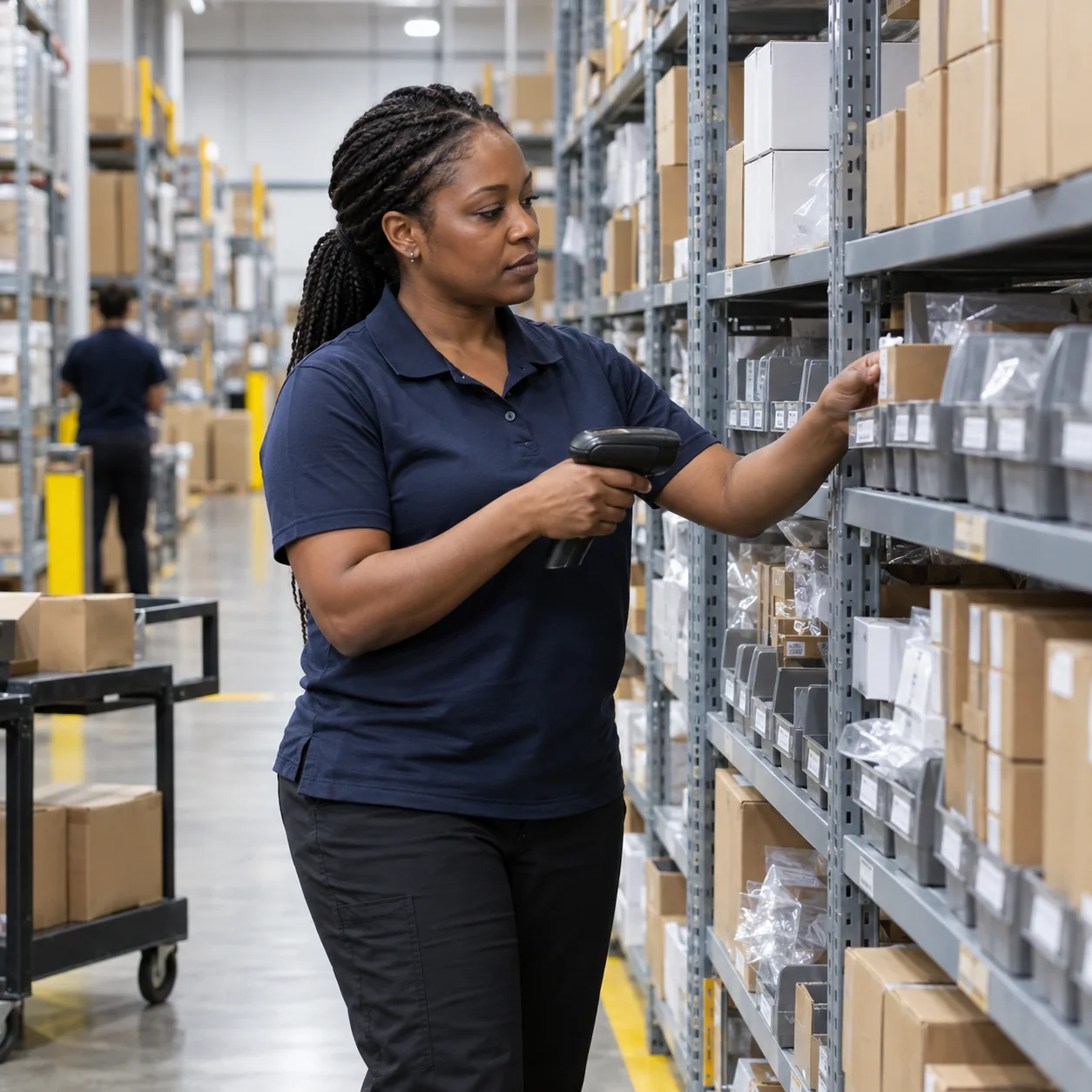
US warehouse fulfillment means storing approved products in the United States and using that inventory to prepare individual customer orders. The useful service is not simply shelf space. It connects an inbound record, a sellable SKU, available quantity, a packing instruction and a shipment record.
FriendDropshipping can coordinate the China-side product and packing plan with US stock placement. The merchant approves which products move, how much inventory to commit and what customer promise the selected route can support.
California and New Jersey US Warehouse Locations
Our US West warehouse is in California and our US East warehouse is in New Jersey. Decide whether one coast or both should hold a specific SKU according to customer demand, replenishment cost and the delivery objective.
Stock for western demand
California is the western US warehouse option. Consider it when a meaningful share of orders is headed west or when the agreed inbound plan makes this the more practical first US stock location.
- Define the SKUs and quantities assigned to California.
- Check expected arrival, receiving and available-stock dates.
- Review replenishment before a bestseller runs low.
Stock for eastern demand
New Jersey is the eastern US warehouse option. It can support orders concentrated in eastern destinations, provided the added stock commitment and replenishment plan make sense for the product.
- Allocate only products with a reason to be held here.
- Keep variant and packaging records consistent across sites.
- Agree which warehouse releases an order if stock differs.
Two warehouses are not automatically better than one. Splitting a slow-moving SKU can strand inventory in both locations. Start with the order map and unit economics, then choose the number of stock points.
Discuss Your US Stock MapWhich Products Belong in a US Warehouse?
US stock is most useful when the same SKU sells repeatedly, the product and packaging are stable, and enough American customers buy it to justify inbound transport and local storage. A viral week is not yet a replenishment forecast.
- Use order history by SKU and destination rather than total store sales.
- Confirm product version, labels, claims and route eligibility before moving units.
- Set a reorder point that includes supplier, inbound and receiving time.
- Define an exit plan for slow, damaged or superseded stock.
Keep testing flexible. New or uncertain items may be better handled through a China-side model until product quality, conversion and demand are understood. The dropshipping from China guide explains that broader route.
How Our US Warehouse Fulfillment Process Works
The operation begins before inventory reaches the US. Each handoff should leave a record the next team can use, with exceptions kept outside the normal order flow.
- 01
Approve the SKU
Confirm product, variant, version, destination eligibility and packing reference. Specify who approves a substitution or discrepancy.
- 02
Plan US inbound
Choose California, New Jersey or both; document the quantity, transport handoff, import responsibilities and expected receiving reference.
- 03
Receive and qualify
Match cartons and units to the inbound plan. Place mismatched or questionable stock on hold until the agreed decision is made.
- 04
Release DTC orders
Check available stock, select the correct item and pack-out rule, prepare the parcel and return tracking after dispatch.
- 05
Reconcile and restock
Review stock movement, delivery exceptions and reorder signals; update the plan from actual customer demand.

US Warehousing, Pick-and-Pack and Returns
Once approved inventory is available, each DTC order needs an unambiguous item, quantity, destination and packaging rule. A warehouse location alone cannot prevent version swaps, missing bundle components or an old insert being used.
- Stock status: distinguish inbound, on hold, available, reserved and exception units.
- Pick and pack: verify the selected variant and use the agreed mailer, label, insert or kit components.
- Tracking and exceptions: return shipment data and escalate address problems, failed scans or damage evidence.
- Returns: agree inspection, restock, hold or disposal decisions before a return arrives.
For a deeper description of per-order operations, explore our dropshipping fulfillment service. For branded inserts and kits, see our custom packaging guide for Shopify brands.
China vs US vs Hybrid Fulfillment
The right model can differ by SKU. Compare the customer benefit of local stock with the cost and risk of buying, transporting and holding those units in advance.
| Comparison | 01 · Stay flexibleChina-side fulfillment | 02 · Stock proven productsUS warehouse fulfillment | 03 · Segment by SKUHybrid China + US |
|---|---|---|---|
| Best fit | New, changing or long-tail products with uncertain demand. | Repeat-selling SKUs with concentrated US demand. | A mixed catalog with both test products and proven sellers. |
| Inventory position | Stock remains close to suppliers and packaging preparation in China. | Approved units are held in California or New Jersey before orders arrive. | Each SKU is assigned to China, the US, or both under a defined rule. |
| Customer route | Each order follows an international cross-border route. | Available US stock follows a domestic delivery route. | The route depends on the SKU’s assigned inventory location. |
| Main advantage | Lower US stock commitment and more supplier-side flexibility. | Proven inventory is positioned closer to American customers. | Flexibility for tests while selected winners use local stock. |
| Main exposure | International transit remains part of the customer order. | Inbound, storage, replenishment, returns and aged stock require planning. | Multiple locations can create allocation and overselling complexity. |
| Control to define | Product eligibility, packaging readiness and cross-border route. | Reorder point, available quantity and slow-stock action. | Which SKU is held where and when inventory should move. |
For China-side supplier coordination and stock preparation, see the China 3PL service.
What Determines US Warehouse Fulfillment Cost?
A low pick fee cannot be evaluated alone. Compare quotes using the same product, parcel, order volume, destination mix and exception assumptions.
| Cost area | What to specify | Why it changes the quote |
|---|---|---|
| China-side preparation | Product approval, inspection scope, labels, packaging and carton plan | Work performed before export affects quality and US receiving. |
| Bulk inbound and import | Origin, shipment size, transport method, customs model and responsible party | Freight and import costs must be counted before local fulfillment begins. |
| US receiving and storage | Cartons, units, SKUs, dimensions, expected occupancy and turnover | Handling and held space can vary with product size and demand. |
| Order handling | Items per order, variants, kits, inserts, special checks and packaging materials | A simple one-item order is not the same workload as a custom pack-out. |
| Delivery and returns | Destination mix, parcel weight/dimensions, selected service and return volume | Carrier rates, surcharges and reverse handling can change total cost. |
| Exceptions and minimums | Address fixes, reshipments, aged stock, software or account minimums if applicable | These are easy to miss when comparing a headline fulfillment price. |
Send one representative order profile. Include SKU count, monthly DTC orders, items per order, packed size and weight, expected US stock, destination mix and any branding steps.
Request a Scoped QuoteOur 3PL cost guide for Shopify brands explains how to compare fee structures in more detail.
Start US Warehouse Fulfillment With a Small SKU Pilot
A controlled first inbound is more useful than a catalog-wide move. Select representative products and a normal customer-order scenario, then review physical stock and the order record together.
 Discuss a Stock Pilot
Pilot sequence
- Share approved variants and packaging rules.
- Choose California or New Jersey first—or document why both locations are needed.
- Receive test stock and verify available quantity.
- Run a normal order and an exception; inspect packing, tracking and stock movement.
- Set reorder and slow-stock decisions from observed demand.
If supplier selection is unresolved, start with product sourcing before committing US inventory. The shipping solutions page covers route considerations beyond warehouse location.
US Warehouse Fulfillment FAQs
Where are your US warehouses?
Our US West warehouse is in California and our US East warehouse is in New Jersey. The best starting location depends on the SKU, customer destinations, inbound route and stock commitment.
Should every product be stocked in the US?
No. US stock is usually easier to justify for stable, repeat-selling products. New, unproven or frequently changing items may be better tested with a more flexible China-side model first.
Can I use both California and New Jersey?
Yes, when demand and inventory economics support a two-location plan. Split-stock decisions should define SKU quantities, replenishment triggers and which location fulfills each customer order.
How is US warehouse dropshipping different from supplier-direct shipping?
With US warehouse fulfillment, approved stock is placed in America before the individual customer order arrives. Supplier-direct shipping normally starts its physical supply process after the order is received. The trade-off is earlier stock commitment in exchange for locally available inventory.
What happens if the received SKU or quantity does not match?
The discrepancy should be recorded and affected units held outside sellable stock until the agreed decision owner approves a correction, replacement or other action. The exact receiving and evidence scope should be set before inbound.
Can branded packaging or multi-item kits be used?
They can be planned when the materials, SKU mapping and pack-out instructions are agreed in advance. Confirm component availability and the rule for an out-of-stock item before promising a kit to customers.
How are returns handled?
Agree the return destination, inspection criteria and decisions for restock, hold or disposal before launch. A returned parcel should not automatically be placed back into sellable stock.
What are your MOQ, storage fees and delivery times?
These depend on the product, stock volume, locations, handling scope and selected delivery service. Send a representative order profile for a current quote and written operating assumptions; older published figures should not be treated as a universal rate or guarantee.
Plan Your US Warehouse Fulfillment
Share the products you want to place in the United States and where your customers are. We can review the California/New Jersey stock option, the China-to-US handoff and the operating details needed for a scoped quote.
- SKU and product-version review
- California / New Jersey stock decision
- Inbound and available-stock rules
- DTC packaging and order workflow
- Quote inputs and pilot checkpoints
