
Warehousing Services in China and the US for Ecommerce Brands
Receive products from your suppliers, identify the right SKU, make approved stock available, and prepare individual customer orders. Keep flexible inventory in China, then consider US stock for proven products when the economics and delivery goal support it.
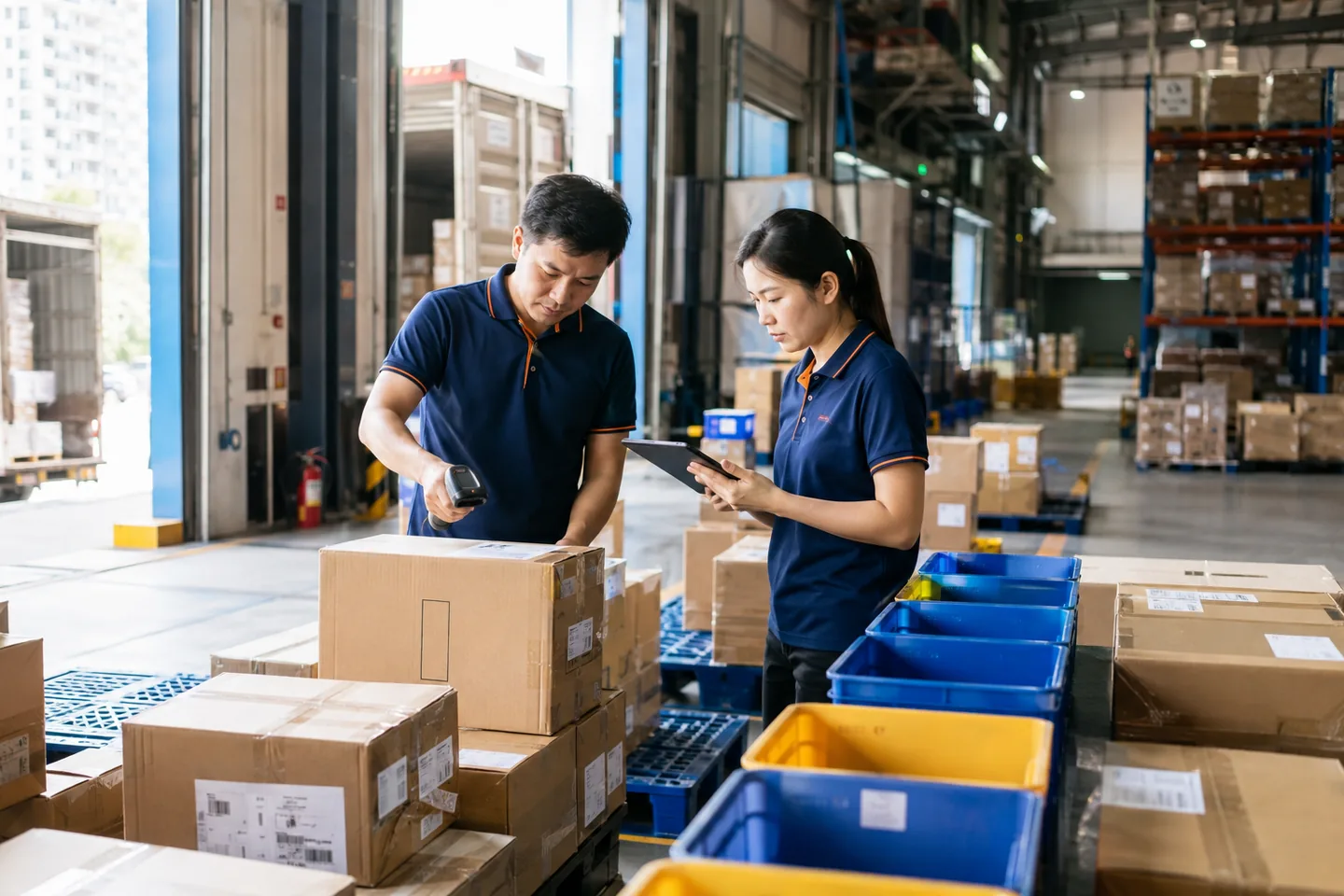
What Do Ecommerce Warehousing Services Include?
Warehousing is the controlled interval between a supplier delivering goods and the next approved use of those goods. For an ecommerce brand, that means more than placing cartons on a shelf: every sellable unit needs a product identity, a condition, a location and an instruction for when it may leave.
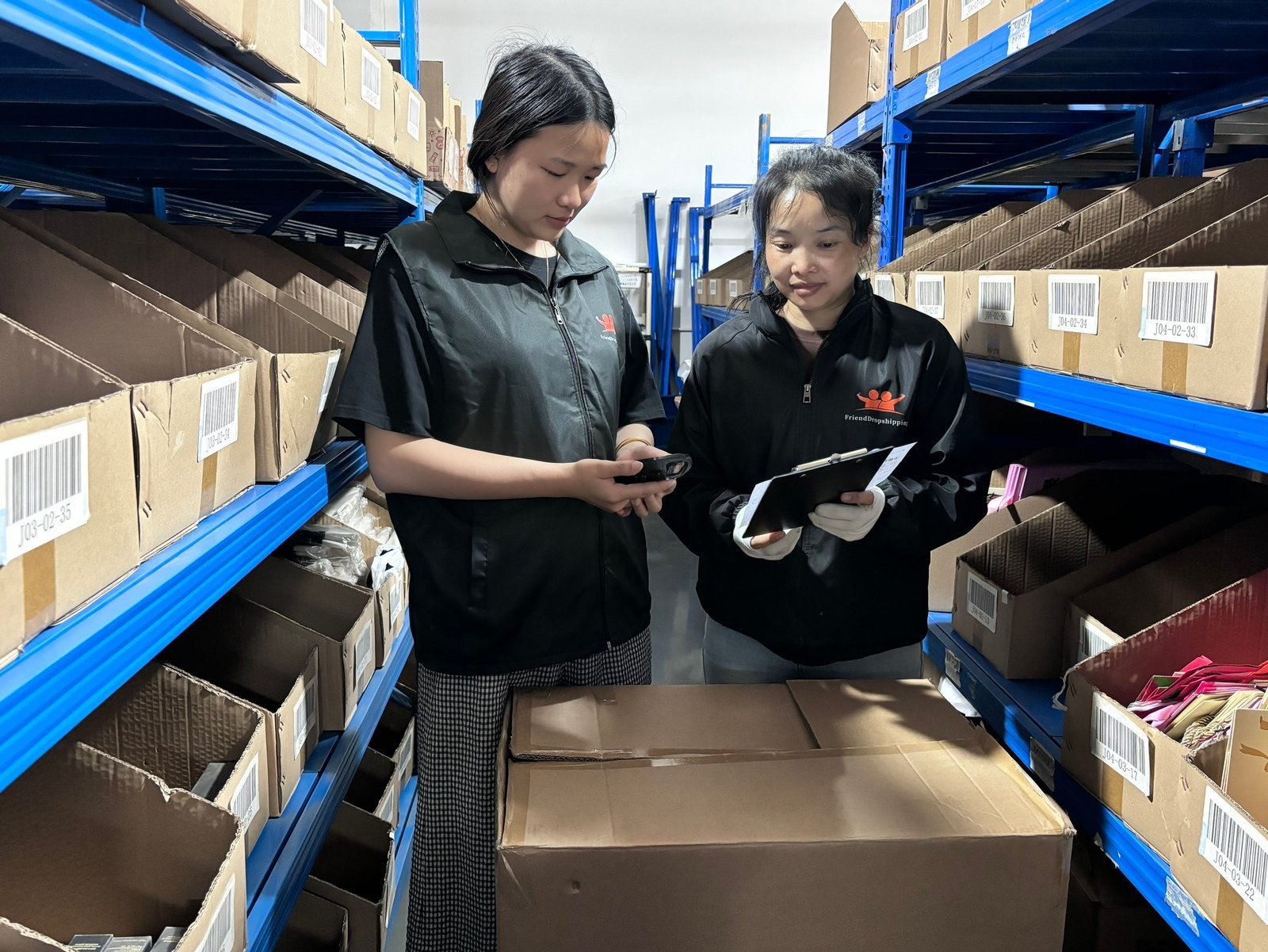
FriendDropshipping connects China-side receiving and stock preparation to direct-to-customer order handling. The merchant still decides the product version, stock commitment, packaging rules, destination promise and approval thresholds.
China Warehousing in Dongguan and Yiwu, With US Options
Use the origin that matches your suppliers and the destination stock position that matches actual demand. Our China warehouses are in Dongguan and Yiwu; our US West warehouse is in California and our US East warehouse is in New Jersey.
Dongguan · Humen
A China-side receiving point to consider when suppliers and packaging work are coordinated around Guangdong. Confirm the SKU, incoming quantity and any inspection hold before units are shown as available.
广东省 东莞市 虎门镇 正鸿高新产业园A区10栋2号4楼 View Dongguan address on Google Maps ↗Google Maps opens an address search, not a verified precise pin.
Yiwu · Beiyuan
A China-side location to consider when supplier consolidation and order preparation are centered around Yiwu. Set receiving references in advance so products from separate suppliers remain traceable.
浙江省 金华市 义乌市 北苑街道 新业云谷B06 512 室 View Yiwu address on Google Maps ↗Confirm receiving instructions before sending any supplier cartons.
West and East Coast Warehousing
For repeat-selling products with dependable demand, an agreed portion of stock can be planned closer to US buyers. Cross-border bulk movement, import responsibility, replenishment and local order costs must be compared with direct dispatch from China.
Not sure which location to use? Share suppliers, SKU list, target markets and forecast volume; the stock plan can be assessed product by product.
Discuss Warehouse LocationsWarehousing Services Built Around Ecommerce Orders
Define the checks for the actual product. Receiving a box, approving the contents and releasing a customer parcel are different decisions.
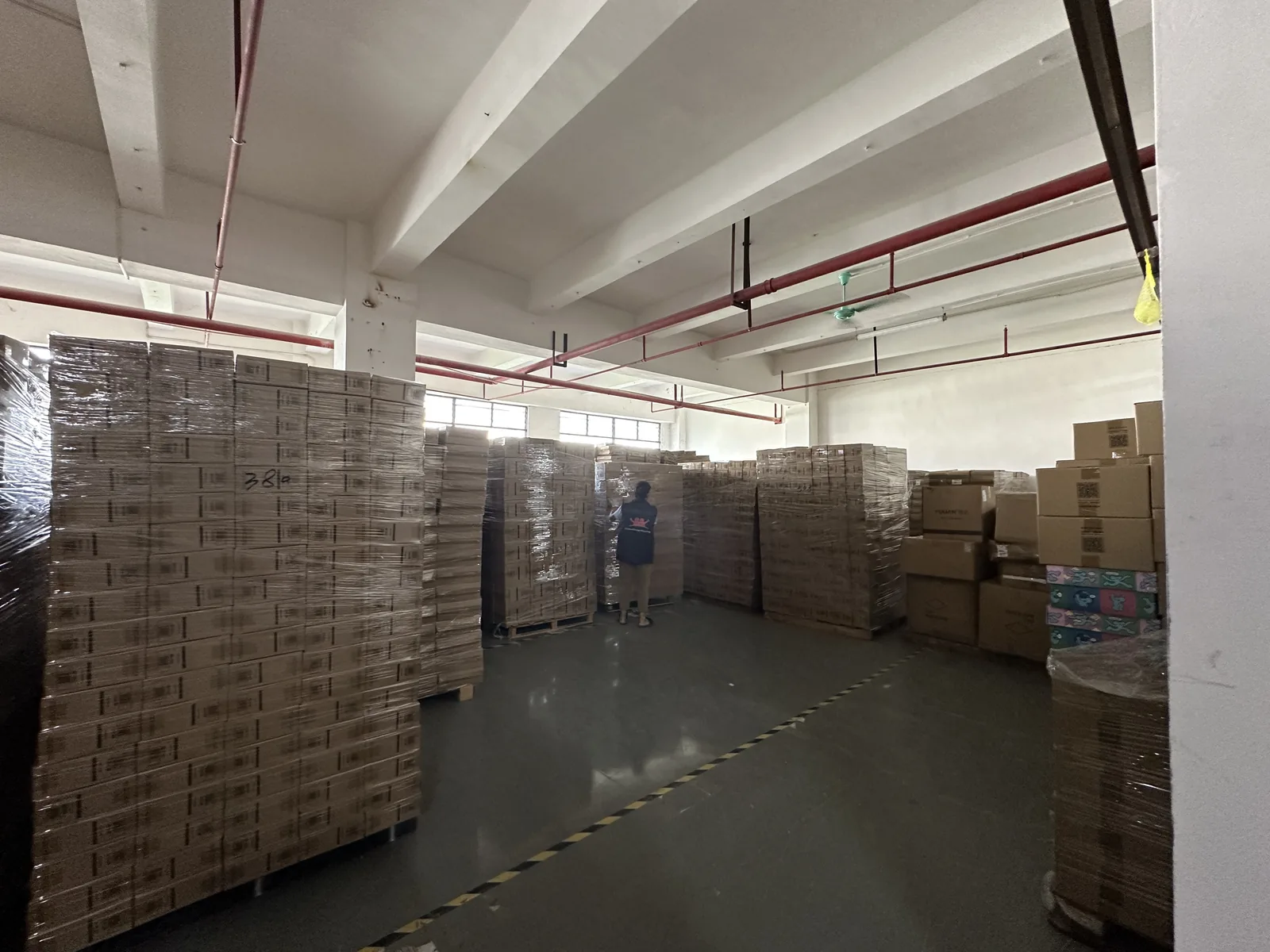
Supplier Inbound
Record expected supplier deliveries and purchase references. On arrival, count the agreed units and note damaged, missing or unidentified goods before adding them to stock.
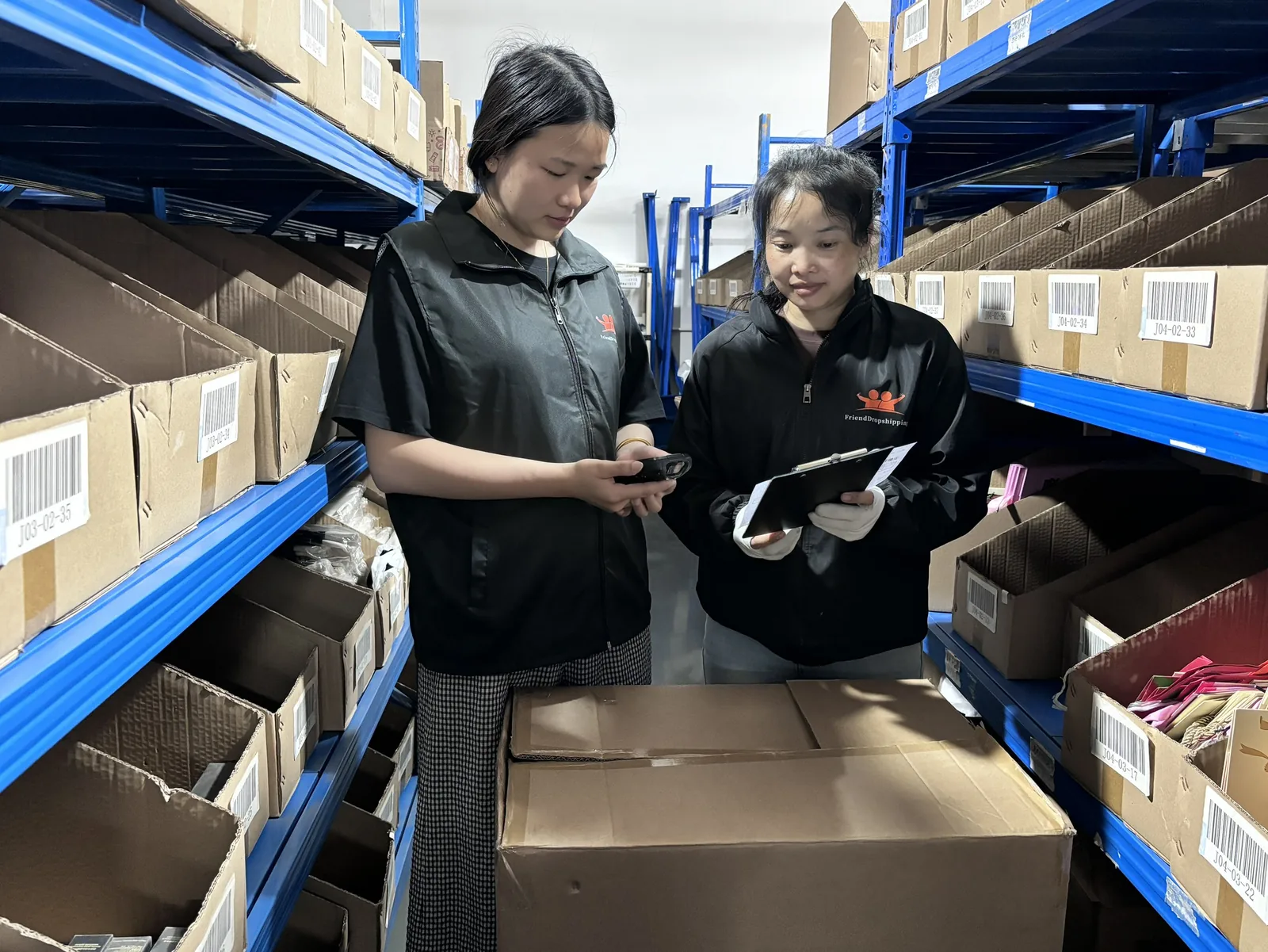
SKU and Stock States
Separate product variants and versions. Available, reserved, on-hold and damaged units should not be presented as one undifferentiated stock total.
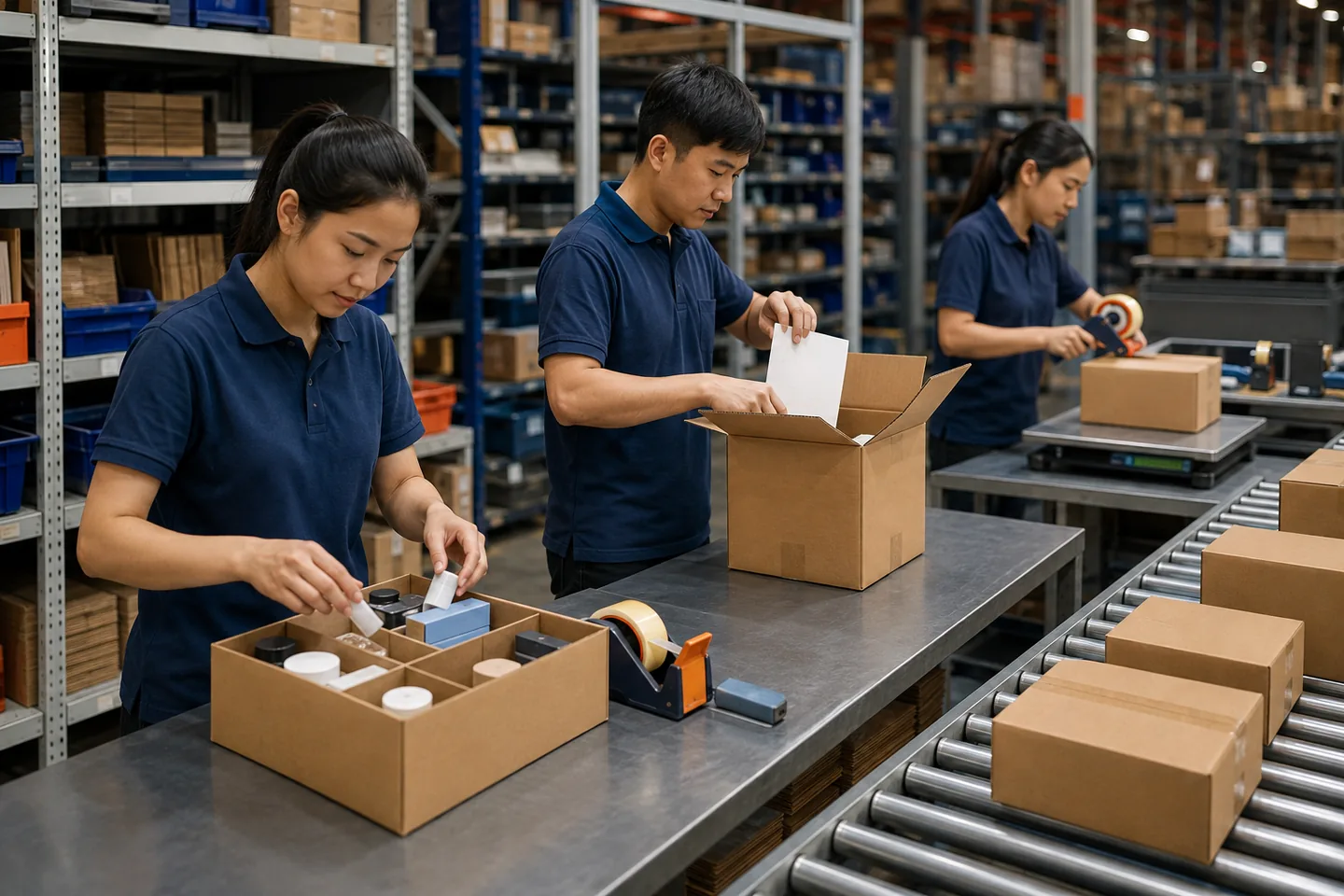
Pack-Out Readiness
Connect available units to approved labels, inserts, bundles and parcel rules. Set the action to take when a component or approved package is missing.
If supplier selection is still unresolved, start with China product sourcing. If the per-order pick, pack and tracking workflow is your main question, see dropshipping fulfillment.
Ecommerce Warehouse Inventory Control That Prevents Blind Release
A total stock count is not the same as a sellable stock count. One item may be expected, another under check, and another already committed to a customer order.
Agree SKU identifiers, acceptable substitutions, product-version rules, count cadence and who can approve adjustments. Order data should be checked against that agreed stock record before the parcel is released.
Supplier delivery announced; units not yet counted.
Mismatch or inspection decision pending.
Approved for customer-order allocation.
Committed to an open order or agreed purpose.
Damage, loss or version issue needs resolution.
China vs US Warehousing: Which Inventory Model Fits?
The decision is not “Which warehouse is best?” but “Which SKUs justify which inventory commitment?” Use actual demand, supplier lead time, destination concentration, margin and return behavior.
| Decision factor | China warehousing | US warehousing | Hybrid warehousing |
|---|---|---|---|
| Best fit | Test, long-tail or multi-market SKUs near China suppliers. | Proven SKUs with repeatable US demand. | Different stock rules for different SKU groups. |
| Inventory commitment | Keep stock flexible at origin. | Fund bulk import and local storage before customer orders. | Pre-position selected sellers; retain flexible stock in China. |
| Order path | Individual parcels cross borders after warehouse release. | Approved local stock is released to US customers. | Route orders by SKU, destination and agreed stock availability. |
| Main trade-off | Cross-border transit and customs remain in the customer order path. | Slow or obsolete US stock can be costly to move or exit. | More replenishment and allocation rules to coordinate. |
| Decision test | Can the SKU tolerate the full order-to-delivery path? | Does local-delivery value justify import and inventory exposure? | Which SKUs merit a limited US stock pilot? |
For the wider operating model, explore China 3PL. For store-level planning from sourcing through delivery, see dropshipping from China. The US warehouse service page provides more destination-side context.
What Determines Ecommerce Warehousing Cost?
A low storage rate can be offset by receiving, order handling, packaging, freight, returns or a minimum charge. Request the same SKU and order profile from every provider.
| Cost layer | What to specify | Why it matters |
|---|---|---|
| Setup and inbound | SKU count, variants, supplier cartons, receiving reference, inspection scope | Unknown or mixed goods take more work to identify and qualify. |
| Storage | Average and peak units, dimensions, turnover, storage duration | Space and aging stock exposure depend on the actual inventory profile. |
| Order handling | Orders per month, units per order, bundles, labels and inserts | One-unit orders and multi-item branded kits have different handling steps. |
| Shipping | Destination mix, product restrictions, weights, parcel sizes, delivery objective | Route suitability and total landed cost vary by product and market. |
| Exceptions | Holds, rework, returns, damages, recounts and stock exit | Ask when extra work requires approval and how it is billed. |
Compare cost per successfully delivered order, not storage alone. Add receiving, storage, pick and pack, packaging, shipping and expected exception costs.
Request a Warehousing QuoteFor a fuller fee checklist, read the 3PL cost guide for Shopify brands. Route choice is covered separately in shipping solutions from China.
Start Warehousing With a Controlled SKU Pilot
A small live test should verify the product record, physical stock and order output together. Correct the procedure before scaling unit count or opening another warehouse location.
- 01
Share the profile
Provide suppliers, SKU/variant list, expected units, packaging, sales channels and destination mix.
- 02
Approve the rules
Define receiving checks, stock states, substitutions, reorder points and who handles exceptions.
- 03
Receive test stock
Use real supplier cartons; confirm the stock record matches physical units and agreed evidence.
- 04
Release real orders
Test a normal order and an exception. Review packing, tracking, stock movement and charges.
Planning a China-first launch? The broader dropshipping from China guide explains when to test, reserve China stock or move proven SKUs closer to buyers.
Discuss a Stock PilotWarehousing Services FAQs
The exact operating scope is agreed for each product and order profile.
What is the difference between warehousing and fulfillment?
Warehousing controls where products are received, identified, stored and made available. Fulfillment starts when an approved order allocates stock and follows the pick, pack, label, dispatch and tracking workflow. The two must share the same SKU and stock rules.
Can you receive products from more than one supplier?
A multi-supplier receiving plan can be discussed. Give each supplier a purchase or inbound reference and identify how cartons, components and product versions should be matched. Goods should not silently become sellable if the reference or condition does not match.
Which China warehouse should my supplier send goods to?
That depends on supplier locations, the product, receiving workload and the approved order plan. Confirm the exact Dongguan or Yiwu receiving instructions with the team before shipping goods; do not choose solely from the public address.
Where are your US warehouses?
Our US West warehouse is in California, and our US East warehouse is in New Jersey. We provide the receiving instructions during onboarding.
When should I move inventory from China to the US?
Consider a limited pilot when a SKU has repeatable US demand and the expected local-delivery benefit justifies bulk replenishment, import responsibility and storage risk. Keep uncertain or long-tail items on a lower-commitment plan until the evidence improves.
Can you guarantee free storage or a fixed dispatch time?
No universal promise is made on this page. Storage terms, operating cutoff, route eligibility and dispatch targets depend on the actual goods, location and agreed scope. Request written terms for your quote.
How are damaged, mismatched or unavailable items handled?
The agreed workflow should separate those units from available inventory, record the discrepancy and identify who can approve replacement, rework or an order hold. Exact inspection depth and reporting method should be set before inbound.
Do you provide B2B or wholesale warehousing?
This page is for ecommerce and direct-to-consumer inventory and customer orders. B2B and wholesale operations are outside the service scope described here.
Plan Warehousing Around Your Actual SKUs
Share product details, suppliers, forecast volume and destinations. We can discuss which stock belongs in China, whether a US pilot is justified, and what needs approval before the first order goes live.
- SKU and variant list
- Supplier and inbound locations
- Expected stock and monthly order profile
- Packaging and destination requirements
- Exception and replenishment questions
