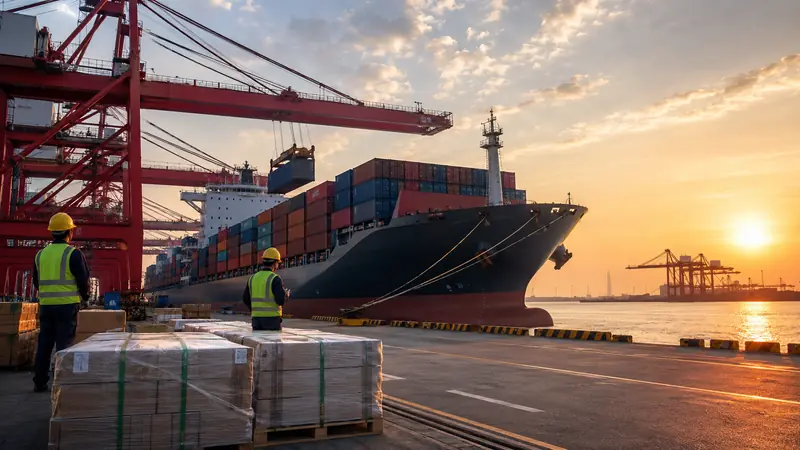
Custom packaging sounds simple at first. Print a logo on a box, put the product inside, and ship it. Done, right?
Well, not quite.
Printing the package is only one part of the job. Someone must store it, count it, match it to the correct Shopify SKU, apply it to every order, and reorder it before stock runs out. If your products come from several factories, the workflow gets even more interesting. One factory may make the product, another may print the box, and a fulfillment warehouse may bring the two together.
That is why the best custom packaging setup is not always the fanciest one. It is the setup your supply chain can repeat without making mistakes.
This guide explains how to build that setup. You will learn which packaging to customize, what it may cost, how MOQ works, whether AliExpress suppliers can help, and how a private agent or China fulfillment center can apply branded packaging to Shopify orders.
How Do You Get Custom Packaging for Shopify Dropshipping?
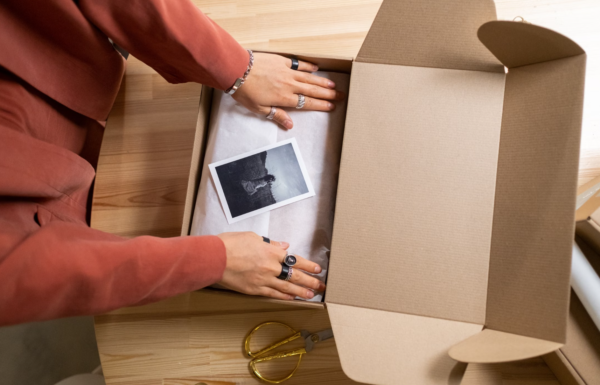
To get custom packaging for Shopify dropshipping, first choose the part of the package you want to brand. It could be a sticker, insert, mailer, retail box, bottle, pouch, or a full packaging set. Then ask a supplier, private agent, or fulfillment center to quote the design, sample, MOQ, production, storage, and per-order packing cost.
A reliable workflow usually looks like this:
-
Validate the product. Avoid ordering thousands of boxes for a product that has not produced repeat sales.
-
Choose the packaging layer. Decide whether you need branded product packaging, an outer shipping package, or both.
-
Prepare specifications. Confirm dimensions, material, artwork, colors, finishes, and required label information.
-
Approve a physical sample. A screen mockup cannot tell you whether the product fits or the adhesive holds.
-
Produce a manageable quantity. Balance unit price against the risk of unused packaging.
-
Store packaging near the products. The supplier, agent, or fulfillment center needs physical stock before orders arrive.
-
Map packaging to Shopify SKUs. Tell the warehouse which box, insert, sticker, and pack-out method belongs to each item.
-
Track consumption and reorder early. Packaging has a production lead time, just like the product.
For a store with one product and one dependable supplier, direct supplier customization may be enough. For a store using several factories, bundles, or detailed brand rules, a private agent or 3PL usually gives better control.
One important point: adding a package in Shopify does not cause a factory to print it or a warehouse to use it. Shopify holds order and shipping data. Physical packaging still needs an operating partner.
What Is Custom Packaging for Dropshipping?
Custom packaging for dropshipping means that an order is shipped using packaging made or prepared for your brand instead of the supplier’s normal presentation. The customization can be tiny, such as a logo sticker, or extensive, such as a printed bottle, retail carton, insert, tissue paper, and branded mailer.
In a traditional retail model, the brand often receives products in bulk and packs orders itself. In dropshipping, the seller may never touch the product. The supplier or fulfillment warehouse must therefore follow the brand’s packaging instructions on the seller’s behalf.
Product Packaging vs Shipping Packaging
Product packaging is the material closest to the item. Examples include a supplement bottle, cosmetic jar, jewelry box, pouch, retail carton, or product label. It may carry product information, instructions, barcodes, warnings, and branding.
Shipping packaging protects the product during delivery. Examples include a corrugated carton, poly mailer, paper mailer, padded envelope, tape, void fill, and the carrier label.
The distinction matters. A supplier may agree to put your product in a beautiful retail box but still send that box inside a plain gray mailer. Or the shipping label may cover the logo. If you want a branded unboxing experience, ask what the customer will see at every layer.
For fragile products, the outer shipping package also has a second job: surviving the journey. Pretty packaging that arrives crushed is, honestly, not very premium.
Neutral, Branded, and Private-Label Packaging
These terms are related but not identical:
-
Neutral packaging removes the supplier’s logo, promotion, and invoice. It does not necessarily show your brand.
-
Branded packaging adds your logo, colors, message, or visual identity to one or more packaging components.
-
Private-label packaging presents the product under your brand and often includes product-specific information. Depending on the category and market, that information may include ingredients, responsible-party details, warnings, instructions, or compliance marks.
A seller testing a phone accessory may only need neutral packaging. A skincare or supplement brand may need a product label and retail container long before it needs a printed shipping box. Start with the layer that solves the real problem.
How Custom Packaging Works in Shopify Dropshipping
Custom packaging works when the printed materials and the fulfillment instructions meet in one place. The Shopify order identifies what the customer bought. The warehouse uses that information to select the correct product and packaging components.
Here is the full workflow:
|
Stage
|
Main action
|
Output
|
Common failure
|
|
Packaging brief
|
Define product, market, volume, brand, budget, and protection needs
|
Written requirement
|
Asking only for “a nice custom box”
|
|
Format selection
|
Choose box, mailer, insert, sticker, label, or full set
|
Packaging plan
|
Customizing too many pieces too early
|
|
Dieline and artwork
|
Place graphics on the supplier’s production template
|
Print-ready file
|
Using the wrong dimensions or old artwork
|
|
Proofing
|
Review text, colors, barcode, and layout
|
Approved digital proof
|
Treating a screen color as exact production color
|
|
Sampling
|
Produce and test a physical sample
|
Golden sample
|
Skipping product-fit and shipping tests
|
|
Production
|
Print the approved quantity
|
Packaging inventory
|
Choosing quantity only by lowest unit price
|
|
Inbound control
|
Count and inspect packaging at the warehouse
|
Accepted stock
|
Discovering defects only after customer orders ship
|
|
SKU mapping
|
Link packaging components to products and variants
|
Pack-out rules
|
Applying the wrong insert or box to a variant
|
|
Fulfillment
|
Pick, pack, label, and dispatch
|
Branded order
|
Supplier forgets a component during busy periods
|
|
Replenishment
|
Track usage, waste, and lead time
|
Reorder plan
|
Product stock remains available but boxes run out
|
Watch How Custom Packaging Is Prepared
Build the Packaging Brief Before Requesting Quotes
A useful packaging brief should include:
-
Product dimensions and packed weight
-
Product photos or a physical sample
-
Destination countries
-
Average and peak daily orders
-
Expected packaging quantity
-
Required materials and finishes
-
Logo and brand colors
-
Barcode and label requirements
-
Protection requirements
-
Preferred opening experience
-
Target unit cost
-
Required production date
Send the same brief to every potential supplier. Otherwise, one quotation may cover only a box, while another includes an insert, assembly, and delivery to the warehouse. The prices look comparable, but they are not.
Approve a Physical Sample, Not Just a Mockup
A digital proof is useful for catching spelling mistakes and layout problems. It cannot show whether a mailer tears, a box is too loose, or a sticker lifts from a cold bottle.
Put the real product inside the sample. Shake it. Open it. Apply the shipping label. Check whether the barcode scans. If appearance matters, photograph it under ordinary indoor light, not only studio light. A physical master sample becomes the reference for production and warehouse QC.
When Should You Start Using Custom Packaging?
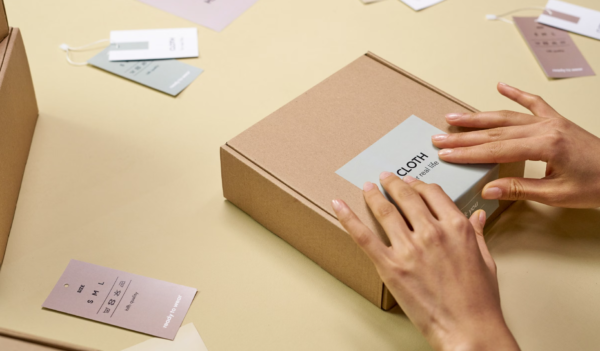
Start custom packaging when the product has enough demand to consume the packaging before the design, offer, or product changes. You do not need to wait until you are a giant brand. You do need some evidence that the item will keep selling.
Ordering packaging too early locks cash into cardboard, labels, and mailers that cannot easily be used for another product. Waiting too long may make a growing store feel generic and reduce the consistency of the customer experience. The sensible point sits in the middle.
|
Business stage
|
Recommended approach
|
Reason
|
|
No confirmed sales
|
Neutral supplier packaging and product samples
|
Keep the test flexible
|
|
First consistent orders
|
Neutral mailer plus sticker or insert
|
Add identity with low inventory risk
|
|
Product has repeat sales
|
Low-MOQ branded mailer, label, sleeve, or carton
|
Improve presentation without buying every component
|
|
Stable daily volume
|
Coordinated product and shipping packaging
|
Consumption supports better unit pricing and stock planning
|
|
Multi-product brand
|
Shared outer packaging plus SKU-specific inner pieces
|
Maintain one brand system without too many package sizes
|
There is no magic order number. A bulky seasonal product and a small evergreen accessory have different economics. A better check is this:
Packaging quantity ÷ realistic weekly orders = weeks of packaging stock
If 1,000 printed mailers represent ten months of normal sales, ask whether the logo, product, and mailer size will still be correct ten months from now. If 1,000 mailers represent five weeks, the inventory risk is much smaller.
Also check cash flow. Packaging is usually paid before customers order. It should not consume the money needed for product stock, advertising, returns, or shipping.
Custom Boxes vs Mailers vs Inserts vs Stickers
The best packaging format depends on protection, brand impact, storage space, MOQ, and shipping dimensions. A rigid box may feel luxurious, but a simple insert can sometimes deliver most of the brand message for a fraction of the cost.
|
Format
|
Best use
|
Typical MOQ tendency
|
Shipping impact
|
Best stage
|
|
Corrugated shipping box
|
Fragile, heavy, or presentation-led goods
|
Medium to high
|
Good protection; size can increase dimensional weight
|
Validated product
|
|
Folding retail carton
|
Product presentation and shelf-ready appearance
|
Medium
|
Light, but normally needs outer protection
|
Private-label product
|
|
Rigid box
|
Gifts, jewelry, premium sets
|
Medium to high
|
Heavier and less space-efficient
|
Higher-margin brand
|
|
Poly mailer
|
Apparel and soft, non-fragile goods
|
Low to medium
|
Very light and compact
|
Early growth
|
|
Paper mailer
|
Lightweight goods and paper-led presentation
|
Low to medium
|
Compact; moisture performance varies
|
Early growth
|
|
Padded mailer
|
Small items needing light impact protection
|
Low to medium
|
Slightly bulkier than a plain mailer
|
Testing or growth
|
|
Insert card
|
Story, instructions, QR code, offer, or thank-you note
|
Low
|
Almost no effect on shipping
|
Nearly any stage
|
|
Sticker or label
|
Low-cost logo or sealing application
|
Very low to low
|
Minimal
|
Testing stage
|
|
Printed sleeve
|
Branding a standard box, jar, or container
|
Low to medium
|
Small weight increase
|
Validated small brand
|
Choose Materials for the Product and Route
Corrugated board is commonly used for shipping protection. Paperboard suits retail cartons. Kraft paper offers a simple look and can work for boxes, mailers, sleeves, and fill. Poly mailers are light and useful for soft products. Padded formats protect small items without a full carton. Molded pulp, paper fill, air pillows, and other inserts can limit movement inside a box.
Do not choose material only from a catalog photo. Consider moisture, crushing, sharp edges, leakage, heat, and how many transport handoffs the parcel may face. A package traveling internationally through several sorting centers needs more tolerance than a package moving across one city.
Product category matters too. Food, supplements, cosmetics, batteries, liquids, children’s products, and other regulated or sensitive categories may have packaging and labeling needs beyond normal branding. A packaging printer cannot decide market compliance for you.
How Much Does Custom Dropshipping Packaging Cost?
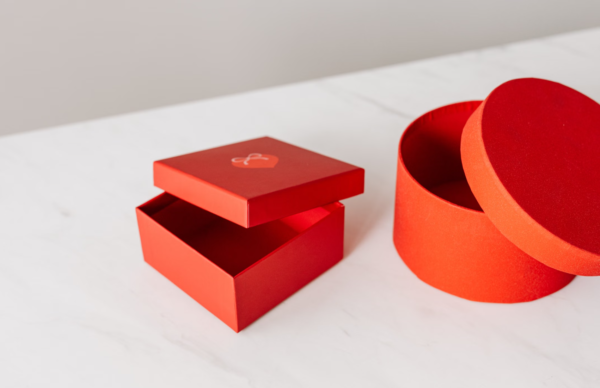
Custom packaging cost is not just the printed unit price. The full amount includes design, sampling, production, inbound freight, storage, assembly, and any increase in outbound shipping cost.
Use this formula:
True packaging cost per shipped order = packaging unit cost + inbound freight per unit + receiving/storage allocation + application fee + added outbound shipping cost + expected waste
The Main Cost Layers
-
Design and dieline work: A graphic designer may need to adapt your artwork to the packaging factory’s template.
-
Sample cost: Printed samples can cost far more per unit than production pieces. Courier delivery may cost more than the sample.
-
Tooling or setup: Dies, printing plates, molds, special colors, and finishes may have one-time charges.
-
Production: Material, dimensions, print method, colors, coating, and quantity affect the unit price.
-
Inbound freight: Packaging must travel from the printing factory to the product supplier or fulfillment warehouse.
-
Receiving and QC: Someone should count cartons and check visible production quality.
-
Storage: Empty boxes take up surprising space. Rigid boxes are especially hungry for shelves.
-
Application: The warehouse may charge to fold a box, apply a label, add an insert, or build a kit.
-
Outbound shipping: Heavier or larger packaging can change the carrier charge.
-
Waste and obsolete stock: Damaged pieces, setup waste, old branding, and discontinued products all have a cost.
Illustrative Shopify Order Example
Imagine a Shopify store selling a compact skincare tool. The product weighs 180 grams and already has a basic protective pouch. The store expects 1,000 orders over the next three months.
The following figures are illustrative planning examples, not quotations:
|
Packaging route
|
Example component cost
|
Other likely costs
|
Estimated brand effect
|
|
Neutral mailer
|
$0.10 per order
|
Basic packing fee
|
Low
|
|
Neutral mailer + logo sticker + insert
|
$0.10 + $0.04 + $0.08
|
Application and storage
|
Moderate
|
|
Custom printed mailer + insert
|
$0.35 + $0.08
|
Sample, inbound freight, application
|
Strong for a light product
|
|
Printed retail box + outer mailer + insert
|
$0.80 + $0.10 + $0.08
|
Dieline, sample, storage, assembly, possible shipping increase
|
Strongest presentation
|
The sticker-and-insert route might add roughly $0.12 in components before application. The full retail-box route might add $0.98 in components, plus setup and a possible increase in parcel dimensions. That difference is $860 across 1,000 orders before other fees.
The expensive route is not automatically wrong. If it supports a higher selling price, lower damage rate, better content, or stronger retention, it may be worthwhile. But run the numbers before falling in love with a magnetic box.
For a broader view of product, packing, storage, and shipping charges, see this Shopify fulfillment cost guide.
What Is the MOQ for Custom Packaging?
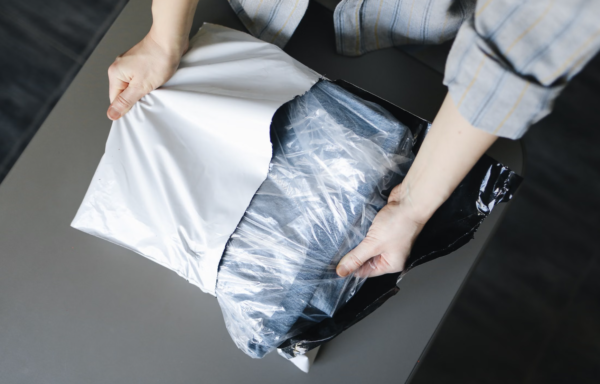
MOQ means minimum order quantity. It is the smallest production run a packaging supplier is willing to accept for a specific design and specification.
There is no universal custom packaging MOQ. A printed paper insert may have a much lower financial barrier than a molded bottle or a fully custom rigid box. A supplier might print a tiny digital run but require a larger quantity for offset, flexographic, or molded production.
MOQ changes because of:
-
Standard size versus a custom structure
-
Digital printing versus plate-based printing
-
Material purchase requirements
-
Number of colors and finishes
-
Cutting dies or molds
-
Manual versus automated production
-
The packaging supplier’s normal customer size
-
Whether several orders can share the same production setup
Can You Get Custom Packaging Dropshipping With No Minimum?
Yes, in a limited sense. Some digital packaging printers can make one printed sample or a very short run. Stickers and cards can also start at low quantities. However, “custom packaging dropshipping no minimum” does not usually mean a factory prints one branded box only after each customer checks out.
For normal fulfillment, the packaging must already exist before the warehouse packs the order. Even when the printer has no formal MOQ, you still need enough packaging on hand to make the workflow practical. One box sitting at a printer in another city cannot help a warehouse ship today’s order.
No minimum can also hide a high unit cost. A $9 sample box is useful for approval. It is not useful for a product with a $12 gross margin.
How to Build Custom Packaging With a Low MOQ
If full custom packaging is too expensive, use a modular approach:
-
Put a custom sticker on a stock mailer.
-
Add a branded insert to neutral shipping packaging.
-
Use a standard bottle or pouch with a product-specific label.
-
Add a printed sleeve around a stock carton.
-
Choose one mailer size for several compatible products.
-
Use digital printing for the first short run.
-
Customize the product package first and the shipping package later.
This is not a cheap-looking compromise if it is designed well. A clean sticker, a clear insert, and a correctly sized mailer can look more considered than an oversized custom box full of empty space.
Can You Use Custom Packaging With Shopify?

Yes. You can use custom packaging for Shopify orders, but Shopify and the warehouse handle different parts of the process.
Shopify stores product, variant, SKU, order, and fulfillment data. It can also store package dimensions and weight for shipping calculations. According to Shopify’s package setup documentation, merchants can add custom package details and assign a package to a product or variant. Shopify notes that a variant-specific package override applies to single-item orders, while multi-item orders use the store default package for checkout calculations.
That setting helps calculate rates and purchase labels. It does not tell a worker where your printed inserts are stored or which side of a mailer should receive a sticker.
The supplier, private agent, or 3PL must manage:
-
Physical packaging stock
-
Packaging SKU and bin location
-
Product-to-package compatibility
-
Variant and bundle rules
-
Insert, gift, and sticker instructions
-
Barcode and visual checks
-
Packaging substitutions
-
Reorder alerts
A Typical Shopify Custom Packaging Order Flow
-
A customer places an order in Shopify.
-
The order syncs to the supplier or warehouse system.
-
The system reads the SKU, variant, quantity, destination, and any bundle rule.
-
The picker collects the product and required packaging components.
-
The packer follows the approved pack-out instructions.
-
The final parcel is weighed and measured.
-
A carrier label is created.
-
Tracking information syncs back to Shopify.
Test this flow before a launch. Place orders for every major variant and at least one multi-item basket. A rule that works for one unit may fail when two products need a larger carton.
Can AliExpress Suppliers Provide Custom Packaging?
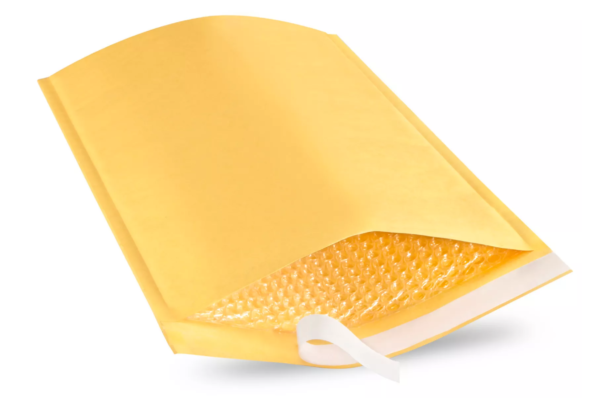
Some AliExpress suppliers can provide custom packaging. The answer depends on the seller’s factory relationship, your order volume, the packaging type, and whether the seller is willing to store packaging for future orders.
AliExpress can work well when you have one main product, one cooperative seller, and a simple request such as removing promotional material, adding a sticker, or including a card. After a product proves demand, the supplier may quote a printed box, label, pouch, or mailer.
Ask specific questions instead of “Can you do custom packaging?”
-
Will you remove your logo, invoice, QR code, and promotional card?
-
Is the packaging for the product, the shipping parcel, or both?
-
What is the MOQ for each component?
-
Who manufactures the packaging?
-
Where will unused packaging be stored?
-
Who owns it if we stop working together?
-
Can you show photos of completed orders?
-
How will you ensure every Shopify SKU gets the right package?
-
Can you handle bundles or products from another supplier?
-
What happens when the custom package is out of stock?
Direct supplier packaging becomes harder when a store uses several factories. Factory A may hold your mailers, while Factory B needs them tomorrow. Sending packaging between factories adds time, freight, counting problems, and responsibility gaps.
AliExpress is not “bad” for packaging. It is simply a marketplace relationship. The operating control depends on the individual seller. Use it when the workflow is simple and verifiable.
Private Dropshipping Agent vs AliExpress for Custom Packaging
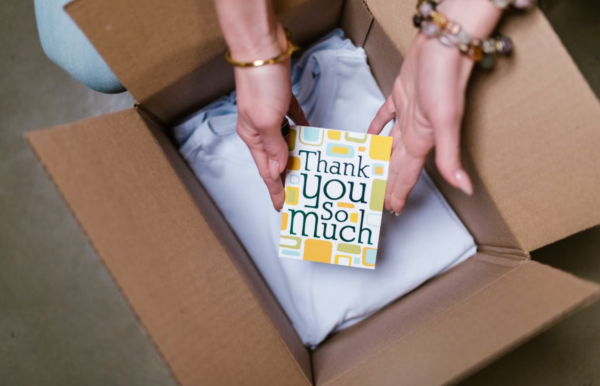
A private dropshipping agent coordinates sourcing and fulfillment outside a standard marketplace listing. For custom packaging, the practical advantage is central control. Products from several suppliers and packaging from a separate printer can arrive at one warehouse before orders are packed.
|
Decision factor
|
AliExpress supplier
|
Private dropshipping agent
|
|
Best fit
|
Product testing or a simple single-supplier item
|
Validated products, multiple factories, bundles, or brand-led fulfillment
|
|
Packaging sourcing
|
Depends on the seller’s options
|
Can compare specialist packaging factories
|
|
MOQ strategy
|
Based on one seller’s offer
|
Can combine stock formats with custom labels, cards, sleeves, or mailers
|
|
Multi-supplier products
|
Usually difficult
|
Products can be consolidated in one warehouse
|
|
Independent QC
|
Limited or seller-led
|
Product and packaging can be checked separately
|
|
Packaging storage
|
Seller-dependent
|
Packaging can be managed as separate inventory
|
|
Shopify rules
|
Varies by seller and app
|
Can map packaging to SKU, variant, bundle, and destination
|
|
Communication
|
Marketplace messages
|
One-to-one operational contact
|
|
Main trade-off
|
Quick to start, less control over complex operations
|
More setup, stronger control after product validation
|
A private agent custom packaging workflow is most useful when the packaging supplier and product supplier are not the same company. It can also help when one brand standard must be applied across several categories.
That does not mean every seller needs an agent on day one. If you are testing one item and receiving two orders a week, neutral packaging is often enough. Operational complexity should grow after demand, not before it.
How to Store Custom Packaging at a China Fulfillment Center
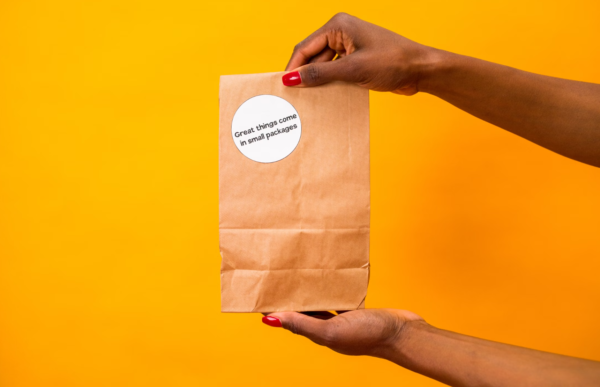
Once custom packaging reaches a China fulfillment center, treat it as inventory. Boxes and inserts may not be products customers buy, but running out of them can stop the same orders.
Give every component a simple identifier. For example:
-
MAILER-BLACK-M
-
INSERT-WELCOME-V3
-
BOX-SKINCARE-01
-
STICKER-LOGO-50MM
Then map those identifiers to product SKUs and pack-out rules. A bundle might require one box, two product sleeves, one instruction card, and no promotional insert for a wholesale customer. Write it down. Memory is not a warehouse system.
Set a Packaging Reorder Point
Use this basic formula: Reorder point = average daily packaging use × total replenishment lead time + safety stock
If a printed mailer takes 18 days to produce and reach the warehouse, the reorder point must cover more than 18 days of orders. Add safety stock for production delay, demand spikes, misprints, and damaged pieces.
Track product and packaging stock together. Having 2,000 products and 40 boxes is not healthy inventory.
Put These Terms in the Warehouse Agreement
-
Who legally owns the packaging?
-
How is incoming quantity counted?
-
Are cartons opened for visual inspection?
-
Is storage charged by piece, carton, pallet, or volume?
-
Is there a free-storage period?
-
How are damaged pieces recorded?
-
Can stock be transferred to another warehouse?
-
What happens to obsolete artwork?
-
How often will inventory reports be provided?
-
Which neutral backup package can be used with approval?
A capable China 3PL fulfillment service can store packaging, receive Shopify orders, and apply SKU-level packing rules. Confirm the exact service scope before transferring stock.
Packaging Design, Materials, and Shipping Standards to Check
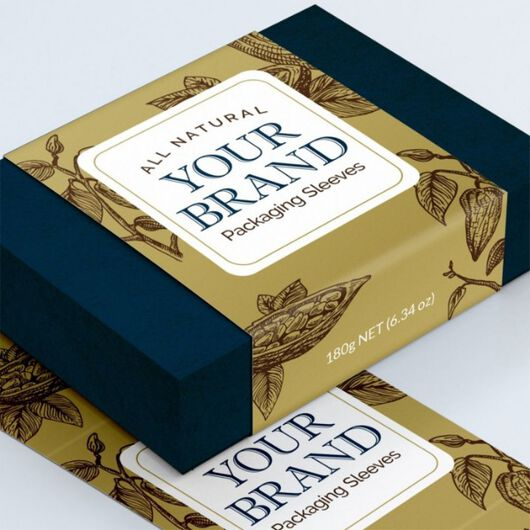
Packaging must look correct, protect the item, fit the fulfillment process, and support accurate shipping calculations. These needs sometimes pull in different directions.
Confirm the Production Files
Before production, confirm:
-
Final dieline version
-
External and internal dimensions
-
Bleed and safe areas
-
Vector logo files where required
-
Image resolution
-
Font outlines or supplied fonts
-
Pantone, CMYK, or another agreed color reference
-
Barcode size and quiet zone
-
Surface finish and coating
-
Adhesive or seal type
-
Position of shipping labels and warehouse labels
-
Version number and approval date
Do not name files final-final-new2.pdf. Use a simple version system such as BOX-SKINCARE-V3-APPROVED-2026-08-08.pdf. It is a small habit that prevents rather expensive mistakes.
Test Protection and Dimensional Weight
Pack the actual item and test the final parcel, not an empty box. Check movement, crushing, edge damage, seals, moisture exposure, and label adhesion. For fragile or valuable goods, discuss suitable drop, vibration, or compression tests with packaging and logistics professionals.
Keep the package compact. Shopify’s packaging and weight guidance notes that carriers commonly charge based on size and weight and explains that dimensional weight may apply when package volume is high relative to actual weight. Carrier formulas differ, so use the final external measurements to request a shipping quote.
This is where a $0.20 larger box can create a much bigger logistics bill. Always compare the packed parcel, not just packaging unit cost.
Be Careful With Environmental Claims
Kraft color does not prove that a package is recyclable, recycled, compostable, or environmentally preferable. Ask for material specifications and supporting documents before putting claims on the packaging.
The FTC Green Guides advise businesses not to make broad, unqualified claims such as “green” or “eco-friendly.” The guidance also explains when recyclable, recycled-content, compostable, and degradable claims need qualification and evidence.
Likewise, an FSC logo is not a decorative tree icon. FSC’s on-product labeling guidance explains the approved-label process. Confirm that the relevant certified organization and printer can legitimately apply the mark.
Rules differ by market and product category. Packaging compliance, product labeling, taxes, and importer responsibilities should be reviewed for each destination.
How to Quality-Check Custom Packaging Before It Goes Live
Good packaging QC starts before mass production. Waiting until 2,000 boxes reach the warehouse is a rough time to notice that the barcode does not scan.
Create a Golden Sample
The golden sample is the approved physical reference. Sign or label it clearly and keep one with the warehouse or inspector. Check:
-
Dimensions and product fit
-
Material thickness
-
Color and print registration
-
Surface finish
-
Text and required information
-
Barcode readability
-
Adhesive and seal strength
-
Opening and closing experience
-
Shipping-label placement
-
Final packed appearance
Create a Pack-Out SOP
Photograph each step. Show which side faces up, where the insert sits, where the sticker goes, and how protective material is arranged. Define whether substitutions are allowed.
For example:
-
Scan product SKU.
-
Select BOX-SKINCARE-01.
-
Place the product pouch in the paper insert.
-
Add INSERT-WELCOME-V3 above the product.
-
Close the box and apply the round seal at the center line.
-
Place the retail box in MAILER-WHITE-M.
-
Apply the carrier label without covering the logo.
-
Photograph the first five orders in the pilot batch.
Run a small live pilot. Send orders to different addresses and, if possible, different countries. Compare the packed weight, transit condition, tracking, delivery time, and customer photos. Then correct the SOP before every order uses the new packaging.
How FriendDropshipping Handles Custom Packaging + Order Fulfillment
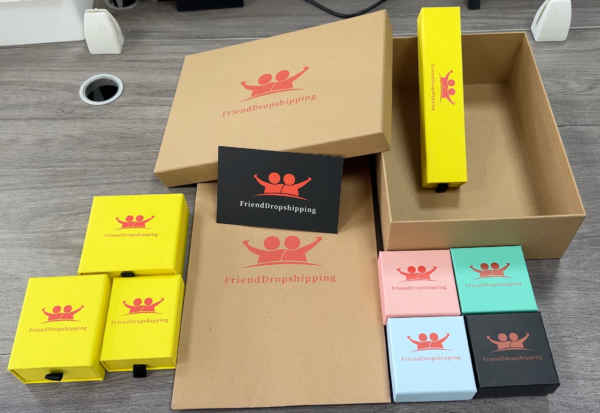
FriendDropshipping combines China-side product sourcing, custom packaging coordination, warehouse storage, and per-order fulfillment. This is designed for sellers who do not want to manage a product factory, packaging printer, inspector, and shipping company through separate conversations.
The working process can include:
-
Requirement review: Share the product, brand files, target countries, estimated order volume, packaging idea, and budget.
-
Supplier comparison: Compare appropriate product and packaging sources instead of forcing one factory to do everything.
-
Specification confirmation: Check dimensions, materials, printing, MOQ, setup charges, and lead time.
-
Mockup and sample: Review artwork and arrange physical samples where required.
-
Production coordination: Place the approved packaging order and follow its production schedule.
-
Warehouse receiving: Receive products and packaging, count stock, and check visible condition.
-
Packaging inventory setup: Assign packaging components to Shopify SKUs, variants, or bundles.
-
Order fulfillment: Pick the product, apply the approved packaging, dispatch the parcel, and return tracking to the store.
-
Replenishment support: Monitor product and packaging demand so the two inventories stay aligned.
Current MOQ, production time, and price depend on the packaging type, material, dimensions, print method, and order quantity. A printed card, label, poly mailer, and rigid box will not have the same production logic. Request a current quotation instead of relying on an old generic number.
You can review the available custom packaging and private-label options or start with product sourcing and fulfillment if the product supplier has not been finalized.
This model is most useful for a brand using Chinese suppliers and needing one contact to coordinate products, packaging, QC, storage, and worldwide fulfillment. A seller with only a few test orders may be better off starting with neutral packaging and one branded insert.
A 30-Day Custom Packaging Implementation Plan
Custom packaging can move quickly when the decisions are organized. The following plan is an operating example; production time varies by material and supplier.
Week 1: Define the Job and Compare Quotes
-
Measure the product and existing package.
-
Confirm target countries and shipping routes.
-
Estimate 60-90 days of realistic orders.
-
Decide which packaging layer needs branding.
-
Request quotes for at least two practical options.
-
Compare total landed and fulfillment cost, not just print price.
Ask for a simple route and a premium route. You may find that a $0.12 insert plus a good stock mailer solves the immediate problem.
Week 2: Complete Artwork and Samples
-
Obtain the factory dieline.
-
Prepare print-ready artwork.
-
Check spelling, contact details, barcodes, and claims.
-
Approve the digital proof.
-
Produce and inspect a physical sample.
-
Pack the real product and request shipping quotes using final dimensions.
Week 3: Order Packaging and Build Shopify Rules
-
Approve the production quantity.
-
Record packaging ownership.
-
Create packaging SKUs.
-
Map products, variants, and bundles.
-
Define substitutions and low-stock alerts.
-
Create a photo-based pack-out SOP.
Week 4: Receive Stock and Run Pilot Orders
-
Count incoming packaging.
-
Compare production with the golden sample.
-
Test barcode and label scanning.
-
Process several real or test orders.
-
Review packaging photos and carrier charges.
-
Correct the SOP before full rollout.
Do not launch the packaging the same day it reaches the warehouse. A short pilot gives you room to catch issues without affecting every customer.
Common Custom Packaging Mistakes Shopify Sellers Make
1. Ordering Full Custom Boxes Before Product Validation
Low unit cost is not a saving when half the boxes remain unused. Start with a component that can be consumed quickly or reused across products.
2. Confusing Retail Packaging With the Shipping Package
Confirm what the customer will see at the door. A retail box may still need a protective outer carton or mailer.
3. Comparing Only the Printed Unit Price
Include sampling, tooling, inbound freight, storage, application, added shipping cost, and waste.
4. Making the Package Too Large
Empty space looks odd, uses more protective material, and may increase dimensional weight.
5. Approving Only a Screen Mockup
Print color, material feel, fit, and adhesive performance require a physical sample.
6. Forgetting Who Owns Unused Packaging
Put ownership, transfer, disposal, and storage terms in writing before paying.
7. Using One Rule for Every Order
Single-item orders, bundles, gifts, wholesale orders, and different destinations may need different packaging.
8. Tracking Product Stock but Not Packaging Stock
A product cannot ship in its approved branded format when the insert or box is unavailable.
9. Making Unsupported Sustainability Claims
Ask for evidence and use precise, qualified wording.
10. Assuming Shopify Physically Controls the Pack-Out
Shopify sends order and package data. The fulfillment partner still needs packaging inventory and a warehouse SOP.
Conclusion: Build the Workflow Before Buying the Box
The best custom packaging for Shopify dropshipping is not necessarily the most elaborate package. It is the package that protects the product, supports the brand, fits the shipping budget, and can be applied correctly to every order.
Start with the smallest useful branding layer. For a new store, that may be neutral packaging with a sticker or insert. As sales become predictable, move toward printed mailers, product labels, cartons, or a complete branded set.
Before paying, confirm the physical sample, true cost, MOQ, storage terms, packaging ownership, Shopify SKU rules, QC process, and reorder point. Do that, and custom packaging becomes a repeatable part of fulfillment rather than a pile of boxes waiting for a plan.
Frequently Asked Questions
1. Can I get custom packaging dropshipping with no minimum?
Some digital printers can make one sample or a very short run. Stickers and inserts may also have very low minimums. However, the packaging normally needs to be produced and stored before a dropshipping order is packed. “No minimum” printing is therefore not the same as printing one package after every Shopify sale.
2. How do I choose a dropshipping custom packaging supplier?
Check print quality, samples, MOQ, setup fees, lead time, material specifications, QC, and ownership terms. Also confirm whether the company only prints packaging or can store it, connect it to Shopify SKUs, and apply it to individual orders.
3. Can an AliExpress supplier use my branded packaging?
Some can. Ask the individual seller about MOQ, storage, application, neutral outer packaging, photos, and unused stock. Direct customization works best when one reliable supplier handles most of the product and fulfillment process.
4. Is a private agent custom packaging service better than AliExpress?
It can be better for multiple suppliers, independent QC, bundles, packaging inventory, and detailed Shopify rules. AliExpress may be simpler during testing. Choose according to operational complexity rather than assuming one model is always better.
5. Can custom packaging for Shopify orders be applied automatically?
Orders can sync automatically, but physical packaging still requires warehouse rules. The fulfillment partner must map each product or variant to the correct box, mailer, insert, sticker, or bundle process.
6. Where is custom packaging stored in dropshipping?
It may be stored by the product supplier, a private agent, or a fulfillment/3PL warehouse. Confirm storage fees, stock reporting, damage handling, ownership, and whether packaging can be transferred if the relationship ends.
7. Are custom boxes better than custom mailers?
Boxes offer better structure and protection. Mailers are usually lighter, cheaper to store, and more economical for soft or durable items. The right choice depends on the product, presentation, shipping route, and dimensional weight.
8. Are packaging inserts worth using for dropshipping?
Often, yes. Inserts are light, relatively inexpensive, and easy to update. They can provide instructions, tell the brand story, include a QR code, or encourage repeat purchase without changing the whole shipping package.
9. Does custom packaging increase shipping costs?
It can. Added weight, larger external dimensions, or a change from mailer to box may increase the carrier charge. Measure and weigh the final packed parcel before approving mass production.
10. What files does a branded packaging dropshipping supplier need?
Suppliers commonly request a dieline, vector logo, print-ready artwork, colors, fonts or outlined text, images, barcode details, finishes, and product information. Requirements vary, so use the printer’s current template.
11. How do I avoid running out of custom packaging?
Track packaging as separate inventory. Set a reorder point based on average daily use, production time, inbound delivery time, and safety stock. Keep an approved neutral backup package for emergencies if brand and product requirements allow it.
Table of Content

I’m Cassiel. I’ll help you scale your Shopify business with reliable fulfillment.
Join to newsletter.
Follow us and get more knowledge.