Shopify fulfillment usually costs anywhere from a few dollars to more than $20 per order. That answer is correct, but not terribly helpful. It is like asking, “How much does dinner cost?” A bowl of noodles and a steak dinner both count as dinner.
Your real Shopify fulfillment cost depends on what you sell, where the product is stored, where the customer lives, how quickly you promise delivery, and which services happen before the parcel leaves the warehouse. A light phone case shipped from China is one calculation. A five-kilogram kitchen appliance stored in California is another planet.
For most Shopify stores, the fulfillment bill may include product receiving, storage, inventory handling, picking, packing, packaging materials, shipping, software, custom inserts, returns, and account minimums. In dropshipping, several of these costs may be bundled into one product-plus-shipping quote. Convenient, yes. Transparent, sometimes less so.
Quick answer: Shopify itself does not set one universal fulfillment price. Merchants can self-fulfill, use a third-party logistics company, connect a dropshipping supplier, or combine several methods. For a small, lightweight ecommerce product, a sensible planning range is often about $6-$15 per fulfilled order before product cost. Heavy products, express delivery, remote addresses, returns, and custom work can push the cost much higher.
In this guide, we will pull the bill apart piece by piece. Then we will calculate a specific Shopify product: a silicone dog lick mat sold by a store processing 30 orders per day, or roughly 900 orders per month. We will compare CJdropshipping, HyperSKU, a US 3PL, and a private dropshipping agent.
One note before we start: international parcel rates change with destination, weight, fuel, season, product type, and account volume. The example prices below are planning figures, not live quotations from those companies. Use their current calculators or request a written quote before setting your retail price. That small sentence can save a fairly large headache.
What Is Shopify Fulfillment?
Order fulfillment is everything that happens after a customer places an order and before the parcel reaches that customer. At a minimum, someone has to locate the item, pack it, attach a shipping label, hand it to a carrier, and return tracking information to Shopify.
The Shopify Help Center lists three broad approaches: merchants can fulfill their own orders, use third-party fulfillment services, or combine fulfillment methods. Shopify can connect the order data, but the physical work is completed by you, a warehouse, a dropshipping supplier, or another fulfillment partner.
That distinction matters because “Shopify fulfillment cost” is not normally a single fee charged by Shopify. It is the operating cost of fulfilling Shopify orders.
Four Common Shopify Fulfillment Models
|
Fulfillment Model
|
Where Inventory Sits
|
Who Packs the Order?
|
Typical Fit
|
|
Self-fulfillment
|
Your home, office, or warehouse
|
You or your staff
|
New stores, low volume, unusual products
|
|
Domestic 3PL
|
A warehouse near the customer
|
3PL warehouse
|
Proven products needing fast local delivery
|
|
Dropshipping platform
|
Supplier or platform network
|
Supplier or platform warehouse
|
Testing products without bulk inventory
|
|
Private dropshipping agent
|
Factory, agent, or agent warehouse
|
Agent’s fulfillment team
|
Stores wanting sourcing, negotiation, QC, branding, and fulfillment together
|
There is no automatic winner. Self-fulfillment may look cheap until the founder spends four hours every evening printing labels. A US warehouse may cost more per parcel but deliver in three days. China direct shipping may lower inventory risk, yet take longer. The useful question is not “Which one is cheapest?” It is “Which one gives my store the lowest reliable cost for the customer experience I promise?”
How Much Does Shopify Fulfillment Cost Per Order?
A practical 2026 planning range for small ecommerce parcels looks like this:
|
Cost Component
|
Common Planning Range
|
How It Is Usually Charged
|
|
Account setup or onboarding
|
$0-$500+
|
One time
|
|
Inventory receiving
|
Free to $25-$50 per hour, or per carton/pallet
|
Per inbound shipment
|
|
Storage
|
$5-$15 per bin or roughly $20-$60+ per pallet monthly
|
Monthly
|
|
Pick and pack
|
$1.50-$4.50 for the first item
|
Per order
|
|
Additional item pick
|
$0.20-$1.00
|
Per extra item
|
|
Standard packaging
|
Free to $1.00
|
Per order
|
|
Custom packaging application
|
$0.20-$2.00+
|
Per order or task
|
|
Domestic small-parcel shipping
|
Roughly $4-$12+
|
Per parcel
|
|
China-to-US tracked small parcel
|
Roughly $5-$12+
|
Per parcel
|
|
Return processing
|
$3-$10+ before return postage
|
Per return
|
|
Kitting or assembly
|
$0.20-$3.00+, sometimes hourly
|
Per unit or project
|
|
Monthly minimum
|
$0-$1,000+
|
Monthly shortfall or commitment
|
These are broad market-planning ranges, not a rate card. Shopify notes that fulfillment and 3PL costs can include receiving, storage, packing, shipping, and software. Its fulfillment cost guide also points out that excess inventory raises storage expense and that product size and weight affect the bill.
The huge range exists for a reason. A warehouse may include packaging and the first pick in an all-in fulfillment rate. Another provider may show a low pick fee, then add receiving, tape, labels, account management, storage, and peak-season charges. Same parcel, very different-looking invoice.
Shopify Fulfillment Cost Formula
Use this formula for a stocked 3PL model:
Monthly Shopify fulfillment cost = Receiving + storage + pick and pack + packaging + shipping + kitting + software + account minimums + returns + adjustments Fulfillment cost per order = Monthly Shopify fulfillment cost / successfully fulfilled orders
For dropshipping from China, the working formula is often shorter:
Dropshipping landed fulfillment cost per order = Product cost + agent/platform handling + packaging + international shipping + duties/taxes paid by seller + expected loss/return reserve
Do not divide by orders placed if some were canceled before fulfillment. Use orders that were actually shipped. Also separate fulfillment cost from payment processing, advertising, Shopify subscription fees, and product returns caused by marketing promises. They all matter to profit, but mixing them creates a bowl of accounting soup.
A More Honest Cost-per-Order Formula
For internal decision-making, add the quiet costs:
True fulfillment cost per delivered order = (All fulfillment invoices + reships + lost parcels + return handling packaging waste + software + internal operations labor) / delivered orders
The word delivered matters. A $6 shipment that fails and requires a $6 reship is not a $6 shipment anymore.
What Shopify Fulfillment Fees Should You Expect?
Inventory Receiving Fees
Receiving covers unloading, counting, checking, labeling, and placing inventory into storage. Some warehouses charge per pallet or carton. Others charge hourly. Complicated mixed cartons usually cost more because warehouse staff must sort them.
Ask whether the receiving fee includes:
-
Carton count
-
Unit count
-
SKU verification
-
Damage inspection
-
Barcode labeling
-
Lot or expiry capture
-
Photos
-
Pallet disposal
-
Discrepancy reporting
“Free receiving” may mean the warehouse accepts sealed cartons without counting every unit. That can be perfectly fine for a low-risk product. It is not the same service as a detailed inbound inspection.
Shopify Warehouse Storage Fees
Storage may be charged per bin, shelf, pallet, cubic foot, or cubic meter. Small products are usually cheaper to store. Slow inventory is not.
Suppose one pallet costs $45 per month and holds 1,200 units. If all units sell in one month, storage contributes only $0.0375 per unit. If the same pallet takes six months to sell, the accumulated storage becomes $0.225 per unit, before long-term storage surcharges.
That amount still looks small. Now multiply it across 30 sleepy SKUs. Dead stock is very polite while it eats cash; it barely makes a sound.
Pick and Pack Fees for Shopify Orders
The first pick covers locating the product and starting the order. Extra units or SKUs may add extra-pick fees. A one-SKU order is usually cheaper than a six-item bundle stored in six bins.
Ask these questions:
-
Is the first item included?
-
Is an extra fee charged per unit or per unique SKU?
-
Are mailer or carton costs included?
-
Does the fee change for orders from Amazon, TikTok Shop, or wholesale channels?
-
Are same-day orders more expensive?
-
Is there a peak-season surcharge?
Packaging and Custom Branding Costs
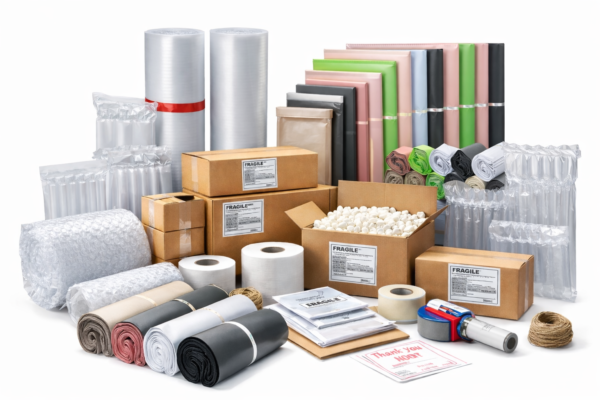
Plain mailers may be included. Branded boxes, tissue paper, instruction cards, stickers, coupons, and protective inserts usually are not.
Custom packaging has three cost layers:
-
Manufacturing the packaging
-
Shipping and storing it
-
Applying it to each order
A custom box costing $0.40 can add more than $0.40 to fulfillment after inbound freight, storage, and the warehouse task fee. Still, branded packaging can be worthwhile when it raises perceived value or repeat purchase. FriendDropshipping’s Customization and Private Pack service explains how labels, cards, boxes, and branded shipping materials can fit into the fulfillment workflow.
Shipping Cost: Usually the Biggest Number
Shipping often takes the largest bite. It depends on origin, destination, service level, parcel type, actual weight, dimensional weight, remote-area rules, and duties.
Carriers normally charge using the greater of actual weight and dimensional weight under the route’s rules.
Dimensional weight (kg) = Length x Width x Height in cm / route divisor
The divisor may be 5,000, 6,000, 8,000, or another number. Always use the divisor in the actual quote. Shaving two centimeters from a box can sometimes save more than weeks of arguing over the product price.
Returns, Reships, and Failed Delivery Fees
Return postage is only the beginning. You may also pay for receiving the return, inspecting it, photographing it, repacking it, restocking it, disposing of it, or shipping a replacement.
Track these separately:
-
Carrier loss rate
-
Delivery failure rate
-
Damage rate
-
Wrong-item rate
-
Customer return rate
-
Reship cost
-
Recoverable inventory value
A cheap provider with weak address checking or poor SKU control can quietly become the expensive provider.
Shopify Fulfillment Cost Example: A Silicone Dog Lick Mat at 900 Orders per Month
Now for the useful part. Let us calculate one product all the way through.
Product and Store Assumptions
Our example Shopify store sells a silicone dog lick mat for $19.99.
|
Input
|
Assumption
|
|
Daily order volume
|
30 orders
|
|
Monthly fulfilled orders
|
900 orders
|
|
Units per order
|
1
|
|
Product selling price
|
$19.99
|
|
Product actual weight
|
0.32 kg
|
|
Packed dimensions
|
30 x 30 x 3 cm
|
|
Destination
|
Contiguous United States
|
|
Delivery promise
|
Tracked standard shipping
|
|
Product type
|
Ordinary goods, no battery, liquid, or magnet
|
|
Return/reship reserve
|
3% of fulfillment spend in the final model
|
Using a dimensional divisor of 6,000:
-
30 x 30 x 3 / 6,000 = 0.45 kg dimensional weight
The parcel weighs 0.32 kg physically but may be billed at 0.45 kg. The mat is light and floppy, yet its flat package occupies space. This is exactly the kind of product where packaging design matters.
If the mat can be safely folded into a 23 x 18 x 5 cm package:
-
23 x 18 x 5 / 6,000 = 0.345 kg dimensional weight
Depending on the route’s weight increments, that change may move the parcel into a lower band. We have not even negotiated with the factory yet, and packaging may already save money.
CJdropshipping Fulfillment Cost Example
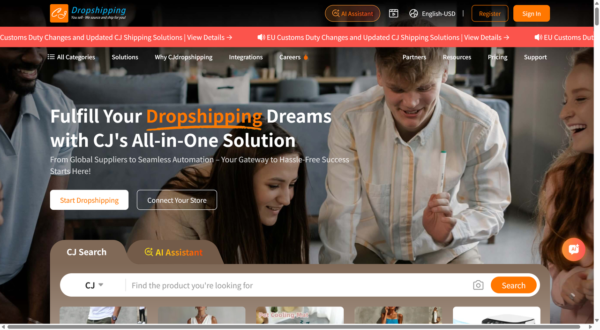
CJdropshipping combines product sourcing, order processing, warehouse services, and shipping options. Its official service-fee page shows that fees differ by warehouse and task. For example, some China-warehouse inbound and inspection services are listed as free, while labels and overseas warehouse operations can have separate charges. Current shipping should be checked through its calculator or agent.
For our lick mat, assume the following illustrative checkout-style quote:
|
CJdropshipping Cost Item
|
Example Per Order
|
|
Product price shown in platform
|
$3.10
|
|
Basic order processing
|
Included in quoted workflow
|
|
Standard packaging adjustment
|
$0.20
|
|
Tracked China-to-US shipping option
|
$6.70
|
|
Estimated product + fulfillment total
|
$10.00
|
At 900 orders: $10.00 x 900 = $9,000 per month
This model is easy to understand because the merchant pays the platform for the product and shipping. The trade-off is that the catalog product price may not show the factory’s entire cost structure or available negotiation room.
Do not use the numbers above as CJ’s live price. Search the exact SKU, destination ZIP code, quantity, packed dimensions, and shipping method inside the current system.
HyperSKU Fulfillment Cost Example
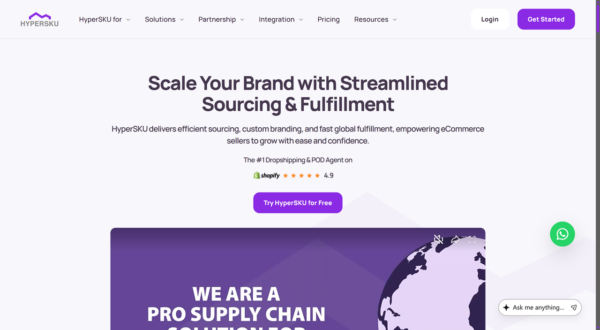
HyperSKU’s listing in the Shopify App Store says the app is free to install and the merchant pays product and shipping costs. It also advertises sourcing, fulfillment, private labeling, custom packaging, and a shipping calculator. In other words, the subscription can be $0 while actual order fulfillment certainly is not $0. Fair enough.
Assume HyperSKU returns this illustrative sourced quote for the same product and service promise:
|
HyperSKU Cost Item
|
Example Per Order
|
|
Sourced product
|
$2.90
|
|
Fulfillment handling
|
Included in order quote
|
|
Standard packaging adjustment
|
$0.20
|
|
Tracked China-to-US shipping
|
$6.40
|
|
Estimated product + fulfillment total
|
$9.50
|
At 900 orders: $9.50 x 900 = $8,550 per month
That is $450 lower than the CJ example for the month. But the comparison is valid only if product thickness, silicone grade, package size, tracking, delivery performance, and after-sales terms are genuinely equivalent. A cheaper mat that curls at the edges is a different product, even if the listing photo is twinsies.
Private Dropshipping Agent Fulfillment Cost Example
Now assume a private agent contacts several factories for the same lick mat instead of accepting one catalog listing. The agent confirms material, dimensions, packaging, and actual factory stock. After comparison and negotiation, the working numbers are:
|
Private-Agent Cost Item
|
Example Per Order
|
|
Factory-sourced product
|
$2.45
|
|
Pick, pack, QC, and account handling
|
$0.45
|
|
Compact mailer and label
|
$0.18
|
|
Negotiated tracked shipping route
|
$5.90
|
|
Estimated product + fulfillment subtotal
|
$8.98
|
At 900 orders: $8.98 x 900 = $8,082 per month
Add a 3% reserve for losses, reships, and fulfillment exceptions:
-
$8,082 x 3% = $242.46 reserve
-
($8,082 + $242.46) / 900 = $9.25 adjusted cost per order
Compared with the examples:
|
Model
|
Base Cost per Order
|
Monthly Cost at 900 Orders
|
Difference vs Private Agent Base
|
|
CJdropshipping example
|
$10.00
|
$9,000
|
$918 more
|
|
HyperSKU example
|
$9.50
|
$8,550
|
$468 more
|
|
Private-agent example
|
$8.98
|
$8,082
|
Baseline
|
That does not mean a private agent will always be cheaper by exactly this amount. Sometimes a large platform has a strong price on a popular SKU or route. Sometimes the private agent finds a better factory but the product requires custom inspection or packaging that adds cost. The lesson is to request comparable quotes and open the bundle.
China Direct Fulfillment vs a US 3PL for the Same Shopify Product
What if the seller buys the lick mat in bulk and stores it in a US warehouse?
Assume a larger factory order lowers the product price to $2.10. Bulk freight and import costs add an estimated $0.65 per unit. The US 3PL then charges receiving/storage allocation, pick and pack, packaging, and domestic shipping.
|
US 3PL Cost Item
|
Example Per Order
|
|
Bulk factory product cost
|
$2.10
|
|
Freight, duty, and import allocation
|
$0.65
|
|
Receiving and storage allocation
|
$0.18
|
|
Pick and pack
|
$2.75
|
|
Mailer or packaging
|
$0.25
|
|
US domestic shipping
|
$5.85
|
|
Estimated product + fulfillment total
|
$11.78
|
The US 3PL is more expensive in this example, but it may deliver in two to five days instead of cross-border timing. That can improve conversion, reduce “Where is my order?” tickets, and support repeat purchase. The extra $2.80 may be a cost, or it may be a customer-acquisition tool wearing a shipping label.
Shopify Fulfillment Cost and Gross Contribution
At a $19.99 selling price:
|
Model
|
Product + Fulfillment
|
Gross Contribution Before Ads, Payment Fees, and Overhead
|
|
CJ example
|
$10.00
|
$9.99
|
|
HyperSKU example
|
$9.50
|
$10.49
|
|
Private agent base
|
$8.98
|
$11.01
|
|
US 3PL example
|
$11.78
|
$8.21
|
This table is not net profit. Advertising, Shopify subscription, payment processing, refunds, taxes, creative work, and staff still need feeding. But it shows why a $0.50 fulfillment difference matters: at 10,000 annual orders, it is $5,000.
CJdropshipping vs CJdropshipping vs HyperSKU vs Private Agent: Which Costs Less?
|
Factor
|
CJdropshipping
|
HyperSKU
|
Private Dropshipping Agent
|
|
App or platform access
|
Broad self-service platform
|
Free-to-install Shopify app; order charges apply
|
Often quote-based, sometimes no fixed monthly fee
|
|
Product discovery
|
Large catalog
|
Sourcing requests and product options
|
Agent searches and compares factories
|
|
Price structure
|
Product plus selected shipping and task fees
|
Product plus shipping, with customization as quoted
|
Product, handling, packaging, and shipping quoted directly
|
|
Inventory display
|
Platform inventory data
|
Platform/agent inventory data
|
Manual factory confirmation plus warehouse records
|
|
Communication
|
Platform support and assigned support depending on account
|
Agent-supported platform model
|
Direct one-to-one agent relationship
|
|
Best for
|
Fast catalog testing and broad automation
|
Stores wanting sourcing plus app workflow
|
Sellers wanting factory negotiation, custom handling, and closer communication
|
|
Main watch-out
|
Compare catalog price with actual product specification
|
Request full cost and route details
|
Agent quality and process vary; verify capability
|
Big platforms are efficient because they standardize thousands of users and products. That is their strength. It is also why a seller can feel like order number 84721 on a busy day.
A private agent works differently. The relationship is narrower and more personal. You can ask the agent to compare three factories, photograph the actual batch, check whether the factory can ship 400 units this week, or find out why yesterday’s replenishment did not leave. That level of attention can feel more like a VIP supply-chain desk than a marketplace support ticket.
Why Catalog Inventory Is Not Always Real Factory Inventory
Large sourcing platforms need searchable product catalogs. The inventory number shown in a system may come from platform warehouse stock, supplier feeds, estimated availability, or periodically synchronized data. It is useful, but it may not always equal the factory’s available-to-promise inventory at this exact minute.
Picture a screen showing 2,000 units. Sounds reassuring. Yet 1,500 may be reserved for another buyer, 300 may still be in production, and only 200 may be ready to leave. The number is not necessarily fake; it may simply describe a different inventory state.
A private dropshipping agent can contact the factory and ask more specific questions:
-
How many finished units are physically ready now?
-
How many are already reserved?
-
Which color or variant is available?
-
What is the current daily production capacity?
-
When will the next batch finish?
-
Can stock be held for the store’s forecast?
-
Did the factory change material, packaging, or specifications?
This manual confirmation is less glamorous than a big dashboard. It is often more useful before a promotion goes live.
How FriendDropshipping Provides Private Shopify Fulfillment Support
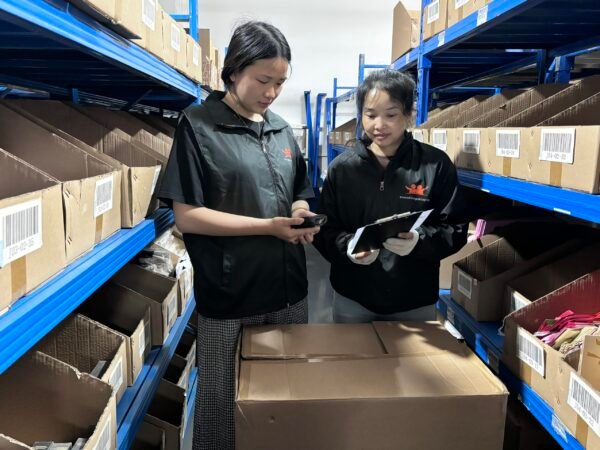
FriendDropshipping is designed for sellers who want the automation of Shopify fulfillment but do not want the relationship to stop at a platform screen.
Its Sourcing and Fulfillment service combines product sourcing, factory communication, quotations, Shopify order synchronization, inventory management, and fulfillment. The website states that sellers receive one-to-one support and that sourcing has no monthly subscription or fixed service fee; merchants should still request a current product-and-shipping quotation for their exact project.
More Factory Comparisons and Price Negotiation
A catalog gives you the product already loaded into that catalog. A private agent can look outside it. FriendDropshipping can compare factories based on the requested material, quality, packaging, order volume, and destination. When order volume rises, the agent can return to the factory and negotiate again instead of leaving the original catalog price untouched forever.
The goal is not simply “find the cheapest item.” It is to find the best workable cost for the correct product. A lick mat made with thinner silicone is cheaper, sure. It may also create one-star reviews when it folds like a wet napkin.
Direct Factory Stock Confirmation
FriendDropshipping’s personal agents can communicate with factories to confirm finished stock, production timing, and replenishment. This helps the seller distinguish dashboard inventory from units that can actually be shipped.
For a store preparing a TikTok campaign or influencer launch, that distinction is a big deal. Advertising 500 orders into a 120-unit reality is not a fun weekend.
One-on-One, VIP-Style Service
Private-agent fulfillment is personal by design. One agent learns the store’s products, preferred packaging, target countries, shipping priorities, and common exceptions. The seller does not have to explain the entire business from zero in every support conversation.
That VIP-style support may include:
-
Factory and product comparison
-
One-to-one quotation discussion
-
Real product photos and sample coordination
-
Quality checks before shipping
-
Custom labels, inserts, boxes, and mailers
-
Factory stock and lead-time follow-up
-
Shipping-route comparison
-
Shopify order synchronization
-
Tracking updates
-
Exception, reship, and after-sales communication
FriendDropshipping’s Quality Control service can check physical condition, quantity, SKU, and packaging before dispatch. Its 3PL Fulfillment service supports sellers that already own inventory, while the private-agent model can also coordinate sourcing before stock reaches the warehouse.
This is the main difference from a giant platform: FriendDropshipping is not trying to be a vending machine with a million buttons. It is trying to be the China-side operations person who knows your store.
When Should You Contact a Private Dropshipping Agent?
A private agent becomes especially useful when:
-
You have a product producing steady daily orders
-
Platform pricing is reducing your margin
-
The same SKU appears at several unexplained prices
-
You need accurate factory stock before scaling ads
-
You sell bundles or use custom packaging
-
You need products from several factories in one parcel
-
You want an agent to negotiate as order volume grows
-
Quality problems are creating refunds
-
You need someone to follow up production and replenishment
-
Standard support replies are no longer enough
Stores with only one or two occasional orders can still request help, but the financial savings become clearer at volume. At 900 orders per month, saving $0.40 per order creates $360. Saving $1 creates $900. Small numbers start lifting weights once they repeat every day.
Sellers can contact FriendDropshipping with the product link, destination, daily order count, and packaging request to receive a comparable quote.
Hidden Shopify Fulfillment Costs That Quotes Often Miss
Monthly Minimums and Account Fees
Some 3PLs require a minimum monthly spend. If the warehouse minimum is $1,000 and your activity generates $700, you may still owe the $300 difference. Ask whether minimums apply to storage, pick and pack, postage, or the total invoice.
Peak-Season Surcharges
Carrier and warehouse fees may rise during Q4 or major sales events. Labor cutoffs can also change. Build a peak scenario before Black Friday, not during it.
Address Corrections and Remote Areas
Bad addresses, islands, rural ZIP codes, and remote territories may trigger surcharges or failed delivery. Use address validation and ask how remote-area charges are shown before shipment.
Packaging Storage and Obsolete Materials
Custom boxes and inserts occupy space. If you change the logo, legal text, or product size, old packaging can become useless inventory. Print in sensible batches.
SKU Setup, Barcodes, and Relabeling
New-SKU onboarding, barcode application, FNSKU labels, cover labels, and relabeling may be separate tasks. CJ’s public service-fee page, for example, lists different label charges by warehouse. A three-cent task and a fifty-five-cent task are both called “labeling” until you read the column.
Returns and Disposal
Ask whether returns are inspected, photographed, restocked, quarantined, or destroyed. Also ask who decides. A returned personal-care or supplement product may not be resellable even when the bottle looks untouched.
Currency Conversion and Payment Fees
Cross-border platforms and agents may quote in USD while costs originate in RMB. Payment method, exchange rate, and transfer fee can change the final amount. Track the amount that left your bank, not only the quotation subtotal.
How to Reduce Shopify Fulfillment Costs Without Making Service Worse
1. Reduce Packed Dimensions
Measure the shipping parcel, not the naked product. Fold, nest, compress, or redesign packaging where safe. Recalculate dimensional weight after each change.
2. Compare Identical Specifications
Give every provider the same product material, size, weight, packaging, destination mix, and service target. Otherwise, the lowest quote may simply be quoting less product.
3. Negotiate After Volume Becomes Predictable
Bring real order data: daily average, destination split, parcel weight, and forecast. A supplier can negotiate more confidently when volume is not just “soon, very big.”
4. Use More Than One Shipping Route
One route may be best for the US, another for the UK, and another for heavy parcels. Maintain a primary and backup route for important markets.
5. Keep Inventory Moving
Order enough to prevent stockouts without filling the warehouse with hope. Use sell-through and lead time to set reorder points.
6. Bundle Carefully
A second small unit may add little shipping cost and improve average order value. But a second SKU can also add pick fees or customs complexity. Calculate the real bundle.
7. Fix Quality Problems Upstream
Inspection costs money. Reships, refunds, chargebacks, bad reviews, and lost repeat customers cost more. FriendDropshipping discusses the broader workflow in its guide to dropshipping from China with better fulfillment.
8. Audit the Invoice Every Month
Compare quoted and billed weight, shipping service, remote charges, storage units, extra picks, returns, and adjustments. Fulfillment invoices are not bedtime reading, but they are often profitable reading.
Shopify Fulfillment Quote Checklist
Send this information to CJdropshipping, HyperSKU, a 3PL, or a private agent:
|
Information
|
Example
|
|
Product link and specification
|
Silicone dog lick mat, food-grade silicone, 30 cm
|
|
Actual unit weight
|
0.32 kg
|
|
Packed dimensions
|
30 x 30 x 3 cm; ask for compact option
|
|
Daily/monthly volume
|
30 daily / 900 monthly
|
|
Destination split
|
80% US, 15% UK, 5% Canada
|
|
Average units per order
|
1.12
|
|
Product restrictions
|
Ordinary goods, no battery or liquid
|
|
Packaging
|
Plain mailer first; quote branded insert separately
|
|
Delivery target
|
Tracked standard, target 7-12 business days
|
|
Shopify needs
|
Auto order sync and tracking return
|
|
QC requirements
|
Material, color, size, surface defects, SKU
|
|
Inventory requirement
|
Current finished stock and replenishment lead time
|
|
Quote format
|
Product, handling, packaging, shipping, surcharges separated
|
Ask the provider to state the quote date and validity period. Shipping prices are milk, not canned beans. They expire.
Final Answer: How Much Should You Budget for Shopify Fulfillment?
For a light, simple Shopify product, budget roughly $6-$15 per order for fulfillment and shipping before product cost, then replace that broad range with an SKU-level quote. Domestic 3PL delivery may cost more but arrive faster. China direct fulfillment can reduce inventory commitment and support product testing. A platform such as CJdropshipping or HyperSKU offers convenience and automation. A private agent can add factory comparison, price negotiation, direct stock confirmation, quality checks, and more personal support.
For the 900-order lick-mat example, the estimated product-plus-fulfillment total ranged from $8.98 through a private-agent model to $11.78 through a stocked US 3PL. Those figures are not universal prices. They show the calculation method.
The cheapest label is not always the cheapest delivered order. Calculate receiving, storage, handling, packaging, shipping, exceptions, and returns. Check whether the product is truly the same. Confirm whether inventory is physically ready. Then look at delivery performance and support when something goes wrong.
That is the real Shopify fulfillment cost. It is not one number on a calculator. It is the cost of keeping the promise your checkout page just made.
FAQs About Shopify Fulfillment Costs
1. How much does Shopify fulfillment cost per order?
For a small ecommerce parcel, a broad planning range is about $6-$15 per order before product cost. The actual amount depends on storage location, pick and pack, packaging, parcel weight, destination, shipping speed, and returns. Heavy or express parcels can cost much more.
2. Does Shopify charge a fulfillment fee?
Shopify does not apply one universal physical fulfillment fee to every order. You may pay Shopify for your plan and related services, while fulfillment charges come from the warehouse, fulfillment network partner, dropshipping app, supplier, or carrier you use.
3. What is included in a Shopify fulfillment fee?
It may include receiving, storage, picking, packing, standard packaging, and shipping. Some providers bundle these costs, while others itemize them. Returns, custom inserts, kitting, labeling, account minimums, and peak fees may be extra.
4. How do I calculate Shopify fulfillment cost per order?
Add monthly receiving, storage, pick and pack, packaging, shipping, software, returns, minimums, and adjustments. Divide the result by successfully fulfilled orders. For a better view, divide total fulfillment and reship costs by delivered orders.
5. Is Shopify fulfillment cheaper than Amazon FBA?
It depends on the product, sales channel, storage time, shipping zone, and provider. Amazon FBA can be efficient for Amazon orders, while a Shopify-focused 3PL or private agent may offer more control over branding, multi-channel rules, sourcing, and international fulfillment. Compare an actual SKU under both models.
6. How much do 3PL companies charge for Shopify orders?
Many 3PLs charge receiving and storage plus roughly $1.50-$4.50 for the first pick, packaging, and shipping. Exact pricing varies greatly. Monthly minimums, return fees, extra-item picks, and special projects can change the total.
7. Is CJdropshipping free to use for Shopify fulfillment?
CJdropshipping does not necessarily require a standard monthly subscription for basic use, but merchants still pay product and shipping costs, and some warehouse or value-added tasks have fees. Check the current service-fee page and shipping calculator for the exact SKU and destination.
8. Is HyperSKU free for Shopify stores?
The Shopify App Store lists HyperSKU as free to install. Merchants pay the product and shipping costs of fulfilled orders, and additional charges may apply. “Free app” means no app installation charge, not free products or delivery.
9. How much does YunExpress shipping cost?
YunExpress pricing depends on origin, destination, weight, dimensions, product type, delivery service, and account volume. Use its current calculator or request a quote. For planning only, a sub-0.5 kg China-to-US ecommerce parcel may fall in a broad $5-$12 range across standard routes and providers.
10. Is 4PX cheaper than YunExpress?
Sometimes, but not across every parcel and country. Compare both using the same dimensions, billable weight, destination ZIP codes, product type, tracking, duties, and claim terms. The cheaper label can be more expensive if delivery failure is higher.
11. Does product weight or package size matter more?
Both matter. Carriers may charge the greater of actual weight and dimensional weight. A light but bulky product can therefore cost more than a compact, heavier product. Ask for the route’s dimensional divisor and weight increments.
12. When should a Shopify store move to a 3PL?
A 3PL becomes useful when self-fulfillment consumes too much time, order volume is predictable, fast domestic delivery matters, or the store needs reliable storage and multi-channel operations. Compare the 3PL cost with labor, rent, errors, and time under self-fulfillment.
13. Is a private dropshipping agent cheaper than a large platform?
It can be, especially when the store has stable volume and the agent can compare factories or negotiate product and shipping rates. It is not guaranteed. Compare identical product quality, packaging, route, delivery performance, and after-sales terms.
14. Can a private agent confirm real factory inventory?
Yes, a capable agent can contact the factory to confirm finished stock, reserved quantity, production capacity, and replenishment timing. This can provide more context than a catalog inventory number that may update on a delay or represent several stock states.
15. How can FriendDropshipping lower Shopify fulfillment costs?
FriendDropshipping can compare factories, negotiate based on order volume, confirm factory stock, coordinate quality checks, manage custom packaging, compare shipping routes, and sync Shopify fulfillment. Sellers receive one-to-one support and can request a quote based on the exact product, destination, and daily order volume.
Table of Content

I’m Cassiel. I’ll help you scale your Shopify business with reliable fulfillment.
Join to newsletter.
Follow us and get more knowledge.