
A 30 ml glass serum leaves the factory looking perfect. Two weeks later, a customer opens a damp parcel. The dropper has loosened, the label is stained, and the branded carton now smells like the product it was supposed to protect.
The warehouse shipped on time. It still failed.

Beauty and cosmetics fulfillment from China is not just moving boxes after checkout. It must protect the formula, the exact shade or variant, the batch record, the approved presentation, and the shipping route. One weak handoff can turn a healthy product into refunds, bad reviews, or a compliance problem.
The right setup also varies by SKU. A dry makeup brush and an alcohol-based fragrance do not belong in the same shipping plan. Let’s build the workflow from that reality.
What Beauty and Cosmetics Fulfillment From China Actually Includes
Beauty fulfillment is the operational cycle of receiving, storing, picking, packing, shipping, tracking, and handling returns for cosmetics and personal-care orders. When products originate in China, it may also involve domestic supplier collection, quality checks, packaging coordination, export preparation, and cross-border delivery.
That sounds like one service. It is really six jobs.
|
Job
|
Typical owner
|
Evidence or output
|
|
Product development and manufacture
|
Brand and manufacturer
|
Approved formula, specification, batch records, test and release evidence
|
|
Sourcing and purchasing
|
Brand, buyer, or sourcing agent
|
Supplier identity, quote, purchase order, sample, change terms
|
|
Market compliance
|
Brand, importer, or legally defined Responsible Person
|
Classification, safety file, approved claims and label, required notification or listing
|
|
Warehousing and fulfillment
|
China 3PL or fulfillment partner
|
Receiving record, lot/location data, inventory, pick-pack record, shipment handoff
|
|
International transport and customs
|
Shipper, carrier, broker, importer
|
Classification, accepted service, commercial data, customs entry, tracking
|
|
Customer support and returns
|
Brand plus agreed service partners
|
Complaint record, refund, quarantine, claim, investigation, disposition
|
Overlap is fine. A China fulfillment company may source products and operate a warehouse. A manufacturer may apply retail labels. A broker may advise on an HS code. What matters is that every task has a named owner and nothing falls into the cracks.

Marketplace Seller, Factory, Agent, or 3PL?
A marketplace seller offers a listing. A factory makes a formula, component, container, or finished product. A sourcing agent compares and coordinates suppliers. A 3PL receives inventory and fulfills orders. Some businesses combine several roles, but the evidence for one role does not prove another.
A glossy factory video does not prove accurate parcel fulfillment. A Shopify integration does not prove formula safety. A warehouse tour does not prove ownership of the manufacturer.
Before fulfillment begins, verify the China supplier behind the beauty product. Match the business license, invoice issuer, payment beneficiary, manufacturing role, specification, and sample. If the formula or packaging can change without written approval, the warehouse will faithfully ship a moving target.
Choose the Fulfillment Model Before the Provider
“Fulfillment from China” can describe three different inventory models. Choose per SKU, not by slogan.
China-Direct Per-Order Fulfillment
Inventory stays in China and individual customer orders travel across borders. This can suit product tests, long-tail colors, low-volume accessories, and brands that want to avoid a large overseas stock commitment.
The trade-offs are longer delivery, more customs handoffs, limited return options, and route restrictions for liquids, fragrances, aerosols, batteries, or certain ingredients. A cheap order is not useful if the carrier refuses it.
Bulk Export to a Destination-Country 3PL
The brand imports inventory in bulk to a warehouse near customers. Final delivery is usually faster, local returns are easier, and domestic carriers may support product types that are awkward in international parcel networks.

The brand commits cash earlier. It must plan bulk freight, importer responsibilities, customs clearance, local storage, and aging inventory. A trend can cool while three months of stock are still sitting politely on a rack.
Hybrid Fulfillment by SKU
A hybrid setup keeps test items and long-tail variants in China while moving stable, fast-selling, or route-restricted SKUs closer to demand. It can also split regions: US inventory local, smaller markets China-direct.
|
Factor
|
China-direct
|
Local 3PL
|
Hybrid
|
|
Upfront inventory
|
Lower to moderate
|
Higher
|
Selective
|
|
Final delivery
|
Usually longer
|
Usually faster
|
SKU and region dependent
|
|
Cross-border parcel restrictions
|
High relevance
|
Less relevant after bulk import
|
Managed by SKU
|
|
Local returns
|
Harder unless arranged
|
Easier
|
Available for selected markets
|
|
Shelf-life exposure
|
Smaller batches possible
|
More stock aging locally
|
Balanced with demand
|
|
Best fit
|
Tests and long tail
|
Proven demand
|
Growing multi-SKU brand
|
Use delivered cost, route acceptance, usable shelf life, customer promise, return rate, and cash flow to choose. Order volume alone is a poor judge.
Why Beauty Products Need More Than Generic Pick and Pack

Identity Errors Are Expensive
Cosmetic catalogs are full of look-alikes. “Nude 02” can sit beside “Nude 03.” A 30 ml serum carton can look identical to its 50 ml version. US, EU, and Arabic label versions may share the same bottle color.
The WMS should distinguish SKU, shade, size, market, language, bundle, and pack-out version. Barcode scanning at receiving and picking helps, but only if the barcode master is correct. Photograph and approve the first packed order for every new or changed SKU.
Formula and Package Can Fail Together
Beauty defects are not limited to the formula. A pump may leak only after vibration. A cap liner may react poorly with the contents. Pressed powder can fracture inside an unmarked carton. A lipstick can soften during a hot route even when the warehouse was cool.
Common failure modes include:
-
loose pumps, droppers, and caps;
-
cracked glass and crushed jars;
-
broken pans and damaged applicators;
-
leaking sachets or tubes;
-
label lifting, ink rubbing, or carton staining;
-
separation, discoloration, odor change, or texture change;
-
missing seals, leaflets, warnings, or bundle parts.
The pack-out must address the actual failure mode. “Add bubble wrap” is not a specification.
Product Life Continues After Manufacturing
The warehouse receives a product from a specific batch. That identity should follow it through storage, the customer order, a return, and any recall.
Lot tracking enables the brand to ask, “Which customers received batch S260714?” FEFO helps move suitable stock by the earliest approved date. Quarantine prevents questionable goods from quietly returning to available inventory.
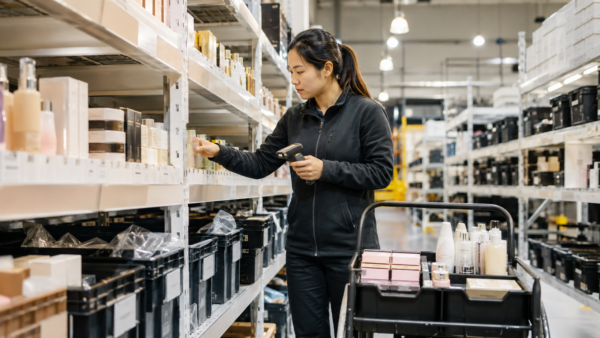
Without those controls, a complaint is just a sad email with no supply-chain context.
Decide Which Beauty SKUs Fit China Fulfillment
No product category is automatically accepted on every route. Use this matrix to begin the review.
|
Product profile
|
Main risk
|
Warehouse control
|
Transport check
|
Possible model
|
|
Brushes, sponges, mirrors, dry tools
|
Contamination, breakage, material mismatch
|
Clean storage, count, visual QC, protection
|
Material and destination restrictions
|
Often China-direct friendly
|
|
Powders and palettes
|
Pan fracture, shade error
|
Barcode/shade scan, fitted cushioning
|
Carrier handling and parcel test
|
Direct or local
|
|
Creams, serums, toners
|
Leak, stability, short date
|
Seal check, lot/date, approved storage
|
Ingredient, liquid, route acceptance
|
Route dependent
|
|
Glass bottles and jars
|
Shatter and leak
|
Segregation, fitted insert, damage inspection
|
Packaging and claims limits
|
Direct after pilot or local
|
|
Perfume, nail polish, aerosols
|
Flammability or pressure
|
Correct segregation and documented handling
|
Dangerous-goods classification and approved carrier
|
Specialist route or local stock
|
|
Battery beauty devices
|
Battery, voltage, returns
|
Model/serial/SKU control, protection
|
Battery documents, mode and destination rules
|
Route dependent
|
Non-formula accessories are often simpler, but they still need material, safety, labeling, and IP checks. Formula products demand a product-compliance system before the first warehouse scan.
Compliance Comes Before Warehouse Onboarding
Compliance starts with product classification in the destination market. The same jar can be treated differently when its ingredients, intended use, or claims change. A product marketed only to moisturize may follow one path; claims to treat disease or change body function can trigger another category.
Sunscreen is a familiar example: classification and requirements are not identical across major markets. Do not copy a supplier’s label from one country and assume it travels.
United States: MoCRA and FDA Operating Context
The US Modernization of Cosmetics Regulation Act expanded FDA authority and created requirements involving safety substantiation, serious adverse-event reporting, facility registration, product listing, records, and recalls. Exact duties and exemptions depend on the entity and product.
Under MoCRA, the “responsible person” is generally the manufacturer, packer, or distributor whose name appears on the cosmetic label. That is a defined legal role. It should not be assigned casually to a warehouse because the warehouse prints shipping labels.
FDA’s registration and product-listing page reported 16,398 active facility registrations and 1,298,361 active cosmetic product listings as of June 30, 2026. More importantly, FDA states that registration and listing are not a cosmetic approval program. Do not advertise an FDA listing as product approval or certification.
US labels may need product identity, net quantity, business information, ingredient declaration, warnings, and other statements according to the product. Use the FDA’s cosmetic labeling requirements as an official starting point, then obtain qualified review for the actual SKU and claims.
The fulfillment partner can check that the approved label version is applied, that a lot code is readable, and that held stock does not ship. It cannot decide that an unreviewed formula is safe or turn a cosmetic into a compliant drug.
European Union: Responsible Person, Product File, and CPNP
An EU cosmetic needs an EU-established Responsible Person and the applicable safety, Product Information File, labeling, good manufacturing, notification, and post-market processes before being placed on the market. The Cosmetic Products Notification Portal is the EU notification system under Regulation (EC) No 1223/2009.
Notification is not the warehouse’s substitute for a safety assessment. The brand and Responsible Person should release the exact formula, packaging, claim set, and market label. The 3PL follows those approved instructions, preserves traceability, and protects product compliance during storage and transport.
Great Britain: GB Responsible Person and Notification
Great Britain has its own Responsible Person and notification route. GOV.UK’s business guidance for cosmetic products covers the GB Responsible Person, Product Information File, safety assessment, labeling, notification to OPSS, and serious harmful effects.
Do not treat Great Britain, Northern Ireland, and the EU as one checkbox. Confirm the legal entity, product notification, label address, language, and distribution route for each market.

Build a Product Release Pack for the 3PL
Give the warehouse a controlled file for every SKU:
-
SKU, barcode/GTIN, shade, size, and market version;
-
approved product and packaging photos;
-
label artwork and revision number;
-
lot-code format and capture rule;
-
manufacture, minimum-durability, or expiry data and stock-rotation rule;
-
minimum remaining shelf life at dispatch;
-
approved storage range and excursion action;
-
Safety Data Sheet where relevant to classification or handling;
-
approved shipping services and destinations;
-
pack-out materials and steps;
-
release, hold, recall, and escalation contacts.
An SDS does not replace the cosmetic safety assessment or PIF. It serves a different job, often involving workplace handling or transport classification.
The China-to-Customer Beauty Fulfillment Workflow
Step 1: Approve the Supplier, Product, and Golden Sample
Confirm the manufacturer and every important outsourced step. Approve the formula or product specification, container, closure, label, carton, and ship-ready presentation. Define change control: no ingredient, material, colorant, pump, adhesive, label, or packaging substitution without written approval.
If separate factories make the formula, container, carton, and inserts, a partner can coordinate beauty sourcing and warehouse fulfillment. One receiving point simplifies consolidation, but the brand still needs qualified product and regulatory oversight.
Keep signed or clearly identified golden samples at the brand, manufacturer, and inspection/warehouse location where practical.
Step 2: Create the SKU and Lot Master
The product master should include the exact sellable unit and its operational attributes:
-
SKU and barcode;
-
product, shade, scent, size, and bundle;
-
market and language;
-
lot and date formats;
-
shelf-life and release rule;
-
storage class;
-
dangerous-goods or route status;
-
pack-out version;
-
return and disposition class.
Do not reuse one barcode across label languages or sizes if the warehouse must distinguish them. A clever shortcut at setup becomes a very dumb return problem later.
Step 3: Book Supplier Inbound
Send an advance shipping notice before cartons arrive. It should list purchase order, SKU, quantity, lots, dates, carton count, expected delivery, and required documents.
Define whether mixed lots are allowed inside a carton. If they are, specify how units are separated and labeled. The warehouse should not discover three lots at the pick face two months later.
Step 4: Receive, Inspect, and Quarantine
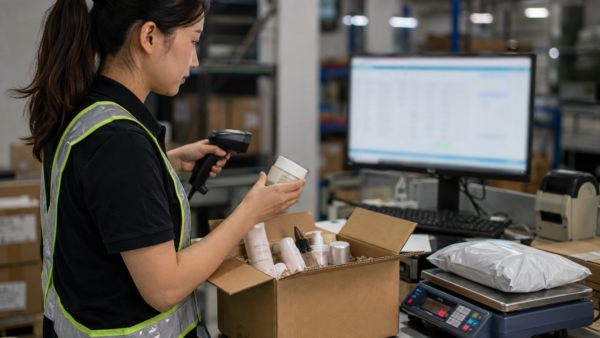
At receiving, count goods against the notice and capture the required lot and date data. Check visible condition, seal, leakage, glass, cap/pump, shade, barcode, approved label, carton, and packaging version. Photograph discrepancies and move affected units to a system-blocked quarantine location.
A documented product and packaging inspection scope can compare units with approved samples and measurable requirements. Sampling can find visible mismatch. It cannot confirm every unit or replace laboratory release, microbiology, stability, or safety evidence.
Record who decides whether held goods are reworked, returned, destroyed, or released. Warehouse staff should not guess that a leaking carton is “probably fine.”
Step 5: Store and Rotate Inventory
Put stock away by product requirement, lot, and status. Released and quarantined stock must not share one available location in the system. Monitor storage conditions at useful points, including areas where products may wait before putaway or dispatch.
Use FEFO where the approved date data supports it. Set alerts for minimum dispatch shelf life, not just final expiry. A customer buying a six-month routine does not want a product with seven months remaining.
Cycle counts should reconcile physical stock, available stock, held stock, damaged stock, and packaging components.
Step 6: Import Orders and Pick the Exact Variant
Connect the store or exchange orders through an agreed file/API process. Test duplicate prevention, cancellations, address changes, inventory updates, and tracking pushback.
At pick, scan the SKU and capture the allocated lot. Check market/language version and bundle components. Similar shades should not rely on somebody remembering that “Warm Sand” is the carton with the slightly more beige stripe.
Step 7: Pack, Label, and Dispatch
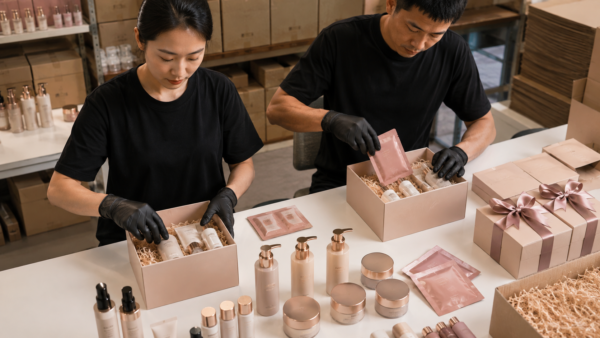
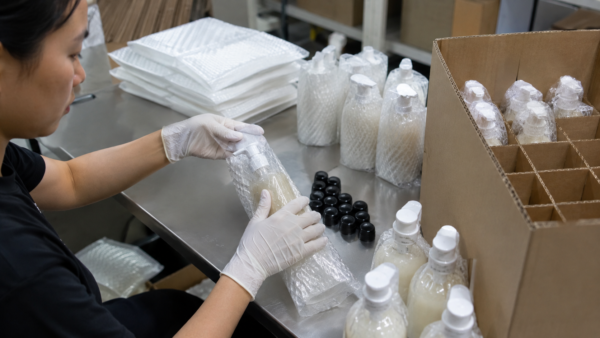
Follow the approved pack-out. Confirm closure and seal. Add secondary containment or absorbent material only where the specification requires it. Immobilize glass. Protect pressed powder from shock and compression. Apply the correct insert, sample, and outer packaging.
Then select the approved service for that product and destination. Use accurate customs data, create tracking, and retain the order-to-SKU-to-lot-to-shipment link.
For creams, masks, toners, and serums, FriendDropshipping describes a sensitive-product and skincare fulfillment workflow that includes seals, leak protection, cushioning, lot/date checks, warehouse handling, and route review. Confirm the exact product, destination, evidence, and service scope before onboarding.

Lot Tracking, FEFO, PAO, and Recall Readiness
FIFO ships the stock received first. FEFO ships the stock with the earliest applicable expiry or durability limit first. Beauty brands often need FEFO because two lots received on the same day can have different usable life.
FEFO only works when the date is meaningful and captured accurately. The WMS needs lot-level or unit-level attributes tied to locations and orders. A note in a spreadsheet that no picker sees is not FEFO.
PAO Is Not an Unopened Expiry Date
The open-jar PAO symbol—such as 12M—describes the period of use after opening under the applicable framework. The unopened item on a warehouse shelf has not started that consumer-use period.
To rotate unopened stock, the 3PL needs the brand-approved minimum-durability or expiry date, or a validated rule based on manufacture date and shelf life. Do not invent an unopened expiry by adding the PAO months to the receiving date.
Run a Desk Recall
Before launch, select a test lot and ask the provider to:
-
block it from allocation;
-
identify every warehouse location and on-hand quantity;
-
list every order, channel, date, and destination that received it;
-
identify returns or damaged units tied to it;
-
reconcile received, shipped, held, returned, and disposed quantities;
-
export the evidence and record the authorized next action.
If “lot tracking” cannot produce that result, it is mostly decorative data entry.
Storage and Packaging for Liquids, Glass, Pumps, and Palettes
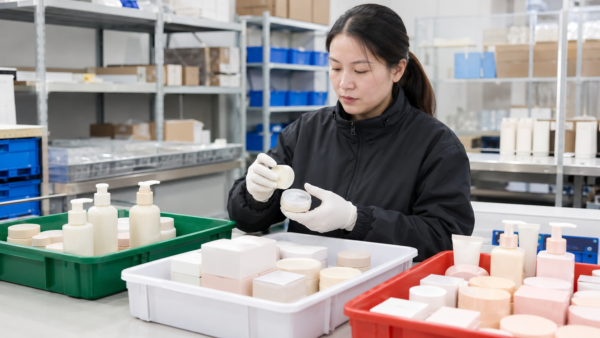
Use Formula-Specific Storage Rules
There is no honest universal temperature for all cosmetics. Ask the brand’s product and quality team to derive storage and excursion limits from stability evidence, packaging compatibility, and intended shelf life.
The 3PL should explain:
-
normal temperature and humidity monitoring where relevant;
-
sensor locations and calibration;
-
dock and staging exposure;
-
alert thresholds and response time;
-
backup power or contingency arrangements;
-
excursion records and affected-lot identification;
-
who may release or dispose of exposed stock.
“Climate controlled” without ranges, records, and an exception process is just a comfortable phrase.
Build the Pack-Out Around the Failure Mode
A glass serum may need a fitted insert, closure check, inner cushioning, and a strong outer carton. A toner may need secondary leak containment. A pressed palette needs face and edge protection against shock. A pump bottle may need a lock or clip if the approved component supports one.
Materials can include corrugated cartons, molded pulp or paperboard inserts, air-column sleeves, bubble cushioning, foam where appropriate, leak-resistant bags, absorbent pads, tamper evidence, and dividers. Choose them by product, route, sustainability goals, and test results—not by a pretty supplier photo.
The custom-packaging workflow for Shopify dropshipping explains how artwork, physical samples, component inventory, SKU mapping, and pack-out instructions meet inside a warehouse. Cosmetics also require strict version control. An old insert with a retired claim should not be used because it was still on the shelf.
Test the Whole Parcel
Test the sellable product inside its final shipping package. Record actual and dimensional weight. Use suitable drop, vibration, compression, seal, leak, and temperature-route trials based on risk. Then send pilots through the real carrier path to several destinations.
A perfect retail box on a conference table has not passed a shipping test. It has attended a meeting.
Shipping Cosmetics From China Without Guessing

Classify the Product Before Choosing the Carrier
Start with the exact formulation and packaging. Review alcohol content, flash point where applicable, aerosol or pressure, quantity per inner and outer package, battery details, SDS, destination, and transport mode.
Perfume, cologne, nail polish, remover, aerosols, and some alcohol-based hair or beauty products may fall under dangerous-goods rules. The IATA Dangerous Goods Regulations framework covers how hazardous articles are classified, packed, marked, documented, and handled in air transport. Carrier, service, account, route, and country acceptance rules still vary.
Never hide the product behind “beauty sample” or “gift.” A vague description does not change chemistry.
Sensitive Does Not Always Mean Dangerous Goods
A nonflammable cream or water-based serum may not be regulated as dangerous goods, yet the carrier can still restrict liquids or require leak-resistant packaging. Powders may trigger screening. Glass may be accepted but expensive to protect.
Acceptance is specific to product, quantity, package, route, carrier account, mode, and destination. Obtain written confirmation when the risk is material and recheck after formula, pack size, or route changes.
Verify Customs and Commercial Data
Use an accurate product description, reviewed HS classification, quantity, value, origin, and consignee/importer information. Define DDP or DAP treatment, duties, VAT, brokerage, restricted ingredients, and customer charges before publishing a delivery promise.
A provider can compare shipping routes for liquids and sensitive products based on destination, product properties, weight, dimensions, speed, and cost. Ask for the named service, chargeable-weight rule, tracking behavior, restrictions, loss/damage process, and current acceptance for your SKU.
Returns, Complaints, Damage, and Adverse Events
Decide where customers return products. Sending a $20 serum back to China may cost more than the recoverable value. A local return address or refund-with-evidence workflow can be more practical, but the brand still needs data from the item.
Returned products should enter quarantine before disposition. Opened, leaking, tampered, recalled, temperature-abused, or contaminated goods usually need controlled disposal or another approved route. A sealed return still requires identity, lot, seal, condition, storage-history, and market-rule review before restocking.
Record order, SKU, lot, expiry/durability, photos, complaint, symptoms where reported, use conditions, severity, resolution, and escalation. A customer-service refund does not close a potential safety or serious adverse-event investigation.
Review the provider’s published refund and resend evidence requirements, then negotiate beauty-specific terms for leaks, glass damage, short-dated stock, wrong shade, lost parcels, and return disposition. Define deadlines, proof, remedy, and cost owner.
Calculate the Real Cost of China Cosmetics Fulfillment
Compare providers using one all-in fulfilled-order formula:
Fulfilled-order cost = inbound allocation + receiving and lot capture + storage + pick/pack + packaging materials + kitting + shipping + seller-paid duties/taxes + account/software fees + expected damage, expiry, return, and reship cost
For a serum order, the $0.80 pick fee tells you almost nothing alone. The order may also need a seal check, inner bag, fitted sleeve, carton, insert, special route, and dimensional-weight charge.
|
Cost layer
|
Question to normalize
|
|
Receiving
|
Per carton, unit, hour, lot, or purchase order?
|
|
Storage
|
Bin, shelf, carton, pallet, volume, and minimum?
|
|
Pick and pack
|
First item, additional item, bundle, and insert?
|
|
Packaging
|
Material cost plus assembly task?
|
|
Shipping
|
Named service, weight rule, fuel/remote/sensitive surcharge?
|
|
Failures
|
Damage, leak, loss, expiry, return, and reship allowance?
|
Model an expected case and a bad case. Compare China-direct, local, and hybrid options at realistic order and inventory levels. A local 3PL can cost more in storage but less in final delivery and returns. The cheapest rate-card line rarely wins the full equation.
How to Choose a China Beauty Fulfillment Partner
Send the Same RFP to Every Provider
Give each candidate the same facts:
-
product category, formula/transport profile, and packaging;
-
SKU, shade, market, and lot complexity;
-
monthly orders, units per order, peaks, and destinations;
-
current and minimum dispatch shelf life;
-
storage and quarantine requirements;
-
pack-out, samples, inserts, and gift sets;
-
store channels and integrations;
-
delivery promise and approved routes;
-
expected returns and local-return need;
-
inventory forecast and future local-stock plan.
A quote built from “we sell skincare, please send prices” will be fog wearing a spreadsheet.
Ask for Evidence, Not Adjectives
Request a live or recorded demonstration of:
-
receiving a mixed-lot inbound;
-
blocking a quarantined lot;
-
tracing one shipped order back to a lot;
-
generating inventory-age and short-date reports;
-
scanning similar shades;
-
producing temperature records and excursion actions where required;
-
packing your golden sample;
-
showing current carrier approval for the SKU;
-
handling a damaged return and claim;
-
exporting inventory and order data during exit.
Ask which services and warehouses are owned, operated, or subcontracted. Review insurance, data access, price-change notice, service levels, claim windows, stock-release terms, and business continuity.
Use a Weighted Scorecard
|
Category
|
Suggested weight
|
|
Beauty-category and SKU fit
|
15%
|
|
Lot, date, quarantine, and recall capability
|
15%
|
|
Product protection and storage
|
15%
|
|
Route and destination capability
|
15%
|
|
WMS, integration, and reporting
|
10%
|
|
Service and exception ownership
|
10%
|
|
Normalized total cost
|
10%
|
|
Compliance boundary and documentation discipline
|
5%
|
|
Continuity and exit readiness
|
5%
|
Adjust weights by catalog. Fragrance gives transport more weight. A shade-heavy makeup line emphasizes pick accuracy. An active skincare line may prioritize stability, lots, and dispatch shelf life.
FriendDropshipping can coordinate China sourcing, visible QC, sensitive-product handling, custom packaging, Shopify orders, warehouse fulfillment, and route comparison within an agreed scope. For proven inventory, its China 3PL fulfillment service covers receiving, storage, SKU handling, order processing, packing, and international dispatch. Confirm formula, destination, lot/date logic, storage evidence, carrier acceptance, return route, and compliance ownership for each project.
Pilot Before Moving the Full Catalog
Start with representative difficulty, not only the easiest SKU. A useful pilot may include one liquid, one fragile package, and one multi-component kit.
Test normal orders and ugly cases:
-
mixed-lot inbound;
-
wrong or unreadable barcode;
-
damaged seal or short-dated unit;
-
two similar shades in one order;
-
old and new insert versions;
-
address change after order import;
-
lost or leaking parcel;
-
customer return;
-
inventory and lot-data export.
Send parcels to several target addresses through the proposed routes. Compare quoted and invoiced cost, processing time, tracking, customs events, parcel condition, product temperature exposure if relevant, order accuracy, and system records.
Set go-live criteria before the pilot. If the provider cannot hold a failed lot, reproduce the pack-out, or explain an invoice difference, fix it before thousands of customers join the experiment.
Conclusion
Beauty and cosmetics fulfillment from China is a controlled chain, not a fast box-moving contest. Choose China-direct, local, or hybrid fulfillment by SKU. Give the warehouse approved product, lot, storage, packing, route, and escalation rules. Then test whether the system follows them.
A strong operation can show the product file handoff, trace a batch, protect the parcel, use an accepted route, and explain the full cost. That is less glamorous than a new serum launch. It is also what lets the launch survive.
Frequently Asked Questions
1. What is beauty and cosmetics fulfillment from China?
It is the receiving, storage, picking, packing, cross-border shipping, tracking, and return handling of beauty orders from a China-based warehouse. Some providers also coordinate supplier purchasing, inspection, custom packaging, and store integration. Product development and market compliance remain separate responsibilities unless a contract and applicable law assign them otherwise.
2. Can cosmetics ship directly from China to the US, EU, or UK?
Often yes, but feasibility depends on formulation, claims, packaging, quantity, carrier, destination, importer setup, and local cosmetic rules. Confirm product compliance and route acceptance before listing. A route that accepts one water-based cream may reject an alcohol-based fragrance.
3. Which beauty products are difficult or restricted to ship internationally?
Perfumes, nail polish, removers, aerosols, pressurized products, and some high-alcohol formulas may be dangerous goods. Liquids, powders, glass containers, and battery devices can face additional restrictions or packaging rules even when not classified as dangerous goods.
4. Does a China cosmetics 3PL handle FDA or MoCRA compliance?
A 3PL can execute approved labels, lot capture, storage, holds, distribution records, and recall instructions. It does not automatically become the MoCRA responsible person or prove product safety. Define the legal roles of the brand, manufacturer, importer, responsible person, and warehouse with qualified advice.
5. What documents should a cosmetics brand give its fulfillment warehouse?
Provide the approved SKU and barcode master, product/packaging images, label version, lot/date rules, minimum shelf life, storage and excursion instructions, SDS where relevant, approved destinations and services, pack-out SOP, and release/hold/recall contacts. Add any product-specific handling documents.
6. What is lot tracking in cosmetics fulfillment?
Lot tracking records the production batch attached to inventory and each shipped order. It helps investigate complaints, manage expiry, hold affected stock, and identify customers during a recall. The provider should be able to trace both forward from a lot and backward from an order.
7. What is FEFO, and is it better than FIFO for skincare?
FEFO means first expired, first out; FIFO means first in, first out. FEFO is usually more useful when lots have different expiry or durability dates. It requires accurate date data and brand-approved dispatch rules. FIFO may still suit products without meaningful expiry differences.
8. Is PAO the same as an expiration date?
No. PAO describes the intended period of use after a cosmetic is opened. It does not by itself provide the warehouse with an unopened expiry date. Use approved durability, expiry, or manufacture-plus-shelf-life data to manage unopened inventory.
9. Do cosmetics need temperature-controlled storage?
Some do, but there is no universal range for every cosmetic. Storage and excursion limits should come from formulation stability and packaging evidence. Ask the 3PL for monitoring, calibration, alarm, investigation, backup, and affected-lot records that match those limits.
10. How should a 3PL prevent skincare leaks and broken glass?
Use compatible closures, seal checks, secondary containment where specified, fitted inserts, suitable cushioning, and a strong outer carton. Test the complete parcel through relevant drop, vibration, compression, leak, and route conditions. Packaging should be tied to the exact SKU.
11. Can perfume, nail polish, and aerosols ship from China?
Sometimes, through approved dangerous-goods services and compliant packaging. Eligibility depends on classification, SDS, quantity, packaging, mode, carrier account, and destination. Obtain current written acceptance; do not declare a flammable product as an ordinary cosmetic.
12. Can returned cosmetics be restocked?
It depends on product condition, seal, lot, storage history, market rules, and the brand’s approved policy. Opened, tampered, leaking, recalled, contaminated, or temperature-abused goods generally require quarantine and controlled disposition. Do not return stock to sale automatically.
13. How much does beauty fulfillment from China cost?
Costs can include inbound transport, receiving, lot capture, storage, pick and pack, packaging, kitting, shipping, duties or taxes, software/account fees, returns, damage, expiry write-off, and reships. Compare providers with the same sample orders and verified packed dimensions.
14. Should a beauty brand use China-direct, local, or hybrid fulfillment?
China-direct can suit tests and long-tail SKUs. Local stock can improve delivery and returns for stable demand. A hybrid model assigns each SKU and region based on route acceptance, shelf life, contribution, inventory risk, and customer promise. Many growing catalogs benefit from that flexibility.
15. How do I choose a China 3PL for cosmetics and skincare?
Send a consistent RFP, inspect the proposed facility and systems, test lot traceability, review storage evidence, approve a physical pack-out, verify routes, normalize all fees, and run pilot orders. Contract terms should cover service levels, claims, subcontractors, data, inventory release, and exit.
Table of Content

I’m Cassiel. I’ll help you scale your Shopify business with reliable fulfillment.
Join to newsletter.
Follow us and get more knowledge.