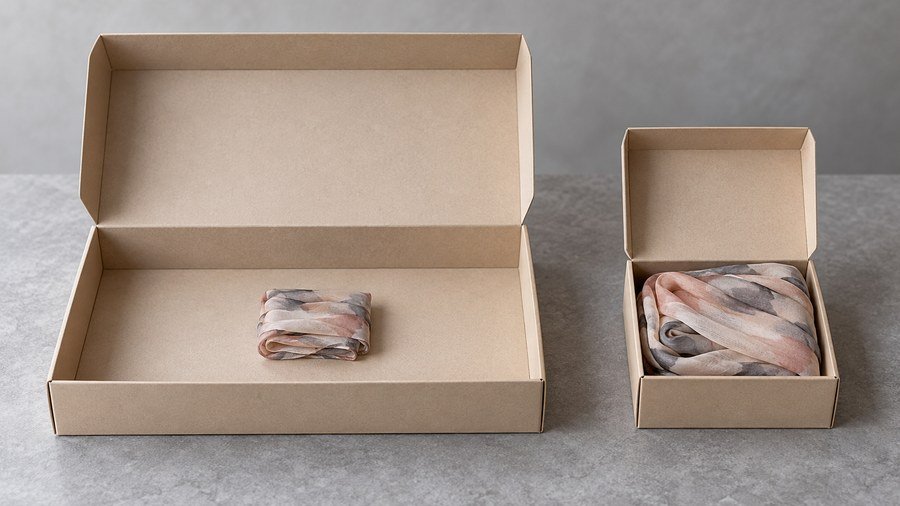
A 250 g phone case and a 250 g luxury accessory put the same number on a scale. They should not automatically travel on the same shipping line.

The phone case may need a low-cost ecommerce route with decent tracking. The luxury item may need stronger delivery evidence, tighter claims handling, and perhaps a signature. Send either parcel to a remote island postcode and the choice may change again.
There is no single best shipping method from China. The right line depends on the packed parcel, money at risk, destination, product rules, and customer promise. The details change across dropshipping, DTC, subscription, Amazon, and bulk orders, but the decision logic stays useful.
A Shipping Line Is an End-to-End Service, Not Just a Carrier Name
In China ecommerce, people often use “shipping line” to mean a complete service or shipping channel. It is not necessarily the airline, ship, postal company, or van that physically carries the parcel.
A dedicated line can include:
-
pickup from a fulfillment warehouse;
-
export sorting and declaration;
-
consolidated line-haul by air;
-
customs processing in the destination country;
-
injection into a local parcel network;
-
final delivery by a postal or commercial carrier;
-
tracking updates and an exception process.
One parcel can pass through several hands. Two services using the same last-mile carrier can therefore have different prices and delivery records because their export schedule, customs setup, data, handover, and claims process differ.
It helps to separate two jobs from the start:
-
Direct-to-consumer parcel delivery: One packed order goes from a China warehouse to an individual buyer.
-
Inventory replenishment: Cartons or pallets move to an overseas warehouse, retailer, or Amazon FBA facility.
The first job usually compares postal services, EMS, ecommerce lines, and express couriers. The second may involve air cargo, rail, truck, LCL, or FCL. Mixing them is like comparing a taxi with a removal truck. Both move goods, but not in the same way.
Start With Three Pass-or-Fail Gates Before Looking at Price
A rate sheet is tempting. Still, price should not be the first filter. A cheap line is useless if it cannot legally accept the product, meet the delivery promise, or process your orders without constant manual fixes.
Gate 1: Is the Product Eligible?
Start with the actual product, not a vague category such as “electronics” or “beauty.” Ask whether it contains:
-
lithium-ion or lithium-metal batteries;
-
a power bank or loose battery;
-
liquid, gel, cream, paste, or powder;
-
alcohol, perfume, or another flammable ingredient;
-
a magnet or magnetized component;
-
food, supplements, seeds, or plant material;
-
a blade, pressurized container, or medical item;
-
branded goods that may need authorization;
-
fragile, very long, heavy, or oddly shaped parts.
“Prohibited” and “restricted” are not the same. A prohibited item cannot use that service. A restricted item may be accepted only with the right classification, test report, packaging, label, quantity limit, or declaration.
Air transport has formal dangerous-goods requirements. The IATA Dangerous Goods guidance explains that common household products can fall into regulated classes and that the shipper is responsible for correct classification. In practice, you should give the fulfillment agent a complete product description and ask for written, route-specific confirmation.
One successful parcel is not proof of general acceptance. The issue may simply have gone unnoticed. That is luck wearing a label, not a shipping strategy.
Gate 2: Can the Route Meet the Real Delivery Promise?
A quoted “7–10 days” may describe transit after departure, not the time from customer payment to doorstep delivery. Ask what the clock includes.
The real timeline can contain:
order processing + warehouse handling + dispatch wait + line-haul + customs + last mile
A line that flies three times a week may wait two days before departure. A fast flight can then meet slow customs and a three-day local delivery. Those stages must fit the promise shown in your store.
Use a realistic range based on completed orders. Do not build your customer promise around the fastest parcel in last month’s report.
Gate 3: Can Your Team Operate the Line Reliably?
Check the less glamorous details:
-
required label and address format;
-
postcode and phone-number rules;
-
maximum declared value;
-
tracking-event quality;
-
first-scan timing;
-
claim evidence and filing deadline;
-
compensation cap;
-
return or destruction process;
-
cutoff time and pickup schedule;
-
backup route when the line is suspended.
If every tenth order needs an address edit, scan chase, or surcharge explanation, the low rate is doing a little magic trick. Cost has moved from logistics to labor and support.

Weight: Quote the Packed Parcel, Not the Product Listing
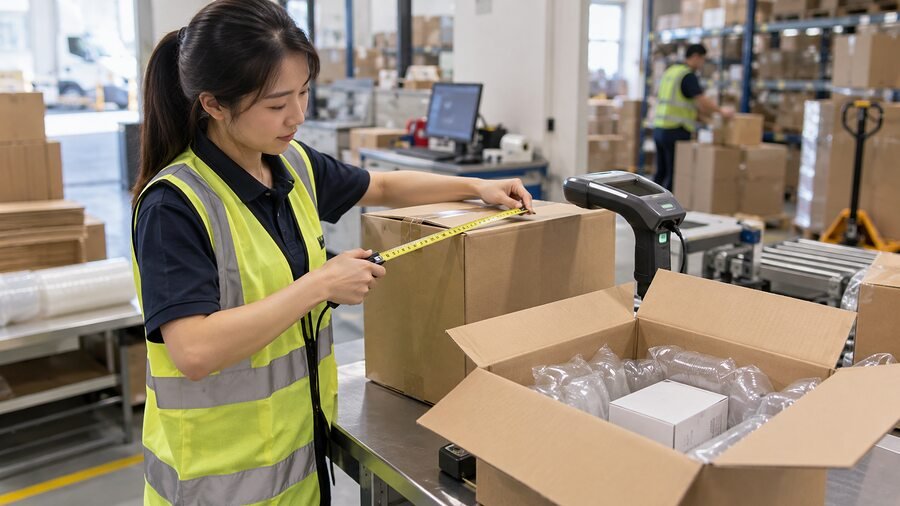
The product weight in a supplier spreadsheet is not enough. The line receives a packed parcel with a mailer or box, protection, inserts, tape, labels, and sometimes several products. Measure that parcel or you are choosing with imaginary data.
Actual, Dimensional, and Chargeable Weight
Three terms matter:
-
Actual weight is what the packed parcel weighs on a scale.
-
Dimensional weight, also called volumetric weight, estimates how much transport space the parcel occupies.
-
Chargeable weight is the billing weight used by the service. It is often the greater of actual and dimensional weight, after the line’s rounding and billing rules are applied.
For example, imagine a packed box measuring 40 × 30 × 20 cm. A service using a divisor of 5,000 would calculate:
40 × 30 × 20 ÷ 5,000 = 4.8 kg
If the box weighs 2.1 kg, the shipment may be rated at 4.8 kg before further rounding. In plain language, you are paying for the space, not just the product. The box is partly shipping air.
The principle is common, but the formula is not universal. Carrier, service, contract, origin, and destination can change it. FedEx’s dimensional-weight guidance, for example, compares actual and dimensional weight and specifies its own divisor and rounding. It is a carrier example, not a rule for every China line.
Ask which divisor applies, when dimensions and final weight are rounded, and whether long-side or oversize rules apply.
Billing Increments and Minimum Charges Can Flip the Choice
Shipping is rarely billed with laboratory-scale precision. A line may charge in 0.5 kg, 100 g, 50 g, or other increments. It may also have a minimum billable weight.
Suppose a route bills each started 0.5 kg:
| Measured chargeable weight | Billed weight | What happened |
| 0.49 kg | 0.50 kg | Small rounding effect |
| 0.51 kg | 1.00 kg | The parcel crossed a billing step |
| 0.98 kg | 1.00 kg | Nearly all of the step is used |
That 20 g difference can create a much larger price change. Packaging around a billing break may matter more than a tiny rate discount.
Minimum charges matter too. A low kilogram rate may perform badly on light parcels after the minimum fee. Long-side, girth, residential, and remote-area fees can add another surprise.
Packaging Is Part of the Freight Rate
A package has two jobs: protect the product and avoid wasting space. Push too far in either direction and you pay somewhere else.
A thin poly mailer may be right for a soft T-shirt. It is a poor home for a glass bottle. A rigid gift box may look premium, yet it can turn a light jewelry item into a bulky parcel. Corrugated mailers, molded pulp, paperboard inserts, foam, bubble wrap, and air cushions all change the packed profile.
Test protection and volume together. Record external dimensions, packed weight, damage, and presentation. This guide to right-size custom packaging explains how box style, inserts, materials, and assembled volume affect the project.
There is no prize for the smallest possible box if the item arrives cracked. There is also no prize for building a sofa around a coffee mug.
Multi-Item Orders Need Their Own Profile
One-unit data does not predict every basket. Two products may fit into one mailer with almost no extra volume. Three may require a box. A bundle can also cross a weight step or value limit.
Measure the common single-SKU order, top multi-item baskets, gift sets, the bulkiest normal order, and combinations containing restricted goods. These profiles create useful rules without turning the warehouse into a physics department.
Value: Match Shipping Protection to the Cost of Failure
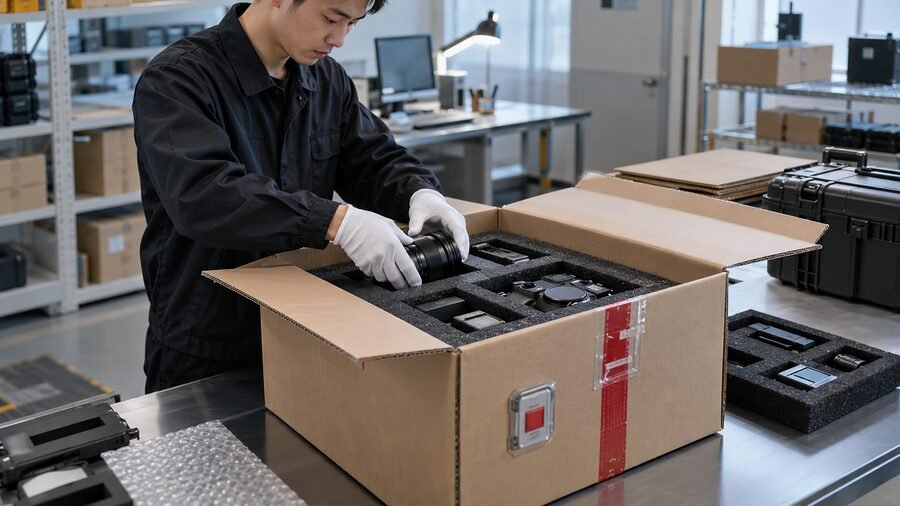
Value affects route choice even when weight stays the same. Yet “value” has several meanings, and mixing them creates bad decisions.
Product Value Is More Than the Customs Declaration
Keep these figures separate:
-
Customs value: the truthful value declared for import purposes under the applicable rules.
-
Landed product cost: what the product, inbound freight, packaging, and related work cost your business.
-
Retail price: what the customer paid.
-
Contribution margin: the money left after variable costs.
-
Replacement cost: the product, fulfillment, reshipping, support, and perhaps refund cost when delivery fails.
Do not lower a customs declaration to make a route appear cheaper. That can create compliance issues, invalidate coverage, and make a claim rather uncomfortable. If valuation is unclear, use qualified customs or tax advice for the destination market.
Low-Value and High-Value Orders Need Different Safeguards
For a low-value order, commercial express may cost more than the margin can carry. A proven postal or dedicated ecommerce line can make sense if it has usable tracking and a consistent local handoff.
For a high-value order, consider:
-
end-to-end tracking rather than a partial scan history;
-
proof of delivery;
-
signature service where it is useful and accepted locally;
-
tighter address verification;
-
declared-value coverage or cargo insurance;
-
clear claim evidence and deadlines;
-
a service with a strong record for that exact destination.
Paying more does not automatically buy safety. Premium couriers still have exclusions, value limits, remote fees, and claim deadlines. Read the terms and lane data.
Before release, product quality checks can reduce a different kind of failure: shipping the wrong, damaged, or obviously defective item through an expensive route. Fast delivery of the wrong color is still wrong.
Add the Expected Cost of Exceptions
The label price is only the visible part. A more useful comparison is:
Decision cost = shipping charge + expected loss + expected damage + expected delay/support + expected return or resend cost
This is not an invitation to invent a fancy probability model. Use your own order history.
If Line A costs $4.80 and Line B costs $5.40, the cheaper line wins only if its missing scans, tickets, resends, and losses do not consume the 60-cent saving. If both perform similarly on a low-risk lane, the cheaper option makes sense.
Review the actual refund and resend conditions before assuming every exception will be reimbursed. Claim windows, evidence, compensation limits, excluded events, and return handling affect the money truly at risk.
Destination: Judge the Whole Lane, Down to the Postcode
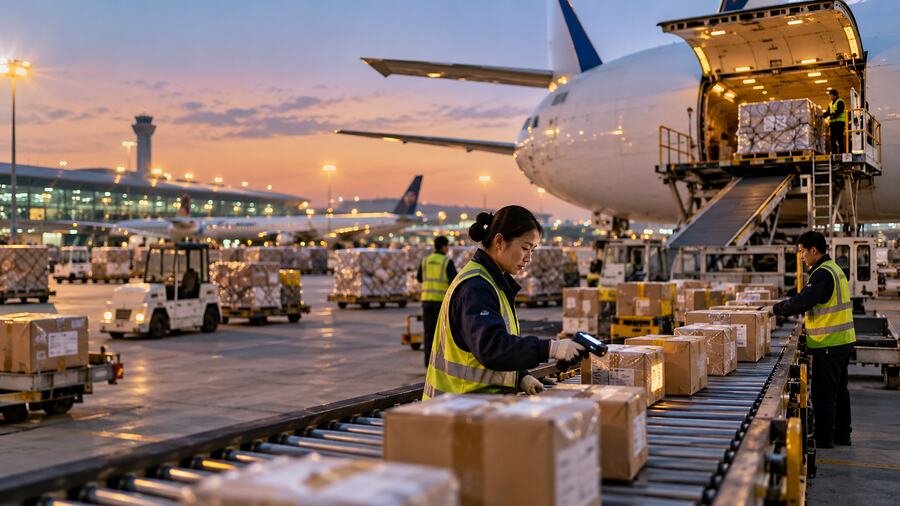
“Shipping to the US” or “shipping to Europe” is too broad for a reliable rule. Country is the first filter. Postcode is where the route becomes real.
Country Is Only the First Filter
A service that works in mainland cities may perform differently for islands, territories, military addresses, rural regions, or remote postcodes. Zones can have different:
-
delivery times;
-
last-mile carriers;
-
remote-area surcharges;
-
parcel-size limits;
-
signature options;
-
pickup-point coverage;
-
import restrictions;
-
return processes.
Ask the shipping provider for excluded and remote postcodes. Then compare those lists with your order history. If only 1% of customers fall into a difficult zone, you may create a fallback rule. If 25% do, it is not an edge case. It is the business.
Product rules vary too. Cosmetics, supplements, medical devices, toys, electronics, wood packaging, and branded goods may need different documents. A transport line does not make a non-compliant product compliant.
The Last Mile Often Decides the Customer Experience
Customers usually remember the van at the end, not the aircraft in the middle.
Find out who performs final delivery and what happens at handoff. Check whether tracking continues, when the local number appears, what delivery proof exists, how many attempts are made, whether redirection is possible, and how incomplete addresses are handled.
A route can clear customs quickly and still fail at the doorstep through poor rural coverage or address handling. Judge the full lane, not its glamorous middle.
Customs Scope: Compare DDP and DAP Carefully
DDP and DAP divide cost, responsibility, and import handling differently. DDP is commonly quoted as a seller-arranged delivered service including duties and taxes in its agreed scope. Under DAP, the buyer generally handles arrival costs such as duties and taxes.
Do not rely on three letters alone. Confirm who supplies importer data, pays duties and brokerage, performs clearance, fixes incomplete declarations, and handles rejected or unpaid shipments.
The ICC Incoterms rules allocate common delivery tasks, costs, and risks between seller and buyer. An Incoterm is not a speed guarantee or a substitute for checking line scope.
Unexpected delivery charges can cause refusals and complaints. A compliant, correctly declared DDP route can be smoother, but a vague “tax included” chat message is not enough.
Returns and Undeliverable Parcels
When delivery fails, the parcel may receive another attempt, wait at a pickup point, return locally or to China, enter storage, or be destroyed. Ask which outcome applies and how long you have to respond.
The outbound price hides this. A $6 parcel costing $20 to return is not a $6 problem. Local disposal and replacement may suit low-value goods; recovery may suit valuable ones.
Build a Lane Card for Each Major Market
Keep the facts in one small record. A lane card makes different teams compare the same service rather than passing around half-remembered chat messages.
| Field | What to record |
| Destination | Country, territory, postcode zones, and remote-area rules |
| Promise | Dispatch schedule and realistic delivery range |
| Customs | DDP or DAP scope, required data, duties, taxes, and documents |
| Last mile | Carrier, tracking events, delivery attempts, and proof |
| Exceptions | Loss, damage, delay, return, destruction, and address correction |
| Commercials | Rate, billing step, fuel or peak fees, surcharges, and claim cap |
Update the card when the line, last mile, customs policy, or pricing changes. Logistics knowledge gets stale fast.
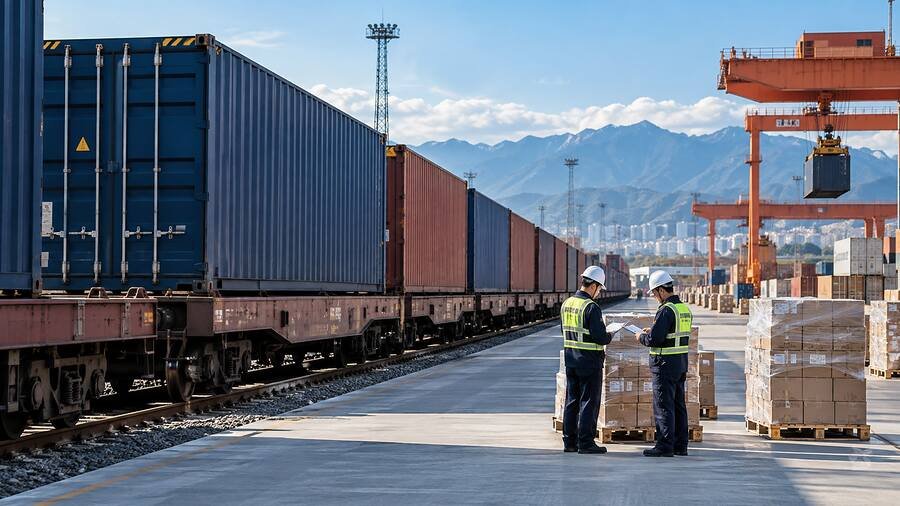
Match the Shipment to the Right Route Family
Once a shipment passes the three gates and you understand its weight, value, and destination, compare the appropriate route families. Do not ask every service to compete for every job.
Postal and EMS Services
Postal routes and EMS can suit samples and some light parcels. Their national postal reach helps, but tracking, delivery attempts, customs, compensation, and returns vary by destination. Check recent lane results.
Dedicated Ecommerce Lines
Dedicated ecommerce lines consolidate many parcels from China, move them through a designed cross-border route, clear them under an agreed model, and inject them into a local delivery network.
They are common in dropshipping and DTC because they can balance cost, speed, tracking, and acceptance. Some specialize by destination or product. A provider may excel on its US route and be average elsewhere, so judge each lane on its evidence.
Commercial Express
DHL, FedEx, UPS, and similar networks suit urgent samples, replacements, and valuable goods. Check dimensional weight, remote and residential fees, brokerage, value limits, restrictions, and destination surcharges. An oversized light parcel can become eye-wateringly expensive.
Air Freight and Air DDP
Air freight becomes relevant for cartons, pallets, or larger inventory shipments that need to move faster than sea freight. Some door-to-door air services are quoted with a DDP scope, while other quotes cover only selected airport or customs stages.
Confirm minimum size, pickup, clearances, duties, taxes, final delivery, and appointment fees. Air freight is not simply a very large parcel label.
Sea Freight: LCL and FCL
Sea freight often suits bulky, heavy, or planned inventory. LCL combines your cargo with other shipments. FCL gives you a full container.
The ocean rate is only part of the bill. Compare handling, documentation, ports, customs, deconsolidation, delivery, pallets, demurrage, and appointments. LCL may suit moderate volume; FCL may suit volume, control, or stronger unit economics.
Lead time also has an inventory cost. Saving on freight does not help if stock arrives after the sales campaign.
Rail and Truck Freight
Rail and truck can suit supported regional corridors, including some China-to-Europe or neighboring-country movements. Border handling, reliability, equipment, and acceptance are lane-specific. They are not global alternatives.
| Shipment pattern | Start by comparing | Main reason | Do not skip |
| Light, low-value DTC parcel | Postal and dedicated ecommerce lines | Cost control | Tracking and delivery consistency |
| Light, high-value order | Express and proven premium parcel lines | Better control and evidence | Signature, claims, and destination limits |
| Sensitive product | Eligible specialist lines | Acceptance comes first | Classification, documents, and packaging |
| Urgent inventory replenishment | Express freight or air freight | Speed at larger weights | Complete door-to-door scope |
| Bulky, planned inventory | LCL or FCL sea freight | Lower transport cost per unit at volume | Destination charges and stock buffer |
If you need to compare operational options, FriendDropshipping provides shipping solutions for small parcels and bulk goods rather than forcing every shipment into one channel.
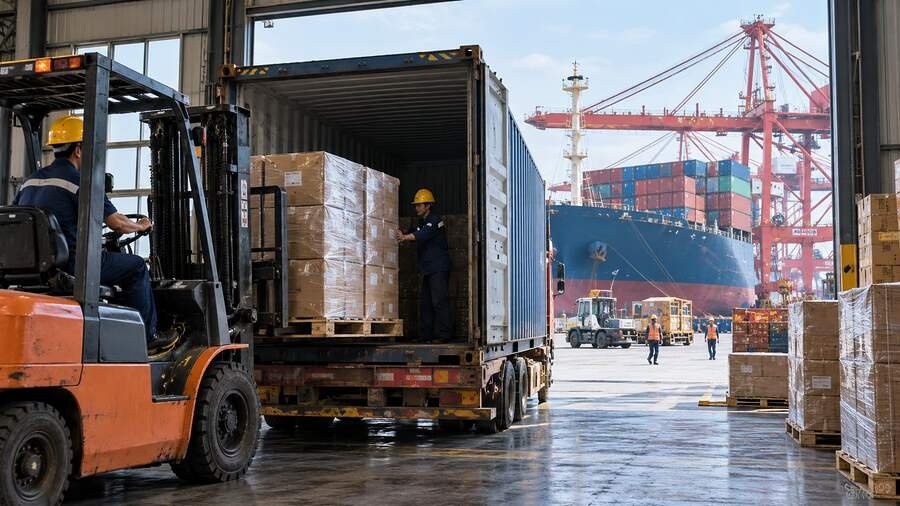
Compare Shipping Quotes on the Same Scope
Three quotes are not comparable just because all three end with a dollar sign. Give every provider the same input and make each one show what is included.
Send One Complete Quote Brief
Include:
-
exact product name, use, and material;
-
battery, liquid, powder, magnet, food, or branded-goods status;
-
external packed dimensions and packed weight;
-
number of parcels, cartons, pallets, or total CBM;
-
truthful value and currency;
-
destination country and postcode;
-
required dispatch and delivery window;
-
DDP, DAP, door-to-door, or another required scope;
-
tracking, signature, coverage, and return needs;
-
expected weekly or monthly volume.
Photos help but do not replace specifications. A photo cannot show battery watt-hours or alcohol percentage.
Ask What the Price Excludes
Specifically ask about:
-
fuel and peak-season adjustments;
-
remote-area and residential fees;
-
dimensional-weight adjustment and reweigh fees;
-
long-side, oversize, and additional-handling charges;
-
export documentation;
-
customs clearance and brokerage;
-
duty, tax, and disbursement fees;
-
storage after a hold;
-
address correction and redelivery;
-
return, destruction, or abandonment;
-
insurance or declared-value coverage.
If the answer is “all included,” get the inclusions in writing. Friendly confidence is pleasant. A defined scope is better.
Use a Like-for-Like Quote Table
| Quote field | Line A | Line B | Line C |
| Chargeable weight and calculation rule | |||
| Service scope and customs model | |||
| Realistic delivery range | |||
| Last-mile carrier | |||
| Tracking and proof of delivery | |||
| Included and excluded surcharges | |||
| Claim limit and deadline | |||
| Undeliverable and return treatment | |||
| Total expected decision cost |
For bulk stock, sourcing and logistics are often connected. Multi-supplier orders may need receiving, checks, consolidation, relabeling, or new export cartons before they can leave. A partner offering sourcing, consolidation, and shipping support can help define where procurement ends and the transport scope begins.

Three Orders That Look Similar Until You Price the Risk
These examples are illustrative. They show the reasoning, not live universal rates.
Case 1: An $18 Phone Case, 0.25 kg, Going to the United States
The item is light, low value, and usually unrestricted. For a common mainland US postcode, compare proven ecommerce and postal lines. Express may be faster but swallow the margin. Check first scans, delivery range, tracking, and loss handling.
If the case ships in an oversized retail box, fix the packaging before debating carriers. A few centimeters may matter more than a small rate discount.
Case 2: A $350 Watch, 0.60 kg, Going to Germany
The weight is modest, but the value at risk is higher. Confirm any battery and route acceptance. Compare a premium ecommerce line with express using customs data, tracking, proof, signature, value limits, coverage, claims, and undeliverable treatment.
A $7 saving is not attractive if one loss creates a $350 product replacement, another shipping charge, and an unhappy customer. Here, value changes the route even though the scale does not say much.
Case 3: Eight CBM of Furniture Inventory Going to Canada
This is not a small-parcel decision. It is a freight, packaging, customs, and stock-planning project.
Compare LCL and FCL by packed volume, weight, loading, fragility, address, customs scope, port charges, deconsolidation, and final appointment. Cartons, corner protection, moisture barriers, pallets, or crates may be needed.
The cheapest ocean line item can lose its shine once destination handling and final delivery are added. Also work backward from the required stock date. A late bargain is still late.
Turn the Choice Into a Shipping Rule, Then Test It
Choosing a line once is not the same as running shipping well. The decision must become a rule that the warehouse can follow.
Create a Primary and Backup Line
Build rules using fields such as:
-
SKU or product class;
-
restricted-goods status;
-
packed-weight band;
-
parcel dimension band;
-
order-value band;
-
destination country and postcode zone;
-
promised delivery tier;
-
primary route and fallback route.
The backup should have a trigger. Examples include temporary suspension, missed flights, peak-season capacity, a new product restriction, poor delivery performance, or a customs change. “Use whatever looks okay today” is not a fallback rule.
Run a Controlled Test Batch
Do not send only five parcels to the same city and declare victory. Use a manageable batch that includes different normal postcodes, parcel profiles, and order values.
Track:
-
warehouse release to first scan;
-
dispatch wait;
-
median and slower-end delivery time;
-
customs holds;
-
missing or confusing tracking events;
-
failed delivery and return rate;
-
loss and damage;
-
claims accepted and time to resolution;
-
quoted cost versus billed cost;
-
customer support contacts per order.
There is no magic test size. A store with 30 weekly orders needs different evidence from one shipping 30,000 daily. Use enough normal orders to expose obvious problems, control risk, and expand in stages.
Review the Lane, Not One Dramatic Parcel
One late delivery does not prove that a line is bad. A repeated pattern should not be dismissed as bad luck either.
Review route data monthly and before a major promotion. Separate performance by country, postcode group, product class, weight band, and last-mile carrier where possible. Compare billed cost as well as label cost.
A documented China 3PL fulfillment workflow stores approved parcel profiles, routing rules, tracking outputs, and exception actions. That is how a good choice survives beyond its first spreadsheet.
Conclusion
Choose a shipping line from China in the right order. First, confirm that the product is eligible. Next, measure the packed parcel and calculate the route’s chargeable weight. Then match protection to the order value, examine the destination down to the postcode and last mile, and compare the complete expected cost—not just the label price.
After that, test the route with real orders. Keep a primary line, a defined backup, and lane-level performance data.
The right answer may change by SKU, basket size, destination, season, and delivery promise. That is normal. Good shipping is not about finding one heroic carrier. It is about building a small set of rules that keeps cost, risk, and customer experience in balance.
Frequently Asked Questions
What is the best shipping method from China for small parcels?
For light, ordinary DTC products, compare ecommerce lines, postal services, and EMS. Add express when speed, value, or delivery evidence justifies it. Decide using packed chargeable weight, eligibility, postcode, tracking, and recent lane performance.
At what weight should I switch from courier shipping to air freight?
There is no universal cutoff. Dimensions, destination, volume, minimums, pickup, and customs scope matter. When parcel billing becomes costly, quote both options door to door. Bulky light cargo may switch earlier than dense cargo.
Is actual weight or dimensional weight used for shipping from China?
Many lines bill the greater of actual and dimensional weight. Rules and divisors vary, so ask for the formula, rounding, billing increment, and oversize conditions before comparing rates.
How do I calculate chargeable weight for an international parcel?
Weigh and measure the packed parcel, calculate dimensional weight with that service’s divisor, then apply its rounding, minimum, and billing increment. Do not borrow another carrier’s divisor.
Which shipping option from China is best for high-value products?
Compare eligible services with continuous tracking, delivery proof, clear value limits, coverage, and workable claims. Express or a proven premium line may fit. Destination performance, signature, customs, and returns matter as much as speed.
Should I use DDP or DAP shipping from China?
DDP can be smoother when duties, taxes, and clearance are compliantly included. DAP may suit shipments where the importer handles arrival costs. Confirm responsibilities and charges in writing; the term alone does not define every detail.
What is a dedicated ecommerce shipping line?
It is an end-to-end cross-border parcel route. The provider consolidates orders, arranges export and line-haul, uses an agreed customs process, and hands parcels to a local network. Quality varies by destination and product.
Is EMS better than a private ecommerce line?
Neither always wins. EMS may offer broad postal reach; a dedicated line may have better price, speed, customs handling, or tracking on one lane. Compare recent results, restrictions, claims, and complete cost.
Can I ship products with lithium batteries from China?
Often yes, but acceptance depends on battery type, configuration, watt-hours, quantity, documents, packaging, mode, and destination. Loose power banks differ from batteries installed in equipment. Get written route approval.
How do liquids, powders, cosmetics, and magnets change the shipping choice?
They reduce eligible routes and may require reports, ingredients, special packaging, labels, or a specialist channel. Confirm transport acceptance and destination import rules separately.
Why does the best China shipping line differ by destination country?
Customs, postal networks, remote areas, address formats, delivery attempts, and returns differ. The same export line may use different local partners, so one country’s performance proves little elsewhere.
How can I check the last-mile carrier before shipping?
Ask for the partner by country and postcode, then inspect a completed sample tracking number. Confirm whether peak season or remote areas can change the carrier.
What happens when an international parcel is undeliverable?
It may get another attempt, wait at a pickup point, return locally or to China, enter storage, or be destroyed. Confirm the process, deadline, and charges beforehand.
How many test orders should I send before scaling a shipping line?
There is no fixed number. Test enough variation in products, weights, values, and postcodes without exposing too much revenue. Scale in stages while tracking delivery, exceptions, claims, support, and billed cost.
Should one store use several shipping lines?
Usually. One line may suit ordinary US parcels, another batteries, another valuable orders, and another bulk stock. Keep the set manageable and define each route’s use case, destination, backup trigger, and review.
Table of Content

I’m Cassiel. I’ll help you scale your Shopify business with reliable fulfillment.
Join to newsletter.
Follow us and get more knowledge.