
Two Chinese suppliers quote the same printed box. One says $0.62 per unit. The other says $0.91. Easy choice, right?

Not yet. The first price excludes the cutting die, printed sample, assembly, export cartons, and delivery. The second includes them. By the time both orders reach the warehouse, the “cheap” box may cost more.
That is why custom packaging does not have one honest price per unit. A useful budget must separate setup costs, production costs, and the cost of getting usable packaging into your fulfillment process.
This guide shows how to do that for boxes, mailers, pouches, labels, cards, and inserts made in China. It also explains why two sensible suppliers can quote very different numbers without either one necessarily playing games.
The Three Numbers Behind Every China Packaging Quote
Before comparing prices, put each cost into one of three buckets.
Development and Setup Cost
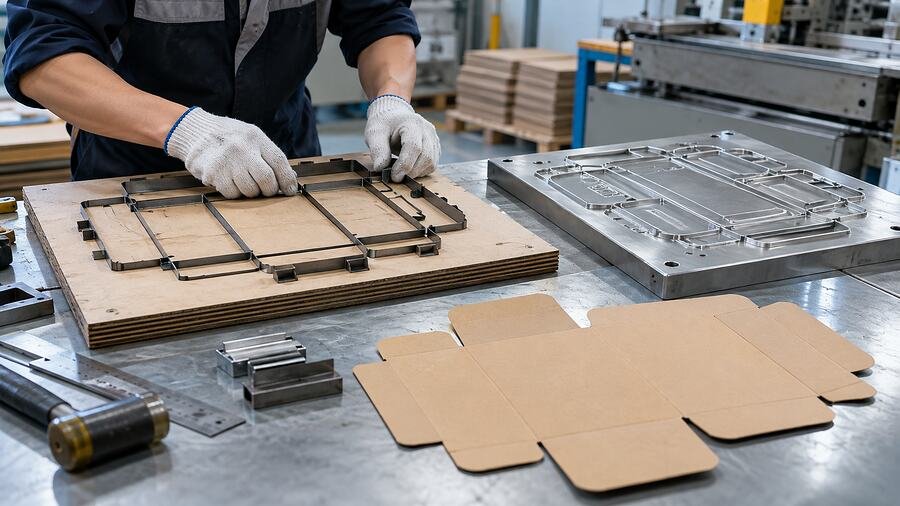
This is the money required to prepare the job. It may include structural design, a dieline, artwork adjustment, proofs, physical samples, a cutting die, printing plates, gravure cylinders, foil dies, embossing tools, and machine preparation.
Some items are paid once. Some return whenever the artwork, size, material, or production run changes. “Setup included” is fine, but ask what that sentence actually includes.
Production Unit Cost
This is the price of producing each finished piece. It covers material, printing, die cutting, folding, gluing, finishing, inserts, hand assembly, factory packing, and normal production waste—depending on the quote.
The phrase “depending on the quote” is doing serious work here. A box supplied flat is not the same product as a box assembled with an insert and ribbon.
Landed Usable Cost
This is what the packaging costs when it is available for real orders. It can include freight, import charges, receiving, inspection, storage, pack-out labor, damaged units, color rejects, and obsolete packaging.
Use two simple formulas:
Total project cost = setup + production + finishing and assembly + quality and compliance + freight and import + storage and fulfillment + expected waste
Landed usable unit cost = total project cost ÷ usable packaging units received
If 1,000 boxes cost $900 to produce but only 970 are usable after damage and rejection, divide the full project cost by 970, not 1,000. Slightly annoying, yes. Also much closer to reality.
Public supplier guides show why one neat market average is risky. A current custom packaging pricing guide publishes ranges spanning well under one dollar to more than $10 per unit across different formats and quantities. Treat such figures as orientation, not a China-wide rate card.
For a project that connects packaging production with storage and order handling, review what is included in custom packaging services for ecommerce brands, then request pricing against your exact specification.
One-Time Setup Costs: What Are You Paying For?
Setup is where many quotations become fuzzy. One supplier lists every item. Another rolls everything into the unit price. A third waives a fee but uses an existing structure that limits your options. None of those approaches is automatically wrong. You just need to see the trade.
Artwork and Structural Design
Artwork design controls how the package looks. Structural design controls how it works.
If you already have print-ready artwork and are using a supplier’s standard box template, setup can be light. If the package needs a new locking tab, insert, window, unusual shape, or load-bearing structure, somebody must engineer and test it.
A dieline is the flat drawing that shows cut lines, folds, glue areas, bleed, safe zones, and artwork placement. It should identify dimensions and revision status. Moving a logo is a small artwork change. Moving a fold line can change the tool and the physical package.
Confirm whether the quote includes:
-
structural design or only use of an existing template;
-
dieline creation and revision rounds;
-
artwork preflight and font/image checks;
-
barcode position and minimum clear area;
-
color separation and production files;
-
ownership of editable files after approval.
Proofs and Physical Samples
Not every “sample” proves the same thing.
-
A PDF proof checks text, position, and basic artwork content.
-
A plain structural sample checks size, folds, closure, and product fit.
-
A digitally printed prototype gives a physical impression of graphics and structure.
-
A production-process sample uses materials and processes closer to the final run.
A handmade rigid-box sample may look excellent but does not fully predict the speed and small tolerances of bulk assembly. A digital proof may not match offset ink on coated paper exactly. Decide what the sample must approve, then record its limitations.
Paying for one useful sample is usually cheaper than receiving 3,000 beautiful boxes that pinch the product by 2 mm. Packaging mistakes have a talent for becoming very physical.
Cutting Dies, Plates, and Cylinders
These tools perform different jobs:
-
A cutting die works like a large industrial cookie cutter. It creates the package shape, creases, holes, and windows.
-
Offset plates carry separated print information. Artwork or color changes may require new plates.
-
Flexographic plates are common for corrugated and flexible materials. Cost depends on size, colors, and plate technology.
-
Gravure cylinders are engraved for high-volume flexible packaging. Setup is heavier, but unit economics can work at scale.
-
Foil and embossing dies create metallic or raised/recessed effects and are separate from the cutting die.
Ask Who Owns the Tooling
Paying a tooling charge does not always mean you can pick up the tool and move it to another factory. Ask:
-
Is the tool owned by the buyer or supplier?
-
How long will it be stored?
-
Is reuse free on an unchanged reorder?
-
What change creates a new tool?
-
Who pays when a tool wears out?
-
Can the tool or source file be transferred?
Get the answer before the first purchase order. It is much harder to negotiate tool ownership while a launch date is staring at everyone.
Machine Setup and Make-Ready
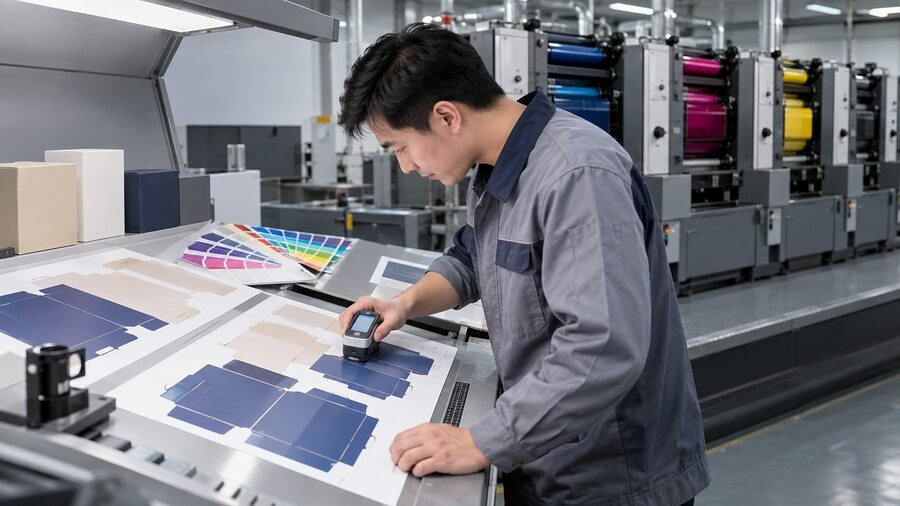
Every production run needs preparation. The team loads plates, adjusts ink, aligns colors, sets the die cutter, tests folds, tunes glue, checks the first sheets, and removes waste. Flexible-packaging lines may also need material threading, tension settings, lamination setup, and cleaning.
These costs may appear as machine setup, make-ready, minimum printing charge, or nothing at all because they are built into the unit price.
| Setup item | Usually fixed or variable? | May repeat when | Evidence to request |
| Dieline/design | Mostly fixed | Structure changes | Approved drawing and revision |
| Physical sample | Per sample round | Material, print, or finish changes | Signed sample or approval record |
| Cutting die | Mostly fixed | Size/structure changes or die wears | Tool ID and ownership term |
| Plate or cylinder | Fixed by artwork/color | Artwork, color, or size changes | Tool list by version |
| Machine make-ready | Per production run | Most reorders | Quote line or written inclusion |
Unit Pricing Starts With Format, Material, and Size
Asking for the price of a “custom box” is a bit like asking the price of a vehicle. A folding carton and a magnetic rigid box both hold products, but their materials and production steps are worlds apart.
Folding Cartons
Folding cartons are usually made from paperboard such as SBS, coated board, or kraft. They are printed flat, die-cut, creased, folded, and sometimes glued. Because production can be automated and cartons ship flat, they often suit retail packaging for cosmetics, supplements, small electronics, and personal-care products.
Cost moves with board grade and caliper, sheet size, ink coverage, coatings, number of glue points, windows, inserts, and order quantity. A delicate folding carton may still need an outer shipper. Leaving that out of the budget makes the retail box look cheaper than the complete pack-out.
Corrugated Mailers and Shipping Boxes
Corrugated board sandwiches fluting between liner sheets. E-flute can create a neater ecommerce mailer; B-flute and stronger constructions may suit heavier or more demanding shipments. Board grade, flute, box area, print method, full-color coverage, coating, and strength all affect cost.
Corrugated packaging can be efficient when delivered flat. Once assembled, it becomes mostly air. That matters if it must travel from the packaging factory to another city or country.
Rigid Gift Boxes
Rigid boxes use thick greyboard wrapped with printed or specialty paper. Drawer boxes, lift-off lids, book-style boxes, magnetic closures, ribbons, and fitted inserts add material and labor.
They are common for jewelry, watches, beauty sets, electronics, and premium gifts. They can be surprisingly expensive to ship because they are normally delivered assembled. A small luxury box may weigh little yet occupy a large share of a carton.
Flexible Pouches and Poly Mailers
Flexible packaging depends on film structure, gauge, barrier requirements, printing, lamination, zipper, valve, tear notch, seal, size, and conversion method. A simple apparel poly mailer is not comparable with a multi-layer coffee or supplement pouch.
Food-contact suitability, oxygen or moisture barrier, migration requirements, and shelf life are specification and compliance questions. “PET pouch” or “kraft pouch” is not enough information by itself. For multiple flavors or languages, ask whether MOQ and tooling apply per artwork.
Labels, Cards, Sleeves, and Inserts
A stock mailer plus a printed label or card can be a sensible first branding step. Cost depends on stock, adhesive, coating, shape, sheet layout, folds, perforation, variable data, and the number of versions.
This route is less dramatic than a custom magnetic box. It is also easier to change when a new brand is still learning what customers actually buy.
| Format | Main cost drivers | Typical application | Common cost trap |
| Folding carton | Board, size, colors, die cutting, glue | Retail/product box | Protective shipper omitted |
| Corrugated mailer | Flute, area, print process, board grade | DTC shipping | Dimensional volume |
| Rigid box | Greyboard, wrap, handwork, closure, insert | Premium products | Assembly and bulky freight |
| Flexible pouch | Film layers, barrier, tools, zipper | Food, coffee, supplements | MOQ per artwork/flavor |
| Insert, card, or label | Sheet layout, stock, coating, adhesive, versions | Low-risk branding | Too many small versions |
Printing Cost: Digital, Offset, Flexo, or Gravure?
Printing method changes both setup cost and unit cost. The cheapest process at 200 pieces may be the expensive one at 20,000.
Digital Printing for Pilots and Multiple Versions
Digital printing normally avoids conventional printing plates. It can suit samples, launch batches, multiple artwork versions, seasonal packaging, and variable information. Setup is lighter and artwork changes are easier.
The tradeoff is unit economics. At higher volume, digital printing may cost more per piece than a process with heavier setup but faster production. Color and substrate choices also depend on the equipment.
Offset Printing for Paperboard and Volume
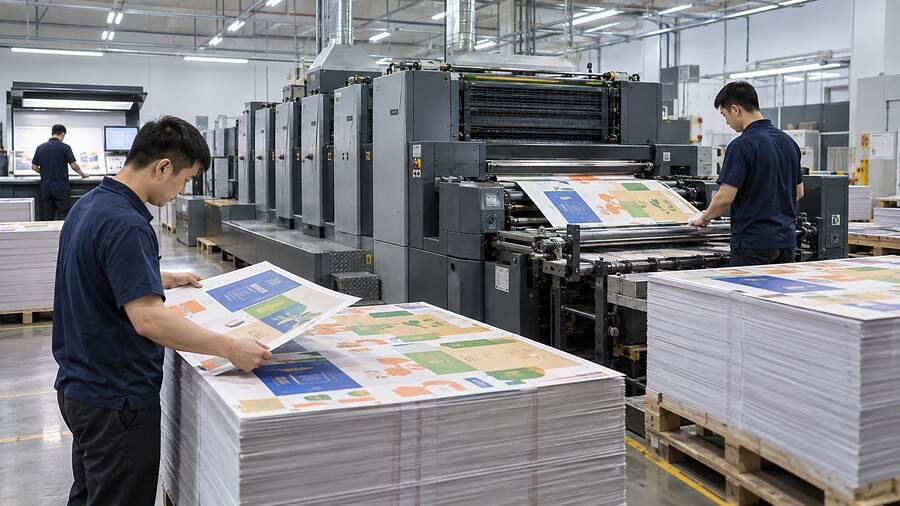
Offset, or lithographic, printing is widely used for folding cartons, wrap papers, and litho-laminated corrugated packaging. It offers strong image quality and repeatability when properly controlled.
It requires plates and make-ready. Sheet layout matters: a slightly larger box may reduce the number of pieces that fit on one sheet, creating a price jump that looks odd until you see the layout.
Flexographic Printing for Corrugated and Film
Flexo uses relief plates and fast presses. It is common for corrugated cartons, labels, bags, and flexible films. Price depends on plate size, color count, print coverage, substrate, and run length.
A one-color logo on kraft corrugated board is a very different job from heavy multi-color coverage. Ask whether plates are charged per color, per size, per artwork, and per print side.
Gravure for High-Volume Flexible Packaging
Gravure uses engraved cylinders. Cylinder cost makes small runs hard to justify, especially across several flavors or sizes. At sustained volume, however, print speed and repeat consistency can make sense.
Do the math by version. A 40,000-pouch order split across eight artworks is not automatically one efficient run.
What “Full Color” Fails to Tell You
It may mean CMYK outside only. It may include inside printing. It may not include white ink on clear film, a Pantone spot color, metallic ink, heavy solids, or a protective coating.
Ask for:
-
print process and number of colors;
-
outside, inside, or both;
-
percentage and location of coverage;
-
white or specialty inks;
-
color target and proof type;
-
acceptable color tolerance;
-
barcode contrast and scan check;
-
reorder color-control method.
ISO 12647-7 is one recognized framework for digital proofing systems. It can be relevant when color-critical work needs formal proof control, but do not assume every factory works to it. Put the required proof and tolerance into the specification.
Finishes, Inserts, and Hand Assembly Add Up Quietly
Finishing can improve durability or presentation. It can also build a surprisingly long production route.
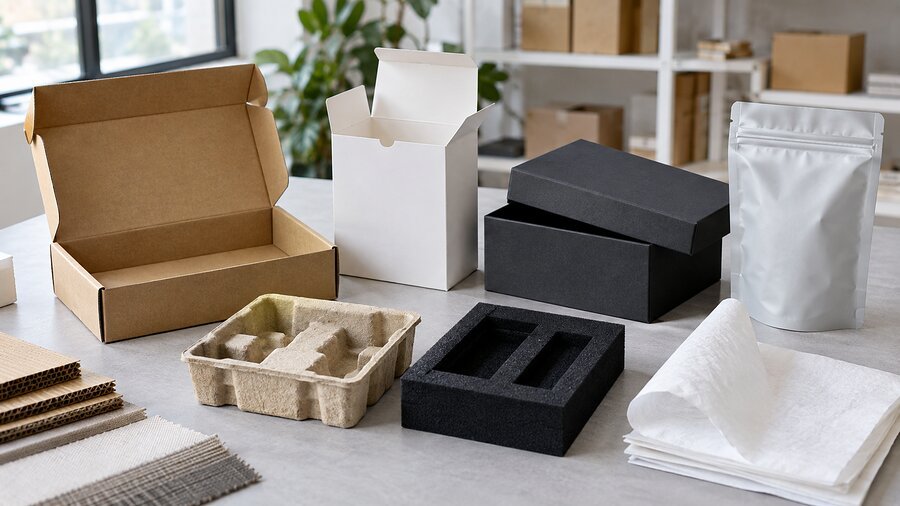
Common options include matte or gloss lamination, aqueous coating, varnish, soft-touch film, spot UV, foil stamping, embossing, debossing, window patching, ribbons, magnets, and specialty paper. Inserts may use paperboard, corrugated board, molded pulp, EVA, foam, or formed plastic.
Each feature can add a tool, machine pass, drying time, hand-placement step, inspection point, or separate supplier. Five “small” upgrades can behave like five people adding toppings to a pizza. The base disappears under the bill.
| Feature | Setup impact | Unit-cost impact | Question to ask |
| Matte/gloss coating | Low–medium | Low–medium | Needed for rub or moisture resistance? |
| Foil stamping | Medium–high | Medium | New die per artwork or size? |
| Emboss/deboss | Medium–high | Medium | Registered to print or separate? |
| Window patch | Medium | Medium | Which film, glue, and disposal route? |
| Magnet/ribbon | Medium | High | What manual placement tolerance applies? |
| Custom insert | Medium–high | Medium–high | Does it protect, fit, and release the product? |
Choose a finish for a reason. A matte coating that prevents scuffing may save rejects. A second foil color that nobody notices may just save you from having spare cash.

MOQ Changes Unit Price, but It Does Not Decide the Best Order
Fixed setup gets spread across more units as quantity rises. Suppose a project has $600 of setup cost:
-
at 500 units, setup equals $1.20 per unit;
-
at 1,000 units, it equals $0.60;
-
at 5,000 units, it equals $0.12.
That part is simple. The business decision is not.
The following example is illustrative, not a live supplier quote:
| Quantity | Setup per unit | Production price | Cash before freight | Inventory exposure |
| 500 | $1.20 | $1.10 | $1,150 | Low; expensive per unit |
| 1,000 | $0.60 | $0.78 | $1,380 | Moderate |
| 5,000 | $0.12 | $0.48 | $3,000 | High; artwork and demand risk |
The 5,000-unit run has the lowest calculated unit cost. It also needs more cash and storage. If the product sells 200 units a month, a label law changes, or the brand refreshes its logo, cheap boxes can become expensive cardboard furniture.
The factory MOQ tells you what the supplier accepts. The economic order quantity tells you what the business should buy after price, sales speed, storage, cash flow, and obsolescence are considered. The separate guide to custom packaging MOQ in China covers quantity by format and process in more depth.
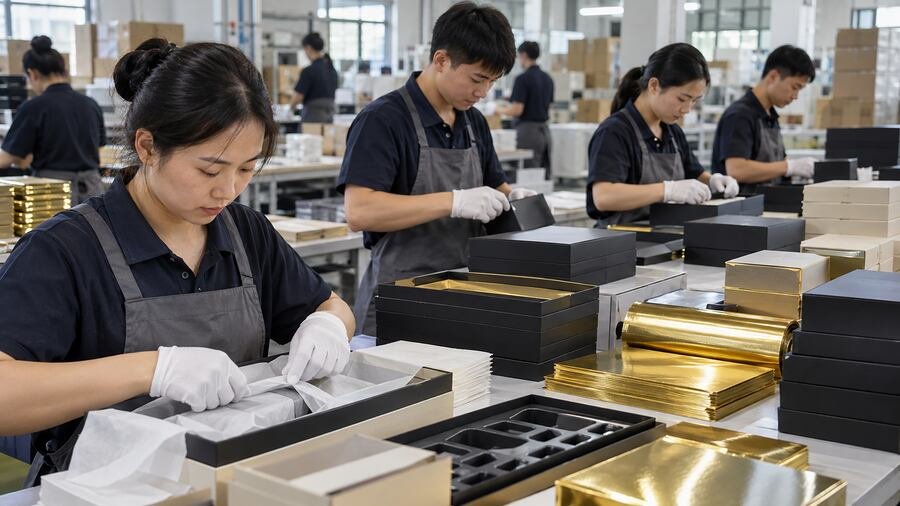
Hidden Costs Between the Factory Quote and a Usable Package
An EXW unit price is not wrong. It is simply standing near the beginning of the journey.
Freight and Dimensional Volume
Packaging is often light and bulky. Freight depends on export-carton dimensions, carton count, gross weight, pallet use, and cubic meters—not just the weight of one box.
Ask whether packaging ships flat, folded, pre-glued, or fully assembled. Compare air, sea, rail, truck, or domestic delivery to the fulfillment warehouse. A split shipment can send a small launch quantity by air and the balance by sea.
If packaging and finished products move through different factories, consolidation adds another step. The correct shipping options for packaging and finished orders depend on volume, destination, deadline, and whether the packaging can travel flat.
Import, Receiving, and Inspection
Confirm the delivery term and address. Does the quote cover factory pickup, export clearance, freight, destination fees, duty, tax, brokerage, or final delivery? A delivered quote and an EXW quote should not share the same comparison column without adjustment.
At receiving, count cartons and sample finished units. Check dimensions, material, print, finish, glue, odor where relevant, visible damage, and quantity by artwork. Agree on production overrun or underrun tolerance before ordering.
Storage and Fulfillment
Packaging becomes inventory. Each size, artwork, language, insert, and revision needs an identity. Old and new versions must not mix.
A documented China 3PL fulfillment workflow can control packaging SKUs, pack-out instructions, and reorder points. If demand is split between regions, compare warehousing services in China and the US rather than automatically shipping all empty packaging overseas.
Per-order cost may include retrieving the packaging, folding it, applying a label, placing an insert, assembling a kit, or replacing the supplier’s original package. Include that labor in the product contribution margin.
Waste, Defects, and Obsolete Stock
Allow for damaged corners, color rejection, poor glue, scratched lamination, unusable barcodes, counting differences, and handling damage. Also price non-physical waste: an old promotion, discontinued SKU, changed ingredients, new warning, or rebrand can make perfect packaging unusable.
Testing and Certification Claims
Testing should match the product and distribution route. Possible checks include product fit, compression, drop, vibration, scuff, rub, barcode scan, adhesive performance, and moisture exposure.
The ISTA test procedures range from screening tests to simulations for particular distribution environments. That does not mean every package needs every test. It means “make the box strong” is not a test plan.
For forest-based packaging, asking for FSC material is not the same as having a valid claim through the finished supply chain. FSC explains that chain-of-custody certification tracks certified material through production and distribution. Confirm the supplier’s certificate scope, claim, invoice wording, and logo authorization rather than copying an FSC mark into artwork.
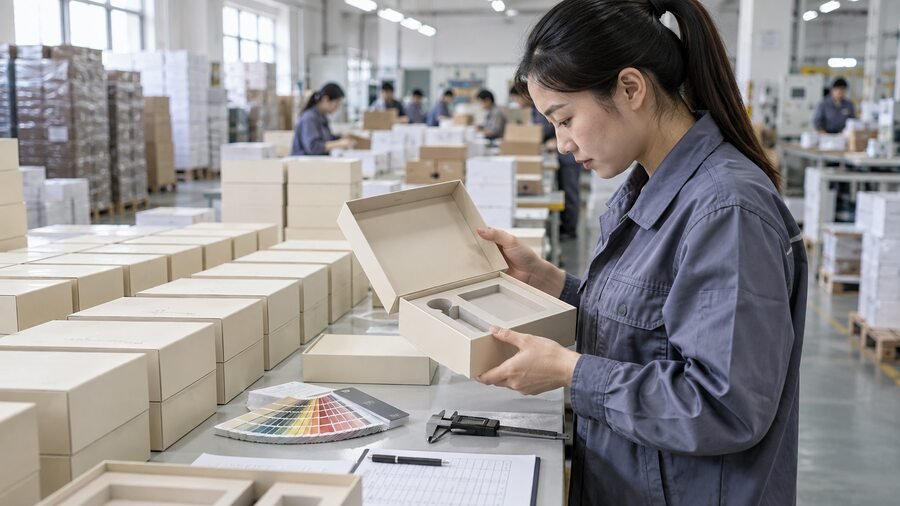
How to Compare China Packaging Quotes Line by Line
Send every supplier the same brief. If one factory quotes a 350 gsm folding carton and another quotes corrugated E-flute, you have two prices for two products.
Include:
-
product dimensions, weight, fragility, and pack orientation;
-
sales channel and destination;
-
internal and external package dimensions;
-
structure reference and dieline status;
-
material grade, thickness or caliper, flute, film structure, or barrier need;
-
print process, colors, coverage, inside/outside printing, and color reference;
-
coating, finish, insert, closure, and assembly state;
-
quantity by size, SKU, artwork, language, and expected reorder;
-
required sample and approval process;
-
export-carton requirements, delivery term, address, and deadline.
A China product sourcing process can help coordinate the packaging supplier with the product, sample, warehouse, and shipping plan. Still, the buyer should approve the specification and commercial terms.
| Quote field | Supplier A | Supplier B | Supplier C |
| Structure and dimensions | |||
| Material and thickness | |||
| Print process and coverage | |||
| Finish and insert | |||
| Quantity per version | |||
| Sample and setup fees | |||
| Tool ownership and reuse | |||
| Unit price and quantity tolerance | |||
| Export packing and delivery term | |||
| Lead time after approval | |||
| Landed usable unit cost |
Do not stop at the total. Ask what changes on reorder. Setup may fall because the cutting die is reused, while make-ready and minimum charges remain. A tiny artwork edit may require new plates. A board-price change may move the unit rate. Put the reorder assumptions in writing.
Three Worked Custom Packaging Budgets
The examples below are teaching models, not current factory offers. Actual costs depend on specifications, timing, supplier, and delivery scope.
Case 1: Launch-Stage Skincare Folding Carton
A brand needs 1,000 folding cartons in one size. The box uses coated paperboard, CMYK outside printing, a simple protective coating, and one glue seam. It ships flat.
| Illustrative item | Cost |
| Artwork/prepress and dieline check | $100 |
| Cutting die | $160 |
| Printed physical sample | $90 |
| Production: 1,000 × $0.62 | $620 |
| Freight, receiving, and inspection allowance | $230 |
| Total project cost | $1,200 |
If 980 cartons are usable, landed usable cost is about $1,200 ÷ 980 = $1.22 each. The $0.62 factory unit price was real. It just was not the whole project.
Case 2: Premium Jewelry Rigid Box
A jewelry brand orders 500 wrapped rigid boxes with a foil logo, magnetic closure, and fitted insert.
Assume $420 for structure, sample, foil die, and setup; $3.70 per finished box; and $520 for bulky freight, receiving, and inspection. Total project cost is $2,790. At 485 usable units, the usable cost is about $5.75 each.
The box is physically small. Its manual work, several components, tools, and assembled shipping volume are not.
Case 3: Four-Flavour Flexible Pouch Order
A supplement brand wants 1,000 pouches for each of four flavors. A digital pilot may accept four artworks with lighter setup but a higher unit rate. A conventional flexo or gravure quote may offer a lower unit rate only after plates or cylinders are paid for each version and a higher run is produced.
Suppose the pilot costs $0.88 per pouch with $240 of shared setup: $3,520 + $240 = $3,760 before freight. A larger conventional run might fall to $0.36 per pouch, yet require 10,000 per flavor plus $2,000 of tooling: $14,400 + $2,000 = $16,400 before freight.
The second route is cheaper per pouch. It also commits much more cash and creates 40,000 flavor-specific packages. If demand is uncertain, the expensive pilot can be the cheaper business decision. Funny how that happens.
Reduce Packaging Cost Without Making It Feel Cheap
Cost reduction should remove work that customers do not value, not protection they need.
-
Start with a stock structure and add a label, sleeve, card, or one-color print.
-
Right-size the package around the product and shipping route.
-
Standardize one box size across compatible SKUs.
-
Reduce artwork, language, and color versions where practical.
-
Print only the areas customers see and value.
-
Choose one memorable finish instead of foil, UV, embossing, ribbon, and a small brass orchestra.
-
Consider engineered paperboard or molded pulp instead of foam when performance and requirements allow.
-
Ship folding cartons and corrugated boxes flat, then assemble near fulfillment.
-
Approve product fit and structure before final artwork and tooling.
-
Use a pilot run, then scale after sales and pack-out are proven.
-
Agree on tool reuse, storage, and reorder pricing before the first order.
Cheap-looking packaging usually comes from poor fit, weak artwork, inconsistent print, or careless packing—not from skipping three decorative processes. Spend where the product and customer can feel the difference.
Conclusion
The cheapest printed unit is not always the lowest-cost usable package. Start with the product and shipping route. Define the structure, material, print, finish, versions, quantity, and approval method. Then separate setup fees from repeating production cost and calculate freight, storage, fulfillment, defects, and obsolete stock.
Compare suppliers using the same brief and the same delivery scope. Approve a meaningful sample, clarify tool ownership, and buy an economic quantity rather than chasing the lowest unit price.
Once those pieces are visible, custom packaging pricing in China stops feeling mysterious. It becomes a normal sourcing calculation—with a few more folds in it.
Frequently Asked Questions
How much does custom packaging cost per unit in China?
There is no reliable single average. A simple label, printed card, folding carton, corrugated mailer, rigid gift box, and barrier pouch use different materials and processes. Request a quote using exact dimensions, material, printing, finish, quantity by artwork, and delivery scope. Then add setup and landed costs.
What setup fees should I expect for custom packaging?
Possible charges include structural design, dieline creation, artwork preparation, proofs, physical samples, cutting dies, printing plates, gravure cylinders, foil or embossing tools, color matching, and machine make-ready. Ask which are included and which recur on reorders.
How much does a custom packaging sample cost?
It depends on the sample. A digital proof may be free or inexpensive. A plain structural sample is usually cheaper than a printed, finished prototype. A production-process sample can cost more because the factory must prepare materials, tools, or a short run. Confirm whether sample freight is separate.
What is the difference between a dieline and a cutting die?
A dieline is the digital drawing showing the package’s cuts, folds, glue areas, and artwork boundaries. A cutting die is the physical production tool that cuts and creases the material. Changing the structure can require both a revised dieline and a new die.
Do digital printing jobs need printing plates?
Normally, digital printing transfers the image without conventional offset or flexographic plates. That reduces setup and helps small runs or multiple versions. The printer may still charge artwork preparation, color setup, cutting dies, samples, or minimum machine fees.
Can cutting dies, printing plates, and cylinders be reused for reorders?
Often, yes, if the size, structure, artwork, colors, substrate, and production equipment remain compatible. Storage limits, wear, damage, and supplier policy matter. Get the reuse period and any reorder setup charges in writing.
Who owns the packaging tooling after I pay for it?
Payment alone does not settle ownership. The supplier may own it, hold it for your exclusive use, or allow transfer under agreed conditions. The purchase order should state ownership, storage time, maintenance, reuse, transfer rights, and disposal.
What is the cheapest custom packaging option for a small ecommerce brand?
Often it is an appropriate stock mailer or box combined with a branded sticker, label, sleeve, tape, or insert. This keeps setup and inventory risk low. The best option still needs to protect the product and fit the shipping method.
How does MOQ affect custom packaging unit price?
Higher quantity spreads design, tooling, plates, make-ready, and waste across more units. Material purchasing and machine efficiency can also improve. However, more units require cash and storage and increase the risk of obsolete artwork, so the lowest unit price may not deliver the lowest total business cost.
Is a rigid box much more expensive than a folding carton?
Usually. Rigid boxes use thick board, wrap paper, more components, and significant assembly. Magnets, ribbons, foil, and inserts add further steps. They also ship assembled, which raises freight volume. A simple folding carton is flatter and more automated.
Does custom packaging pricing include freight from China?
Not automatically. A quote may be EXW factory, include domestic delivery to a warehouse, or include international freight. Confirm the Incoterm or delivery scope, export packing, pickup, customs handling, destination fees, duties and taxes, and final delivery address.
How do I calculate landed cost per usable package?
Add development, samples, tools, production, finishing, assembly, quality checks, freight, import, receiving, storage, and expected waste. Divide that total by the number of packaging units actually usable for orders—not merely the quantity printed on the purchase order.
Does FSC-certified paper make custom packaging more expensive?
It can, depending on material grade, supplier certification, availability, quantity, and documentation. The price difference is not universal. More importantly, verify chain-of-custody evidence and the exact FSC claim before using the name or logo on packaging.
How can I avoid color differences between the sample and bulk production?
Define the color target, substrate, print process, proof type, tolerance, and viewing conditions. Approve a relevant physical sample or press proof for critical work. Keep a signed reference and require the supplier to control bulk production and reorders against it.
Can a China fulfillment center store packaging and apply it to individual orders?
Yes, if the operation supports packaging inventory and documented pack-out rules. Give each box, insert, label, and version its own identifier. Define storage, replenishment, assembly, application, old-version handling, and per-order labor before launch.
Table of Content

I’m Cassiel. I’ll help you scale your Shopify business with reliable fulfillment.
Join to newsletter.
Follow us and get more knowledge.