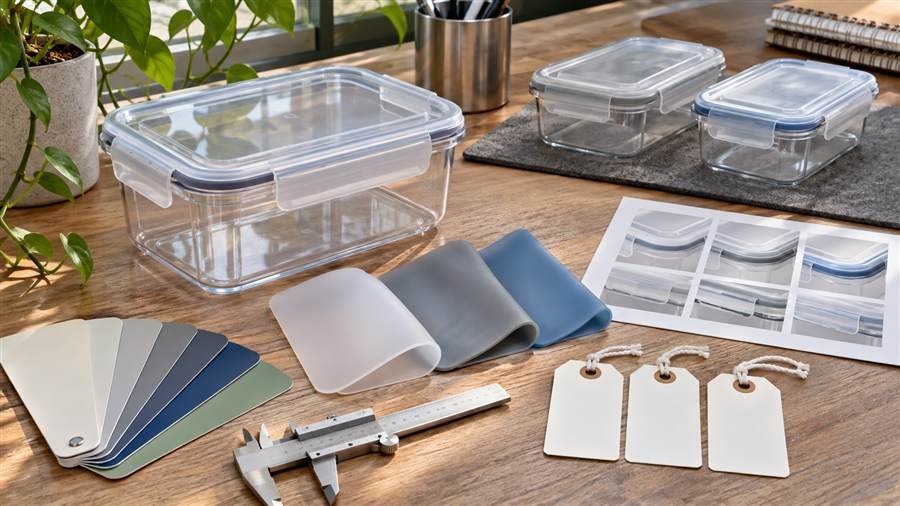
You have 18 cartons of small home goods in a Yiwu warehouse. A courier says it can move them fast. An air-freight quote looks cheaper per kilogram. A rail forwarder offers a middle route to Europe. Sea freight has the lowest headline price. Which one should you book?
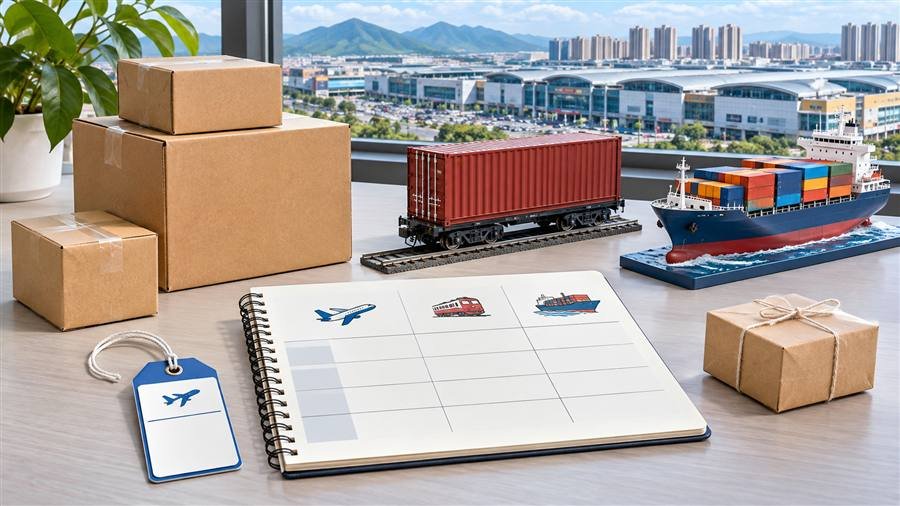
First, stop looking at the headline price. One quote may end at an airport, another at a rail terminal, and a third at your customer’s door. A fast flight can still wait for a warehouse collection, export paperwork and final delivery. The right comparison is what the same packed goods cost to reach the same final address by the date you actually need them.
If you are moving samples, wholesale stock or ecommerce orders from Yiwu, the useful quote is the one that covers the journey your goods will actually take. Freight rates, routes and service availability change. Check any timing in a sales pitch against the specific lane before promising delivery.
Begin with the cargo, destination and deadline
Yiwu is inland. Your supplier’s cartons may first move to a local consolidation warehouse, an airport, a rail terminal or a seaport such as Ningbo-Zhoushan. That first leg takes time and money. It also creates a place where several suppliers’ goods can be checked and combined.
Before asking “air or sea?”, write down six things: product description, quantity, packed carton count, gross weight, outer dimensions, and final delivery address. Add the date by which the goods must be usable, not merely landed at a port. State whether the shipment goes to a store, an Amazon or 3PL warehouse, or individual customers.
Product details matter. A plain cotton pouch is easier to route than a power bank, a liquid cosmetic or a fragile glass lamp. The same cargo can be acceptable on one carrier service and refused on another. If the goods are not yet packed, ask the supplier for proposed carton dimensions and mark the quote as provisional. One oversized box can change the calculation.
For mixed Yiwu purchases, use a common receiving point before requesting final freight rates. Yiwu sourcing often includes supplier coordination and warehouse consolidation; the shipping decision comes after the real SKU mix and parcel profile are known.
Four modes, compared on the same job
| Mode | Usually worth checking for | Cost and time drivers | Common blind spot |
|---|---|---|---|
| Express courier | Samples, small urgent parcels, high-value lightweight goods | Chargeable weight, destination, service level, remote-area and fuel charges | A courier price may exclude import duty or a special pickup |
| Air cargo | Urgent commercial stock that is too large for a sensible courier bill | Airport handling, chargeable weight, flight space, clearance and final truck | Airport-to-airport transit is not delivery to your warehouse |
| Rail | Suitable freight to reachable Europe or Central Asia corridors | Terminal collection, train space, border handling, onward road leg | Rail is not a general route to every destination |
| Sea LCL or FCL | Planned inventory, heavier or bulkier goods | Origin trucking, port charges, consolidation, sailing, destination fees and delivery | A cheap ocean line can sit inside an expensive door-to-door move |
A busy season, a changed route or an unusual product can reorder the options in the table. Request a current quote for the actual lane.
Express: a small parcel with fewer handoffs to arrange
Express courier is often the easy choice for samples or a few cartons you need quickly. The courier network can combine pickup, international movement, tracking and local delivery. Bulky goods can make that convenient service expensive.
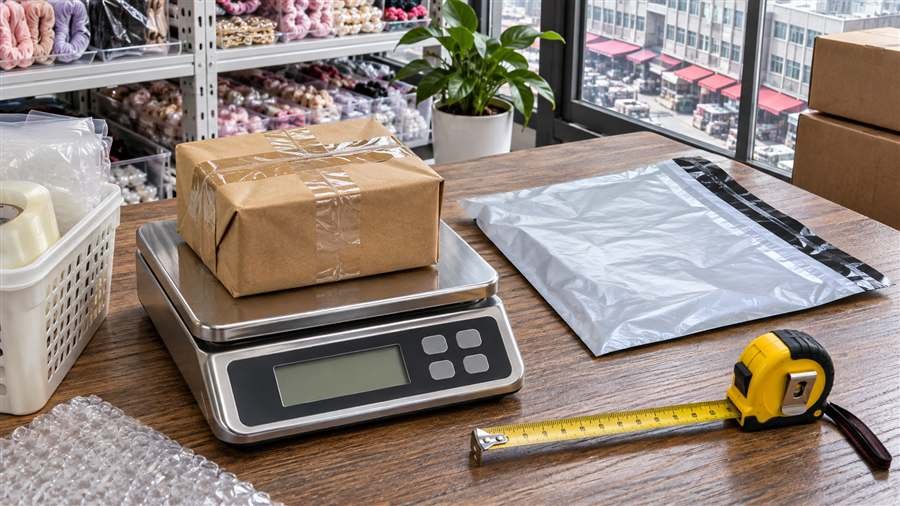
Ask whether the offer is a major integrated courier service, a dedicated ecommerce line, or a reseller’s “express” product. Those labels do not describe the same handoffs. Confirm pickup location, tracking events, customs handling, delivery area, claims process and whether the final-mile company differs from the first carrier.
Weight on the scale is only one number
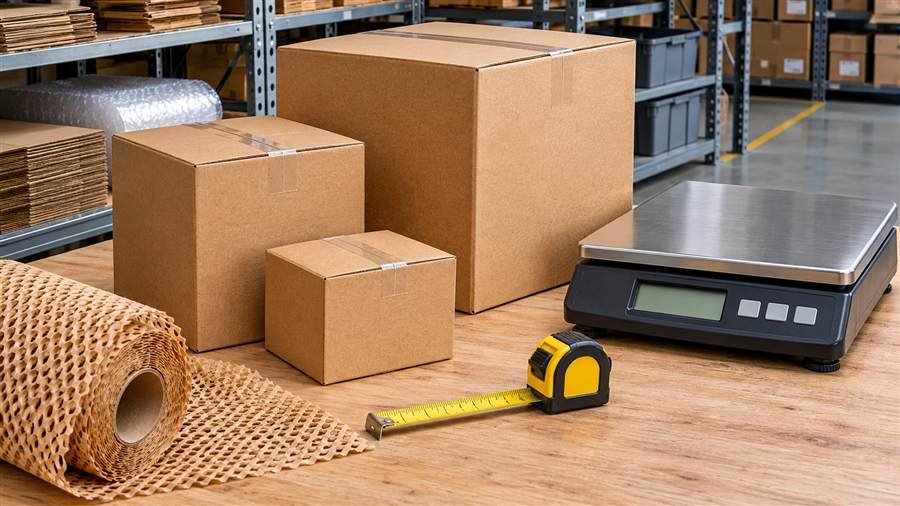
Many express and air services compare actual weight with volumetric weight, sometimes called dimensional weight, and charge on the larger figure. The divisor and rounding rule vary by carrier and service. Measure the sealed outer carton, not the bare product. A half-empty gift box can make a light item expensive to send.
Get the carrier’s formula with the quote. Ask about remote-area, fuel, oversize and address-correction surcharges. Then calculate cost per sellable unit. A $30 sample shipment is one thing; repeating that cost on every low-priced customer order is another.
For dropshipping, a dedicated cross-border parcel line may be more appropriate than premium express. It still needs a current destination quote and a realistic tracking path. Dropshipping fulfillment is an order-by-order workflow; bulk air and sea freight serve a different inventory job.
Air cargo: fast main leg, more work around it
Air freight can fit urgent replenishment when a courier quote grows too large. The air leg is quick, but cargo still needs collection in Yiwu, export handling, terminal acceptance, customs clearance, destination handling and a truck or local carrier to the final address. Ask which of those legs the quote includes.
Air cargo may have minimum charges, airport storage or handling fees, and a different dimensional-weight calculation from the courier option. A quote per kilogram without the minimum and destination fees is hard to compare. The shipment’s value matters too: paying extra to avoid a stockout can be rational if the missing stock would cost more in sales or customer trust. Use your own margin, not a blanket “air is worth it” rule.
Ask for a dispatch-to-warehouse estimate with each stage named. A five-day flight-and-clearance claim can become a longer door-to-door job if your receiving warehouse has appointment rules or the product needs extra paperwork. Keep some buffer around a launch date.
Rail: useful where a corridor and final leg exist
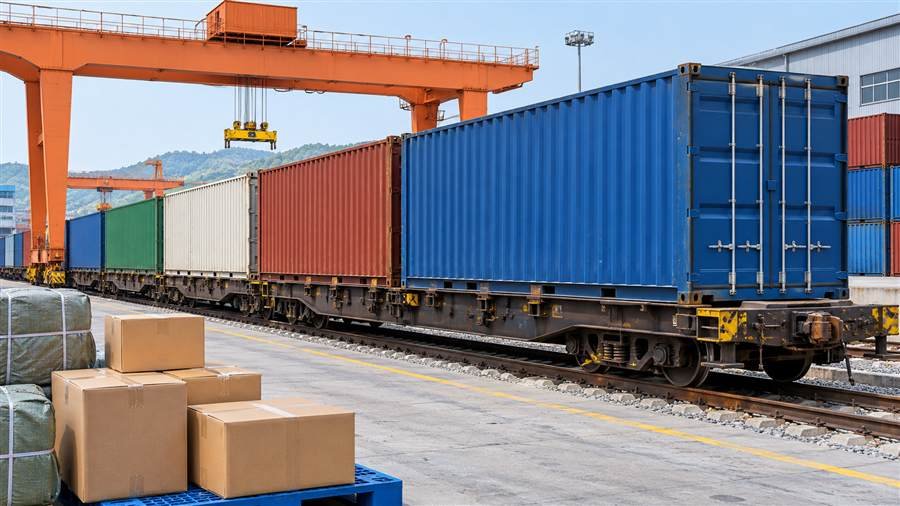
China to Europe rail services have included Yiwu as an origin. Rail can serve some European and Central Asian destinations when the cargo is too heavy for affordable air but needed sooner than a sea plan would comfortably allow. It serves specific corridors; it does not carry goods across the ocean to the United States.
Your quote needs the Yiwu pickup, origin terminal, rail leg, border or gauge-change handling where relevant, destination terminal, customs and final truck. Ask which country the train passes through and whether the forwarder has a current service for your product and consignee address. Geopolitics, border rules and capacity can affect a route. A timetable for a terminal-to-terminal train is not a promise to your warehouse door.
Rail may be attractive for cartons of mid-value stock headed to a European distribution point. A handful of direct-to-consumer parcels usually belong in a parcel network instead. Compare rail with air and sea for the same delivery address and customs scope before choosing it.
Sea: plan from Yiwu to the final address
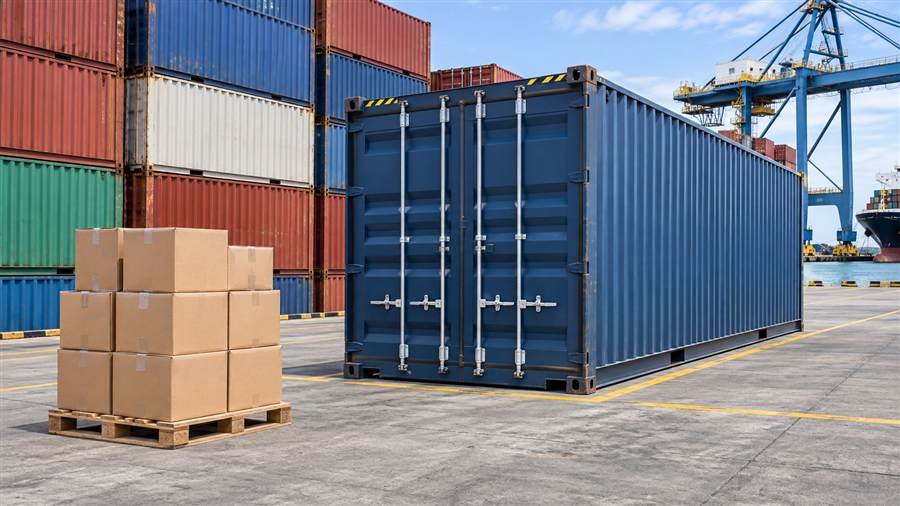
Ocean freight is often considered for larger or less urgent inventory. From Yiwu, goods first need to reach a seaport. A supplier may deliver to a Yiwu consolidation point, then a forwarder trucks the cargo to the port. The ocean leg is only one part of the trip; origin and destination charges can be significant.
LCL or FCL?
LCL, less-than-container load, combines your cargo with other shippers’ goods. It can work for a modest volume, but you pay for consolidation and deconsolidation and need to watch the chargeable cubic volume, minimums and destination fees. FCL, full-container load, gives your shipment a container booking. It can improve the economics of a larger load, but it does not mean filling a container is automatically cheaper for a few cartons.
Ask the forwarder to quote both near the crossover point using actual cubic meters (CBM), gross weight, carton count and commodity. A large, light item may use container space long before it reaches a heavy weight. A dense item may meet a weight or handling limit first. There is no reliable universal “switch to FCL at X cartons” rule.
Sea suits planned replenishment when you can carry stock and allow for the journey. Add time for supplier completion, pickup, consolidation, port cutoffs, sailing, customs and final delivery. A late factory order cannot be rescued by quoting the fastest vessel schedule on a web page.
Build a door-to-door quote that you can compare
Put each provider on the same sheet. Ask for the all-in amount to one named final address, then request the components. Some charges may be pass-through estimates until the goods are packed or classified.
| Line to confirm | Question for the forwarder |
|---|---|
| Origin pickup | From which Yiwu address, on what date, and who loads? |
| Receiving and consolidation | Are supplier deliveries, counting, storage and repacking included? |
| Main transport | Which courier product, flight, rail corridor or ocean service? |
| Chargeable basis | Actual weight, dimensional weight, CBM, minimum charge or container rate? |
| Origin charges | Export clearance, terminal handling and documents included? |
| Destination charges | Terminal, brokerage, last-mile truck, appointment and storage included? |
| Duty and tax | Estimated separately; who is importer and who pays? |
| Coverage | Insurance, claims limit and product exclusions? |
| Timing | Pickup, main-leg transit, customs and final delivery estimated separately? |
The ICC’s Incoterms® 2020 rules allocate costs, risks and obligations under named trade terms. A quote that says only “FOB,” “DAP” or “DDP” still needs the named place and a clear scope. The seller’s FOB port price is not the same job as a forwarder’s door delivery. Incoterms also do not replace your product contract or settle every fee by magic.
Think about a simple example: Supplier A quotes $400 to deliver cartons to a China port. Forwarder B quotes $500 for an ocean leg. Neither figure tells you the destination terminal charge, duty, customs broker fee or truck to your warehouse. Adding $400 and $500 and calling it “delivered cost” would be a mistake. Get the missing rows before approving a price for your store.
The same discipline helps with a multi-supplier order. One warehouse can receive products from several Yiwu sellers, verify counts, and create a packed cargo profile for the freight quote. Warehousing and consolidation can reduce scattered handoffs, though receiving, storage and repacking should appear in the cost model.
Before pickup, match the commercial invoice and packing list to the cartons. The product description, quantity, value, carton count, weights and consignee details should agree. Your forwarder may also need a product classification, origin information or other documents for the destination and transport mode. Ask who prepares each record and who checks it. A typo in the receiving address can hold a small express parcel; a mismatch across a container’s documents can create a much larger problem.
Keep the quote’s validity date and assumptions. Currency, fuel adjustment, peak charge and available capacity can move between planning and booking. If the supplier changes the carton count or the delivery address changes, request a refreshed price. Save the final booked service next to the quote so you can compare the invoice and actual delivery later.
Materials and product rules can veto the cheapest route
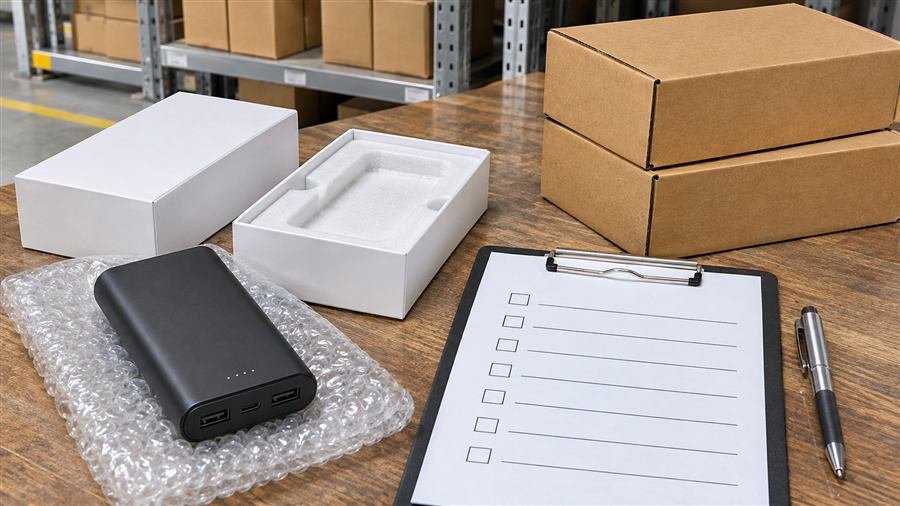
A fragile ceramic set needs protective fill and may use a larger box. Apparel can compress into a smaller parcel. A power bank changes the conversation entirely: battery chemistry, watt-hours, test evidence, packing and carrier acceptance affect route eligibility. IATA’s dangerous-goods guidance is one starting point for air movements; the actual carrier and current regulations control acceptance. Our battery and power-bank fulfillment guide shows the kind of model-specific data to gather.
Liquids, aerosols, magnets and other restricted goods also need a proper classification and route check. Ask the supplier for documents tied to the exact product, not a PDF for something similar. Do not put a vague “household item” description on customs paperwork to make a difficult product appear easy.
Packaging affects cost and protection. Shortening a carton by a few centimeters may reduce dimensional weight on one service, while removing too much protection raises damage and reship costs. Test the packed item and its actual shipping rate.
Choose by scenario, then test a real shipment
For a sample or one urgent, light order, start with express and compare an eligible parcel line. For a few cartons of important stock, request both courier and air-cargo door quotes. For a suitable European replenishment, include rail alongside air and sea. For a planned, larger warehouse fill, compare sea LCL and FCL. If the destination is the US, rail does not replace the ocean or air crossing.
A split can make sense. Send enough stock by air to cover a near-term gap, then move the rest by sea. Price two pickups, two customs paths, and two receiving events. A “half air, half sea” idea saves nothing if the extra handling eats the benefit.
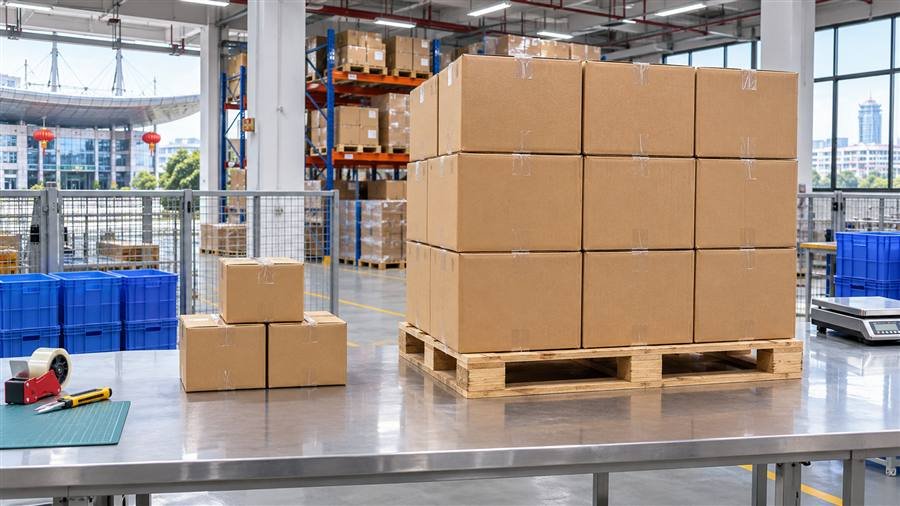
Pilot the route with a shipment you can track from Yiwu pickup to the actual final address. Save the quote, packed dimensions, invoices, tracking events, customs charges and delivery date. Compare estimated and billed cost; it will show which quote assumptions held up. If the products are still being sourced, product sourcing should settle the SKU and pack-out before anyone promises a freight price.
Conclusion
Express, air, rail and sea solve different problems. Start with the goods, address and deadline. Compare quotes at the same door-to-door scope, including Yiwu collection, customs and final delivery. Then test the route with a real packed shipment. The cheapest line on a rate card is useful only when it gets the right goods to the right place in time.
FAQs
What is the cheapest way to ship goods from Yiwu?
It depends on destination, volume, weight, dimensions and delivery scope. Sea often suits larger planned stock, while a small parcel may be cheaper to send through a parcel network than a formal freight move. Compare delivered totals.
Is express courier the same as air freight?
No. Express usually bundles pickup, movement, tracking and delivery in a courier network. Air cargo may quote an airport leg with separate terminal, customs and final-delivery work.
When is express better than air cargo?
Express is often simpler for samples and small urgent parcels. Ask for both when the carton count or chargeable weight grows; minimums and destination charges can change the answer.
Can Yiwu goods ship by rail to Europe?
Yes, when a current rail service serves the origin, destination terminal and onward delivery point, and the product is accepted. Confirm the whole route and customs scope with the forwarder.
Can I use rail from Yiwu to the United States?
Rail can move goods to a China terminal or seaport, but it cannot cross the ocean to the US. The international leg needs sea or air transport.
Is rail always faster than sea freight?
No. Compare door-to-door estimates on the same lane. Border handling, train schedule, port service and final trucking can change the result.
What is the difference between LCL and FCL?
LCL shares a container with other shippers. FCL books a container for your shipment. LCL can suit smaller volumes; FCL may suit larger loads. Compare all origin and destination charges.
How does a Yiwu shipment reach a seaport?
Usually by domestic transport from the supplier or a consolidation warehouse to the export port. Confirm who arranges and pays for that leg.
What is chargeable or volumetric weight?
It is the billing weight calculated from the parcel’s outer dimensions. Many courier and air services compare it with actual weight and bill the higher figure under their service rules.
Why did the final freight bill exceed the quote?
The packed dimensions may differ, or the original quote may have excluded surcharges, terminal charges, duty, tax or final delivery. Compare the invoice line by line with the written quote.
What should a door-to-door quote include?
Origin pickup, handling, main transport, clearance responsibilities, destination fees and delivery to a named address. Ask what remains estimated or excluded.
Who pays import duties under DDP or DAP?
The selected Incoterms® rule allocates the usual responsibility, but the named place and local legal ability to clear imports matter. Confirm who is importer of record and who actually pays each tax or duty.
Can I ship batteries or liquids by air?
Some products can move on approved services when properly classified, packed, marked and documented. Others face restrictions. Get the exact product details checked by the carrier or qualified dangerous-goods specialist.
Should I split urgent stock between air and sea?
It can help cover a near-term shortage while lowering freight on the rest. Include the extra pickups, clearances and receiving work in the comparison.
How should a dropshipper ship one customer order from Yiwu?
Use a suitable tracked parcel route for the product and destination. Check the packed weight, restrictions, delivery promise and exception process.
Table of Content

I’m Cassiel. I’ll help you scale your Shopify business with reliable fulfillment.
Join to newsletter.
Follow us and get more knowledge.