Dog beds look like easy ecommerce products. The customer is obvious and the photos can be lovely. Then the shipping quote arrives. That fluffy bed weighing 2.5 kilograms somehow has the chargeable weight of a small cabinet. Not so lovely now.
Still, the category deserves attention. The American Pet Products Association reported that 95 million US households owned a pet in 2025. It put US pet spending at $158 billion for that year and projected $165 billion for 2026. Dog ownership reached 53% of US households. That is a broad customer base, although a big market does not automatically make every product a good bet. The useful question is not, “Do people buy dog beds?” They clearly do. The question is, “Can this particular bed solve a clear problem and survive the sourcing, shipping, and return math?” APPA’s 2026 State of the Industry provides the market context.
This guide studies ten Shopify dog bed brands and ten trending pet beds for dropshipping in 2026. The brands are not ranked by revenue. They were selected for positioning and merchandising lessons. The product review also covers foam, compression, dimensional weight, QC, and returns. A good pet bed is not merely comfortable. It is understandable, repeatable, and sensible to ship.
Shopify Dog Bed Brands and 2026 Pet-Bed Trends at a Glance
Before getting into the details, here is the short list. “Top” means useful to study. It does not mean these brands are arranged by sales, traffic, or profit.
|
Brand
|
Positioning worth studying
|
Main seller lesson
|
|
K9 Ballistics
|
Durable, chew-resistant, orthopedic beds
|
Build the offer around one expensive customer problem
|
|
FunnyFuzzy
|
Home decor, softness, and visual variety
|
Sell the bed as part of the room, not only a pet accessory
|
|
Plufl
|
Oversized, human-use novelty
|
An unusual format can earn attention, but logistics still gets a vote
|
|
Lords & Labradors
|
Premium pet lifestyle and guided selection
|
Reduce choice anxiety with sizing, breed, and style guidance
|
|
Beco Pets
|
Sustainability-led materials
|
Make material choices specific and supportable
|
|
Snuggy
|
Comfort, gifting, and personalization
|
Personalization can raise perceived value
|
|
Nandog Pet Gear
|
Luxury fashion and interior styling
|
A coherent visual identity can support premium pricing
|
|
Settle Pet
|
Human-grade orthopedic positioning
|
Explain the construction behind the benefit
|
|
Ralph & Co
|
Refined design with practical care information
|
Washability and fit details help close the sale
|
|
Bowl & Bone Republic
|
Focused European design language
|
A narrow aesthetic can distinguish a familiar product
|
The product trends that deserve the closest look are orthopedic foam beds, calming donut beds, washable modular beds, cooling beds, chew-resistant beds, elevated outdoor cots, cave beds, travel mats, crate pads, and sofa-protector beds. None is automatically a winner. Each fits a different buyer and comes with a different fulfillment headache.
How These Shopify Dog Bed Brands Were Selected
A list like this can become slippery. Estimated traffic, editorial preference, and supplier “hot product” tags measure different things. Here, a brand or store had to meet most of these conditions:
-
Dog beds are a meaningful part of its offer.
-
The store has a recognizable customer, problem, or design position.
-
Product pages help buyers judge size, material, care, or durability.
-
The merchandising offers a useful lesson for a Shopify seller.
-
The business was operating as an ecommerce brand when reviewed in August 2026.
Platforms and catalogs change, so this is an August 2026 research snapshot. Copying a homepage will not copy the supplier relationship, testing, returns process, or customer knowledge behind it.
Independent testing publications make a similar point from the consumer side: the right dog bed depends on size, age, sleeping style, temperature, care, and construction. The evaluation criteria used in Sleep Foundation’s dog-bed testing are helpful because they move the conversation beyond soft-looking photos.
10 Shopify Dog Bed Brands Worth Studying in 2026
1. K9 Ballistics: Build the Brand Around Durability
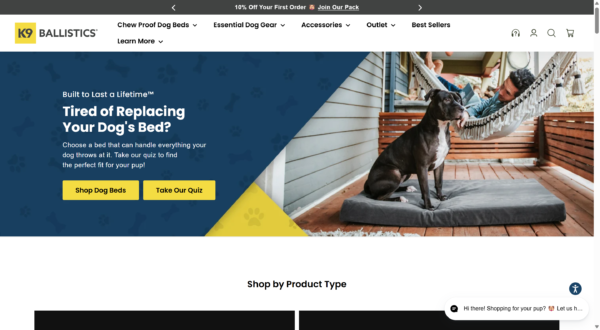
K9 Ballistics answers a painful question: what can an owner buy when a dog destroys ordinary beds? Its crate pads, orthopedic beds, tough fabrics, warranties, and replacement logic all circle that problem. That focus is the lesson. “Premium comfort” says little; a bed for dogs that dig, scratch, or chew creates urgency. The promise also raises expectations, so sellers need real seam, edge, fabric, and abrasion testing. Never call a product indestructible because a supplier used the word in a quotation.
2. FunnyFuzzy: Sell the Bed as Part of the Home
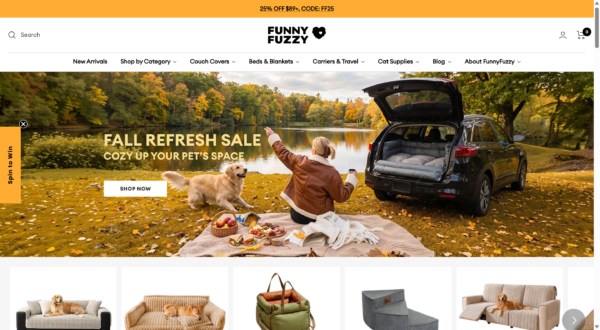
FunnyFuzzy leans into soft textures, playful shapes, sofa covers, and room photography. The bed is presented as something the owner will see every day, not hide before guests arrive. That matters because the human notices color, hair, cleaning, scale, and placement. The risk is choice overload. A smaller Shopify store should borrow the visual clarity, not the catalog size. Start with one home style or customer problem, then add filters and comparisons as the range grows.
3. Plufl: Turn an Unusual Format Into a Shareable Product

Plufl made the familiar dog-bed shape large enough for humans. The concept is instantly understandable in video, so scale becomes the novelty. It is also a warning for dropshippers. A human-size bed needs storage, compression testing, and an expensive return journey. The lesson is not to find a copy. Ask whether a standard product can serve a new use, then calculate the carton before falling in love with the idea. Big viral products can produce big warehouse bills.
4. Lords & Labradors: Reduce Choice Anxiety With Guidance
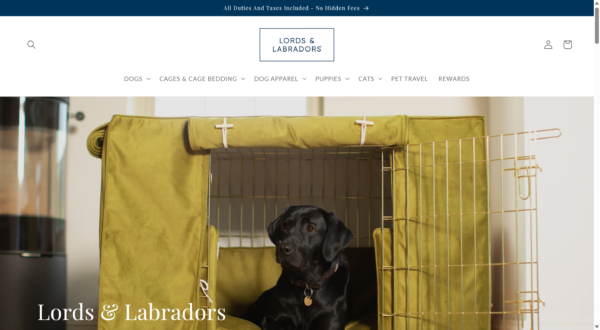
Lords & Labradors shows how to organize beds by size, breed, shape, style, and use. That guidance matters because 90 by 70 centimeters does not tell a buyer how much space remains inside a bolster. A smaller brand can add internal and external dimension diagrams, real dogs with breed and weight stated, and a short explanation of each bed shape. Better guidance reduces choice anxiety and size-related returns.
5. Beco Pets: Make Materials Part of the Product Story
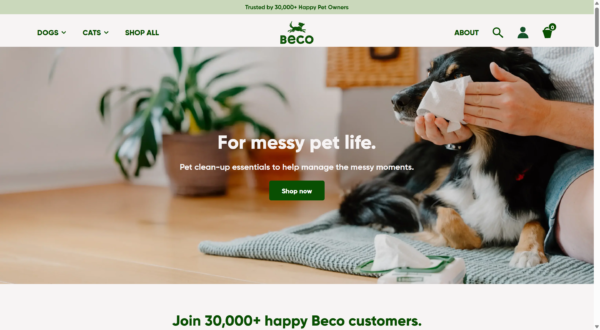
Beco Pets shows how materials can become part of the reason to buy. Recycled fill, durable covers, repairability, and replacement components are meaningful when explained specifically. “Eco-friendly” alone is vague. State which material is recycled, how much is used, and how the claim is supported. Product and packaging should also agree. A recycled-fabric message feels awkward when the bed arrives in excessive plastic and an oversized box.
6. Snuggy: Use Personalization to Raise Perceived Value
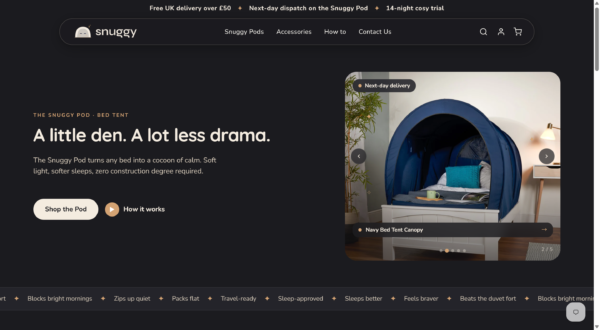
Snuggy shows how names, embroidery, and gift-ready presentation can make a familiar soft product feel personal. This can support a higher price, but customer text must move accurately from Shopify to production. Character limits, fonts, capitalization, previews, and remake responsibility need rules. Start with one embroidery position and a few tested colors. Twenty fonts and twelve threads sound generous, then become a spreadsheet swamp.
7. Nandog Pet Gear: Let Design Support Premium Pricing
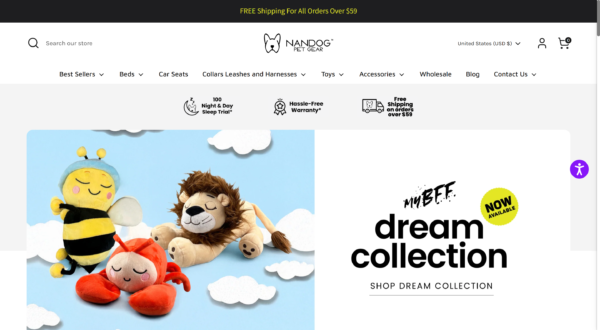
Nandog Pet Gear uses connected colors, textures, and luxury presentation. A coherent design system helps beds, blankets, carriers, and photography feel made for the same customer. That supports cross-selling and premium pricing. Styling cannot rescue weak construction, though. Plush fabric can shed, trim can catch claws, and pale covers show dirt. Design earns the first look; stitching, care, and repeatable color protect the experience after delivery.
8. Settle Pet: Explain the Construction Behind Comfort
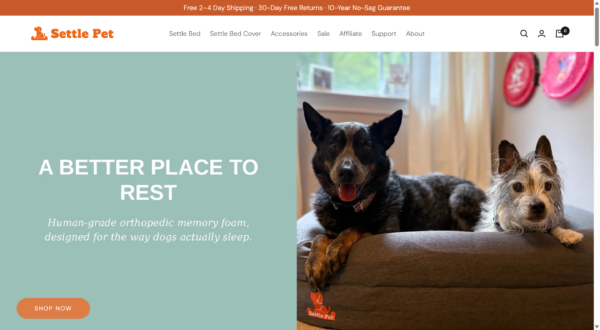
Settle Pet uses human-comfort language and orthopedic positioning. The useful lesson is to explain the build: foam thickness, layers, cover, liner, base, and edge height. During sourcing, ask for type, density, tolerance, compression method, and recovery time instead of accepting “memory foam.” Factories may use that phrase for products with very different feel and durability. Keep comfort claims measured and do not imply treatment of joint disease.
9. Ralph & Co: Make Fit and Care Part of the Sale
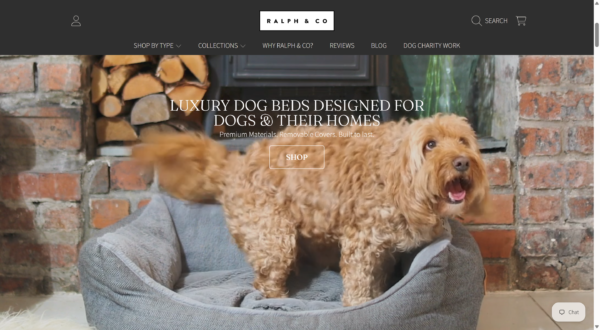
Ralph & Co reinforces a simple ecommerce truth: care details are selling details. Removable covers, hidden zippers, washable fabric, liners, grip, and spare covers answer real objections. “Machine washable” still needs instructions: cycle, temperature, drying method, and which parts must be removed. Clear care information reduces damage and gives customer service a consistent answer. The lesson is a little boring, maybe, but useful things often are.
10. Bowl & Bone Republic: Keep the Niche Visually Tight
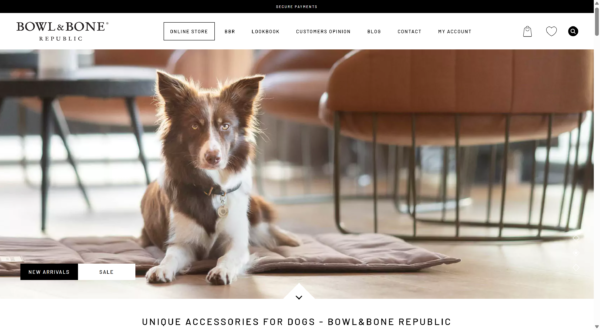
Bowl & Bone Republic uses a focused design language across beds and accessories. Colors, forms, photography, and names support the same customer image. A new brand does not need fifty products to look established; two bed shapes, controlled colors, a blanket, and a spare cover may feel more intentional. The hard part is production consistency. Fabric shade, logo position, stitching, and dimensions need approved references. Good design needs very unglamorous specification sheets.
Top Trending Pet Beds for Dropshipping in 2026
A trend is a reason to investigate, not a purchase order. Supplier catalogs, search interest, competitor listings, reviews, and social posts can show attention. None tells you whether your audience will buy at your price or whether the packed product leaves enough margin.
Use the table as a product-screening map.
|
Pet-bed format
|
Customer problem
|
Strong marketing angle
|
Main fulfillment risk
|
Best validation step
|
|
Orthopedic foam bed
|
Senior and large dogs need a supportive surface
|
Layered support and easier rest
|
Foam quality and carton volume
|
Cut-open sample and rebound test
|
|
Calming donut bed
|
Curlers seek an enclosed sleeping shape
|
Soft nest-like comfort
|
Saturation, shedding, wash damage
|
Three-cycle wash and seam test
|
|
Washable modular bed
|
Hair, odor, mud, and accidents
|
Replaceable cover and liner
|
Zipper and replacement-stock failure
|
Remove, wash, refit, and repeat
|
|
Cooling bed or mat
|
Hot-weather resting discomfort
|
Seasonal cooling surface
|
Gel leakage and exaggerated claims
|
Heat-cycle and puncture testing
|
|
Chew-resistant bed
|
Dogs destroy ordinary beds
|
Tougher cover and protected edges
|
High expectations and warranty cost
|
Abrasion, seam, and edge testing
|
|
Elevated outdoor cot
|
Damp ground and limited airflow
|
Patio, camping, and outdoor use
|
Frame damage and assembly issues
|
Load and repeated assembly test
|
|
Cave or burrow bed
|
Small pets prefer hiding or nesting
|
Enclosed sleeping space
|
Shape collapse and poor entry fit
|
Structure and opening-size test
|
|
Foldable travel mat
|
Owners need a portable familiar surface
|
Car, cafe, hotel, and camping use
|
Thin padding and weak handles
|
Fold-cycle and handle-load test
|
|
Crate pad
|
Owners need exact crate fit
|
Low-profile, washable crate comfort
|
Size-related returns
|
Crate compatibility chart
|
|
Sofa-protector bed
|
Owners want closeness without covering the sofa in hair
|
Shared furniture and easy cleaning
|
Sofa fit and color mismatch
|
Measurement and placement guide
|
Orthopedic Memory-Foam Beds for Senior and Large Dogs
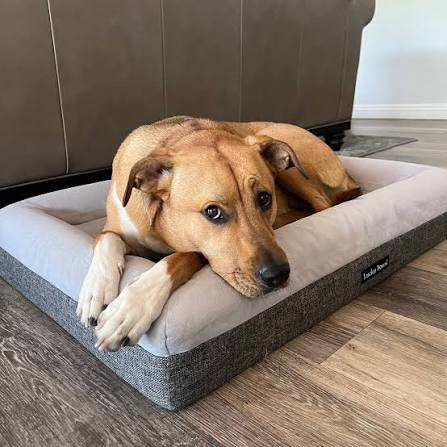
Orthopedic beds address a recognizable buyer: owners of older, heavier, or less mobile dogs. Solid memory foam can feel substantial but be warm and heavy. Egg-crate foam may improve airflow and reduce cost, while low-density versions flatten. Layered beds combine a base with a softer top. This format needs material testing, careful claims, and consistent sourcing; repeat buyers expect the same thickness and firmness.
Calming Donut and Bolster Beds
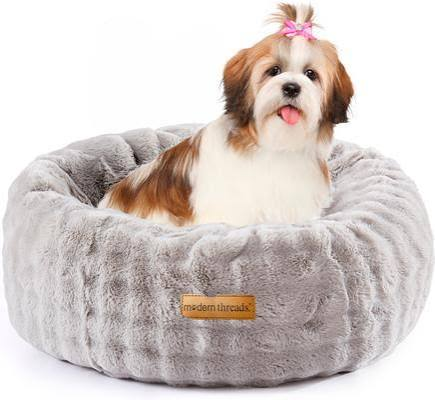
Donut beds remain easy to understand: the raised rim suits pets that curl up, and plush materials look warm on camera. The category is crowded, so differentiation needs more than another neutral color. Consider removable covers, denser fill, stronger bases, less shedding, and clearer sizing. Use “calming” carefully. Show the nest-like shape and intended sleeping style without presenting the bed as anxiety treatment.
Washable and Modular Dog Beds
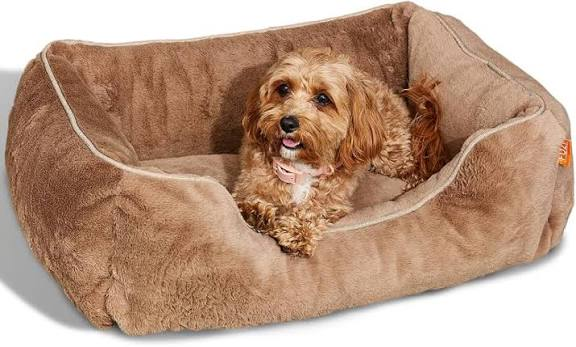
Washability is often the main benefit. A bed that is easy to disassemble, wash, dry, and rebuild solves hair, odor, mud, and accidents. Modular designs can add spare-cover and liner sales. Test the zipper after repeated removal and check shrinkage, pilling, twisting, color transfer, and final fit. “Machine washable” is the start of the test, not the end.
Cooling Mats and Breathable Summer Beds
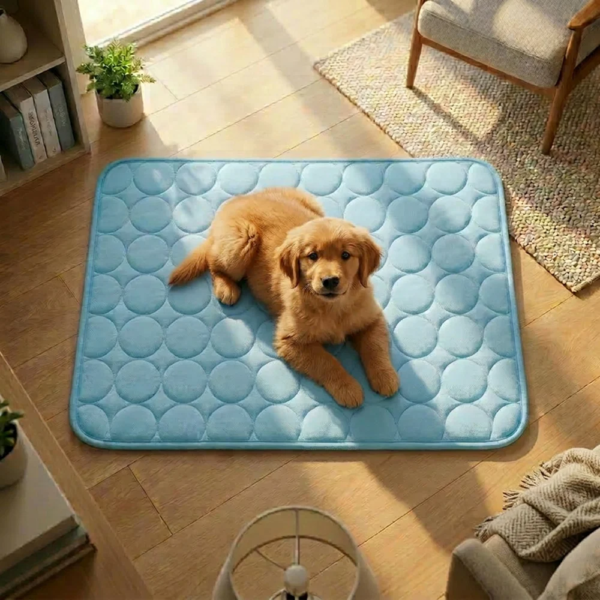
“Cooling” covers different designs. Gel mats absorb heat for a period, raised mesh cots improve airflow, and some fabrics merely feel cool at first touch. Explain the mechanism and avoid unsupported temperature claims. Gel needs puncture, seal, leak, fold, and heat-storage checks. Cots can have awkward frame cartons, while gel mats are heavy. Timing matters too; a cooling bed arriving after the heatwave is an expensive autumn mat.
Chew-Resistant and Armored Beds
Chew-resistant beds solve an expensive problem. Useful construction includes abrasion-resistant covers, protected zippers, reinforced seams, and fewer exposed edges. Customers may have bought several failed beds, so warranty boundaries and language must be realistic. Pull, rub, fold, scratch, and inspect samples at the corners. Check whether damaged frames expose sharp parts. This niche has strong pain, but it is not forgiving.
Elevated Outdoor Cots and Travel Mats
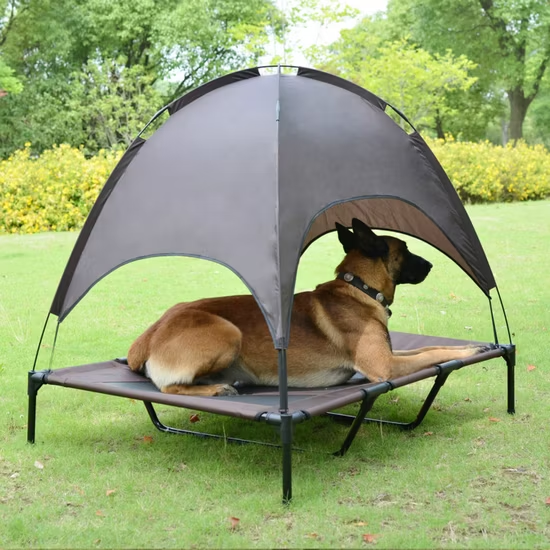
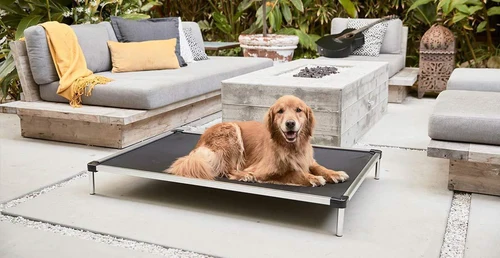
Elevated cots suit patios, camping, kennels, and warm weather. Check load, wobble, feet, frame coating, fabric tension, replacement parts, and assembly. Long frame sections may trigger oversize charges. Travel mats are easier to ship but can become thin blankets. Test handles, repeated folding, padding migration, water resistance, and cleaning after outdoor use.
Cave, Burrow, Crate, and Sofa-Protector Beds
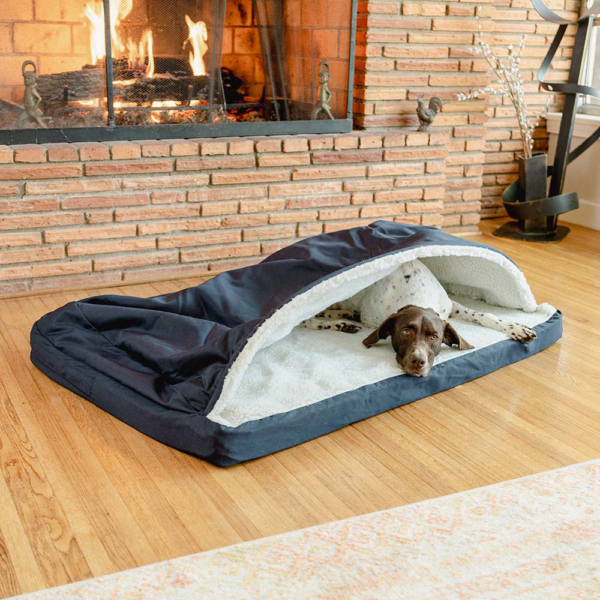
These formats work because their uses are specific. Cave beds serve small pets that hide, crate pads need exact compatibility, and sofa-protector beds contain hair while keeping the pet close. A cave opening can be too small even when outside dimensions look generous, while bolsters reduce sleeping area. Give usable area, thickness, opening size, and furniture measurements instead of hiding behind S, M, and L.
Dog Bed Materials, Construction, and Claims Sellers Need to Understand
The cover gets the photos, but the inside often determines reviews. Compare materials using measurable specifications.
|
Material
|
Useful property
|
Common tradeoff
|
Question for the supplier
|
|
Solid memory foam
|
Contouring and premium feel
|
Weight, heat, and slower recovery
|
What are the density, thickness, tolerance, and recovery time?
|
|
Egg-crate foam
|
Air channels and lower cost
|
May feel less substantial
|
What density is used, and how does it perform after compression?
|
|
Polyester fiberfill
|
Soft, light, and compressible
|
Can flatten, clump, or shift
|
What is the fill weight and how is it distributed?
|
|
Shredded foam
|
Compressible and adjustable
|
May feel uneven
|
What is the source, particle range, and containment method?
|
|
Oxford fabric
|
Abrasion resistance and easy wiping
|
Can feel less soft
|
What denier, coating, rub result, and waterproof rating are available?
|
|
Faux fur or plush
|
Warm tactile appeal
|
Shedding, matting, and heat
|
What is the fiber content, pile weight, and wash result?
|
|
Mesh
|
Airflow and outdoor use
|
Snagging or seam stress
|
What load, tension, and abrasion testing has been completed?
|
A waterproof liner and a water-resistant cover are not the same. The first aims to stop liquid reaching the foam. The second may only delay absorption. Ask how the property was tested and whether seams and zipper openings are included.
Labels also deserve attention. US requirements depend on the product and materials, but Federal Trade Commission guidance explains that many household textile products are covered and specifically includes pet furniture. Sellers should review fiber content, country of origin, responsible company identity, and relevant labeling duties for their target market. The FTC textile and wool labeling guidance is a useful official starting point, not a substitute for market-specific legal advice.
Finally, turn broad claims into testable statements. “Waterproof liner,” “removable machine-washable cover,” and “600D Oxford outer fabric” describe something. “Best orthopedic calming eco bed” mostly describes a busy label.
Is a Dog Bed Actually a Good Dropshipping Product?
It can be, but only when the packed product works. Dog bed shipping cost is commonly driven by volume rather than scale weight.

Calculate Dimensional Weight Before Product Cost
Carriers use dimensional-weight formulas to account for parcel space. A common illustration is:
Dimensional weight in kilograms = length x width x height in centimeters / dimensional divisor
The divisor varies by carrier, service, route, and contract. Oversize rules may also apply. The numbers below are an example, not a quote.
|
Packing state
|
Carton size
|
Actual weight
|
Dimensional weight using 5,000 divisor
|
Illustrative chargeable weight
|
|
Uncompressed
|
65 x 45 x 25 cm
|
3.2 kg
|
14.63 kg
|
14.63 kg
|
|
Compressed
|
48 x 36 x 14 cm
|
3.4 kg
|
4.84 kg
|
4.84 kg
|
The compressed package is slightly heavier because of the bag and protective packing, yet its dimensional weight is much lower. That can change the economics completely.
Test Vacuum Compression Instead of Assuming It Works
Compression is useful for fiberfill and some foam beds, but not every product recovers well. Ask the supplier to pack the sample exactly as a customer order would be packed. Leave it compressed for a realistic period. Then record recovery after 24, 48, and 72 hours.
Check final dimensions, foam thickness, permanent creases, lumps, zipper stress, odor, and cover fit. Add clear unpacking instructions. If the bed requires 48 hours to regain shape, tell the customer before they post a one-star photo ten minutes after opening it.
Build the Landed Cost, Not a Factory-Price Fantasy
Use this structure:
Landed cost per sellable unit = product + customization + China inbound + inspection + packaging + fulfillment + freight + duties and taxes + payment allowance + expected return and reship cost
Here is an illustrative model for a medium washable bolster bed. It is not a supplier quote.
|
Item
|
Illustrative amount
|
|
Product and standard cover
|
$14.00
|
|
Logo label and insert
|
$0.80
|
|
Inbound, QC, and packing
|
$1.70
|
|
Cross-border shipping
|
$10.50
|
|
Duty, payment, and exception allowance
|
$2.00
|
|
Expected return/reship allowance
|
$2.50
|
|
Total operating cost before ads and overhead
|
$31.50
|
|
Selling price
|
$69.00
|
|
Contribution before ads, platform fees, support, and overhead
|
$37.50
|
A seller who compares only the $14 product price with the $69 retail price sees a very handsome margin. A seller who includes the rest sees the actual business.
Return Risk Can Be Larger Than the Shipping Saving
Dog beds are returned for wrong size, unexpected color, slow expansion, weak support, damage, and simple pet preference. The last one is hard: nothing may be defective, but the dog refuses the bed.
Reduce avoidable returns with internal sleeping measurements, breed examples, a scale photo, setup instructions, material close-ups, care details, and a clear return policy. Decide what happens to opened or used textile products in each market. A return is not solved merely because the parcel comes back; the product may no longer be sellable.
How to Validate a Trending Pet Bed Before Selling It
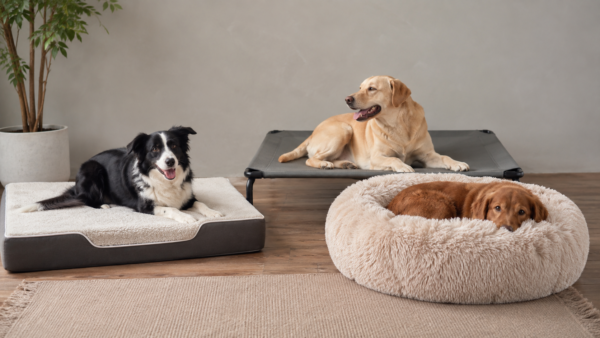
Here is a practical sequence that works better than selecting the product with the most dramatic supplier video.
Step 1: Define One Buyer and One Problem
“Dog owners” is too broad. Try “apartment owners with senior Labradors who need a supportive bed with a removable washable cover.” Now the product requirements become clearer: low entry, usable sleeping area, stable foam, grip, liner, and easy cleaning.
Step 2: Read Reviews for Failure Language
Read reviews across several brands and retailers. Look for repeated complaints: flattened after two weeks, smelled after opening, too small inside, zipper broke, cover shrank, foam turned yellow, base slid, dog became hot, or fill gathered in one corner.
These are not just negative comments. They are a free draft of your inspection checklist and product-page FAQ.
Step 3: Compare Three Suppliers Using the Same Specification
Send every supplier the same sheet. Include finished dimensions and tolerance, internal sleeping area, foam type and density, cover composition, zipper, liner, base, logo, packaging, barcode, packed carton, MOQ, sample time, production time, and required documents.
Do not compare one factory’s 30-kilogram-density foam bed with another factory’s polyester-filled bed as though price is the only difference. For a broader view of agents, marketplaces, manufacturers, and fulfillment partners, use this list of China pet dropshipping suppliers.
Step 4: Order Samples and Run a Simple QC Protocol
Measure the product. Weigh it. Photograph it. Remove and refit the cover. Wash it three times according to the proposed instructions. Test the zipper. Compress it. Leave it packed. Measure recovery. Rub the fabric. Inspect seams, labels, odor, loose threads, color transfer, and the anti-slip base.
Then update the specification with what you learned. A sourcing partner can help compare factories, coordinate samples, and prepare a repeatable workflow; this is where product sourcing and fulfillment support is relevant.
Step 5: Test the Offer Before Buying Deep Inventory
Build one focused Shopify product page. Use several honest angles: easier cleaning, support for a large dog, furniture-friendly design, or portable travel comfort. Decide in advance which metrics justify another order.
Avoid launching seven sizes in twelve colors. That creates 84 variants before you know which one people want. Start with the sizes that fit your audience and a color range the supplier can reproduce.
Private Label Dog Beds: Start With the Cover Before Rebuilding the Product
Private label does not have to begin with a new foam formula and a container order. It can develop in stages.
At the lower-complexity end, use a stock product with a sewn logo label, branded care card, barcode, and approved packing instructions. This keeps sampling and MOQ more manageable.
The next stage may include a custom cover color, embroidery, woven labels, spare covers, a waterproof liner, or a branded vacuum bag and carton. These changes create a more visible difference without rebuilding the whole bed.
Full OEM or ODM development can change dimensions, shape, foam layers, frame, fabric, fasteners, and packaging. It gives more control but also creates more responsibility. Sampling takes longer. MOQs rise. Tests and specifications become more important.
For many Shopify sellers, the cover is the sensible first branding surface. It is visible, replaceable, and central to care. Branded inserts and unpacking instructions can improve the experience without increasing the product’s dimensions. Options such as logo labels, inserts, mailers, and cartons are covered in FriendDropshipping’s custom packaging and private pack service.
Ask one more question before choosing a printed box: will the customer value it enough to pay for the extra dimensional weight? A neat compressed pack with good instructions may be better than a beautiful box full of air.
China Fulfillment, US Warehousing, or Direct Shipping for Pet Beds?
The right model changes as demand becomes clearer.
|
Business stage
|
Likely fulfillment model
|
Why it can fit
|
Main caution
|
|
Early product test
|
Small batch or controlled direct fulfillment
|
Limits inventory exposure while the offer is tested
|
Per-order procurement and bulky freight may be slow or expensive
|
|
Proven SKU with multi-country demand
|
Stocked China 3PL
|
Centralizes inventory, QC, compression, packing, and global dispatch
|
Cross-border transit remains
|
|
Stable demand concentrated in the US
|
US warehouse for selected sizes
|
Faster domestic delivery and simpler local returns
|
Requires inbound freight and more inventory cash
|
|
Larger catalog with clear winners
|
Hybrid China and local inventory
|
Winners sit near buyers while long-tail stock stays centralized
|
Forecasting and stock allocation become more complex
|
Direct supplier shipping can work during an early test if the supplier has physical stock and follows an agreed packing process. It becomes fragile when every order triggers a new factory purchase. Color, fill, packaging, and dispatch time can change without warning.
A stocked China warehouse removes repeated procurement from the customer-order timeline. It can receive products, inspect them, hold packaging, compress approved items, pick orders, and route parcels. Sellers comparing this model can review the operational scope of a China and global 3PL fulfillment service.
Local US inventory makes more sense when one or two sizes sell predictably in the United States. The delivery gain can offset inbound freight and storage, but only if stock turns. A hybrid setup is often more practical than moving every color and size. Proven units can be positioned in an USA warehouse network, while slower variants remain in China.
Daily order count is only one signal. Also consider SKU concentration, replenishment time, gross margin, US share, return rate, and the cost of a stockout.
Shopify Product Pages That Reduce Dog-Bed Returns
Dog-bed pages should do more than display a dog looking peaceful. They need to answer fit, construction, care, and arrival questions.
Show Measurements in More Than One Way
List external length and width, internal sleeping area, bolster height, foam thickness, and product weight. Add a diagram. Include real dog examples with breed, approximate weight, and bed size. Avoid relying only on S, M, L, and XL because those labels mean different things across suppliers.
Explain Materials and Care Without Hiding Details
Show the layer construction and state which parts can be removed. Give fiber composition and washing instructions. Explain whether the liner is waterproof or water-resistant. State whether spare covers are available.
Show the Packed and Unpacked Product
If the product arrives compressed, show the package and the expansion process. State the expected recovery time. Tell buyers not to cut deeply into the bag. A thirty-second setup video may prevent several customer-service conversations.
Use Comparisons and Proof Carefully
A comparison table can help buyers choose between orthopedic, bolster, crate, and travel styles. Reviews are more useful when they mention dog size, usage period, and washing experience. Warranty terms should be easy to find.
Avoid dramatic health promises. “Low front entry” is observable. “Cures hip pain” is a medical claim. The first helps a buyer understand the design; the second needs a level of evidence that a generic supplier brochure will not provide.
Which Pet Bed Should You Test First?
Choose from the customer backward.
|
Strongest audience insight
|
First format to investigate
|
Why
|
|
Senior or large-breed owners
|
Orthopedic foam bed
|
Clear support, fit, and comfort problem
|
|
Apartment owners
|
Washable modular bed
|
Hair, odor, mud, and accidents are visible pain points
|
|
Hot-climate customers
|
Cooling mat or elevated cot
|
Strong seasonal and regional use case
|
|
Camping and travel buyers
|
Foldable travel mat
|
Portable, demonstrable, and easier to store
|
|
Owners of destructive chewers
|
Chew-resistant bed
|
High-cost pain, although quality responsibility is serious
|
|
Small dogs that burrow
|
Cave or bolster bed
|
Specific behavior with strong visual appeal
|
|
Design-conscious owners
|
Sofa-style or interior-led bed
|
Home fit can support premium positioning
|
Before launching, score the idea against seven checks:
-
The buyer and problem are specific.
-
The sample passes measurement, wash, seam, and recovery tests.
-
The packed carton leaves room for margin.
-
The size guide is easy to understand.
-
Product claims can be supported.
-
The supplier can repeat the approved specification.
-
Returns can be handled without breaking cash flow.
If the product fails carton economics, changing the button color will not save it. If it fails repeatability, more advertising may simply scale the complaints.
Conclusion: Do Not Choose a Dog Bed From the Photo Alone
The strongest Shopify dog bed brands make a familiar product easier to trust through focus, fit guidance, care details, construction proof, and coherent design. The 2026 product trends also serve clear needs: support, washing, cooling, travel, crate fit, nesting, or resistance to damage.
Start with one audience and one format. Compare suppliers against one specification, test washing and compression, and calculate dimensional shipping plus returns before setting the price. Then choose direct fulfillment, a China 3PL, local stock, or a hybrid model. It is less exciting than spotting a viral video, but far more useful. The better product is the one that still makes sense after the carton is measured.
FAQs About Shopify Dog Bed Brands and Pet Beds for Dropshipping
1. Are Dog Beds Good Products for Dropshipping?
Yes, when they solve a specific problem and pack efficiently. Their main disadvantages are dimensional shipping, size returns, inconsistent fill, and hygiene concerns after use. Calculate the packed carton and expected return cost before testing.
2. Which Pet Beds Are Trending in 2026?
Orthopedic, donut, washable modular, cooling, elevated, chew-resistant, cave, travel, crate, and sofa-protector beds are worth investigating. Demand varies by climate and audience, so validate each idea with reviews, samples, shipping quotes, and a small test.
3. Are Orthopedic Dog Beds Profitable to Sell?
They can support a higher price, but profit depends on foam quality, carton volume, shipping, returns, and advertising. Compare contribution after fulfillment instead of factory price against retail price. Weak foam can create refunds quickly.
4. Are Calming Donut Dog Beds Still Popular?
They still appeal to pets that curl up, but the market is crowded. Differentiate through less shedding, stronger seams, removable covers, denser fill, and clearer sizing. Do not present the bed as anxiety treatment without suitable evidence.
5. What Dog-Bed Material Is Best for Senior Dogs?
No material is universally best. Compare foam density and thickness, a low entry, stable base, washable cover, and usable sleeping area. Owners should consult a veterinarian when a dog has pain, mobility problems, or a diagnosed condition.
6. How Much Does It Cost to Ship a Dog Bed From China?
A quote requires destination, carton dimensions, actual weight, product, and service level. Beds are often charged by dimensional weight. Compression may reduce cost, but prices still change by route, season, and carrier rules.
7. Can Dog Beds Be Vacuum Compressed for Shipping?
Many fiberfill and some foam beds can be compressed. Test a production-equivalent sample after realistic storage and transit time. Measure recovery after 24, 48, and 72 hours, then check odor, lumps, seams, and dimensions.
8. Does Vacuum Compression Damage Memory Foam?
It can. Weak foam, excessive compression, heat, or long storage may cause incomplete recovery. Test the exact foam and packing method before production, and tell customers how to unpack it and how long recovery takes.
9. What Dog-Bed Sizes Should a Shopify Store Offer?
Start with a few sizes that suit the target audience. Give external dimensions, usable sleeping area, thickness, and breed examples. Bolsters reduce internal space, so do not rely on S, M, and L alone.
10. How Do I Find a Reliable Dog-Bed Supplier?
Compare suppliers using one specification. Verify the business, order samples, and test dimensions, foam, fill, seams, zipper, washing, recovery, labels, and carton. Confirm MOQ, lead time, defect handling, and repeat-order consistency.
11. Can I Add My Logo and Custom Packaging to Pet Beds?
Yes. Options include sewn labels, embroidery, custom covers, care cards, inserts, vacuum bags, and cartons. MOQs differ by component. A stock bed with a custom label is easier to test than a fully custom shape.
12. What Should I Check in a Dog-Bed Sample?
Check dimensions, foam or fill, fabric, odor, seams, zipper, liner, base grip, labels, and carton. Wash the cover, test compression and recovery, and photograph the approved sample for production inspection.
13. Should Dog-Bed Inventory Stay in China or Move to a US Warehouse?
Keep stock in China when demand is international or still developing. Move proven sizes to the US when local demand justifies inbound freight and storage. A hybrid model keeps winners near buyers and slower variants centralized.
14. How Should a Store Handle Returns on Used Dog Beds?
Use a clear, legally compliant policy covering measurements, damage evidence, hygiene, and timing. Decide how opened beds are inspected and whether they can be resold. Accurate sizing prevents more losses than a complicated return form.
15. Can I Call a Dog Bed Orthopedic, Calming, Cooling, or Chew-Proof?
Only when the claim is truthful, specific, and supported. Describe construction and tested performance without implying disease treatment. Absolute terms such as indestructible or guaranteed calming create a high evidence burden. Seek market-specific advice when unsure.
Table of Content

I’m Cassiel. I’ll help you scale your Shopify business with reliable fulfillment.
Join to newsletter.
Follow us and get more knowledge.