The global dietary supplement market has become one of the most commercially powerful product categories in e-commerce. The market is projected to grow from approximately $218.88 billion in 2026 to over $430 billion by the mid-2030s, compounding at nearly 9% annually. In the United States alone, the market reached $85.4 billion in 2026, growing 9.21% year-over-year.
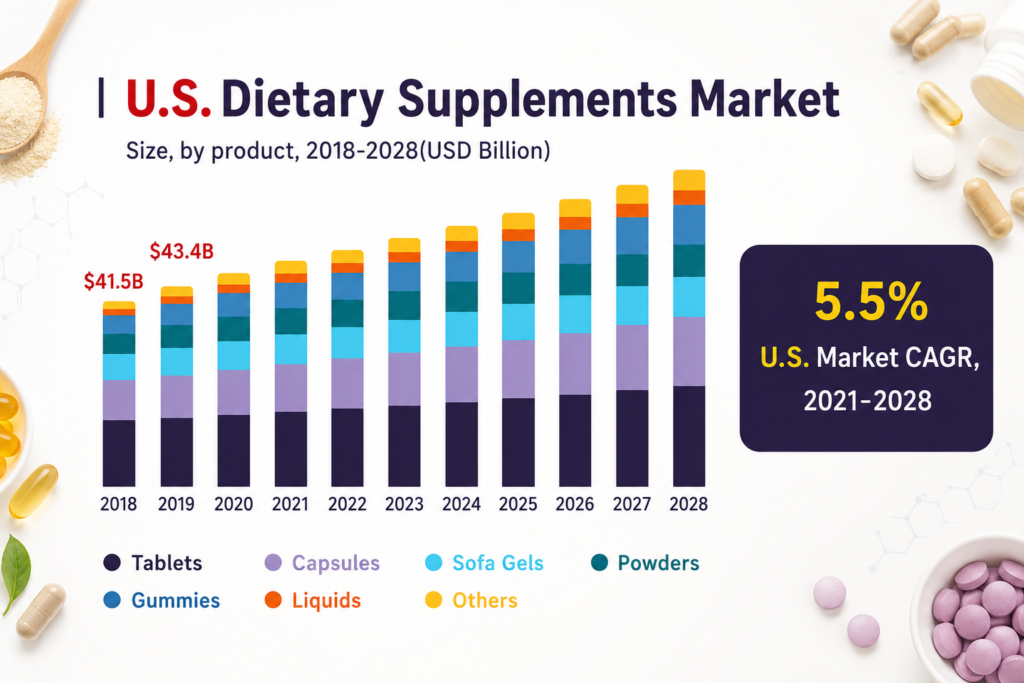
Source: https://lindin168.com/en/health-supplement-trends-in-2023_en
For entrepreneurs, this intersection of growing consumer demand and accessible dropshipping infrastructure has created a genuine window of opportunity. But the industry carries real regulatory obligations, intense competition, and high standards for consumer trust. This guide gives you a clear, practical roadmap for navigating all of it.
What Is Supplement Dropshipping?
Supplement dropshipping is an e-commerce model where you sell health and wellness products such as vitamins, protein powders, and herbal supplements without manufacturing or warehousing any inventory. When a customer orders, that order is forwarded to a third-party supplier who produces, labels, and ships the product directly to your customer under your brand name. Supplements differ from generic dropshipping in three important ways.
First, they carry regulatory complexity. The FDA, MHRA, EU food safety authorities, and Australia’s TGA all oversee how supplements are manufactured, labeled, and marketed.
Second, they demand consumer trust at a higher level, since customers are putting something into their bodies.
Third, they offer significantly better economics: supplements typically carry 30–50% gross margins for white label products, with premium brands reaching 55–70%, and strong repeat purchase behavior that makes subscription models viable.
Why Supplement Dropshipping Is Growing in 2026
Several trends are driving the market’s expansion and creating openings for new brand builders.
Personalized nutrition is the fastest-growing segment, expanding at 15% annually. Consumers increasingly understand that genetics, gut microbiome, and lifestyle affect nutritional needs, and brands targeting specific populations command 2–3x price premiums over generic products.
Weight management is the single hottest category by growth rate. The weight management supplements market is projected to reach $7.88 billion in 2026, growing at 17.9% CAGR driven by consumer interest in GLP-1 pathway support, berberine, and appetite-regulating compounds.
Gut health has graduated from trend to established category. Probiotics, prebiotics, digestive enzymes, and postbiotics now represent a substantial portion of supplement sales across all demographics, bolstered by expanding research into the gut-brain axis.
Women’s health supplements covering hormonal balance, perimenopause, fertility, and postpartum recovery have become commercially significant. Women aged 65+ report supplement usage rates of 82% in the U.S., and women overall outpace men in supplement purchasing.
Sports nutrition continues its steady climb. The global protein supplements market is forecasted to reach $36.2 billion by 2030, with pre-workout energy formulas alone accounting for 33.3% of the sports nutrition segment.
Best Supplement Formats to Dropship
Format affects production cost, consumer preference, margin, and importantly, fulfillment complexity.
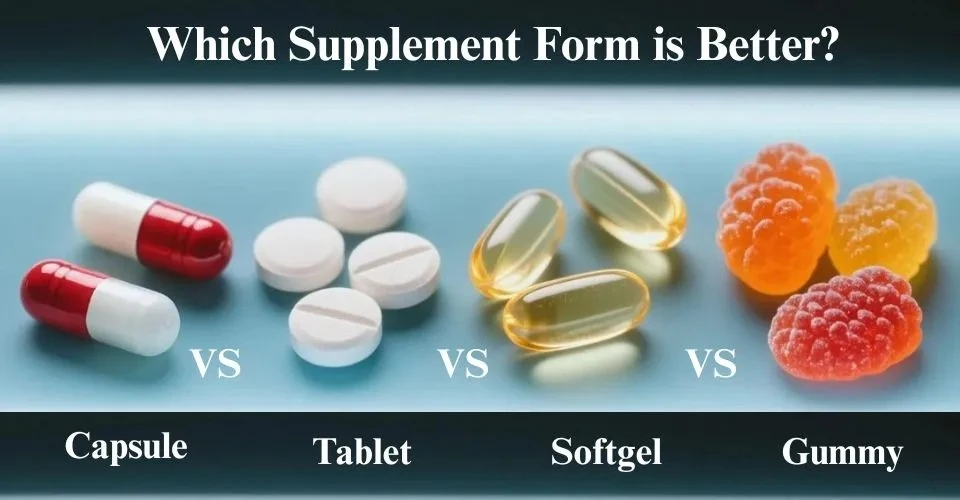
Gummies are the fastest-growing format. Gen Z uses them at a 45% rate versus 22% for older demographics, and they photograph well for social media. One real-world challenge: gummies are highly temperature-sensitive. In summer months, shipments passing through warm climates or sitting in uncontrolled delivery vehicles can melt or fuse together, resulting in a poor customer experience. Brands shipping gummies internationally should request temperature-stable formulations and consider insulated packaging during warmer seasons.
Capsules are the industry workhorse: cost-effective, widely available from suppliers, and uncomplicated to ship. They’re the most forgiving format for international supplement fulfillment — stable across a wide temperature range and rarely flagged by customs.
Softgels suit fat-soluble nutrients like omega-3s and vitamin D, carrying a premium perception. Like gummies, they can soften in heat, so climate-controlled storage and careful routing matter for warmer destination markets.
Powders dominate sports nutrition with strong perceived value. They’re bulkier to ship, which increases dimensional weight costs, and require moisture-resistant packaging. Protein powders in particular can trigger additional customs scrutiny in some markets due to their appearance and composition.
Liquid supplements serve niche markets like children’s vitamins and fast-absorb formulations, but they’re the most logistically demanding format. They’re heavier, more fragile, restricted from certain air freight lanes, and with shorter shelf lives that compress your fulfillment window.
For most new supplement dropshippers, starting with capsules or gummies in a defined niche gives the best combination of supplier availability, demand, and manageable supplement shipping complexity.
How to Find a Reliable Supplement Dropshipping Supplier
Your supplier choice will make or break your supplement business. Work with the wrong manufacturer and you’re exposed to serious liability like mislabeled products, contaminated batches, and the legal consequences that follow. Before committing to anyone, verify the following.
GMP Certification. Current Good Manufacturing Practice certification isn’t a nice-to-have. Under 21 CFR Part 111, the FDA legally requires it of every supplement manufacturer operating in the U.S. If a supplier can’t hand over an active certificate without hesitation, move on.
FDA Facility Registration. Any legitimate U.S.-based manufacturer will appear in the FDA’s facility registration database. Ask for their registration number and look it up yourself. This takes two minutes and immediately separates serious operations from ones cutting corners.
Certificates of Analysis. A COA is your evidence that a batch actually contains what the label says it does at the right potency, free from contaminants. Trustworthy suppliers produce these for every production run, and the best ones use independent third-party labs rather than testing in-house. This matters more than it might seem: NSF testing in 2023 found that nearly one in four supplements failed to meet their own label claims.
MOQs and Lead Times. If you’re starting out, platforms built specifically for dropshipping. Supliful and OK Capsule are two common examples. They let you begin with minimal inventory commitments. Traditional manufacturers are a different story, typically requiring 500 or more units per SKU before they’ll run a production batch. Plan for 2–6 weeks on standard white label orders, and budget 8–16 weeks if you’re developing a custom formulation.
Don’t choose suppliers on price alone. The cost of a quality incident like refunds, chargebacks, regulatory attention, and brand damage far outweighs any savings on unit cost.
White Label vs. Private Label Supplements
These terms describe meaningfully different arrangements. White label means applying your brand to a manufacturer’s pre-existing formula, also available to other retailers. The advantages are speed (days to weeks to launch), low or no MOQ, and minimal upfront cost. The limitation is differentiation: your formula may be nearly identical to competitors using the same supplier.
Private label supplement fulfillment involves developing an exclusive formula with a manufacturer. The investment is higher. Expect 500+ unit MOQs, formulation fees, and longer lead times, but the result is a product competitors cannot directly copy.
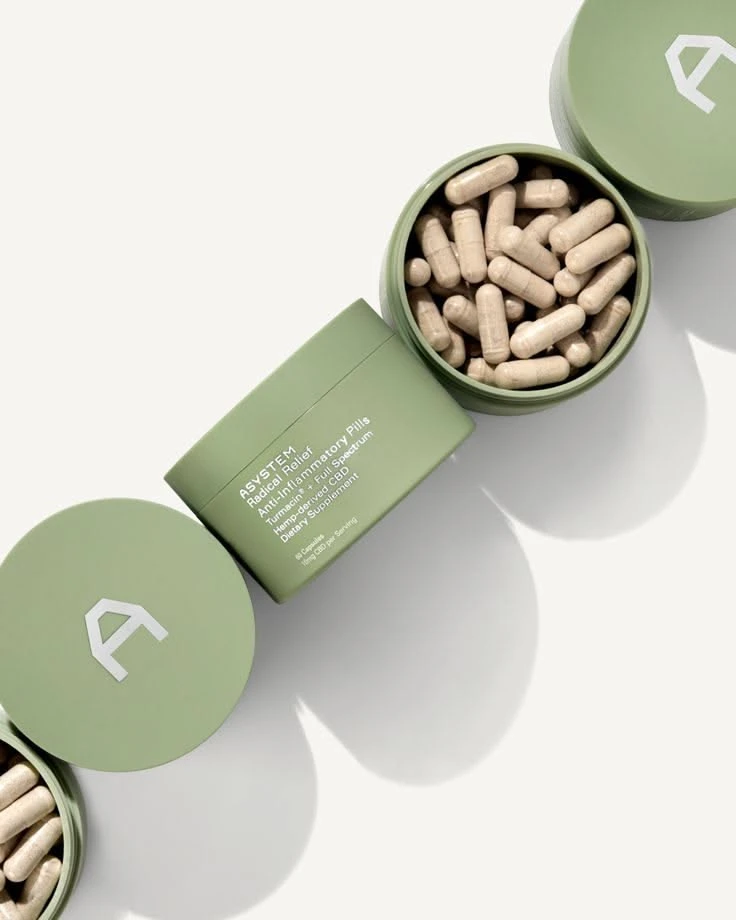
Most successful supplement brands launch with white label products to validate demand and build revenue, then reinvest into private label supplements as the brand gains traction. This approach minimizes initial risk while building toward genuine competitive differentiation.
A word on custom packaging for supplements: most brands underestimate packaging as a conversion driver. In the supplement space, consumers make trust decisions in seconds — your packaging’s tactile and visual quality signals product quality before they even open the bottle. Foil pouches, matte-finish labels, embossed logos, and QR codes linking to COAs all contribute meaningfully to perceived value.
Compliance and Regulations
Compliance is not optional. It determines whether your business is viable long-term.
In the United States, supplements are regulated under DSHEA (1994). They don’t require FDA pre-approval, but must be safe and accurately labeled. The critical issue for sellers is health claims. Structure/function claims like “supports healthy immune function” are permitted with a required disclaimer. Disease claims like “treats or prevents colds” make your product an unapproved drug. The FTC additionally requires all advertising claims to be truthful and substantiated.
In the UK, food supplement regulations operate independently post-Brexit under the MHRA. The EU operates a stricter regime where health claims must be approved and listed in the EU Register, and Novel Food ingredients require specific authorization. NMN, for example, was classified as a Novel Food in the EU, restricting its sale until brand-specific authorizations were obtained. Australia’s TGA requires supplements to be listed on the ARTG as Listed Medicines before sale.
Across all markets, labels must accurately list all ingredients with quantities, include allergen disclosures, and carry appropriate warnings. Build compliant labeling and claim language before your first sale. Retroactive compliance is expensive and sometimes impossible.
How to Ship Supplements Internationally
Shipping supplements internationally is more complex than booking a standard courier. Every market has its own import rules for health products, and mistakes here result in seized shipments, customs delays, and customers who never receive their orders.
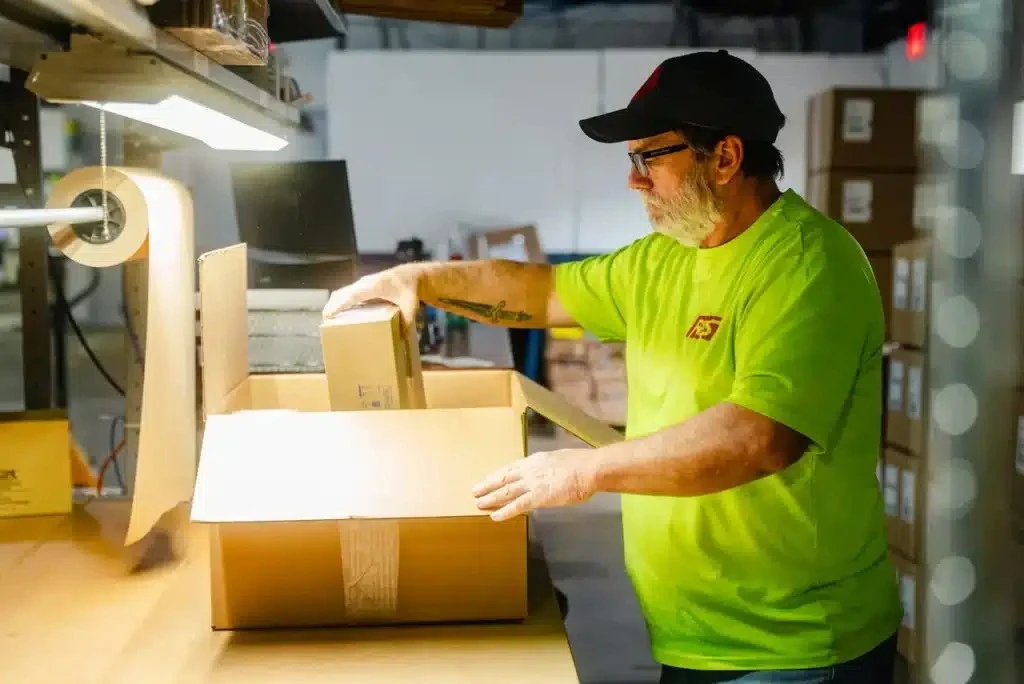
Most markets require accurate commercial invoices declaring contents, value, and country of origin. Many additionally require a certificate of free sale. Without correct documentation, shipments stall at customs. A common fulfillment failure point that disproportionately affects new brands.
Ingredient restrictions by market are a serious operational concern. Certain ingredients commonly found in U.S. supplements like DMAA, ephedra, high-dose melatonin (above 0.5mg per serving in many EU countries), and some botanical extracts are restricted or outright prohibited in target markets. Brands expanding internationally need to audit every formula against destination-market restricted ingredient lists before shipping a single unit.
Format-specific shipping challenges are real and underappreciated. Liquids face restrictions on certain air freight lanes. Gummies and softgels require temperature-controlled routing in summer months or through equatorial regions. Powders can be flagged for additional customs inspection due to their appearance and bulk density. Planning your logistics around these format-specific realities prevents expensive surprises.
For shipping methods, express couriers (DHL, FedEx, UPS) are standard for premium products, with 5–10 business days setting reasonable customer expectations. Build clear return policies that account for the fact that opened supplement products typically cannot be restocked.
How to Start a Shopify Supplement Store
Choose a niche. Avoid launching a general health store. Define a specific audience with a specific need like women’s hormone balance, men’s sleep recovery, gut health for IBS, or sports endurance for amateur athletes. A tight niche enables better SEO, higher conversion rates, and more defensible positioning.
Vet your supplier. Order samples, verify GMP certification, request COAs, and test the product. Evaluate responsiveness, platform integration, and fulfillment speed. Don’t shortlist on price.
Build your Shopify store. Choose a trust-signaling theme, invest in professional product photography, and write compliant product descriptions. Work with a Shopify supplement supplier that offers direct platform integration to automate order routing and inventory sync.
Test the fulfillment chain. Place test orders end-to-end before opening to traffic. Shopify supplement fulfillment platforms that integrate directly eliminate the manual errors that plague stores using disconnected workflows.
Launch marketing carefully. Meta and Google restrict supplement ads, particularly for weight loss products. TikTok Shop has emerged as a high-growth channel through influencer marketing. Build organic educational content in your niche before scaling paid spend.
Build subscriptions from day one. Install Recharge, Bold, or Shopify’s native subscription tools at launch. Subscription revenue is the single most important lever for supplement business profitability. It reduces effective acquisition cost, increases lifetime value, and creates predictable monthly cash flow.
Real-World Fulfillment Challenges Supplement Brands Face
The gap between theory and practice in supplement fulfillment is wider than most new brand owners expect. Here are the operational realities that catch sellers off guard.
Seasonal shipping degradation. Summer heat destroys gummies and softgels in transit. Brands that don’t adjust their supplement fulfillment services for seasonal temperature changes end up with melt complaints, refund requests, and negative reviews concentrated in Q2 and Q3.
Customs holds on health products. Even correctly documente shipments get held at customs in markets like Brazil, India, and parts of Southeast Asia. Experienced fulfillment partners know which markets require additional documentation upfront and route shipments accordingly.
Label compliance mismatches. A product compliant for the U.S. market may have claims or ingredient disclosures that don’t meet UK or EU labeling requirements. Brands expanding internationally without market-specific label versions face either customs rejection or regulatory exposure.
Stock synchronization failures. When a supplier’s inventory isn’t synced in real time with your Shopify store, you sell products that are out of stock or in a production run. This is one of the most common early-stage operational failures and one of the strongest arguments for working with a supplement fulfillment partner that offers live inventory integration.
Fulfillment speed mismatches by format. Capsules and powders typically ship within 24–48 hours of order placement. Custom-packaged private label products, or those requiring kitting and assembly, can take 3–5 business days. Set customer expectations accordingly at checkout.
How FriendDropshipping Supports Supplement Brands
FriendDropshipping is a sourcing and fulfillment partner used by supplement brands that need more operational control than a standard dropshipping platform provides.
Their services cover the key operational needs of a growing supplement business:
Product sourcing and supplier vetting. FriendDropshipping identifies and qualifies supplement manufacturers by checking GMP certification, COA availability, and production capacity so brands aren’t navigating supplier selection alone.
Quality inspection. Before products are shipped to customers, FriendDropshipping conducts physical quality checks on incoming inventory. This adds a layer of oversight between factory production and final delivery that most direct dropshipping arrangements don’t include.
Custom packaging is handled in-house, covering branded boxes, labels, inserts, and bundle configurations. This is particularly valuable for brands building private label product lines that require packaging differentiation beyond what standard white label offers.
Warehousing and inventory management. Rather than shipping directly from manufacturer to end customer on every order, brands can store inventory at FriendDropshipping’s facilities, reducing fulfillment time, enabling faster shipping options, and allowing pre-built stock for seasonal demand spikes.
Worldwide fulfillment. FriendDropshipping manages international shipping logistics, documentation, and carrier selection for brands selling across multiple markets. This includes navigating the format-specific and ingredient-specific restrictions discussed earlier in this guide.
For supplement brands that have moved past the initial launch phase and are dealing with real volume, fulfillment complexity, or international expansion, having a dedicated operations partner addresses the gaps that pure dropshipping platforms weren’t designed to fill.
Future Trends for 2026 and Beyond
Personalized supplements are moving toward mainstream accessibility, driven by direct-to-consumer genetic testing and AI recommendation engines. Brands that differentiate by targeting precisely defined consumer profiles will have a structural advantage.
Subscription-first models are becoming the business architecture, not an add-on. Brands built around recurring revenue with loyalty programs and proactive customer engagement dramatically outperform transactional stores on every unit economic metric.
Clean-label products are now a purchase driver, not just a brand value. Consumers are scrutinizing fillers and artificial additives with sophistication. Minimal, recognizable ingredients have crossed from organic grocery into mainstream supplement buying behavior.
AI-driven health platforms are beginning to replace generic recommendations with protocols personalized to wearable data, lab results, and dietary logs, creating both a new channel and a new content imperative for supplement brands.
Need Help With Supplement Fulfillment?
Scaling a supplement brand means eventually outgrowing manual order processing, disconnected supplier relationships, and generic packaging. Here’s what a purpose-built supplement fulfillment services setup looks like for supplement businesses at growth stage:
- Shopify integration — automated order forwarding, real-time inventory sync, and tracking updates pushed directly to your storefront
- Private label packaging — custom branded boxes, labels, inserts, and product bundles built around your brand identity
- Global shipping — carrier selection, documentation handling, and last-mile delivery management across North America, Europe, Australia, and beyond
- Free storage — warehousing for pre-built inventory without monthly minimums during your early growth phase
- Dedicated account manager — a single point of contact who understands your product catalog, your markets, and your operational requirements
If you’re at the stage where fulfillment is becoming a bottleneck rather than a background function, it’s worth having a direct conversation about what a structured partnership would look like for your business.
Frequently Asked Questions
What is supplement dropshipping?
Supplement dropshipping is a business model where you sell branded health and wellness products through your own online store without holding inventory. A supplier manufactures, packages, and ships products directly to your customers on your behalf.
Is supplement dropshipping legal?
Yes, but it comes with specific regulatory requirements. You must manufacture your products in GMP-certified facilities, label them accurately, and market them without unauthorized health claims. Requirements vary by country. The FDA governs the U.S., while the MHRA, EU EFSA, and TGA govern the UK, EU, and Australia respectively.
How much money do I need to start a supplement dropshipping business?
With a white label dropshipping platform (zero MOQ), you can technically launch with less than $500 covering your Shopify subscription, domain, and initial marketing spend. Realistically, a budget of $1,500–$3,000 allows for professional branding, product photography, and a meaningful initial marketing push.
What’s the difference between white label and private label supplements?
White label products use pre-existing manufacturer formulas that you brand as your own. Private label products are formulated exclusively for your brand. White label is faster and cheaper to launch; private label offers higher differentiation and better long-term margins.
How do I find a GMP-certified supplement supplier?
You can search the FDA’s facility registration database directly, request certification documentation from potential suppliers, or work with a sourcing partner like FriendDropshipping that pre-vets manufacturers on your behalf. Always verify certifications independently rather than taking supplier claims at face value.
What are Certificates of Analysis and why do they matter?
A Certificate of Analysis (COA) is a lab document confirming that a product batch meets its label claims. Correct ingredient potency, no harmful contaminants. They’re your primary evidence of product quality and are increasingly expected by sophisticated supplement consumers.
Can I sell supplements on Shopify?
Yes. Shopify supports supplement stores, though it classifies them as high-risk merchants for payment processing purposes. You’ll need a payment processor that accepts supplement brands. Shopify Payments may require additional review. Ensure your product descriptions and marketing copy comply with platform advertising policies.
What are the most common mistakes in supplement dropshipping?
The most damaging are: making disease claims in product copy or ads, choosing suppliers without verified GMP certification, ignoring market-specific compliance requirements when expanding internationally, and underinvesting in brand and packaging quality.
How do I ship supplements internationally?
International supplement shipping requires accurate customs documentation, compliance with destination-market ingredient restrictions, and carrier selection suited to your product format. Liquids, gummies, and softgels all have format-specific shipping considerations. Working with an experienced fulfillment partner significantly reduces the risk of customs holds and delivery failures.
Are there ingredients I can’t ship to certain countries?
Yes. DMAA, ephedra, high-dose melatonin, and certain botanical extracts face restrictions in EU, UK, and Australian markets. Always audit your formulas against destination-country restricted ingredient lists before shipping internationally.
What is supplement fulfillment?
Supplement fulfillment refers to the warehousing, packing, labeling, and shipping of supplement products to end customers. It can be handled directly by a manufacturer (in pure dropshipping), by a third-party logistics provider (3PL), or by a dedicated supplement fulfillment service like FriendDropshipping.
How does Shopify supplement fulfillment work?
A Shopify supplement store connects to a fulfillment partner via app integration. When a customer places an order, the fulfillment provider automatically receives the details, picks, packs, and ships the product. Shopify syncs the tracking information and sends it directly to the customer. The best integrations operate with no manual steps required.
What should I look for in a supplement fulfillment service?
Key factors include: real-time inventory sync with your storefront, GMP-compliant storage conditions, custom packaging capabilities, transparent COA documentation, international shipping experience, and responsive account management.
How long does international supplement shipping take?
Express courier services (DHL, FedEx, UPS) deliver most international supplement shipments within 5–10 business days. Economy options run 2–4 weeks. Transit times vary by origin, destination, and whether the shipment clears customs without delay.
What is private label supplement fulfillment?
Private label supplement fulfillment covers the entire post-production process for exclusively formulated products like custom packaging, quality inspection, warehousing, and shipping under your brand. It’s a more operationally intensive service than standard white label dropshipping, suited to brands that have moved beyond generic formulas and need their packaging and logistics to reflect their brand positioning.
Final Words
The supplement dropshipping opportunity in 2026 is real and accessible, but it rewards those who build seriously. Choose your niche deliberately. Vet suppliers on quality and compliance, not price. Build compliant labeling and claims before launch. Understand the fulfillment realities of your product format. Design for subscription revenue from day one. And treat packaging and brand investment as the competitive assets they are.
The global supplements market is on a long, structural growth trajectory. For entrepreneurs willing to approach it with the right foundations, such as the right supplier, the right fulfillment setup, and genuine brand differentiation, it is still one of the most compelling opportunities in e-commerce today.
Table of Content
- What Is Supplement Dropshipping?
- Why Supplement Dropshipping Is Growing in 2026
- Best Supplement Formats to Dropship
- How to Find a Reliable Supplement Dropshipping Supplier
- White Label vs. Private Label Supplements
- Compliance and Regulations
- How to Ship Supplements Internationally
- How to Start a Shopify Supplement Store
- Real-World Fulfillment Challenges Supplement Brands Face
- How FriendDropshipping Supports Supplement Brands
- Future Trends for 2026 and Beyond
- Need Help With Supplement Fulfillment?
- Frequently Asked Questions
- Final Words

I’m Cassiel. I’ll help you scale your Shopify business with reliable fulfillment.
Join to newsletter.
Follow us and get more knowledge.