Picture next month’s box. A moisturizer, a glass serum, two little sachets, and a card explaining the routine. One thousand subscribers have paid. There are plenty of serums in the warehouse. Great, right?
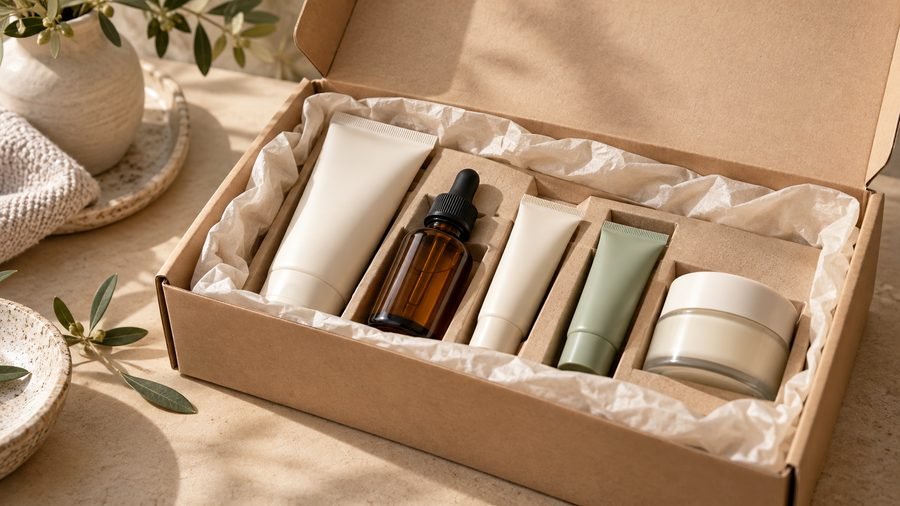
Then someone counts the sachets. There are only 800 of the right one. Another 300 belong to a previous campaign. Meanwhile, one serum lot is on hold pending a quality check. The boxes look easy until you ask which complete, approved boxes can actually leave on the promised date.
That is the job of skincare subscription box fulfillment. It is part inventory control, part assembly line, part customer promise. The pretty tissue paper matters, sure. But the less photogenic work—sample identity, lot eligibility, version control, and order records—keeps a monthly launch from turning into a customer-service pileup.
Here is a workable way to run the cycle, whether you ship from China, use a destination-country 3PL, or split the work between the two.
A monthly box is a small production run
A regular skincare order begins when a customer buys something. A subscription box starts earlier. The brand forecasts subscribers, buys components, decides the month’s assortment, and commits to a shipping window before many final orders are released.
The workload also arrives in a lump. A warehouse that handles 40 beauty orders a day might suddenly need to assemble and dispatch 1,000 variations in one week. A skin-type tier, fragrance preference, welcome offer, or country-specific insert can multiply the versions. The team needs a controlled build, not a memory game.
Treat every cycle as a production run with a simple sequence:
-
Forecast active subscribers by tier and destination.
-
Approve the box contents and any permitted substitutes.
-
Receive, inspect, and reserve every component.
-
Confirm usable lot quantities against the ship date.
-
Approve a physical first box for each version.
-
Build, check, label, and dispatch by the agreed cutoff.
-
Keep the component history tied to each shipped order.
The brand decides what it promises customers and approves the product, label, and market requirements. The fulfillment partner follows those approved instructions and reports exceptions. Put the handoff in writing. “Use whatever sample is available” is an invitation to a surprise.
Freeze the promise before the boxes are built
Set a cycle ID such as 2026-11, a bill of materials (BOM) revision, and a time when changes stop. Record the customer-facing description beside the warehouse instructions. If the site promises a 10 ml calming serum, a warehouse note that says “serum sample” is too loose.
The cutoff should cover product changes, subscription skips, address edits, and payment release separately. They do not always happen on the same day. A customer may still change an address while the contents of the box are already fixed. The order system and warehouse need to agree on the last safe moment for each change.
Count every sample, mini, and paper insert as a real component
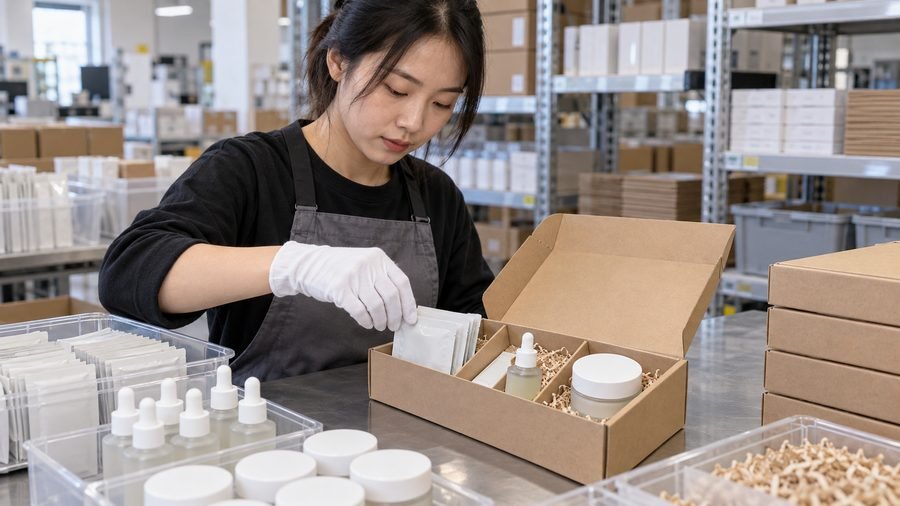
A sample might cost little. It can still stop the whole build. That is the awkward bit. If a box needs two sachets and the warehouse has 1,600 eligible sachets, it can build at most 800 boxes from that supply—even with 1,000 moisturizers on the shelf.
For each planned component, calculate available boxes as eligible reserved quantity ÷ quantity required per box, rounded down. The smallest result is the current build capacity. Reserve stock for subscriptions if the same item also feeds ordinary store orders, gifting, or influencer mailers. Otherwise, your “available” count can vanish while the campaign email is going out.
A sample needs its own SKU and identity
Do not let a full-size cleanser, a 15 ml mini, a promotional sachet, and a non-sale tester share one undifferentiated inventory record. They may contain a similar formula, but they have different fill sizes, packaging, labels, lots, and intended uses. Even two sachets with the same formula may belong to different markets or campaigns.
Ask suppliers for the exact component code and original production lot. Count the actual inner units at receiving, not just the outer cartons. A case marked “500 samples” may contain mixed versions, a short shipment, or a damaged corner that soaked half the sleeves. Tiny items disappear surprisingly well in a busy warehouse.
The same rule applies to cards, sleeves, stickers, and shipping cartons. A November insert can look almost identical to October’s while advertising an offer that has ended. Give each printed revision an identifier and keep old versions out of the active pick face. If seasonal packaging requires a large print run, compare the usable stock and revision risk with the custom packaging MOQ in China before ordering six months of boxes.
Version the whole kit
A finished kit SKU can make storefront ordering simple. Behind that SKU, the warehouse still needs a recipe. At minimum, the recipe names the cycle, market, subscriber tier, exact component SKU and quantity, approved lot rules, insert language, packing layout, and revision number.
| Component / example SKU | Lot or date rule | Tier / version | Pack check |
| 30 ml glass serum / SER-30 | Released lot; meets brand’s use-window rule | All tiers, November build | Cap and seal intact; cushioned away from glass contact |
| 15 ml moisturizer / MOI-15 | Released lot and approved market label | All tiers | Correct mini, not the 50 ml retail SKU |
| Calming sachet / CAL-S1 | Original batch captured; two units per box | Sensitive-skin tier | Count two; scan correct sachet version |
| Routine card / CARD-NOV-EN | Print revision approved | English-language version | Correct offer and sequence face up |
These are sample identifiers, not actual products or warehouse codes. The point is that “November box” alone cannot describe every box if a subscriber tier or destination changes the contents.
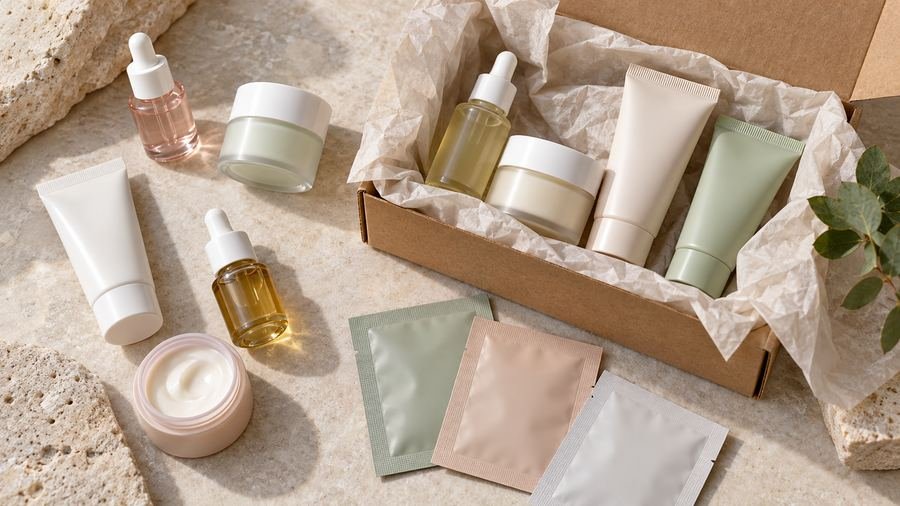
Receive by lot, then rotate only eligible stock
Good batch rotation begins at the loading dock. Record the supplier, component SKU, original batch code, received quantity, condition, and any manufacturer-provided date or shelf-life information. Check seals, leaks, outer packaging, labeling, and storage instructions. Segregate anything awaiting inspection, missing data, or a quality decision. A hold should be a system status that blocks picking, not a sticky note on a pallet.
Some skincare is sensitive to heat, light, or rough handling. Storage conditions should come from the product’s validated requirements, not a warehouse-wide guess. Keep a record of excursions and who decided whether affected units could be released. The same applies when a supplier sends a replacement batch that looks a little different. Do not quietly mingle it with the old one.
FIFO and FEFO are different rules
FIFO means first in, first out: the earliest-received stock is picked first. FEFO means first expiring, first out: the eligible stock with the earliest expiry is picked first. Suppose lot A arrived on Monday and has a manufacturer-supported date in December. Lot B arrived on Thursday but has a date in November. FIFO points to A; FEFO points to B.
There is a catch. FEFO does not mean “ship the oldest thing no matter what.” First, exclude held or damaged stock. Then apply the brand’s approved remaining-shelf-life rule at dispatch, allowing for transit and a reasonable customer-use window. Rotate among the lots that pass. If lot B is too short-dated for that rule, it stays out of the box even if it expires first. The brand and manufacturer decide its next disposition, which might be a different approved channel or a write-off. Do not invent a universal six-month or twelve-month cutoff.
For ordinary U.S. cosmetics, a printed expiration date is not universally required. The FDA’s guidance on cosmetic shelf life and expiration dating says manufacturers remain responsible for product safety and shelf life. It also distinguishes products such as sunscreen and acne treatments, which may be drugs, from ordinary cosmetics; drugs have different stability and expiration-label requirements. If a consumer label lacks a date, ask the manufacturer for reliable batch-to-date information and the approved handling policy. A third-party batch-code calculator is not a substitute for that evidence.
Destination rules can differ, too. Before a box crosses borders, have the responsible product team review the particular formula, claims, label, and market. A moisturizing sample and an SPF sample may look alike in a carton. Their regulatory treatment may be quite different.
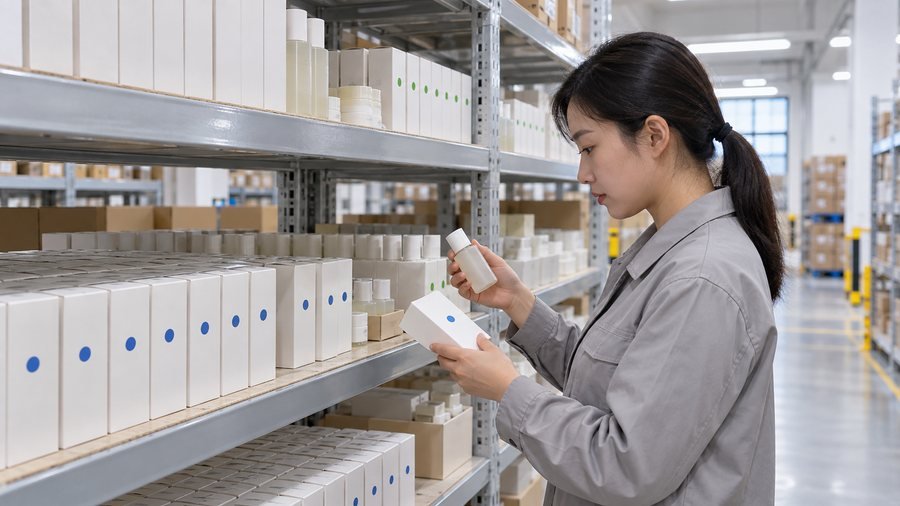
Build ahead, on demand, or somewhere between
Prebuilding every kit can make shipping week calmer. It can also lock the wrong components into hundreds of finished boxes. Building each box after the renewal order arrives keeps choices open, but adds component picks and labor when the clock is loudest.
| Build model | Speed / cost benefit | Expiry and version risk | Best fit |
| Prebuild complete kits | Repeated work happens in a controlled batch; dispatch can be faster | Changes and lot holds may require opening finished kits | Stable contents and a reliable subscriber count |
| Assemble after order release | Stock and tier decisions stay flexible longer | More picks near cutoff; harder to absorb a sudden peak | Many variants or frequent skips and swaps |
| Pre-stage a common core | Repeated items are prepared early; final choices stay open | Requires a clear record of which variable pieces went into each finished box | Shared base with changing samples, cards, or tiers |
| Routine card / CARD-NOV-EN | Print revision approved | English-language version | Correct offer and sequence face up |
Take a box with a cleanser and moisturizer for everyone, plus one of three serums. You could stage the common pair in a labeled tray, then scan the correct serum and card when the subscriber order is released. That reduces last-minute work without guessing the subscriber’s choice too early.
Whatever model you choose, keep the source lots attached to the final kit. If you open 50 prebuilt boxes to replace a sample, record the original and replacement component, affected build IDs, who performed the rework, and the new approval. Otherwise, the label on the outside tells only half the story.
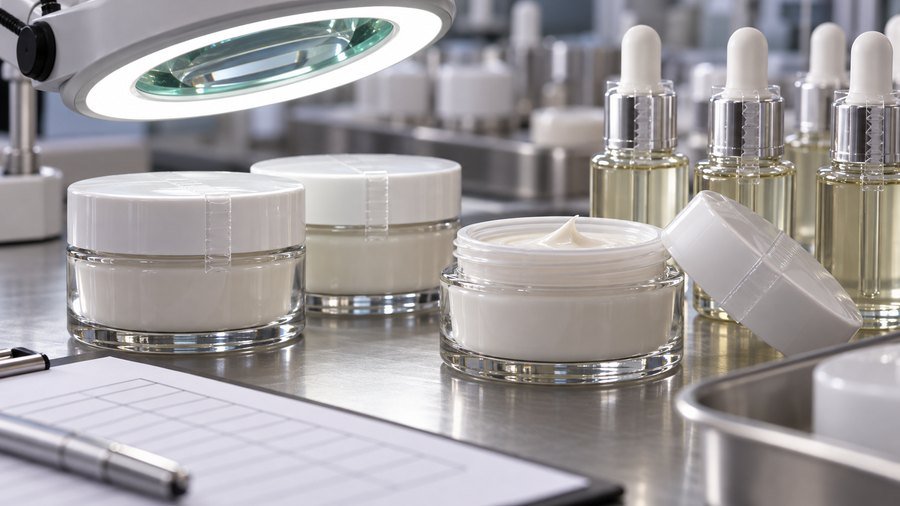
Approve one finished box before the line runs
A spreadsheet does not tell you whether the dropper knocks against the cleanser bottle in transit. Make a physical first box for each meaningful version. Have the brand approve its contents, presentation, protection, and customer-facing text before full assembly begins. Save the approved image and build instructions as a reference. When a variable sample changes, check that version too.
Set heavy items low, cushion glass, protect sachets from sharp carton edges, and keep liquids from soaking the insert if a cap loosens. A tamper feature, cap check, or leak barrier may be appropriate for the actual container. Test a packed box using a method suitable for its route and contents. A nice-looking unboxing video does not prove the pack will survive sorting equipment.
There is no magic amount of tissue or fill. Extra material can increase parcel dimensions and postage while still leaving the bottle free to rattle. Weigh and measure the final packed version, then check the carrier’s chargeable-weight and acceptance rules. Treat the printed outer box as packaging inventory with its own revision, count, and reorder lead time.
During assembly, use a scan or controlled check for each component and its lot where practical. Count sachets rather than scooping a handful. A second check can focus on the expensive, fragile, or easily confused items. Pull a sample box at defined points during the run and compare it with the approved first box. If something fails, stop the affected build, isolate completed units since the last good check, and document the correction. Small mistake, small pause. Better than 400 awkward emails.

Release the right version to each subscriber
The subscription platform and warehouse management system need a shared answer to four questions: who is due a box, which version, where it goes, and when it may ship. Payment failures, skips, cancellations, address changes, and late joiners should arrive as explicit order states, not as a daily chat message.
Use an agreed time zone for cutoffs. A “midnight” deadline is vague when the storefront, warehouse, and customers are in different countries. Freeze the BOM before assembly; freeze address data as late as your label and carrier workflow safely allows. If an order changes after a label is printed, define who can intercept it and how the original tracking record is voided or updated.
As an illustration, a brand might freeze the November assortment on October 25, finish inbound checks on October 29, approve the first kits on October 30, release paid orders on November 1, and dispatch in agreed waves afterward. Those dates are an example of a planning sequence, not a promised 3PL service level. Work backward from the real customer delivery window and carrier pickup schedule.
When a component is missing, show the true number of complete eligible kits. If the calming sachet runs short, do not let the warehouse quietly use a brightening one for the sensitive-skin tier. Hold the affected orders, obtain an approved substitute with the right label and version, or communicate a changed ship plan to customers. Keep the substitution tied to the affected order IDs. A customer should not have to discover the change while opening the box.
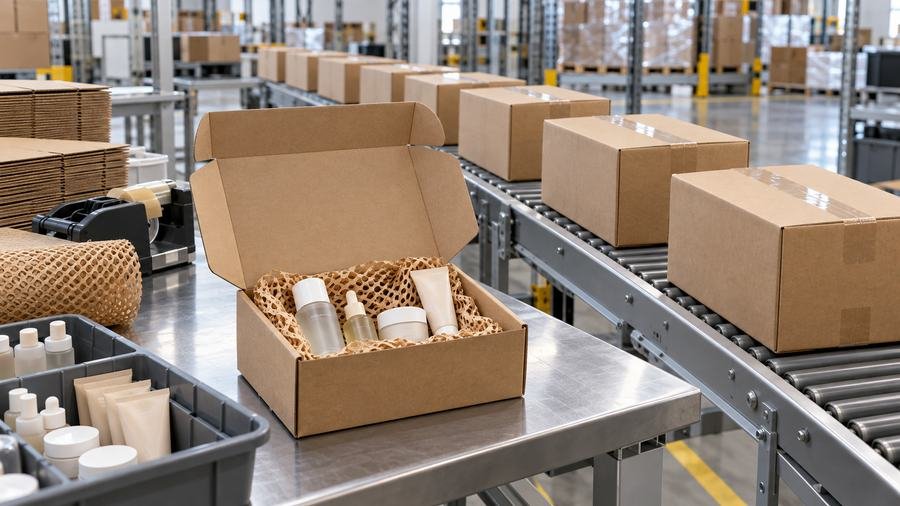
Keep the component story after the box gets a single SKU
The storefront may see one SKU: NOV-BOX-SENSITIVE. The warehouse must see its family tree. A useful record connects the kit build ID and revision to the original lot and quantity of each serum, moisturizer, sample, and other relevant product component. Then it connects that finished kit to the order ID and dispatch event.
Why bother? Imagine a quality complaint about one serum lot after 600 boxes have shipped. With component-to-order records, the team can identify which orders contained that lot, which finished kits remain unshipped, and which other lots were used in the same cycle. Without them, the entire month may have to be treated as suspect while everyone reconstructs a packing shift from memory.
Run a rehearsal before launch: pick one component lot and ask the partner for all finished and shipped boxes containing it. Reverse the query from a customer order to its component lots. Confirm a hold stops unshipped kits and loose stock alike. A returned box should not flow back into saleable inventory by default; inspect it under the brand’s return policy and preserve its history. For the wider record design, see lot tracking for cosmetics fulfillment.
The warehouse’s traceability record supports the brand’s decisions; it does not transfer all product responsibilities to the 3PL. The FDA’s MoCRA overview describes duties associated with the responsible person and manufacturing or processing facilities. The exact duties depend on the product and activity. Have qualified product and regulatory owners decide the applicable requirements, while your fulfillment agreement spells out hold, investigation, and record handoffs.

Work out the cost of the complete box
“Pick and pack: $X” is too small a view for a rotating beauty kit. A quote may separately charge for receiving, storage, component picks, assembly labor, printed inserts, protective material, quality checks, shipping, returns, or rework. It might include some of those. Ask for the actual fee schedule and unit of charge.
A useful per-box calculation is:
Component cost + allocated receiving and storage + component picks and assembly + packaging and QC + shipping + expected damage, expiry, and rework cost.
Here is a deliberately hypothetical comparison, in dollars, for one box. It is arithmetic for planning, not a market benchmark or a FriendDropshipping quote:
| Cost line | Example per box | What to check in a real quote |
| Products and two samples | $14.00 | Sample unit costs and wastage included? |
| Receiving and storage allocation | $0.70 | Based on units, cartons, pallets, or time? |
| Four component touches and assembly | $2.80 | Is the first pick separate from additional items? |
| Mailer, insert, protection, and QC | $1.60 | Are branded materials and extra checks billed separately? |
| Outbound shipping | $5.50 | Which route, zone, dimensions, and surcharges? |
| Expected rework and damage allowance | $0.40 | Based on the brand’s own measured history? |
| Illustrative total | $25.00 | Recalculate using actual quotes and product data. |
The $0.40 allowance is a placeholder, not a prediction. An actual program should measure leakage, late changes, unsold printed inserts, expired stock, and reships by cycle. A cheap assembly fee can look silly if each version change triggers a paid teardown. For a broader breakdown of inbound, storage, handling, and shipping lines, see China fulfillment center fees.
Ask the partner to quote at your likely low and high subscriber counts. Include how they bill two sachets, an added sample, a mid-cycle card swap, a rush build, and a held lot. Then calculate margin after product, fulfillment, payment fees, acquisition, and expected service costs. The shipping carton is not the entire business model.
Pick a shipping route, then prove it with a small cycle
China-direct shipping can make sense when production, assembly, and stock sit close together and the product is accepted on the chosen cross-border route. A destination-country 3PL can shorten local delivery and simplify some returns, but requires inventory positioning and replenishment planning. A hybrid may stage common kits near the customer and handle some limited drops at origin. Compare the full delivered cost and the promised customer experience, not just one postage line. The related guide to beauty and cosmetics fulfillment from China goes deeper into those route choices.
Check each actual SKU and destination with the carrier or shipping partner. Liquids, glass, alcohol-based fragrances, aerosols, and products with drug claims may trigger different acceptance, documentation, or import requirements. A route that accepts a moisturizer does not automatically accept a fragrance spray or sunscreen. Build a fallback for a rejected shipment before renewal week.
Before scaling to the whole list, run a limited cycle or dry run. Supply the partner with the exact BOM, labels, component-lot data, and approved first box. Then ask for a physical inventory count, a sample of packed boxes, an order-to-lot trace report, a simulated lot hold, tracking events, and an invoice matched against the quote. Test one skip and one late address edit, too. Those little edge cases are where a smooth demo becomes a real operation.
Conclusion
A skincare box is ready when every required component is present, released, assigned to the right version, protected for its route, and traceable to the order. Plenty of serum alone will not save a missing sachet. A beautiful box alone will not explain a mixed-up batch.
Start with one cycle’s BOM, one first-box approval, and one traceability drill. If the team can show exactly what went into each subscriber’s box—and why that stock was eligible—the next renewal is a lot less dramatic.
Frequently Asked Questions
What does skincare subscription box fulfillment include?
It covers receiving and storing full-size products and samples, checking lot eligibility, reserving components, assembling the approved kit, packing it for transit, shipping within the planned window, and preserving order-level records for complaints or holds.
Should sample sachets and minis have separate SKUs?
Yes. Give different sizes, labels, formulas, campaigns, or markets distinct identifiers. A separate SKU helps the team count stock, pick the right version, and connect a sample to its original lot.
How does a 3PL know whether a kit is available to sell?
It checks the approved BOM against eligible, reserved quantities for every required component. The scarcest component sets the number of complete kits. Held stock and units allocated to other channels do not count.
What is a BOM for a beauty subscription box?
A bill of materials lists the exact product and packaging components, quantities, variants, and approved revisions needed to build one box. It should identify the cycle and tier so the warehouse can use the correct recipe.
Is pre-kitting better than building after each renewal?
It depends on how stable the contents and subscriber count are. Pre-kitting can smooth the shipping rush. On-demand assembly handles changes more easily. A common-core build with the variable pieces added later often works well for tiered boxes.
How should cosmetic batches be rotated for subscription boxes?
First block held, damaged, or otherwise ineligible lots. Apply the brand’s approved remaining-use-window rule. Among eligible lots, pick the earliest expiring one when date data supports FEFO. Keep the selected lot connected to each finished kit.
What is the difference between FIFO and FEFO in skincare?
FIFO picks stock by arrival order. FEFO picks by expiry order. A later arrival can expire earlier, so the two rules can point to different lots. Neither rule permits shipping a held or unsuitable lot.
Must every U.S. cosmetic display an expiration date?
No. Ordinary U.S. cosmetics do not have a universal expiration-date label requirement. Manufacturers remain responsible for safety and shelf life. Products regulated as drugs, including some SPF and acne products, follow different rules.
What if a sample has too little remaining shelf life?
Remove it from eligible subscription stock under the brand’s approved rule. Ask the product owner whether it has another permitted disposition. Do not hide the short date inside a promotional box or assume a sample is exempt from the quality decision.
Can a 3PL swap an out-of-stock serum or sachet?
Only under a clearly approved substitution rule that covers product identity, label, market, subscriber tier, and customer promise. Record the actual substitute and lot in affected orders. If no substitute is approved, hold the order and escalate.
How do you trace a recalled item inside a completed kit?
Link the component’s original lot to each kit build ID, then to the shipped order IDs. Query both directions. Keep prebuilt but unshipped kits in the search, and make sure rework updates the component record.
How should glass serums and liquid minis be packed?
Check closures and seals, cushion glass from other hard items, contain likely leakage, and test a finished box for the actual route. Recheck weight and dimensions after adding protection. A visual mockup is only the first step.
What happens if a subscriber skips or changes an address near cutoff?
The platform must send a clear updated order state before the agreed operational cutoff. The team then releases, intercepts, or holds the order according to its stage. Define who handles a change after the label is created.
Which fees get missed in a beauty-box quote?
Additional component picks, kitting labor, printed-material storage, first-box approval, extra QC, version changes, held-lot rework, protective packaging, and returns are common questions to ask. The contract determines whether they are separate charges.
Can a skincare subscription box ship from China to every country?
No universal route covers every product and destination. Check the formula and claims, destination-market requirements, carrier acceptance, packaging, and customs data for the actual SKUs. Plan an alternate route for restricted items.
Table of Content

I’m Cassiel. I’ll help you scale your Shopify business with reliable fulfillment.
Join to newsletter.
Follow us and get more knowledge.