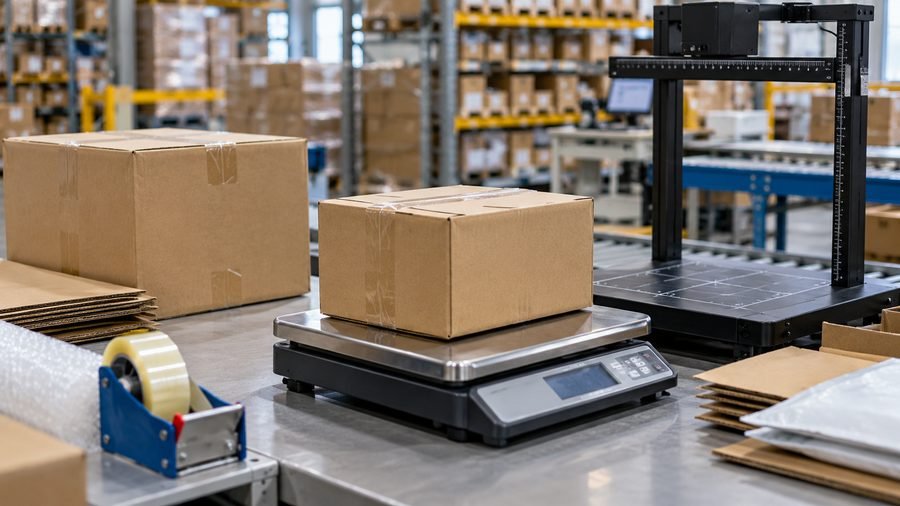
You order 1,200 units. The supplier says they shipped 1,200 units. The truck reaches your 3PL, and the first invoice has a receiving charge, a pallet charge, a label charge, and two hours of “special labor.” What happened between the truck and the shelf?

Maybe the bill is right. Maybe the warehouse counted loose cartons, built pallets, and found six cartons with labels that did not match the stock inside. Or maybe two lines describe the same work. You cannot tell from the headline rate.
That is the tricky part about 3PL receiving fees. They are tied to how inventory arrives and what the warehouse must do before it can be sold. A neat pallet of one SKU is a different job from a floor-loaded container full of mixed cases. Let’s walk through the bill as the warehouse sees it, then work backward to the documents that should support it.
What does a receiving fee pay for?
Receiving starts when your goods arrive at the warehouse under an agreed inbound booking. The team unloads or accepts the shipment, identifies the cartons or pallets, checks the agreed quantities and visible condition, records the receipt in the warehouse management system (WMS), and moves accepted stock toward storage. The exact work included depends on the contract.

Here is where people often talk past one another. “Counted” might mean counting sealed outer cartons. It might mean scanning every sellable unit. Those are different amounts of labor. “Inspected” might mean noticing a crushed box at the dock, not opening every box to test products. Ask what those words mean on your rate card.
The fee also has neighbors. For a wider map of receiving, storage, packing, and delivery costs, see the China fulfillment center fee structure.
| Charge | What it normally relates to | Question to settle |
|---|---|---|
| Inbound freight | Moving goods to the warehouse | Does the quoted freight end at the dock or include unloading? |
| Receiving | Accepting, identifying and recording an inbound load | Is the count by pallet, carton or individual unit? |
| Putaway | Moving accepted goods to a storage location | Is it included in receiving? |
| Storage | Space occupied over a billing period | When does the storage clock begin? |
| Special inspection | Opening, testing, photographing or grading stock beyond the standard check | Who authorizes it, and how is it measured? |
| Pick and pack | Handling a later customer order | Why would this appear before an order ships? |
Receiving is a one-time event for a particular inbound shipment. Storage can continue while the stock sits there. Do not confuse a $15 charge to receive a pallet with $15 per pallet per month to store it. Same pallet, different job.
Cartons, pallets, containers: why the billing unit changes
There is no single “3PL receiving price.” The rate could be per loose carton, per pallet handled, per unit checked, per container unloaded, per shipment, or per labor hour. Some contracts combine methods. What matters is the billable unit and the work it buys.

The software side reflects this variety. Extensiv’s receiving billing categories distinguish item-based handling from value-added work, such as palletization and container unloading, and from initial storage charges. That is a useful way to read a quote, though each 3PL sets its own terms.
| Inbound format | Common billing basis | What may change the invoice |
|---|---|---|
| Loose parcel or master carton | Per carton or parcel, sometimes with a shipment minimum | Mixed SKUs, missing carton labels, unit counts |
| Palletized LTL or truckload | Per pallet received | Breakdown into SKU-specific pallets, unstable loads, extra pallet materials |
| Floor-loaded container | Per container, per carton or labor hour | Container size, carton count, SKU sorting, pallets built after unloading |
| Complex or unsorted arrival | Labor hour, unit, project or exception fee | Rework scope, minimum time, supplies and approval |
Loose cartons are simple only when their contents are clear
Suppose a supplier sends 20 cartons by parcel carrier. Each carton has one SKU, a readable label, a stated unit count, and a matching advance shipping notice (ASN). The warehouse can scan the cartons and put them away under a predictable per-carton process.
Now suppose those same 20 cartons contain six SKUs mixed together, with no list of which unit is in which carton. Twenty remains the physical carton count, but the warehouse has another task: open, identify, count, sort, and possibly relabel. A low per-carton price may not cover that task. Ask whether the 3PL accepts mixed-SKU cartons at all, what “mixed” means, and whether a unit count is charged separately.

Pallet pricing depends on the pallets the team actually handles
Palletized freight can be easier to unload with a forklift. A per-pallet receipt may make sense when the load is stable and labeled. But “one pallet” on a bill is not always the one pallet your supplier pictured at the factory.
A pallet stacked with four SKUs may need to be broken into separate locations. A damaged pallet might be rebuilt. A pallet that exceeds the warehouse’s safe size or height rule may need special handling. Before booking freight, get the warehouse’s pallet dimensions, weight limits, label placement and mixed-SKU rules. The warehouse should show whether it billed incoming pallets, pallets built, or both for distinct work.
A container fee may be an unloading fee, not an all-in receipt
Floor-loaded means cartons are loaded loose inside the container instead of on pallets. Unloading is labor-heavy. You may see “devanning,” “floor unload,” or “container handling” on a rate card. A palletized container may follow a different schedule.
One public provider example shows why fine print matters. In its published pricing overview, Flexport describes a separate floor-loaded container unloading charge; the same page says standard receiving is included in certain domestic fulfillment rates and lists separate B2B inbound fee definitions. Those are Flexport’s program-specific terms, not FriendDropshipping rates or a universal market benchmark. Do not lift one line into your own budget without checking which program and current contract applies.
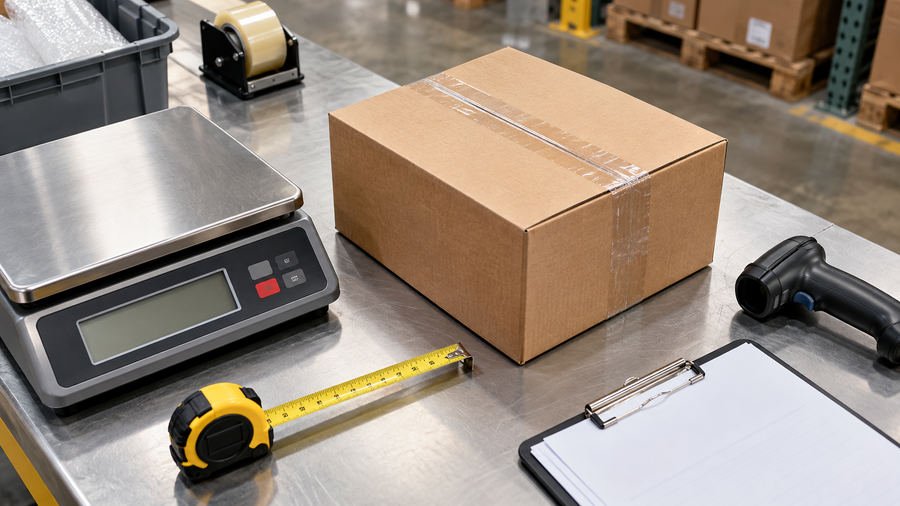
For your quote, ask: Does the container fee cover unloading only? Does it cover sorting, carton counting and WMS receipt? Will the warehouse charge for pallets it supplies? Is putaway included? If there are 600 cartons in a 40-foot container, the number “40-foot” says nothing about the six hundred small handling decisions inside it.
Hourly rates and minimums need a clock
Some warehouses bill unusual inbound work by the hour. Ask whether the rate is per worker-hour, whether there is a minimum, when the clock starts, and whether a supervisor or equipment is charged separately. “Two hours” could mean two people for one hour, or one person for two. The receipt or work order should tell you which.
A minimum charge can also make a tiny delivery cost more than cartons multiplied by the listed unit rate. That can be perfectly legitimate if it was disclosed. The fix is to compare invoices with the signed schedule, not with a single number taken from a pricing page.
What makes incoming stock a problem?
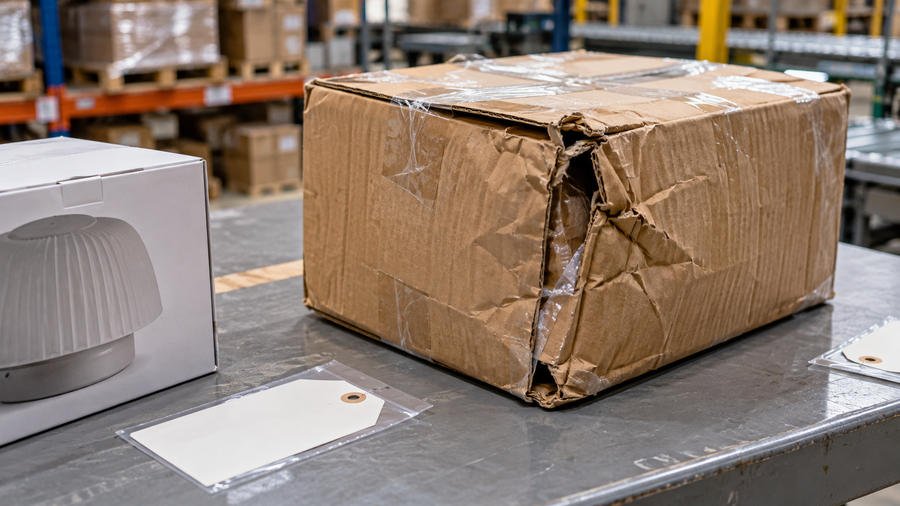
Problem stock is inventory the warehouse cannot confidently identify, count, store or release under the agreed process. It is not a magic fee category. The actual cost depends on what happened, who must fix it, and what the contract allows.
| Issue found | What the warehouse should record | Possible extra work |
|---|---|---|
| ASN or packing list differs from the load | Expected and actual counts by SKU and carton; arrival reference | Investigation, recount, data correction |
| Barcode is missing or unreadable | Affected SKU/cartons and photos | Label printing and application |
| Mixed-SKU carton lacks a contents map | Carton ID and observed contents | Opening, sorting and unit count |
| Crushed, leaking or visibly damaged goods | Condition photos, quantity and location | Isolation, detailed inspection, repacking or disposal after approval |
| Overage, shortage or unknown product | Expected quantity, received quantity and evidence | Reconciliation and a decision on the surplus or shortage |
| Lot or expiry data is missing where required | Affected batch and missing fields | Hold, verification and lot-level data capture |
An ASN error is a data problem and a warehouse problem
An ASN tells the 3PL what is coming before it arrives. It should identify the shipment, SKUs, carton or pallet counts, expected units, and any lot information required by your operating agreement. The warehouse can prepare space and recognize a mismatch. With no ASN, the team may have to figure out whose goods just arrived. Hmm, that is a slow way to start a Tuesday.
Do not assume every mismatch is the supplier’s fault. The warehouse might scan the wrong carton, the freight carrier might deliver part of the shipment later, or the ASN might have used cases where the WMS expected units. Compare the purchase order, packing list, transport record and WMS receipt before making a stock adjustment. If a fee is charged, request the transaction or labor record behind it.
Damage and shortages should lead to a hold, not a guess
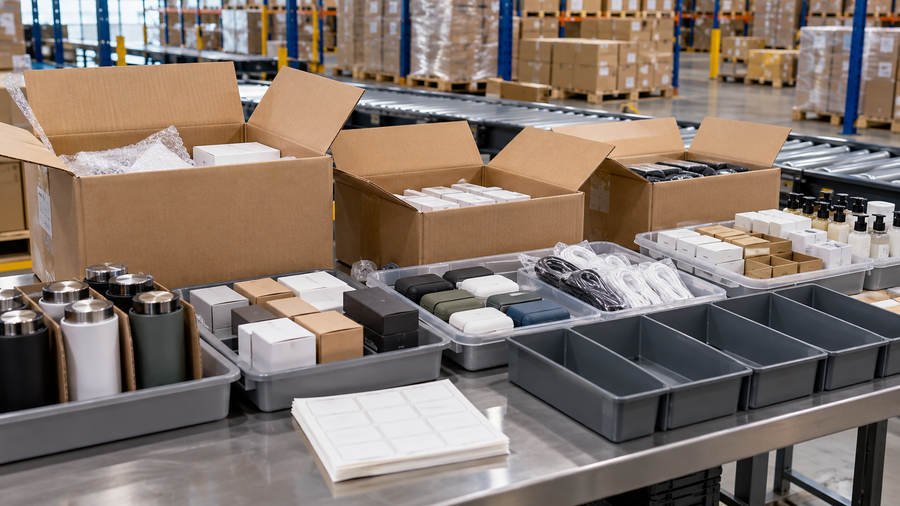
Imagine 12 cartons arrive, but one is wet and another is missing. The safe next step is to record the condition and counts, keep affected goods away from sellable inventory, and notify the owner. For sealed cartons, a visible-condition check cannot prove that every item inside is fine. A deeper inspection needs an agreed scope.
“Quarantine” here means a WMS or physical hold pending a decision. It is not an automatic promise of a special room, lab test, or standard fee. Your SOP should say who can release, return, rework, dispose of, or claim the goods, and who pays when each cause is established. Keep photos and a timestamp. Otherwise, a dispute turns into two people remembering a different box.
Regulated or fragile products need a better receiving brief
For skincare, supplements, food or other lot-sensitive products, a carton count alone might not support the brand’s required traceability. Specify whether the 3PL captures lot codes, expiry dates and quantities at the unit, carton or pallet level. Check what the product category and destination market require before relying on a generic warehouse process. Fragile decor, glass bottles and electronics may need condition photos or a sampling plan. None of these services should be assumed from the word “inspection.”
A receiving invoice, built from one actual-looking load
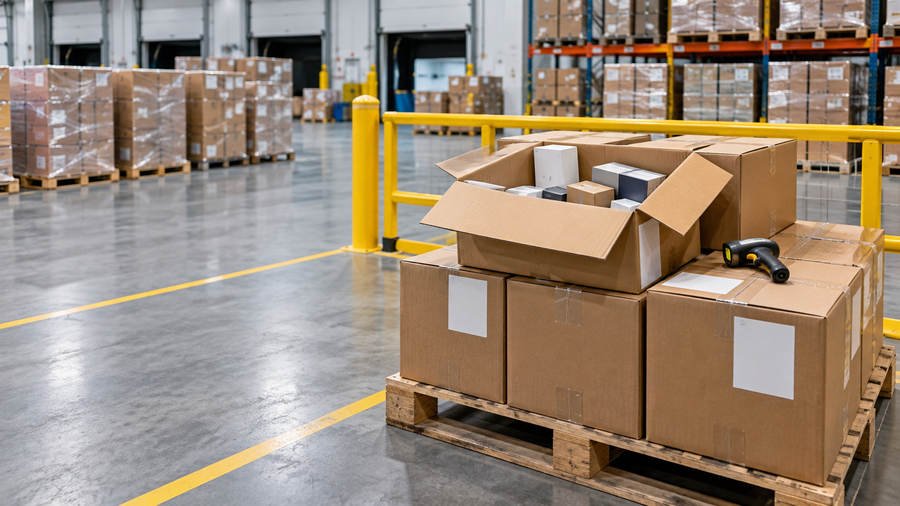
Let’s use made-up numbers to see how the math works. These are illustration rates, not a quote, market average or FriendDropshipping price. A brand sends a floor-loaded container with 500 cartons and 5,000 units. The agreed base fee is $400 for unloading and sorting. The warehouse must supply ten pallets at $12 each. Twenty cartons lack usable labels. The brand approves relabeling at $1 per carton. After counting, 50 units are held because their SKU cannot be confirmed.
| Line item | Calculation | Illustrative amount |
|---|---|---|
| Floor unload and agreed sorting | 1 × $400 | $400 |
| Supplied pallets, separate from unload labor | 10 × $12 | $120 |
| Approved relabeling | 20 × $1 | $20 |
| Total receiving and authorized extra work | $400 + $120 + $20 | $540 |
If 4,950 units are confirmed sellable, the temporary allocation is $540 ÷ 4,950, or about $0.109 per sellable unit. The 50 held units still belong in the inventory reconciliation. If they later become sellable, the allocation changes. This is a planning view, not a rule that a 3PL bills by sellable unit.
What if the invoice also says “500 cartons received × $1.50”? That is another $750. It might be correct if the $400 explicitly buys only unloading and the carton charge buys separate check-in and putaway. It might duplicate labor already included in the $400. Ask for both scope definitions and the receipt. Do not accept or reject the line based on arithmetic alone.
Compare a smaller shipment. Ten clean pallets at an agreed $12 per pallet would be $120, assuming the fee includes the agreed count and putaway and no minimum applies. If the warehouse charges an $80 minimum and ten pallets calculate to $120, you pay $120, not $200, unless the contract describes an additional fixed shipment fee. Again, names matter.
Prepare the inbound handoff before the truck moves
You can avoid much of the avoidable work by making the stock easy to recognize. A warehouse receiving team is not a detective agency. Give it a map before the cartons reach the dock.
- Send the ASN early. Match the warehouse’s required fields and deadline. Include purchase order or shipment reference, carrier details, planned arrival, pallet/carton count, SKU, expected units, and required batch details. Update it if the supplier changes the load.
- Book the dock appointment. Confirm which party books it, who pays for waiting or missed slots, and whether the 3PL accepts unscheduled parcels differently from freight deliveries.
- Label the outer handling units. Put a readable carton or pallet ID where it can be scanned. Map each ID to SKU and quantity. Label mixed cartons as mixed if the warehouse permits them. Keep unit barcodes distinct from carton IDs.
- Send the documents the team will compare. Share the packing list, transport or bill-of-lading reference, and any product instructions. A barcode format such as GTIN may help retail traceability where the channel requires it; the 3PL’s WMS still needs the actual identifier mapped to your SKU.
- Write the exception rule. Who gets alerted about damage, shortages or unknown goods? Which photos are required? How long can stock be held? At what dollar amount must the brand approve rework before it begins?
For the full handoff across product data, inventory and SOPs, the 3PL onboarding checklist gives a useful sequence. In a China-to-overseas flow, add a special check at consolidation: do the supplier’s carton IDs survive repacking and export? If cartons are merged, create a new mapping before the next warehouse receives them.
Compare quotes by the work, then audit by the receipt
Take one representative inbound profile and send it to both prospective 3PLs. Include cartons, pallets, units, SKUs, dimensions, loading style, percentage of mixed cartons, lot/expiry needs, and how often this shipment arrives. Ask each provider to price that same scenario. A headline pallet rate cannot compare with an all-in container quote without the scope.
For each proposal, get written answers to these questions:
- Does the base fee include unloading, count, scan, WMS entry and putaway? What level of counting?
- If a floor-loaded container is unloaded and its cartons are received, are both charges due? What distinct work does each cover?
- Is the billable quantity the ASN estimate, physical receipt, or later verified count? What happens with a shortage?
- Are pallet supplies, wrap, labels, extra SKU sorting, overtime and equipment separate? Are there minimums?
- Who approves exceptional work, what evidence is supplied, and how soon must a discrepancy be reported?
- When does accepted stock become available in the WMS, and when does storage billing begin?
- How long do you have to question a charge after receiving the invoice?
Once the first shipment lands, compare the invoice to the ASN, warehouse receipt, condition photos, WMS inventory movements and any approved work order. One line should have one traceable trigger. If 12 pallets arrived and the invoice shows 16, ask whether four were built from a mixed pallet, whether those are supplied pallets, or whether the quantity is wrong. Request the receipt IDs and work record. It is much easier to fix a specific mismatch than to argue that a fee “looks high.”
For brands choosing a partner near Chinese suppliers, China 3PL fulfillment services can be evaluated against this same inbound checklist. Get a quote using your real SKU mix and shipping flow. A China warehouse does not make supplier-to-warehouse transport, export work, or overseas delivery automatically part of receiving.
Choose the receiving process for the product, not the prettiest rate
A single-SKU replenishment pallet may need a straightforward count and scan. A subscription box with components from five suppliers may need a component-level check before assembly. Cosmetics and supplements may need lot and expiry capture. Fragile products may justify a documented sample inspection. An Amazon-bound shipment might need separate channel labels or preparation. Each additional step has a purpose; each should have an owner and a price.
This is also why two suppliers selling the same product can create different 3PL bills. One sends labeled, stable pallets. The other sends loose cartons with no SKU map. The second supplier’s lower product price can evaporate at the dock. Ask for the delivered, received, sellable cost, not only the ex-factory product price.
Conclusion
A receiving fee is easier to manage once you stop treating it as one mysterious number. Describe the load, define the standard work, agree on the separate tasks, and require a receipt behind every charge. Clean labels and a good ASN save time. Clear approval rules protect you when the stock is not clean. Before signing a 3PL quote, run one real inbound example through the rate card. The first invoice should then feel boring. Boring is good here.
FAQs
1. What does a standard 3PL receiving fee include?
It depends on the contract. It often covers accepting the load, an agreed count, WMS entry and putaway. Ask whether unloading, unit checks, photos and pallet supplies are included.
2. Is receiving charged per pallet, carton or unit?
Any of those is possible. Some providers use a shipment or container fee, an hourly rate, or a combination. Match the charge to the physical load and the agreed work.
3. Can a 3PL charge both a container unload fee and a carton fee?
Yes, if the two fees buy distinct tasks under the agreement. Ask whether unloading, carton verification and putaway overlap. A duplicate description needs clarification.
4. Is putaway included in the receiving fee?
Sometimes. The answer should be explicit in the rate card. If putaway is separate, define its unit and trigger so it can be checked against the receipt.
5. What is the difference between pallet receiving and pallet storage?
Receiving pays for inbound handling when a pallet arrives. Storage pays for occupied space over the contract’s billing period, which may continue for weeks or months.
6. Does floor-loaded freight cost more than palletized freight?
It often takes more unloading labor, but a final quote depends on carton count, layout, SKU mix and contract terms. Compare the total work, including any pallet creation.
7. What is an ASN, and what if it is wrong?
An advance shipping notice tells the warehouse what to expect. A wrong ASN can slow receiving and trigger agreed exception work. Compare it with the actual count before changing inventory.
8. What is a mixed-SKU carton?
It is one outer carton containing more than one product SKU. It can be fine if the 3PL accepts it and receives a clear contents map; otherwise opening and sorting may cost extra.
9. Who pays for relabeling or rebuilding a pallet?
The contract should say. The warehouse should record the cause, affected quantity, materials and authorized labor. Agree on a spending threshold before non-urgent rework.
10. How are damaged or short shipments recorded?
The warehouse should document expected and actual counts, visible condition, photos and any hold. Compare its receipt with supplier and carrier records before assigning responsibility.
11. Does the warehouse count every item inside every carton?
Not necessarily. A standard receipt may count sealed cartons or declared cases. Request unit-level verification explicitly if you need it, and price the extra labor.
12. Are lot numbers and expiry dates captured automatically?
Do not assume so. Specify the field, scan level, label format and release rule before sending lot-sensitive goods. Confirm the WMS can report the captured data.
13. Can a 3PL charge a receiving minimum for a small delivery?
Yes, if the signed pricing schedule includes one. Check whether it replaces a lower calculated charge or is a separate fixed fee; the wording determines the math.
14. What do I need to dispute a receiving invoice?
Get the signed rate card, ASN, packing list, warehouse receipt, WMS transaction, condition photos and approved work orders. Match each billed unit to a documented event.
15. When will newly received stock be available to sell?
That depends on the agreed receiving turnaround and whether the goods pass identification and condition checks. Ask for a service target and a separate process for held stock.
Table of Content

I’m Cassiel. I’ll help you scale your Shopify business with reliable fulfillment.
Join to newsletter.
Follow us and get more knowledge.