The best vitamin dropshipping suppliers for Shopify are not always the cheapest catalog platforms. A reliable vitamin supplier should support product traceability, clear supplement facts, batch or lot control, safe packaging, Shopify order processing, private label options, and realistic shipping routes for each destination country.
For most Shopify vitamin brands, the best supplier model depends on the stage of the business:
| Shopify Brand Stage | Best Supplier Type | Why It Fits |
| Testing a niche | Ready-made private label catalog | Fast launch, low inventory risk |
| Building a branded store | Supplier plus fulfillment partner | Better packaging, inserts, shipping control |
| Scaling paid ads | 3PL or stocked inventory model | Faster delivery and fewer stockouts |
| Creating unique formulas | Custom supplement sourcing partner | Differentiation and stronger brand value |
| Selling internationally | Cross-border fulfillment partner | More flexible market coverage |
FriendDropshipping is a strong fit for Shopify sellers that want more than a basic catalog. Through Supplement Fulfillment, Sourcing & Fulfillment, Customization & Private Pack, Quality Control, 3PL Fulfillment, and Shipping Solutions, the team can help brands source vitamin products, check packaging, customize labels and inserts, store inventory, fulfill Shopify orders, and ship to supported markets.
This article is general business information, not legal, medical, tax, customs, or regulatory advice. Vitamin formulas, labels, claims, imports, and shipping availability should be reviewed for each product and market.
Why Vitamin Dropshipping Is Different From Ordinary Dropshipping
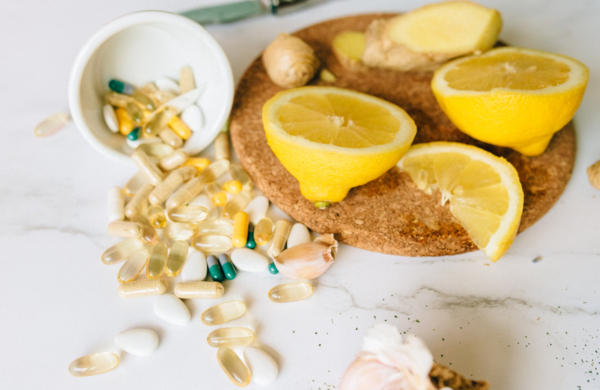
Vitamins look simple from the outside. A shopper sees a bottle of vitamin D3, a B-complex capsule, a multivitamin gummy, or a magnesium tablet. A Shopify seller may see a repeat-purchase product with subscription potential. But the operational reality is more sensitive than selling phone cases, pet toys, or fashion accessories.
Vitamins are consumed by people. That means the product condition, ingredient accuracy, label wording, dosage, expiration date, and storage environment all matter. A supplier mistake can lead to refunds, chargebacks, customs holds, marketplace complaints, or even product safety concerns.
The U.S. FDA explains that manufacturers and distributors are responsible for evaluating dietary supplement safety and labeling before marketing and ensuring products are not adulterated or misbranded. The FDA can take action after an adulterated or misbranded supplement reaches the market. Shopify sellers should read the FDA’s official Dietary Supplements page before building a vitamin offer for the U.S. market.
For marketing claims, the FTC’s Health Products Compliance Guidance is also important. A supplier may provide a bottle, label file, or product description, but the brand still needs to avoid unsupported health, disease, or cure claims in ads, landing pages, emails, TikTok videos, and product pages.
In short: the best vitamin dropshipping supplier is the one that helps you reduce operational risk while giving your Shopify brand room to grow.
What Makes a Vitamin Supplier “Best” for Shopify?
There is no single best supplier for every Shopify store. A beginner testing a vitamin niche has different needs from a brand running Meta ads at scale. A U.S.-only store has different needs from a DTC brand shipping to Europe, the UK, Canada, or Australia. A generic private label vitamin store has different needs from a brand building a custom gummy, sachet, capsule, or premium bundle.
The best vitamin dropshipping suppliers for Shopify usually perform well in six areas.
| Evaluation Area | What to Check | Why It Matters |
| Product quality | COA, specs, lot control, expiry | Reduces product and complaint risk |
| Label support | Supplement Facts, ingredients, warnings | Helps avoid misleading listings |
| Shopify workflow | App, API, CSV, manual sync | Prevents fulfillment errors |
| Fulfillment control | Pick, pack, tracking, returns | Protects customer experience |
| Branding options | Label, box, inserts, mailers | Builds repeat purchase value |
| Market fit | Routes, documents, restrictions | Avoids customs and delivery issues |
The word “supplier” can mean several different things. Some companies own a ready-made catalog and print your label after each order. Some are manufacturers that produce bulk runs but do not handle direct-to-consumer fulfillment. Some are 3PL warehouses that store products you already own. Some are sourcing and fulfillment partners that coordinate factories, quality checks, packaging, warehousing, and shipping.
For Shopify brands, the best choice is usually not just a product source. It is a workflow partner.
Best Vitamin Dropshipping Supplier Models for Shopify

Instead of treating every company as the same type of supplier, it is more useful to compare supplier models. This helps Shopify sellers avoid choosing a platform that is convenient at launch but limiting at scale.
-
Private Label Catalog Suppliers
Private label catalog suppliers offer ready-made vitamins and supplements that can be sold under your brand label. A seller chooses products, uploads label artwork, connects a Shopify store, and pays when an order is fulfilled.
This model is attractive because it is fast. You do not need to commit to large inventory before testing demand. You can launch a store around vitamin D, B12, magnesium, multivitamins, beauty gummies, sleep support formulas, or sports nutrition products with relatively low operational complexity.
The downside is differentiation. If many brands can access the same catalog, your moat comes from positioning, creative, offers, customer experience, education, and branding. You may also have limited control over formula changes, bottle types, packaging materials, or international routes.
Examples of this model include platforms such as Supliful, which presents itself as a private-label dropshipping platform for supplements and wellness products with Shopify integration, product selection, label customization, and fulfillment support.
-
Vitamin Manufacturers
Manufacturers are useful when you need custom formulas, larger runs, special formats, or more control over ingredients. This can include capsules, tablets, gummies, powders, stick packs, softgels, or liquid drops.
Manufacturers are not always dropshipping suppliers. Many produce in bulk and ship pallets or cartons to your warehouse, 3PL, Amazon prep center, or fulfillment partner. They may have strong formulation and compliance experience but no direct Shopify order fulfillment workflow.
This model fits brands that have proven demand and want a proprietary product. It usually requires more planning, higher MOQ, longer lead time, and more label responsibility.
-
3PL Supplement Fulfillment Providers
A supplement 3PL stores products that your brand owns and fulfills Shopify orders from inventory. It may not produce vitamins, but it can manage inbound receiving, storage, FEFO or FIFO picking, kitting, packaging, tracking, returns, and sometimes lot or expiration data.
This model is strong for scaling. If you already know your top vitamin SKUs, stocking inventory closer to customers can improve delivery speed and reduce per-order shipping cost. It can also support bundles, subscriptions, influencer kits, and retail samples.
The tradeoff is inventory risk. You need to forecast demand, manage expiry dates, and avoid overstocking formulas that do not sell.
-
China-Based Sourcing and Fulfillment Partners
A China-based sourcing and fulfillment partner can support Shopify brands that want product sourcing, private label packaging, custom inserts, inspection, warehousing, and international order shipping from one workflow.
This model is useful when a seller wants more flexibility than a fixed catalog but is not ready to manage multiple factories, packaging suppliers, freight forwarders, warehouses, and shipping channels separately. It can also work well for custom packaging, small branded inserts, thank-you cards, branded poly mailers, or mixed product bundles.
FriendDropshipping fits this model. For vitamin and supplement brands, the team can support sourcing, supplier coordination, packaging customization, inspection, warehouse storage, order fulfillment, and shipping. Sellers can contact FriendDropshipping through the Contact page for product-specific feasibility, document availability, and route options.
-
Marketplace Supplier Apps
Marketplace apps can help Shopify sellers find suppliers in categories such as wellness, beauty, food, and lifestyle products. Some connect stores to U.S., EU, or global suppliers. The benefit is breadth and convenience. The risk is uneven supplier quality.
If you use a marketplace app for vitamins, do not evaluate only the product image and margin. Ask who manufactures the product, where inventory is stored, whether the product has a COA, whether the label is suitable for your market, what claims are allowed, and whether batch or expiration data can be provided.
Supplier Comparison: Which Type Fits Your Shopify Vitamin Brand?
The table below compares common supplier models. It is not a quality ranking. It is a practical map for choosing the right structure.
| Supplier Model | Launch Speed | Branding Control | MOQ Risk | Best For |
| Catalog dropshipping | Fast | Low to medium | Low | Testing niches |
| Private label platform | Fast | Medium | Low | First branded store |
| Manufacturer | Slow | High | High | Custom formulas |
| 3PL warehouse | Medium | High | Medium | Scaling winners |
| Sourcing fulfillment partner | Medium | High | Flexible | Custom and global sellers |
For a Shopify brand, the best setup may combine two models. For example, you can test a vitamin angle with a catalog supplier, then move winning products into a private label or custom sourcing workflow. You can start with China-based fulfillment for early international flexibility, then place winning SKUs in a destination-country warehouse once demand becomes predictable.
Best Vitamin Product Types for Shopify Dropshipping
Vitamin categories are attractive because many products are small, light, reorderable, and easy to bundle. However, each product type has different customer expectations, claim risks, and fulfillment requirements.
| Vitamin Category | Common Format | Demand Driver | Fulfillment Note |
| Vitamin D3 | Softgel, capsule, gummy | General wellness | Watch heat and label dosage |
| Vitamin B12 | Tablet, drop, gummy | Energy positioning | Avoid disease claims |
| Multivitamin | Capsule, tablet, gummy | Daily routine | High competition |
| Prenatal vitamin | Capsule, tablet | Specific life stage | Higher label sensitivity |
| Hair, skin, nails | Gummy, capsule | Beauty outcome | Claims need care |
| Kids vitamins | Gummy, chewable | Parent buyer | Packaging and warnings matter |
The NIH Office of Dietary Supplements provides ingredient fact sheets for vitamins, minerals, herbs, and other dietary supplement ingredients. Their Dietary Supplement Fact Sheets are useful for understanding ingredients, but Shopify sellers should not copy health claims from educational pages into ads without regulatory review.
Vitamin D3
Vitamin D3 is one of the most common vitamin categories because it is easy to explain and widely searched. It can work as a standalone SKU or as part of immune support, bone health, or daily wellness positioning.
For dropshipping, the main concerns are dosage accuracy, Supplement Facts clarity, bottle seal condition, heat exposure, and claims. Avoid presenting vitamin D as a cure or treatment. Keep product pages focused on permitted structure/function language and general wellness education.
Vitamin B12 and B-Complex
B12 and B-complex products are often positioned around energy metabolism, vegan lifestyles, and daily nutrition. These products can appeal to specific audiences, but the marketing must be careful. “Supports energy metabolism” is very different from claiming to treat fatigue, anemia, neurological conditions, or disease.
For Shopify stores, B vitamins can perform well in quizzes, bundles, subscriptions, and lifestyle positioning. Ask suppliers whether formulas use cyanocobalamin, methylcobalamin, or other ingredient forms, and make sure the label is clear.
Multivitamins
Multivitamins are broad and competitive. They can work well when your brand has a clear audience: women’s wellness, men’s performance, active adults, vegans, seniors, busy professionals, or beauty-focused customers.
The challenge is differentiation. A generic multivitamin is easy to compare by price. A better Shopify strategy is to position the product around a customer segment, bundle, packaging style, subscription program, or custom formula.
Gummies
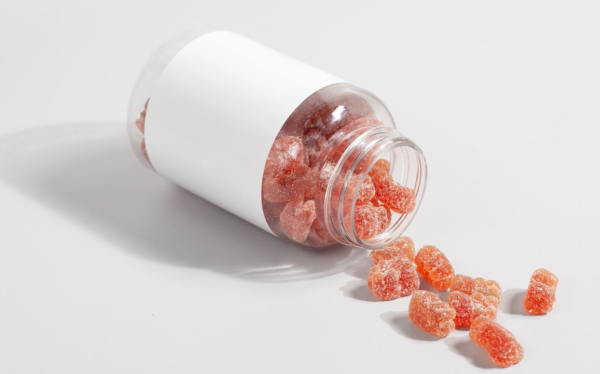
Vitamin gummies are visually appealing and easy to sell through social content. They can work for beauty, kids, sleep support, immune support, or daily wellness. But gummies require extra operational attention. Heat can affect texture. Packaging must protect the product. Ingredients, sweeteners, flavors, and serving sizes need to be accurate.
If you sell gummies internationally, confirm route stability, temperature sensitivity, customs descriptions, and reshipment rules before scaling paid traffic.
Prenatal, Kids, and Senior Vitamins
Life-stage vitamins can convert well because the buyer intent is specific. They also require more caution. Prenatal vitamins, kids vitamins, and senior formulas may involve sensitive audiences, stricter label expectations, and higher trust requirements.
For these products, Shopify sellers should be more conservative with claims, use stronger quality documentation, and avoid launching unless the supplier can provide product-specific support.
How to Evaluate Vitamin Dropshipping Suppliers
Choosing a vitamin dropshipping supplier is not just a sourcing decision. It affects your store’s conversion rate, refund rate, review profile, ad account stability, cash flow, and long-term brand value.
Check Product Documentation
Ask for product-specific documentation, not generic promises. Useful documents may include:
| Document | What It Shows | Why It Matters |
| COA | Test result or product analysis | Supports quality review |
| Product spec | Formula, format, serving size | Helps listing accuracy |
| Label file | Supplement Facts and warnings | Reduces label mismatch |
| GMP evidence | Facility quality system | Supports supplier vetting |
| Lot/expiry data | Batch and shelf life | Helps inventory control |
In the U.S., dietary supplement current good manufacturing practice requirements are found in 21 CFR Part 111. A Shopify seller does not need to become a regulatory lawyer, but the seller should understand that supplement production, packaging, labeling, and holding are not casual activities.
Review Labels Before Uploading Products
Never assume a supplier’s default product copy is safe to publish. Check the product name, Supplement Facts panel, serving size, ingredient list, allergen statements, warning statements, manufacturer or distributor information, net quantity, and any claims.
The FDA’s Dietary Supplement Labeling Guide explains general labeling concepts, including identity statements, net quantity, nutrition labeling, ingredient labeling, and claims. The guide is older, but it remains an important official resource and should be used alongside current regulations and professional review.
Test the Full Fulfillment Journey
Order samples as if you were the customer. Do not judge only the product photo. Check:
-
How long the order takes to process
-
Whether tracking updates correctly
-
Whether the bottle arrives sealed
-
Whether the label is aligned and readable
-
Whether the package protects the product
-
Whether the packing slip shows the wrong supplier name
-
Whether the customer sees confusing customs information
-
Whether the product page matches the delivered item
If you sell on Shopify, your customer experience starts before checkout and continues through delivery. A supplier that looks cheap on a spreadsheet can become expensive if it causes customer service tickets.
Compare Total Delivered Cost
The cheapest product cost is not always the best cost. For vitamins, compare total delivered cost:
Total delivered cost = product cost + label cost + packaging cost + pick and pack + shipping + transaction handling + duties/taxes + replacements + customer support impact.
| Cost Item | Low-Cost Trap | Better Question |
| Product price | Cheap formula, weak docs | What documentation supports it? |
| Shipping | Slow or unstable route | What is actual delivery performance? |
| Packaging | Generic or weak | Will it survive transit? |
| MOQ | Too much inventory | Can we phase the launch? |
| Returns | Unclear policy | Who pays for reshipments? |
Confirm Shopify Integration Details
Some suppliers have native Shopify apps. Others use API, CSV, ERP, or manual order upload. A native app can be convenient, but it is not automatically better if the product, route, or documentation is weak.
Ask:
-
How are Shopify orders imported?
-
How quickly are orders processed?
-
Can tracking sync back to Shopify?
-
Can SKUs be mapped accurately?
-
Can bundles or multi-SKU orders be handled?
-
Can branded inserts be added?
-
Can inventory be reserved?
-
Can low-stock alerts be shared?
How FriendDropshipping Supports Shopify Vitamin Brands

FriendDropshipping is positioned for sellers that want a more flexible vitamin fulfillment workflow than a simple one-click catalog. This is especially useful when you want to combine sourcing, customization, packaging, quality checks, and shipping.
Product Sourcing and Supplier Coordination
Shopify sellers often know what they want to sell but do not know how to find stable suppliers. FriendDropshipping can help identify sourcing options for vitamin and supplement products, compare supplier capabilities, and coordinate product details before launch.
This does not mean every formula can be shipped to every country. Vitamins and supplements should be reviewed by ingredient, dosage, label, claims, destination market, and route availability.
Custom Labels and Private Packaging
Private label vitamins need to look like a real brand, not a generic bottle with a logo pasted onto it. FriendDropshipping can support custom labels, bottles, jars, pouches, cartons, inserts, thank-you cards, and branded shipping materials through Customization & Private Pack.
This is important for Shopify because customers compare the full unboxing experience. A good product in weak packaging can still receive poor reviews.
Quality Control Before Fulfillment
For supplements, inspection is not only about checking whether an item exists. It may include checking label alignment, bottle condition, seal condition, batch information, outer packaging, SKU match, quantity, and visible damage before storage or shipment.
FriendDropshipping’s Quality Control service can help reduce obvious fulfillment mistakes before orders reach customers.
Shopify Order Fulfillment and Storage
Once products are ready, FriendDropshipping can help store inventory and fulfill Shopify orders. For brands that move beyond pure dropshipping, 3PL Fulfillment can support a more controlled inventory workflow.
This is useful for sellers running paid ads, influencer campaigns, subscriptions, or seasonal promotions. Vitamin brands often lose money when winning SKUs go out of stock during a campaign. A fulfillment partner should help you plan inventory, packaging, and route capacity before a traffic spike.
International Shipping Support
Vitamin shipping is country-specific. A product that can ship to one destination may not be suitable for another because of ingredients, labeling, customs data, or local rules. FriendDropshipping’s Shipping Solutions can help Shopify sellers evaluate shipping options for supported markets and choose practical routes.
Before scaling, confirm HS code, product name, ingredient description, declared value, destination restrictions, and customer-facing delivery time.
Best Vitamin Dropshipping Suppliers for Shopify: Practical Shortlist
The following list is organized by use case rather than pretending that one supplier is best for everyone.
-
FriendDropshipping: Best for Custom Sourcing, Packaging, and Global Fulfillment
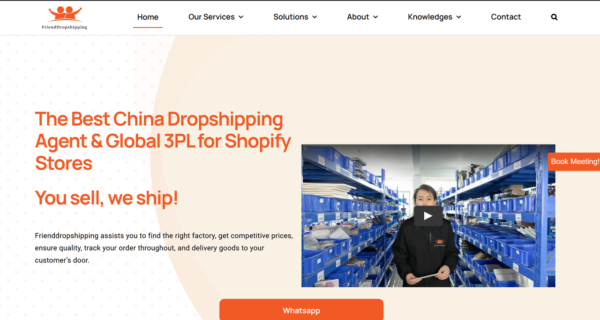
FriendDropshipping is best for Shopify vitamin brands that want flexible sourcing, private packaging, quality checks, storage, fulfillment, and international shipping support from China. It is a strong fit when you want to move beyond a generic catalog and build a more controlled brand experience.
Best for:
-
Shopify sellers testing vitamin products with customization needs
-
Brands that want custom labels, inserts, cartons, or mailers
-
Sellers that want sourcing plus fulfillment support
-
Stores shipping to multiple supported countries
-
Brands that need a partner to coordinate product, packaging, and logistics
Potential limitation:
-
Product feasibility depends on formula, documentation, MOQ, country rules, and route availability.
-
Supliful: Best for Fast Private Label Launches in a Catalog Model
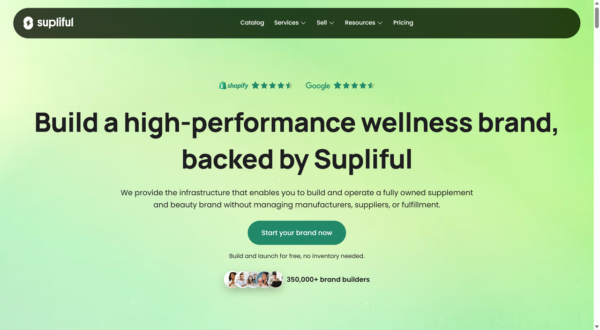
Supliful is a private-label dropshipping platform that focuses on supplements, wellness, beauty, and related products. Its website highlights Shopify integration, label customization, no inventory needed at launch, and fulfillment support. This can be attractive for sellers who want a fast U.S.-focused launch without managing manufacturing or warehousing.
Best for:
-
Beginners who want to test a private label vitamin brand quickly
-
U.S.-focused Shopify stores
-
Sellers comfortable using ready-made catalog products
-
Brands that value speed over deep customization
Potential limitation:
-
Catalog products may be less differentiated than a custom formula or fully custom packaging workflow.
-
GreenDropShip: Best for U.S. Natural Product Wholesale and Dropshipping
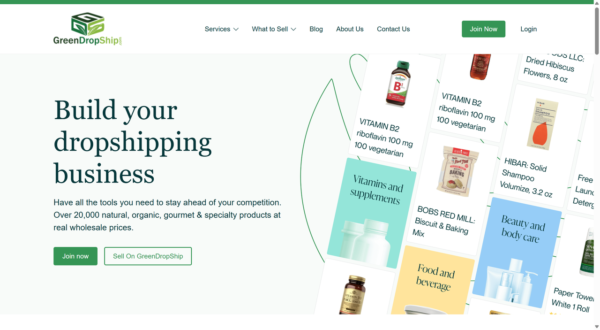
GreenDropShip is a U.S.-based dropshipping and wholesale supplier that includes natural and grocery-style categories. It can be relevant for Shopify sellers who want U.S.-located products and a broader wellness assortment, depending on current catalog availability.
Best for:
-
U.S. sellers seeking domestic product access
-
Stores combining wellness, grocery, and natural products
-
Sellers who want a broader catalog, not only vitamins
Potential limitation:
-
Vitamin-specific branding, label control, and documentation may vary by product and supplier.
-
A Manufacturer Plus 3PL Setup: Best for Scaling Custom Vitamin Brands
Once a Shopify store has proven demand, a direct manufacturer plus 3PL can be powerful. The manufacturer handles formulation and production. The 3PL stores finished goods and fulfills Shopify orders.
Best for:
-
Brands with stable monthly order volume
-
Custom formulas
-
Subscription vitamin businesses
-
Retail-ready packaging
-
Stores needing faster domestic delivery
Potential limitation:
-
Higher MOQ, longer production timelines, and more inventory risk.
-
Supplier Marketplace Apps: Best for Early Research
Marketplace apps can help sellers discover potential wellness suppliers, but they should be treated as research tools, not automatic quality guarantees. A Shopify seller still needs to verify product documents, labels, fulfillment rules, and route performance.
Best for:
-
Product research
-
General wellness assortment testing
-
Sellers who want to compare many suppliers
Potential limitation:
-
Supplier quality, documentation, and vitamin-specific support can vary widely.
Comparison Table: Vitamin Dropshipping Supplier Options
| Supplier Option | Main Strength | Best Market | Branding Level | Key Caution |
| FriendDropshipping | Custom sourcing and fulfillment | Global supported routes | High | Check product feasibility |
| Supliful | Fast private label launch | USA-focused | Medium | Catalog differentiation |
| GreenDropShip | U.S. wholesale access | USA | Low to medium | Verify each product |
| Manufacturer + 3PL | Custom formula scaling | Depends on warehouse | High | MOQ and inventory risk |
| Marketplace apps | Supplier discovery | Varies | Varies | Quality consistency |
Shopify Setup Tips for Vitamin Dropshipping
The supplier is only one part of the business. Your Shopify store must also be built carefully.
Build Product Pages Around Trust
Vitamin shoppers need trust signals. A strong product page should include clear product identity, serving size, supplement facts, ingredients, usage instructions, warnings, storage notes, shipping expectations, refund policy, and brand contact information.
Avoid vague claims such as “cures fatigue,” “prevents disease,” “burns fat fast,” or “reverses aging.” These may create regulatory, platform, and ad-account risks. Use conservative language and support claims with qualified review.
Use Bundles Carefully
Bundles can raise average order value, but vitamin bundles should make sense. A “daily wellness kit” may work better than randomly combining products. Make sure serving directions do not encourage excessive intake of overlapping nutrients.
Examples:
-
Vitamin D3 plus K2 bundle
-
Beauty gummy plus collagen support bundle
-
Vegan B12 plus multivitamin bundle
-
Kids multivitamin plus immune support bundle
-
Sleep support plus magnesium bundle
Plan Subscriptions Early
Vitamins are naturally suited for subscriptions because customers reorder. But subscription success depends on delivery reliability. If your supplier often ships late, your subscription program will create customer service problems.
Before launching subscriptions, confirm stock planning, fulfillment processing time, tracking sync, customer address updates, and cancellation handling.
Watch Heat, Shelf Life, and Packaging
Some vitamin formats are more sensitive than others. Gummies, softgels, probiotics, and liquids may require extra attention. Even if a product is stable, poor packaging can damage customer trust.
Ask your supplier:
-
What is the product’s shelf life?
-
How is expiration tracked?
-
What happens if inventory is short-dated?
-
Are bottles sealed?
-
Can fragile packaging be reinforced?
-
Are heat-sensitive routes supported?
Country Considerations for Vitamin Dropshipping
Vitamin dropshipping is not globally uniform. Each market can have different rules for ingredients, labels, claims, duties, customs, and product classifications.
| Market | Can Vitamins Be Sold? | Key Concern | Practical Advice |
| USA | Often possible | FDA/FTC claims and labeling | Review label and claims |
| EU | Product-specific | Ingredient and notification rules | Check country requirements |
| UK | Product-specific | Label and import compliance | Review before launch |
| Canada | More controlled | NPN and natural health rules | Do not assume U.S. labels work |
| Australia | More controlled | TGA rules may apply | Get product-specific review |
For the USA, consult FDA and FTC resources. For Europe, requirements can vary by country and formula. For Canada and Australia, many supplement products have more specific regulatory pathways than sellers expect.
The safest operational approach is to decide your target market first, then select products. Do not choose a vitamin product first and assume it can be shipped everywhere.
Red Flags When Choosing a Vitamin Dropshipping Supplier
Avoid suppliers that make the process feel too easy while refusing to answer basic questions. Fast launch is useful, but blind launch is risky.
Red flags include:
-
No product-specific COA or specification
-
No clear manufacturer or facility information
-
No batch or expiration tracking
-
No sample order process
-
No clear return or reshipment policy
-
Disease claims in default product copy
-
Unclear Shopify order processing time
-
No answer about shipping restrictions
-
Poor packaging in sample orders
-
Pressure to scale before testing
If a supplier says “FDA approved supplements,” be careful. The FDA does not approve dietary supplements before they are marketed in the same way it approves drugs. A supplier can follow relevant regulations and quality systems, but “FDA approved” wording is often misleading for ordinary dietary supplements.
How to Choose the Best Vitamin Dropshipping Supplier: Step-by-Step

Step 1: Define Your Market
Decide where you will sell first: USA, UK, EU, Canada, Australia, or another market. Your supplier choice depends on market rules and shipping routes.
Step 2: Choose Product Type
Start with a focused product category. A beginner should not launch 30 vitamin SKUs at once. Choose one audience and one product family.
Step 3: Request Documents
Ask for COA, product specifications, label files, ingredient information, lot and expiration process, and any relevant facility documentation.
Step 4: Order Samples
Test the full journey. Review bottle, seal, label, packaging, tracking, transit time, and customer-facing experience.
Step 5: Calculate Delivered Cost
Include product, fulfillment, packaging, shipping, payment fees, duties, refunds, replacements, and ad cost assumptions.
Step 6: Plan Scaling
If the product works, decide whether to keep dropshipping, move to stocked inventory, customize packaging, build a 3PL setup, or create a custom formula.
Recommended Workflow for Shopify Vitamin Brands
| Stage | Goal | Supplier Setup | FriendDropshipping Role |
| Research | Validate niche | Sample sourcing | Product feasibility check |
| Launch | Test sales | Low MOQ fulfillment | Shopify order fulfillment |
| Brand | Improve trust | Custom label and pack | Packaging customization |
| Scale | Reduce errors | Stored inventory | QC and 3PL support |
| Expand | Add markets | Route review | Shipping solutions |
This staged approach keeps risk under control. You do not need to overbuild on day one, but you should choose a partner that can support the next step if the product wins.
Final Recommendation
The best vitamin dropshipping supplier for Shopify is the one that matches your business stage, market, product type, and brand goals.
Choose a catalog platform if you need speed. Choose a manufacturer if you need a proprietary formula. Choose a 3PL if you already own inventory and want faster fulfillment. Choose FriendDropshipping if you want a flexible partner that can help with sourcing, private packaging, quality checks, storage, Shopify fulfillment, and international shipping support.
For serious vitamin brands, supplier selection should be based on documentation, fulfillment reliability, packaging control, market fit, and long-term scalability. A cheap supplier can help you launch. A reliable fulfillment partner can help you build a brand.
FAQs
What are the best vitamin dropshipping suppliers for Shopify?
The best supplier depends on your stage. Supliful can fit fast private label catalog launches. GreenDropShip may fit U.S. natural product sourcing. A manufacturer plus 3PL can fit scaling brands. FriendDropshipping is a strong choice for Shopify sellers that want sourcing, custom packaging, quality control, fulfillment, and international shipping support.
Can I dropship vitamins on Shopify?
Yes, vitamins can be sold on Shopify if your products, labels, claims, payment setup, shipping routes, and target-market rules are handled properly. Shopify gives you the store infrastructure, but you are still responsible for what you sell and how you market it.
Do vitamin dropshipping suppliers need to be FDA approved?
Dietary supplements are not generally pre-approved by the FDA before marketing like drugs. However, manufacturers and distributors are responsible for safety, labeling, and avoiding adulterated or misbranded products. Ask suppliers for product-specific documentation and review FDA resources.
What documents should I ask a vitamin supplier for?
Ask for a COA, product specification, label file, ingredient list, Supplement Facts panel, lot and expiration process, and relevant GMP or facility documentation. Requirements vary by product and market.
Can FriendDropshipping help with private label vitamins?
Yes. FriendDropshipping can support private label vitamin projects through sourcing, custom labels, packaging, inserts, quality checks, storage, fulfillment, and shipping, depending on the product and destination market.
Can I sell vitamins to the USA, Europe, Canada, or Australia?
Sometimes, but it depends on the formula, label, claims, documentation, and local rules. Do not assume one vitamin product can ship everywhere. Review each product and market before launch.
What vitamin products are easiest to start with?
Common beginner categories include vitamin D3, B12, multivitamins, beauty gummies, and magnesium-related products. The best choice depends on your audience, supplier documentation, competition, and route availability.
Are vitamin gummies good for dropshipping?
Vitamin gummies can sell well because they are easy to understand and visually appealing. However, they can be more sensitive to heat, texture changes, packaging issues, and claims. Test samples and routes before scaling.
Should I use a catalog supplier or custom vitamin manufacturer?
Use a catalog supplier when you need speed and low inventory risk. Use a custom manufacturer when you have proven demand, a clear brand strategy, and enough budget for MOQ, testing, packaging, and longer lead times.
How long does vitamin fulfillment take?
Processing and transit time depend on supplier location, inventory status, packaging requirements, and destination country. A Shopify seller should test real sample orders and confirm tracking sync before promising delivery times to customers.
Table of Content

I’m Cassiel. I’ll help you scale your Shopify business with reliable fulfillment.
Join to newsletter.
Follow us and get more knowledge.