Two Chinese suppliers quote the same 300-unit order. Supplier A offers DDP for $1,850. Supplier B wants $2,120. Easy choice, right?
Well, maybe not.
Supplier A’s quote says only “DDP by sea.” It does not name the delivery address, tariff code, importer, duty assumption, or charges for a customs examination. Supplier B lists all five. It also states who pays if the final-mile carrier needs a delivery appointment.

The first number is lower. The second shipment may still cost less.
That is the central problem with DDP shipping from China. DDP can make an import feel simple because one party manages most of the journey. Yet three letters on a quotation do not prove that every duty, tax, customs task, and delivery charge has been handled properly.
This guide will help you check the structure behind the quote. We will cover cost, shipping time, air and sea options, customs, documents, product restrictions, Amazon FBA, and the warning signs that deserve a pause.
What DDP Shipping From China Really Means
DDP stands for Delivered Duty Paid. It is one of the trade terms in the ICC Incoterms 2020 framework.
The seller arranges transport to the agreed place, handles export and import formalities, and pays applicable import duties and taxes. Delivery occurs when the import-cleared goods are placed at the buyer’s disposal at the named destination, ready for unloading. Unless the contract changes this, the buyer unloads.
Put the Exact Named Place in Writing
“DDP USA” is vague. So is “DDP customer warehouse.” A useful contract identifies the exact place:
DDP 825 Example Avenue, Dock 3, Dallas, Texas 75201, Incoterms® 2020
The exact address lets the forwarder price remote-area status, appointments, access, and delivery equipment. For a fulfillment center, add receiving instructions; the right building without an appointment can still reject the truck.

Seller and Buyer Responsibilities at a Glance
|
Task
|
Seller under DDP
|
Buyer under DDP
|
|
Prepare goods and commercial documents
|
Responsible
|
Provide accurate order and destination requirements
|
|
Export clearance in China
|
Responsible
|
Assist if information is reasonably required
|
|
Main international transport
|
Responsible
|
Monitor the commercial timeline
|
|
Import clearance
|
Responsible under the sales term
|
Must not unknowingly lend its importer or tax identity
|
|
Import duties and applicable taxes
|
Responsible under the sales term
|
Check whether the arrangement affects tax recovery or records
|
|
Delivery to the named place
|
Responsible
|
Be ready to receive the cargo
|
|
Unloading at destination
|
Usually not responsible
|
Usually responsible unless agreed otherwise
|
|
Product legality and market access
|
Cannot be solved by the Incoterm alone
|
Buyer and seller must allocate real legal and compliance work
|
DDP Does Not Replace Customs or Product Law
An Incoterm allocates delivery work, cost, and risk. It does not approve a product or override customs law. The contract may require the seller to clear imports, while destination law still decides who may act as importer and which product rules apply. DDP is the job list; customs law is the building code.
DDP, Door-to-Door, and Tax-Inclusive Lines
These phrases often appear together, but they are not automatically identical.
|
Phrase
|
What it may mean
|
What to verify
|
|
DDP under Incoterms 2020
|
Seller delivers import-cleared goods to the named place and pays applicable duty/tax
|
Contracting seller, named place, importer structure, exclusions
|
|
Door-to-door shipping
|
Carrier moves cargo from pickup address to delivery address
|
Whether duty, tax, customs, and unloading are included
|
|
Tax-inclusive shipping line
|
Logistics price includes an estimated tax component
|
Declaration method, importer, tariff code, value, and proof
|
|
All-in shipping quote
|
Commercial shorthand for bundled charges
|
Written list of every included and excluded item
|
Ignore the marketing label for a moment and examine the responsibilities underneath it.
Is the Quote Really DDP?
A real DDP offer should survive ordinary questions. You should not need detective music playing in the background.
Ask These Seven Questions
-
What is the exact named place? Get a complete address and the Incoterms version in the sales contract or purchase order.
-
Who is the contracting seller? Match the quotation, invoice, payment recipient, and party promising DDP.
-
Who will complete destination customs clearance? Ask which broker and lawful importer or declarant structure will be used.
-
Which HS code and customs value support the quote? A duty-paid price without either input is a guess.
-
Which charges are included? Confirm duty, VAT or GST, additional tariffs, brokerage, security filings, destination handling, final mile, and delivery appointments.
-
Which events can create another invoice? Customs examinations, storage, demurrage, address correction, remote delivery, redelivery, return, and destruction are common examples.
-
What evidence will you receive? Ask about transport milestones, customs-release or entry records where available, tax-payment evidence, proof of delivery, and the final account.
Do this before pickup. Once the cargo is moving, your negotiating power shrinks rather quickly.

Red Flags Worth Stopping For
A low rate is not proof of wrongdoing. It may come from efficient consolidation or a strong carrier contract. Still, these signs need an explanation:
-
the provider quotes from product value and weight alone;
-
the destination is a country, not an address;
-
every product receives the same rate and nobody reviews the HS code or customs value;
-
nobody will identify the customs structure, exclusions, insurance limits, or main-freight milestones;
-
payment goes to an unrelated entity without written explanation.
If a supplier says the route is “special,” ask what makes it special. There may be a perfectly normal answer. There also may not be one.
When DDP From China Makes Sense—and When It Does Not
DDP is a tool, not a trophy. It works well in some cases and gives away too much control in others.
|
Situation
|
Likely fit
|
Why
|
|
First import of standard, admissible goods
|
Often useful
|
One party coordinates the journey and landed cost is easier to plan
|
|
Small wholesale replenishment
|
Often useful
|
Buyer avoids building a full customs and freight workflow immediately
|
|
Amazon FBA shipment
|
Possible with controls
|
Importer, labels, appointment, and rejection handling must be settled first
|
|
Stable, high-volume importing
|
Compare carefully
|
FCA or FOB may provide better freight control and rate transparency
|
|
Regulated or restricted goods
|
Case by case
|
Product and carrier rules matter more than the three-letter term
|
|
Buyer wants to recover import VAT
|
Specialist review needed
|
Importer identity and customs evidence may affect recovery
|
|
Oversize delivery without a loading dock
|
Possible with detail
|
Unloading equipment and site access must be priced and assigned
|
|
Supplier refuses entry or tax evidence
|
Poor fit
|
The buyer cannot verify the import structure
|
DDP is attractive when simplicity is valuable and the seller has a proven destination network. It is less attractive when you already have a good broker, negotiate freight at volume, need direct control of customs data, or require import records in your own name.
For ecommerce brands, also decide where inventory should sit. Direct parcels, bulk DDP delivery to a local warehouse, and stock held at a China 3PL are different models. This comparison of a China 3PL versus a U.S. fulfillment center helps frame that decision.

How DDP Shipping From China Works Step by Step
The precise chain changes by mode and destination. A well-run shipment usually follows these stages.
1. Define the Product and Delivery Model
Record the product, material, use, brand, model, quantity, unit value, and origin. Define whether this is wholesale delivery, FBA replenishment, bulk stock to a 3PL, or direct consumer parcels.
If you are still choosing the broader supply chain, this guide to dropshipping from China explains how sourcing, inventory, processing, and customer delivery connect.
2. Check Classification and Importability
Establish a defensible HS code and description. Check restrictions, licenses, labels, safety records, intellectual property, and carrier acceptance. A freight route cannot repair missing compliance.
3. Build the Shipping Data Pack
Provide the same information to every bidder:
-
supplier pickup address;
-
ready date;
-
exact delivery address;
-
SKU, quantity, and value;
-
carton count and pallet count;
-
outer dimensions for every carton type;
-
gross and net weight;
-
product photos and specifications;
-
proposed HS code and origin;
-
battery, liquid, powder, magnetic, or dangerous-goods status;
-
delivery appointment, liftgate, or inside-delivery needs.
Without final packed dimensions, the price remains provisional.
4. Compare the Same Scope
Give every bidder the same brief. Compare route, mode, chargeable unit, validity, milestones, tax assumptions, inclusions, exclusions, and payment terms—not just the price per kilogram.
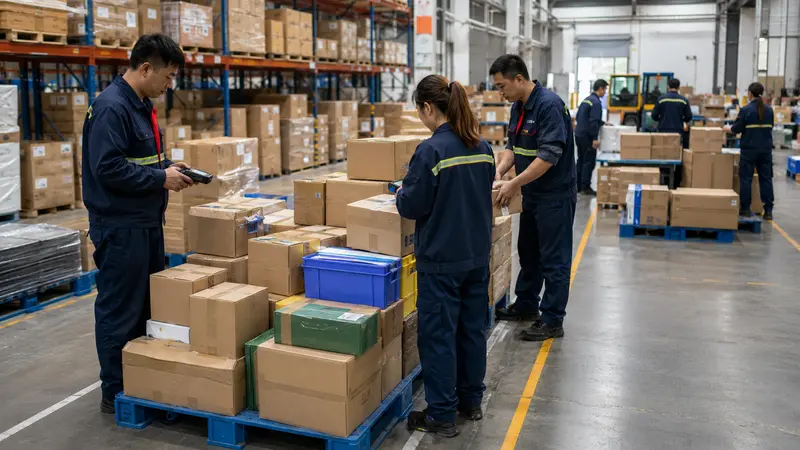
5. Inspect, Collect, and Consolidate
Confirm quality and carton condition before international transport. Pre-shipment quality control can catch quantity, packaging, label, damage, and variant errors near the supplier.
With several factories, a sourcing and fulfillment partner can collect and consolidate while preserving supplier, SKU, carton, and lot identity.
6. Complete China Export Procedures
The seller prepares export data, books transport, moves cargo to the terminal, and handles export clearance. Invoice, packing list, origin, and physical cargo must agree.
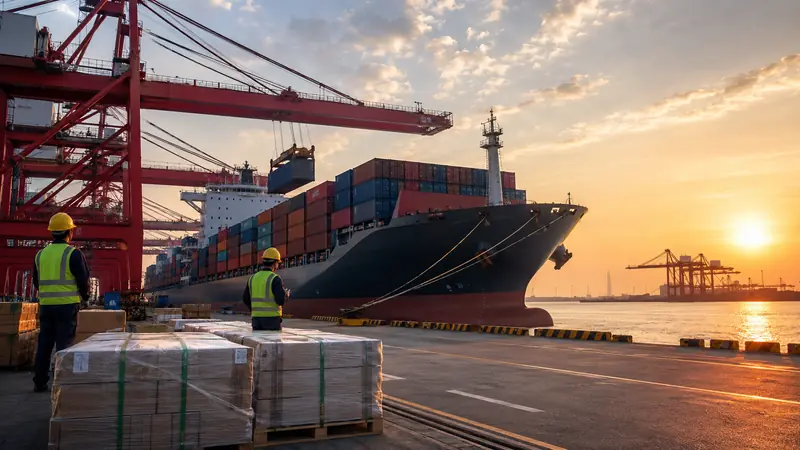
7. Move the Cargo Internationally
The shipment travels by courier, air, sea, rail, road, or a combination. Different shipping solutions from China suit different weights, densities, destinations, and deadlines. Tracking should show real departure, arrival, clearance, and handoff milestones.
8. Clear Destination Customs
The DDP arrangement completes import formalities and pays covered duties and taxes through an authorized structure. Customs may release, question, examine, reclassify, or hold the cargo. The buyer must know beforehand if its name, tax number, bond, or importer account will be used.
9. Complete Final-Mile Delivery
After release, the freight moves to the named place. Confirm receiving hours, appointment, pallet rules, vehicle access, liftgate, floor delivery, and unloading. A sofa left curbside is close, but perhaps not close enough.
10. Close the Shipment File
Retain the final invoice, tracking, proof of delivery, available customs records, tax support, damage evidence, and exception charges. Reconcile the quote with the result so the next purchase uses real data.
How Much Does DDP Shipping From China Cost?
There is no universal DDP price per kilogram or cubic meter. Cost depends on lane, cargo, tariff treatment, mode, season, and final delivery.
A useful model is:
DDP landed cost = China pickup/export + main freight + insurance + customs/brokerage + duty/tax + destination handling + final mile + accessorial charges
Add product cost when calculating the complete landed cost per unit.

What Changes the Price?
|
Cost driver
|
Why it matters
|
|
Origin and destination
|
Distance, port access, local carrier coverage, and customs environment change
|
|
Transport mode
|
Express, air, rail, road, LCL, and FCL use different charging systems
|
|
Actual weight and dimensions
|
Air and parcel carriers often bill the higher chargeable weight
|
|
Cargo density
|
A light, bulky pillow and a compact metal part use space very differently
|
|
Product and HS code
|
Classification affects duty, additional tariffs, documents, and acceptance
|
|
Customs value and origin
|
These help determine the tax and duty base
|
|
Carton and pallet format
|
Non-stackable, oversize, or weak cargo can cost more to handle
|
|
Season and capacity
|
Peak periods, holidays, disruption, and fuel costs affect rates
|
|
Delivery type
|
Residence, remote area, appointment, liftgate, and FBA delivery add work
|
|
Exception risk
|
Examinations, storage, demurrage, redelivery, and correction fees may sit outside the quote
|
Air and Express: Understand Chargeable Weight
Air and courier services compare actual weight with volumetric weight. They bill whichever is higher under the service’s rules.
A common structure is:
Volumetric weight = length × width × height ÷ divisor
The unit, divisor, rounding, and carton count must match the provider’s tariff; carriers do not all use the same rule.
For 12 cartons measuring 50 × 40 × 35 cm, a divisor of 6,000 produces 140 kg volumetric weight. At 180 kg actual weight, billing uses 180 kg; at 95 kg actual, it may use 140 kg. Less empty carton space can mean lower freight.
Sea Freight: LCL and FCL Work Differently
LCL combines shipments and may charge by cubic meter or weight/measure, plus minimums and local handling. FCL charges for a container movement. It can improve efficiency at volume but adds loading, free-time, detention, demurrage, and delivery planning.
Confirm pickup, export, main freight, fuel, destination handling, brokerage, duty/tax, port or deconsolidation fees, final delivery, and accessorials. Examination, storage, and demurrage are often excluded because nobody controls selection, but the exclusion must be written.
Normalize Two Quotes Before Choosing
This fictional 180 kg, $6,000 shipment shows how to compare scope:
|
Item
|
Quote A
|
Quote B
|
|
Headline freight
|
$1,620
|
$1,390
|
|
China pickup
|
Included
|
$95
|
|
Customs brokerage
|
Included
|
Included
|
|
Duty and additional tariff
|
Included on stated HS/value
|
Excluded
|
|
Commercial final delivery
|
Included
|
Included
|
|
Appointment fee
|
Included
|
$85
|
|
Examination/storage
|
Excluded
|
Excluded
|
|
Document evidence
|
Entry summary and delivery proof
|
Delivery proof only
|
Quote B is cheaper only on the first line. It is not comparable until duty and the import arrangement are defined.
For ecommerce brands, shipping is only one layer of unit economics. Receiving, storage, pick and pack, packaging, returns, and write-offs also matter. This guide to 3PL costs for Shopify brands provides the wider fulfillment view.
How Long Does DDP Shipping From China Take?
Transit time is not total delivery time. Use planning ranges only after the route and service are known.
|
Mode
|
Indicative international movement
|
Broad door-to-door planning range
|
Typical use
|
|
Express courier
|
3–7 days
|
5–10 days
|
Samples and small urgent cartons
|
|
Air freight
|
5–10 days
|
8–16 days
|
Medium shipments with higher time value
|
|
Rail to Europe
|
14–22 days
|
20–35 days
|
Moderate urgency and inland European destinations
|
|
Road to parts of Europe/Asia
|
12–20 days
|
18–30 days
|
Route-dependent regional freight
|
|
Sea LCL
|
20–45 days
|
30–60 days
|
Smaller ocean shipments that can wait
|
|
Sea FCL
|
18–40 days
|
25–55 days
|
Larger, planned inventory moves
|
These are not guarantees. Origin, destination, frequency, consolidation, customs, weather, season, and final-mile capacity can move the result outside the range.
Build the Timeline in Pieces
Ask for estimates covering production release, inspection, pickup, consolidation, export, main transport, import clearance, and final delivery. Define the start and finish so both teams measure the same clock.
Common Causes of Delay
Document mismatches, classification questions, inspections, undeclared special cargo, rolled bookings, slow consolidation, holidays, weather, consignee problems, and missed appointments all add time. DDP cannot prevent them, but it should make ownership clear.

Customs, Duties, Taxes, and the Importer Question
The seller has the DDP import-clearance and duty-paid obligation. Destination law still governs importer eligibility, customs representation, tax registration, records, and product compliance. A China-based seller may need a local entity, representative, broker, or another lawful structure.
Do not assume the forwarder becomes the legal importer. Do not allow use of your company identity, tax number, bond, or authorization without understanding it.
United States
U.S. importers are expected to exercise reasonable care over classification, value, origin, and admissibility. U.S. Customs and Border Protection’s importer guidance is a starting point; specific advice may still be needed.
For a China-to-USA DDP shipment, clarify:
-
who appears as importer of record;
-
who signs a customs power of attorney;
-
which HTS classification is used;
-
how transaction value and assists are handled;
-
whether ordinary duty and additional tariffs are included;
-
whether a customs bond is required and whose bond is used;
-
who handles required ocean shipment filings;
-
which entry and payment records the buyer may receive;
-
what happens if CBP changes the classification or value.
Amazon must not be named as importer of record. Clear FBA cargo before delivery to the fulfillment center.
European Union and United Kingdom
The EU and UK have separate customs and VAT systems. Review importer eligibility, representation, EORI or registration, customs value, duty, import VAT, and records.
The European Commission’s customs-duty guidance explains the building blocks used in EU duty calculations. The commercial DDP quote should state the code, value basis, origin, and taxes assumed for the actual destination.
The party paying import VAT is not automatically entitled to recover it. If recovery matters, obtain tax advice before booking.
For consumer parcels, do not apply a bulk-import explanation blindly. Marketplace obligations, low-value schemes, postal or express data, and changing thresholds can create a different workflow. FriendDropshipping’s guide to the EU low-value parcel customs reform covers that ecommerce context.
Canada, Australia, UAE, India, and Other Markets
Google suggestions for this topic are packed with country names. That makes sense. DDP is an international rule, but customs and tax execution is local.
For every new country, confirm importer eligibility, registration, tariff and tax, restricted-goods rules, labels, representation, final-mile exclusions, and post-clearance records.
DDP does not work identically everywhere.

Products, Materials, Documents, and Standards That Change the Plan
A forwarder needs more than “beauty item,” “electronic accessory,” or “sample.” Classification and carrier acceptance require specifics.
Cargo That Often Fits Standard Channels
Conventional apparel, non-powered household goods, accessories, and stationery may fit routine channels when correctly classified and compliant. Even simple goods can need fiber labels, plant-health treatment, brand authorization, or market-specific packaging.
Cargo That Needs Extra Review
|
Cargo or material
|
Why it changes the plan
|
Information to prepare
|
|
Lithium batteries
|
Dangerous-goods classification, capacity, packing, and carrier limits
|
Battery type, Wh rating, test summary, SDS where relevant, packing method
|
|
Perfume, aerosols, nail products
|
Flammability or pressure risks
|
Formula/SDS, flash point, container size, quantity, packaging
|
|
Cosmetics and supplements
|
Ingredients, claims, labels, registration, or responsible-party rules
|
Formula/specification, tests, label, manufacturer, market records
|
|
Food and plant materials
|
Sanitary, agricultural, and facility controls
|
Ingredients, origin, processing, permits, certificates
|
|
Toys and children’s goods
|
Mechanical, chemical, age grading, and labeling requirements
|
Test reports, materials, age group, warnings, traceability
|
|
Electronics and radio devices
|
Safety, EMC, radio, batteries, plugs, and energy rules
|
Model, circuit/radio data, certifications, labels
|
|
Chemicals, powders, and magnets
|
Safety screening and transport restrictions
|
Exact composition, SDS, magnetic report if requested, packaging
|
|
Wood pallets and crates
|
Regulated wood-packaging requirements
|
ISPM 15 treatment and mark where required
|
|
Branded goods
|
Trademark and counterfeit risk
|
Supplier invoices and brand authorization
|
Specialized preparation starts before booking. The workflow for importing regulated supplements from China is one example.
Documents and Data by Stage
|
Stage
|
Typical document or data
|
Purpose
|
|
Quotation
|
Product, HS code, value, dimensions, weight, addresses, ready date
|
Price the same scope
|
|
Supplier release
|
Purchase order, inspection result, carton list
|
Confirm goods match the order
|
|
Export
|
Commercial invoice, packing list, shipper/export data
|
Support export declaration and transport
|
|
Main transport
|
Air waybill, bill of lading, rail or road document
|
Record carriage and routing
|
|
Product compliance
|
Test reports, licenses, registrations, labels, SDS, certificates
|
Support admissibility and carrier acceptance
|
|
Import
|
Classification, value, origin, broker authority, importer data
|
Complete destination customs formalities
|
|
Delivery
|
Appointment, reference numbers, pallet/carton rules, contact
|
Avoid final-mile rejection
|
|
Closeout
|
Customs/release records available, duty/tax support, proof of delivery
|
Reconcile and retain evidence
|
Standards and Frameworks You May Encounter
Relevant frameworks include Incoterms 2020 for delivery allocation; the Harmonized System for tariff classification; IATA and IMDG requirements for dangerous goods; ISPM 15 for regulated solid-wood packaging; and destination rules for product safety, labels, testing, registration, and claims.
Ask which rule applies, which record demonstrates it, what model or batch it covers, and whether the destination accepts it.

DDP Versus DAP, DDU, FOB, CIF, FCA, and EXW
DDP is not automatically better. Choose the term according to who can perform each task legally and efficiently.
|
Term
|
Export clearance
|
Main transport
|
Import clearance and duty
|
Delivery point / main idea
|
Often considered when
|
|
DDP
|
Seller
|
Seller
|
Seller
|
Named destination, ready for unloading
|
Buyer values simplicity and seller has a valid destination setup
|
|
DAP
|
Seller
|
Seller
|
Buyer
|
Named destination, ready for unloading
|
Buyer can manage import clearance and taxes
|
|
DDU
|
Legacy wording
|
Depends on contract
|
Usually buyer
|
Similar commercial idea to unpaid destination duty
|
Replace with a current Incoterms rule and precise contract wording
|
|
FOB
|
Seller
|
Buyer
|
Buyer
|
Risk transfers when goods are on board at the named port
|
Buyer controls ocean freight; intended for sea/inland waterway transport
|
|
CIF
|
Seller
|
Seller
|
Buyer
|
Seller pays cost, insurance, freight to port; risk transfers earlier on board
|
Commodity-style port shipment by sea, not warehouse delivery
|
|
FCA
|
Seller
|
Buyer
|
Buyer
|
Delivery to buyer’s carrier at named place
|
Containerized or multimodal shipments where buyer controls freight
|
|
EXW
|
Buyer bears most tasks
|
Buyer
|
Buyer
|
Goods made available at seller’s premises
|
Experienced buyer can manage China pickup and export issues
|
DDP Versus DAP
DAP can be cleaner when the buyer has a broker, importer registration, tax setup, and duty account. DDP may suit a smaller importer with a lawful seller setup. If records must be in the buyer’s name, DAP may align better.
DDP Versus FOB or FCA
FOB and FCA provide more freight control with more coordination. FCA can fit containerized or multimodal cargo; FOB has a sea or inland-waterway setting.
DDP Versus CIF
CIF is neither duty paid nor door delivery. The seller pays freight to port, but risk transfers on board at origin; the buyer handles import and onward delivery.
DDP Applications by Business Model and Industry

Shopify and DTC Brands
A DTC brand might use DDP in two ways:
-
send each consumer order from China through a parcel line; or
-
import stock in bulk to a destination-country warehouse, then deliver locally.
Direct parcels reduce inventory commitment but can mean slower delivery and harder returns. Bulk stock improves local speed but commits cash earlier.
A China 3PL fulfillment service can store and dispatch either international parcels or bulk replenishment. Customs and tax must match that flow.
Amazon FBA Sellers
DDP can move inventory to Amazon, but “Amazon delivery included” is not enough. Confirm:
-
a lawful importer arrangement that does not name Amazon;
-
FNSKU, carton, pallet, and shipment labels;
-
appointment booking and carrier eligibility;
-
delivery reference numbers;
-
rejected-load, redelivery, and storage procedures;
-
who pays if Amazon changes or closes the appointment;
-
proof that cargo was accepted, not merely delivered to the gate.
Allow appointment buffer after customs release.
Wholesale and Retail Importers
DDP can simplify delivered unit costing for repeat stock. Attach retailer bookings, pallet labels, height limits, routing guides, and penalties to the quote.
Private Label and Regulated Products
For cosmetics, supplements, food, toys, or electronics, qualification, testing, labels, traceability, and market records come before freight. DDP cannot cure an unsafe formula or missing report.
Furniture, Machinery, and Oversize Cargo
For large cargo, check road access, vehicle size, dock height, crane or forklift, floor loading, and hours. Three letters will not unload a 600 kg machine.
DDP Risks and Practical Solutions
|
Risk
|
What it looks like
|
Practical control
|
|
Hidden exclusions
|
Low rate followed by customs, appointment, or delivery extras
|
Signed inclusion and exclusion schedule
|
|
Wrong tariff code or value
|
Duty estimate relies on a vague description or undervaluation
|
Written classification and valuation basis
|
|
Unclear importer structure
|
Provider avoids naming broker, importer, or authorization
|
Verify parties and authority before pickup
|
|
Product is not admissible
|
Customs holds, returns, destroys, or seizes cargo
|
Product and destination review before sale and shipment
|
|
Shared LCL delay
|
Another consignment in the consolidation triggers an inspection
|
Ask about consolidation controls, milestones, and exception allocation
|
|
Tracking blackout
|
Domestic label exists but main movement is invisible
|
Agree on departure, arrival, clearance, and handoff milestones
|
|
Damage or loss
|
Seller assumes DDP equals insurance
|
Agree on cargo cover, value, exclusions, evidence, and claims deadline
|
|
FBA rejection
|
Label, pallet, appointment, or carrier fails
|
Written FBA delivery scope and recovery process
|
|
Tax evidence missing
|
Buyer cannot reconcile accounting or VAT treatment
|
State closeout documents in the contract
|
|
Delay dispute
|
“Transit time” was measured from different starting points
|
Define each milestone and any service commitment
|
DDP Does Not Automatically Include Cargo Insurance
The seller bears transport risk until delivery under DDP, but that is not the same as telling the buyer what insurance exists. A seller may self-insure, buy limited carrier liability, or purchase cargo insurance.
Ask for the insured value, covered risks, deductible, exclusions, claims documents, notification deadline, and payment recipient. Also decide what happens if the cargo arrives damaged but the customer signs a clean delivery receipt.
Have an Exception Playbook
State who acts and pays when customs requests documents, changes classification, or examines cargo; when storage begins; when goods are damaged; when delivery is refused; or when cargo must be returned, re-exported, abandoned, or destroyed. You cannot predict every problem, but you can give the first response an owner.
How to Choose a DDP Freight Forwarder or China Partner
Choose the provider that can explain the shipment plainly and support it with records.
Request Evidence, Not Adjectives
Verify the legal company and payment account, similar cargo experience, route and subcontractors, destination broker/import structure, special-cargo capability, quote assumptions, insurance, tracking, escalation, redacted closeout samples, and references for material shipments.
A redacted sample can demonstrate the process without exposing another customer’s data.
Send a Standard Quote Brief
Use a template like this:
Please quote DDP [full destination address], Incoterms® 2020. Cargo: [exact product and material], [quantity], [value], [HS code if known], origin [city], ready [date]. Packed cargo: [carton/pallet count], [dimensions], [gross weight]. Disclose batteries, liquids, powders, magnets, wood packaging, and brand status. State route, mode, chargeable unit, validity, estimated milestones, importer/customs structure, duty and tax basis, inclusions, exclusions, insurance, final-mile service, and documents supplied after delivery.
Send the same brief to every bidder for comparable answers.
Put Exceptions in the Contract
The quotation and purchase order should cover the named place, Incoterms version, cargo/value assumptions, rate validity, tax adjustments, inspections, storage, demurrage, redelivery, appointment changes, unloading, delays, insurance, claims, returns, document release, subcontracting, and data handling.
If one provider combines sourcing, warehousing, and shipping, separate each stage’s price and responsibility.
Run a Pilot Shipment
Pilot with representative packaging, product, destination, and receiving rules.
Measure:
-
pickup punctuality;
-
carton and SKU accuracy;
-
milestone visibility;
-
customs questions;
-
quoted versus actual cost;
-
total door-to-door time;
-
delivery condition;
-
document completeness;
-
response speed when something changes.
One pilot does not prove every route, but it reveals how the team handles reality.
A Simple DDP Decision Framework
Before booking, answer these five questions:
-
Is the product admissible and correctly documented? If not, fix that first.
-
Can the seller perform destination import obligations lawfully? Ask how, not only whether.
-
Is the quote defined at an exact named place? Include the real final-mile requirements.
-
Can you verify classification, value, taxes, clearance, and delivery? Decide which evidence you need.
-
Does DDP beat DAP, FCA, or FOB on total cost, control, and risk? Compare the same shipment scope.
If one answer is foggy, pause before pickup. Freight problems become more expensive once the cargo is inside a container, at an airport, or sitting under customs control.
Conclusion
DDP shipping from China can remove a lot of coordination from an import. The seller manages transport, export and import clearance, duties and taxes, and delivery to the named place. For a new importer or a modest replenishment order, that can be genuinely useful.
The convenience is real only when the structure is real.
Write the exact destination. Confirm the importer and broker arrangement. Review the HS code, customs value, duty assumptions, product rules, exclusions, unloading, and insurance. Compare quotes line by line, then keep the clearance and delivery evidence after the shipment closes.
In short, do not buy the letters DDP. Buy a documented path from the Chinese supplier to the correct receiving point, with no important job left unnamed.
Frequently Asked Questions
1. What does DDP shipping from China mean?
The seller arranges transport to the named destination, clears export and import, and pays applicable duties and taxes. The buyer normally unloads. State the place and Incoterms version in the contract.
2. Does DDP shipping include customs duties and taxes?
Yes. The quote should still state its HS code, customs value, tariff, and VAT or GST assumptions. Examinations, storage, and other exceptions may be excluded in writing.
3. Who is the importer of record on a DDP shipment from China?
The seller has the contractual obligation, but destination law determines who may legally act as importer. Verify the structure before booking, especially if your company details will be used.
4. Is DDP shipping from China legal and safe?
Yes, when properly executed. Correct classification, value, importer authority, product compliance, carrier acceptance, and honest declarations still matter.
5. How much does DDP shipping from China cost?
There is no single rate. Lane, mode, dimensions, density, classification, value, tax, season, cargo, and final delivery all matter. Compare complete inclusions and exclusions.
6. How long does DDP shipping from China take?
Broad door-to-door planning ranges are 5–10 days for express, 8–16 for air, and 25–60 for ocean. Customs, consolidation, season, and appointments can change them.
7. Is DDP cheaper than FOB or DAP?
Sometimes. DDP bundles more seller-managed work; FOB, FCA, or DAP may suit buyers with strong logistics setups. Compare landed cost, control, records, and risk.
8. What is the difference between DDP and DDU?
DDP includes seller-managed import clearance and duty. DDU is not a current Incoterms 2020 rule; modern contracts normally use DAP or another precise current term.
9. Can Alibaba suppliers ship DDP?
Some can through logistics partners. Verify the seller, destination, customs structure, classification, value, taxes, exclusions, tracking, and closeout documents before paying.
10. How can I tell whether a DDP quote is genuine?
Verify the importer, broker, HS code, value, taxes, exact destination, exceptions, and evidence. Vague tax-inclusive wording without cargo review is not enough.
11. What documents should I receive for a DDP shipment?
Keep the invoice, packing list, transport record, tracking, and delivery proof. You may also need customs evidence, tax support, certificates, insurance, and exception invoices.
12. Can I use DDP shipping for Amazon FBA?
Yes, if cargo is cleared and meets Amazon’s label, carton, pallet, carrier, and appointment rules. Amazon cannot be importer of record. Plan for rejection and redelivery.
13. Can batteries, cosmetics, liquids, or branded products ship DDP?
Possibly, subject to product, carrier, route, and country rules. Disclose composition, battery or safety data, packaging, brand authorization, and compliance records before booking.
14. Does DDP include insurance and unloading?
Not automatically. State insurance terms separately. The buyer normally unloads at destination unless the contract changes that, so plan equipment and labor.
15. Can I recover import VAT on a DDP shipment?
It depends on jurisdiction, importer identity, registration, structure, and evidence. Paying VAT does not automatically create a recovery right; obtain tax advice before booking.
Table of Content

I’m Cassiel. I’ll help you scale your Shopify business with reliable fulfillment.
Join to newsletter.
Follow us and get more knowledge.