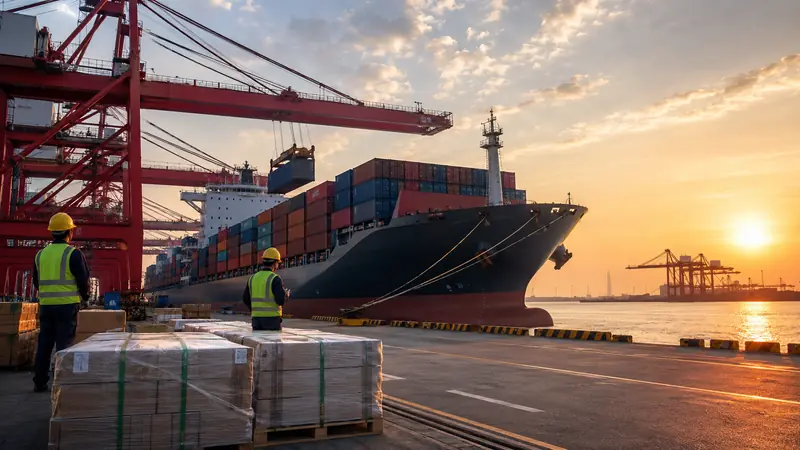
A China 3PL is a third-party logistics provider that stores inventory in China and handles some or all of the work between the factory and the customer. Typical services include receiving, inventory management, picking, packing, international shipping, and tracking updates.
Some China 3PLs are mainly warehouses. Others also act as sourcing and operations partners. They may compare factories, arrange samples, inspect products, consolidate components, produce packaging, assemble kits, and send bulk inventory to overseas warehouses.
The typical flow looks like this:
Factory or supplier -> China 3PL -> inbound check -> storage -> Shopify order -> pick and pack -> international shipping line -> local carrier -> customer
Because the warehouse is close to Chinese manufacturing clusters, replenishment from a factory may take days rather than weeks. If a label is wrong or a product needs rework, it can often be fixed before the goods cross an ocean. That is a practical advantage, not just a cheaper-rent story.
A China 3PL fulfillment service may fit brands that need:
-
lower inventory commitment while testing demand;
-
sourcing or supplier communication in China;
-
consolidation from several factories;
-
quality checks before international shipping;
-
branded labels, boxes, mailers, inserts, or bundles;
-
direct fulfillment to customers in several countries;
-
bulk preparation for a US warehouse or Amazon FBA.
Not every provider offers all of this. Ask what work is performed by warehouse staff, what is subcontracted, and what costs extra. “We can do everything” is a pleasant sentence. A written service scope is better.
What Is a US Fulfillment Center?
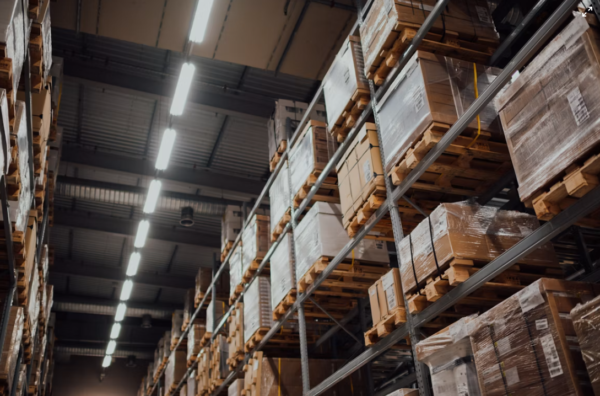
A US fulfillment center stores inventory inside the United States and ships orders through domestic carriers after a customer buys. It normally receives imported or US-made stock in bulk, records inventory, picks and packs orders, sends tracking data to the store, and processes returns.
The flow is different from direct China fulfillment:
Factory -> bulk air or ocean freight -> US customs clearance -> US fulfillment center -> storage -> customer order -> domestic carrier -> customer
The biggest customer-facing advantage is speed. Once inventory is received and available, US orders can often move through domestic parcel networks without an international leg on each sale.
A US warehouse may support:
-
domestic pick and pack;
-
bin, shelf, pallet, or cubic-foot storage;
-
kitting and branded packaging;
-
wholesale and retail preparation;
-
domestic returns, exchanges, and restocking;
-
two-day, ground, or expedited delivery options;
-
integrations with Shopify and other sales channels.
It usually does not find your Chinese factory, negotiate the product price, supervise production, or correct defects before export. Those jobs remain with the brand, factory, sourcing agent, or another service provider.
FriendDropshipping’s USA warehouse fulfillment illustrates the basic model: inventory is sourced or produced, moved to US stock in bulk, then fulfilled through domestic delivery. The warehouse becomes faster for the customer, but the brand must commit to the inventory earlier.
China 3PL vs US Fulfillment Center: The Decision Factors That Matter
Do not choose a warehouse from one shipping quote. Start with your order and SKU data.
At minimum, collect these inputs:
-
Percentage of customers in the United States
-
Average daily and monthly orders
-
Number of active SKUs
-
Revenue concentration by SKU
-
Packed weight and dimensions
-
Product cost, selling price, and gross margin
-
Production and replenishment lead time
-
Return, defect, and failed-delivery rates
-
Delivery promise shown at checkout
-
Cash available for inventory, freight, and duties
-
Need for sourcing, QC, assembly, or custom packaging
-
Current and planned sales countries
Order volume is useful, but it cannot make the decision alone. A lightweight $60 skincare tool with a low return rate may justify US inventory early. A bulky seasonal decoration with uncertain demand may not. A small accessory sold equally across five countries may remain more flexible in China even at higher volume.
The useful question is not “Which country is cheaper?” It is:
Which inventory location delivers the customer experience we promise at the lowest reliable total cost, without trapping too much cash?
Cost Comparison: Is a China 3PL Cheaper Than a US Fulfillment Center?
Sometimes. A China 3PL often requires less upfront inventory and avoids a separate bulk move into an American warehouse. A US fulfillment center can lower transportation cost per order at scale because goods travel internationally in bulk, then move domestically. The winner depends on the product and volume.
Compare Total Cost Per Delivered Order
For China fulfillment, use:
China delivered cost = product + China inbound + receiving/storage + pick/pack + packaging + international shipping + duties/taxes + failed-delivery reserve + return/refund reserve
For US fulfillment, use:
US delivered cost = product + bulk freight + duty/brokerage + US receiving/storage + pick/pack + packaging + domestic shipping + returns + inventory write-off reserve
These formulas expose why a tiny pick fee does not tell the whole story.
Common China 3PL Costs
-
supplier-to-warehouse freight inside China;
-
receiving, counting, photos, and inspection;
-
storage and inventory management;
-
pick and pack;
-
packaging materials and branded inserts;
-
international parcel shipping;
-
duty, tax, or customs-handling costs under the chosen route;
-
remote-area, address-correction, failed-delivery, and reship charges;
-
return or refund allowance.
Common US Fulfillment Costs
-
bulk ocean or air freight from the factory;
-
duty, tariffs, brokerage, bond, and import handling;
-
inbound appointment, receiving, counting, and putaway;
-
bin, shelf, pallet, or cubic-foot storage;
-
pick and pack plus extra-item fees;
-
cartons, mailers, labels, and kitting;
-
domestic parcel postage and zone surcharges;
-
monthly minimums, software, and account fees;
-
return processing, aged inventory, removal, and disposal.
For current fee categories and quote questions, see the separate Shopify fulfillment cost guide and 3PL pricing guide.
Illustrative Cost Example: One Shopify Product at Two Volumes
Consider a hypothetical kitchen accessory with these assumptions:
-
packed weight: 450 grams;
-
retail price: $34.99;
-
factory product cost: $6.00;
-
65% of customers are in the United States at 300 monthly orders;
-
80% of customers are in the United States at 1,500 monthly orders;
-
standard branded mailer, one item per order;
-
moderate return risk;
-
no unusual hazardous-goods or oversize handling.
The numbers below are an illustration, not a current quotation from FriendDropshipping or any named carrier. Real rates depend on dimensions, destination ZIP codes, declared value, HTS classification, tariffs, service level, season, and contract volume.
|
Cost per US order at 300 monthly orders
|
China direct
|
US stocked
|
|
Factory product
|
$6.00
|
$6.00
|
|
International movement, duty, and import allocation
|
$1.20 per parcel assumption
|
$1.60 bulk allocation
|
|
Receiving and storage
|
$0.24
|
$0.50
|
|
Pick, pack, and packaging
|
$1.05
|
$2.85
|
|
Customer delivery
|
$7.40 international
|
$6.20 domestic
|
|
Return, failure, and inventory-risk reserve
|
$0.75
|
$1.40
|
|
Illustrative delivered cost
|
$16.64
|
$18.55
|
At the lower volume, China wins this example on cost and cash flexibility. The US model delivers faster, but the brand must import and stock inventory before it sells.
Now assume 1,500 monthly orders, better shipping rates, faster stock turnover, and more predictable demand.
|
Cost per US order at 1,500 monthly orders
|
China direct
|
US stocked
|
|
Factory product
|
$5.60 volume assumption
|
$5.60 volume assumption
|
|
International movement, duty, and import allocation
|
$1.05 per parcel assumption
|
$1.20 bulk allocation
|
|
Receiving and storage
|
$0.18
|
$0.28
|
|
Pick, pack, and packaging
|
$0.95
|
$2.35
|
|
Customer delivery
|
$6.70 international
|
$5.40 domestic
|
|
Return, failure, and inventory-risk reserve
|
$0.65
|
$0.90
|
|
Illustrative delivered cost
|
$15.13
|
$15.73
|
The costs are now close. If US delivery improves conversion, repeat purchase, or customer retention, the extra $0.60 may be an excellent trade. If it does not, China may still produce the stronger margin.
Change the parcel from 450 grams to 1.8 kilograms and the answer may flip. Change the US sales share from 80% to 35% and it may flip back. That is why one universal “move at 500 orders” rule is shaky.
Operating Cost Is Not the Same as Cash Commitment
A US warehouse can produce an attractive per-order cost while requiring far more working capital.
Suppose the brand wants eight weeks of stock in America. It may need to pay for:
-
units in production;
-
finished goods waiting for inspection;
-
freight in transit;
-
duties and customs clearance;
-
stock being received;
-
sellable stock on US shelves;
-
safety stock for replenishment delays.
In effect, the brand may fund several inventory stages at once. China direct fulfillment can keep more stock close to production and move one customer order at a time. The per-order freight is higher, but the inventory bet is smaller.
Neither model is automatically more profitable. One can save operating cost. The other can protect cash. Your business may need one more than the other right now.
Shipping Speed Comparison: China Fulfillment vs US Domestic Delivery
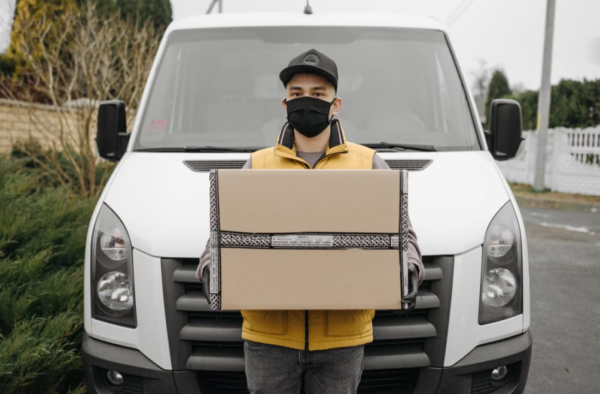
A US fulfillment center is normally faster for American customers after inventory is available. China fulfillment normally takes longer because every parcel crosses an international border.
China-to-US Order Delivery
A China fulfillment order usually passes through warehouse processing, export handling, international line-haul, customs processing, destination handoff, and last-mile delivery.
For many ordinary ecommerce parcels, a working plan may be around 6-15 business days after dispatch. Some premium routes are faster. Economy lines, remote areas, peak seasons, product restrictions, customs review, and address problems can make delivery longer.
Do not publish the fastest possible carrier number as the customer promise. Use actual delivered data by country, shipping line, weight band, and month.
US Domestic Order Delivery
Once US inventory is received and active, warehouse handling may take zero to two business days, followed by domestic carrier transit. Many brands target roughly two to five business days for standard US delivery, depending on warehouse location, service, destination zone, weekends, and cutoff time.
This speed can reduce “Where is my order?” tickets. It can also make paid advertising and repeat purchase easier because the delivery promise feels familiar to US shoppers.
The Two Clocks Most Comparisons Mix Together
There are two different lead times:
-
Customer order-to-door time
-
Factory order-to-sellable-inventory time
The US warehouse wins the first clock. China may win the second.
A Chinese factory may replenish a nearby China 3PL in a few days after production. Replenishing a US warehouse adds export booking, international freight, customs, delivery appointment, receiving, and putaway. Ocean replenishment can be economical but slow. Air can protect a stockout but eat margin rather quickly.
This creates a funny situation. The warehouse closest to the customer can be furthest from the next unit being made.
When Faster Shipping Is Worth Paying For
Fast US delivery is more valuable when:
-
customers need the product for an event or date;
-
competitors offer domestic delivery;
-
repeat purchase is important;
-
the product has a high margin;
-
returns and exchanges are common;
-
marketplaces enforce delivery metrics;
-
slower shipping causes cancellations or chargebacks.
It is less decisive when the item is unusual, made-to-order, strongly differentiated, low return, or sold internationally to many destinations.
Inventory Management and Cash-Flow Risk
China and US warehouses create different inventory problems. Neither removes forecasting.
China Inventory Advantages
Keeping stock in China can support:
-
smaller launch batches;
-
faster replenishment from nearby factories;
-
easier consolidation across suppliers;
-
one inventory pool for several countries;
-
lower exposure to importing an unproven SKU in bulk;
-
product rework before international freight;
-
flexible testing of colors, bundles, and packaging.
This is useful for a broad catalog where a few products may become winners and many will not.
US Inventory Advantages
US stock supports:
-
fast domestic fulfillment;
-
stable local carrier handoff;
-
easier returns and exchanges;
-
better control of US wholesale or retail orders;
-
less customer-level cross-border uncertainty after the bulk import clears;
-
quicker replacement shipments.
This works best when demand is predictable enough to feed the warehouse without overstocking it.
Inventory Risks in Each Model
|
Risk
|
China 3PL
|
US fulfillment center
|
|
Stockout recovery
|
Factory replenishment may be quick, but customer delivery remains cross-border
|
Replenishment from China can take weeks after production
|
|
Dead stock
|
Less pressure to position every SKU overseas
|
Slow stock can collect storage, aging, and disposal fees
|
|
Cash tied in transit
|
Lower when orders ship individually
|
Higher during bulk freight and customs processing
|
|
Global allocation
|
One pool can serve many countries
|
Inventory may become trapped in the wrong regional market
|
|
Customer delivery
|
Longer and more variable
|
Faster while local stock is available
|
|
Returns inventory
|
Difficult to recover economically from international customers
|
Easier to inspect, restock, refurbish, or liquidate
|
Metrics to Check Before Moving Stock to the USA
Use at least 60-90 days of SKU data. Review:
-
units sold per week;
-
US share of orders;
-
sales volatility;
-
forecast error;
-
contribution margin after fulfillment;
-
return and defect rate;
-
weeks of inventory cover;
-
factory lead time;
-
freight and customs lead time;
-
stockout cost;
-
storage and aging rules.
Move the SKU, not the hope. A product should earn its shelf space with data.
Product Sourcing and Manufacturing Support
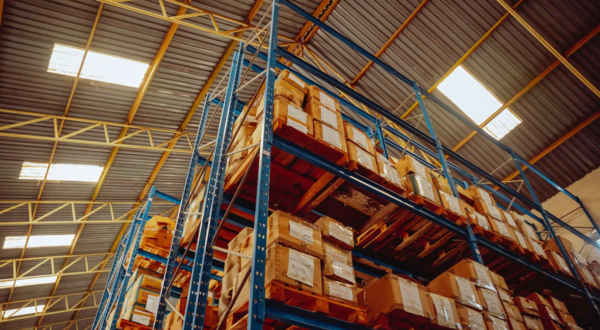
A China 3PL can sit inside the production workflow. A US fulfillment center usually starts after production is finished.
Why Proximity to Chinese Factories Matters
A China-side partner can help with:
-
comparing suppliers and quotations;
-
confirming the actual factory;
-
arranging and photographing samples;
-
clarifying materials, dimensions, colors, and tolerances;
-
negotiating price and MOQ;
-
following production dates;
-
consolidating products from several suppliers;
-
checking packaging before mass production;
-
coordinating rework or replacement before export.
This can reduce handoffs between the factory, sourcing company, inspection company, packaging supplier, freight forwarder, and warehouse. FriendDropshipping combines these jobs through its China sourcing and fulfillment workflow.
What a US Warehouse Usually Cannot Fix
Imagine 2,000 units arrive in California with the wrong logo color. The US warehouse can photograph the problem, quarantine the stock, relabel it for a fee, or ship it somewhere else. It cannot make the original production error cheap again.
Once the stock has crossed the ocean, correction becomes more expensive. This is why source-side control matters for private-label brands.
The US warehouse remains valuable. It just solves a later part of the chain.
Quality Control: Where Is It Easier to Catch and Fix Problems?
China is generally better for finding and fixing factory-side problems before export. A US fulfillment center is better for local receiving evidence, domestic return inspection, and rapid customer replacements.
Use quality control at four moments:
-
During production: Check materials, workmanship, and the first finished units.
-
Before export: Verify quantity, visible defects, function, packaging, labels, and cartons.
-
At warehouse receiving: Record shortages, transit damage, barcode problems, and lot details.
-
Before dispatch: Confirm the right SKU, condition, bundle, insert, and address.
A China quality control service can catch issues while the factory is still close enough to rework or replace stock. The US warehouse can then perform receiving and outbound checks for the domestic leg.
For higher-risk products, use written specifications, approved samples, inspection criteria, batch or lot traceability, and independent testing where appropriate. “Looks fine” is not a quality plan. It is a mood.
Custom Packaging and Branding
China is often easier for creating packaging because product factories, label printers, box makers, insert printers, and assembly labor are geographically close. A US fulfillment center is often better for applying packaging quickly to local orders after all materials are already stocked.
Packaging Work Commonly Done in China
-
custom labels and stickers;
-
printed retail boxes;
-
branded mailers;
-
instruction manuals;
-
thank-you cards and inserts;
-
bundles and gift sets;
-
barcode labels;
-
product and packaging assembly.
The product, label, bottle, box, insert, and shipping carton can each have a different MOQ. Confirm them separately. Also confirm who stores unused materials and what happens when artwork changes.
Packaging Work Commonly Done in the USA
-
applying stored branded mailers or inserts;
-
final kitting;
-
relabeling for domestic channels;
-
wholesale carton preparation;
-
local promotional bundles;
-
replacement or return repacking.
US special-project labor can be expensive, especially when the warehouse must open and modify every unit. If packaging can be finalized correctly in China, doing so before bulk freight often reduces touches. Keep a small local capability for campaigns, returns, and corrections.
Returns, After-Sale Support, and Customer Service
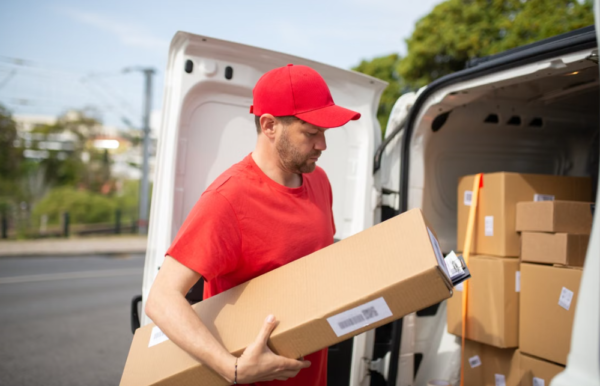
A US fulfillment center normally gives American customers the easier return experience. A China 3PL needs a different after-sale strategy, especially for low-value products.
Returns to a US Fulfillment Center
A domestic warehouse can receive the parcel, inspect it, photograph it, and assign a disposition:
-
return to sellable stock;
-
repackage or refurbish;
-
quarantine;
-
send back to the brand;
-
liquidate;
-
donate;
-
dispose.
This is useful for apparel, high-value products, electronics, and anything likely to be exchanged. Ask about return postage, processing, inspection depth, restocking, and disposal fees.
Returns for Orders Shipped from China
Sending a $15 item back to China can cost more than the item. Brands may instead use:
-
a US return consolidation address;
-
refund without return for low-value cases;
-
replacement shipment;
-
partial refund;
-
local donation or disposal;
-
periodic bulk return to the source warehouse.
The policy should depend on product value, safety, resale condition, fraud risk, and customer experience. Do not improvise one unhappy customer at a time.
Customer Service Depends on the Provider, Not Only the Country
A US address does not guarantee good communication. A China warehouse does not guarantee poor communication.
Compare:
-
response hours and time zone;
-
dedicated account manager or ticket queue;
-
lost-parcel escalation;
-
inventory discrepancy process;
-
photo and video evidence;
-
refund and reship authority;
-
carrier-claim handling;
-
peak-season response;
-
reporting and root-cause analysis.
After-sale service should have written rules. Otherwise every exception becomes a tiny negotiation, and tiny negotiations grow teeth at scale.
Customs, Duties, and Product Compliance
Both models involve import compliance. A US warehouse does not make customs disappear. It moves customs clearance to the bulk inbound stage.
China-origin goods stopped qualifying for US duty-free de minimis treatment under the relevant change effective May 2, 2025, according to CBP guidance on low-value shipments from China. Rates and entry processes can change, so verify current treatment with a qualified customs broker before pricing a route.
For either model, check:
-
accurate product description;
-
country of origin;
-
declared value;
-
HTS classification;
-
duties and additional tariffs;
-
importer-of-record responsibilities;
-
product-specific agency rules;
-
documentation and recordkeeping;
-
carrier acceptance.
Food, supplements, cosmetics, liquids, batteries, children’s goods, medical devices, and other regulated products need extra planning. DDP can allocate delivery and import tasks under a contract. It does not make a noncompliant product legal.
Treat customs cost as part of landed cost, not an annoying surprise that lives outside the spreadsheet.
Which Fulfillment Model Fits Your Business Stage: China, the US, or Both?
The right warehouse model changes as the business grows. A China 3PL is often the practical starting point for testing and factory-side work. A US fulfillment center becomes more useful when American demand is predictable and delivery speed starts affecting conversion. Between those points, many brands use both.
The table below is a decision starting point, not a hard order-volume rule. Product margin, packed size, US customer share, return rate, forecast accuracy, and available cash can move the decision earlier or later.
|
Business stage
|
Recommended model
|
Why it fits
|
Decision checkpoint
|
|
Testing products
|
China
|
Small test batches stay close to suppliers, QC, and packaging support
|
Cross-border delivery still fits the offer and margin
|
|
10-50 orders/day
|
China or selective hybrid
|
Keep tests and long-tail SKUs in China; move only proven US winners
|
One or more SKUs show stable US demand and can support a domestic batch
|
|
100-500 orders/day
|
China + US
|
US stock speeds up fast movers while China handles sourcing, replenishment, launches, and global orders
|
Forecasting, inventory sync, routing, and replenishment are reliable
|
|
Large US brand
|
US-led hybrid
|
Domestic speed, returns, wholesale support, and service levels become central
|
The business has sufficient working capital and import capability
|
|
Multi-country sales
|
China or regional hybrid
|
China remains a central pool while regional warehouses hold local winners
|
Demand in each region justifies a separate inventory commitment
|
Testing Products: Start in China
Keep the first batch small and learn which product actually sells. China fulfillment reduces the need to import a large quantity before demand is proven. It also keeps samples, supplier communication, QC, packaging changes, and rework close to the factory.
Moving an unknown product into a US warehouse adds speed to a guess. Test first. Let the sales data earn the domestic inventory.
10-50 Orders Per Day: Move Winners, Not the Whole Catalog
This is the transition stage. If one SKU produces consistent US orders, compare the cost of direct China fulfillment with a limited US inventory pilot. Keep new launches and slower products in China.
Do not move the entire catalog because one product is doing well. A selective hybrid model protects cash while improving delivery for the products customers buy most often.
100-500 Orders Per Day: Use China and the US Together
At this volume, proven US products can justify bulk freight and domestic delivery. China can remain the sourcing, manufacturing, QC, custom-packaging, replenishment, and global-fulfillment base.
This is also the point where forecasting and routing become real operational jobs. A casual spreadsheet may begin making strange noises.
Large US Brands: Lead With US Inventory
For a mature US-focused brand, domestic inventory often becomes the default for core products. Faster delivery, local returns, retail compliance, wholesale orders, and warehouse service levels carry more weight.
China still matters upstream. It can inspect production, consolidate suppliers, prepare packaging, and hold replenishment stock before bulk export.
Multi-Country Brands: Add Regional Stock Selectively
China can serve as the central inventory pool for global and uncertain demand. Add stock in the US or another regional warehouse only where destination-level sales are concentrated and repeatable.
Otherwise, the brand may create several small piles of the wrong product in several expensive warehouses.
How to Split Hybrid Inventory by SKU
Review at least 90 days of sales by SKU and destination. Then classify products according to demand velocity and operational needs.
|
SKU type
|
Suggested location
|
|
Proven bestseller with stable US demand
|
US warehouse with replenishment inventory in China
|
|
New launch
|
China until demand is proven
|
|
Slow-moving long-tail product
|
China
|
|
Seasonal bestseller
|
US during the selling window; China outside it
|
|
High-return product
|
US if local inspection and resale justify the cost
|
|
Multi-country bestseller
|
China plus regional stock in the strongest markets
|
The basic rule is simple: put predictable US bestsellers near US customers. Keep tests, slow movers, replacement parts, global orders, and uncertain demand close to the source.
How Shopify Routes Orders Between China and US Warehouses
Shopify supports multiple fulfillment locations and assigns orders according to available inventory and configured routing rules. Its official location fulfillment documentation explains location priorities, shipping profiles, split fulfillment, and order routing.
For a hybrid setup:
-
Create and activate the China and US fulfillment locations.
-
Assign inventory to the correct location by SKU.
-
Use shipping profiles for products with different fulfillment rules.
-
Prioritize US inventory for US customers.
-
Configure routing to minimize split shipments.
-
Decide whether China should fulfill an order when US stock reaches zero.
-
Prevent overselling where cross-border fallback is not acceptable.
-
Test single-SKU, mixed-SKU, and out-of-stock orders before launch.
The fallback rule matters. If checkout promises three-day US delivery but an out-of-stock product silently ships from China, the tracking email may create a support ticket before the parcel leaves the country.
Set a Replenishment Rule Before Moving Inventory
Use this basic formula: Reorder point = average daily sales x total replenishment lead time + safety stock
Total lead time should include production, inspection, freight booking, international transit, customs clearance, warehouse appointment, receiving, and putaway.
Use ocean freight for planned replenishment when volume supports it. Keep air freight for launches, shortages, or high-margin emergencies. If every shipment becomes urgent air freight, the forecast is sending a message.
Control the Risks of a Hybrid Fulfillment Model
Using both locations can improve speed and inventory flexibility, but it also creates more moving parts:
-
duplicated inventory;
-
split shipments;
-
mismatched packaging versions;
-
fragmented reporting;
-
stock-transfer delays;
-
two return workflows;
-
incorrect location priorities;
-
overselling at one location;
-
additional operational management.
Hybrid fulfillment works best when it is selective. Do not duplicate every SKU in both countries. Place inventory according to actual demand, define one owner for replenishment decisions, and review the location split regularly.
China 3PL vs US Fulfillment for Shopify and Amazon
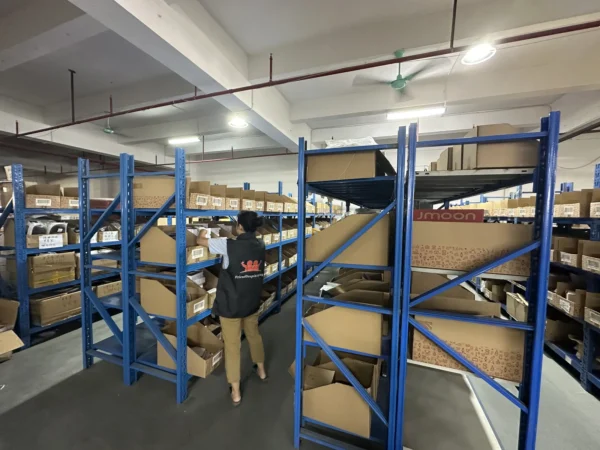
Which Option Is Better for Shopify Stores?
Shopify can work with China, US, or hybrid fulfillment. The best setup depends on where customers live and how the store positions delivery.
China is useful for product testing, international demand, private labeling, and flexible inventory. US fulfillment is useful for proven domestic demand, faster delivery, and easy returns. Hybrid works when the merchant can manage multi-location stock and clear delivery rules.
Is China Fulfillment Suitable for Amazon Sellers?
Yes, for upstream work and some merchant-fulfilled orders. A China 3PL can source, inspect, label, prep, consolidate, and forward inventory to Amazon fulfillment centers.
Amazon inventory must still meet current prep, packaging, labeling, and shipment requirements. Amazon’s official FBA prep guide explains that inventory needs correct barcodes, secure packaging, and product-specific preparation before it reaches a fulfillment center.
Keep the models separate:
-
FBA: Amazon stores and fulfills inventory sent into its network.
-
MCF: Amazon inventory fulfills orders from other channels.
-
FBM: The merchant or its 3PL fulfills Amazon orders.
-
China 3PL: Can prepare and forward FBA stock or fulfill supported direct orders.
A China warehouse does not replace Amazon’s inbound workflow. It can help execute it correctly before the cartons leave China.
A Step-by-Step Warehouse Decision Checklist
Use this process before signing a warehouse agreement:
-
Export 90 days of orders by SKU and country.
-
Measure the actual packed weight and dimensions.
-
Identify US bestsellers, global products, tests, and slow movers.
-
Request China and US quotes using identical specifications.
-
Calculate cost per delivered order, not only pick and pack.
-
Calculate cash tied in production, transit, duties, and storage.
-
Add return, reship, defect, stockout, and write-off assumptions.
-
Decide the delivery promise by market.
-
Assign each SKU to China, the US, or both.
-
Run a small US inventory pilot before moving the full catalog.
-
Configure Shopify routing and test mixed-location orders.
-
Review cost, delivery, stockouts, and returns every month.
Also read the contract. Check minimums, storage aging, receiving rules, inventory shrinkage, insurance, liability, termination, removal fees, peak surcharges, and data ownership. The cheapest quote can become surprisingly athletic once the extra fees start running.
Final Comparison Table: China 3PL vs US Fulfillment Center
|
Factor
|
China 3PL
|
US fulfillment center
|
Hybrid use
|
|
Cost
|
Often lower inventory commitment; international cost applies per order
|
Bulk freight can reduce international cost per unit; domestic warehouse fees apply
|
Compare by SKU and destination
|
|
Product sourcing
|
Strong when sourcing is integrated
|
Usually limited
|
Source and develop in China
|
|
Shipping speed
|
Longer for US customers
|
Faster while US stock is available
|
Put speed-sensitive winners in the US
|
|
Manufacturing support
|
Close to factories and packaging suppliers
|
Usually a separate service
|
Keep factory coordination in China
|
|
QC
|
Easier to fix defects before export
|
Strong for receiving, returns, and local evidence
|
Inspect at source and destination
|
|
Custom packaging
|
Convenient for production, printing, and assembly
|
Good for applying materials already held locally
|
Produce in China; stock local packaging as needed
|
|
Inventory cost
|
Flexible testing and one global pool
|
More cash tied in imported domestic stock
|
Split inventory by velocity
|
|
Returns
|
International returns can be uneconomical
|
Easier domestic reverse logistics
|
Use a US return hub where practical
|
|
Global shipping
|
Strong from one central source
|
Best for US customers
|
Add regional stock only where demand supports it
|
|
After-sale
|
Often uses refund, replacement, or local consolidation
|
Faster inspection, exchange, and restocking
|
Standardize policy across locations
|
|
Customer support
|
Depends on provider communication and time zone
|
Local-hours advantage may help
|
Give one team clear ownership
|
Conclusion: Choose by SKU and Stage, Not by Warehouse Nationality
A China 3PL and a US fulfillment center solve different parts of the ecommerce supply chain.
Choose China first when you are testing products, working closely with Chinese manufacturers, building custom packaging, managing many SKUs, or serving several countries. It keeps inventory flexible and makes factory-side corrections easier.
Choose US fulfillment when demand is proven, most customers are American, fast delivery affects conversion, and local returns matter. It asks for better forecasting and more working capital, but it can create a stronger domestic customer experience.
Use both when the data supports it. Put proven US winners near US buyers. Keep new products and long-tail inventory near the source. Revisit the split as products change.
The right answer is not China or America forever. It is the right location for this SKU, at this stage, for this customer promise.
FAQs About China 3PL and US Fulfillment
Is a China 3PL cheaper than a US fulfillment center?
It can be cheaper for testing, flexible inventory, and lightweight international orders. A US center can become cost-competitive at stable volume because goods move internationally in bulk. Compare total delivered cost, duties, storage, returns, and inventory risk for the actual product.
Should I store inventory in China or the US?
Store unproven, global, or slow-moving SKUs in China. Store proven US bestsellers in the United States when faster delivery and returns justify the extra inventory commitment. Many growing brands use both.
When should I move inventory to a US warehouse?
Move a SKU when US demand is stable, the margin supports domestic fulfillment, forecasts are reliable, and delivery speed has measurable value. Daily order volume is only one signal. Product weight, US customer share, return rate, and replenishment time also matter.
Can I use both a China 3PL and a US fulfillment center?
Yes. Keep bestsellers in the US and tests or long-tail SKUs in China. Configure inventory, shipping profiles, routing priorities, stockout fallback, and returns carefully so customers receive the delivery promise shown at checkout.
Which option is better for Shopify stores?
China fulfillment often fits testing, sourcing, custom products, and global sales. US fulfillment fits proven domestic demand and faster delivery. Shopify supports multiple locations, so a hybrid model can work when routing and inventory are configured correctly.
Is China fulfillment suitable for Amazon sellers?
Yes. A China 3PL can inspect, label, prepare, consolidate, and forward inventory to Amazon FBA. It may also fulfill some merchant-fulfilled orders. The inventory must still meet Amazon’s current packaging, labeling, and inbound requirements.
How fast is shipping from a China 3PL to the United States?
Many standard tracked ecommerce routes plan around 6-15 business days after dispatch. Actual timing depends on processing, line, product type, customs, destination, and season. Use delivered performance data rather than the fastest advertised transit.
How much does a US fulfillment center charge per order?
There is no universal fee. The invoice may include receiving, storage, pick and pack, packaging, domestic postage, software, minimums, returns, and special projects. Ask for a complete rate card and model the actual SKU.
What order volume justifies a US warehouse?
Some brands test US stock at 10-50 daily orders, while others wait longer. The better trigger is stable SKU-level US demand plus enough margin and cash to cover production, bulk import, storage, and replenishment risk.
Can a China 3PL handle product sourcing and custom packaging?
Some can. Services may include supplier comparison, sampling, QC, consolidation, labels, boxes, inserts, and kitting. Confirm what is done in-house, the packaging MOQs, lead times, storage fees, and approval process.
How do returns work when orders ship from China?
Low-value products are often refunded or replaced because international return postage is uneconomical. Brands can also use a US return address to consolidate, inspect, restock, or dispose of returns under agreed rules.
How does Shopify route orders between China and US warehouses?
Shopify uses active fulfillment locations, available inventory, shipping profiles, and order-routing priorities. Configure US-first routing for US customers, minimize split fulfillment, and decide whether China should act as a stockout fallback.
What products should stay in China instead of a US warehouse?
New tests, low-volume SKUs, global products, replacement parts, seasonal items outside their selling window, and products with uncertain demand often stay more flexible in China.
Does a US warehouse remove customs duties?
No. Inventory still needs to be imported and cleared before it enters US stock. The difference is that customs and duties are handled during the bulk inbound shipment instead of through each direct customer parcel.
Can a China 3PL prepare inventory for Amazon FBA?
Yes, if the provider supports Amazon preparation. It can inspect units, apply labels, package products, build cartons, and forward shipments. The seller remains responsible for using the correct Amazon shipment plan and current requirements.
Table of Content

I’m Cassiel. I’ll help you scale your Shopify business with reliable fulfillment.
Join to newsletter.
Follow us and get more knowledge.