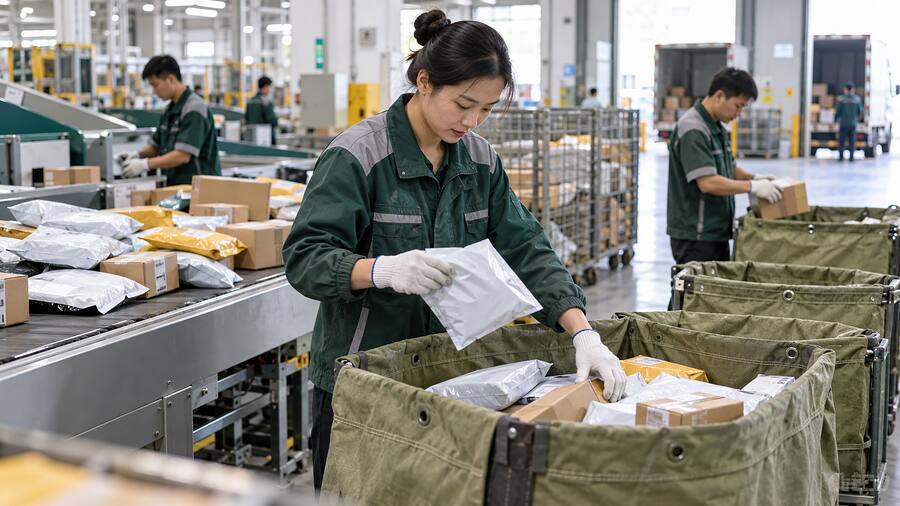
The Alibaba listing says “manufacturer.” Your contact sends a good sample. Then the quotation comes from one company, the payment instructions name another, and the factory tour seems to be at a third address.
So who are you buying from?
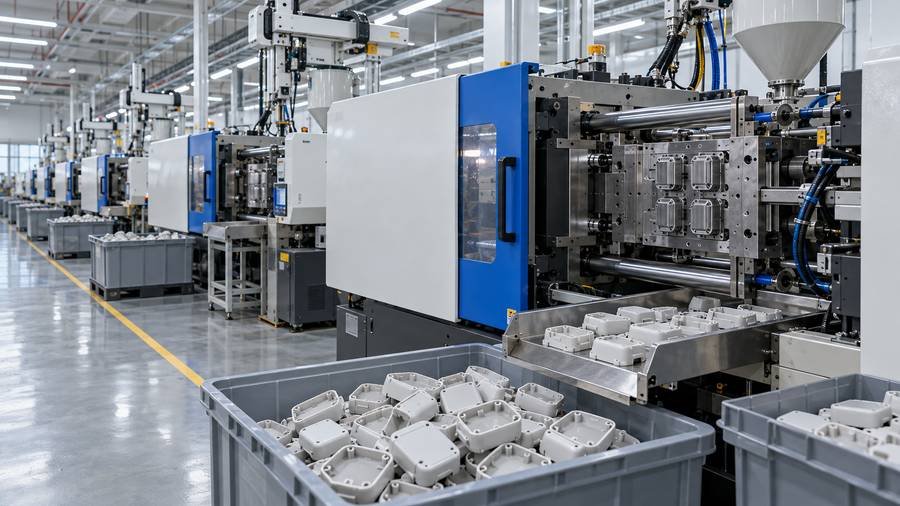
That question matters more than the word on the listing. A factory may make your product but use a related company to sell it abroad. A trading company may coordinate several excellent factories. And a company with its own assembly line may buy half its catalog elsewhere. These arrangements can all work. The trouble starts when you think one company controls the whole order and nobody can show you how the pieces fit.
This guide helps you identify the people and companies behind your order. Then you can decide whether buying direct, working with a trader, or using an agent makes sense for your products and budget.
What changes when you buy from a factory or a trading company?
A factory operates a production process. It may cut, mold, assemble, fill, sew, or finish a product. It doesn’t have to make every component itself. An electronics assembler, for instance, may buy chips, boards, cables, and packaging from other firms. The useful question is which steps it controls for your item.
A trading company usually buys from one or more producers and sells to the overseas buyer. It may handle supplier search, English communication, sampling, quality checks, packing, and export coordination. Its price includes the goods and the work it does—or should do. Ask what the price covers.
A buyer-side sourcing agent has a different job: the agent helps you compare and coordinate suppliers under an agreed service scope. Fee and payment arrangements vary, so ask whether the agent merely arranges the purchase or also becomes the seller of record. Some businesses combine these roles.
And then there’s the hybrid: a factory with a trading arm, or a company that makes some products and sources the rest. For a hybrid, ask about the exact SKU. “We have a factory” is not the same as “we make this item there.”
| Question for your order | Direct factory | Trading company | Hybrid or sourcing agent |
| Who makes the core product? | The factory, subject to disclosed outsourced steps | One or more separate producers | Depends on the SKU and agreed role |
| Who handles technical changes? | Usually a production or engineering team | Usually passes requests to its producer | Depends on access to the producer |
| Can you combine unrelated SKUs? | Often limited by its processes | Usually more flexible | Often possible with coordination |
| Is a low MOQ guaranteed? | No | No; stock or combined orders may help | Depends on each source |
| Who arranges quality checks? | The factory’s team, plus any buyer-appointed inspection | The trader, if the service is defined and evidenced | Must be assigned in writing |
| Who signs and receives payment? | May be the factory or a separate sales/export entity | Commonly the trading seller | Depends on the transaction structure |
Neither column is a quality rating. A good trader can rescue a small, messy multi-product order. A factory can still deliver the wrong material. What counts is control, evidence, and a clear person responsible when a batch goes sideways.

How to tell who actually makes your product
Think of verification as tracing a parcel backwards. You start with the seller, then follow the paperwork and the physical production steps until they meet. One clue rarely settles the question. A few independent clues should tell the same story.
Match the legal identity, not the English storefront name
Ask for the full Chinese registered name and a readable business license. Record its Unified Social Credit Code, registration status, business scope, registered address, and establishment date. Then compare those details with the quotation, contract, invoice, and bank beneficiary.
China’s State Administration for Market Regulation explains that the National Enterprise Credit Information Publicity System can be searched by company name, Unified Social Credit Code, or registration number. Access and displayed fields can vary, so get help reading the Chinese record if needed.
Manufacturing terms in a business scope can support a factory claim. Sales or import-export terms may point to a trading role. But a license is a record of the entity, not a camera on today’s production line. It cannot prove that a particular lot was made at a particular site. Likewise, the registered office and the production site may legitimately differ.
Use our guide to the business-license fields buyers should match if you need a field-by-field check. When names differ, ask for a written explanation of the relationship before treating the mismatch as routine—or as fraud.
Ask for the production route of this SKU
Give each supplier the same product brief. Include dimensions, materials, finish, colors, functions, artwork, packaging, quantity, target market, and intended delivery date. Then ask: “Which steps take place at your own site, and which are subcontracted?”
For a silicone kitchen item, the route might include raw material preparation, molding, trimming, logo printing, inspection, and packing. A factory may control molding and trimming but send printing elsewhere. That’s normal enough when disclosed and controlled. It becomes a problem if your logo quality depends on an unnamed shop that can change without approval.
Request the production-site address, the legal name of the entity operating it, and a short process map. Ask who owns the tooling and who approves a change in material, component supplier, or site. If the product has several variants, repeat the question for each important SKU. One “factory” label cannot answer for the entire catalog.
Use a live tour to ask better questions
A live video call can show the site sign, the relevant machines, an active work area, incoming materials, QC stations, and packing space. Ask your contact to move from the showroom to the work area, and to show the process that matters for your product. A molded item calls for a different tour than a sewn bag.
Still, the video alone does not establish who owns the site or who will make your future batch. A trader may have open access to a partner factory. That’s fine if the relationship is clear. Match the site name and address to the proposed order, then use a visit or independent audit when the order justifies it. Our broader guide explains how to verify a China manufacturer beyond marketplace badges.
Ask questions that a process owner can answer
Skip “Are you a real factory?” Almost everyone can say yes to that. Ask how your tolerances are measured, what causes rejects, which coating goes on the product, and what production constraint drives the MOQ. Ask what happens if you change one dimension after sample approval.
A factory may answer through an engineer. A capable trader may return with precise answers from its factory. Either can be a good sign. You’re checking whether the answer is specific, documented, and consistent—not judging how fast someone types back.
For electronics, you might ask which team handles board assembly and functional testing. For apparel, ask who cuts, sews, washes, and labels. For cosmetics, ask who formulates, fills, and controls batch records, and what evidence the destination market requires. Product compliance depends on the actual item, claims, and market. A generic certificate is no shortcut.
Connect the sample to the production order
A pretty sample can come from a different workshop than the one handling bulk production. Keep a dated approved sample and a written specification. Record material grade, measurements, performance checks, color reference, packaging, and acceptable tolerances. Ask how those details will reach the line and how a finished batch will be checked against them.
For a larger first order or a sensitive product, an independent site visit may be sensible. A supplier audit checklist covering legal identity, capacity, quality, and social compliance helps scope that work. An audit records what was observed at a site and time; a pre-shipment inspection checks a particular lot. Neither promises that every future shipment will pass.
| Evidence | What it helps establish | What it does not prove by itself |
| Marketplace label or badge | A starting point for reviewing a supplier profile | That this company makes your exact SKU |
| Business license and public record | A registered legal entity and its recorded details | Actual machinery, current capacity, or batch origin |
| Live video and site information | A view of relevant processes and stated location | Site ownership or future production route |
| Scoped independent audit | Observations about a named site and processes | Performance of every future order |
| Approved sample and lot inspection | Whether sampled units match stated criteria | That untested units or later lots are identical |
Alibaba.com’s Verified Supplier explanation says assessment information may cover company structure, facilities, machinery, and subcontractors, with reports available for buyers. It also distinguishes a trading company, a manufacturer, or both. Read the report’s entity, site, scope, and date; the badge alone is not a product approval.
The real cost comparison is larger than the unit price
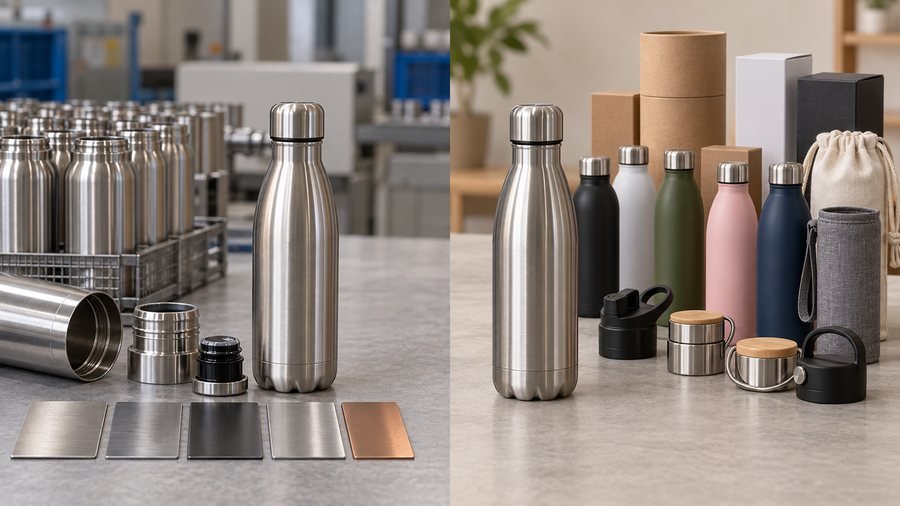
A direct quote of $4.20 and a trader quote of $4.65 look easy to compare. They aren’t, unless both cover the same spec, quantity, packaging, inspection, delivery point, currency, and Incoterm. “Cheaper” might simply mean the other quote forgot the carton.
Here’s a hypothetical comparison, for illustration only. Both routes supply the same 500 units to the same agreed China handoff point. Neither includes international freight, duties, taxes, or destination delivery; obtain those separately on the same basis.
| Illustrative cost for 500 units | Direct factory | Trading company |
| Product unit quote | $4.20 × 500 = $2,100 | $4.65 × 500 = $2,325 |
| Samples and setup for this order | $120 | $80 |
| Buyer-paid China coordination and inspection | $260 | $160 |
| Agreed local delivery and packing add-ons | $140 | $90 |
| Illustrative total to the same handoff point | $2,620 | $2,655 |
| Effective amount per unit | $5.24 | $5.31 |
The trader is $225 higher on the product line and only $35 higher after the stated work. Change the buyer’s inspection scope or the supplier’s included services, and the result changes. This is not a market price survey or a claim about average margins. It’s a reminder to price the job you’re actually buying.
Now consider a second order of 5,000 units. If the trader’s extra unit price remains $0.45 and the same service costs remain fixed, that difference could become meaningful. But don’t assume either quote stays unchanged at scale. Ask both suppliers to re-quote at the same volumes and specifications.
There are less visible costs too: excess stock from a high MOQ, artwork errors, extra samples, rejected cartons, storage, currency conversion, and time spent chasing three suppliers. If you import, compare the full landed cost after freight, insurance where applicable, duties, taxes, broker charges, and destination handling. Those items depend on the route, product and market.
When a factory is the better fit—and when a trader earns its margin
Go direct when process control and repeat volume matter
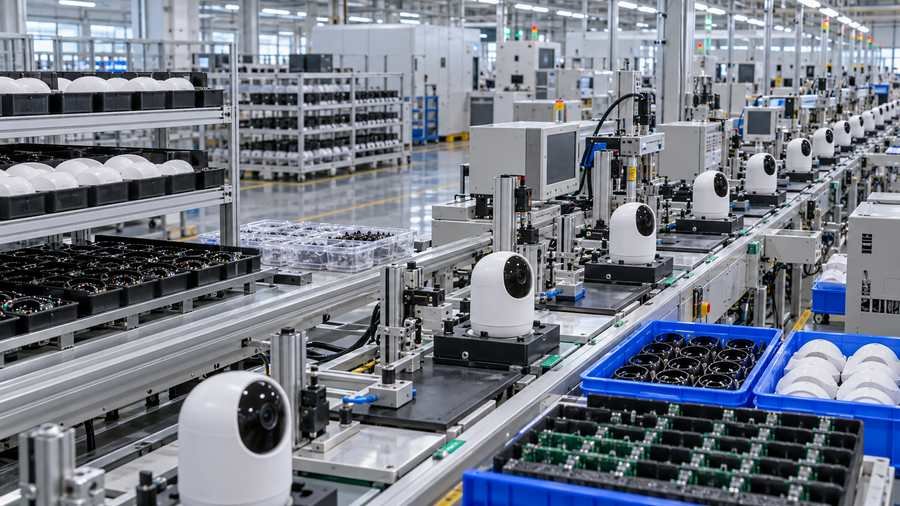
A direct factory relationship is often useful when one product drives steady orders, the design needs engineering work, or you own custom tooling. Say you sell a kitchen accessory with a specific material and a tight fit requirement. You want the people changing the mold to see the defect report, not hear a shortened version three calls later.
Direct access can speed technical decisions. It can also make factory inspections and change control simpler. Yet buying direct asks more of your team: compare production quotes, arrange checks, coordinate export and shipping, and keep the records straight. Some factories prefer larger production runs. Others accept small quantities when the process and schedule allow. Ask about this SKU rather than relying on a rule of thumb.
Use a transparent trader for mixed products or a small test
Imagine a new home-goods store testing a desk mat, a cable organizer, and a storage pouch. Three materials, three processes, three producers. You could manage each factory yourself. Or a good trading company could combine the work, collect samples, coordinate packaging, and provide one accountable seller. That service has value if it is real.
Ask for a written service scope and proof of quality checks. Can you or an independent inspector visit the actual production sites? Who approves a factory change? Who pays for rework if a batch misses the agreed spec? A trader who can answer those questions may be worth more than a cheap factory quote you can’t manage.
For dropshipping, distinguish buying the stock from fulfilling individual customer orders. A factory may manufacture a product but have no workflow for storing mixed SKUs, picking single units, inserting branded packaging, or sending tracking data to your store. A trader may not do those jobs either. Confirm the warehouse and fulfillment handoff separately.
What if the supplier is both—or uses a separate export company?
Many arrangements sit in the middle. A manufacturer may sell through an affiliated export company. A trading business may own a small assembly workshop. A sourcing agent may coordinate factories and warehousing without being the producer. The label on the business card will not tell you which entity owes you a remedy.
Map the roles. Identify the company that signs the purchase agreement, the one operating the manufacturing site, the invoice issuer, the exporter on shipping paperwork, and the bank beneficiary. If different names appear, request evidence of their relationship and write down who is accountable for defects and delay. Don’t send money to a new account solely because a chat message says the “finance team changed it.” Confirm changes through a separately verified channel.
If you need help comparing factories and trading companies against the same brief, China product sourcing support can coordinate supplier options, samples, and checks. Keep the approval of product, supplier, and commercial terms in your hands.
| Your situation | Likely starting route | Check before committing |
| One repeat SKU with tooling or tight tolerances | Direct factory | Production site, engineering access, tooling and change rights |
| Several unrelated SKUs in modest quantities | Transparent trader or agent | Source disclosure, sample consistency, fee scope and consolidation |
| A factory quote through its export affiliate | Hybrid arrangement | Documented entity link, contract, payment and inspection access |
| Regulated or safety-sensitive product | Route with proven process access | Product-specific tests, current documents and market requirements |
| One-off small dropshipping orders | Supplier plus fulfillment partner as needed | Inventory ownership, unit-level QC, pick/pack and tracking handoff |
Treat that table as a shortlist, not a verdict. A good buyer asks for evidence, quotes on the same basis, and then chooses the operating model that can deliver.
Put the chosen arrangement in writing before the deposit
A conversation is helpful. A written order keeps it from becoming “I thought you meant the other factory” three weeks later. For the purchase agreement or order confirmation, record:
-
the seller’s full registered name and the production site’s operator and address;
-
the exact product specification, drawing revision, approved sample, packaging, and quantity;
-
in-house and subcontracted steps, with approval required for material, component or site changes;
-
sample and tooling ownership, storage, access, and any agreed transfer terms;
-
inspection points, access, sampling criteria, and what happens if a lot fails;
-
lead time, delivery point, agreed trade term, included charges, export-document responsibilities, and payment milestones; and
-
the named party responsible for rework, replacement, refund, or another agreed remedy.
Have someone qualified review the agreement where the order value or legal risk warrants it. Product rules vary by destination and use. An ISO 9001 certificate, if supplied, speaks to the stated scope of a quality management system; it does not certify your individual product or replace testing required for your market.
Before paying, send one final note: “Please confirm the legal seller, manufacturing site, exporter, invoice issuer, and bank beneficiary for this order, and explain any differences.” It’s a slightly unglamorous email. It can save a very glamorous headache.
Conclusion
The useful choice isn’t “factory good, trader bad.” It’s which partner can make or coordinate your product, show you where the work happens, and stand behind the agreed result. Direct factory access often helps with repeat volume and technical changes. A transparent trading company can make a small, mixed order far easier to run. Hybrids and agents can work too, when their roles are clear.
Start with the same written brief for every bidder. Check the legal entities and production route, compare the full job cost, and make accountability part of the order before the deposit moves.
FAQs
How can I tell if an Alibaba supplier is a factory or a trading company?
Get its Chinese legal name and business license, check the public record, request the production address, and ask which processes happen there for your SKU. Then compare the site evidence with the seller, contract, invoice, and payment details. One profile label is not enough.
Does a Verified Supplier badge mean the company makes my product?
No. Review the assessment report to see which entity and site were assessed, what processes were observed, and when. Even a genuine assessment cannot guarantee that your specific order will be made there or meet your specification.
Can a trading company have manufacturing in its business scope?
A recorded scope can include several activities, and a firm may both manufacture and trade. The wording does not establish that it owns or operates the process for your item. Ask for site and process evidence.
Does a Chinese factory need its own export company?
Not necessarily. Some factories handle overseas sales in the same entity; others work through a related or independent export company. Confirm who signs, invoices, exports, and receives payment for your transaction.
Is buying directly from a factory always cheaper?
No. A direct unit price may be lower while samples, coordination, inspections, MOQ-related stock, and local shipping push up the total. Compare quotes using the same specification, volume, delivery point, and included services.
Why might a factory ask for a higher MOQ?
Production setup, material purchase minimums, printing runs, and line scheduling can make tiny batches inefficient. The reason depends on the process. Ask which constraint sets the MOQ and whether a simpler finish or shared material would change it.
Can a trading company arrange OEM or private-label products?
Yes, if its producer can do the work and the trader can control drawings, samples, changes, and inspection. Ask who owns the tooling and who communicates revisions to the factory.
What should I ask to see on a live factory video call?
Ask for the site sign, relevant machines, materials, the work area for your product, quality checks, and packing. Compare what you see with the claimed process. Follow up with independent verification if the order risk warrants it.
What can a factory audit prove?
A scoped audit records observations about a named site, equipment, people, and controls at a point in time. It does not guarantee a later batch. Pair it with clear specifications and an order-level inspection plan.
How do I verify a Chinese supplier’s business license online?
Request the full registered Chinese name and Unified Social Credit Code. Search the official enterprise information system and compare its current record with the license, contract, and bank details. Get competent help if you cannot interpret the Chinese fields or a status entry.
Must the factory name match the invoice and bank account?
They may differ when a related export entity or authorized trading seller handles the sale. Get the relationship and responsibilities documented. The account you pay should belong to the agreed payee; resolve unexplained or last-minute changes before transferring funds.
Can a real factory subcontract production steps?
Yes. Components, printing, finishing, or even a specialized process may be outsourced. Ask which steps leave the site, who does them, and how the supplier keeps your approved spec and quality checks in place.
Is a sourcing agent the same as a trading company?
Not automatically. A trading company commonly buys and resells goods. An agent may coordinate a purchase on the buyer’s behalf for an agreed fee. Some businesses do both. Confirm the actual contract and payment model.
Which partner fits a store shipping small dropshipping orders?
Look for reliable sourcing and a workable single-order fulfillment process. A factory may be great at bulk manufacturing but unable to pick, pack, brand, and dispatch individual orders. Ask who owns inventory and provides tracking.
What should my agreement say if the seller uses another factory?
Identify the approved production site and subcontracted steps. Require your approval before a site or material change. Set inspection access, sample and spec controls, and a clear remedy for defects or delay.
Table of Content

I’m Cassiel. I’ll help you scale your Shopify business with reliable fulfillment.
Join to newsletter.
Follow us and get more knowledge.