
A store sells a soft travel organizer. The product weighs less than a kilogram. Once packed, the parcel weighs 1.2 kg. Then the shipping quote comes back based on nearly 5 kg. Huh?

The warehouse scale isn’t broken. The box measures 40 × 30 × 20 cm, and the carrier has to find room for the whole thing. In many parcel services, that space is converted into a volumetric weight. The carrier compares it with the weight on the scale and uses the larger figure as the starting point for pricing.
For an ecommerce store, the difference can turn a healthy margin into a thin one. It also explains why switching suppliers doesn’t always fix expensive shipping. Sometimes the costly part is the air around the product.
Let’s unpack the calculation, find the point where a smaller box actually helps, and build a packing routine that doesn’t trade a lower freight bill for damaged orders.
The three weights behind one shipping bill
There are three numbers worth separating:
-
Actual weight: What the finished, packed parcel reads on the scale. This includes the item, retail box, mailer or carton, inserts, tape, and protective material.
-
Volumetric weight: The parcel’s outside volume converted into a weight figure using a divisor. You may also hear dimensional weight, DIM weight, or volume weight.
-
Chargeable weight: The weight figure used to rate a shipment under the applicable service rules. For many express and parcel services, it starts with the greater of actual and dimensional weight, subject to eligibility, rounding, and other terms.
Think of a delivery van with ten seats for boxes. A carton full of books may be heavy but take only one little seat. A huge carton holding one pillow can occupy the space of several smaller parcels. The carrier has both a weight limit and a space limit. Dimensional pricing accounts for the second one.
The chargeable weight is not the final price in dollars. A carrier can also consider destination, service level, fuel, remote-area delivery, handling, oversized-package rules, or a minimum charge. And some postal or flat-rate products work differently. So a formula can help you check a quote, but it cannot replace the actual rate card.
This distinction matters when a customer says, “The item is light, so why is shipping expensive?” The honest answer starts with the packed dimensions. Then you look at the service. Only then can you talk about the price.

Measure the finished parcel, then do the math
For a service using metric dimensions, the basic formula is:
Volumetric weight (kg) = length (cm) × width (cm) × height (cm) ÷ divisor (cm³/kg)
The divisor is a rule in the carrier’s service guide or your agreed tariff. It tells you how much cubic space counts as one kilogram for this calculation. A common example for international express is 5,000 cm³/kg. DHL Express explains its 5,000 factor, but that does not make 5,000 the rule for every courier, shipping line, or account.
A 1.2 kg parcel in a 40 × 30 × 20 cm box
First measure the sealed outside of the parcel. For our example:
-
Volume: 40 × 30 × 20 = 24,000 cm³.
-
At a 5,000 divisor: 24,000 ÷ 5,000 = 4.8 kg raw volumetric weight.
-
Actual packed weight: 1.2 kg.
-
The larger candidate is 4.8 kg. The service’s dimension and billing-increment rules determine the rated weight on the invoice.
Notice what did not happen: the parcel did not physically gain 3.6 kg. Its box used enough space to be priced like a heavier parcel under this example rule.
Now keep that same box and change only the divisor to 6,000. The raw dimensional weight becomes 4.0 kg. Dividing by a smaller number produces a larger result. But a service with a 6,000 divisor is not automatically cheaper. Its price per weight band, destination coverage, transit time, and surcharges may all differ.
| Packed parcel | Actual weight | Illustrative divisor | Raw DIM weight | Higher weight before service rounding |
| 40 × 30 × 20 cm | 1.2 kg | 5,000 cm³/kg | 4.8 kg | 4.8 kg, dimensional |
| 40 × 30 × 20 cm | 1.2 kg | 6,000 cm³/kg | 4.0 kg | 4.0 kg, dimensional |
| 30 × 20 × 10 cm | 1.2 kg | 5,000 cm³/kg | 1.2 kg | Tie before rounding |
| 30 × 20 × 10 cm | 3.0 kg | 5,000 cm³/kg | 1.2 kg | 3.0 kg, actual |
Those are calculation examples, not quoted rates. A carrier may round a dimension before multiplying, then round the billable figure to an increment. Another service may have a threshold before dimensional pricing applies. Use the terms for the exact service you plan to buy.
Inches, pounds, and the rounding trap
U.S. parcel guides often use cubic inches and pounds. In its U.S. guide, FedEx shows an inches ÷ 139 calculation and tells readers how it rounds the package measurements. For a simple 20 × 14 × 10 in parcel, 2,800 in³ ÷ 139 is about 20.14 lb before the applicable weight rounding. If the actual packed parcel weighs 8 lb, size is the larger candidate.
Do not divide centimeters by 139. The number has units: in³/lb, not cm³/kg. That mix-up can make a shipping spreadsheet look precise while producing nonsense.
Measure the package the carrier receives, including the widest bulge. The factory’s product sheet might say 32 × 23 × 8 cm. It won’t include your gift box, foam corner, taped seam, or shipping carton. Likewise, a carton labeled “40 × 30 × 20” might expand at a soft side or close a little taller after packing. On a borderline parcel, a few millimeters and a rounding step can push the shipment into another billed band.
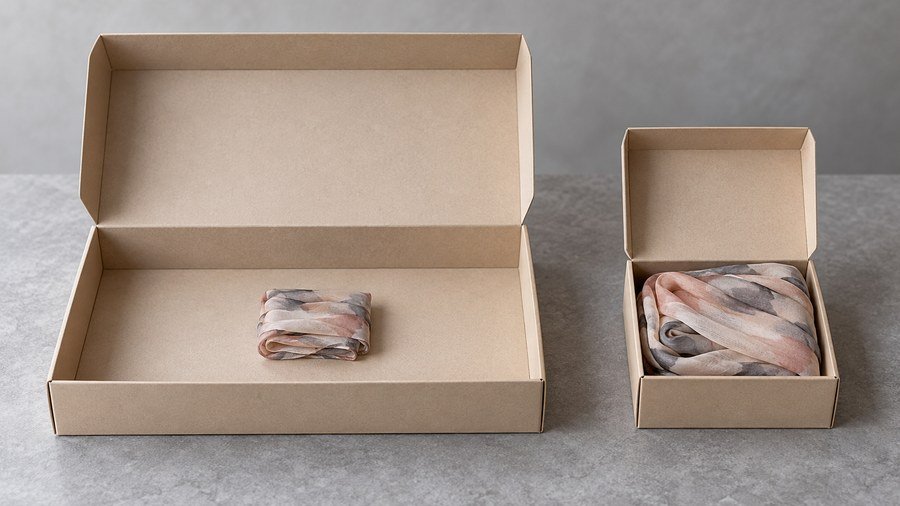
When does an extra centimeter change the bill?
The useful question isn’t “Can I make this box smaller?” It’s “Will the new size cross a pricing boundary without hurting the product?”
Take the 1.2 kg parcel again. At a 5,000 cm³/kg divisor, the point where raw dimensional weight equals actual weight is:
1.2 kg × 5,000 cm³/kg = 6,000 cm³
Above 6,000 cm³, this example parcel is dimension-led. At or below 6,000 cm³, its 1.2 kg actual weight is at least as large as the raw dimensional figure. This is the crossover volume. It is a planning number, not an order to squash the product into a tiny box.
Suppose a packaging test changes the sealed parcel from 40 × 30 × 20 cm to 35 × 25 × 12 cm. Its cube falls from 24,000 to 10,500 cm³. At a 5,000 divisor, raw DIM weight drops from 4.8 to 2.1 kg. That’s a meaningful change, yet the 1.2 kg item is still priced from its dimensions under the simple comparison.
One more redesign might get below 6,000 cm³. Once actual weight controls, further shrinking won’t lower the weight-based figure under this example. It might still avoid a length or size fee, but the rule needs checking. And if the carrier rounds to whole kilograms, a move from 2.1 to 1.9 kg could change the band while a move from 2.1 to 2.05 kg might not. Different billing increments produce different outcomes.
This is why “We cut package volume by 40%” isn’t the same as “We cut freight spend by 40%.” The parcel may hit a minimum charge. A cheaper box may cost more to assemble. The shipment may already sit in the same weight band. Run the finished dimensions through the actual service tariff before changing your standard pack.
For a busy store, start with the SKUs that ship often and have a big gap between DIM and actual weight. An occasional oversized sample isn’t the first place to spend a week redesigning packaging.
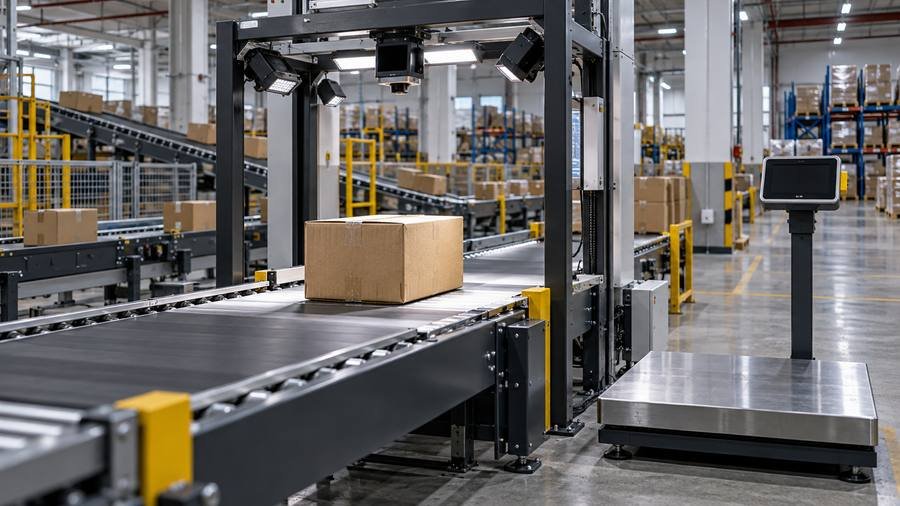
The products and packing materials most exposed
Soft, bulky products make the problem easy to see: cushions, plush toys, puffer jackets, blankets, and fabric organizers. They contain a lot of air. So do lightweight home decor pieces, hats, display items, and some gift sets. A rigid presentation box can turn a tiny beauty tool into a surprisingly large shipping parcel.
Then there are awkward shapes. A lamp shade might weigh almost nothing, but you cannot fold it flat without ruining it. A hollow pet accessory can fill an entire carton. A ceramic item may require thick corner protection. In those cases, the parcel can be big for a good reason.
The opposite case is a compact book set or a dense metal fitting. The scale may outweigh the dimensional calculation. Spending more on a custom miniature box for such an item might produce no weight-based shipping benefit.
Materials matter as much as the item. Corrugated board, foam inserts, bubble wrap, paper filler, and air pillows do different jobs. Some add grams; some add centimeters; some prevent a costly broken delivery. A padded mailer can be excellent for a soft, nonfragile item. The same mailer may be a poor choice for glass or a premium retail box that must arrive without crushed corners.
Think through the sales channel, too. A subscription kit needs repeatable presentation. A dropshipping order may leave a China fulfillment warehouse with its own product packaging. A direct-to-consumer brand may need a recognizable unboxing experience. Those choices can stay. Just ask which layers protect the product and which layers merely ship a pocket of air.
Route restrictions sit next to the volume calculation, not inside it. Liquids, batteries, fragile goods, and destination-specific requirements can narrow your service choices. The smallest possible box is useless if the chosen line won’t accept the contents.

Cut paid-for air without paying for damaged goods
Right-sizing sounds simple until someone actually has to pick and pack 500 orders. If your team keeps only one large carton on the shelf, it will use that carton for nearly everything. The expensive “convenience tax” then shows up on each shipping label.
Give the packer a small set of real choices
Build a short box matrix for your common order types: a single item, two items together, and the usual bundle. Test each with the actual retail packaging and protective material. Record the sealed outside dimensions, not just a supplier’s nominal carton size. A few well-chosen cartons often beat a huge menu that slows the packing station.
Try nesting products that are made to nest, shipping a disassembled part if the buyer can assemble it easily, or moving flexible goods into a suitable mailer. For a gift set, a better-fitting insert can hold items securely in a smaller outer box. It might look less impressive on a warehouse shelf. The customer probably won’t miss the empty space.
Keep an eye on the cost of the change. A printed box may be cheaper per piece at a large order quantity, yet its tooling, storage, and minimum order could outweigh the shipping saving. If you are considering a new branded carton, compare the full custom packaging cost in China alongside the freight difference.
| Packaging change | Why it might help | Test before rollout |
| Smaller corrugated carton | Removes empty cube and filler | Crush protection, pack time, billed weight band |
| Padded or rigid mailer | Flattens suitable items | Edge damage, moisture, label adhesion, carrier eligibility |
| Nested or flat-packed components | Reduces outside height | Assembly instructions, fit, missing parts |
| Vacuum bag for resilient textiles | Compresses soft goods | Recovery, fabric finish, seals, retail presentation |
| Combine two items in one parcel | May remove a second minimum or handling charge | New outer size, cushioning, per-piece rules, total quote |
Compression and consolidation need a trial run
A vacuum bag can be great for a plain, resilient textile. It can also crease a structured jacket, deform foam, or make a plush product look rather sorry when opened. Test how it recovers after the expected transit time. Check that any required product label, hygiene seal, or retail packaging remains usable. Photograph the pack before and after. If damage or refunds climb, the cheap label wasn’t cheap.
Consolidation has the same trap. Two loose items in one huge box can produce more billable cube than two tidy parcels. One parcel might save a second per-package charge, but it might cross a size threshold or require extra protection. Get both packed options measured and quoted. The answer is in the full cost, not in the number of boxes alone.
For stores choosing a shipping line, compare the completed parcels on the same destination and service promise. A 6,000 divisor with a higher rate per kilogram can cost more than a 5,000 divisor with a better contract. The headline factor is only one number in the quote.

Turn packaging into a repeatable warehouse rule
One careful sample pack helps. A routine makes it stick.
At the packing station, record the SKU or bundle, approved box or mailer, protective materials, sealed outside dimensions, and gross weight. Add the destination and shipping service used for the test. Keep a photo where the item or carton is unusual. If the warehouse changes to a substitute box, the dimension record should change too.
For a high-volume SKU, trial a small batch through the actual fulfillment process. Ask three practical questions: Can different packers make roughly the same parcel? Does it survive normal handling? Do the carrier invoices match the expected weight bands? A sample that looks neat on a desk isn’t enough if the pack line has to force the lid shut.
A simple cost comparison can be more useful than a fancy calculator:
Total expected cost per delivered order = packaging material + pack labor + shipping charge + expected damage and return cost
The last term is an estimate from your own data. Say Box A saves an illustrative $0.70 in postage but adds $0.25 in material and $0.20 in pack labor. You have $0.25 left before considering damaged orders. If extra breakage costs an average of $0.40 per shipped order, Box A loses money. Those figures are a made-up decision example, not market pricing.
This is where the broader China fulfillment center fee structure matters. Receiving, storage, packaging, pick-and-pack work, and shipping are connected. Saving on one line while quietly increasing another is easy.
If you use an agent or 3PL, agree on the approved packaging for each SKU and who can authorize substitutions. Ask for the packed dimensions and weight behind the quote, not just a single “shipping cost” field. A dropshipping fulfillment service should be able to discuss the pack-out and suitable shipping options using real product and destination details.
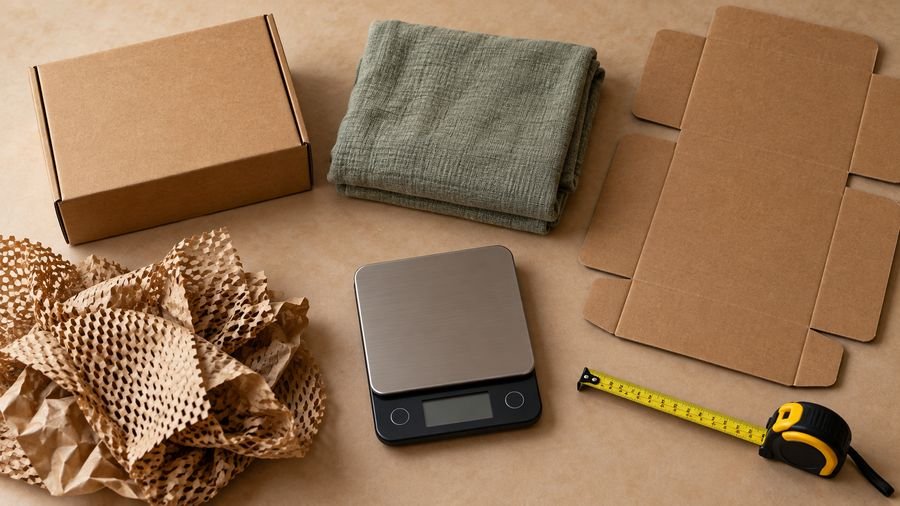
Why the carrier invoice can disagree with your quote
The label is purchased from the information someone entered. The carrier may measure the parcel later. If the numbers differ, the final invoice may change. That is unsettling when the item hasn’t changed, but the first job is to find which input changed.
Check these in order:
-
Package size: Did the quote use product dimensions, inner retail-box dimensions, or the outside shipping carton? Were seams, handles, bulges, or an overpacked side included?
-
Gross weight: Was the scale reading for the complete sealed parcel? Does the label show a default product weight instead?
-
Service and divisor: Did the order actually travel by the quoted carrier product and rate type? Was a metric or imperial divisor mixed into the wrong unit system?
-
Rounding and parcel count: Were dimensions and weight rounded under that service’s rules? Was a two-carton order rated per piece rather than as one averaged shipment?
-
Non-weight charges: Is the extra amount a dimension adjustment, or a separate remote-area, fuel, handling, nonstandard-size, or other fee?
The distinction in step five is easy to miss. A dimensional-weight adjustment and an oversize surcharge can appear on the same bill, but they are different charges. Cutting a box by one centimeter may solve one and leave the other untouched.
If you think the carrier remeasured incorrectly, collect the order ID, label, rate terms, invoice line, and your pack-station evidence. A photo showing a tape at each outside edge and a scale reading can help when available. Compare the exact billed dimensions with the sealed parcel you handed over. Then request a review through your carrier or shipping provider’s adjustment process. Evidence gives you a case; it doesn’t guarantee a credit.
Do this periodically, even when no customer complains. A steady drift in one box size can be a packing problem, a bad master-data field, or a change in what material is available at the station. Repeating the same mistake across 1,000 orders is much worse than one annoying invoice.

Choosing a shipping line for a bulky, light order
For a China-to-customer parcel, ask the provider for the named service, destination postcode, expected transit range, tracking, maximum dimensions, divisor, rounding increment, and any size-related or remote-area fees. Give them the packed dimensions and gross weight, plus a product description. A quote based only on “one pillow, 600 g” leaves out the part that may drive the charge.
Compare services on the same parcel and address. One may have a lower billed weight but a higher base rate. Another may accept the size but have weak tracking or a delivery promise your customer won’t like. High-value fragile decor needs a different balance from a low-cost fabric accessory.
Our guide to choosing a shipping line from China takes the decision beyond weight to product value and destination. Also keep shipment types straight: a single ecommerce parcel, consolidated air cargo, and ocean LCL can have different chargeable-unit rules. Don’t paste an air-cargo rule into a parcel quote just because both mention volume.
Conclusion
A light parcel can be expensive because its box uses space the carrier could have given to other orders. Measure the sealed outside package, calculate volumetric weight with the factor for your service, and compare it with the actual packed weight. Then check the rate band and the rest of the invoice.
The best packaging change is one that survives delivery and lowers the total cost. This week, measure your three bulkiest repeat SKUs. Test one sensible smaller pack for each. You’ll learn more from those six finished parcels than from guessing at a product’s weight on a spreadsheet.
Frequently Asked Questions
Is volumetric weight the same as dimensional weight?
Yes, in everyday parcel shipping they usually describe the same idea: turning the outside volume of a package into a weight figure for rating. “DIM weight” is common in U.S. parcel discussions. The applicable formula and service rules still need checking.
Why was my 1 kg parcel billed as 5 kg?
Its finished box may have enough volume to produce roughly 5 kg of dimensional weight under the service’s divisor and rounding rules. Ask for the billed dimensions, gross weight, divisor, and tariff. A separate size fee or other surcharge could also be involved.
How do I calculate volumetric weight in centimeters?
Multiply the sealed parcel’s length, width, and height in centimeters. Divide the result in cubic centimeters by your service’s cm³/kg factor. For 40 × 30 × 20 cm at 5,000, the result is 4.8 kg before service-specific rounding.
What does a 5,000 shipping divisor mean?
In a metric calculation, 5,000 cubic centimeters count as one kilogram of volumetric weight. It is a pricing conversion, not the physical weight of the contents. Your service might use a different factor.
Is a 6,000 divisor always cheaper than 5,000?
No. It produces a smaller raw dimensional weight for the same carton, but a carrier may charge a different rate, minimum, surcharge, or destination price. Compare final quotes for the same packed parcel and address.
Should I measure the product or its shipping box?
Measure the fully packed and sealed outer parcel at its widest points. Include anything that changes its outside shape. Product measurements help plan a box, but they cannot stand in for the dimensions the carrier sees.
Do couriers round dimensions or weight first?
It depends on the carrier, country, service, and account terms. Some specify how to round each outside dimension before calculating volume and then apply a weight increment. Follow the sequence in the tariff, especially for parcels near a billing threshold.
How is chargeable weight different from actual and volumetric weight?
Actual weight is the sealed package on a scale. Volumetric weight is the number calculated from its size. Chargeable weight is the rating figure determined under the service rules, commonly the larger of those two after relevant measurement and rounding steps.
Does dimensional pricing apply to every parcel?
No universal rule covers every postal product, flat-rate service, carrier, or package size. Some services apply dimensional pricing only after eligibility conditions are met. Check the service guide or negotiated contract instead of using an online calculator’s preset as proof.
How do I check an unexpected carrier adjustment?
Compare the label data with the invoice’s dimensions, weight, service, divisor, and separate fee lines. Pull the original pack record and photos if you have them. Ask your shipping provider which measurement caused the adjustment and how to request a review.
Does a smaller box always reduce the shipping bill?
No. The parcel may already be charged on actual weight, stay in the same rounded weight band, or hit a minimum charge. A tighter pack can also increase material, labor, or damage costs. Calculate the new total, not just its cubic size.
Can a mailer or vacuum bag help?
Often, for products that can handle it. Test a mailer for protection and carrier acceptance; test compressed textiles for shape recovery, seals, and customer presentation. Don’t strip necessary product labels or protective retail packaging just to shave a centimeter.
Is one consolidated parcel cheaper than two?
Sometimes. It may avoid a second per-piece charge, but a larger combined carton can cross a dimensional or size threshold. Pack both options, measure them, and compare complete quotes under the same destination and service conditions.
Do express parcels, air cargo, and sea freight use the same formula?
No. Volume affects pricing in all three, but their units, conversion rules, minimums, and how they rate multiple pieces can differ. Ocean LCL commonly works with volume and weight measurement rather than a parcel DIM divisor. Get the rule for the actual shipment type.
Which products should an ecommerce store audit first?
Start with frequent sellers that look big next to their scale weight: pillows, plush, puffer clothing, lightweight decor, rigid gift sets, and products in oversized cartons. Prioritize the items with the largest DIM-versus-actual gap multiplied by order volume. Then test safer packaging on a small batch before changing every order.
Table of Content

I’m Cassiel. I’ll help you scale your Shopify business with reliable fulfillment.
Join to newsletter.
Follow us and get more knowledge.