
Your ad starts working. Lovely. Then the blue version sells out, a supplier quietly sends the green one, and three customers ask why their tracking numbers have not moved. You spend the evening copying order IDs between Shopify, a supplier chat, and a spreadsheet. The campaign looks healthy. The back room looks less healthy.

That is the moment people start asking whether they need a dropshipping agent. It is a fair question, but there is no magic number of orders per day. A store sending 40 simple, repeat orders through one reliable supplier might be fine. Another store with eight daily orders, fragile products, and three suppliers may already have a costly coordination problem.
The useful question is: which task keeps breaking, how much does the breakage cost, and who could own that task better? An agent may help you source, check, combine, pack, and ship products. It may also add fees and another handoff. Let the evidence decide. Below are eight signals you can check in your own order data, along with smaller fixes to try before you move the whole operation.
What does hiring an agent actually change?
A dropshipping agent usually coordinates work between your store and the companies making, supplying, checking, storing, or shipping the goods. The exact service depends on the agreement. One person may find factories and place purchases. Another company may also receive stock, inspect units, connect to your store, pack orders, and return tracking data. The label “agent” tells you less than a task list does.
| Arrangement | Usually handles | You still need to confirm |
| App or catalog | Product discovery and order automation within its supported network | Product consistency, exceptions, real tracking, and supplier accountability |
| Direct supplier | Making or selling a defined product; sometimes packing and shipping | Cross-supplier orders, independent checks, replacements, and data flow |
| Private agent or managed team | Agreed sourcing and coordination; sometimes QC, stock, packing, and shipping | Which services are real, who performs them, fees, and who owns failures |
| 3PL | Receiving, storing, picking, packing, and dispatching your stock | Who sources and pays for the product, inspects the batch, and replenishes it |
The categories overlap. A factory may fulfill individual orders well. An agent may operate a warehouse. A platform may assign an account manager. If you already have a solid manufacturer, an agent can sometimes manage the receiving and order side without replacing that factory. For a deeper role-by-role comparison, see our dropshipping agent versus supplier guide.
Also settle the inventory question early. Some arrangements buy after the customer pays. Others ask you to fund a buffer of finished units or printed boxes. That can improve dispatch speed, but it ties up cash and creates a stock-ownership question. Write down who owns goods at the factory, at the agent’s warehouse, and after a parcel is lost.
A proven product sells, but every order needs a human nudge
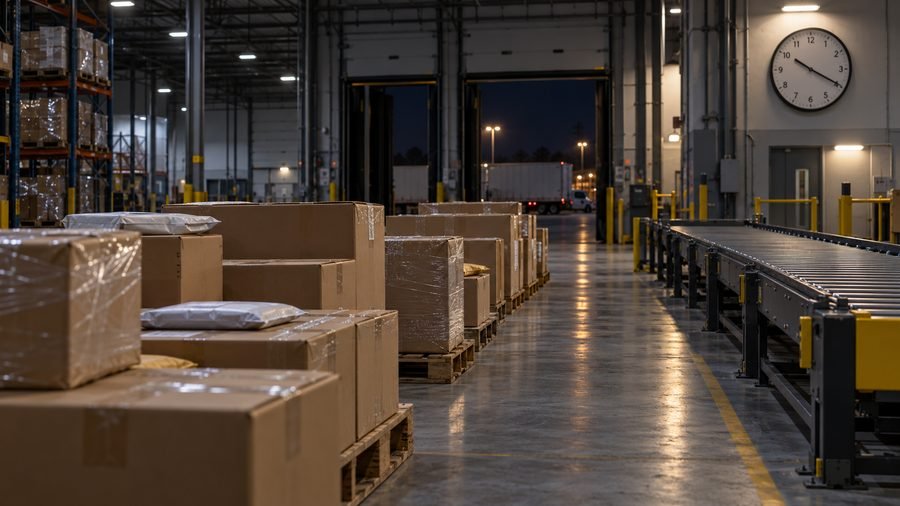
The product is no longer a two-day experiment. It sells most weeks, yet someone still checks each supplier listing, copies the variant, places the purchase, and asks for tracking. The work might take only four minutes per order. At 300 orders, that is 20 hours. Add address changes and supplier messages and, well, there goes another afternoon.
For one week, count manual minutes per order. Mark why you intervened: bad SKU mapping, out-of-stock listing, supplier approval, manual payment, missing tracking, or an actual product question. The cause matters. An integration problem should be fixed in the integration. Hiring an agent to copy the same wrong SKU faster is hardly progress.
An agent becomes worth testing when someone must repeatedly coordinate suppliers, purchase records, and exceptions that your app cannot reliably manage. Ask the candidate to show how a live order arrives, how the exact variant is confirmed, when stock is reserved, and how an address edit is handled before the cutoff. Request a test export with order IDs and outcomes. If the only problem is a broken sync setting, repair that first and measure again.
Dispatch gets slower while your ads get louder
A customer does not care that the supplier printed a label within hours if the parcel waits three days for pickup. Look at three separate timestamps: payment to release, release to actual dispatch, and dispatch to first carrier scan. Then look at delivered time by destination. A single “shipping time” average can hide the exact handoff that hurts.
For example, say most parcels reach the carrier in one day, but one accessory supplier holds them for four. Replacing your whole operation may be excessive. You could source that accessory elsewhere or pre-position a small stock. If delays spread across suppliers because nobody owns the purchase and warehouse cutoff, an agent with a documented intake and dispatch process may help.
Shopify’s order-tracking guidance explains how customers see tracking after it is added to a fulfilled order. That tracking entry is useful, but it is not proof that a carrier physically scanned the parcel. Ask a prospective agent for both data points and a clear escalation rule for labels with no movement. Never promise a faster delivery window until a pilot confirms it on your actual product and route.
Returns and support tickets point to the product, not the ads
“Wrong size.” “The lid arrived cracked.” “The box contains the old version.” These are expensive words. A refund is only the visible bill. There may also be reshipping, support time, lost repeat business, and more advertising spend to replace the sale.
Make a simple defect log for the last 30 to 60 days. Divide cases into wrong variant, visible damage, missing part, failed function, packaging damage, delivery trouble, and buyer’s remorse. Check by SKU, supplier, and batch. If one factory’s new batch caused the spike, inspect that batch and correct its production specification. An agent cannot undo a bad design.
An agent is useful when products arrive from several sources or the current supplier cannot provide a trustworthy pre-dispatch check. Ask exactly what “quality control” means: visual check, quantity check, barcode match, function test, or a sampled inspection of a larger lot? Who holds a failed unit? Who authorizes a substitute? Keep an approved sample and dated specification. For cosmetics, toys, batteries, or other regulated goods, warehouse checks do not replace product-specific testing and market compliance work. A photograph of a neat carton is nice; it does not prove the contents work.
You discover stockouts only after someone has paid
Stock can look plentiful on a public listing and disappear when you try to buy 40 pieces. It can also exist in the wrong color, at a different factory, or in a carton that has not passed inspection. If you keep apologizing to customers for inventory you thought existed, you need a clearer availability promise.
Track three numbers for each important SKU: sellable units on hand, confirmed inbound units with a realistic arrival date, and orders already allocated. Ask which system holds the authoritative count. A supplier spreadsheet updated once a week is not the same as stock ready to be picked today. Specify what happens when the approved variant is missing; no quiet substitutions.
An agent may help with supplier follow-up, small buffer stock, receiving checks, and alerts before an item reaches zero. But first see whether your existing supplier can share better inventory feeds or reserve goods for you. If you do pre-buy, calculate how many weeks of demand the buffer covers and who bears unsold stock. A small cash cushion can make dispatch steadier. It can also turn an unproven color into a shelf of unsold boxes.
One customer order has become three supplier puzzles
A customer buys a yoga mat, straps, and a printed card as one gift. The mat comes from one factory, the straps from another, and the card from a printer. If each ships separately, the customer may receive three tracking links, three different arrival days, and a rather confusing gift.
Check how many orders contain items from more than one source. Count split shipments, duplicate freight, missing accessories, and “where is the rest?” tickets. Then price a consolidated pack honestly: domestic collection, receiving, inspection, storage, kitting labor, packaging, and one outbound parcel. Consolidation is not automatically cheaper; bulky items can make the combined parcel expensive. Test the weight and dimensions.
This is a strong agent use case when no single supplier can own the complete bundle. An agent or warehouse can receive all pieces, verify the bill of materials, and pack one customer order. Ask for a packing instruction, component scan or count method, shortage rule, and photo standard for disputed kits. If only one item is causing the split, a simpler move may be to have your primary supplier stock that item. No need to build a whole new kitchen for one missing spoon.

Your shipping method no longer matches the product or destination
A route that works for a small cotton pouch may be wrong for a power bank, a liquid, or a light but very large gift box. Delivery time, actual versus volumetric weight, tracking quality, loss handling, customs information, and carrier acceptance all change the real cost.
Compare routes with the same SKU, packed dimensions, origin, destination, service level, and tax assumptions. Measure paid-to-delivered time, not just the carrier’s advertised transit window. Group the results by country rather than assuming “international shipping” is one lane. A cheaper quote that has no usable tracking and twice the replacement rate may cost more in practice.
An agent may have access to several parcel lines and can coordinate repacking or route selection. Ask for the carrier or service, chargeable-weight rule, prohibited-item review, customs-data responsibility, and what happens after a missed scan or lost parcel. Carrier acceptance and destination requirements must be checked for the exact item. If a single carrier route is the problem, changing that route with your present partner could be enough. An agent is more useful when those decisions keep changing across products and markets.
Your brand needs repeatable packaging or a controlled product revision
You can test an ordinary product with plain packing. Eventually you may want a printed insert, a bundle that always contains two accessories, or a revised material that solves a common complaint. Now your product page, approved sample, factory, packaging vendor, and warehouse must all agree on what “the new version” means.
Write a revision sheet. Include dimensions, materials, colors, function, variants, barcode, artwork version, packaging, and the date old stock should stop shipping. Count how many units of branded material you must buy before assuming a small insert is free. Ask who owns the printing plates, design files, molds, and any buyer-paid stock.
An agent can coordinate the factory and packaging supplier, hold approved samples, and control the stock changeover. It should be able to tell you which customers received version A and which got version B. Still testing three unrelated products each week? Stay flexible. Printing 2,000 boxes for a product with twelve sales is like ordering a wedding cake before anyone has agreed on a date. Get repeated demand and a stable specification first.
A promotion exposes the weak link in your team
On a normal Tuesday, your setup looks calm. A creator posts about your product or you double ad spend, and the order queue grows faster than anyone can confirm stock. Your one contact goes offline. Address changes wait overnight. Tracking imports fail. The issue is not just volume; it is the lack of a backup and an exception owner.
Before a campaign, simulate a busy day. Who confirms additional stock? Who can approve a substitute? How many orders can the team pack within the promised cutoff? Who answers if a batch fails inspection or the integration stops? Check the queue age, failed-order count, first-response time, and orders without a named owner. Set your own thresholds based on the promise you make to customers; a universal “hire at 30 orders a day” rule will not do that work.
A managed agent team may give you capacity and cover that one freelancer cannot. A skilled individual may still be right for a steady, narrow product line. Ask how peak orders are staffed, whether the warehouse process is documented, how data is backed up, and who acts when the primary contact is unavailable. If your current provider can answer those questions and pass a stress test, you may already have the support you need. Our Shopify fulfillment checklist covers the wider pre-ad-spend checks.

So, do you hire, repair, or wait?
One bad shipment does not diagnose an entire supplier network. Look for repeated friction with a cause you can name. A few weeks of observations are usually more useful than a dramatic screenshot from one terrible day. There is no rule that all eight signs must appear.
| What you find | Likely next move | Evidence to request |
| No validated product; few repeat orders | Wait and keep a flexible test setup | Samples, basic margin and customer feedback |
| A single app setting, one faulty supplier, or one bad route | Repair the specific failure | Before-and-after order records |
| Recurring supplier coordination, QC, or multi-source packing gaps | Pilot an agent for a defined SKU or task | Written scope, sample, quote and trial metrics |
| Reliable direct factory but growing warehousing need | Compare 3PL or hybrid, perhaps retaining the factory | Receiving, inventory and dispatch workflow |
| Agent is already working but one person’s capacity is failing | Compare a team, stronger systems, or split responsibilities | Cover plan, backlog data and a parallel test |
Ask yourself a slightly awkward question: would an agent actually own the recurring failure, or would I still be forwarding the same angry emails? If you cannot name the new owner’s deliverable, you are not ready to buy that service. You are ready to write down the problem more clearly.

Compare total cost, including the messy bits
The agent’s commission is not your only number. For a fair comparison, calculate product cost + inbound or domestic collection + inspection + packaging and pick/pack + international freight + allocated setup cost + expected reships/refunds + internal handling time. Use the same destinations, product version, order mix, and customer promise for both providers. Keep advertising and payment processing consistent too; they matter to profit, but they do not explain a fulfillment-provider difference if unchanged.
Here is an illustrative example, not a market price or promised saving. A store ships 400 orders in a month. Its current product and shipping total is $11.20 per order. It also pays an average $0.90 in refunds and reships attributable to operational failures, and spends $0.60 of staff time resolving supplier exceptions. That is $12.70 per order, or $5,080 for 400 orders. A proposed agent quote is $11.80 for product and shipping, plus $0.35 for agreed checks and packing. If the pilot shows $0.40 in failure costs and $0.20 of internal time, the comparable total is $12.75 per order, or $5,100. In this case the agent is $20 more for the month. You might still value more reliable service, but the arithmetic does not support a savings claim.
Now add a $240 one-time packaging setup charge spread across just the first 400 orders. That adds $0.60 per order and makes the first-month agent cost $13.35 per order, or $5,340. Future months may differ if the fee is genuinely one-time and demand holds. If the quote excludes storage, dimensional-weight surcharges, returns, or unused printed boxes, add them as well. Our guide to dropshipping agent fee models walks through commissions, embedded markups, and extra charges.
Do not treat a projected drop in refunds as a fact before a test. Build a best case, expected case, and poor case. If the plan only works when every parcel becomes faster and every defect disappears, it needs another look.

Run a small agent pilot before moving your whole store
Choose one repeat-selling SKU or a small bundle. Send every candidate the same operating brief: approved sample or clear specification, variants and barcodes, recent order mix, destination countries, current issues, expected weekly volume, packing instructions, and promised delivery window. Ask what they can do with that work today, which services depend on prepaid stock, and which fees are outside the headline quote. A useful evaluation of a reliable dropshipping agent starts with evidence, not a nice chat.
If your needs span sourcing through customer dispatch, compare the candidate’s written scope with a China dropshipping service model that connects those steps. A service page is a starting point for questions; the pilot is where its promises have to hold up.
Confirm the contracting company and payment beneficiary. Get a written responsibility map: supplier, incoming check, stored stock, order import, picking, parcel handoff, tracking update, returns, and failed shipments. Define an inspection rule, acceptable substitution policy, cutoff time, escalation contact, data export, and access to any buyer-paid stock or artwork if you leave. For claims about fast shipping, ask for the exact pilot route and evidence from its scans.
Run a few ordinary orders plus awkward ones: two variants, a late address edit, a missing component, a cancellation before release, and a tracking number that does not scan. Assign each order to only one fulfillment route. Shopify distinguishes order, payment, fulfillment, and return statuses in its order-status documentation; those labels help you monitor work, but a candidate still needs to show what its warehouse actually did. Agree on success measures before the pilot: correct SKU, dispatch within your promised window, scan visibility, complete packing, accurate invoice, and documented exception handling.
If the pilot fails, you need a rollback owner and the old supplier route for eligible new orders. Do not blindly re-route orders already accepted or physically dispatched. If you are changing from a marketplace setup, follow a staged AliExpress-to-agent migration plan to keep open orders attached to their original owner.
Conclusion
Hire an agent when recurring sourcing and fulfillment work has outgrown the people and tools that currently own it, and a candidate can prove it will take over the troublesome handoff. First, pick the signal that hurts most. Measure it for a few weeks. Then compare a targeted fix, an agent pilot, and your current setup on the same product and customer promise. That is a less glamorous way to make the decision, sure. It also costs less than learning from a warehouse full of wrongly packed orders.
Frequently Asked Questions
Do I need a dropshipping agent at 10 orders a day?
Maybe, but ten is not a trigger by itself. If one supplier and an app handle orders cleanly, keep the simple setup. If ten daily orders require constant corrections across several suppliers, test a narrower coordination solution.
Is 30 to 50 orders a day the standard point to hire one?
No. Some publishers use that range as a rough heuristic, but product complexity, margin, error rate, and team capacity matter more than a universal number. Measure your own bottleneck.
Can an agent work with my existing supplier?
Often, yes, if both parties agree on purchasing, stock transfer, inspections, payment, and liability. You might keep your manufacturer while an agent handles receiving, packing, or supplier follow-up.
Can a Shopify app replace an agent?
An app can automate product imports and order flow. Some add sourcing and support. If your main problem is software, an app may be enough. If nobody owns quality, several factories, or disputed orders, define who will do that work.
What is the first metric I should check?
Start with the most repeated customer pain: paid-to-dispatch time, wrong-item rate, or orders requiring manual intervention. Segment by SKU and supplier. A single blended number can hide the fix.
Will an agent guarantee faster shipping?
No. Speed depends on product availability, processing, carrier acceptance, destination, and customs. Get a route-specific quote and compare first scan and delivered dates in a pilot.
Do I have to buy inventory upfront?
Not always. Some agents source after each sale; others require pre-stocked goods or a packaging minimum. Ask when payment is due, who owns leftover stock, and how you can withdraw it.
What exactly should an agent inspect?
Define it for your product: variant, appearance, quantity, accessories, function, label, or packaging. Ask whether every unit is checked or a sample is inspected, and what happens when the batch fails.
Who pays when an order is lost or damaged?
Your written terms should cover investigation, proof, claim windows, reship or refund decisions, insurance, and the responsible party. A carrier’s loss and a supplier’s defective unit are different cases.
How do dropshipping agents charge?
Common models include a disclosed service fee, recurring fee, commission, or a margin included in the product price. Compare the complete delivered cost and the work included, not just the percentage.
Can one agent combine products from several factories?
Some can. Confirm receiving, stock identification, missing-component handling, kitting instructions, and the total domestic plus outbound shipping cost. Combining parcels is useful only if the full arrangement works.
Do branded boxes make an agent worthwhile?
Only when demand, margin, and repeatability support the setup cost and minimum order. Start with a small insert or plain packaging if the product is still changing.
When should I use a 3PL instead?
If you already own stock, trust your manufacturer, and mainly need storage, picking, and shipping, compare a 3PL. If supplier search, production follow-up, and factory coordination are the pain, those jobs need a different owner.
How do I avoid duplicate orders during a switch?
Assign each open order a current owner and status before redirecting anything. Test with new eligible orders, reconcile accepted purchases, and keep shipped orders under the old route’s monitoring until resolved.
Should I keep a backup supplier after hiring an agent?
For a proven product, a qualified alternative can reduce disruption. Agree on the approved specification, sample, tests, price triggers, and who authorizes a switch. A backup that has never made a good sample is only a name on a list.
Table of Content

I’m Cassiel. I’ll help you scale your Shopify business with reliable fulfillment.
Join to newsletter.
Follow us and get more knowledge.