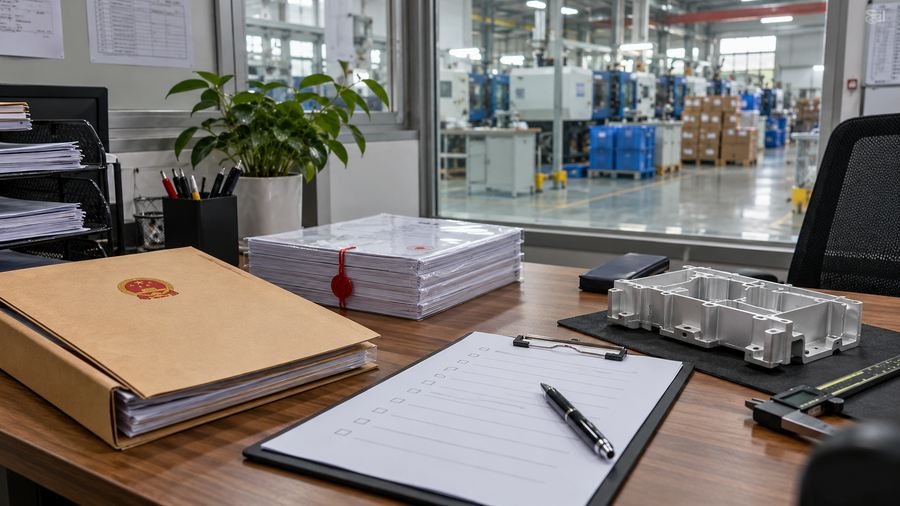
Imagine a small homeware brand ordering its first custom storage boxes. The agent promises to handle everything, including quality control. The shipment arrives with thinner plastic than the approved sample. Then comes the awkward explanation: “Our QC service covers photos and quantity checks.”

This is a hypothetical example, but the gap is easy to see. Both sides agreed to “QC.” They never agreed on what that meant.
A useful China sourcing agent agreement turns promises into specific duties, approval rights, records, and remedies. It should also explain how you leave the relationship without losing access to unfinished orders or your tooling.
Use this guide to prepare your negotiation. Have a lawyer familiar with the relevant jurisdictions review the final documents before signing.
First, Separate the Agent’s Job From the Factory’s Promise
Buying agent, reseller, or manufacturer?
Start with the transaction, not the business card.
A buying agent may find suppliers and manage orders on your behalf. A trading company may buy goods and resell them to you. A manufacturer may produce the goods itself. One business can perform different roles on different orders.
Ask who signs the factory purchase contract, who invoices you for the goods, and who owes you the product warranty. If the agent purchases in its own name, clarify your access to supplier claims and supporting documents.
Why one agreement may not cover the whole order
Your agent can promise to arrange an inspection. That promise does not, by itself, make the factory agree to repair defective products.
| Document | What it should establish | What to check |
| Agent services agreement | Tasks, fees, authority, reporting, and service responsibility | Which legal entity performs the work? |
| Factory purchase contract | Goods, specifications, delivery, payment, and product remedies | Who can enforce the factory’s obligations? |
| Inspection instructions | Checks, sampling, reporting, and release conditions | Does the inspector have the current specifications? |
| Shipping arrangement | Transport scope, documents, insurance, and claims handling | Who contracts with the carrier or forwarder? |
Keep these documents consistent. A buyer’s balance-payment condition is of limited practical use if the factory contract requires payment earlier.
For recurring dropshipping, add an order-level service schedule covering dispatch, inventory updates, returns, and customer-data access. Bulk procurement terms alone will not explain those daily tasks.
Put Identity, Authority, and Scope in the Sourcing Agreement

Match the legal entity, signatory, and payment recipient
Record the agent’s registered name, address, registration identifier, and authorized signatory. For a mainland Chinese company, retain its Chinese legal name rather than relying only on an English trading name.
Check the proposed contract entity against current registration information. Apply the same discipline when you match the supplier’s business license details with its invoice and other order records.
An invoice from one company and a payment request from another need an explanation. They may reflect a legitimate arrangement, but document the relationship and who remains responsible.
A company chop is part of the signing evidence. It is not a substitute for checking the entity and the person’s authority.
List the tasks and decisions the agent may make
“Full sourcing support” sounds helpful. It leaves plenty of room for disagreement.
Attach a scope of work covering the supplier search, quotation comparison, samples, production follow-up, inspection coordination, and warehouse handoff. For each stage, name the output and due date. Also list exclusions, such as laboratory testing or factory travel charged separately.
You can map the sourcing process from brief to bulk order before turning those stages into contractual deliverables.
Then set approval limits. Can the agent place an order, increase quantities, change a component, pay a deposit, or release a shipment? Each decision needs an owner.
For discussion with counsel, an operational instruction might read:
The agent must obtain approval from [named buyer representative] through [agreed channel] before changing the approved supplier, material specification, quantity, or purchase price.
This illustrates the detail needed; it is not a complete legal clause.
Specify response deadlines and what happens while approval is pending. Do not let an unanswered chat quietly become permission to spend more. Agree how urgent issues are escalated, how subcontractors are approved, and how extra work is priced.
Finally, require a usable reporting format. A weekly order-status sheet with blockers and decisions needed is more useful than “production is going well.”
Define Fees Before You Authorize a Payment

Set the commission base, earning milestone, and refund treatment
A percentage is only half a price. The other half is the amount it applies to.
Consider a hypothetical order with $20,000 in goods and $3,000 in freight:
| Calculation | Agent fee |
| 5% of goods value only | $1,000 |
| 5% of goods plus freight | $1,150 |
| Difference caused by the fee base | $150 |
Neither calculation is an industry rule. The point is to agree which one applies before money moves.
Define the treatment of freight, taxes, samples, tooling, discounts, refunds, and canceled quantities. State the currency, exchange-rate source, minimum fee, and any bank charges. If you are comparing proposals, first compare sourcing agent fee models on the same scope.
Separate three events: when a fee is earned, when it becomes payable, and when it can be refunded or credited. A supplier-search milestone may be complete before an order exists. A production-management fee may relate to later work.
Ask what happens if the factory rejects the order, the buyer changes the brief, or the agent fails to deliver an agreed service. A single “all fees non-refundable” sentence deserves closer review.
Disclose rebates, markups, and related-party suppliers
Discuss every source of compensation that could affect the recommendation: buyer fees, supplier rebates, referral payments, freight margins, and related-company profits.
If you expect an open-book agency service, specify which original quotations, invoices, and credits you can inspect. Define whether supplier discounts pass through to you or are shared under an agreed formula.
A reseller’s bundled price is a different commercial model. The problem is buying one model while being told you are getting another.
Control purchase funds and bank-detail changes
Keep service fees distinguishable from money advanced for supplier payments. Require an order-level ledger showing receipts, authorized transfers, refunds, and the remaining balance.
Set a deadline for returning unused funds and providing payment evidence. Discuss whether funds may be used for other orders and what protection actually exists if the agent becomes insolvent. Separate bookkeeping alone does not create regulated escrow protection.
Bank-account changes need their own verification process. Confirm them through a previously verified contact channel and require approval from a named buyer representative. A convincing email attachment should not be enough to redirect a deposit.

Keep Supplier Access and Product Changes Under Control
Agree when the agent will disclose the actual manufacturer, production address, and relevant contacts. If direct factory communication matters to your business, make that part of the service you are buying.
Some agents protect supplier introductions through confidentiality or non-circumvention terms. Discuss the specific suppliers, products, activities, duration, and any continuing commission. An introduction to one factory should not quietly become an unlimited claim over every future purchase.
Require disclosure of ownership links or other material conflicts involving recommended suppliers. Also identify what happens if a factory subcontracts production.
For product changes, build a simple approval trail. The request should explain the proposed change, reason, cost, timing, and effect on testing or performance. The buyer approves the revised reference before production proceeds.
In our storage-box example, “similar plastic” would not be enough. The updated resin grade, wall thickness, and sample would need review.
Keep quotations, revisions, approvals, and factory acknowledgments together. Name the file versions in the purchase order. Otherwise, your team may approve one drawing while the factory works from an older chat attachment.
Make Quality Requirements Measurable—and Failures Actionable

Attach specifications, approved samples, and the test plan
“Good quality” gives an inspector very little to work with.
Use an agreed specification sheet with model numbers, dimensions, tolerances, materials, functions, packaging, and labeling. Where needed, attach a bill of materials, drawings, artwork, and approved sample references.
Different products need different evidence:
| Product or industry | Useful specification details | Questions for the inspection plan |
| Apparel | Fabric composition, measurements, stitching, color references | Which sizes and seams are checked, and by what method? |
| Plastic or metal homeware | Material grade, thickness, dimensions, finish | How are substitutions and dimensional failures detected? |
| Electronics | Approved components, functions, power requirements, labels | Which functional checks and safety-test records are required? |
| Beauty packaging | Contact materials, closures, fill compatibility, decoration | Who arranges leak and compatibility testing? |
Identify applicable destination-market requirements and the party responsible for obtaining the necessary evidence. A document called “certificate” is not enough; its product, model, issuer, scope, and validity need review.
Set a document priority rule for conflicts between drawings, specifications, and samples. A sample is a useful reference, but it may not reveal the internal material or long-term performance you require.
Distinguish photos, inspection, testing, and acceptance
Photos can show visible condition. An inspection checks an agreed scope. Laboratory testing addresses specified properties under defined methods. These are different services.
If sampling is used, agree the plan, lot definition, defect categories, and acceptance criteria. Avoid treating one AQL setting as suitable for every product. Sampling also does not certify that every unit is defect-free.
Define who receives the full report and who may authorize release. Before you arrange product quality control in China, share the approved specifications and required evidence, not just a product photo.
What happens after a failed inspection?
Agree a sequence: notify the buyer, hold the affected goods, document the failure, obtain a corrective-action proposal, and arrange any approved reinspection.
Specify deadlines and responsibility for sorting, rework, replacement, storage, and repeat checks. Make sure the factory accepts its own obligations in the relevant purchase contract. The agent cannot create those obligations merely by promising to “handle the problem.”
Keep pre-shipment release separate from the treatment of latent defects, warranty claims, and product-safety issues. Define later notification and evidence requirements too.
An agent missing an agreed check is one question. A factory supplying defective goods is another. The agreement should explain the agent’s duty to perform or coordinate checks and assist with claims, alongside any expressly agreed product guarantee.

Protect Designs, Confidential Information, and Buyer-Funded Tooling
Paying for development does not answer every ownership question. Discuss existing designs, newly created drawings, improvements, brand assets, production files, and the rights needed to manufacture elsewhere.
Set permitted uses and disclosure limits. Identify which employees, factories, and subcontractors may receive confidential information, and what commitments they must make before access.
An NDA or NNN agreement can form part of the document set. The label alone does not determine whether it fits your transaction.
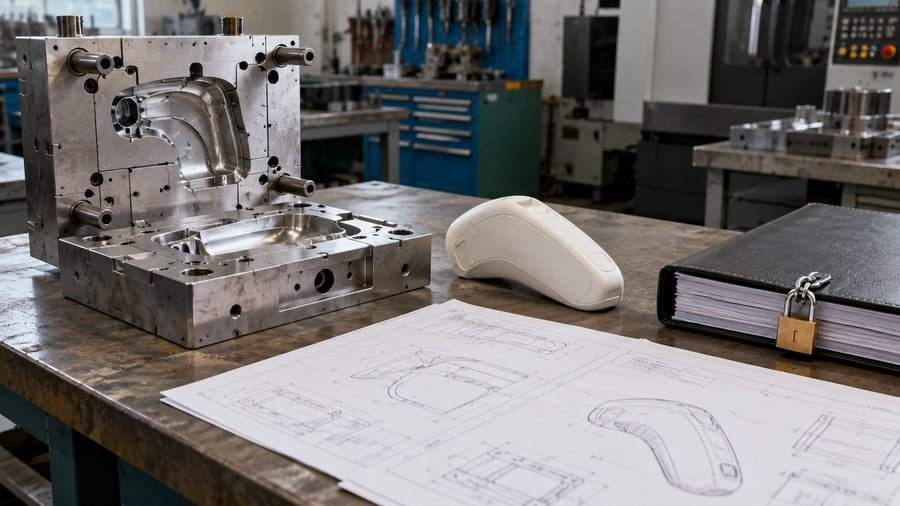
Tooling needs a practical inventory. Record mold identifiers, photographs, location, ownership arrangements, permitted users, maintenance duties, and release conditions. Agree who pays packing and transport costs when tooling moves.
Here is the awkward bit: a promise from the agent may be difficult to carry out if a separate factory physically holds the mold and disputes the buyer’s rights. Obtain appropriate acknowledgments from the actual holder and align them with the factory contract.
Also ask for usable digital files. A PDF preview is not the same as an editable manufacturing drawing. Define file formats, delivery timing, access rights, and what happens to retained copies after the relationship ends.
Clarify Shipping Approval and Disruption Procedures
“Delivery in 30 days” needs a starting event and a destination. Does it mean production finished, cargo handed to a carrier, or goods received at your warehouse?
Identify who approves the route, books transport, checks documents, arranges insurance, and handles claims. Before approving a service, choose a shipping line for the product and destination rather than relying only on the lowest quote.
Where relevant, specify the chosen trade term, named place, and version. ICC’s introduction to Incoterms® 2020 explains their role in allocating delivery responsibilities, risks, and costs. They do not determine ownership of the goods or replace payment and quality clauses.
For delays and disruption, agree notice deadlines, evidence, mitigation, and approval of alternatives. A force-majeure clause should be reviewed alongside payment, suspension, and termination provisions, rather than used as a general excuse for any missed date.
Check Liability Limits and How a Dispute Would Actually Be Handled
Read the liability section against the amounts at risk. If the agent handles a large purchase deposit but limits every claim to a small service fee, understand that gap before accepting it.
Discuss the cap’s calculation, covered losses, exceptions, claim procedures, and insurance. Clarify whether correcting the service is the only remedy or whether other remedies remain available. Do not assume a written damages amount guarantees collection.
China’s Civil Code provisions on entrustment contracts provide relevant context when Chinese law and that contract classification apply. Article 929 addresses losses caused by an agent’s fault under a paid entrustment contract and losses from acting beyond authority. Article 933 addresses termination and potential compensation. These provisions are reasons to review the transaction carefully, rather than assume the contract’s label settles liability.
Have counsel distinguish the governing law from the dispute forum. If arbitration is selected, review the institution, rules, seat, language, and number of arbitrators. If court proceedings are selected, review jurisdiction and service arrangements.
Neither route is automatically best. Consider the likely dispute value, evidence, counterparties, and location of assets. Align related contracts where appropriate so you do not create avoidable procedural conflicts.
Keep signed documents, approvals, invoices, reports, and payment records in an accessible archive. Good evidence starts during normal operations, long before anyone mentions a claim.

Plan the Exit Before the First Purchase Order
An exit clause should explain both how the relationship ends and how work continues safely during the handover.
Distinguish termination for breach from termination for convenience. Address notice, any opportunity to correct a breach, outstanding fees, refunds, and compensation questions under the applicable law. As the Civil Code provisions above illustrate, a right to end a relationship does not necessarily mean a cost-free exit.
Then work through the unfinished business:
-
Identify open purchase orders and who will manage each one.
-
Reconcile deposits, unused funds, credits, and unpaid invoices.
-
Transfer agreed supplier records, specifications, inspection reports, and files.
-
Arrange release of buyer-owned inventory, samples, and tooling.
-
Remove unnecessary system access while preserving required records.
Assign a handover owner and deadline to each item. Specify any agreed transition fee rather than leaving it for an emergency negotiation.
Terminating the agent does not automatically cancel factory orders. Check who contracted with each factory and whether assignment, consent, continued management, or a separate cancellation agreement is needed.
Define which obligations survive, including confidentiality, existing claims, and any narrowly agreed commission on introduced business. A clear ending makes the working relationship easier too: neither side has to guess what happens next.
Gather These Documents Before You Sign
Bring the whole file set to the review. Reading the agent agreement alone can hide conflicting terms elsewhere.
| Document or schedule | Question it should answer |
| Entity and authorization records | Who signs and receives money? |
| Scope and fee schedule | What work is included, and when is payment earned? |
| Specifications and inspection plan | What counts as conforming goods? |
| Approval and payment matrix | Who may commit funds or approve changes? |
| IP and tooling register | What assets must remain under buyer control? |
| Factory contracts and open-order list | Who owes the product obligations? |
| Exit and handover schedule | What moves, to whom, and by when? |
Mark missing documents and unresolved points before signature. Keep one final version accessible to everyone managing the order.
Conclusion
A China sourcing agent agreement works best when it matches how your orders actually run. Identify the parties, limit spending authority, define fees, and turn quality promises into measurable work. Make supplier access, tooling, and unfinished orders part of the conversation early.
Before signing, ask three questions: What must the agent deliver? What evidence will show it happened? What happens if it does not?
Resolve the commercial details with the agent, then have the legal wording reviewed. That gives your team a clearer basis for making decisions when an order gets complicated.
FAQs
Do I need a written agreement with a China sourcing agent?
A written agreement is useful when money, supplier access, custom products, or ongoing work are involved. It records scope and approval rights. The appropriate form depends on the transaction; do not leave important obligations scattered across informal messages.
Is a sourcing agent agreement the same as a purchase contract?
No. The agent agreement addresses services, fees, and authority. The purchase contract addresses the goods and seller’s obligations. If the agent also sells you the products, clearly identify that role and the responsibilities attached to it.
Can the agreement be in English?
An English-language document is not automatically ineffective. Consider the parties, governing law, forum, and translation needs. If you use two languages, have both versions reviewed and specify how inconsistencies will be handled rather than trusting automatic translation.
Does a company chop guarantee that the contract is valid?
No. Check the legal entity, signing authority, and surrounding circumstances as well. A seal image does not establish all those facts. Have counsel advise on the appropriate execution method and preserve the signed version and supporting authorization records.
Should I pay the factory directly or through the agent?
That depends on the purchasing arrangement. Direct payment may improve visibility, while an agent may manage authorized local payments. Either way, verify the beneficiary, contractual obligations, approval process, and evidence showing where the money went.
When should a sourcing agent earn its commission?
Agree a milestone that matches the service. Supplier research, order placement, and production management involve different work. Specify when the fee is earned, when it is payable, and what happens if an order is canceled or the service fails.
Can an agent receive both my fee and a factory rebate?
Ask for disclosure and a clear contractual treatment before accepting the arrangement. Whether it is permitted depends on the facts, applicable law, and agreement. Consider how the incentive affects recommendations, and clarify whether credits should pass to you.
Can I require the agent to disclose the factory?
You can negotiate disclosure and access as conditions of the engagement. State when information is provided and how it may be used. A reseller may offer different access from a buyer-side agent, so establish the model before paying.
Is the agent responsible if an inspection misses defects?
Responsibility depends on the agreed work, how it was performed, the cause of loss, and applicable law. Missing a required check differs from a defect outside the inspection scope. Specify reporting duties, sampling limits, and any additional guarantee.
Who pays for reinspection after a failed batch?
Allocate that cost in advance and obtain agreement from the party expected to pay. Address rework, sorting, storage, and repeat inspection separately. An agent’s promise to request reimbursement does not establish that the factory has accepted the charge.
Can I withhold the balance after a failed inspection?
Review the agreed payment conditions and applicable law first. If payment depends on passing defined checks, preserve the report and follow the notice procedure. Do not assume every defect automatically permits withholding any amount for an unlimited period.
Does paying for a mold automatically give me control of it?
Payment alone does not settle every ownership or access issue. Document ownership, permitted use, location, maintenance, and release conditions. Obtain appropriate confirmation from the party holding the mold, and identify any separate dispute over unpaid manufacturing charges.
Can I work directly with the factory after leaving the agent?
Review confidentiality, non-circumvention, exclusivity, and continuing-commission terms. Their wording and enforceability matter. Negotiate specific suppliers, activities, and time limits before signing, including treatment of factories you already knew independently and orders placed after termination.
What happens to open orders when I terminate the agent?
They need a separate transition plan. Identify the contracting buyer, deposits, production status, and remaining obligations for each order. Ending the service relationship does not itself transfer contracts, recover deposits, or cancel a factory’s accepted purchase order.
Should disputes go to a Chinese court or arbitration?
There is no universal choice. Consider the governing law, parties, assets, claim value, evidence, and enforcement route. Ask counsel to draft a coherent provision for your transaction rather than combining incompatible clauses copied from unrelated contracts.
Table of Content

I’m Cassiel. I’ll help you scale your Shopify business with reliable fulfillment.
Join to newsletter.
Follow us and get more knowledge.