
The sample looks good. The factory video shows a tidy production floor. Your contact says 3,000 custom storage boxes will be ready before the holiday rush. So, is it time to pay the deposit?

Maybe. But imagine discovering later that another workshop prints the boxes, the factory’s packing line is already booked, and nobody has a record of which plastic grade went into the sample. This is a hypothetical situation, yet it shows why a nice sample and a busy-looking workshop answer different questions.
A supplier audit helps you test the production story before you depend on it. The useful result is not a certificate-shaped pat on the back. It is a dated set of observations that helps you decide: proceed, require changes, or pause.
This checklist walks through legal identity, real production capacity, quality controls, and social compliance. It also shows what evidence to save and what to do when a finding is serious.
What a Supplier Audit Can—and Cannot—Tell You
A supplier audit examines a site, its processes, people, and records against a defined scope. It is usually performed before a first substantial order, a new product, or a major change in risk. You might send your own qualified team or commission an independent auditor.
A supplier questionnaire and public-record search come earlier. They help you build a shortlist. If you are still at that stage, first verify a China manufacturer beyond marketplace badges. An inspection of finished goods comes later and checks a particular order. Product testing answers yet another question, such as whether a material or design meets a specified requirement.
| Activity | Main question | Typical evidence | What remains open |
| Desk verification | Who is the company, and what does it claim? | Registration records, licenses, documents, references | Whether the site works as described today |
| Factory audit | Can this site perform the scoped work reliably and responsibly? | Walkthrough, interviews, sampled records, observed controls | How a future batch will turn out |
| Product test | Does a defined sample meet a defined test? | Laboratory report tied to a model and method | Whether every shipped unit matches the sample |
| Pre-shipment inspection | Does a sampled finished lot meet order criteria? | Photos, counts, measurements, defect results | Factory-wide systems and untested units |
The key word is scoped. An audit of a factory’s sewing lines does not approve an outside print shop. A clean report from last year cannot prove this month’s line has room for your order.
Use an audit alongside samples, contract terms, production follow-up, and a plan to inspect actual goods. No one visit can do all those jobs.
Build the Audit Brief Before Anyone Visits the Factory
A general instruction such as “check if they’re reliable” gives an auditor little to test. Define the decision first. Are you deciding whether to pay a deposit, approve a new material, or move a repeat order to a different site?
Describe the product and the risk
Provide a product brief with the target market, intended use, order quantity by SKU, approved drawings or sample references, key materials, labeling, and requested delivery date. Flag any process that matters especially much: food-contact surfaces, electronics assembly, color matching, printing, or custom tooling.
If the brief is still loose, plan sourcing from brief to bulk order before using the audit as a go/no-go gate. The auditor needs something concrete to compare with what the factory actually does.
Set the audited entity, exact site, and permitted access. Can the auditor review order records, take photos, speak privately with workers, and visit subcontractors? A factory may have legitimate confidentiality concerns. Resolve them in advance. Record any area or record that remains out of scope.
Request a document pack
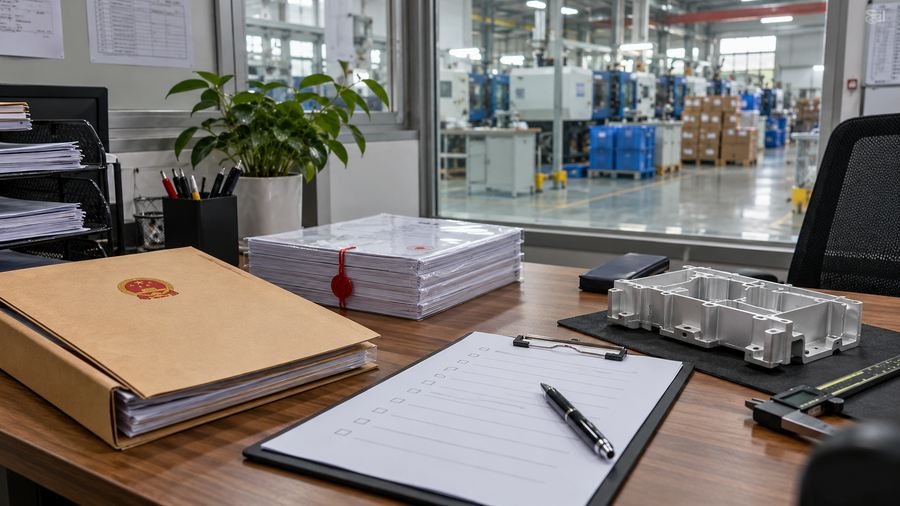
Ask for copies before the visit, then compare them with source records and on-site practice. A sensible starting pack includes the company business license, site address, ownership or occupancy explanation, manufacturing flow, machine list, maintenance logs, production plan, sample specifications, quality procedures, selected inspection records, material suppliers, and subcontractor list.
For social and site risks, request relevant safety and training records, incident logs, working-time and pay records suitable for lawful review, and any applicable permits or prior assessment reports. Use privacy safeguards. You rarely need a buyer-facing dump of individual employee personal data.
Missing evidence is a finding. Mark it “not verified,” note who withheld it and why, and set a follow-up date. Do not quietly turn an inaccessible record into a ticked box.
Legal Checks: Match the Company to the Actual Production Site
Trace the legal and payment identities
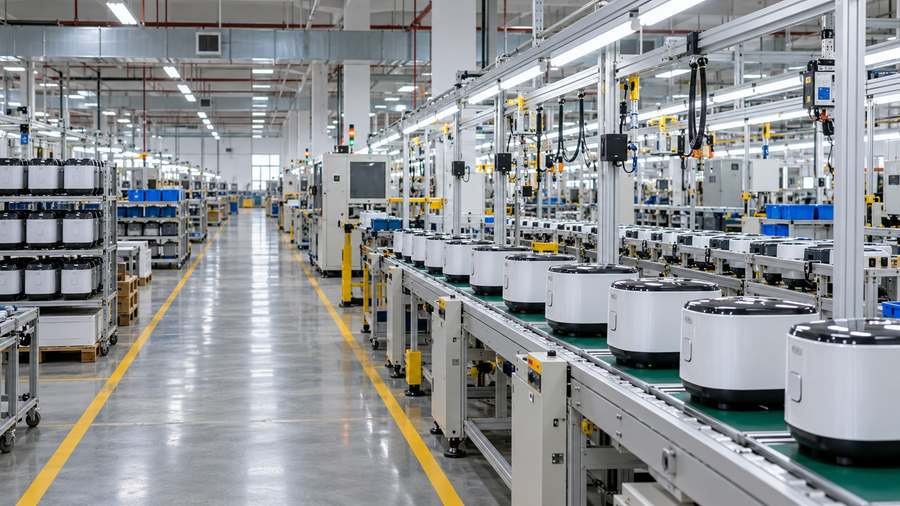
Record the supplier’s full registered Chinese name and Unified Social Credit Code. Compare them with current registration information, the quotation, sales contract, invoice issuer, and bank beneficiary. For field-by-field help, match the fields on a Chinese business license.
Next, stand at the actual facility. Record its address, signage, site contact, and relationship to the company selling you the goods. The registered office and production address can legitimately differ. The question is whether the relationship is documented and the responsibilities are clear.
| Role | Identity to record | Evidence to reconcile |
| Seller | Entity signing your purchase agreement | Registration, contract, invoice |
| Production site | Company controlling the relevant lines | Address, site records, equipment and staffing |
| Outside processor | Site doing a critical process | Name, location, approval and quality controls |
| Exporter | Entity arranging export, if separate | Commercial explanation and shipment documents |
| Payment beneficiary | Account receiving your funds | Bank details and link to the contracting entity |
A trading company can coordinate a capable factory. A factory can use an export affiliate. Neither arrangement is automatically disqualifying. Hidden or shifting identities are the concern. If a new beneficiary appears just before payment, stop and verify the change through an established contact channel.
Check claims against the right site and product
Review certificates and permits relevant to your product and the factory’s processes. Ask what document is required, who issued it, what legal entity and site it covers, its scope, and its current status. A certificate issued to a sister company at another address may tell you little about the line in front of you.
A manufacturing activity listed in a business scope supports the company’s story; it does not prove that a particular machine or workforce exists. Likewise, registered capital is not cash reserved for your order.
Use independent issuer or accreditation routes where available. The IAF explanation of CertSearch describes one way to validate accredited management-system certification. A valid certificate still needs a site-and-scope check, and it does not certify your product.
Where the product or process requires specialized authorization, ask a qualified adviser to confirm the applicable requirement. The audit report should not declare every permit “valid” merely because someone showed a folder.
Capacity Checks: Follow the Bottleneck, Not the Sales Pitch
A headline such as “100,000 units per month” is only a claim until you know what product, line, and workload it refers to.
Walk one product through every stage
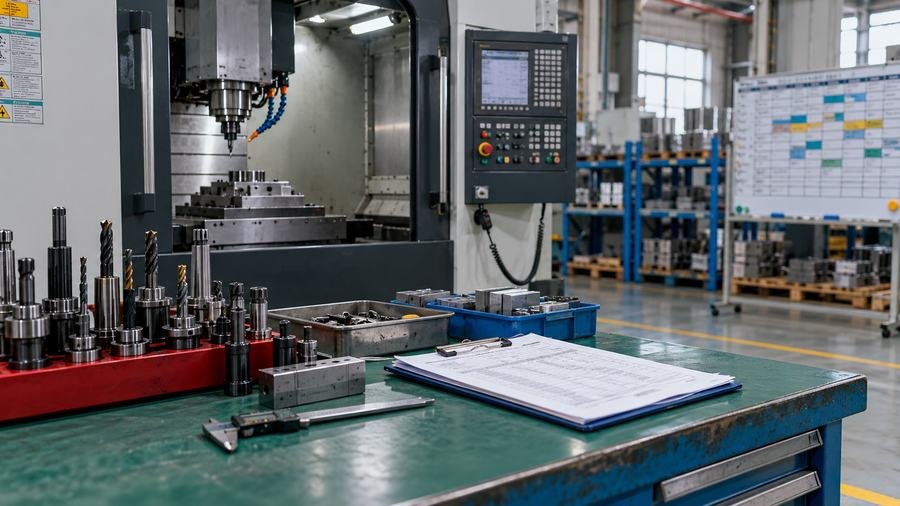
Follow the route from incoming material to packed carton. Note which steps happen here, which are performed elsewhere, and which piece of equipment limits output. Look at the work instructions for a similar product while the line is running. Ask operators and supervisors how they handle a rejected part or changeover.
For a printed storage box, molding may be quick while a shared decoration line or custom packaging supplier becomes the choke point. That matters more than a photo of ten molding machines.
Check the machine list against equipment present and operational. Review maintenance logs, known downtime, tooling condition, spare parts, and the people trained to run the process. An idle machine can be an available resource. It can also be broken. Ask.
Calculate capacity available to your order
Request recent output for comparable products, current order commitments, planned shifts, changeover times, expected yield, and material lead times. Speak with the production planner, not only the sales contact.
Here is a hypothetical calculation. A line runs eight hours a day for 20 days. Its bottleneck stage produces 25 good units an hour, giving a theoretical 4,000 good units in the month. If existing orders reserve 2,800 units, the apparent remainder is 1,200. A promised 3,000-unit order needs a credible plan: another line, more days, changed priorities, or approved outsourcing. The numbers are an example, not a benchmark for plastic products.
Ask to see the schedule supporting that plan. If overtime is the only explanation, check the effect on staffing, quality, and worker welfare. A capacity solution that creates a social or defect problem is not much of a solution.
Map subcontracting without treating every outside process as suspicious. Many suppliers outsource coating, embroidery, heat treatment, testing, or packaging. The audit needs the outside site’s identity, selection method, specifications, acceptance checks, and approval rights. If the outsourced step is critical, extend the assessment to that site.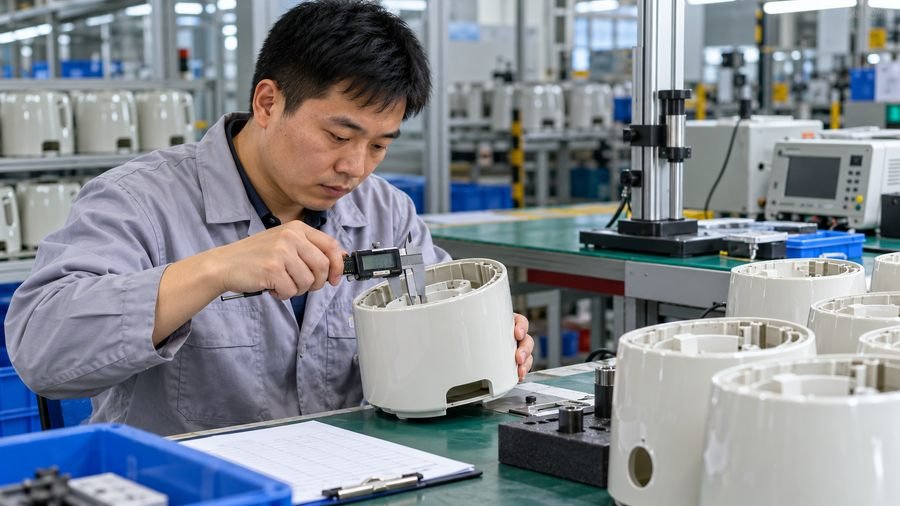
Quality Checks: Ask to See the System Work
A quality manual looks reassuring. The interesting question is whether real people follow it when a delivery date gets tight.
Incoming materials and controlled instructions
Pick a recent material receipt and trace it to its supplier, specification, incoming check, storage location, and production order. Are unapproved materials visibly separated? Can staff tell a rejected lot from an accepted one?
Compare the work instruction on the line with the current drawing or approved sample. Ask how updates reach operators and outside processors. A good system records changes; it does not leave the newest version in one salesperson’s chat history.
In-process controls, measurement, and rejects
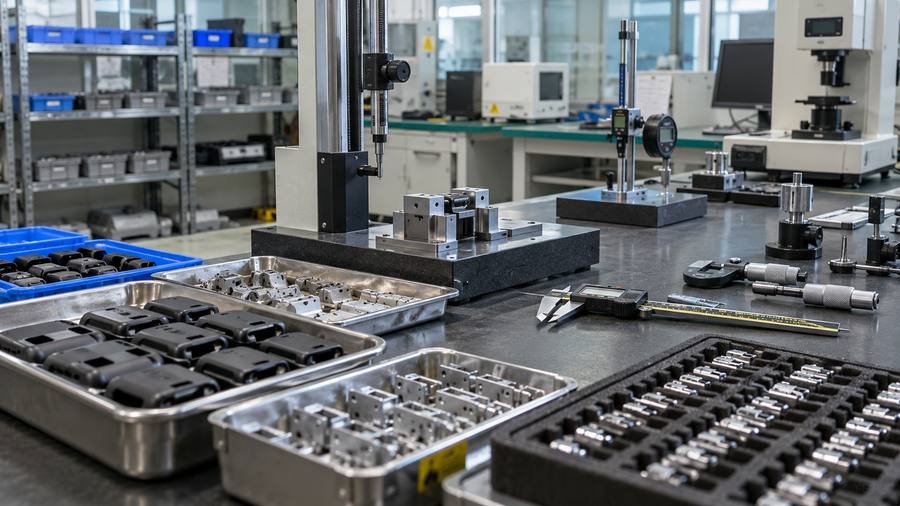
Observe a check in action. Who measures the dimension or tests the function, with which instrument, and at what frequency? Is the device identified and maintained or calibrated as appropriate? Does the record match the date, shift, product, and actual reading?
Choose a nonconforming item. Follow what happens next: identification, segregation, disposition, rework approval, and reinspection. If a rejected carton can slide back into finished stock without a trace, the written procedure has a hole in it.
Ask for examples of past customer complaints and corrective actions. A useful corrective action explains the cause, owner, deadline, fix, and evidence that the fix worked. “We trained staff” may be part of the response. On its own, it says little about whether the error will recur.
Traceability from lot to shipment
Test one direction: choose a finished carton and find the material lot and production record behind it. Then reverse the exercise: choose a questionable material lot and ask which finished goods could contain it.
The needed detail varies by product. Cosmetics packaging, electronics, apparel, and low-risk decorative items do not need identical traceability systems. The question is whether this factory can identify and contain a relevant problem at a useful level.
ISO 19011:2026 provides current guidance for auditing management systems. It is guidance on how to conduct audits, not a product certificate. Even an ISO 9001 certificate is only one piece of evidence; examine its scope, site, issuer, and actual process records.
Finally, agree a separate plan to arrange product quality control in China on the production run. A supplier audit assesses the operation. It cannot tell you that next month’s finished lot meets every specification.
Social Compliance: Go Beyond a Clean Factory Tour
Social compliance needs its own scope. A technical audit of machines and process control may give worker conditions only a quick glance. Do not claim a site is free of labor abuse because the visitor saw tidy floors and smiling staff.
Safety, working conditions, and worker voice
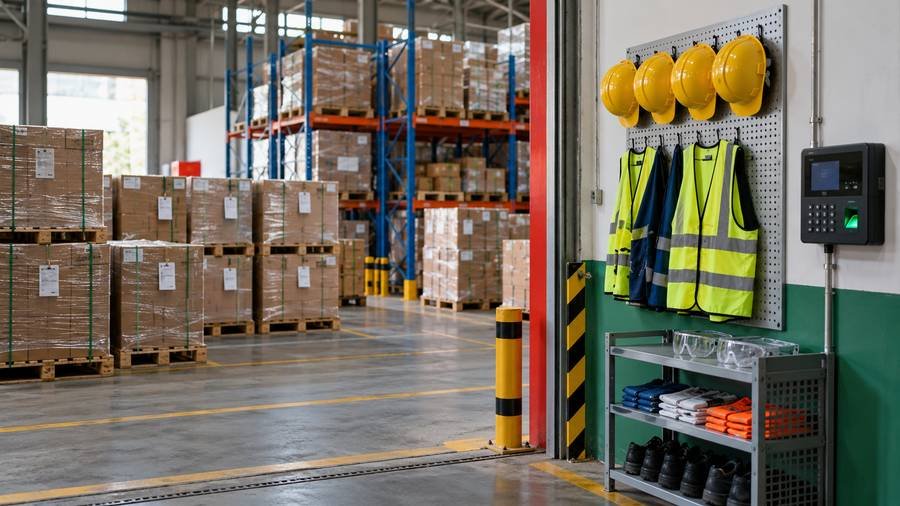
Check whether exits are usable, evacuation routes are clear, fire equipment is maintained, and drills are documented. Observe machine guards, protective equipment, chemical storage, ventilation, and training where those risks apply. Record a blocked exit as a concrete finding, with location and photograph where permission allows.
Review how the site records working hours, pay, recruitment, complaints, injuries, and corrective action. Include temporary or agency workers in the scope where relevant. Worker interviews should be conducted by trained auditors with privacy and anti-retaliation safeguards, not as a public conversation beside a supervisor.
Compare records with observations. If production logs indicate late shifts while the time records show none, investigate the mismatch. One inconsistency calls for more evidence. It is not a license to accuse a factory without checking.
Know when a dedicated ethical audit is required
Ask what your customer, retailer, or buying policy actually requires. A short capability audit does not replace a formal social assessment where one is specified.
Sedex explains that a full SMETA audit examines health and safety, labor, environment, and business ethics. Sedex also says membership and SMETA audits are not certifications and its methodology does not issue a simple pass/fail result. Read the site-specific findings and corrective actions, not a screenshot called a “SMETA certificate.”
Environmental checks depend on the process. A fabric dye house, plating operation, electronics assembler, and simple packing site have different waste, chemicals, emissions, and permit issues. Identify the applicable requirements and review the relevant evidence with appropriate expertise.
A serious worker-safety or labor concern should be escalated promptly and handled with care for affected people. A neat overall score cannot erase it.

Adapt the Checklist to the Product and Destination
Use the same four audit domains, then add the hazards that matter to the actual product and market.
| Example category | Extra production evidence to examine | Possible follow-up |
| Apparel | Fabric and trim control, measurement checks, needle management, outside printing or embroidery | Verify size set, color, and relevant retailer requirements |
| Consumer electronics | Component provenance, assembly instructions, functional testing, rework tracking | Confirm market-specific safety and labeling evidence |
| Beauty packaging | Contact materials, closure fit, decoration, cleaning, leak checks | Arrange suitable compatibility or migration assessment where required |
| Metal or plastic homeware | Material grade, mold or tooling condition, dimensions, coating or finish | Tie test results to the exact model and destination |
A test report for a similar model is not automatically evidence for yours. Ask whether the product, material, configuration, laboratory method, date, and intended destination match.
Likewise, do not make every auditor a product-law expert by putting “compliant” on a generic form. When the item is regulated or safety-sensitive, commission the right technical review and testing alongside the factory audit.
Run the Visit and Preserve Evidence
Give the auditor a brief with the site, product, scope, documents to sample, access rights, confidentiality rules, and reporting format. State whether the visit is announced, what can be photographed, and who receives the report. Ensure the auditor can work independently enough to record unwelcome findings.
A practical visit follows the product path: opening discussion, production floor, materials and warehouse, quality records, workforce and safety review, and a closing discussion. The order may change if the line is operating only at certain hours.
Every finding should have a traceable reference. Write “Line B, exit beside packing, obstructed by three cartons at 10:20” rather than “fire safety poor.” Record a document name, sample date, photograph number, or interview method as appropriate. Protect confidential and personal information.
| Field in the audit report | What to record |
| Criterion | The agreed requirement or question |
| Observation | What the auditor saw or could not verify |
| Evidence | Record ID, photograph, observation time, or sampled item |
| Limitation | Restricted area, missing records, or unavailable personnel |
| Severity and action | Business consequence, owner, due date, and retest method |
Remote document review and a live video call can resolve some questions. They may miss equipment condition, confidential records, worker voices, or an unshown subcontractor. Choose the method around the risk. A first large custom order may deserve a site visit even if the video tour looked pretty convincing.
Turn Findings Into an Approval Decision
A total score is helpful for comparison, but it should never let several easy passes cancel one severe issue. Decide in advance which findings block a deposit or production release.
| Decision | Typical situation | Next action |
| Pause | Legal identity unresolved, critical process inaccessible, serious safety concern, or capacity claim unsupported | Resolve facts and risks before committing funds |
| Conditional approval | Specific fixable gap with an owner and measurable proof | Set deadline; verify correction before the defined gate |
| Proceed with controls | Scoped evidence supports a trial or order, with remaining normal production risk | Approve the next stage, then sample and inspect goods |
A corrective action plan should name the finding, root cause, immediate containment, lasting fix, owner, due date, and proof of effectiveness. Verify the fix in the way the risk demands. A new form may close a minor documentation gap; a changed production process may need observation and a trial run.
Take findings into the purchase agreement and production plan. If an outside coating operation requires approval, name it. If a material mix-up is plausible, specify batch identification and checks. If capacity is conditional on a second line, document that commitment and the date it must be ready. A China product sourcing partner can help coordinate those next steps when your team does not have someone on the ground.
Revisit a supplier when the site, ownership, critical process, order volume, or risk profile changes. A fixed annual schedule can help some programs, but it cannot replace judgment after a serious incident.
Conclusion
A useful supplier audit does four jobs: confirms who and where the supplier is, tests available capacity, observes quality controls in action, and investigates people and site risks with the right scope. Its value lives in the evidence and the next decision.
Walk away from a tidy report with a precise plan: what is approved, what needs proof, who must fix a gap, and which checks still belong to the trial order or finished goods. That’s a better outcome than a reassuring score with no one assigned to act on it.
FAQs
What should a China supplier audit include?
Cover legal and site identity, capacity for your product, quality controls, and relevant worker-safety and social risks. Add product-specific checks. Require observations and evidence references, not just yes/no boxes.
Is a factory audit the same as a pre-shipment inspection?
No. An audit evaluates the factory’s scoped systems, people, and capability. A pre-shipment inspection checks a sampled finished lot against order requirements. You may need both for a substantial custom order.
When should I audit a factory in China?
Before a major first commitment is often useful. Reassess when the site, process, ownership, product risk, or order volume changes. Timing should reflect your exposure and customer requirements.
Can I audit a supplier without visiting China?
Yes, for some document and live-video checks. Remote work cannot show everything. Record the access limitations and consider an on-site auditor when capability, worker conditions, or a critical process remains uncertain.
How do I verify the actual production site?
Compare the site address and company relationship with legal documents. Observe the specific production stages, equipment, employees, work instructions, and recent records. Ask which processes occur at other locations.
Does a business license prove a company owns a factory?
No. It helps establish a registered legal entity and stated business activities. You still need evidence linking that entity to the site, equipment, workforce, contractual seller, and actual manufacturing process.
What documents should an auditor ask for?
Start with company records, process flow, equipment and maintenance logs, capacity plans, material controls, quality records, subcontractor information, and relevant safety documents. Tailor the request to your product and the audit’s access scope.
How can I check the factory’s available capacity?
Find the slowest process for your product. Compare recent good output, working time, current commitments, downtime, changeovers, materials, and staffing. Ask the planner to support the promised date with a schedule.
Does an ISO 9001 certificate replace a supplier audit?
No. Check its issuer, status, site, and scope, then see whether procedures work in practice. Certification of a management system is not product testing or a promise that capacity is available.
What if the factory subcontracts part of production?
Identify the outside site and process. Review how the supplier approves, specifies, checks, and traces the work. For a critical step, seek permission to assess that site or obtain other suitable independent evidence.
Does a technical audit cover child labor and worker safety?
Not necessarily. Read the agreed scope. A technical review may look mainly at machines and quality. Labor, recruitment, hours, fire safety, and worker interviews may need a separate social assessment by trained auditors.
Is SMETA a certification or a pass/fail score?
No. Sedex describes SMETA as an audit methodology for examining site conditions and improvement opportunities. Ask for the relevant report, scope, findings, and corrective actions rather than a claimed “SMETA certification.”
How much does a China factory audit cost?
The quote depends on site location, audit days, auditor skills, travel, product complexity, social-assessment scope, and follow-up. Request a written scope and sample report so you can compare like with like.
What happens if the supplier fails an audit?
Classify the findings. Pause for unresolved critical risks. Give fixable issues an owner, deadline, and verification method. A future order should depend on evidence that the necessary correction has worked.
Can a passed factory audit guarantee my next order?
No. The findings apply to a defined site, time, and sample of evidence. Continue with approved specifications, a suitable trial or production follow-up, and inspection or testing of the actual goods.
Table of Content

I’m Cassiel. I’ll help you scale your Shopify business with reliable fulfillment.
Join to newsletter.
Follow us and get more knowledge.