
A €90 parcel travels from Shenzhen to a customer in France. A €9,000 pallet travels from Ningbo to a warehouse in Germany. Both quotes say DDP.
They do not follow the same tax path.

The parcel may involve checkout VAT, IOSS, low-value customs data, and the temporary €3 duty introduced in 2026. The pallet may involve an EU importer, EORI number, conventional TARIC duty, import VAT, and commercial customs records. Same three letters. Very different plumbing.
That is why DDP shipping from China to Europe needs more than a door-to-door price. You must know the destination, transaction model, importer, customs value, VAT route, product rules, and evidence you will receive after clearance.
This guide walks through those decisions without pretending Europe is one tax zone or that every “all-in” shipping line is true DDP.
First, Does “Europe” Mean the European Union?
Usually, the searcher means the EU. Still, a quote to “Europe” is too broad for customs, VAT, or final-mile pricing.
|
Destination group
|
Customs and VAT position
|
What the quote must clarify
|
|
EU member states
|
EU customs framework plus VAT administered through member states
|
Import country, importer/EORI, VAT path, destination rate, final address
|
|
United Kingdom
|
Separate UK customs and VAT system
|
UK importer, VAT treatment, commodity code, delivery terms
|
|
Norway
|
Separate customs/VAT system; VOEC may apply to qualifying ecommerce sales
|
VOEC or import process, value, product, consignee
|
|
Switzerland and Liechtenstein
|
Swiss customs and import VAT framework
|
Importer, tariff treatment, Swiss VAT, delivery charges
|
|
Other European markets
|
Country-specific systems or special arrangements
|
Local customs, tax, product, and representation rules
|
EU rules do not apply simply because a destination is on the European map. IOSS is not a UK system. A German VAT setup does not automatically solve a shipment to Norway. And a DDP rate to Rotterdam tells you very little about a residential address in rural Switzerland.
The rest of this guide focuses on the EU27. For non-EU Europe, use the same verification method but replace the tax and customs rules with the destination’s own framework.
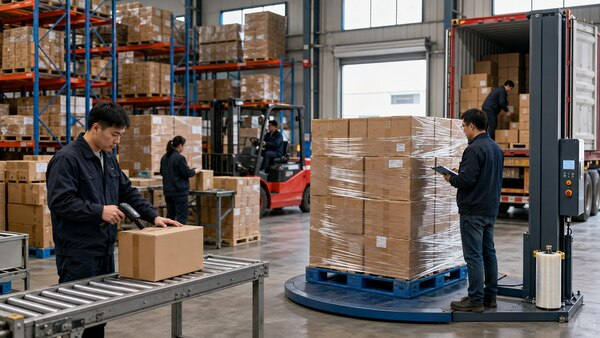
What DDP Shipping From China to Europe Means
DDP stands for Delivered Duty Paid. Under the ICC Incoterms 2020 rules, the seller takes on the broadest delivery obligation.
The seller arranges transport, clears export and import formalities, pays applicable duties and taxes, and delivers the goods to the named destination. Delivery occurs when the import-cleared goods are placed at the buyer’s disposal, ready for unloading. The buyer normally unloads unless the contract says otherwise.
Write the destination precisely:
DDP [full warehouse address, postal code, country], Incoterms® 2020
“DDP Europe” does not identify a customs office, VAT rate, remote area, FBA center, appointment, or unloading need.
For the general responsibility framework, see this guide to DDP shipping from China. The European layer begins when the seller must turn that contractual promise into a lawful EU import.
What DDP Does Not Do
DDP does not:
-
approve a product for sale in the EU;
-
make an incorrect HS code acceptable;
-
give a Chinese seller an automatic right to act as EU importer;
-
guarantee that import VAT can be recovered;
-
include cargo insurance unless agreed;
-
include unloading unless agreed;
-
convert vague “tax included” shipping into a valid customs structure.
Think of the Incoterm as the task list between buyer and seller. EU customs, VAT, and product laws are the rules both sides must work within.
DDP Versus Commercial Shipping Labels
|
Label
|
Possible meaning
|
Evidence to request
|
|
Contractual DDP
|
Seller performs import and delivers duty paid to named place
|
Seller, importer, broker, declaration basis, duties/VAT, delivery proof
|
|
Door-to-door
|
Transport from pickup to destination
|
Whether customs, duty, VAT, and unloading are included
|
|
Tax-inclusive parcel line
|
Logistics rate includes estimated tax handling
|
IOSS/import model, classification, value, payer, customs evidence
|
|
DAP delivery
|
Seller transports to place; buyer clears import and pays import charges
|
Buyer importer setup, broker, EORI, duty/VAT budget
|
Do not fight over the label. Compare the actual work.
Choose the Transaction Path Before Calculating VAT
The first useful question is not “What is the VAT rate?” It is “What kind of transaction is this?”
|
Transaction
|
IOSS relevance
|
Likely customs/VAT focus
|
Main risk
|
|
Bulk B2B import to EU buyer
|
Normally not an IOSS sale
|
Buyer or agreed seller structure imports; conventional duty and import VAT
|
DDP importer arrangement conflicts with buyer records
|
|
Seller-owned stock sent to EU 3PL
|
Not the initial-import solution
|
Seller/local entity imports, then domestic or intra-EU sales follow
|
VAT registrations and stock movement ignored
|
|
Amazon FBA replenishment
|
Not an IOSS solution for the bulk inbound
|
Importer, EORI/VAT, customs, FBA appointment
|
Amazon incorrectly treated as importer
|
|
Direct B2C parcel up to €150
|
Potentially relevant
|
Checkout VAT/IOSS plus temporary customs duty
|
IOSS data missing or €3 duty misunderstood
|
|
Direct B2C parcel above €150
|
IOSS not available for that consignment
|
Conventional import duty/VAT and carrier customs process
|
Customer receives charges despite delivered-price promise
|
|
Excise or restricted goods
|
Ordinary IOSS scope may not apply
|
Product-specific tax, permits, carrier and customs rules
|
Freight route sold before legal eligibility is checked
|
Direct parcels and bulk inventory also create different fulfillment economics. A China 3PL fulfillment service may ship consumer orders internationally or consolidate stock for an EU warehouse. The customs model must match the actual flow, not the marketing name.
The 2026 €3 EU Customs Duty for Low-Value Parcels
This is the part many older guides now miss.
From July 1, 2026, the EU introduced a temporary €3 customs duty on low-value parcels imported from outside the EU, mainly through ecommerce, for goods worth up to €150. The European Commission’s 2026 low-value parcel update gives the controlling public explanation.
It Is Based on Tariff Classification, Not Simple Unit Count
The official example is surprisingly useful:
-
five T-shirts fall under the same tariff classification, so the duty is €3;
-
three T-shirts plus a watch cover two classifications, so the duty is €6.
So “€3 per parcel” is incomplete. “€3 for every physical item” is also incomplete. The operational unit is the tariff-classification category represented in the parcel.
For a store with mixed carts, classification is now part of checkout economics. Product data must connect to the customs declaration. If a phone case, cotton shirt, and watch are all called “accessories,” the problem is not only poor catalog management. It can become a customs problem.
FriendDropshipping’s analysis of the EU low-value parcel customs reform covers the broader operational impact for Shopify and DTC brands.
The €3 Duty Does Not Replace VAT or IOSS
Customs duty and VAT are separate. The temporary duty did not turn IOSS off.
For an eligible sale, VAT may still be charged at checkout and reported through IOSS. The €3 customs duty is declared and paid through the customs process. A DDP provider must account for both without charging the customer again at the door.
This sounds obvious once written down. In real checkout systems, it is more like adding a new pipe behind a finished wall. Product classification, cart composition, tax calculation, shipping price, marketplace responsibility, refunds, and customs data all have to line up.
Pricing and Fulfillment Implications
Low-ticket products feel the change most. A €3 or €6 duty amount can eat a meaningful share of contribution margin. Sellers may need to:
-
update landed-cost rules by tariff category;
-
review whether shipping is embedded in product price or charged separately;
-
prevent artificial splitting designed only to avoid customs rules;
-
compare direct parcels with bulk import to an EU fulfillment center;
-
update refund and rejected-parcel procedures;
-
audit forwarder invoices against actual cart classifications.
The related guide to EU temporary tax reform for dropshipping looks at the store-level pricing and operating response.
VAT Under DDP: Import VAT, Checkout VAT, and IOSS
VAT appears at different stages. Treating every VAT amount as the same thing creates messy records.
Import VAT Versus VAT Charged to the Customer
Import VAT arises when goods enter the EU under the relevant import procedure. Output or sales VAT arises on the sale to the customer. In a conventional bulk import, the importer may pay import VAT and later account for sales VAT. Depending on the member state and setup, postponed accounting or another mechanism may change cash flow.
In an IOSS sale, the seller or deemed supplier charges destination VAT at checkout and reports it through the scheme. With valid IOSS data in the customs declaration, the qualifying consignment can receive import-VAT exemption so the customer is not charged again at the border.
DDP allocates import costs to the seller in the sales contract. It does not by itself issue the correct VAT invoice or decide who may deduct import VAT.
When IOSS Applies
The European Commission’s VAT One Stop Shop guidance describes IOSS as a simplification for distance sales of low-value goods imported from outside the EU in consignments not exceeding €150.
The practical checklist is:
-
a B2C distance sale of imported goods;
-
consignment intrinsic value not above €150;
-
goods not within excluded excise treatment;
-
VAT charged using the customer’s destination rate;
-
seller, intermediary, or deemed-supplier arrangement set up correctly;
-
valid IOSS number transmitted securely in customs data;
-
sale and return records retained.
Do not print the IOSS number on a public commercial invoice. It is sensitive tax data that should travel through the correct electronic declaration channel.
Which VAT Rate Applies?
For consumer sales, destination matters. France, Germany, Spain, Poland, and other member states can have different standard and reduced rates. Product classification matters too. A supplement, children’s book, cosmetic, and electronic device may not share the same treatment.
A giant VAT-rate table looks helpful for a month and stale soon after. Confirm the current destination and product rate when pricing the sale.
Can Import VAT Be Recovered Under DDP?
Maybe, but not simply because someone paid it.
Recovery can depend on the importer named in the customs record, VAT registration, business use, invoice and declaration evidence, representation model, and national practice. Under an opaque DDP line, the buyer may not be importer and may receive no document supporting deduction.
Before booking, decide:
-
which entity imports;
-
whose EORI and VAT registration appear;
-
who receives the customs evidence;
-
how stock moves after import;
-
which party needs a deduction or refund right.
If VAT recovery affects the deal, get destination-specific tax advice. A freight quote is not a tax opinion.
How Customs Duty and Import VAT Are Calculated
The calculation starts long before the forwarder enters a number in a declaration.
Step 1: Classify the Product
The global HS provides the foundation. The EU’s Combined Nomenclature and TARIC add regional detail and measures.
Classification depends on what the product is made from, what it does, how it is presented, and sometimes who will use it. “Kitchen item” is not enough. A stainless-steel vacuum bottle and a plastic food container may follow different headings and duty rates.
Ask the supplier for technical facts, not its favorite low-duty code. The importer or representative needs a defensible classification.
Step 2: Establish Customs Value
Customs value often begins with the transaction price, then applies required additions or adjustments. Transport and insurance to the EU border can matter. So can buyer-supplied molds or materials, royalties, assists, related-party pricing, and proceeds returned to the seller.
The commercial invoice must match the real transaction. DDP does not authorize undervaluation or hiding freight inside a vague product total.
Step 3: Apply Duty Measures
The declared TARIC code, origin, and customs value determine ordinary duty treatment. Preference may require valid origin evidence. Anti-dumping, countervailing, safeguard, excise, or agricultural measures may apply on top of ordinary duty.
For qualifying low-value ecommerce parcels, the temporary 2026 mechanism changes the duty calculation as explained above. Do not apply the €3 method to a commercial pallet simply because some units inside cost less than €150.
Step 4: Build the Import VAT Base
Import VAT is not always invoice price × VAT rate. The taxable base can include customs value, customs duty and certain other charges, plus incidental costs such as transport or insurance to the first destination under the applicable rules.
A provider should show the inputs, not only the final tax number.
Worked Example: Bulk B2B Shipment
This fictional example demonstrates the math. It is not a tariff quote.
|
Input
|
Illustrative amount
|
|
Goods transaction price
|
€10,000
|
|
Freight and insurance included to EU border for this example
|
€1,200
|
|
Illustrative customs value
|
€11,200
|
|
Hypothetical conventional duty rate
|
6.5%
|
|
Illustrative duty
|
€728
|
|
Incidental delivery cost included in VAT base for this example
|
€300
|
|
Illustrative import VAT base
|
€12,228
|
|
Hypothetical VAT rate
|
20%
|
|
Illustrative import VAT
|
€2,445.60
|
The arithmetic is straightforward. Choosing the correct code, valuation treatment, additions, origin, VAT rate, and evidence is the harder part.
Worked Example: Mixed Low-Value Parcel
A €90 parcel contains three T-shirts and one watch. Assume the shirts share one tariff category and the watch falls into another.
The temporary duty is €6: €3 for the shirt category and €3 for the watch category. VAT remains separate and uses the proper destination/product treatment. If IOSS applies, checkout and declaration data must agree so the customer is not asked to pay VAT again.
Who Is the Importer, and Whose EORI Is Used?
DDP says the seller handles import clearance. EU customs law determines how that can actually happen.

An EORI number identifies economic operators for customs activity. It is not a magic permit and not a reusable number that a forwarder may borrow casually. A non-EU seller may need an EU establishment, customs representative, local importer structure, VAT registrations, or an indirect-representation arrangement. Details can differ by member state and transaction.
Ask Before Cargo Pickup
-
Which legal entity appears as importer or declarant?
-
Whose EORI and VAT details are used?
-
Is representation direct or indirect, and who authorizes it?
-
Which member state is the point of import?
-
Who owns the goods at import and after clearance?
-
Will stock move to another member state?
-
Which declaration, duty, VAT, and release records will be supplied?
-
Who pays if customs reclassifies, revalues, inspects, or stores the goods?
The buyer should never discover after departure that its EORI, VAT number, or name was used without approval.
Warning Signs
-
no one identifies the importer or customs representative;
-
a provider offers one “EU tax number” for unrelated customers;
-
the declaration value is lower than the real transaction without legal basis;
-
product descriptions say only “gift,” “sample,” or “accessory”;
-
every commodity receives the same tax-inclusive rate;
-
entry or release evidence is never available;
-
the provider relies on a “special channel” but cannot explain it lawfully.
A confidential broker network can be legitimate. Secrecy about the importer’s identity and declaration method is something else.
China-to-Europe DDP Process Step by Step
1. Define Destination and Transaction
State the country, postal code, exact named place, delivery type, unloading, buyer/seller relationship, and whether the flow is B2B, B2C, FBA, or seller-owned EU stock.
2. Classify and Check the Product
Confirm material, function, origin, value, TARIC basis, import restrictions, labels, and product compliance. Do this before choosing a fast route for cargo that the route cannot accept.
3. Build a Common Quote Pack
Include carton/pallet dimensions, weights, values, SKU classifications, battery or liquid status, IOSS/importer structure, ready date, and final delivery requirements.
4. Inspect and Consolidate in China
A pre-shipment quality control check can catch wrong quantities, labels, cartons, variants, and documents before international cost starts. When several factories are involved, a sourcing and fulfillment partner can collect and consolidate without losing supplier or SKU identity.
5. Complete Export and Main Transport
The seller or its provider handles China export formalities, books parcel, air, rail, truck, or sea transport, and supplies accurate safety/security data. Invoice, packing list, physical cargo, and transport record must agree.
6. File EU Pre-Arrival and Customs Data
The carrier or representative submits required safety/security data through the relevant systems, including ICS2 where applicable. The customs declaration uses the correct importer, representation, classification, value, origin, and tax method.
7. Pay Duty and VAT Through the Agreed Structure
The seller bears covered import charges under DDP. The actual payment route may use IOSS for eligible VAT, a customs account, broker disbursement, postponed accounting, or another lawful arrangement. Write it down before shipment.
8. Deliver and Close the File
After release, the carrier delivers to the named place or FBA center. Retain available customs evidence, duty/VAT support, transport records, proof of delivery, and exception invoices. Compare the actual result with the quote.
Air, Sea, Rail, Truck, or Parcel DDP?
Different shipping solutions from China suit different cargo. A cheap route is useless if it cannot carry the product, meet the deadline, or provide the required import evidence.
|
Mode
|
Often suitable for
|
Charging logic
|
Main variables and risks
|
|
Express/parcel
|
Samples and consumer orders
|
Parcel and chargeable weight
|
Electronic data, restricted goods, customer address, customs handoff
|
|
Air freight
|
Urgent commercial cargo
|
Higher of actual or volumetric weight
|
Capacity, screening, dangerous goods, airport and final mile
|
|
Rail
|
Medium-speed inland EU freight
|
Weight, CBM, container, route
|
Border transfers, corridor conditions, multiple operators
|
|
Truck
|
Selected China-Europe corridors
|
Weight, volume, vehicle
|
Border queues, route permissions, driver and corridor limits
|
|
Sea LCL
|
Smaller planned bulk loads
|
W/M or CBM plus local fees
|
Consolidation, shared inspections, deconsolidation, destination fees
|
|
Sea FCL
|
Stable higher volume
|
Container plus local charges
|
Sailing, free time, demurrage, detention, appointment
|
Broad door-to-door planning may range from about a week for some express services to several weeks for rail, truck, or ocean freight. That statement is intentionally broad. Origin, member state, corridor, season, customs, sanctions, weather, port conditions, and final-mile capacity change quickly.
Ask for milestones: supplier release, pickup, export, departure, arrival, customs release, appointment, and delivery. “18 days” is not useful until both parties agree when the clock starts.
What a China-to-Europe DDP Quote Should Include
Use one formula as the spine:
China pickup/export + main freight + insurance + customs handling + duty + VAT + destination handling + final mile + accessorial charges
Then ask which pieces are included, estimated, refundable, adjustable, or excluded.
Give Every Bidder the Same Inputs
-
exact product, material, use, and brand;
-
HS/CN/TARIC code if known;
-
transaction value and origin;
-
carton/pallet count, dimensions, and weight;
-
batteries, liquids, powders, magnets, chemicals, or solid wood;
-
country, postal code, exact delivery address;
-
dock, residence, appointment, liftgate, and unloading;
-
B2B, B2C, IOSS, FBA, or EU-stock model;
-
proposed importer, EORI, VAT, and representation structure;
-
records required after clearance.
Without packed dimensions and a real postal code, the quote is a sketch.
Common Exclusions
Customs examination, storage, demurrage, detention, reclassification, reassessment, redelivery, remote-area service, rejected FBA loads, return, destruction, regulatory testing, and insurance above stated cover may sit outside the rate.
Exclusions are not automatically unfair. Hidden exclusions are.
Documents, Materials, and Product Standards
Core Records
|
Record
|
What it supports
|
|
Quote and purchase order
|
Named place, Incoterm, cargo, price, tax assumptions, exclusions
|
|
Commercial invoice
|
Parties, product, quantity, value, currency, origin, transaction
|
|
Packing list
|
Cartons, pallets, weights, dimensions, SKU distribution
|
|
Transport document
|
Route, shipper, consignee, carriage and handoffs
|
|
Classification and origin basis
|
TARIC treatment, preference, duties and controls
|
|
EORI/VAT/IOSS data where relevant
|
Importer identification and tax path
|
|
Product records
|
Testing, labels, safety, registration or authorization
|
|
Customs and delivery closeout
|
Release, duty/VAT support, exceptions, proof of delivery
|
Product and packaging materials can change the entire route. Batteries, aerosols, perfumes, chemicals, powders, magnets, food, supplements, wood pallets, radio devices, toys, and branded goods need early disclosure.
Relevant frameworks may include the Union Customs Code, TARIC, ICS2, GPSR, CE legislation for covered products, REACH, RoHS, WEEE, the EU Battery Regulation, IATA or IMDG dangerous-goods rules, and ISPM 15 for regulated solid wood. No product needs every framework. It needs the right ones.
For example, importing supplements into Sweden involves product, labeling, food-law, importer, and national questions that a freight term cannot answer.
DDP can move and declare a compliant product. It cannot manufacture missing compliance at the border.
DDP Versus DAP, FCA, and FOB for Europe
|
Term
|
Main freight
|
EU import clearance/duty
|
Typical reason to use it
|
|
DDP
|
Seller
|
Seller
|
Buyer wants delivered simplicity and seller has a transparent EU setup
|
|
DAP
|
Seller
|
Buyer
|
Buyer wants control of importer, EORI, VAT records, and duty payment
|
|
FCA
|
Buyer after named handoff
|
Buyer
|
Buyer controls multimodal or container freight from a defined point
|
|
FOB
|
Buyer after goods are on board
|
Buyer
|
Suitable sea shipment where buyer manages ocean freight
|
DAP may be cleaner for an established EU importer that wants customs and VAT documents in its own name. DDP can suit a buyer that lacks freight infrastructure, but only when the seller can perform the import obligations lawfully.
FCA gives the buyer transport control without forcing it to collect goods under the broad responsibilities of EXW. FOB is limited to sea or inland-waterway use and transfers risk when goods are on board. DDU is legacy wording, not a current Incoterms 2020 rule.
The best term is not the one that makes the quote look shortest. It is the one that matches the parties’ real customs, tax, and logistics capabilities.
Applications by Business Model and Industry

Shopify and DTC Parcels
The store must connect customer location, VAT rate, IOSS eligibility, tariff category, €3 duty, carrier data, and delivered-price promise. Returns need the same care. A refund to the buyer does not automatically reverse every customs charge without the proper process.
Amazon FBA Europe
Amazon is not the importer. Set the importer, EORI/VAT, labels, pallets, carrier, appointment, and rejection procedure before booking. Stock placed in one member state and moved or sold across others can create further VAT obligations beyond the inbound shipment.
Wholesale and EU Warehouse Stock
Bulk DDP can simplify landed unit costing. It becomes awkward when the seller imports under one structure while the buyer expects customs evidence or VAT deduction under another. Seller-owned stock in an EU 3PL also creates post-import inventory and tax work.
Regulated Products
Cosmetics, supplements, toys, electronics, batteries, and chemicals need product-specific checks before freight. The customs importer, product responsible economic operator, brand owner, and marketplace seller may have different roles. Do not merge them into one vague “responsible party.”
Common Problems and Practical Solutions
|
Problem
|
Likely cause
|
Control
|
|
Customer pays VAT again
|
Missing/invalid IOSS data or wrong transaction model
|
Test checkout-to-declaration data and parcel flow
|
|
€3 duty is underpriced
|
Mixed tariff categories treated as one
|
Map SKUs to defensible classifications
|
|
VAT cannot be recovered
|
Wrong importer or inadequate evidence
|
Design importer/VAT structure before departure
|
|
Customs hold
|
Code, value, origin, safety data, or product record questioned
|
Pre-clearance review and complete data pack
|
|
DDP quote grows later
|
Exclusions or reassessment terms are vague
|
Normalize quote and sign an exception schedule
|
|
FBA refuses delivery
|
Appointment, label, pallet, or carrier fails
|
Written FBA SOP and recovery plan
|
|
Tracking goes dark
|
Rail/LCL/parcel handoffs are not exposed
|
Define milestones and escalation owner
|
|
Product is removed from sale
|
Clearance was confused with compliance
|
Product-specific regulatory review
|
|
Goods arrive damaged
|
Packaging was not designed for route
|
Inspection, packaging test, insurance and claims SOP
|
Cargo insurance deserves its own line. The seller bears risk until DDP delivery, but that does not tell you whether insurance exists, what it covers, or how claims work. Confirm insured value, exclusions, deductible, evidence, deadline, and claims recipient.
How to Choose a China-to-Europe DDP Partner
Ask a provider to explain the structure in ordinary language:
-
legal contracting entity and payment recipient;
-
supported EU countries and product types;
-
parcel versus bulk experience;
-
importer, representative, EORI, VAT, and IOSS boundaries;
-
actual modes, routes, carriers, and subcontractors;
-
duty/VAT assumptions and exception pricing;
-
insurance and claims;
-
milestone tracking and escalation;
-
customs and delivery closeout records;
-
references for similar cargo.
Use one quote brief for every bidder. Include the exact goods, classification, value, origin, packed dimensions, destination, transaction model, compliance flags, VAT route, delivery needs, and required evidence.
Then run a representative pilot. Compare quoted and actual cost, milestones, customs treatment, duty/VAT records, delivery, damage, and response when something changes. One pilot cannot prove every EU country, but it quickly reveals whether the provider documents reality.
Conclusion
DDP shipping from China to Europe can simplify freight, customs, duties, VAT, and final delivery. It works only after “Europe” becomes a real country and address, the transaction becomes a defined B2B or B2C flow, and the importer and tax structure become visible.
Since July 1, 2026, the €3 low-value parcel duty has made SKU classification and cart composition more important. IOSS still handles VAT for qualifying sales; it does not replace customs duty. For bulk imports, conventional classification, customs value, importer evidence, and VAT treatment remain central.
So, yes, compare prices. But first compare structures. The useful DDP quote is the one that still makes sense after customs release and delivery.
Frequently Asked Questions
1. What does DDP shipping from China to Europe include?
The seller arranges transport, export and import clearance, applicable duties and taxes, and delivery to the named place. The buyer normally unloads. The contract should state the exact address and Incoterms 2020.
2. Does DDP shipping include European VAT and customs duty?
Under DDP, the seller bears applicable import duties and taxes. The quote should still identify the importer, VAT method, tariff code, value, duty basis, and exclusions such as examinations or storage.
3. What changed for EU low-value parcels on July 1, 2026?
The EU introduced a temporary €3 customs duty for goods worth up to €150 in low-value parcels imported from outside the EU, mainly through ecommerce. VAT and product rules still apply separately.
4. Is the €3 EU duty charged per parcel or per item?
It is applied per tariff-classification category represented in the parcel, not simply per parcel or physical unit. Five same-category T-shirts create €3; T-shirts plus a watch create two €3 amounts.
5. Does IOSS still apply after the €3 customs duty started?
Yes. IOSS remains a VAT simplification for qualifying imported B2C consignments not exceeding €150. The temporary €3 amount is customs duty, so both mechanisms may matter for the same sale.
6. Who is the importer of record under DDP in the EU?
The seller has the contractual import obligation, but EU and member-state rules determine the lawful importer and representation. Verify the named entity, authority, records, and liability before pickup.
7. Whose EORI number is used for a DDP shipment?
Use the EORI of the entity lawfully involved in the customs declaration under the agreed structure. A forwarder should not casually borrow the buyer’s or another company’s number.
8. Can a buyer recover import VAT paid under DDP?
It depends on importer identity, VAT registration, business use, customs documents, transaction structure, and national rules. Paying the money alone does not create a deduction right. Obtain tax advice when recovery matters.
9. How much does DDP shipping from China to Europe cost?
Cost varies by mode, lane, packed size, weight, product, code, origin, value, duty, VAT, delivery address, season, and exclusions. Compare a complete landed scope rather than one rate per kilogram.
10. How long does shipping from China to Europe take?
Express or air can take days to a couple of weeks, while rail, truck, and ocean usually take several weeks door to door. Customs, corridor, season, consolidation, and appointments change the result.
11. Is DDP better than DAP for EU imports?
DDP offers more seller-managed convenience. DAP often suits an established EU importer that wants control of customs, EORI, duty, VAT, and records. Compare total cost, control, and evidence.
12. Can Alibaba suppliers offer DDP shipping to Europe?
Some can arrange DDP through logistics partners. Verify the contracting seller, importer structure, customs representative, classification, value, taxes, destination, exclusions, and documents rather than trusting the listing label.
13. Can DDP be used for Amazon FBA Europe?
Yes, with a lawful importer and correct EORI/VAT setup. Amazon cannot be the importer. The plan must also cover labels, pallets, appointments, carrier rules, rejection, storage, and redelivery.
14. Do EU rules apply to DDP shipping to the UK, Norway, or Switzerland?
No. These destinations have separate customs and VAT systems. Use UK rules, Norway’s applicable import or VOEC process, or Swiss rules instead of copying the EU IOSS and tariff framework.
15. What documents should I receive after EU DDP customs clearance?
Retain the invoice, packing list, transport record, available declaration or release evidence, duty/VAT support, classification basis, proof of delivery, and exception invoices appropriate to your role.
Table of Content

I’m Cassiel. I’ll help you scale your Shopify business with reliable fulfillment.
Join to newsletter.
Follow us and get more knowledge.