A supplier shows you a neat little serum bottle. The product photos are lovely, the price looks workable, and the listing says it ships worldwide. You add it to your store. Then the first customer order arrives, and three questions turn up at once: Is the retail label right for that country? Will the cap survive the trip? Can the supplier actually ship one bottle, today, on the quoted route?
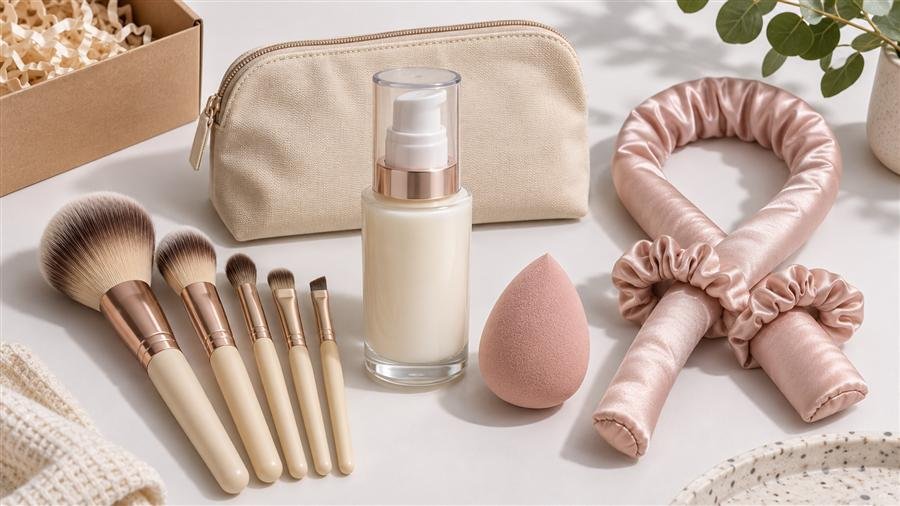
Beauty dropshipping from China puts those decisions on the seller, even when someone else owns the warehouse. A makeup brush, face cream, perfume, and powered cleansing tool each need a different check before they go live.
Work through the product, its source, the target market, and a packed test order before spending heavily on ads.
Decide what “dropship” means for your beauty store
Dropshipping describes the order flow: a customer buys from your store, and another business sends the item to them. It says little about who owns the formula, retail label, inventory, or customer complaint. Settle those points before comparing prices.
| Model | How the product reaches the customer | What you need to settle |
|---|---|---|
| Catalog dropshipping | A supplier ships an existing SKU after each order | Exact product, market eligibility, stock accuracy, and shipping route |
| Authorized brand resale | A brand or authorized channel supplies genuine products | Resale rights, authenticity, permitted countries, and valid labels |
| Agent or 3PL fulfillment | A partner stores approved stock and ships individual orders | Inventory ownership, receiving checks, batch tracking, and service scope |
| Private label | A manufacturer makes or supplies a product under your brand | Formula and label responsibility, safety evidence, minimum order, and change control |
These models can overlap. You might start with a small batch of approved products at a China warehouse and still ship one customer order at a time. That is a legitimate order model, though it does mean buying some inventory in advance. A private-label cream often has a minimum production run; calling it “dropshipping” does not remove that commitment.
For a first test, decide whether the goal is to validate a product idea or build a long-term branded line. If you need to see whether shoppers want a brush set, an existing verified SKU may be enough. If your brand name is going on a serum bottle, plan for the regulatory and quality work that comes with that label. The site’s beauty product dropshipping overview can help map the product categories; this article stays with the steps needed to launch one of them from China.
Pick a first beauty product you can actually support
Beauty is a broad shelf. A hair clip is not a face serum, and neither behaves like an alcohol-based fragrance in the post. Pick a product whose quality you can inspect, whose claims you can support, and whose shipping route you can confirm.
| Product type | Typical first check | Why it matters |
|---|---|---|
| Brushes, sponges, pouches, heatless hair tools | Material, finish, dimensions, hygiene, packed durability | Often simpler to sample and ship, but poor quality is easy to notice |
| Makeup and skincare formulas | Ingredients, claims, retail label, lot, shelf life, seal | The exact formula and destination market matter |
| Fragrance, aerosols, nail products | Contents, flammability, container, carrier acceptance | The route may be restricted or require special handling |
| Powered beauty tools | Model, voltage, battery, plug, functions, claims | Electrical and transport rules may apply alongside beauty marketing rules |
Start with a recognizable customer use. A travel makeup kit could pair a washable brush pouch with two brushes and a sponge. A simple hair routine could use a heatless curling ribbon and scrunchies. Those are easier to explain in a product page than a box of unrelated “viral” items.
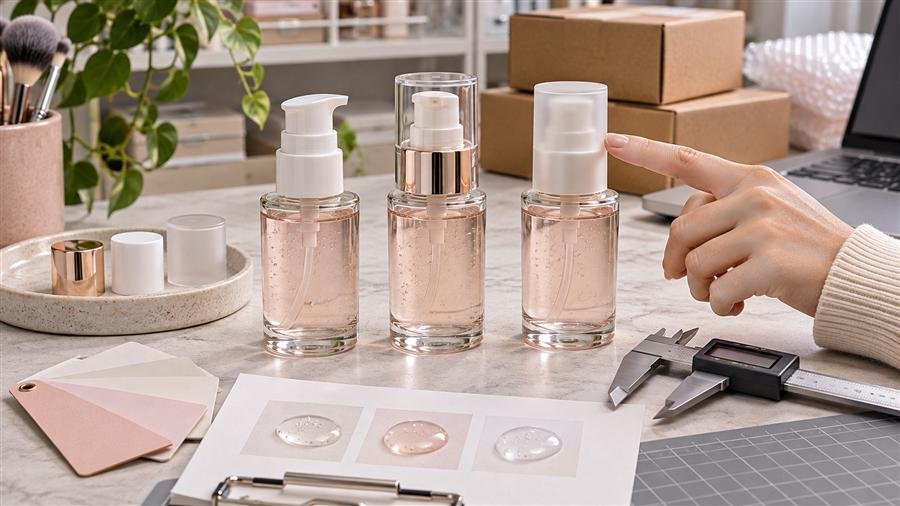
If you want to start with a formula, keep the first SKU narrow. One moisturizer in one pack size gives you fewer variants to control than twelve shades of lip color. It still needs the appropriate evidence, labeling, and a reliable supplier. The general beauty dropshipping product guide goes deeper on category risks. Here the practical question is whether one specific item can survive the full journey from factory to customer.
Write a short product brief before contacting suppliers. Include the item and variant, intended countries, retail price range, expected order volume, desired pack size, any must-have materials or ingredients, and the claims you hope to make. For a non-powered tool, specify dimensions and finish. For a cosmetic, specify the exact formula or product reference. Otherwise you can spend days comparing quotes for different products that happen to share a photo.
Find and verify a China supplier for the exact item
Alibaba and trade fairs can help you find manufacturers and exporters. 1688 can expose domestic Chinese supply, often through a Chinese-speaking buyer or agent. Referrals from merchants in your category can help too. Treat each source as a way to build a shortlist, not as a guarantee that a product is ready for international single-order fulfillment.
Send the same brief to several candidates. Ask for their legal business name, manufacturing or trading role, exact product specification, sample process, quote, minimum order, and who packs individual orders. A factory may make excellent cosmetics but have no system for sending one parcel to a customer in Canada. An agent may handle parcels well while buying the product from a separate factory. You need to know which party controls each handoff.
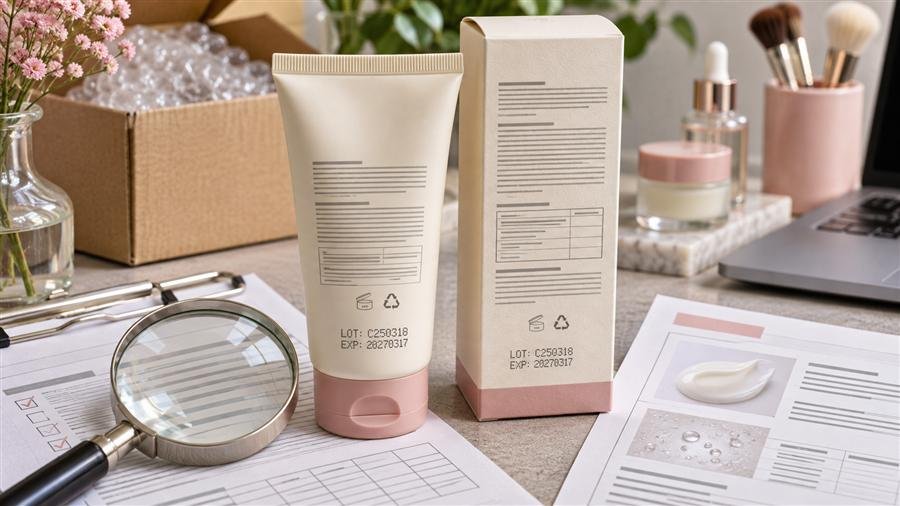
For a formula, ask for the manufacturer and brand owner, the full ingredient declaration required by your market, finished label artwork, lot code format, shelf-life information, and relevant safety or stability evidence. A factory may cite ISO 22716, a cosmetics good manufacturing practice guideline covering production, control, storage, and shipment. Ask which site and activities its evidence covers. That guideline does not approve the formula you plan to sell.
For a known brand, request proof of authorized supply for your intended market. For a beauty tool, get the material and dimensions, plus photos of the production item. Every document should match the item you will list, down to the pack version. A report for a similar jar will not answer a question about yours.
Order samples through the normal production and packing path. A showroom sample can be useful, but a customer-order sample tells you more about what your buyer will receive. Compare the sample with the written brief. Take photos. Record the product code, shade or scent, packaging version, and any lot marking. If a supplier says it may substitute a “similar” bottle or ingredient without notice, stop there and resolve the change rule.
A product sourcing workflow becomes useful when it connects those records to purchasing. The seller, supplier, and fulfillment team should all be looking at the same approved item.
Check the market before you write the listing
Beauty products are sold under the rules of the country where they reach customers. The factory’s ability to export from China does not settle whether your chosen product, label, and claims are suitable for the United States, the EU, or another market. Pick one destination first and review that product for it. Expand only when the next market has been checked.
For U.S. cosmetics, separate a listing from an approval
The U.S. FDA’s cosmetic facility registration and product listing guidance explains applicable obligations under the Modernization of Cosmetics Regulation Act of 2022 (MoCRA), including small-business exemptions for some requirements. Facilities required to register renew every two years, while responsible persons update product listings annually. Neither a facility registration number nor a product listing number means FDA approval. If a supplier offers an “FDA certificate,” ask what it actually documents.
Check product classification as well. A moisturizer sold for appearance and hydration may be treated differently from a product advertised to treat acne. Claims on the store page, ad, and package all count. Do not copy a supplier’s medical-sounding language into your listing and assume the physical label will protect you.
For EU sales, identify the responsible person
The EU’s Cosmetics Regulation (EC) No 1223/2009 sets obligations for cosmetic products placed on the EU market. Ireland’s health regulator explains the responsible person’s duties, including the product information file and safety report. Notification, labeling, and claims also need attention before sale. Ask who will hold the responsible-person role for the exact product and who can provide the required records. A China factory’s generic test report does not appoint an EU responsible person.
The UK, Canada, Australia, and other markets have their own rules. So do product types. A brush is not a cosmetic formula, and a powered tool may bring electrical requirements. If a product contains sunscreen ingredients, makes treatment claims, or includes a battery, route it through the relevant classification and market review. This is where a specialized adviser may be cheaper than a rushed launch.
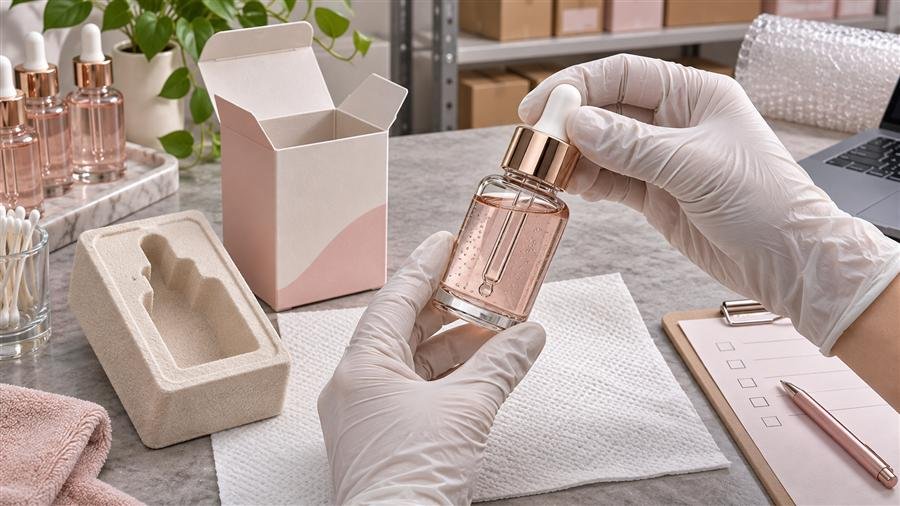
Keep the storefront honest. Show the actual ingredients, size, shade, warnings, and use instructions that apply to the product and market. Ask before using supplier photos; permission and accuracy both matter. If the bottle changes, check whether the images, label, product page, and pack instruction must change too.
Test the product and the parcel
A beauty sample has two jobs. It must perform as the listing says, and it must arrive in saleable condition. Test both. A jar that looks fine on a desk can leak after repeated handling. A compact can crack inside a pretty but loose mailer.
For a cosmetic, compare the sample to the approved reference: fill, texture, scent, shade, seal, pump or dropper action, printed label, and lot code. You may need supplier records or independent testing for issues a quick visual check cannot detect, such as microbial quality or stability. Agree which checks the supplier performs at production, which the warehouse can perform on receipt, and which need a qualified lab. A “100% QC” slogan does not tell you what was checked.
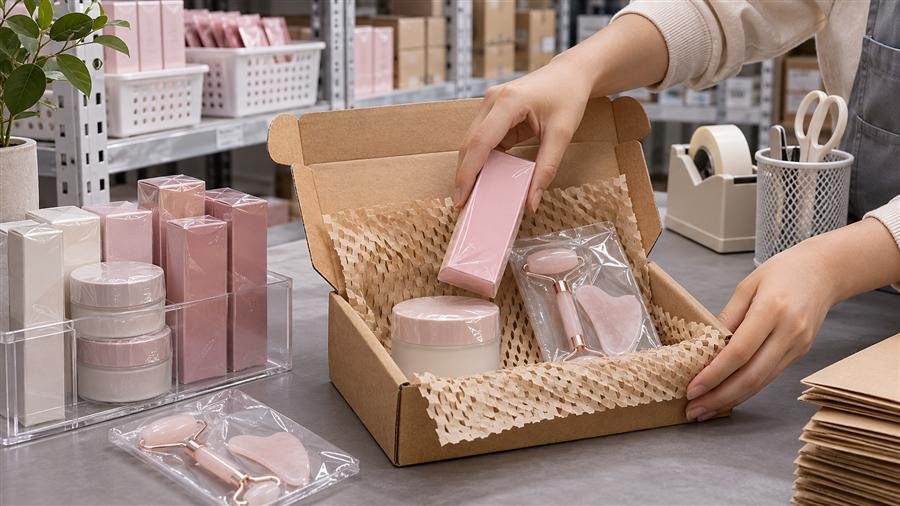
Now pack it as a real order. Use the intended retail carton, protective insert or wrap, and outer parcel. Shake and handle the closed parcel as it would be handled during sorting. Send test orders through the actual route to your target market when possible. Photograph the item on arrival. Watch for leaks, cracked glass, stained labels, squashed corners, and a label that becomes unreadable after rubbing. Hot or cold conditions may matter for a formula; ask the manufacturer what storage and transport limits apply.
The warehouse should have a clear quality control process for damaged seals, wrong shades, missing labels, and questionable batches. Record what happens to failed units. They should not drift back into available stock because a picker needs to finish an order.
Build the China-to-customer order flow
Once the item is approved, write down the path of one order. The store sends the paid order and exact SKU or variant to the supplier or agent. Someone confirms available stock, picks the correct unit, follows the approved packing instruction, books a suitable shipping service, and uploads a tracking number. The parcel then needs a real carrier acceptance scan. Creating a label is not the same as handing over a parcel.
| Step | What to confirm | If it goes wrong |
|---|---|---|
| Order received | Correct SKU, shade, quantity, address, and payment status | Hold the order and correct the data |
| Stock assigned | Approved lot, usable shelf life, and sellable condition | Do not substitute without approval |
| Pick and pack | Seal, label, protection, inserts, and pack version | Repack or quarantine the unit |
| Carrier handoff | Route accepts the exact contents and destination | Choose an eligible route or stop sale |
| After dispatch | First scan, delivery issue, complaint, and return decision | Record ownership and remedy |
Beauty shipments are not one shipping category. A dry brush set may travel through ordinary parcel services. Alcohol-based fragrance, some nail products, aerosols, and battery-powered devices can trigger carrier restrictions or dangerous-goods procedures. Liquid products also need suitable closures and leak protection. Get acceptance for the exact formulation, package, route, and destination. Do not promise worldwide shipping based on a supplier’s general product-page badge.
Returns can be awkward. An opened cosmetic may not be suitable for resale, and a complaint about irritation needs product and lot details, not just a refund button. Agree who answers the customer, who preserves evidence, and who contacts the manufacturer. The broader beauty and cosmetics fulfillment guide covers the warehouse side in more depth.
Price the whole order, then run a small pilot
Compare the complete cost of getting one saleable item to the customer. Include the product, domestic China delivery if applicable, agent or order fee, inspection, retail and shipping packaging, international freight, payment or platform charges, expected returns, and any destination taxes or duties that fall on your business. The cheapest factory quote can become the most expensive delivered order.
Use a quote table for the same SKU and destination. For example, these numbers are illustrative only, not market rates:
| Cost item | Example per order | Question for the supplier or agent |
|---|---|---|
| Product | $5.00 | Is this the approved version and pack size? |
| China-side receiving and packing | $1.20 | Are QC and inserts included? |
| Protective materials | $0.60 | Which carton, seal, and cushioning? |
| International delivery | $6.50 | Which route, weight band, and destination? |
| Total before other selling costs | $13.30 | What changes for returns, duties, and payment fees? |
A $24 selling price would leave $10.70 before ads, payment charges, taxes, refunds, and overhead in that example. That may be workable for one store and poor for another. Run the calculation with your real quote, packed weight, destination, and expected return rate. For a heavier glass bottle, the freight line may shift enough to change the answer.
Then run a small paid pilot. Send a few normal orders across the variants and destinations you plan to serve. Include one multi-item order if bundles matter. Check what arrived, when the carrier first scanned it, whether the product matched the approved sample, and how staff handled an address correction or damaged unit. Define the pass conditions before the pilot begins: acceptable dispatch window, correct SKU, intact package, valid tracking, and a clear response to exceptions. If the same failure repeats, fix the process before increasing volume.
Move from a test SKU to a repeatable beauty range
After the pilot, keep the parts that worked and tighten the weak ones. Record each approved SKU, formula or material version, shade, pack size, label artwork, lot code, and minimum remaining shelf life. A change to the pump or preservative should be reviewed before the next batch is shipped. The product photo, ingredient list, and physical item should still agree.
Bundles and branded presentation can come next. Keep every kit component in a written pack list, with a rule for missing items. Test the assembled parcel, not just the empty box. If your brand will appear on the retail cosmetic label, revisit the legal role and product records before printing. Custom packaging can improve the unboxing, but it should follow the approved product and market requirements.
As orders grow, watch the numbers that affect customers: stock accuracy, wrong-variant picks, damage, first-scan delays, delivered time, and complaints by lot. A weekly review of those records will tell you when the China-side process needs more inventory, a different pack, or another shipping route.
Conclusion
Start with one manageable SKU. Verify the source and product evidence, check the destination rules, test the packed parcel, and run a small pilot with real orders. Expand only when the product and order flow hold up under that test.
FAQs
1. Can I dropship beauty products from China without buying inventory first?
Sometimes. A supplier may ship an existing SKU after each order. Private label or more controlled agent fulfillment may require a production minimum or stored stock. Ask who owns the inventory and when you pay for it.
2. Which beauty products are easiest to test first?
Non-powered tools and accessories, such as brushes, pouches, or heatless hair items, often have fewer formula and shipping questions. They still need sample, material, hygiene, and packaging checks.
3. Can I dropship skincare from Alibaba or 1688?
You can find leads there. Confirm whether the seller will ship single customer orders, whether the exact product suits the destination market, and who handles QC, packing, tracking, and complaints.
4. How do I know whether a supplier will ship single orders?
Ask for the per-order process and price in writing. Place a paid test order to your intended market, then check the product, packaging, carrier scan, and delivery.
5. What documents should I request for a cosmetic formula?
Ask for the exact formula identity, full ingredient declaration, finished label, manufacturer details, lot and shelf-life information, and relevant safety, stability, or claim evidence. The required file depends on the market and product.
6. Do Chinese cosmetics need FDA approval to sell in the U.S.?
Do not treat ordinary cosmetic facility registration or product listing as FDA approval. U.S. obligations depend on the product and its claims. A treatment or SPF claim may change its classification.
7. Who is responsible for EU cosmetic compliance when I dropship?
An EU cosmetic needs a responsible person and the required product records and processes. Establish who holds that role for your exact item before selling it to EU customers.
8. Is a private-label cosmetic still dropshipping?
It can be shipped one order at a time by a supplier or warehouse. Your own brand on the retail product can also bring manufacturing minimums and additional regulatory responsibility.
9. Can I use a supplier’s product photos and claims?
Get permission to use the images and verify that they show the product customers will receive. Check every claim against the product evidence and rules of your selling market.
10. How do I test a serum bottle or makeup compact for shipping?
Order the real retail version, pack it as a customer order, and send it through the planned route. Inspect the seal, closure, glass or compact, label, outer carton, and any leakage on arrival.
11. Can perfume, nail polish, or aerosols be shipped from China?
Some can, through routes that accept the exact contents and package. Alcohol, solvents, and aerosols may trigger restrictions or dangerous-goods requirements. Get a product-and-route answer before listing them.
12. How should I manage shades, lots, and expiry dates?
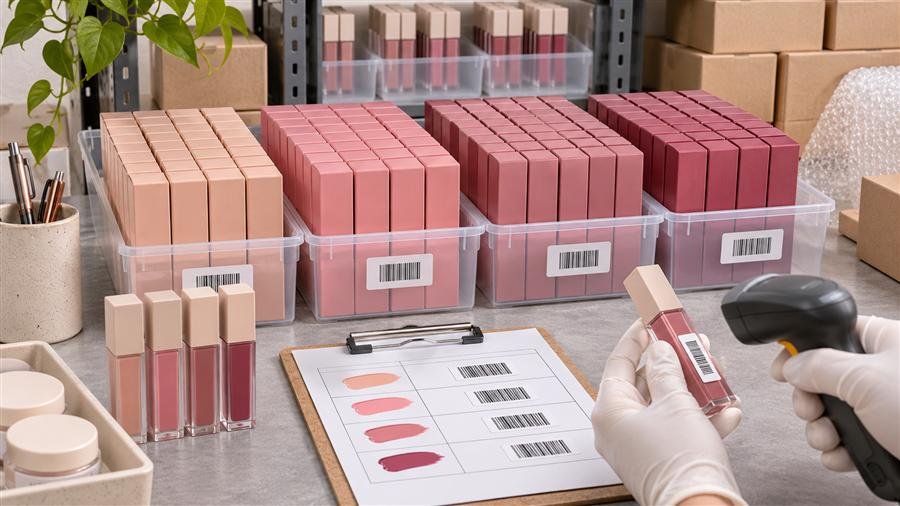
Give every shade a distinct SKU, record lot information where relevant, and set an acceptable remaining shelf-life rule. The warehouse must be able to identify which units went into which orders.
13. What does a China beauty dropshipping agent do?
An agent may coordinate suppliers, samples, stock, inspection, packing, and shipping. Scope varies. Ask what it does itself, what it outsources, and who owns each failure.
14. How much should I budget for product, packing, and shipping?
Use an itemized quote for your exact SKU, packed size and weight, destination, and order volume. Add platform costs, expected returns, and any taxes or duties you must cover. Avoid relying on a generic margin percentage.
15. What if a customer reports irritation or a damaged parcel?
Save the order, product, lot, photos, and complaint details. Follow the applicable complaint and adverse-event process, contact the responsible supplier or manufacturer, and decide whether related stock needs to be held while you investigate.
Table of Content

I’m Cassiel. I’ll help you scale your Shopify business with reliable fulfillment.
Join to newsletter.
Follow us and get more knowledge.