
Your store had a good week. Then the orders took over the spare room. Boxes are stacked beside the desk, someone needs a tracking number, and the blue version of your bestseller has somehow ended up in the bin marked black.
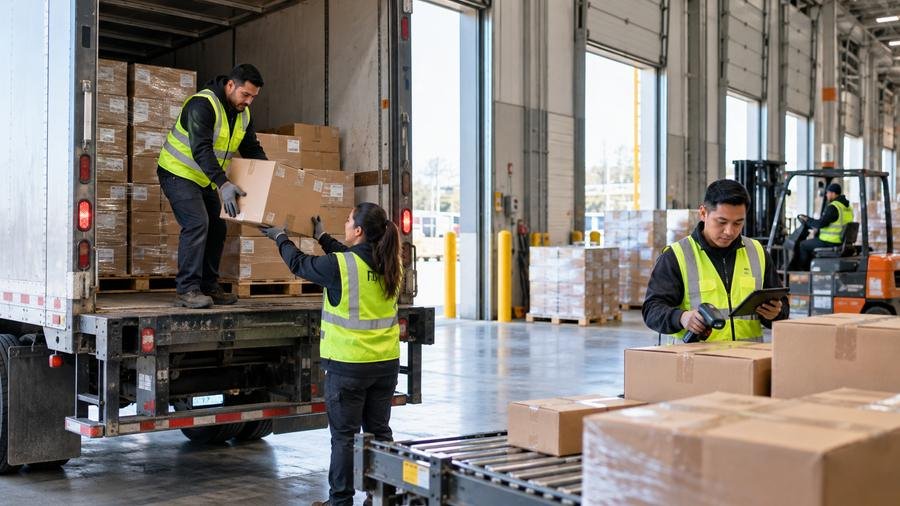
This is often when a business starts asking about third-party logistics. Could another company receive the products, keep the stock organized and ship orders while you focus on the store?
Yes. That is one common use of a 3PL. But sending boxes to a warehouse does not settle every question. You still need to know who owns the inventory, what the provider will do, what the bill includes and what happens when an order goes wrong.
Let’s follow the work from supplier delivery to customer return. Along the way, we’ll use a hypothetical brand selling three travel accessories: a pouch, a brush set and a compact mirror. Simple products, but plenty of opportunities for a warehouse handoff to go well—or get messy.
What Does Third-Party Logistics Actually Mean?
Third-party logistics, usually shortened to 3PL, means hiring an outside provider to perform agreed logistics functions for your business. Those functions can include transportation, receiving, storage, inventory control, order fulfillment and returns.
The term is broader than ecommerce parcel shipping. A transport-focused provider may coordinate freight. A distribution specialist may handle pallets for retailers. An ecommerce fulfillment company may receive stock, pick individual units, pack orders and send tracking back to Shopify. Some providers combine several of these services.
Maersk’s overview of third-party logistics describes this range of outsourced functions. The useful next step is to turn that broad definition into a list of tasks for your own business. “Full service” means very little until the tasks are agreed.
What the Provider Handles—and What Your Business Still Decides
In a typical fulfillment arrangement, your business owns the inventory and the 3PL holds it for you. Physical custody does not automatically transfer ownership. The agreement should identify the owner, the contracting parties and the treatment of loss, damage and unpaid charges.
You also retain decisions about the product, customer promise and commercial policy. The warehouse can execute a return instruction without deciding whether the customer deserves a refund.
| Task | Typical merchant responsibility | Typical 3PL responsibility |
|---|---|---|
| Inventory | Purchase stock and decide replenishment | Receive, locate and track accepted units |
| Product requirements | Supply accurate product information and required approvals | Follow the agreed handling scope |
| Packing | Approve materials, presentation and exceptions | Pack according to the approved instructions |
| Shipping | Approve services and customer delivery promises | Prepare parcels and arrange the agreed handoff |
| Returns | Set refund and disposition policy | Receive, inspect and record returned goods |
| Problems | Authorize decisions outside standard rules | Flag issues, preserve evidence and execute decisions |
That table is a starting point, not a universal legal allocation. Specific duties depend on the contract, product and destination. A 3PL does not automatically become your sourcing agent, importer, customer support department or product-compliance owner.

Follow One Order Through a 3PL Warehouse
Our travel-accessory brand sends three products to a fulfillment warehouse. The customer later buys one pouch and one brush set. Sounds straightforward. Here is what needs to happen behind the scenes.
Receiving and Making Stock Available
Before the cartons arrive, the merchant sends an inbound notice. Larger operations often call this an advance shipping notice, or ASN. It tells the warehouse what to expect: supplier, shipment reference, SKUs, quantities, cartons and any special instructions.
The receiving team checks the delivery against the agreed scope. That might mean counting cartons, scanning item identities, checking units or documenting visible damage. A basic receiving check is not necessarily a complete product inspection. Ask which one you are buying.
Suppose a carton should contain 100 mirrors. It contains 98, and two of those have cracked glass. The warehouse should record the shortage and damage, then separate the affected stock. It should not quietly make 100 units available for sale.
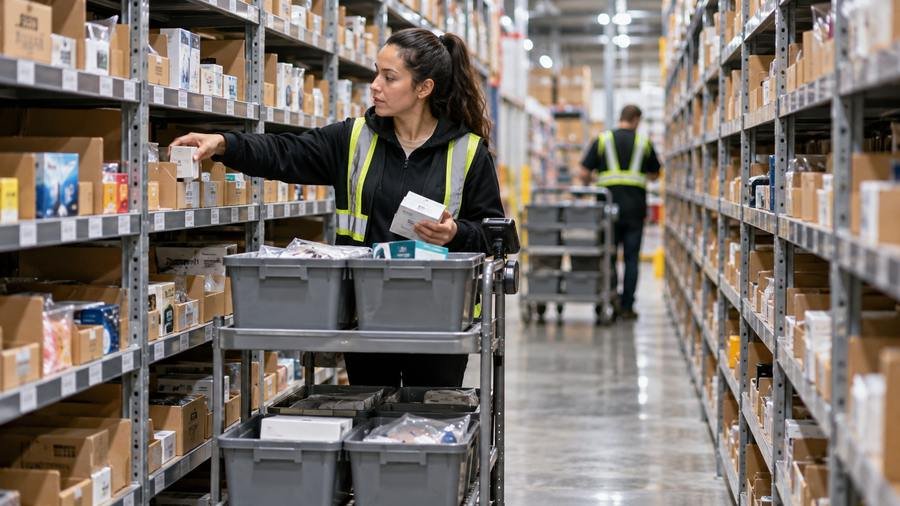
Next comes put-away: moving approved goods into a known storage location and recording that location in the system. This is where suitable warehousing services connect physical stock with inventory records.
Dock arrival, completed receiving and available inventory are different events. Your replenishment plan needs the final one. A carrier saying “delivered” does not tell you whether the warehouse has counted and released the goods.
For our brand, available stock is 100 pouches, 100 brush sets and 96 accepted mirrors. The discrepancy is visible before another customer orders a mirror that is missing or broken.
Importing, Picking and Packing the Order
The customer orders a pouch and a brush set. The store passes the order to the warehouse through an integration or a controlled file process. The storefront variants must map to the correct warehouse SKUs.
An order is released only when it meets the agreed rules. Payment status, stock availability, address checks and fraud review may affect release. If the merchant puts the order on hold, that hold needs to reach the warehouse before packing starts.
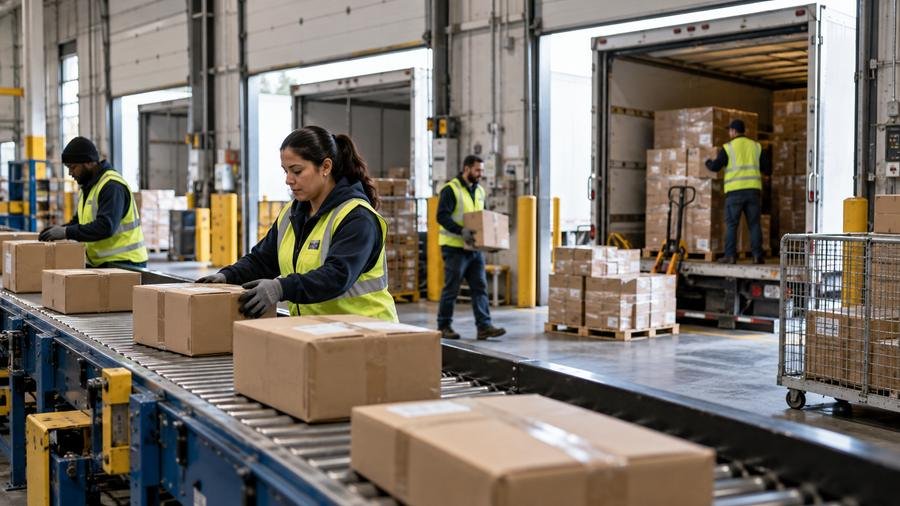
The picker retrieves the units from their locations. Verification can involve scanning the SKU and checking quantity. The packer then follows the approved instruction: pouch and brush set together, one insert, protective material where needed and the correct outer package.
Count these things separately:
- Order: the customer’s purchase.
- Units: the physical products in it.
- SKU lines: the distinct item or variant lines.
- Parcels: the packages dispatched.
Our order has two units, two SKU lines and one parcel. If it ships in two parcels, shipping charges and the customer experience change. If the brand sells the two products as a bundle, the system also needs a clear rule for consuming the component inventory.
The packed weight and dimensions matter. A large box can cost more to ship even when the products are light. A packing instruction should therefore cover protection and package size, not just how the parcel looks on camera.
Carrier Handoff and the Returned Parcel
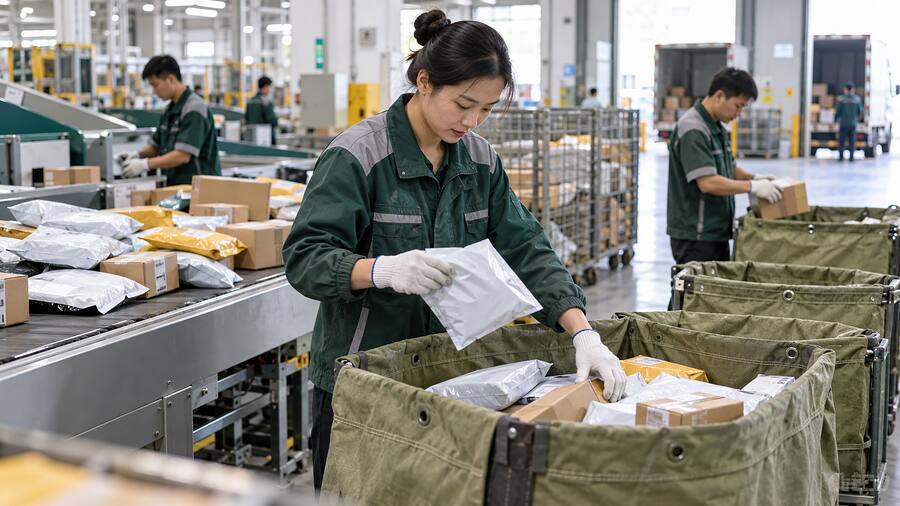
The warehouse prints a label. That is a preparation event. It does not prove the carrier has accepted the parcel, and it certainly does not prove delivery.
Agree which event triggers the shipment update and how carrier collection is recorded. Track parcels that have a label but no movement. A warehouse delay and a carrier delay require different follow-up.
Now imagine the customer returns the pouch. The returns team identifies the order, records the condition and follows the merchant’s disposition rules. An unused, clean pouch may be approved for restocking. A stained pouch may be held, rejected or disposed of under an authorized instruction.
The system should record the decision before inventory changes. The merchant or payment platform handles the refund according to policy. A returned parcel sitting on the dock is not automatically a refund or a saleable unit.

3PL, Dropshipping, Freight Forwarding and 4PL: Which Job Changes?
These labels describe different arrangements, but real companies can offer overlapping services. Compare the work and responsibility rather than choosing from the name alone.
| Model | Main work | Inventory arrangement | What to clarify |
|---|---|---|---|
| In-house fulfillment | Your team receives, stores, packs and dispatches | Usually your stock in your operation | Labor, space, equipment and capacity |
| Carrier or transport service | Moves parcels or freight | Carries goods during transport | Service, handoff, liability and claims |
| Freight forwarding | Arranges transport and related coordination | Depends on the shipment arrangement | Booking, documents, customs scope and delivery handoff |
| 3PL fulfillment | Runs agreed warehouse and order tasks | Usually merchant-owned inventory held by the provider | Receiving, stock control, packing, dispatch and exceptions |
| Dropshipping | A supplier or partner ships customer orders | Depends on purchasing and ownership terms | Product consistency, availability and customer-order control |
| 4PL | Coordinates a wider logistics program and providers | Depends on the underlying operations | Planning authority, provider management and accountability |
Dropshipping and 3PL can coexist. You might test a product through supplier-direct shipping, then buy approved stock and place it with a fulfillment partner. You might also keep some products in stock while other orders ship from suppliers. Record which path each SKU follows.
A freight forwarder can arrange the bulk shipment into the warehouse. That does not necessarily mean it will pick individual ecommerce orders. Some forwarders also offer warehousing, so inspect the actual scope.
A 4PL commonly coordinates multiple providers and broader logistics decisions. It may be useful when managing a network has become a job of its own. That is a different need from finding one warehouse to pack your orders.
Amazon FBA is a specific fulfillment program with its own inventory, preparation, eligibility and commercial rules. It can be part of a brand’s logistics setup, but it is not a synonym for every 3PL service. If you also sell through Shopify, establish how stock and orders are handled across those channels.
When Outsourcing Helps—and When You Should Wait
There is no magic monthly order count that makes a 3PL the correct choice. Product size, order complexity, geography, minimum charges and the value of your team’s time all affect the decision.
Our travel brand may ship 400 simple orders with two people and a small storage room. Another brand may struggle with 100 orders because each requires several components, a gift message and fragile packing. Volume alone misses the work.
Outsourcing becomes more attractive when:
- Packing competes with product development, customer service or selling.
- Space and staffing cannot handle normal demand or seasonal peaks.
- Orders need consistent scanning, packing and stock records.
- Customers are far from your current dispatch location.
- Multiple channels or wholesale orders add operational complexity.
- Specialist handling requires capabilities you cannot reasonably build.
A suitable provider can share warehouse infrastructure across clients, supply trained execution capacity and offer carrier options. It may also provide better stock visibility. Those are potential benefits to verify, not automatic results of signing a contract.
The trade-offs are real. Monthly minimums can make quiet periods expensive. You depend on another team’s receiving and dispatch process. Mistakes can take longer to investigate when your products are miles away. You still fund inventory, and you need time to manage the relationship.
Delivery also affects how customers judge the store. DHL’s 2026 ecommerce research, based on 29,000 shoppers and 5,800 businesses across 29 countries, identified trust and choice of delivery partners as critical factors for seven in ten surveyed shoppers. That supports taking delivery seriously. It does not prove that outsourcing will improve a particular store’s conversion rate.
Waiting can be sensible if orders are few, stock is highly personal or made to order, or your product data is still unreliable. First fix an unclear SKU list or constantly changing bundle. Moving confusion into a larger warehouse usually creates larger confusion.
What Does a 3PL Cost Beyond Pick and Pack?
An advertised pick fee is one line of the bill. The full cost may include receiving, storage, extra picks, packaging, shipping, returns, technology, minimums and special work.
Storage can be billed by bin, pallet, cubic volume or another agreed measure. Receiving might be charged per carton, unit or labor hour. A floor-loaded shipment can require different work from a tidy pallet. Ask how each activity becomes a charge.
Here is an illustrative monthly example for 500 shipped orders. The figures are hypothetical U.S. dollar amounts, not FriendDropshipping prices or industry averages.
| Cost line | Illustrative monthly amount | Assumption to check |
|---|---|---|
| Receiving | $150 | Agreed shipment format and counting scope |
| Storage | $300 | Agreed space measure and billing period |
| Pick and pack | $1,250 | Actual units and SKU lines per order |
| Packaging materials | $250 | Standard material consumption |
| Shipping | $2,500 | Actual destinations, parcels and packed dimensions |
| Returns | $100 | Defined return volume and processing scope |
| Software/account services | $100 | Included features and separate charges |
| Total | $4,650 | Excludes product cost, inbound freight and other stated exclusions |
| Cost per shipped order | $9.30 | $4,650 divided by 500 shipped orders |
The example’s $2.50 pick-and-pack average is not its $9.30 total cost per order. It also does not tell you what happens during a slow month, when the same inventory remains in storage but fewer orders ship.
Check monthly minimums carefully. Is the minimum a floor against qualifying fees, or an additional charge? Which activities count toward it? Adding a minimum to a subtotal that already exceeds the floor can produce the wrong comparison.
Also request rules for relabeling, kitting, inventory counts, aged stock, peak periods, address changes and inventory removal. Ask whether shipping is passed through, marked up or billed under a separate rate card. Use the detailed China fulfillment-center fee breakdown when reviewing those line items.
On the in-house side, count labor at a realistic cost, space, utilities, packaging, equipment, software, shipping and errors. Include the founder’s packing time instead of treating it as free. Compare a normal month, a quiet month and a peak month with the same product and destination assumptions. That gives you a decision you can use.
Watch averages when the order mix changes. If more customers buy the mirror, your protective-material use may rise. If more orders go to distant destinations, the shipping average may rise even though the warehouse’s pick fee stays the same. Keep the invoice tied to an order export showing items, parcels, weights and services. Then you can distinguish a rate change from a different workload. That is much more useful than arguing about a monthly total with no supporting detail.

Products, Packaging Materials and Industries Change the Setup
A 3PL that handles soft clothing efficiently may not have the right process for glass, dated food or a battery-powered device. Ask for capabilities matched to your product rather than a long list of industries on the homepage.
| Product or industry | Handling issue | What to agree |
|---|---|---|
| Apparel | Similar sizes/colors and presentation-sensitive returns | Variant identification, folding, tags and return grading |
| Beauty products | Leakage, seals, lots and shelf life | Product-specific storage, lot records and protective packing |
| Electronics | Accessories, serials and battery restrictions | Unit identity, set contents and accepted shipping services |
| Food or supplements | Dates, storage conditions and traceability | Suitable facility/process, lot control and stock rotation |
| Bulky or fragile goods | Space, handling equipment and breakage | Storage method, protection and freight arrangements |
| B2B wholesale | Carton/pallet quantities and retailer instructions | Label format, packing list and routing requirements |
Packaging materials are inventory too. Corrugated cartons, mailers, void fill, dividers, tape, inserts and labels need identifiers, quantities and replenishment rules. If an insert runs out, should the packer hold orders, omit it or use an approved alternative? Write that down.
For our travel brand, the compact mirror needs protection that the pouch does not. The outer carton should fit the products without leaving too much empty space. The brush set may need a specific orientation to prevent damage. A branded insert should not obscure a required label or introduce an unapproved product claim.
You can coordinate custom packaging options once the packing rule and product dimensions are clear. Test the complete parcel. A beautiful box that crushes on the route has failed its main job.
For dated goods, FEFO means first-expiring, first-out. It can be appropriate when expiry drives allocation. FIFO, first-in, first-out, follows receipt order instead. The warehouse needs the relevant dates and a minimum remaining shelf-life rule to execute either correctly.
Specialist services may require suitable premises, equipment, permits, training or product records. Confirm the exact requirements for the market and goods. A warehouse saying it handles cosmetics or food does not establish compliance for every formula or product. The merchant and provider should agree who supplies evidence, who reviews it and what triggers a hold.

China, a Local Warehouse or a Hybrid Network?
Warehouse location is a balance between supplier access and customer access. A site close to your office can be convenient to visit, but the more useful question is where your products and customers are.
Stock in China can simplify receiving from Chinese suppliers, consolidation, inspection and packaging preparation. For a brand with many destinations or changing product ranges, that can be useful. Individual international parcels still need suitable routes, realistic delivery promises and defined import arrangements.
Stock near a major customer market can support domestic delivery and a practical return address. It also requires bulk replenishment, import planning and more inventory committed to that region. An unsold local unit remains an unsold unit.
A hybrid setup might place our brand’s proven pouch in a local warehouse while holding slower variants in China. That can improve the fit of each stock pool, but it adds replenishment decisions, routing rules and potential split shipments. Make sure the stock record tells the store which location can fulfill each variant.
Compare inbound freight, duties and applicable import costs, receiving, storage, outbound delivery, returns and cash tied up in stock. Our China 3PL versus U.S. fulfillment center comparison develops that location decision.
For the China-side model, China 3PL fulfillment services connect supplier receiving, SKU control, packing and dispatch. Confirm the scope for your actual goods and destinations. A warehouse location by itself does not promise a delivery time, a duty treatment or a returns solution.

The Data, Standards and Service Measures to Agree First
The physical operation and the data operation need to tell the same story. Otherwise, your dashboard can say 100 available units while the warehouse has 96 accepted units and four on hold.
Decide Which System Controls Each Record
A warehouse management system, or WMS, tracks warehouse stock and execution. An order management system, or OMS, can coordinate orders and routing. Shopify or another sales channel takes customer orders. An ERP may hold purchasing or finance records. One business may use all of these; another may use a simpler arrangement.
Name the authoritative system for each record and how updates move. Lock the SKU map, units of measure, bundle components and inventory statuses. “One case” and “one unit” must not be interchangeable. If the store sells a two-pack, the warehouse needs to know whether it picks one prepacked SKU or two components.
Test failed imports, duplicate orders, cancellations and delayed stock updates. Who notices the failure? Who can retry it? Does retrying create a second shipment? An integration logo shows a possible connection; a test order shows whether your specific setup works.
Keep Physical Stock and Available Stock Separate
For our travel brand, the warehouse physically holds 98 mirrors after the shortage, but only 96 are accepted. The two cracked units remain on hold until an authorized decision. Publishing all 98 as available would create orders for goods the brand cannot ship in acceptable condition.
A useful reconciliation follows opening stock, receipts, shipments, approved adjustments and returns to the closing balance. Run it by SKU and location. Explain differences instead of simply replacing yesterday’s number with today’s count. If a pouch returns but has not passed inspection, it belongs in a return or hold status, not immediately in available stock. This distinction also helps prevent overselling when several channels share the same inventory.
Use Identification Standards Where They Apply
A product barcode and a logistics-unit identifier serve different purposes. GS1’s Serial Shipping Container Code, or SSCC, identifies a logistics unit such as a pallet, case or parcel. The GS1 logistic-label guidance explains that identification system.
Use the labels required by your receiving partner, retailer or transport arrangement. Do not assume every small ecommerce parcel needs the same logistics label. Ask for an accepted example, placement instructions and a scan test before shipping a full batch.
Define the Metric Before Agreeing to the Target
An impressive accuracy percentage is hard to judge without its denominator. Does it count orders, units, lines or locations? Does it include stock on hold? Is on-time dispatch measured at label creation or physical handoff?
| Metric | Definition to agree | Evidence to review |
|---|---|---|
| Receiving time | Start event to accepted stock availability | Arrival and system-release timestamps |
| Inventory accuracy | Exact reconciliation method and scope | Counts, adjustments and investigation records |
| Order accuracy | Correct orders or lines against a defined total | Error log with causes and affected orders |
| On-time dispatch | Eligible orders handed off by the agreed cutoff | Release, packing and handoff records |
| Returns time | Return arrival to recorded disposition | Receipt, inspection and approval timestamps |
Set service-level agreement targets for the workload, calendar and exceptions you actually expect. There is no single universal target suitable for every product. A management-system certificate, if relevant, is another piece of evidence; it does not guarantee perfect orders or product safety.
Choose a Provider and Test the Handoff
Send shortlisted providers the same order profile: SKUs, unit dimensions and weights, inventory levels, inbound cartons, monthly orders, units per order, destinations, packing rules and expected returns. Include normal and peak demand.
Request an itemized quote and a representative sample invoice or clearly documented billing example. Ask how the facility handles your product, how discrepancies are investigated and which work is subcontracted. Define who receives an escalation when a normal instruction cannot be followed.
Review the agreement’s service boundaries, claim process, insurance arrangements, termination notice and exit charges. Ask how you retrieve inventory and records if you leave. “We will work it out later” is an expensive way to handle stock transfers.
Use a pilot that includes:
- A normal order with two products.
- A cancellation or address change before release.
- An order for a held or unavailable SKU.
- A bundle with clear component consumption.
- A returned item with an approved disposition.
Reconcile the opening stock, transactions and closing stock. Check the actual parcel, tracking events and charges. Record what failed and retest the correction before increasing volume.
The detailed 3PL onboarding checklist helps turn that pilot into a complete data, inventory and SOP handoff. Standard operating procedures should be usable on the warehouse floor: clear identifiers, approved photos, exception rules and named decision owners. The best onboarding document is one the people packing the order can follow without guessing.
Conclusion
A 3PL can take substantial warehouse and shipping work off your team’s hands. The useful arrangement starts with a defined job: which goods arrive, which stock is available, how orders are packed and what event counts as dispatch. Compare the whole bill, choose a location that fits your supply and customers, and test the process before moving all orders. With clear data, responsibilities and exception rules, outsourcing becomes an operation you can manage rather than a warehouse you simply hope is doing well.
FAQs
1. What Does 3PL Stand For?
3PL stands for third-party logistics. It means outsourcing agreed logistics tasks to another company. Those tasks can range from transportation to warehousing, order fulfillment and returns. The actual service depends on the provider and contract.
2. What Does a Third-Party Logistics Company Actually Do?
An ecommerce 3PL commonly receives goods, stores inventory, picks and packs orders, coordinates shipping and processes returns. Some also offer kitting, labeling or other services. Confirm the included work and its limits rather than assuming every service is available.
3. Is a 3PL the Same as a Fulfillment Center?
A fulfillment center is a facility or operation focused on preparing orders. A 3PL is the external provider arrangement and can include broader logistics services. A brand may also operate its own fulfillment center, so the terms are not always interchangeable.
4. What Is the Difference Between 3PL and 4PL?
A 3PL generally executes agreed logistics functions. A 4PL commonly coordinates a wider logistics program, including other providers. Service models overlap, so check the planning authority, operational scope and accountability in the proposed agreement.
5. How Is a 3PL Different From Dropshipping?
With conventional 3PL fulfillment, a merchant places stock with a provider for customer orders. Dropshipping commonly uses supplier-direct fulfillment after a sale. Ownership and payment terms vary. Some businesses combine both paths, so document the arrangement for each SKU.
6. Does the 3PL Own My Inventory?
Usually not in a standard fulfillment agreement. The merchant retains ownership while the provider holds and handles the stock. Check the contract for title, claims, loss, damage and rights relating to unpaid fees or inventory removal.
7. Is a 3PL Worth It for a Small Business?
It can be if the service removes a real capacity or location problem at an acceptable total cost. Compare minimum charges, product complexity, space and the value of your team’s time. There is no order-volume threshold that works for every business.
8. How Much Does 3PL Fulfillment Cost?
It depends on goods, storage, order contents, parcels, destinations and required services. Add receiving, storage, picking, packing materials, shipping, returns and other charges. Divide by shipped orders for an average, then examine which order types drive the cost.
9. What Fees Are Often Missing From the Initial Quote?
Check minimums, extra picks, relabeling, aged storage, inventory counts, returns, peak work, integration and inventory removal. They are not necessarily hidden or unfair. The important point is to identify their triggers and rates before agreeing to the service.
10. Can a 3PL Connect to Shopify and Amazon?
Many offer sales-channel connections, but supported features differ. Test variant mapping, stock updates, order holds, cancellations and tracking. Amazon preparation or fulfillment requirements are a separate scope question from whether the provider can import marketplace orders.
11. Who Handles Customer Refunds and Returned Inventory?
The merchant usually decides refunds under its customer policy. The warehouse can receive, inspect and record returned goods, then restock, hold or dispose of them under approved rules. Agree who authorizes each action and how the systems update.
12. How Should I Measure Inventory and Order Accuracy?
Define the calculation, denominator, time period and exclusions first. Inventory reconciliation and correct-order fulfillment measure different things. Review adjustment records and error causes alongside the percentage so you can identify what went wrong and prevent repetition.
13. Can a China 3PL Serve Overseas Customers?
Yes, where appropriate international services are available. Confirm acceptance for the product, destination, packed measurements, import arrangement and delivery promise. Also plan a workable returns route. China-side fulfillment does not automatically solve destination compliance or duties.
14. What Information Do I Need Before Onboarding?
Prepare SKU and variant data, units of measure, inventory quantities, inbound details, packing instructions, destinations, integrations and exception rules. Add lots, dates or serials where needed. Agree ownership of decisions and test the data before transferring live orders.
15. What Happens if I Change 3PL Providers?
You will need a verified stock count, exportable records, packing and transfer instructions, and a controlled order cutover. Confirm notice periods and removal charges early. Reconcile stock and test the new provider before routing the full order volume there.
Table of Content

I’m Cassiel. I’ll help you scale your Shopify business with reliable fulfillment.
Join to newsletter.
Follow us and get more knowledge.