You order a phone case and a desk lamp from Temu on the same evening. The phone case lands at your door three days later. The lamp is still showing an international transit update a week after that. Same app, same cart, completely different journey. A bit odd, right?
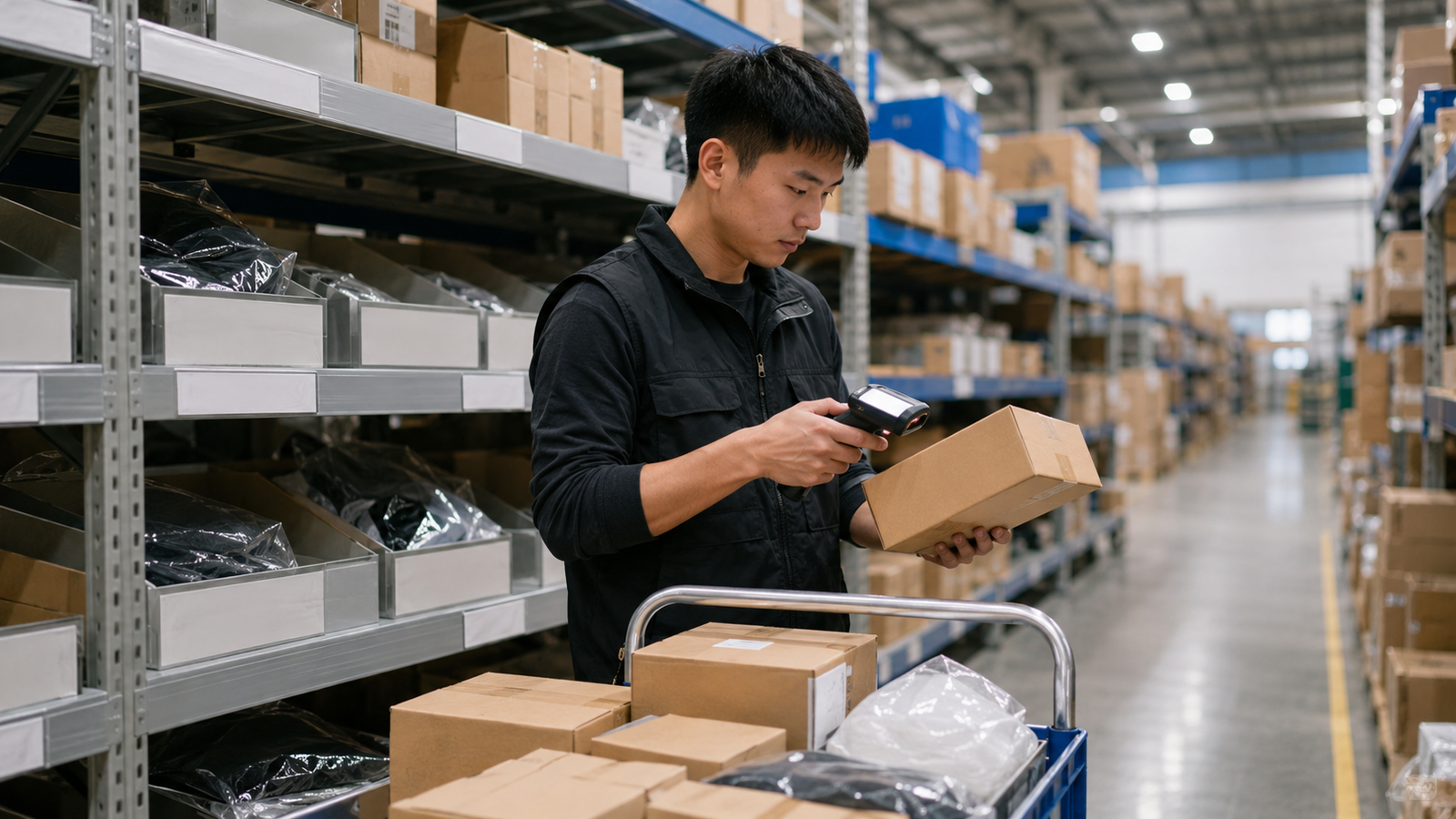
It happens because Temu orders do not all leave from one giant warehouse. Many products are made or sourced in China, but an individual parcel may be dispatched from China, inventory already stored near the buyer, or a warehouse managed by the seller. Your location, the product, the seller, and current stock all affect the route.

That is the central answer. The more useful question is how to work out where your item is coming from. Let’s unpack that without drawing a fake warehouse map.
Where Does Temu Ship From? It Depends on the Item
Temu’s explanation of shipping origins is carefully worded: the origin varies depending on the product purchased. Temu also says products are shipped through logistics partners.
In practice, an order usually follows one of three paths:
-
Cross-border fulfillment: The order is processed internationally, often in China, then travels through export handling, international transport, customs, and a local delivery carrier.
-
Local warehouse fulfillment: The seller has already imported the item in bulk and stored it in or near the destination market. The customer’s parcel begins its final journey there.
-
Seller-managed fulfillment: A seller holds the stock and dispatches the order directly or through a third-party logistics provider. That seller may be local, international, or a China-based business holding inventory overseas.
Temu is a marketplace connecting shoppers with many manufacturers, brands, and merchandise partners. Think of a shopping mall with thousands of stockrooms behind it, not a department store with one loading dock.
|
What you see
|
Likely route
|
What can still vary
|
|
A local label and short delivery estimate
|
Inventory is probably already in the destination market
|
The seller, 3PL, warehouse, and carrier
|
|
International transport or customs events
|
Cross-border fulfillment
|
Export location, consolidation point, and last-mile partner
|
|
Seller-specific delivery date or shipping charge
|
Seller-managed fulfillment
|
Where that seller physically holds the SKU
|
|
Several dates in one cart
|
More than one processing or fulfillment path
|
Stock, seller, size, weight, and carrier
|
The word “origin” causes much of the confusion here. It can refer to the country where a product was made, the warehouse that packed the customer order, or even the location where a domestic carrier first scanned it. Those are different places.
“Made In,” “Ships From,” “Delivered By,” and “Return To” Are Not the Same
Imagine a mug made in China, stocked in California, delivered by UPS, and returned to Nevada. One product, four relevant locations.

Product or manufacturing origin
This is where the item was manufactured or substantially produced. Many Temu products come from Chinese factories and suppliers, but the marketplace and seller mix can differ by country.
A “Made in China” label tells you about production origin. It does not tell you whether the customer parcel left China yesterday or sat in a local warehouse for six weeks before the order.
Fulfillment or dispatch origin
This is where inventory is picked, packed, labeled, and released for the order-specific trip to the buyer. When someone asks where Temu ships from, this is usually what they mean.
An item made in Shenzhen can be imported by the pallet, stored in the UK, and dispatched to London as a domestic parcel. Its product origin is China; its retail fulfillment origin is the UK.
Last-mile location
The first address or city shown by a domestic carrier may be a sorting hub, airport gateway, injection point, or local depot. Cross-border operators sometimes assign a domestic tracking number before the shipment reaches that carrier.
So, a USPS, Royal Mail, or Canada Post number does not automatically prove the parcel began in the United States, United Kingdom, or Canada. It may describe only the final part of a longer trip.
Return destination
A return can go to a seller, consolidator, warehouse partner, or processing center. A domestic return label is therefore weak evidence of outbound origin. It shows where the return is handled, not where the journey began.
How Temu’s Main Fulfillment Routes Work
Temu’s network has changed as the marketplace has expanded, customs rules have shifted, and shoppers have come to expect shorter delivery windows. The result is a hybrid system rather than one universal route.
Route 1: Cross-border fulfillment from China
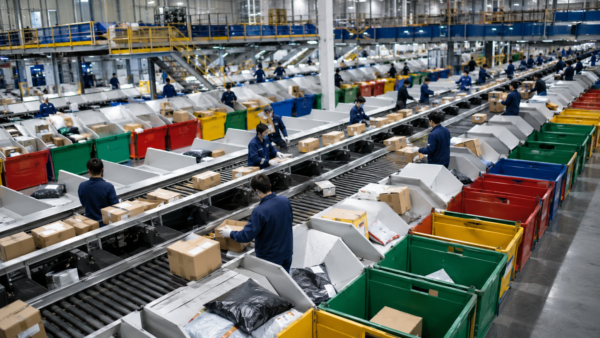
Under the cross-border model, products move from a manufacturer or seller into processing or consolidation. Workers confirm the SKU, pack it, and group parcels for international transport. The load then passes export handling, reaches the destination, clears customs, and enters a domestic delivery network.
This route can create strange-looking tracking. Several days may pass between a warehouse event and an airline or customs event. The domestic carrier may show only that data was received. Then, suddenly, five scans appear in one afternoon after the parcel is handed over.
The parcel may still be moving inside a consolidated load that does not receive a public scan at every step.
Route 2: Local warehouse or pre-positioned inventory
Local fulfillment reverses the timing. The international movement happens before the shopper places the retail order.
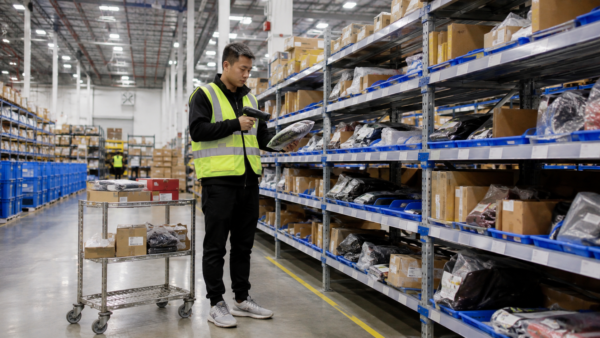
A seller imports units in bulk, completes customs entry, and stores them in-country or regionally. When a customer buys one, the warehouse sends it through a domestic carrier. This removes the post-purchase international and customs stages and can make bulky products more practical to sell.
“Local,” however, does not mean locally manufactured. It also does not necessarily mean Temu owns the building. The stock may belong to a marketplace seller and sit inside an independent 3PL facility.
Route 3: Seller-managed fulfillment
Some sellers handle inventory themselves or contract a fulfillment provider. Temu supplies the marketplace and order flow; the seller or partner handles storage and dispatch.
This explains why items that look similar can carry separate delivery dates or seller-specific shipping terms. One merchant may have stock already sitting in the buyer’s country. Another may need more processing time. A third may be out of stock at its usual location and use a different warehouse.
|
Fulfillment route
|
International leg after purchase?
|
Customs visible in tracking?
|
Common tracking pattern
|
Main uncertainty
|
|
Cross-border
|
Usually
|
Often
|
Processing, line-haul, customs, then local handoff
|
International transit and clearance
|
|
Local inventory
|
Usually not
|
Usually handled before the retail order
|
Domestic pickup and sorting scans
|
Seller dispatch and local carrier capacity
|
|
Seller-managed
|
It depends on stock location
|
It depends
|
Seller- and carrier-specific
|
Where the seller holds that particular SKU
|
For a closer look at how dedicated lines, express services, air freight, and other international shipping routes from China fit together, it helps to view the parcel as a chain of handoffs rather than one uninterrupted courier trip.
Does Temu Ship From a Warehouse in Your Country?
Temu has local fulfillment options in a growing number of markets, but availability is item-specific. A broad statement such as “Temu has a warehouse in Europe” cannot tell a shopper where one lamp or jacket will be dispatched tomorrow.

Be careful with long lists of “Temu warehouse addresses.” A facility used by a seller or logistics company is not automatically owned by Temu, and stock can move.
United States
The US fulfillment picture changed sharply in 2025. Temu moved toward inventory already held in the country and sales fulfilled by locally based sellers as the economics and customs treatment of low-value direct imports changed.
On May 2, 2025, the US ended the de minimis exemption for products of China and Hong Kong. It later suspended duty-free de minimis treatment for low-value shipments from all countries effective August 29, 2025, subject to stated exceptions. CBP’s current de minimis notice is more useful in 2026 than articles repeating the former $800 rule.
A US order may now be fulfilled from inventory already inside the country, especially when marked local. It may still have been made in China and imported earlier in bulk. Not every US listing is guaranteed to use that route, so check the item and order data.
United Kingdom and Europe
European shoppers can see a mix of cross-border and local fulfillment. Temu has been developing a local-to-local model in which local merchandise partners sell through the platform and inventory can be fulfilled closer to the customer.
In April 2025, DHL and Temu announced a European local-to-local initiative. The announcement said Temu expected that model eventually to account for up to 80% of its European sales. That is a company expectation, not evidence that 80% of every country’s orders are already local in 2026.
An item already stored inside the EU can move to an EU buyer without a new import clearance for that retail parcel, although overseas goods went through an earlier bulk import. The UK has its own customs and VAT framework. In both markets, item-level checkout information beats a generic regional chart.
Canada, Australia, New Zealand, and Asia-Pacific markets
These markets may offer both cross-border and locally or regionally stocked products. Small merchandise suits parcel routes, while bulky or fast-selling goods are better local-stock candidates. A regional warehouse is not necessarily domestic; borders and taxes may still apply.
Other markets
Local seller programs have expanded unevenly. No static table can guarantee every SKU’s origin. Use the product label, checkout grouping, and earliest physical tracking events.
How to Tell Where Your Temu Item Ships From
You may not always see a full street address, and you generally do not need one. What matters is whether the item is following a domestic or cross-border fulfillment path.
Before you order
1. Look for local-fulfillment wording
A “Local” or “Local Warehouse” label is the clearest visible clue that inventory is positioned near the destination. Wording can vary by country and app version, so read your own product and checkout screens.
The badge does not prove local manufacture or warehouse ownership, and another variant may use a different stock pool.
2. Compare delivery windows
If one nearly identical item shows delivery in a few days and another takes longer, the first may be locally stocked. Seller processing and carrier service can also affect the estimate.
Recheck after selecting color, size, quantity, and address. Two variants may sit in different facilities.
3. Watch how the cart groups items
The cart may separate items by seller, shipping terms, or delivery window. Separate groups may not be consolidated, and seller-specific charges can appear.
4. Read the checkout summary
Review fulfillment wording immediately before payment because inventory can change. For a time-sensitive order, save the promised delivery window.
Do not decide from price or seller name. A China-based merchant can hold US stock, while a local-sounding shop can use an international route.
After you order
1. Open the order details
Go to Your Orders, select the order, and choose Track. The page can show the carrier, number, delivery time, and current status. Temu notes that warehouse processing can take one to three business days.
Use the official instructions to track an order in Temu, since the interface may differ slightly by region.
2. Check every package tab
Each package can have its own carrier, items, and delivery window. Before reporting something missing, check whether it is assigned to another parcel.
3. Read from the earliest event forward
The newest event shows where the parcel is now; the earliest physical events reveal more about its origin. Look for warehouse departure, international line-haul, customs, destination-country receipt, or carrier handoff.
4. Separate data creation from physical movement
“Label created” usually means data was sent to a carrier, not that a driver collected the parcel. A domestic number can be assigned before a cross-border shipment reaches that carrier. Wait for an acceptance scan.
5. Use the carrier Temu names
Open the official site of the carrier Temu assigns. Number formats overlap, so do not guess from the prefix.
|
Origin clue
|
Reliability
|
How to interpret it
|
|
Explicit item-level fulfillment origin
|
High, but time-sensitive
|
Best pre-purchase signal for that SKU and stock moment
|
|
Full early tracking history
|
High after movement starts
|
Can reveal domestic or international route stages
|
|
Checkout grouping and delivery estimate
|
Medium to high
|
Reflects current routing but remains an estimate
|
|
Local label
|
Medium to high
|
Strong local-stock clue; ownership and manufacture can differ
|
|
Domestic tracking number
|
Medium
|
May represent only the final-mile segment
|
|
Price, seller name, packaging, or return address
|
Low
|
None uniquely proves where the outbound parcel began
|
What Happens Between the Warehouse and Your Door
A cross-border ecommerce parcel passes through more hands than most shoppers realize. Picture a relay race. The baton keeps moving even though each runner sees only their section of the track.

1. Warehouse processing
The system confirms stock, assigns items, and prepares the order. A payment confirmation is not the same as dispatch. If one item needs more time, the available products may move first.
2. Picking, packing, and labeling
Workers or automated systems pick the correct SKU and variant, choose packaging, weigh the parcel, and create shipping data. Restricted or fragile products may need a different route or extra protection.
3. Consolidation
Many small ecommerce parcels are grouped into a larger shipment for the international leg. Consolidation improves transport efficiency, but public tracking may show fewer updates during this stage.
4. International line-haul
The consolidated shipment moves between countries by air, sea, rail, road, or a combination. Low-value ecommerce orders often use specialized cross-border lines that combine international transport with customs and a local handoff.
5. Customs clearance
Authorities or their systems assess shipment data, origin, value, product category, and required documents. Most parcels move through without the buyer visiting a customs office, but an inspection or information request can slow the route.
6. Domestic carrier handoff
After release, a local delivery carrier receives the parcel or its consolidated batch. This is often when detailed public scans suddenly begin. A previously inactive domestic number now shows acceptance, sorting, and transit events.
7. Last-mile delivery
The parcel moves through regional and local facilities, then goes out for delivery. Rural addresses, apartments, gated communities, PO boxes, and incorrect address details can affect this final stage even when the international trip went smoothly.
A locally fulfilled item skips most post-purchase international stages. It begins with local warehouse processing, then enters the domestic carrier network. That is why two items from the same online cart can feel as if they came from different stores. Logistically, they almost did.
One more detail: your Temu order number and carrier tracking number have different jobs. The order number identifies the purchase inside Temu. The tracking number follows a physical parcel through a carrier network. A split order can have one order number and several tracking numbers.
Why Delivery Times and Packages Differ in the Same Order
Stock location is a big factor, but it is not the only one.

Two items can show different dates because they come from different sellers, have different processing times, or require different shipping routes. A lithium-battery product may not use the same air service as a T-shirt. A large shelf may ship separately because of dimensional weight. A popular variant might be local while another color remains overseas.
Carrier capacity, customs inspections, weather, holidays, sales events, remote destinations, and address corrections can all change the final date. Even a local parcel can be late if the seller takes several days to hand it over.
Temu’s official support gives two clear reasons for split packages. Some products need more processing time, so ready items are sent first. An order may also exceed a carrier’s combined weight limit. You can read Temu’s split-package guidance for the order-page steps.
Different sellers, stock locations, product restrictions, and routes can also make consolidation impractical. Those are reasonable logistics factors, but they should not be presented as Temu’s stated reason for every split.
If an order divides, treat each parcel as its own little trip:
-
Match the included items to each package tab.
-
Save every tracking number.
-
Compare the delivery windows separately.
-
Do not report an item missing until you confirm it is not coming in another parcel.
Annoying? Sometimes. But sending ready items ahead can be better than holding the whole cart because one odd-shaped lamp is still being packed.
Packaging, Product Materials, and Categories Can Change the Route
There is no single packaging format used for every Temu order. A soft T-shirt might travel in a poly mailer. A ceramic planter needs a carton and cushioning. A bottle may need a seal and leak protection. Packaging depends on the item, seller, fulfillment facility, carrier rules, and destination.

The product itself also influences the shipping path.
|
Category or material
|
Logistics issue
|
What a buyer should check
|
|
Apparel and textiles
|
Easy to consolidate, but sizing returns can be frequent
|
Fiber/material label, measurements, and return terms
|
|
Electronics and lithium batteries
|
Air-transport, documentation, and marking restrictions
|
Battery specifications, plug type, voltage, and credible compliance information
|
|
Cosmetics, liquids, and powders
|
Leakage, ingredient, and carrier restrictions
|
Ingredients, seals, volume, and destination rules
|
|
Toys and children’s products
|
Higher product-safety obligations
|
Age grade, warnings, small parts, and destination standards
|
|
Glass and ceramics
|
Breakage risk and extra cushioning
|
Packaging reviews and damage/refund procedure
|
|
Furniture and oversized products
|
Dimensional weight and expensive one-by-one air freight
|
Local-stock label, dimensions, seller dispatch time, and return cost
|
Materials matter beyond freight. Paints, coatings, plastics, adhesives, fabrics, batteries, and food-contact surfaces may be subject to safety or labeling rules in the destination market. A product being available on a marketplace is not, by itself, proof that it meets every rule for every intended use.
For sensitive categories, read specifications rather than trusting a product photo. A cable that looks fine on a screen can have the wrong plug. A toy can be the wrong age grade. A storage container can look food-safe without documentation saying it is. The parcel arriving faster does not solve a product-safety problem.
Customs, Duties, VAT, and Product Standards
Customs questions often begin with “Where did it ship from?” but authorities may care about several different facts: product country of origin, tariff classification, declared value, destination, importer, and the rules in force on the entry date.
A parcel dispatched domestically usually does not face a new import clearance at the customer-order stage. If the product was manufactured overseas, it was likely imported earlier in bulk. The seller or supply-chain operator dealt with that import process before storing it locally.
A cross-border parcel enters after the customer orders. Duties, taxes, fees, and data requirements depend on the destination. Do not assume an old social-media post about a duty-free threshold is still correct.
In the United States, duty-free de minimis treatment for low-value shipments from all countries was suspended effective August 29, 2025, with stated exceptions. The practical assessment can still vary with the product and entry method, so current CBP information matters more than a generic promise from a seller or blogger.

In Europe, VAT and customs treatment are only part of the picture. Products may also be subject to safety, traceability, labeling, and category-specific requirements. The European Commission’s overview of EU product compliance requirements is a sensible starting point for understanding business obligations.
For consumers, three habits reduce trouble:
-
Read the checkout total and import wording carefully.
-
Keep the order invoice and product description.
-
Verify any customs request through the official carrier or government channel.
For ecommerce sellers, the standard is higher. They need to understand who acts as importer, which HS code applies, what documents the product requires, and whether packaging and safety information comply in the sales market. “My supplier said it is fine” is not a compliance system. It is barely a sentence.
What to Do When the Shipment Looks Stuck
Tracking pages are good at showing status and less good at explaining what a status means. Here is a practical way to handle the common problems.

The label exists, but nothing is moving
Temu says warehouse processing can take one to three business days. Weekends, holidays, and busy sales can stretch the wait.
Look for a physical acceptance scan. If only shipment information was received, the carrier may have data but not the parcel. A domestic number may stay inactive until destination-country handoff.
If the promised dispatch period passes, contact Temu through the order page; it can see fulfillment data a domestic carrier cannot.
Tracking pauses during international transit
A gap can occur during consolidation, international movement, customs, or a system transfer. Scans are events, not a live GPS trail.
This is similar to the reasons covered in why a China shipment can take longer than expected: processing and handoffs often matter as much as the flight itself.
Check whether the delivery window has passed. A short scan gap can be normal; a missed estimate deserves attention.
Customs asks for information or payment
Open the carrier link shown in your order. Confirm any customs information or payment through that official site or the government authority.
Do not pay through a random shortened link in a text message. Delivery-themed phishing works because shoppers are already waiting for something. A real order number does not make every incoming message genuine.
Keep the invoice and product details. If charges were stated as included, contact Temu before paying an unexpected amount.
An item seems to be missing
Open every package tab and match its item list. The missing product may be assigned to another number.
If it is not in another parcel, photograph the package, label, and contents. Keep the packaging and report the item through order support.
The package says delivered, but you cannot find it
Check the carrier record and delivery photo. Look around safe places, lockers, reception, side entrances, and with household members. Yep, the parcel is sometimes under a porch chair.
If it is still missing, contact the carrier and Temu. Confirm the address, and never post the full label or tracking number publicly.
The order is late, and you need it for an event
Once a parcel is moving, changing its route is rarely possible. Check the estimate, consider a local backup, and review current late-delivery options in the order.
For future deadlines, choose explicit local stock and leave a buffer. International shipping and “must arrive Friday” are uneasy roommates.
What Temu’s Model Means for Ecommerce Sellers
Temu’s hybrid network offers a useful supply-chain lesson. Shipping one parcel from China avoids holding destination-country inventory, but it adds international transit and customs to every retail order. Importing stock in bulk requires forecasting and working capital, but it can shorten the customer delivery window.

Neither method is automatically better. A new seller testing demand may prefer low inventory exposure. A store with stable daily sales may benefit from pre-stocking its winners and using local fulfillment.
The important bit: finding a product on Temu is not the same as having a business-ready supplier. A scalable store needs reliable inventory data, consistent product specifications, quality control, neutral or branded packaging, order synchronization, documented shipping options, and a workable returns process.
Businesses evaluating the wider sourcing model can compare dropshipping and sourcing from China. Once demand is steady, the next decision is whether to keep inventory in China, move part of it overseas, or use a hybrid network.
A comparison of China 3PL and overseas-warehouse options helps define those roles. Growing stores can also reduce shipping time as order volume grows by consolidating suppliers, pre-stocking proven SKUs, and choosing routes based on stability rather than the prettiest advertised number.
For stores that need stock receiving, inspection, pick and pack, packaging, and order dispatch under one workflow, a 3PL fulfillment service is the operational layer between a factory and the final carrier.
Conclusion
Temu does not ship every order from one place. Many items are made or sourced in China, while the customer parcel may leave China, locally stored inventory, or a seller-managed warehouse. The route depends on the SKU, variant, buyer’s country, seller, and stock available when the order is placed.
To identify your own route, use item-level fulfillment wording, the final checkout estimate, package grouping, and the earliest physical tracking events. Treat a domestic carrier number, local return address, or seller name as supporting clues, not proof.
The logo on a shopping bag tells you where you bought something. It does not tell you every road the product traveled before reaching your door. Temu works the same way.
Frequently Asked Questions
1. Where does Temu ship from?
Temu orders can leave China, locally stored inventory, or a seller-managed location. The route depends on the product, variant, destination, seller, and current stock. Temu says origins vary by the product purchased.
2. Does Temu ship everything from China?
No. Many products are linked to Chinese manufacturers, and some ship cross-border. Others are imported in bulk and dispatched from local inventory, while sellers may fulfill orders themselves or through a 3PL.
3. Are Temu products made in China?
Many are, but do not assume every item has the same manufacturing origin. Check its label or packaging. Where a product is made can differ from where the customer parcel is dispatched.
4. Does Temu have warehouses in the United States?
Temu uses US local fulfillment, seller inventory, and logistics partners. That does not mean Temu owns every facility or every order is domestic. Use item-level fulfillment wording, not unverified address lists.
5. Does Temu have warehouses in the UK or Europe?
Local and seller fulfillment exists alongside cross-border shipping in the UK and Europe. Availability varies by item. An expanding local-to-local strategy does not prove that a particular parcel is locally stocked.
6. What does “local warehouse” mean on Temu?
It generally means the item is stored closer to the customer. It does not prove local manufacture or Temu ownership. The seller or a third-party logistics company may hold the stock.
7. How can I tell where an item ships from before ordering?
Look for local or seller-fulfillment wording, select the exact variant, check the delivery estimate, review cart grouping, and read the checkout summary. These signals are stronger than price or seller name.
8. How can I find the origin after my package ships?
Open the order, select Track, and read from the earliest event. International transport, customs, or destination-country arrival suggests a cross-border route. An early local pickup better fits domestic fulfillment.
9. Why did Temu split my order into several packages?
Temu says items may separate when some need longer processing or the order exceeds a courier’s weight limit. Different sellers, locations, and routes can also prevent consolidation. Track each parcel separately.
10. Why do products in the same cart have different delivery dates?
Items may sit in different warehouses, use different sellers, or require different services. Size, batteries, liquids, processing time, and variant-level stock can also change the estimate.
11. Who delivers Temu packages?
Temu uses logistics partners, not one universal fleet. A cross-border parcel may involve a consolidator and a separate last-mile carrier. Follow the carrier displayed inside your order.
12. Why does tracking say “label created” but show no movement?
The warehouse may have sent shipment data before carrier collection. A domestic label can also exist before a cross-border parcel reaches that carrier. Look for a physical acceptance scan.
13. Will I pay customs duties on a Temu order?
It depends on destination, origin, classification, value, entry method, and current law. Local stock was usually imported earlier. Check checkout terms and current official customs guidance, not an old threshold.
14. Can Temu deliver to a PO box?
It depends on the assigned carrier and local postal rules. Postal operators may accept PO boxes, while private couriers may require a street address. Check the current checkout message.
15. Does the return address show where the item originally shipped from?
Not necessarily. Returns may go to a consolidator, seller, inspection center, or 3PL that did not handle outbound shipping. Use the original tracking history to assess that route.
Table of Content

I’m Cassiel. I’ll help you scale your Shopify business with reliable fulfillment.
Join to newsletter.
Follow us and get more knowledge.