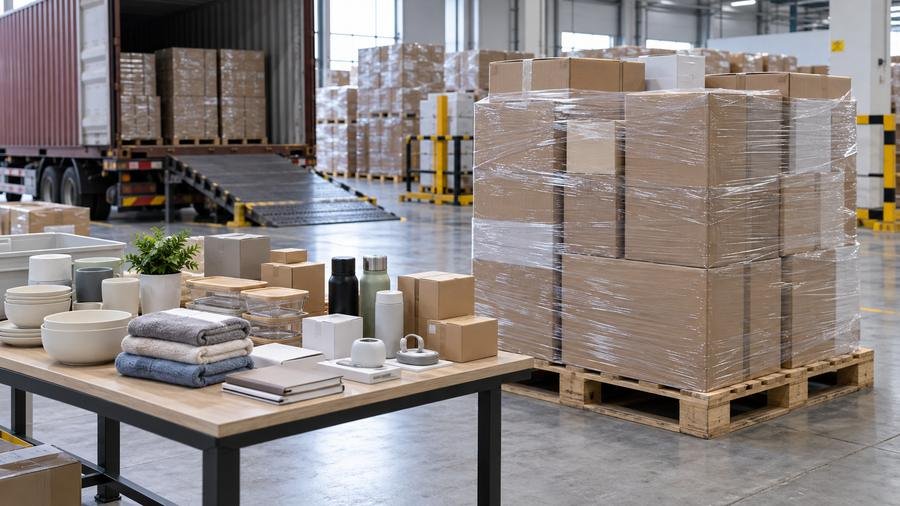
You pick up a clear storage box at a Yiwu booth and ask where it is made. “Our factory,” says the seller. That could mean a molding workshop owned by the same business. It could mean a sister company. Or it could mean a supplier the seller buys from every week.
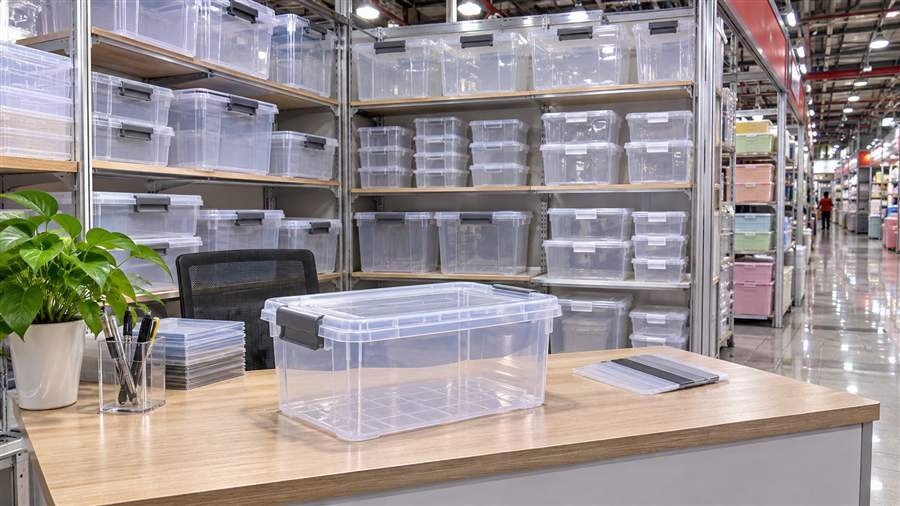
Before paying, establish which business sells to you, who makes this exact product, and who controls production decisions. You may end up buying from a capable trader or going straight to a manufacturer. Either can work when the relationship is clear and someone takes responsibility for the order.
A Yiwu booth is a sales location
Yiwu International Trade City, often called Futian Market, brings products and buyers together. The booth itself tells you where the sales conversation happens. It does not tell you which machines, workers, or subcontractors will make your order.
Several arrangements can sit behind the counter:
| Business behind the booth | What it may do | What to clarify |
|---|---|---|
| Factory-owned sales booth | Sell goods made at its own site | Does that site make your exact SKU? |
| Related trading or export company | Sell for an affiliated manufacturer | How are the entities connected, and who owes you the goods? |
| Independent trading company | Buy from several producers | Who controls specification, changes, and claims? |
| Stock wholesaler | Resell available inventory | Where is the batch, and does it match the sample? |
| Mixed manufacturer and reseller | Make some items and buy others | Which role applies to each quoted product? |
A company might mold storage boxes and buy the matching baskets from another workshop. It might make the product but outsource printing. So ask about the item and process in front of you. “Are you a factory?” is too broad to carry the whole conversation.
FriendDropshipping’s Yiwu sourcing service includes comparing suppliers and reviewing available business and product evidence. For a custom order, ask what further site verification is needed. A booth photo and a manufacturer’s claim are useful starting records; you still need to connect them to the company and product.
Start with the business taking your deposit
Match the seller’s legal identity to the order
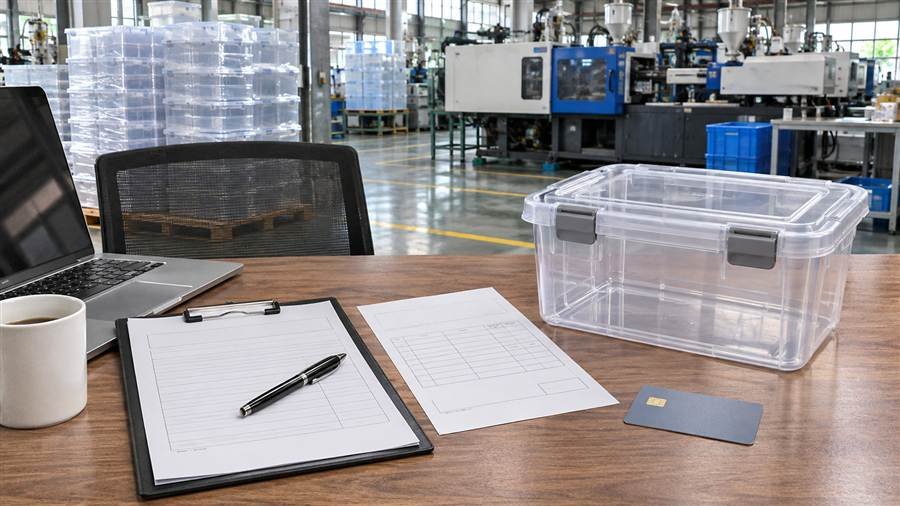
Request the Chinese legal name, business license details, and unified social credit code of the business you will contract with. Save the booth number and location, salesperson’s name, contact details, quotation, and product reference together. An English brand name on a business card may differ from the registered Chinese name. Get both.
Compare the legal entity with the agreement or pro forma invoice and the payment beneficiary. If the seller says a different exporter receives the money, ask for the structure in writing. Which entity is selling the goods? Which one invoices you? Who handles a refund or a rejected batch? A related company can be involved legitimately. You should be able to explain the arrangement without guessing.
The National Enterprise Credit Information Publicity System is a relevant place to check Chinese entity records. A SAMR-hosted explanation of the system describes registration and other business disclosures it collects. Search using the exact Chinese name or credit code, and get local help if access or language gets in the way. Treat a license image sent in chat as a document to check against the record.
Read the business scope without asking it to prove too much
Manufacturing or processing in the registered scope gives you a lead to investigate. It does not establish that a production line is operating today or that this company makes the quoted storage box. Likewise, a registered office address may differ from a workshop address. An office suite is a reason to ask where production happens, rather than an automatic verdict.
If the names or addresses differ, request a simple written map: seller, producer, production site, exporter, and payee. Unexplained changes are worth pausing over. For broader first-order checks, our guide to reliable Yiwu suppliers covers the sample, terms, and payment trail around the relationship.
Ask how this exact SKU is made
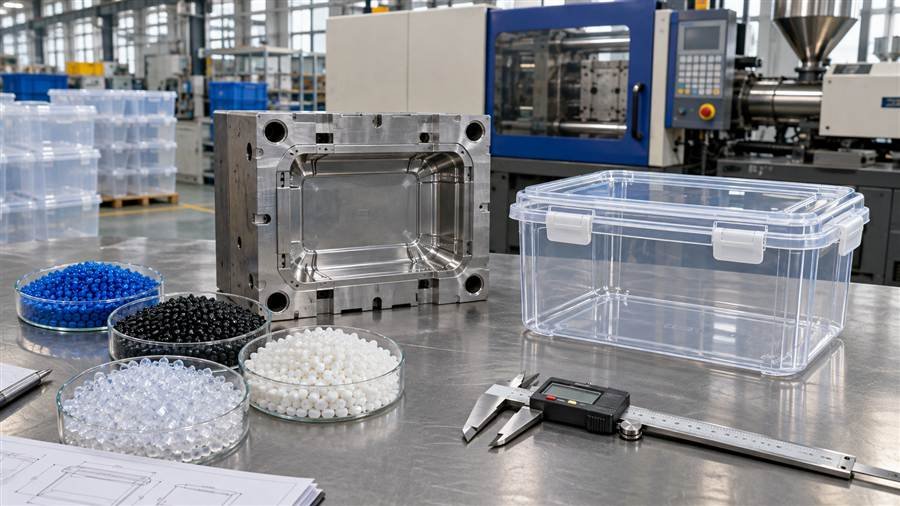
Take the storage box apart in conversation. What plastic is specified for the body? Is the lid a different material? Who molds the body, fits the clips, prints the label, and packs it? Which steps happen at the named factory, and which happen elsewhere? Ask who buys materials and approves a substitute when the usual supply is unavailable.
A seller with production access should be able to obtain concrete answers. Give the salesperson time to consult an engineer if needed. Compare the answers with the quote, sample, site evidence, and production plan. If the seller still cannot explain a change after checking with its team, follow up before committing.
Use a customization question with a real purpose
Suppose you want a thicker wall, a different lid color, and a logo on the sleeve. Ask which changes need new tooling, which can use an existing mold, and what minimum applies to each color or printed design. Request the sample process, lead time, and cost basis. You learn more from that discussion than from asking for the “best factory price” three times.
For textiles, the equivalent questions may involve fabric composition, cutting, sewing, dyeing, and label application. For jewelry, ask about base metal, plating, finishing, and outsourced steps. For an electrical accessory, identify the exact model, component configuration, assembly site, and relevant test evidence. Product knowledge needs to match the category.
Keep tooling and materials under written control
If you pay for a mold, record ownership, where it is kept, maintenance, permitted use, and what happens if you move production. Do the same for custom artwork and files. Ask whether the displayed sample uses the same material and tooling proposed for the bulk order. A perfect sample from another source tells you little about a batch made somewhere else.
Our product sourcing workflow connects supplier comparisons with samples and written specifications. The useful output is a product reference both parties can inspect, with approval required for changes to the material, maker, or production site where those changes matter to the order.
Treat signs, catalogs, and factory videos as clues
“Factory direct” may be a truthful description. It may also be loose sales language. A huge catalog suggests sourcing across several producers, but a manufacturer can trade in complementary goods. A narrow catalog can belong to a specialist trader. Neither pattern settles the question.
| Clue | Possible explanation | What to request next |
|---|---|---|
| Very broad catalog | Trader, group company, or mixed business | Production source for the exact SKU |
| Low MOQ | Ready stock, shared production, or resale | Batch location and custom-production terms |
| Fast technical answers | Experienced sales team or direct production access | Written spec and process evidence |
| Factory photos or video | Own site, partner site, or reused marketing | Live relevant walkthrough and site identity |
| Manufacturing in scope | Registered production activity | Evidence of current, relevant operations |
| Platform verification badge | Checks under that platform’s criteria | What was checked, when, and for which entity |
Be careful with the reverse assumptions, too. A delayed reply does not prove a middleman is hiding. A factory may need to check capacity or an outside process. A higher MOQ may come from material purchasing or packaging, even when the seller is a trader.
Keep a short list of unresolved questions. “Who molds the body?” is a useful open issue. “They sounded confident” is a poor substitute for its answer. If a seller gives a clear explanation of its sourcing role, judge that model on its terms. If its explanation changes whenever you request evidence, hold the commitment until the story and records agree.
Use a walkthrough or site visit to close specific gaps
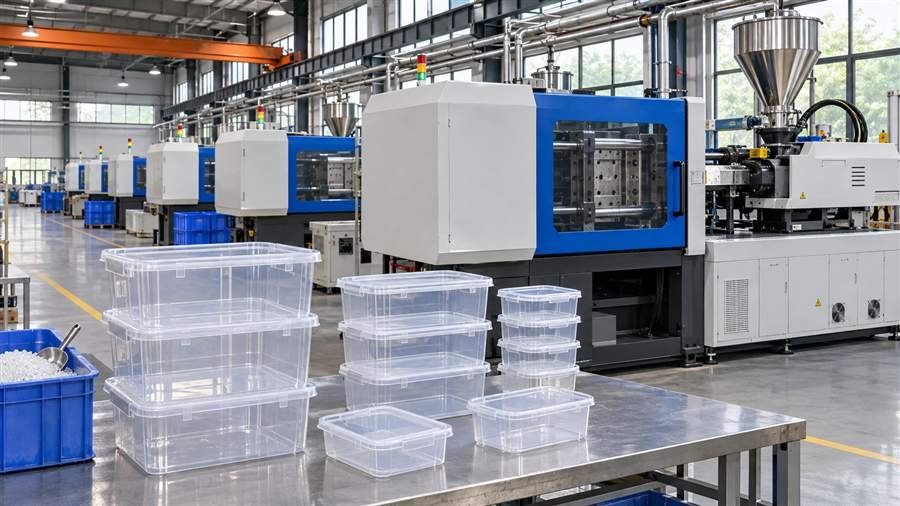
Show the relevant work, not only the showroom
A live video call can help when you are buying remotely. Agree on the site address and the purpose of the call. Ask to see relevant equipment, material storage, work in progress, and the quality checks used for that product or a genuinely similar process. Ask the host to explain what happens there and what is sent to another site.
For the storage box, seeing molding equipment is more useful than another tour of finished shelves. Still, it only demonstrates what you observed. The site might be a partner factory. That is not necessarily a problem; you need the seller to describe the relationship accurately and show how it controls your order.
Do not demand access to confidential customer work as a test of honesty. A supplier may have reasonable limits. Ask what alternative evidence it can provide, or arrange an independent visit with an agreed scope. A clipped promotional video with no location or product link gives you less to work with.
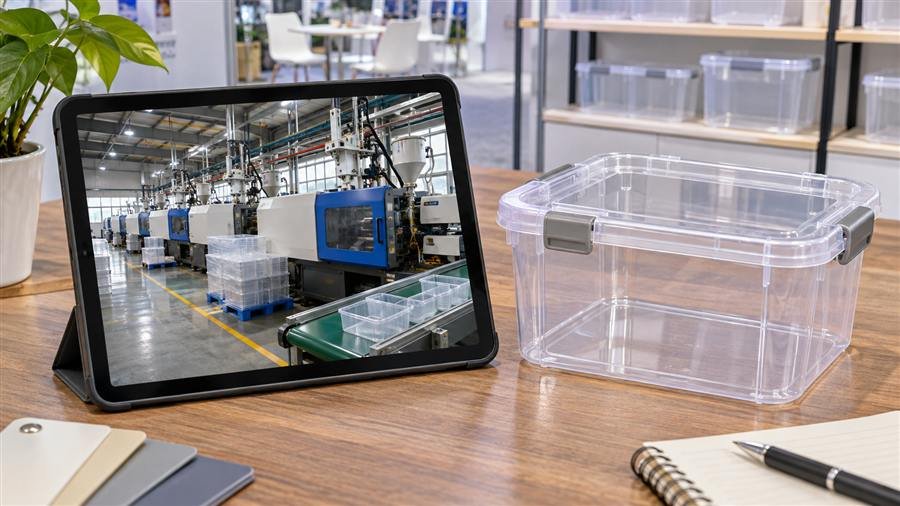
Decide what an independent visit needs to answer
For a large deposit, new tooling, or a product where mistakes are costly, a site visit or audit may be worthwhile. Define the questions first: does the relevant process exist, who operates it, what work is outsourced, how is material identified, and how are production and QC records kept?
Ask for dated observations, site details, photos where permitted, and limitations. A visitor cannot establish legal ownership just by walking through a workshop. It needs corroborating company or relationship records. Nor does a line running on Tuesday prove it has room for your order in December. Discuss capacity and scheduling separately. Verification reduces specific uncertainties; each unresolved issue still needs a decision.
A factory certificate does not approve your product
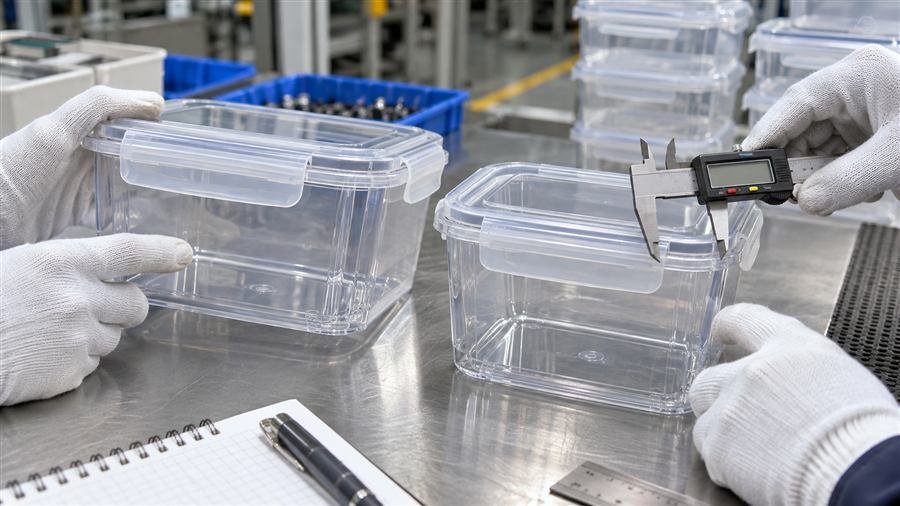
An ISO 9001 certificate concerns a quality management system within its stated scope. The joint ISO/IAF explanation of expected outcomes makes clear that this is not product certification or a guarantee that every unit conforms. Check the certificate’s entity, site, scope, validity, and issuing body. A certificate for a different group company does not automatically cover the workshop you are visiting.
A product test report answers another question. Check the named model, materials or configuration, tested requirements, applicant, date, and report scope. A report for one plastic grade cannot simply be assumed to cover a different material. Ask a competent laboratory or product specialist what evidence your item and destination actually require.
Food-contact kitchenware, toys, jewelry, textiles, and electrical goods have different risks and requirements. A storage box used for socks and one promoted for food storage can create different obligations. State the intended use before requesting evidence.
Then inspect the actual batch against the approved specification. A business identity check, management-system certificate, laboratory report, and batch inspection serve different purposes. Our quality-control service describes sample references, inspection scope, and holding mismatched goods. Visual warehouse checks cannot establish hidden material composition or replace specialist testing.
Choose the buying structure around your order
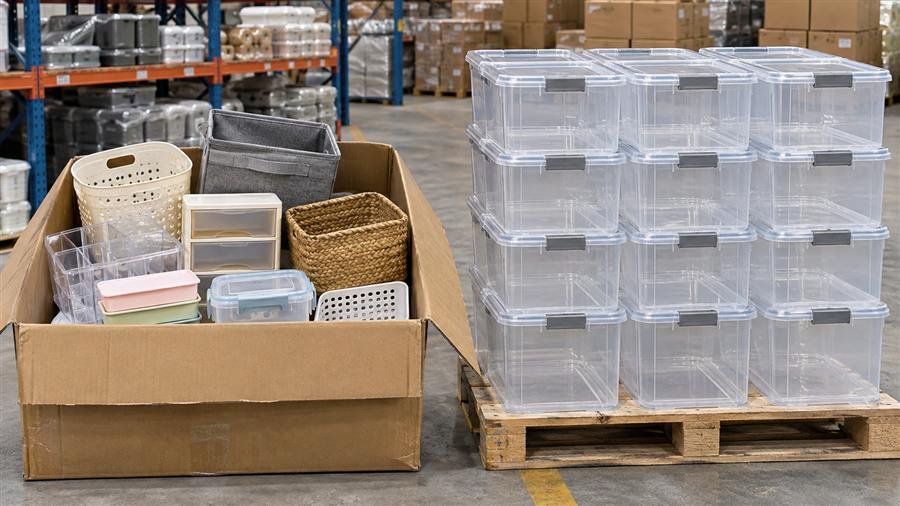
For a small stock order with several unrelated products, a trader may combine quantities, coordinate suppliers, and help prepare export paperwork. You pay for that work somehow, through a disclosed fee, product margin, or agreed resale price. Compare the full offer and who stands behind it.
For repeated custom production, direct access to the relevant manufacturer can make material decisions, tooling, and technical changes easier to discuss. It can also bring production minimums, separate packaging suppliers, or more coordination work for you. A factory may subcontract a step when capacity is tight. Ask about approval and disclosure before the order starts.
Consider two hypothetical orders. The first is 300 mixed home-storage items from several categories. The second is 10,000 identical boxes with a custom lid and repeat replenishment. The first buyer might value consolidation more. The second has more reason to investigate the molding process and tooling control. Those quantities are examples, not thresholds for when a factory becomes the right choice.
Compare quotes against the same material, dimensions, quantity, packaging, inspection scope, and delivery point. Include domestic freight, setup, sample rounds, payment costs, and your own coordination burden. “Factory price” is not a complete cost calculation. A transparent trader who can meet your specification may be a better fit than a manufacturer that cannot support your order size or service needs.
Put the production relationship into the first order
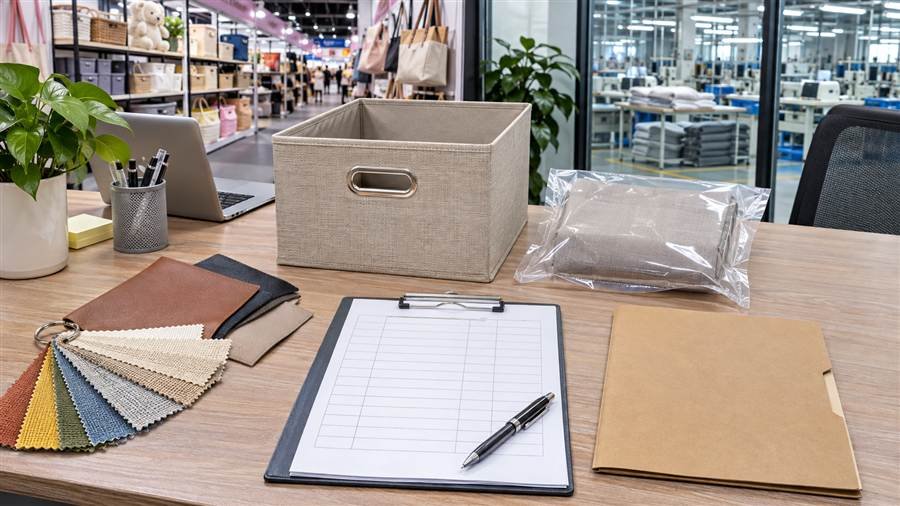
Keep a compact evidence packet before paying the deposit. It should connect the seller to the goods you approved and the site expected to produce them. For custom or material-sensitive work, identify changes that require your written approval. Ask for inspection access and define what happens when a batch fails or a supplier misses the date.
For ready-stock buying, focus on the batch you will receive. Ask where it is stored, whether the quantity is reserved, and whether all cartons contain the same version. A sample pulled from a booth shelf may have been there for months. For a new production run, focus more on the approved process, material purchasing, sample stages, and production schedule. The paperwork should describe the job you are commissioning. Otherwise you can spend a week confirming that a factory exists and still buy the wrong stock.
| Record | Why it matters |
|---|---|
| Seller, contract party, invoice and payee | Identifies the commercial relationship |
| Producer and production address | Connects the SKU to a named source |
| In-house and outsourced steps | Shows where control and checks are needed |
| Approved sample and specification revision | Gives the batch a common reference |
| Material, site and supplier change rule | Prevents unapproved substitutions |
| Tooling and artwork terms | Clarifies use, custody, and transfer |
| Milestones, inspection and claims terms | Defines evidence, decisions, and remedies |
Start with a manageable trial where practical. Check the goods and documents, and pay attention to how the seller handles questions or discrepancies. Before reordering, confirm that the source, material, tooling, and specification remain the same. Keep a record of any agreed changes even after a first batch goes well.
Conclusion
The storage box on a Yiwu counter may come from the booth owner’s workshop, an affiliated factory, or an independent supplier. Establish which arrangement applies to that SKU. Match the seller and payment records, investigate the relevant process, and put change control and claims into the order. Choose the structure that can deliver your actual product with clear responsibility when something needs fixing.
FAQs
Are all Yiwu market booths owned by factories?
No. A booth may represent a manufacturer, related sales company, trader, or wholesaler. Ask who produces the exact SKU you are buying.
Can a factory use a separate trading or export company?
Yes. Ask how the companies are connected and which one sells, invoices, receives payment, and handles claims. Record the arrangement before paying.
Does a business license prove that a supplier manufactures goods?
It helps establish identity and registered activity. It does not prove current production of your item. Corroborate the claim with site and product evidence.
Does a broad product catalog mean the seller is a trader?
It is a clue. A manufacturer may also buy complementary items. Check the production source of each important SKU.
Does a low MOQ mean I am buying from a wholesaler?
No. It may reflect ready stock or a shared production run. Ask separately about stock availability and custom-production minimums.
How can I check a supplier remotely?
Review company details, match payment records, request samples, hold a relevant live walkthrough, and consider an independent site check when the risk warrants it.
What should a live factory walkthrough show?
Relevant equipment, materials, work in progress, and quality checks where access permits. Confirm the location and how it relates to the seller and your product.
Can a factory visit prove ownership?
It shows observations at a site. Legal ownership or an affiliated relationship requires corroborating records; a visit alone cannot establish it.
What if the bank beneficiary differs from the booth name?
Pause and ask why. A related exporter may be involved, but obtain a written explanation of who receives the money and owes you the goods.
Does ISO 9001 prove the product meets my market’s requirements?
No. It concerns a quality management system. Product-specific requirements, evidence, and batch checks remain separate.
Can a real factory outsource part of production?
Yes. Ask which steps, where they happen, and how the factory controls them. Define which outsourcing or source changes require your approval.
Is buying from a factory always cheaper?
No. Compare the same specification and total cost, including minimums, setup, packaging, freight, and coordination. A trader may consolidate buying effectively.
When is a trading company the better option?
It may fit small mixed orders or buyers needing supplier coordination. Judge transparency, product control, service scope, and claims terms.
Who should own molds and custom artwork?
Agree ownership, custody, permitted use, maintenance, and transfer rights in writing, especially when you pay for development.
What should I check again before a repeat order?
Confirm the producer, site, material, specification, tooling, packaging, and lead time. Record changes and inspect against the current approved reference.
Table of Content

I’m Cassiel. I’ll help you scale your Shopify business with reliable fulfillment.
Join to newsletter.
Follow us and get more knowledge.