You need hair clips, cosmetic bags and a scarf for a gift set. They belong together in your store. In Yiwu, they can send you to different buildings.
Yiwu International Trade City, often called Futian Market, groups wholesale products by district and floor. Learning that layout before you arrive gives you more time to compare samples and fewer hours following the wrong signs.
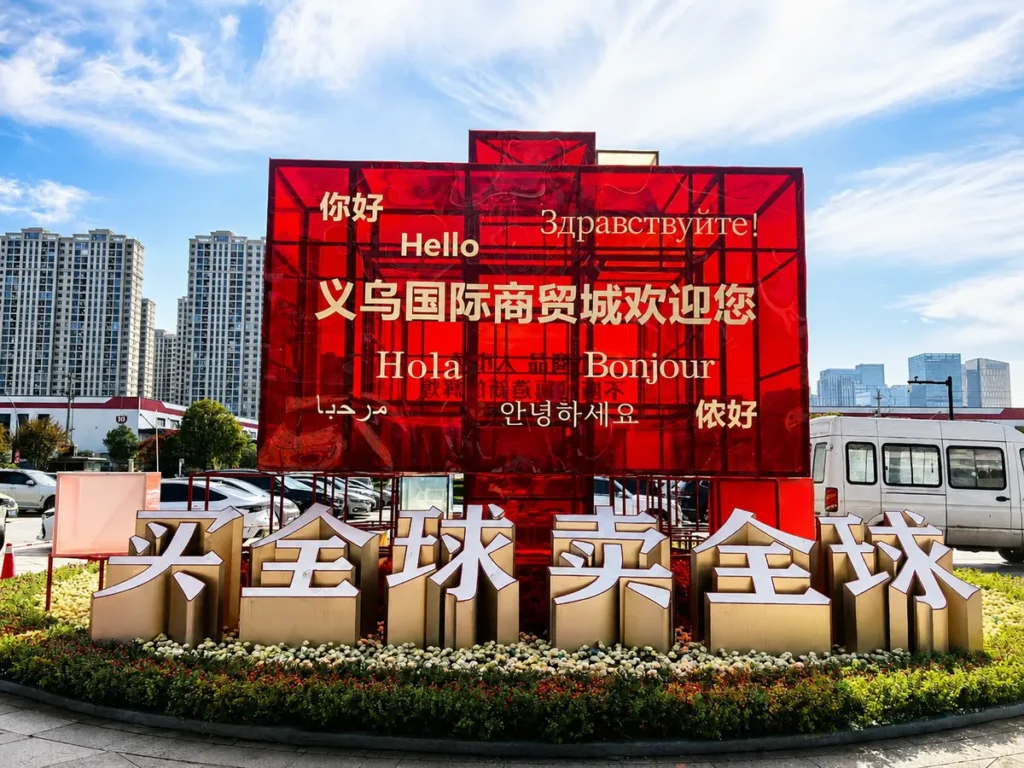
Start with the product list. Then choose your district, check the floor and confirm the actual booth. Save a current supplier address before you set off.
Find your product category before choosing a district
The starting points below follow Yiwugo’s current product directory, checked on November 18, 2026. They are category listings, not guarantees that a particular seller has stock. Some categories appear in more than one district.
| Product category | Main starting point | What to check next |
|---|---|---|
| Toys and artificial flowers | District 1, 1F | Toy type, flower components and selected supplier |
| Hair accessories and fashion jewelry | District 1, 2F | Finished items versus components; District 1-East also has related listings |
| Festival crafts, decorative gifts and frames | District 1, 3F | Material, season and packaging |
| Bags, luggage and umbrellas | District 2, 1F | Bag type, dimensions and construction |
| Hardware, locks and electrical products | District 2, 2F | Exact model and intended use |
| Kitchen hardware, small appliances and clocks | District 2, 3F | Product specification and export requirements |
| Stationery, sports and outdoor goods | District 3, 1F to 2F | Pens, paper and eyewear on 1F; office, sports and outdoor categories on 2F |
| Cosmetics and beauty supplies | District 3, 3F | Tools versus formulas; related categories also appear in District 6 |
| Socks, hats, gloves and scarves | District 4 | Socks on 1F; hats and gloves on 2F; scarves on 4F |
| Bedding and curtain fabrics | District 5, 2F to 3F | Finished bedding versus fabric sold for further production |
| Pet products | District 5, 2F and listed 5F space | Exact product, supplier and current booth |
| Auto and motorcycle accessories | District 5, 4F | Vehicle compatibility and part specification |
| Trend toys, fashion and smart products | District 6 | Check the relevant floor and product listing before visiting |
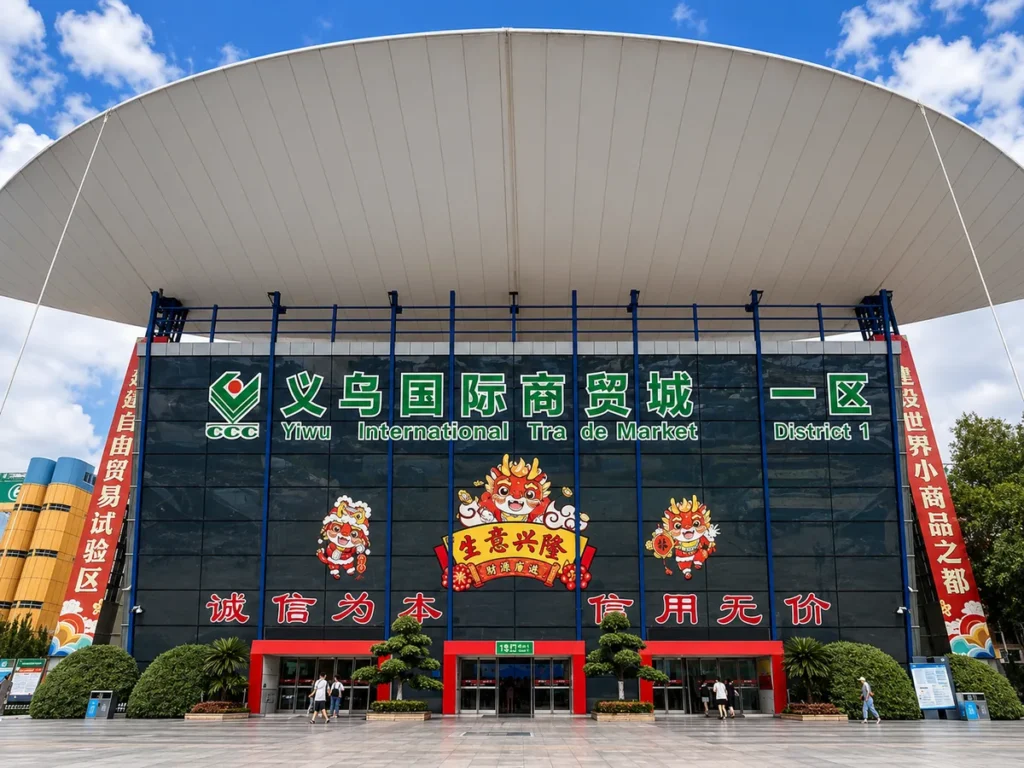
Write “District 3, 3F” rather than “third floor.” The third floor in another district will lead you to different goods. Also keep the building’s full name when searching: an east extension is a separate destination in the directory.
District 1: toys, jewelry, artificial flowers and gifts
District 1 is a useful starting point for gift shops, accessory sellers and seasonal-product buyers. Its categories cover several products that look good together in a retail assortment, although you will still need to compare suppliers separately.
Match the floor to the product you need
The main directory groups toys, artificial flowers and flower accessories on 1F. Hair ornaments and jewelry are on 2F. Festive crafts, tourist crafts, porcelain, crystal and photo frames appear on 3F. The 4F listing includes toys, flowers, jewelry and craft accessories.
For toys, record the material and intended age group. A plush item and a small plastic toy raise different inspection questions. Loose parts, seams and packaging need attention, and the destination market determines applicable safety requirements.
For flowers, compare stem construction, fabric or plastic components, color consistency and packed volume. A large decorative arrangement may cost little to buy but take up considerable shipping space.
Jewelry needs more than a color reference. Ask about the base metal, plating, clasp and individual packing. Our jewelry sourcing and fulfillment page covers how those product details connect with sample checks and presentation.
Do not assume that a showroom described as factory-direct proves manufacturing capability. Ask who produces the goods and who will sign the order. For festival products, confirm whether the sample is available stock or a reference for a future production run.
District 2: bags, umbrellas, hardware and electrical goods
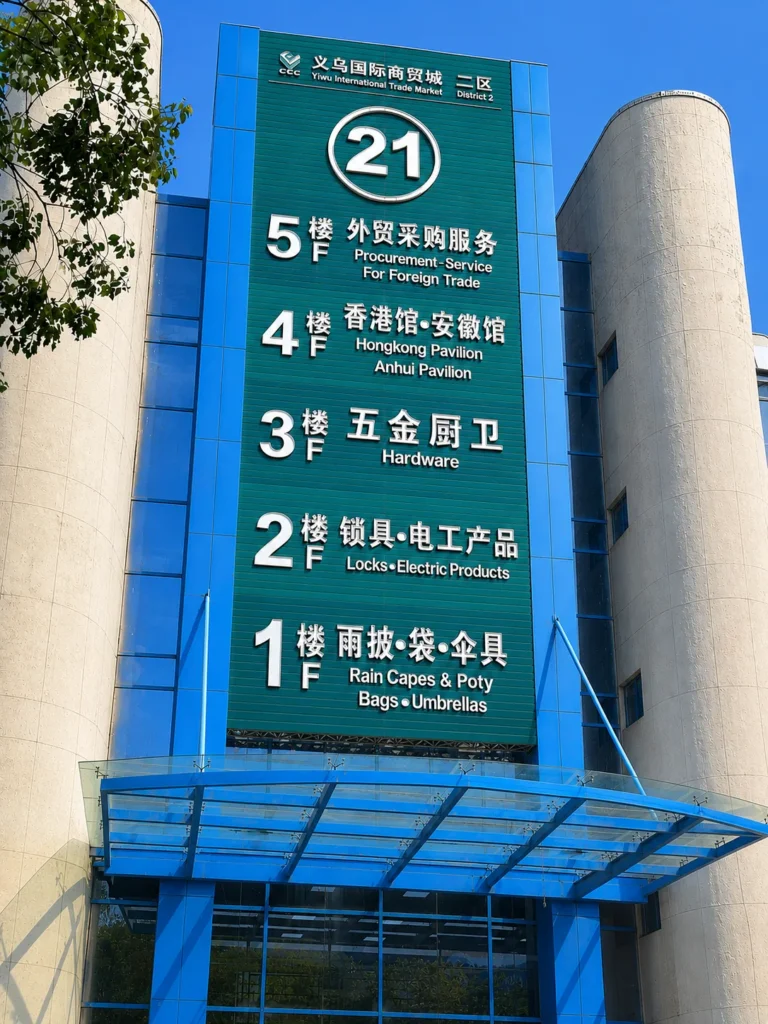
District 2 brings together travel products and practical goods. The main building’s 1F listings include rainwear, umbrellas, luggage and school bags. On 2F, look for electrical products, locks, hardware tools and vehicles. The 3F categories include kitchen and sanitary hardware, small appliances, telecom products, clocks and watches. Related categories continue on 4F.
If your list says “cosmetic bag,” add the dimensions and construction before searching. A lined fabric pouch, transparent zipper bag and structured travel case are different products. Check the fabric, zipper, lining and seams with the item open as well as closed.
For bags and shoes sourcing, sample measurements and variant records help prevent a similar-looking replacement from slipping into a later order. Shoes themselves also have a District 4 directory entry, so follow the actual category rather than treating the two products as one location.
With umbrellas, examine the frame, opening mechanism and packed size. For hardware, specify dimensions, material and the job the item must perform. An attractive finish tells you little about whether a lock or tool suits its intended use.
Electrical goods require another layer of checks. Confirm the exact model, ratings and destination requirements. A plug that fits your socket does not establish electrical safety or product compliance.
District 3: stationery, sports goods and beauty products
District 3 is worth checking for school, office, sports and beauty assortments. Its directory includes pen, ink and paper products plus eyewear on 1F. Office and stationery goods, cultural and sports products, and outdoor categories appear on 2F.
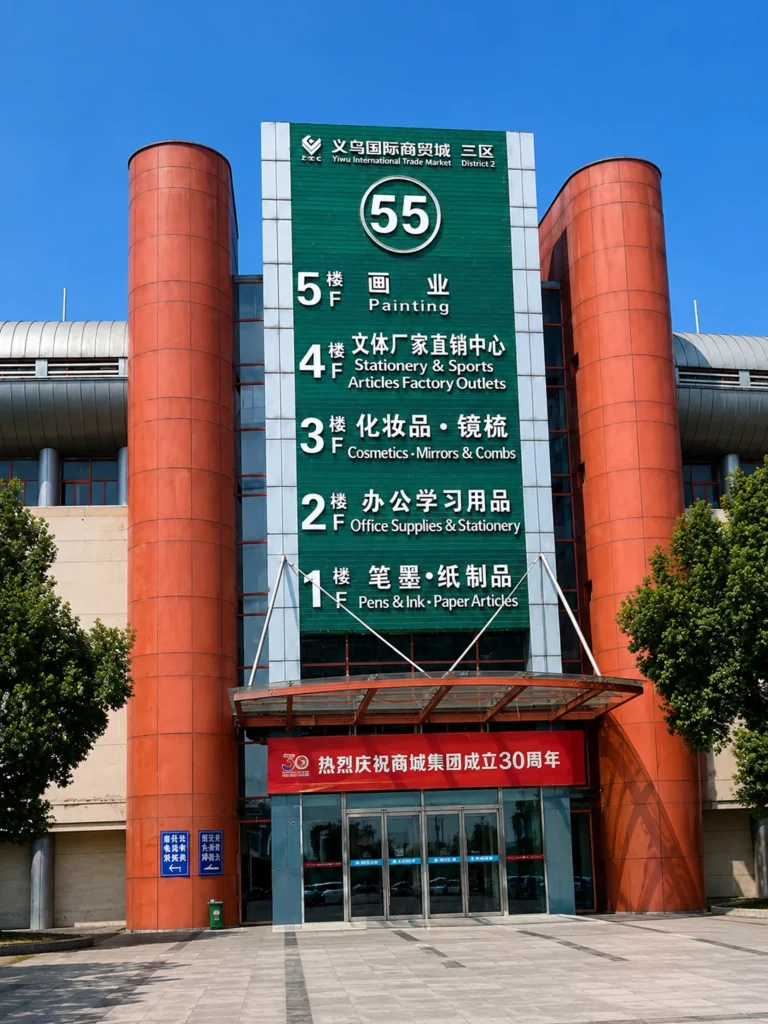
On 3F, the listed groups include cosmetics, beauty and hair supplies, buttons, zippers and apparel accessories. These garment trims are inputs for clothing production, so distinguish them from finished garments when planning your visit.
Separate beauty tools from cosmetic formulas
For a brush set, compare the fiber, handle, ferrule and set contents. Check shedding and how the brushes will be protected after inspection. A cream or serum needs a different specification, with formulation, labeling and product safety obligations relevant to its destination.
If you are building a collection, beauty product sourcing should begin with the exact products and uses. “Beauty goods” is too broad for either a supplier brief or a compliance check.
For stationery, verify the selling unit. A quotation per pack can look cheaper than one per piece. Record paper size, sheet count, ink type and the components of any set.
Current upper-floor listings include cultural and sports products on 4F, and wall art, frames and hotel furnishings on 5F. Older summaries can describe these floors more generally. Confirm your shortlisted supplier’s floor instead of assuming every upper level is simply a factory-outlet hall. The directory also lists New Year pictures, calendars and couplets on the basement level.
District 4: socks, knitwear and everyday textile products
Start on 1F for socks and leggings. The 2F categories include knitwear, hats, gloves and daily necessities. On 3F, the directory lists yarn, ties, lace, towels, cords and tapes, plus shoes. Belts, lingerie, scarves and packaging boxes and bags appear on 4F.
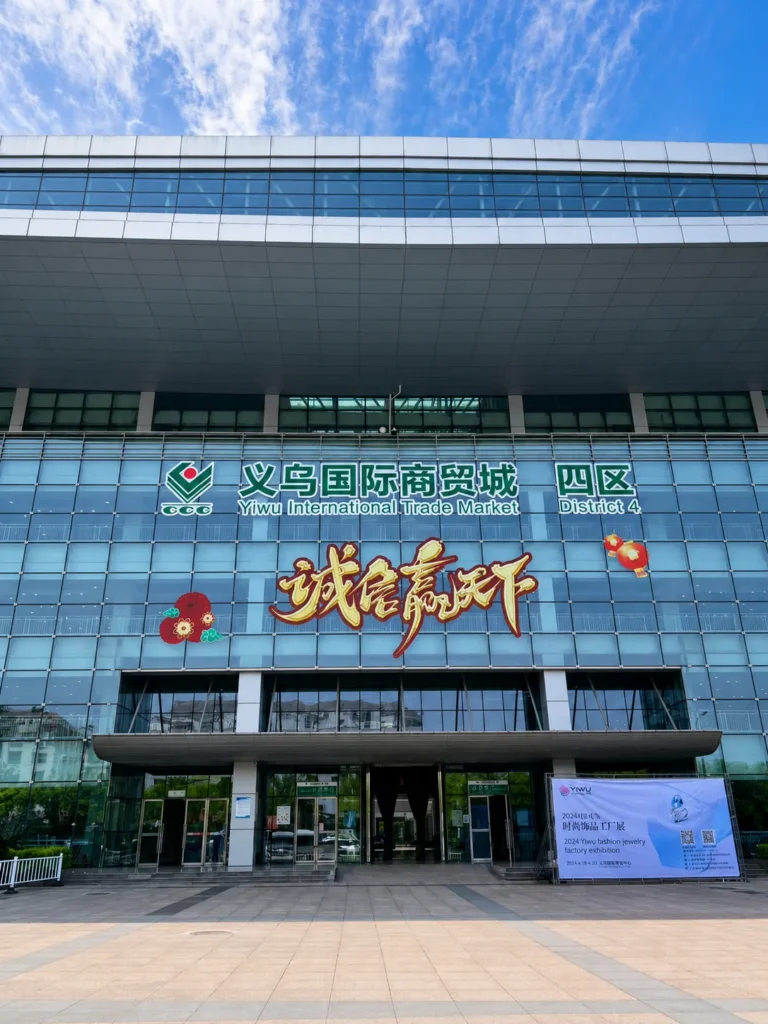
The 5F listings include the tourist shopping center and selected clothing-accessory and daily-use categories. That does not mean every booth sells individual retail quantities. Ask the seller about its order terms.
A sock sample gives you a feel for the knit and finish. It does not replace a written composition or size specification. Two pairs described as cotton socks can differ in fiber blend, weight, stretch and construction.
For apparel sourcing and fulfillment, define measurements, tolerances and labeling alongside the approved sample. If you plan to mix colors or sizes, ask whether the minimum applies to each variant or the combined order.
The current directory has a packaging-box-and-bag category on 4F. That is a starting point for supplier research, not a promise that every packaging material or printing process is available there. Bring the packed product dimensions and artwork requirements when asking for quotes.
District 5: bedding, fabrics, pet products and auto accessories
On 1F, the current directory includes food and alcohol, daily necessities, jewelry and crafts, and the Belt and Road pavilion and Africa commodity center. Goods displayed in an imported-products area should not automatically be treated as China-made products for export.
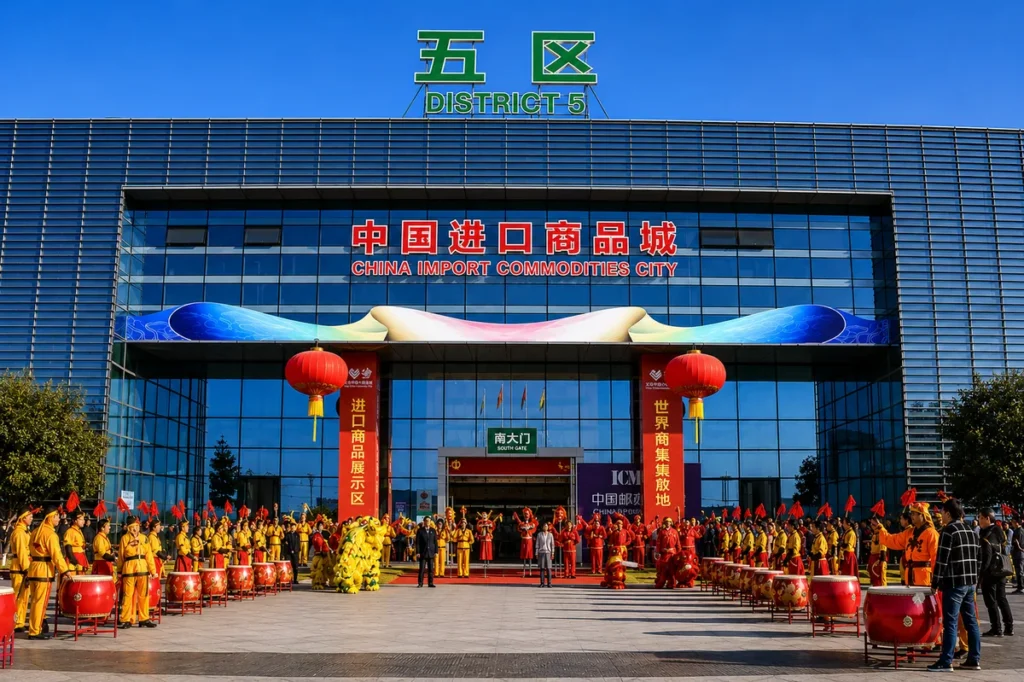
The 2F listings include bedding, wedding supplies, hair products and pet supplies. On 3F, look for curtain fabrics and wedding and hotel supplies. Automotive supplies and auto and motorcycle parts appear on 4F. The current directory also lists a Home Living & Pet Space on 5F.
Check overlapping categories and current floor listings
Older district summaries can omit newer category entries or describe the upper floors differently. Use the category listing to identify a supplier, then confirm the address directly. A pet-product listing elsewhere in the market is not necessarily an error; some products cross category boundaries.
For bedding, write down the finished dimensions and the set contents. A photograph of a neatly made bed may include cushions that are not part of the quotation. Fabric buyers should confirm composition, width, weight and the unit of sale.
For pet products, define the animal, size and intended use. Auto accessories need exact fitment information. A part that looks right in a display cabinet may still be wrong for the vehicle your customer owns.
District 6: what the Global Digital Trade Center adds
Yiwugo now lists District 6 as the Global Digital Trade Center. A guide that stops at five districts misses this part of the current directory.
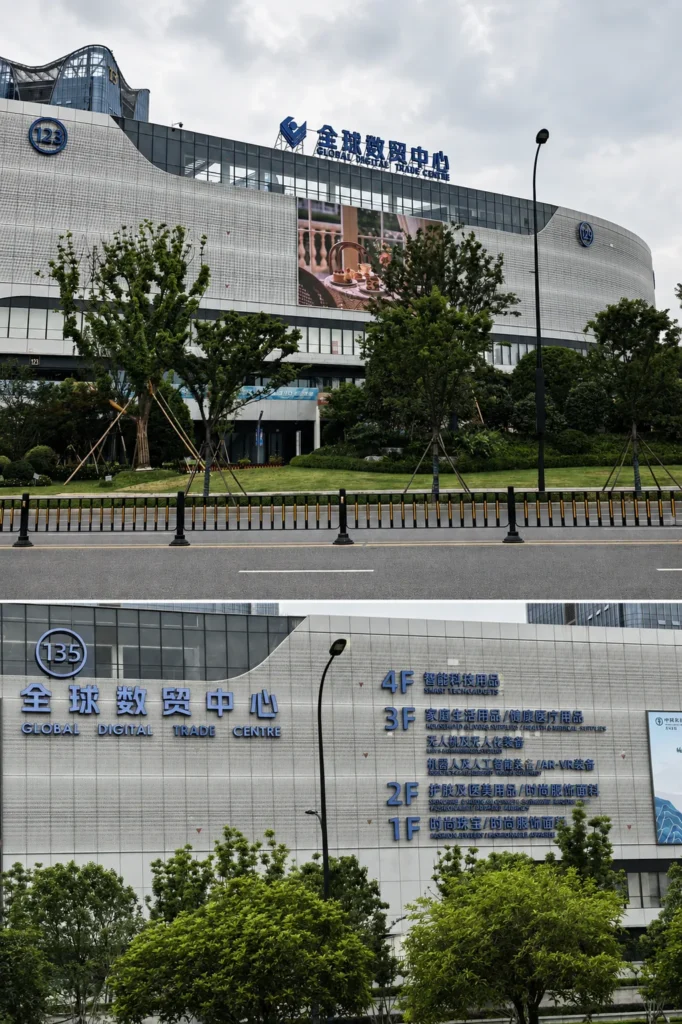
Its 1F categories include fashion garment fabrics, creative trend toys and fashion jewelry. On 2F, the directory lists fashion garment fabrics, baby and children’s products, and skincare and medical-beauty categories. The 3F entries include home and medical products, drones, robots, AR and VR, and travel products. Popular IP collections and smart technology appear on 4F.
Those labels help you decide whether to investigate a supplier. They do not establish medical approval, technical performance or permission to sell a character-branded product.
For IP merchandise, ask for evidence of authorization covering your intended sale. For connected or powered products, check the exact model and relevant technical documentation. A working demonstration is useful, but it will not answer every question about production consistency, batteries, radio functions or destination requirements.
If your existing assortment already has suitable suppliers in Districts 1 to 5, add District 6 for a specific comparison.
When to check the east extensions or a separate market
District 1-East has jewelry and jewelry-accessory listings across its lower floors, with flower accessories on 4F. Keep “East” in the address when confirming a booth. Dropping that word can send your representative to the wrong building.
District 2-East has its own floor arrangement: home-decoration hardware on 1F, new energy on 2F, and smart hardware and appliances on 3F. Do not apply the main District 2 floor guide to the east extension.
For finished garments, investigate Huangyuan Garments Market separately. It is a different market, not a clothing floor inside the Trade City. Ask for the seller’s full market name before planning a visit.
The Production Material Market is another separate destination. Its current directory includes fabric accessories, printing and packaging machinery, sewing equipment, plastic pellets and leather materials, among other categories. It may be relevant when you are buying manufacturing inputs or equipment. A buyer looking for finished retail gifts has a different task.
Turn a district name into a usable booth address
A district is a search area. Before a visit, turn it into a specific destination using the Yiwugo market map and confirmation from the seller. If the map does not load on your device, request a location pin, entrance details and a photograph of the booth sign.
Keep the Chinese address with your English notes
Save the original Chinese text alongside your translation. Record the district or extension, floor, gate, street or unit where provided, and booth number. Add the seller’s name and contact details.
Tie that address to a product and sample reference. “Nice bag supplier” will be a frustrating note after you have seen several similar bags.
Photograph the booth sign with permission and date your record. Before returning, ask whether the supplier is still at that location. A saved screenshot is useful evidence of your earlier visit, but it cannot confirm today’s address or stock.
Plan a Yiwu buying route around your shortlist
Decide which products need comparison before booking appointments. Leave time to review the samples and ask suppliers about anything you could not resolve at the counter.
A one-day accessories visit
Suppose you want hair clips and simple jewelry for a small retail collection. Start with District 1’s relevant floor and investigate District 1-East only where the shortlisted products justify it.
Compare your priority items first. Ask for the same quantities, materials and packaging from each candidate. Label samples immediately, then leave time to return to the strongest options with follow-up questions.
A two-day gift-set visit
For a hypothetical set containing beauty brushes, a cosmetic bag and a scarf, your starting points span Districts 3, 2 and 4. Contact candidates before travel and rank the components by how difficult they are to source.
Use the first day for the highest-priority component and any confirmed appointments that fit. Use the second for remaining categories and revisits. This is a planning example, not a promise that three districts can be thoroughly covered in two days.
Check current opening arrangements and allow for travel, translation and sample discussions. Keep a backup appointment if a supplier is absent. Carrying every sample through every building is tiring, too; agree a collection or delivery arrangement when the load grows.
Before placing an order, record more than the booth number
Match materials, samples and MOQ per variant
Your record should connect the physical item to the quotation. Include material, dimensions, color, quantity unit, packaging and approved sample reference. Write down what would count as an unacceptable defect.
Ask whether the MOQ applies per SKU, size, color or artwork. Existing stock and a new production run can have different minimums. Custom packaging may introduce a separate minimum and setup cost. For an online sourcing comparison alongside your market visit, our guide to private label MOQ and export requirements explains those trade-offs.
Product requirements follow the intended use and destination. Ask for relevant evidence for the exact item. A booth’s category, an attractive sample or a general certificate does not settle every testing and labeling requirement.
Agree receiving, inspection and consolidation responsibilities
Confirm the legal seller, payment beneficiary and order responsibility. If the booth also operates a Chinese online storefront, the guide to verifying a Chinese storefront supplier helps organize identity checks. A market visit still needs its own evidence of who is accepting your order.
For several suppliers, name the receiving warehouse and define its checks. Will someone count every variant, inspect selected units, record shortages and hold disputed goods? Photographs of unopened cartons will not answer those questions.
If you combine market purchases with online orders, use a documented buying, inspection and consolidation workflow. Reconcile the contents before final packing and confirm who approves shipment.
FriendDropshipping can help coordinate supplier comparison, samples and warehouse handoffs. Send a product list with quantities, specifications and destination so the team can discuss a defined scope. Bulk buying and individual ecommerce fulfillment should be agreed separately.
Conclusion
Start your Yiwu sourcing plan with the products you need. Match each category to a district and floor, then confirm the actual booth before visiting. Include the east extensions, District 6 or a separate market when they serve a specific buying task.
Keep enough time to compare materials, record samples and revisit suppliers. A clear shortlist with usable addresses and written quotations gives you something to act on after the trip. A phone full of product photos without supplier references is much harder to turn into an order.
FAQs
Which Yiwu district should I visit for my products?
Choose by category first. District 1 covers many gifts and accessories; District 2 includes bags and hardware; District 3 has stationery and beauty supplies. Districts 4 and 5 cover textile and other categories, while District 6 adds fashion and smart-product listings. Confirm the floor and booth next.
Where can I find toys and fashion jewelry in Yiwu?
Start with District 1: toys are listed on 1F and jewelry on 2F. District 1-East also has jewelry-related listings, while District 6 includes trend toys and fashion jewelry. Check the exact product and supplier address, especially when comparing finished goods with components.
Which district sells bags, umbrellas and luggage?
District 2, 1F is the main starting point in the directory. Specify the bag type, dimensions and material before shortlisting sellers. Some related products appear elsewhere, so use the supplier’s confirmed location rather than assuming every bag seller must be on that floor.
Where are cosmetics and beauty tools sold?
District 3, 3F includes cosmetics and beauty and hair supplies. District 6 also has skincare and related categories. Separate tools from formulas when preparing your brief. Their specifications, checks and destination requirements differ, even if you plan to sell them in one collection.
Where should I look for socks, fabrics and bedding?
Start with District 4, 1F for socks. District 5 lists bedding on 2F and curtain fabrics on 3F. Other fabric categories appear in District 6 and specialist markets. Tell suppliers whether you need a finished item or material for further production.
Where can I find pet products in Yiwu Market?
The current District 5 directory lists pet supplies on 2F and a Home Living & Pet Space on 5F. Individual products can also appear under other categories. Confirm the supplier’s actual address and define the animal, size and intended use before requesting samples.
Does Yiwu Market have five districts or six?
The current Yiwugo directory lists Districts 1 to 6, including the Global Digital Trade Center as District 6. Many older guides describe the traditional five districts. Check the directory date and distinguish numbered districts from the east extensions and separate markets elsewhere in Yiwu.
Is Huangyuan Garments Market inside the Trade City?
No. Treat Huangyuan Garments Market as a separate destination. The Trade City has clothing-related categories such as hosiery, knitwear and garment accessories, but these do not make every clothing inquiry a Trade City visit. Ask for the full market and booth address.
Can I cover all Yiwu market districts in one day?
Choose the category that matters most to your order. Even within one category, comparing samples and discussing specifications takes time. Prioritize confirmed suppliers and leave room for revisits. Your schedule should reflect appointments and purchasing questions, not just the number of districts on a map.
Can I source from these districts without visiting China?
Yes. A local representative can locate suppliers and coordinate samples. Agree how addresses, quotations and product details will be recorded. Specify inspection and consolidation tasks separately, and approve samples before bulk purchasing. Remote access does not remove the need to verify the seller and written order.
Table of Content

I’m Cassiel. I’ll help you scale your Shopify business with reliable fulfillment.
Join to newsletter.
Follow us and get more knowledge.


