Finding a supplier in China is easy. Type a product name into a marketplace and thousands of listings show up before your coffee cools. Finding a supplier who sends the right item, in the right package, on time, for the 300th order? That is the real job.
A supplier profile is a bit like a dating profile. It can introduce you. It cannot prove how somebody behaves on a bad Tuesday when stock disappears and 40 customers want tracking updates.
This guide shows you how to choose the right sourcing channel, check the company behind a quote, test the actual product and fulfillment route, calculate the complete delivered cost, and scale without turning every order into a rescue mission. We will define “reliable” with evidence, not badges or cheerful promises.
What Dropshipping from China Looks Like in 2026
Dropshipping means your store sells a product that another company supplies or fulfills after the customer orders. In China, that model now comes in several forms.

Traditional per-order dropshipping
Your store forwards each paid order to a seller or supplier, who sends it to the buyer. The low inventory commitment suits testing. The trade-off is control: stock can be stale, product versions change, and you depend on the supplier’s packing, tracking, and response when trouble starts.
Agent-backed dropshipping
A private agent can compare factories, buy products, receive and inspect them, apply packaging, and release orders to carriers. This is useful for 1688 sourcing, several factories, bundles, or local stock verification.
The hybrid model
Many stores test with little inventory, reserve proven SKUs in a China warehouse, then move stable products closer to customers when faster delivery justifies the stock risk. Zero inventory suits uncertain demand; controlled inventory suits predictable demand.
Is Dropshipping from China Still Worth It?
Yes, for the right product and operating setup. China offers deep manufacturing clusters, huge material and component networks, packaging suppliers, and the ability to combine several products in one warehouse. Those advantages are hard to replace.

Still, the lowest factory quote does not automatically create the lowest customer cost.
|
Potential advantage
|
Related trade-off
|
|
Large product and supplier choice
|
Similar-looking listings may use different materials or factories
|
|
Low commitment for early testing
|
Per-order buying gives weak stock and price control
|
|
Strong customization ecosystem
|
Samples, artwork, tooling, and packaging can add lead time and MOQ
|
|
Supplier clusters for many industries
|
Capability varies sharply by category and region
|
|
International parcel networks
|
Customs, duties, restrictions, and late-tail delivery affect cost
|
|
Multi-supplier consolidation
|
Someone must receive, check, map, and combine the SKUs correctly
|
|
Easy path from generic to private label
|
Compliance and manufacturer responsibilities can increase when your brand goes on the product
|
Compact, durable, easy-to-explain products remain good candidates. Items with a useful improvement angle—better material, clearer sizing, a smart bundle, or stronger packaging—give you room to build value.
Fragile, oversized, hazardous, highly regulated, or low-margin commodity products are harder. A $3 item is not a bargain if shipping costs $8, one in ten arrives damaged, and customers can find the same product locally tomorrow.
Before contacting factories, validate product demand across several signals. Supplier research cannot rescue a product nobody wants.
The Six Types of China Dropshipping Suppliers
Six companies may call themselves suppliers while doing completely different work.
Marketplace sellers
AliExpress and DHgate connect you with merchants and suit low-commitment tests. Quality, stock, shipping, branding, and support vary by seller.
Direct factories and manufacturers
Factories make the product or major components. They offer control and customization, but many prefer production runs to individual consumer orders.
Trading companies and wholesalers
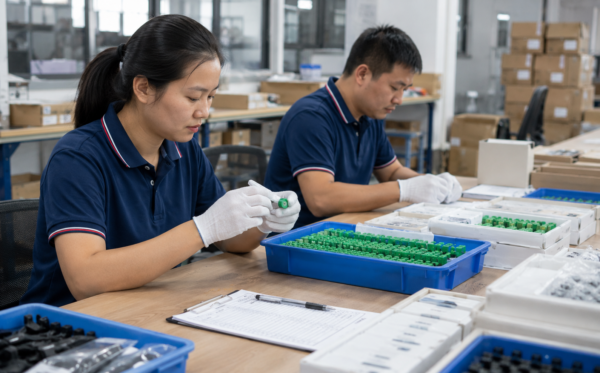
A trading company sources and resells. A good trader can combine categories and accept smaller orders. Trouble starts when it claims to own production it does not control.
Dropshipping platforms
Platforms combine catalogs, store integration, order tools, and fulfillment. They reduce manual work, though product-level control still varies.
Private sourcing and dropshipping agents
Agents search outside fixed catalogs and coordinate suppliers, samples, purchasing, QC, packaging, warehousing, and shipping.
China 3PL and fulfillment warehouses
A 3PL stores inventory and ships orders. Some also source; others expect approved stock. Confirm the scope.
|
Supplier model
|
MOQ/commitment
|
Sourcing help
|
QC and branding
|
Store automation
|
Best fit
|
|
Marketplace seller
|
Usually low
|
Catalog only
|
Seller-dependent
|
Third-party tools
|
First product tests
|
|
Direct factory
|
Medium to high
|
Own products
|
Strong potential
|
Often limited
|
Proven SKU or private label
|
|
Trader/wholesaler
|
Low to medium
|
Several sources
|
Varies
|
Usually limited
|
Mixed categories or smaller buys
|
|
Dropshipping platform
|
Low
|
Platform catalog/request
|
Standardized options
|
Usually strong
|
Fast store launch and testing
|
|
Private agent
|
Flexible
|
Broad supplier search
|
Often coordinated
|
Provider-dependent
|
Growing stores and branded operations
|
|
China 3PL
|
Inventory required
|
Sometimes
|
Warehouse services
|
Usually strong
|
Stable demand and controlled fulfillment
|
Every task needs an owner: product sourcing, payment, inspection, inventory, packing, dispatch, tracking, customs data, and returns. Overlap is fine. Gaps are not.
Where to Find Reliable Chinese Suppliers
Choose a channel that matches your order size, language ability, product complexity, and fulfillment needs.
AliExpress for low-commitment catalog testing
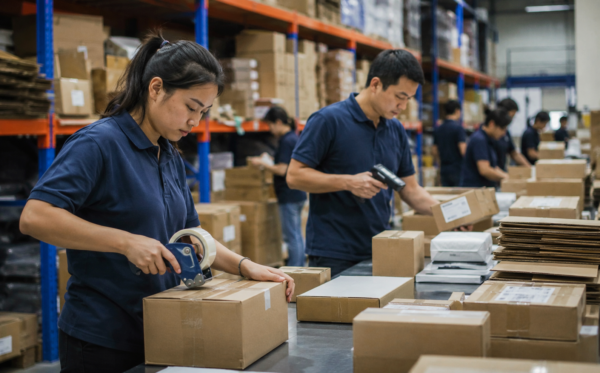
AliExpress lets you buy one unit, read reviews, and compare routes. Treat it as a testing channel, not proof of a stable factory relationship. Ask about blind shipping, processing time, variant stock, and product-version changes.
Alibaba for export-ready supplier discovery
Alibaba supports international RFQs, samples, negotiation, and protected orders. It includes manufacturers and traders, so verify the production role.
Alibaba’s official Buyer Central sourcing process recommends detailed purchase orders, samples, production monitoring, and inspection. Those are useful controls even if you later buy outside the platform.
1688 for domestic wholesale sourcing
1688 serves China’s domestic B2B market, with Chinese language, local payments, domestic addresses, and China-side shipping. Many sellers do not fulfill international single orders.
You may need an agent to pay, receive, inspect, consolidate, and export. A low listing price can vanish after domestic freight, handling, returns, and international shipping join the party.
Made-in-China and Global Sources for B2B discovery
These platforms help with factory, industrial-product, and export-supplier discovery. Ask whether candidates accept low-volume fulfillment and who holds inventory.
Canton Fair, Yiwu Market, and specialist trade shows
Trade fairs let you handle samples and meet decision-makers. Specialist shows can be better than a giant general marketplace for electronics, beauty, pet, packaging, or textile products.
Yiwu is especially useful for small commodities, accessories, gifts, household items, and products that can be consolidated from several vendors. A local Yiwu dropshipping and sourcing company can translate product requirements, compare stalls or factories, and organize the warehouse handoff.
Referrals, agents, and factory clusters
Referrals can shorten the search, but verify them like any cold lead. Reddit and Facebook threads about “trusted suppliers” attract suppliers pretending to be satisfied customers. Ask what the referrer bought, when, at what volume, to which market, and how the supplier handled a failure.
|
Your stage
|
Useful starting channel
|
|
Testing one generic product
|
AliExpress or a dropshipping platform
|
|
Comparing export-ready suppliers
|
Alibaba, Made-in-China, Global Sources
|
|
Seeking lower domestic wholesale prices
|
1688 plus China-side support
|
|
Developing a custom/private-label product
|
Direct factories, trade fairs, sourcing agent
|
|
Coordinating several factories or bundles
|
Private agent and China warehouse
|
|
Fulfilling stable inventory
|
China 3PL or hybrid China/local warehouse network
|
For a managed route, China product sourcing and fulfillment support can combine supplier comparison with the later warehouse steps. Still request a written scope and run a pilot. “Agent” is a role, not automatic proof of quality.
How to Verify a China Dropshipping Supplier Step by Step
This is where reliability becomes observable. We will use a travel cable organizer pouch as a running example. It is simple enough to understand but detailed enough to expose supplier differences.
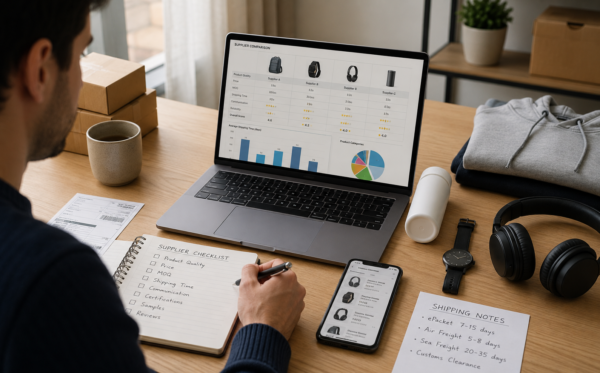
Step 1: Build a product requirement pack
Do not send a photo with “How much?” and expect comparable quotes. One supplier may price thin polyester; another may assume water-resistant nylon and reinforced seams. The photos can look identical.
For the organizer, define:
-
Outer material and lining
-
Finished dimensions and acceptable tolerance
-
Number and position of pockets and elastic loops
-
Zipper type, color, and pull strength
-
Stitching and edge finish
-
Available colors and acceptable color difference
-
Logo method and exact position
-
Packaging material, label, barcode, and insert
-
Target packed weight
-
Target markets and monthly forecast
-
Expected test quantity and later reorder quantity
-
Whether individual order fulfillment is needed
Attach a drawing, reference sample, or annotated photos. Send the same dated version to every candidate. Otherwise, two weeks later, everybody is discussing a different pouch.
Step 2: Shortlist three to five suppliers
Match the channel to the job: a seller for a small test, a factory for a branded run, or an agent when three sources must become one bundle.
Send each candidate the same RFQ. Ask:
-
Are you the manufacturer, a trading company, an agent, or a warehouse?
-
Which production steps happen at your facility?
-
Can you fulfill individual orders, or only production orders?
-
What are the sample, test, and volume prices?
-
What is included and excluded from the quote?
-
How long do sampling, production, procurement, and dispatch take separately?
The point is to map who controls the product and must solve problems.
Step 3: Verify the legal entity and payment identity
Request a clear Chinese business license. Record the registered Chinese company name, Unified Social Credit Code, legal representative, registration status, address, establishment date, and business scope.
Search the company in China’s official National Enterprise Credit Information Publicity System. The interface is Chinese, so use the Chinese legal name or credit code, not the supplier’s English marketing name.
Then compare:
-
Business license entity
-
Marketplace account owner
-
Contracting party
-
Proforma invoice issuer
-
Payment beneficiary
-
Warehouse or factory address
Differences are not always fraud; a group may use an export company or separate warehouse. Demand a written explanation and relationship documents. Never send money to a newly introduced personal account because “finance changed the bank today.”
Registration proves the entity exists, not that it owns a factory or can fulfill your orders.
Step 4: Verify product and production capability
Ask for evidence tied to your exact pouch, not a cinematic factory video that could belong to anyone.
Useful checks include:
-
Live video call from the relevant production or packing area
-
Current material stock and finished inventory
-
Machines or subcontractors used for your product
-
Recent product-specific production records with sensitive client data removed
-
Daily or weekly capacity and how it was calculated
-
Peak-season capacity plan
-
Typical material lead time
-
Quality staff and inspection equipment
-
Disclosure of outsourced steps
Factories often specialize. A beautiful cut-and-sew workshop may still outsource printing, packaging, or metal parts. Outsourcing is normal. Hidden outsourcing creates uncontrolled changes.
Step 5: Order paid samples through the real route
Buy the sample. Free samples are not the goal; truthful samples are.
Approve a golden sample after checking material, dimensions, function, odor, color, logo, packaging, and packed weight. Photograph and measure it.
If direct-to-customer fulfillment is part of the service, test the route too. Measure:
-
Payment to supplier acceptance
-
Acceptance to dispatch
-
Dispatch to first carrier scan
-
Tracking completeness
-
Delivery time
-
Parcel and product condition
-
Included invoice, branding, or promotions
-
Response to an address or tracking question
When volume justifies it, send pilots to several target-market addresses. One parcel is only a clue.
Step 6: Write the specification and quality agreement
Turn the approved sample into a written product standard. Include measurable materials, dimensions, colors, functions, labels, packaging, and tests. State that materials or suppliers cannot change without approval.
Define defects by consequence:
-
Critical: safety or legal risk, wrong electrical rating, sharp hazard, prohibited substance, missing mandatory warning
-
Major: wrong material, failed zipper, incorrect size beyond tolerance, wrong SKU, severe cosmetic damage
-
Minor: small appearance issue that does not affect normal use or saleability
Sampling inspection can use ISO 2859-1:2026, which provides AQL-indexed schemes for lot-by-lot inspection by attributes. AQL is not a quality promise. Agree on defect limits, sample size, acceptance rules, and any 100% checks for critical features.
Before inventory scales, build a repeatable product quality inspection in China around the SKU’s real failure modes—not a generic five-photo report.
Step 7: Test store integration and exception handling
Test actual orders and ugly edge cases:
-
Correct SKU and variant mapping
-
Inventory update frequency
-
Duplicate order prevention
-
Address validation and change cutoff
-
Cancellation before and after packing
-
Out-of-stock notification
-
No unauthorized substitution
-
Split order and bundle rules
-
Tracking upload and first-scan alerts
-
Lost, returned, refused, or damaged parcel workflow
Confirm who edits mappings, owns data, and exports orders and inventory if the relationship ends.
Step 8: Run a limited pilot and score the supplier
Start with a quantity or order volume you can afford to learn from. Score every supplier using the same evidence.
|
Score area
|
Evidence to record
|
|
Quote accuracy
|
Final invoice versus agreed quote and exclusions
|
|
Product match
|
Pilot units versus specification and golden sample
|
|
Inventory truth
|
Promised versus physically available variants
|
|
Dispatch
|
Order release to warehouse handoff
|
|
Tracking
|
Handoff to first carrier scan and update completeness
|
|
Delivery
|
Median result plus the late tail, not one best parcel
|
|
Quality
|
Critical, major, and minor defect themes
|
|
Communication
|
Response quality, ownership, and escalation time
|
|
Remedy behavior
|
Replacement, credit, root-cause review, and corrective action
|
Pay special attention to how the supplier handles a mistake. Everybody is responsive while asking for the deposit. Reliability becomes visible when the blue pouch is out of stock and somebody must choose between telling you the truth or shipping green without permission.
Calculate the Real Cost Before Choosing the Cheapest Quote
The quote on the product line is only the first number.
Variable landed cost = product + China domestic freight + inspection + packaging + pick/pack + international shipping + duties/taxes + payment/currency cost + expected refunds and reships
Then calculate:
Cost per kept order = total variable cost across all orders ÷ orders delivered and kept by customers
Consider two illustrative pouch quotes:
|
Cost item per order
|
Supplier A
|
Supplier B
|
|
Product
|
$4.80
|
$5.60
|
|
Domestic receiving/QC
|
$0.10
|
$0.35
|
|
Packaging and pick/pack
|
$0.25
|
$0.45
|
|
International route/duty allocation
|
$6.20
|
$5.90
|
|
Payment/software allocation
|
$0.30
|
$0.30
|
|
Expected refund/reship reserve
|
$1.80
|
$0.80
|
|
Estimated variable cost
|
$13.45
|
$13.40
|
Supplier B has the higher item price but the slightly lower expected order cost. The numbers are examples, not benchmarks. Your product, country, route, duty, defect rate, and contract change the result.
This Shopify fulfillment cost guide breaks down more cost layers. Ask every provider for the same quote format so that fees cannot hide in different columns.
Shipping from China Without Guessing at Delivery Time
“Shipping takes eight days” is incomplete. Eight days from what event?
Separate processing time from carrier transit
Map the full customer lead time:
Order release + supplier procurement + domestic inbound + receiving/QC + pick/pack + carrier handoff + export + import clearance + last mile
A faster airline does not fix four days waiting for the supplier to buy a missing variant. Track dispatch and first scan separately from transit.
Compare recent performance by product, weight, destination, and route. Use the median to understand normal delivery and a late percentile to understand the unhappy tail. This guide to reducing dropshipping shipping time as orders grow explains how to find the slow stage before paying for a faster carrier.
Direct parcel, express, bulk replenishment, and local fulfillment
|
Shipping model
|
Useful when
|
Main trade-off
|
|
Direct cross-border parcel
|
Demand is early or spread across countries
|
Longer and more variable lead time
|
|
Express courier
|
Product value/margin supports speed
|
High cost and category restrictions
|
|
Bulk air/sea replenishment
|
Demand is stable enough to forecast
|
Inventory and customs must be planned earlier
|
|
Destination warehouse
|
One market has predictable volume
|
Storage and dead-stock exposure
|
Compare international parcel and bulk shipping routes using complete cost, product acceptance, tracking, customs scope, and actual lane history.
DDP, DAP, and customs responsibility
Incoterms are contract terms, not marketing adjectives. The ICC’s Incoterms reference explains that under DDP, the seller carries the cost and risk to the named destination and handles export and import clearance and duties. Under DAP, the seller delivers to the named place, while import clearance and duties generally sit with the buyer.
Write the named place and current rule into the agreement. Also confirm importer-of-record arrangements. A parcel line described as “tax included” is not enough by itself.
US low-value import changes
US Customs and Border Protection states that duty-free de minimis treatment for low-value shipments from all countries was suspended effective August 29, 2025, subject to stated exceptions and applicable provisions. Review current CBP duty-waiver guidance rather than copying a competitor’s tariff percentage.
Duty depends on origin, classification, value, current measures, and entry method. Use a customs broker when exposure is material. For other destinations, check local VAT/GST, customs, importer, and product rules.
Quality, Product Standards, and Industry-Specific Supplier Checks
Quality control starts before inspection. An inspector cannot verify “good fabric” or “nice color.” Those phrases need measurable definitions.

What a quality-control plan should contain
Specify:
-
Approved sample and current drawing
-
Inspection stage: incoming, during production, pre-shipment, or per order
-
Lot definition and sampling plan
-
Critical, major, and minor defect criteria
-
Dimensions, materials, functions, and appearance checks
-
Labels, barcode, instructions, and packaging checks
-
Required photos, measurements, and test records
-
Who decides disposition after a failure
-
Rework, replacement, credit, and corrective-action rules
For safety-critical features, sampling may not be enough. Require appropriate full checks or product testing.
Product compliance is not one universal certificate
The destination and product decide the rules. The European Commission’s general product-compliance guidance explains roles for manufacturers, importers, distributors, and fulfillment providers, along with technical documentation, instructions, conformity assessment, and CE-marking questions where applicable.
Ask whether the report covers the exact SKU, model, material, factory, and current standard. A random PDF with a familiar logo proves very little. If your brand appears on a product, you may take on additional manufacturer-like responsibilities depending on the market.
Questions change by industry
|
Industry
|
Supplier checks to add
|
|
Apparel
|
Fiber composition, shrinkage, colorfastness, size tolerance, stitching, needle control
|
|
Electronics/batteries
|
Voltage/plug, cell specification, transport testing, charging safety, dangerous-goods route
|
|
Cosmetics
|
Ingredients, claims, microbial/stability data, leakage, labels, batch and shelf life
|
|
Supplements
|
Formula, COA, batch traceability, expiry, claims, facility and destination requirements
|
|
Pet products
|
Material, strength, species/use claims, small parts, food-contact or feeding context
|
|
Toys/children’s goods
|
Age grading, warnings, small parts, mechanical/chemical tests, traceability
|
|
Home and kitchen
|
Food-contact status, temperature/use limits, breakage, instructions, material declaration
|
A supplier that performs well with canvas bags may not be suitable for lithium battery products. Category experience should be demonstrated with relevant processes and documentation, not a catalog containing everything on earth.
Build the Supplier Agreement and Fulfillment Workflow
Friendly chats are useful. They are not a specification or a service agreement.

Put product and service promises in writing
Cover:
-
Product specification and approved sample
-
Price, currency, quote validity, and change process
-
Sample, procurement, production, and replenishment lead times
-
Inventory reservation and stock reporting
-
Inspection scope and acceptance
-
Packaging, labeling, barcode, and inserts
-
Order cutoff and dispatch service level
-
Tracking and first-scan expectation
-
Lost, delayed, damaged, wrong, and returned parcel rules
-
Replacement, credit, refund, and claim evidence
-
IP ownership, confidentiality, molds, artwork, and files
-
Payment milestones and protected channel
-
Data access, transition assistance, and exit inventory
Alibaba states that Trade Assurance protection is tied to the quality and shipment terms in the online order and to payment through its protected system. Write specifications into the order. A detailed WhatsApp promise that never reaches the contract may not help a dispute.
Create one owner for every handoff
Draw the chain: supplier → China warehouse → carrier → export/customs → last mile → returns. Name who owns each step and the evidence passed forward. For bundles, one warehouse should confirm every component before release.
For branded orders, use a repeatable custom packaging workflow for Shopify. The box, label, insert, barcode, and correct SKU must meet at the same packing station. Printing a logo is the easy bit.
Protect customer delivery promises
For US-facing stores, the FTC’s business guide to the Mail, Internet, or Telephone Order Merchandise Rule explains that the seller remains responsible for shipment representations even when a fulfillment house or drop-shipper causes the failure. If you cannot ship as promised, delay consent or refund obligations may apply.
Build alerts before launch. A missed warehouse cutoff, absent first scan, or out-of-stock SKU should reach your support team before the customer asks where the parcel is.
When to Use an Agent, China 3PL, or Overseas Warehouse
Use an agent when you need Chinese-platform sourcing, supplier comparison, negotiation, several factories, local inspection, packaging coordination, or somebody who can visit and verify.

Use a China 3PL when you already control inventory and need stable receiving, SKU storage, kitting, order sync, pick/pack, and parcel dispatch. This comparison of China 3PL companies and service models can help separate carriers, agents, and actual fulfillment providers.
Use an overseas warehouse when a proven SKU has concentrated demand in one market and faster local delivery is worth bulk replenishment and storage risk.
|
Signal
|
Likely next move
|
|
Product is still uncertain
|
Low-commitment test
|
|
Several suppliers must be coordinated
|
Agent plus China consolidation
|
|
Top SKUs sell steadily
|
Reserve small China stock
|
|
Orders require bundles or packaging rules
|
China 3PL workflow
|
|
One country dominates stable sales
|
Pilot destination inventory
|
|
Forecast is weak or seasonal
|
Keep stock flexible and smaller
|
Do not move every SKU overseas because one product had a good weekend. Inventory confidence should come from stable demand, replenishment time, margin, and return behavior.
Supplier Red Flags That Matter More Than a Low Price
Pause when you see:
-
Unexplained company-name differences across license, invoice, contract, and bank
-
Refusal to provide a paid sample
-
Vague or changing material and size descriptions
-
Pressure to move payment outside a protected channel
-
A quote that excludes shipping, packaging, or handling without saying so
-
No separation between processing time and transit time
-
Huge stock claims without variant-level evidence
-
Product substitution without approval
-
Test reports that do not match the exact model or factory
-
No written remedy for defects, loss, wrong items, or late dispatch
-
A promise that every product, market, and route is equally easy
A supplier who says yes to everything is like a menu serving sushi, tires, and wedding cakes. The range is impressive. You may still want to inspect the kitchen.
Poor English alone does not make a supplier unreliable, and polished English does not prove capability. Look for precise questions, written confirmation, evidence, and honest limits.
A Practical Supplier Decision Framework
Score suppliers only after they receive the same requirement pack and complete comparable samples or pilots.
|
Decision factor
|
Suggested weight
|
|
Product/specification match
|
20%
|
|
Legal and payment identity
|
10%
|
|
Sample and pilot quality
|
15%
|
|
Quote completeness and landed cost
|
15%
|
|
Inventory and fulfillment evidence
|
15%
|
|
Shipping-lane performance
|
10%
|
|
Technology and data fit
|
5%
|
|
Communication and remedy behavior
|
5%
|
|
Category compliance capability
|
5%
|
Adjust the weights to the product. Electronics may need more compliance weight. Fashion may need stronger quality and sizing control. A high-return item may need more attention on remedy behavior.
Price matters, but it is one field. The winner should be the supplier most likely to deliver a conforming, trackable, profitable order repeatedly.
Qualify one backup for proven products. Do not split early orders randomly between suppliers with different versions. Keep the backup ready with the approved specification and sample, then activate it under a controlled rule.
Conclusion
A reliable China dropshipping supplier is not found by choosing a familiar logo from a list. Reliability is built through a clear product pack, comparable quotes, company checks, paid samples, written standards, pilot orders, measured fulfillment, and fair remedies when problems happen.
Use low-commitment channels while demand is uncertain. Reserve stock and add controlled fulfillment as the evidence improves. That sequence—define, shortlist, verify, sample, specify, pilot, measure, then scale—protects both margin and customer trust.
If you have a product link, destination, and expected order volume, you can request a supplier sourcing and fulfillment quote and compare a complete workflow rather than another listing price.
FAQs About Dropshipping from China and Reliable Suppliers
1. Is dropshipping from China still profitable in 2026?
It can be, but profit depends on landed cost, customer acquisition, defects, refunds, duties, and delivery—not the product quote alone. Compact, differentiated products with reliable supply usually have a better chance than generic items competing only on price.
2. How do I find a reliable dropshipping supplier in China?
Start with a clear specification. Shortlist several suppliers, verify their legal entities, order paid samples, test the real fulfillment route, and score a limited pilot. Reliability is demonstrated through repeatable product, dispatch, tracking, and remedy performance.
3. What is the best China dropshipping supplier?
There is no universal winner. A marketplace may suit a first test, a factory a proven private-label SKU, an agent a multi-supplier workflow, and a 3PL stable inventory. Choose by product, volume, destination, branding, compliance, and integration needs.
4. Is Alibaba or AliExpress better for dropshipping?
AliExpress is easier for single-unit catalog testing. Alibaba is better for supplier discovery, specifications, samples, negotiation, and larger or customized orders. Many Alibaba factories do not fulfill individual consumer orders, so a warehouse or agent may still be required.
5. Is 1688 cheaper than Alibaba, and can overseas sellers use it?
1688 prices can be lower because it serves China’s domestic wholesale market. Overseas use is harder due to Chinese language, local payment, domestic delivery, and limited export support. Compare the final cost after agent, receiving, QC, handling, and shipping.
6. How can I verify that a Chinese supplier is a real company?
Request its Chinese business license and Unified Social Credit Code. Check the legal name and active status on China’s enterprise publicity system. Match that entity to the contract, invoice, platform account, and payment beneficiary, and investigate unexplained differences.
7. How do I tell a factory from a trading company?
Ask which production steps happen in-house, review the business scope, request a live product-specific video call, and inspect capability evidence. A trader can still be useful. The important point is knowing who controls production, quality, and problem resolution.
8. Should I use a private dropshipping agent in China?
An agent is useful when sourcing from 1688, coordinating several factories, inspecting products, consolidating bundles, applying packaging, or managing China-side exceptions. Verify the agent’s entity, warehouse process, fee structure, system, and pilot performance like any supplier.
9. What should I ask a supplier before working together?
Ask about company role, exact specification, sample, MOQ, stock, lead time, capacity, substitutions, inspection, packaging, order integration, dispatch cutoff, tracking, shipping routes, lost or damaged parcels, returns, payment, compliance documents, and exit support.
10. Do I need to order a sample before listing a product?
Yes. A sample reveals material, dimensions, performance, packaging, weight, and actual dispatch behavior. For a new source or changed specification, approve a documented golden sample. Regulated or safety-sensitive products require deeper testing than one sample can provide.
11. How long does dropshipping shipping from China take?
There is no responsible universal number. Total time includes procurement, warehouse receiving, QC, packing, carrier handoff, customs, and last mile. Test the exact product-route-destination combination and publish a range supported by recent performance.
12. What is DDP shipping, and who pays import duties?
Under DDP, the seller generally handles delivery to the named destination, export and import clearance, and applicable duties. The contract must state the named place and scope. Confirm importer arrangements instead of relying on a casual “tax included” message.
13. Who is responsible when a dropshipping order ships late?
Your store remains responsible to its customer for the delivery promise it advertised. Supplier fault may give you a contractual claim against the supplier, but it does not transfer customer service to them. Monitor delays and follow destination-market notice and refund rules.
14. Can a Chinese supplier add custom packaging or a private label?
Many can, but ask who produces, stores, counts, and applies each material. Labels and cards often have lower commitment than custom boxes or molded products. Approve artwork and samples, map packaging to SKUs, and test packed weight before rollout.
15. When should I pre-stock inventory or move to a 3PL?
Consider it when demand is repeatable, a few SKUs drive most orders, supplier procurement causes delays, bundles or branding need warehouse control, and margins can carry inventory. Start with a small stock pilot and a clear reorder point.
Table of Content
- What Dropshipping from China Looks Like in 2026
- Is Dropshipping from China Still Worth It?
- The Six Types of China Dropshipping Suppliers
- Where to Find Reliable Chinese Suppliers
- How to Verify a China Dropshipping Supplier Step by Step
- Calculate the Real Cost Before Choosing the Cheapest Quote
- Shipping from China Without Guessing at Delivery Time
- Quality, Product Standards, and Industry-Specific Supplier Checks
- Build the Supplier Agreement and Fulfillment Workflow
- When to Use an Agent, China 3PL, or Overseas Warehouse
- Supplier Red Flags That Matter More Than a Low Price
- A Practical Supplier Decision Framework
- Conclusion
- FAQs About Dropshipping from China and Reliable Suppliers

I’m Cassiel. I’ll help you scale your Shopify business with reliable fulfillment.
Join to newsletter.
Follow us and get more knowledge.