Yes, Alibaba can be used for dropshipping. The important catch is that Alibaba is a B2B marketplace, not one standardized fulfillment company. Some suppliers will ship one item directly to your customer. Others only sell cartons, accept a small wholesale order, or produce custom goods after you meet an MOQ.
That difference changes everything. Before listing a product, you must confirm who holds the stock, who packs each order, which carrier is used, how tracking reaches Shopify, and who handles defects or returns. A cheap product price is not enough.
For most sellers, Alibaba becomes more useful after a product has shown demand. It can open the door to negotiated pricing, private label, custom packaging, and closer factory relationships. Early tests may still be easier through AliExpress or a confirmed one-unit Alibaba supplier. Once orders become steady, small reserved inventory in China often gives better control.
|
Your situation
|
Practical starting model
|
|
No sales or early testing
|
AliExpress or an Alibaba supplier that explicitly accepts one-unit orders
|
|
Proven product with early volume
|
Alibaba supplier plus a small reserved inventory batch in China
|
|
Private label or custom packaging
|
Alibaba factory plus a fulfillment partner or private agent
|
|
Strong demand in one country
|
Alibaba manufacturing plus a destination-country 3PL
|
|
Multi-country Shopify sales
|
China fulfillment, or a hybrid of China and regional warehouses
|
Does Alibaba Do Dropshipping?
Alibaba publishes its own guide to dropshipping through Alibaba.com, and some suppliers advertise low-MOQ or dropshipping support. So the short answer is yes. The more useful answer is: the exact service depends on the supplier and product.
Alibaba provides the marketplace, messaging, supplier profiles, order tools, payment infrastructure, and buyer-protection programs. The supplier makes or sources the product. You operate the store and customer relationship. A factory, warehouse, freight forwarder, or parcel carrier then moves the order. Sometimes one supplier coordinates several of those jobs. Sometimes they coordinate almost none of them.
There are three practical ways to build an Alibaba dropshipping workflow:
|
Model
|
Upfront capital
|
Control
|
Typical speed
|
Best fit
|
|
Supplier ships each order
|
Low
|
Low to medium
|
Depends on processing and route
|
Testing or simple products
|
|
Small batch stored in China
|
Medium
|
Medium to high
|
Faster dispatch; international transit remains
|
Proven products and global sales
|
|
Bulk stock sent to a local 3PL
|
Higher
|
High
|
Fast domestic delivery after inbound stock arrives
|
Stable regional demand
|
Do not assume a product marked “Ready to Ship” automatically includes blind shipping, Shopify synchronization, or one-piece fulfillment. Ready to Ship usually describes product availability and order setup. Daily DTC handling is a separate operational question.
Is Alibaba Good for Dropshipping?
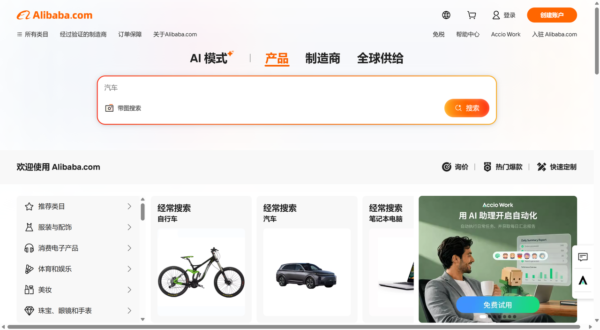
Alibaba is good for dropshipping when your business needs more than a convenient product listing. It becomes especially useful when a product is already selling and you want better pricing, custom specifications, private labeling, or direct access to a manufacturer.
It is a strong fit when:
-
demand is proven or at least supported by a serious test;
-
you can compare samples and negotiate terms;
-
you want factory-level product or packaging options;
-
a small inventory commitment is acceptable;
-
you have a warehouse or agent that can fulfill individual orders;
-
your margin improves enough to justify a more involved supply chain.
Alibaba can feel awkward when you want instant one-click fulfillment from any listing. Many factories are built around production runs and cartons, not hundreds of different home addresses. They may be excellent at making a product and rather clumsy at updating Shopify tracking before your customer wakes up. That is not dishonesty. It is a mismatch between a manufacturing workflow and a retail fulfillment workflow.
Alibaba is therefore not automatically better or worse than AliExpress. It serves a different stage. AliExpress reduces friction for one-unit testing. Alibaba creates more room for sourcing, negotiation, customization, and inventory planning. The right choice depends on what you are trying to solve today.
How Do I Use Alibaba for Dropshipping? A Step-by-Step Workflow
The safest way to use Alibaba is to treat dropshipping as a supply-chain project, not a product-import button. Here is a workable process.
Step 1: Define the product and your maximum delivered cost
Write a basic specification before contacting suppliers. Include materials, dimensions, weight, color, function, packaging, target destinations, and any required test reports. A stainless-steel bottle and an aluminum bottle may look similar in a listing, but the material affects cost, durability, claims, and import requirements.
For products used by children, electrical goods, cosmetics, food-contact items, batteries, supplements, toys, and medical-looking products, check the destination-market rules before buying samples. A carrier accepting a parcel does not prove the product is legally marketable.
Start with this formula:
Maximum delivered cost = selling price – payment fees – advertising allowance – returns allowance – target contribution margin
If a product sells for $29.99, do not ask only, “Can you beat $5?” Work backward from the money left after payment fees, ads, expected refunds, and the profit your store needs.
Step 2: Search Alibaba by product and supplier capability
Search the product in several ways. A broad term shows the market. A material or specification narrows it. Adding “OEM,” “private label,” “low MOQ,” “Ready to Ship,” or “dropshipping” reveals different supplier groups.
Useful platform signals may include Verified Supplier information, Trade Assurance availability, assessment reports, transaction history, response behavior, and category specialization. Alibaba’s official sourcing guide explains several supplier-screening tools. Still, a badge is the beginning of due diligence, not the finish line.
Step 3: Shortlist five to ten suppliers
Do not message fifty suppliers with “best price?” You will receive fifty numbers that may describe different products.
Build a smaller shortlist. Compare:
-
legal company and business type;
-
manufacturer, trading company, or mixed operation;
-
years in the product category;
-
product specialization;
-
assessment report, where available;
-
sample terms;
-
MOQ and price breaks;
-
production or processing time;
-
supported destination countries;
-
one-unit fulfillment capability;
-
communication quality.
A trading company is not automatically a bad choice. It may coordinate several factories, offer more categories, and accept smaller orders. A factory may offer deeper product knowledge and better custom pricing. What matters is whether the supplier’s real role fits your order.
Step 4: Send a complete supplier inquiry
Give every shortlisted supplier the same request. That makes quotations easier to compare.
Hello,I operate a Shopify store selling to [countries]. I am evaluating your [product name/model].Please confirm:
That message is a little longer than “price please,” sure. It also saves three days of confused replies.
Step 5: Order samples from two or three suppliers

A sample should test more than appearance. Record how long the supplier takes to process it, when tracking first updates, how the parcel is packed, whether unwanted invoices appear, and how the supplier responds when you ask a difficult question.
Compare the sample with your written specification. Check dimensions, materials, finish, color, function, labeling, odor, accessories, manuals, and packaging. Keep photos and an approved reference sample. For higher-risk goods, use an independent laboratory or inspection company for the relevant checks.
Step 6: Put important terms into the Alibaba order
Chat history helps, but your order needs measurable terms. Include the exact SKU, materials, dimensions, color, quantity, packaging, defect criteria, ship date, trade term, and agreed remedy. Attach specification sheets and approved artwork.
Alibaba’s Trade Assurance buyer-protection guide explains that protection depends on the platform order and supporting evidence. Trade Assurance is useful, but it is not a magic warranty for expectations that were never documented. Keep payment and key agreements within the supported process.
Step 7: Define how Shopify orders move to fulfillment
Some suppliers support an app or platform workflow. Others use spreadsheets, email, ERP access, or manual daily order files. Confirm:
-
product and variant mapping;
-
customer-address transfer;
-
daily order cut-off time;
-
cancellation window;
-
inventory synchronization;
-
tracking return to Shopify;
-
split orders and bundles;
-
address changes;
-
failed delivery and returns.
Place test orders to your own addresses before opening the tap on paid traffic. Test a normal order, a cancellation, and an address correction. Tiny tests often reveal large future headaches.
Step 8: Run a controlled pilot
Start with 10 to 30 customer orders, or another quantity appropriate to the product risk. Measure processing time, first carrier scan, transit time, delivery rate, defects, wrong items, support response, and reship cost.
One perfect sample does not prove repeatable fulfillment. A good pilot shows what happens on an ordinary Tuesday when several orders arrive, one variant runs low, and a parcel stops tracking.
Alibaba Dropshipping Supplier List: How to Build One You Can Trust
A fixed Alibaba dropshipping supplier list ages quickly. Storefront ownership, staff, stock, MOQ, product quality, and dropshipping policies can change. Rather than publishing names that may no longer fit six months later, build a verified list around supplier type and current test results.
|
Supplier category
|
Useful search angle
|
What to confirm
|
|
Ready-to-ship general goods
|
Product + Ready to Ship + dropshipping
|
Real stock, one-unit handling, neutral parcel
|
|
Electronics accessories
|
Product + OEM/ODM + low MOQ
|
Certifications, battery route, warranty
|
|
Beauty tools
|
Private label beauty tool supplier
|
Materials, claims, packaging, local rules
|
|
Home and kitchen
|
Low MOQ home product manufacturer
|
Carton size, breakage, replacements
|
|
Pet products
|
Pet supplies dropshipping manufacturer
|
Materials, safety documents, packaging
|
|
Jewelry and accessories
|
Low MOQ jewelry supplier
|
Material declaration, plating, tarnish, branding
|
|
Apparel
|
Apparel dropshipping OEM
|
Fabric, size chart, color consistency, returns
|
|
Toys
|
Toy manufacturer low MOQ
|
Age grading and destination test reports
|
|
Packaging suppliers
|
Custom mailer/label/insert low MOQ
|
Print MOQ, lead time, storage, application fee
|
|
Multi-category traders
|
Multi-category dropshipping supplier
|
Factory identity, stock source, QC responsibility
|
Use a worksheet with these columns: supplier URL, legal entity, factory/trader, contact, MOQ, sample result, processing time, named shipping service, Trade Assurance, certificates, packaging, test-order result, and backup status. Date every entry. Your “supplier list” then becomes a living procurement tool rather than a decorative list of links.
How to Verify an Alibaba Dropshipping Supplier Before You Pay
Verification is layered. No single badge, video, certificate, or sample answers every question.
-
Confirm the legal company name. Match the profile, business license, invoice, contract, and payment beneficiary.
-
Review the business license. Check legal status, registered scope, and location.
-
Open the assessment report. Verified Supplier reports can reveal facilities, production lines, staffing, and capabilities.
-
Identify the business model. Ask whether the company makes the product, outsources it, or trades it.
-
Check specialization. A supplier focused on three related categories is easier to understand than a supposed factory selling scooters, lipstick, sofas, and pet bowls.
-
Request a live video call. Ask to see the relevant product, packaging area, and production or storage location.
-
Order a normal sample. Avoid relying only on a specially prepared showroom piece.
-
Check product-specific documents. Confirm certificate holder, model number, laboratory, standard, date, and destination relevance.
-
Verify payment details. Investigate unexplained beneficiary changes or mismatched entities before paying.
-
Document the Trade Assurance order. Specifications and remedies should be clear enough for another person to judge.
-
Arrange inspection. For custom or larger orders, inspect before final payment or shipment. A structured quality-control process can cover quantity, appearance, specification, packaging, and function according to an agreed scope.
-
Test problem handling. Ask what happens if 5% of units fail, a shipment misses the date, or a variant is unavailable.
Red flags include pressure to pay outside the agreed process, copied certificates, refusal to sample, impossible prices, vague stock answers, and a sudden bank-account change. None proves fraud alone. Together, they tell you to slow down.
Alibaba Dropshipping Costs and Profit Calculation

The product price is only one line in the real cost. Include:
-
samples and sample freight;
-
product price;
-
mold, setup, artwork, or customization fees;
-
packaging;
-
domestic freight in China;
-
warehouse receiving and storage;
-
pick and pack;
-
international shipping;
-
duties, taxes, and brokerage;
-
payment and currency-conversion fees;
-
expected defects, refunds, and reships.
Use this formula:
True delivered cost = product + packaging + handling + shipping + border costs + payment fees + expected defect/return/reship cost
Consider a compact kitchen organizer sold on Shopify for $29.99. The following numbers are illustrative, not live supplier quotations.
|
Model
|
Product
|
Packaging/handling
|
Shipping/inbound allocation
|
Risk allowance
|
Illustrative delivered cost
|
|
AliExpress one-unit test
|
$6.80
|
Included
|
$4.20
|
$0.70
|
$11.70
|
|
Alibaba supplier-direct
|
$5.20
|
$0.60
|
$4.50
|
$0.80
|
$11.10
|
|
Alibaba 100-unit batch in China
|
$3.80
|
$1.10
|
$4.20
|
$0.55
|
$9.65
|
|
Alibaba bulk stock to US 3PL
|
$3.50
|
$0.70
|
$2.10 inbound + $4.00 local fulfillment
|
$0.45
|
$10.75
|
The cheapest factory price does not always create the cheapest delivered order. A larger batch may lower unit cost but add storage and inventory risk. A local 3PL may cost more per order yet improve delivery speed and conversion. For more line-item context, see this Shopify fulfillment cost guide.
Shipping Alibaba Dropshipping Orders to Customers
Shipping has two clocks: processing time and transit time. A “7-day shipping” quote means little if the supplier waits six days before handing over the parcel.
Supplier-direct international shipping
This is the simplest low-inventory setup. The supplier receives each order, packs it, and books an international parcel. Confirm the named service, processing SLA, first scan, tracking format, remote-area charges, and lost-parcel policy. Do not accept “fast line” as the whole answer.
Small-batch stock in a China warehouse
Reserved stock removes the wait for a factory to source or produce every order. The warehouse can inspect incoming units, hold packaging, process bundles, and select routes by destination. A China 3PL fulfillment service is often useful for Shopify stores selling to several countries.
Bulk freight to a destination-country 3PL
Moving inventory by air, rail, sea, or truck to a regional warehouse creates faster domestic delivery. It also adds inventory commitment, freight planning, customs entry, receiving charges, storage, and local return handling. This model works best when regional demand is predictable.
For every setup, document DDP versus DAP, customs responsibility, delivery-time reporting, signature rules, return address, and compensation for lost parcels. Ask for delivery percentiles, not only averages. “Average 8 days” can hide a painful long tail.
Alibaba Dropshipping vs AliExpress Dropshipping
Alibaba and AliExpress share an ecosystem, but they solve different buying jobs. Shopify’s current Alibaba sourcing guide also frames Alibaba around supplier sourcing, negotiation, and buyer due diligence.
|
Factor
|
Alibaba
|
AliExpress
|
|
Core model
|
B2B sourcing marketplace
|
Consumer-style marketplace
|
|
Typical order
|
Negotiated order, small batch, wholesale, or approved dropshipping
|
One-unit checkout
|
|
MOQ
|
Common, often negotiable
|
Usually one unit
|
|
Unit price
|
Often improves with quantity
|
Usually higher
|
|
Private label
|
Stronger supplier options
|
Limited and seller-specific
|
|
Automation
|
Tool and supplier dependent
|
Mature dropshipping app ecosystem
|
|
Shipping
|
Negotiated by supplier/workflow
|
Listing-level options, still seller dependent
|
|
Inventory
|
Better when stock is reserved
|
Usually shared seller inventory
|
|
Best stage
|
Scaling, sourcing, customization
|
Discovery and early testing
|
Use AliExpress when you need quick product discovery, one-unit checkout, and minimal upfront stock. It is practical for learning whether customers click, buy, and keep the product.
Move toward Alibaba when sales repeat, margin pressure appears, or you need a better product. Alibaba gives you room to discuss materials, packaging, private label, and price breaks. It also demands more work: specifications, samples, MOQs, fulfillment arrangements, and supplier management.
A sensible migration is not a dramatic platform breakup. Test carefully, identify a product worth improving, compare Alibaba suppliers, reserve a small batch, and then scale inventory according to real sell-through.
From Alibaba and AliExpress to a Private Dropshipping Agent

Private dropshipping developed as an operational step beyond marketplace-only sourcing. AliExpress made one-unit international ordering accessible. Alibaba made factories, wholesalers, customization, and negotiated purchasing easier to reach. A private agent adds the day-to-day coordination layer that marketplace sellers and factories may not provide consistently.
That layer can include:
-
comparing several factories instead of relying on one listing;
-
confirming real factory stock and production schedules;
-
arranging samples and recording specifications;
-
negotiating price and replenishment;
-
receiving private inventory;
-
checking products before storage or dispatch;
-
holding labels, boxes, inserts, and branded mailers;
-
combining items from different suppliers;
-
synchronizing Shopify orders;
-
selecting shipping routes;
-
handling exceptions, returns, and reships through one contact.
The improvement is not that an agent “replaces” Alibaba or AliExpress. Agents may still source through Alibaba, 1688, markets, factories, or existing client suppliers. The improvement is ownership of the gaps between purchasing and customer delivery.
For sellers who have outgrown supplier-by-supplier coordination, FriendDropshipping’s private dropshipping agent service can coordinate sourcing, factory communication, quality checks, private inventory, custom packaging, and fulfillment from one workflow. This model makes the most sense after you have repeatable demand or a clear branded-product plan. It is unnecessary complexity for a store that has not yet validated anything.
Common Alibaba Dropshipping Mistakes
Assuming every supplier dropships. Ask explicitly about one-unit orders, individual addresses, neutral packaging, and tracking.
Comparing only unit price. Shipping, packaging, handling, duties, refunds, and defects can reverse the apparent bargain.
Skipping samples. Photos cannot verify material, finish, function, packaging, or processing behavior.
Treating a badge as full verification. Platform checks are useful signals. You still need product-level due diligence.
Using vague order terms. “High quality” is an opinion. “304 stainless steel, 0.6 mm wall thickness, no visible dents at 50 cm” is closer to inspectable.
Confusing factory stock with reserved stock. A supplier may show availability today and allocate it to another buyer tomorrow.
Scaling ads before testing fulfillment. Ten controlled orders reveal more than a hopeful conversation.
Ignoring intellectual property and market rules. Avoid copied brands, unsafe claims, and documents that do not match the product.
Having no return plan. Decide who pays, where products return, when to refund without return, and how evidence is collected.
Depending on one supplier. Keep an approved backup for products that matter to revenue.
Alibaba Dropshipping Decision Guide
|
Business situation
|
Recommended next step
|
|
No validated product
|
Compare suppliers, order samples, and use low-risk one-unit tests
|
|
Early sales below 10 orders/day
|
Confirm supplier-direct fulfillment or continue testing on AliExpress
|
|
Stable 10-50 orders/day
|
Negotiate Alibaba pricing and reserve a small China inventory batch
|
|
Multiple suppliers or custom packaging
|
Add a private agent or China fulfillment warehouse
|
|
Proven demand in one country
|
Send planned stock to a local 3PL and retain China replenishment
|
|
Multi-country sales
|
Keep a China inventory pool and add regional stock selectively
|
Ask yourself five questions before changing models:
-
Is demand proven by paid orders, not just views?
-
Can the margin support the complete delivered cost?
-
Can the supplier handle your daily order workflow?
-
Is stock reserved for you or merely displayed by the supplier?
-
Who owns quality checks, tracking exceptions, returns, and reships?
If those answers are messy, the supply chain is not ready to scale. The guide on finding a dropshipping agent or supplier provides another way to compare the operating models.
Conclusion
Alibaba does support dropshipping, but not as one identical service across every listing. Its real strength is access to suppliers, negotiated pricing, private label, product development, and small-batch or wholesale purchasing.
For early testing, use AliExpress or an Alibaba supplier that has clearly confirmed one-unit fulfillment. For a proven product, compare samples, document specifications, and reserve a manageable quantity in China. When multiple suppliers, branded packaging, QC, tracking, and daily customer orders become a full-time coordination job, add a private agent or 3PL. For strong demand concentrated in one region, move planned inventory closer to customers.
The best model is not the one with the lowest number in the product-price column. It is the one that delivers an acceptable product, at a sustainable total cost, through a process you can repeat when orders grow.
FAQs About Alibaba Dropshipping
1. Does Alibaba do dropshipping?
Yes. Alibaba has suppliers and tools that support dropshipping, but support varies by supplier and product. Confirm one-unit ordering, individual-address shipping, processing time, neutral packaging, tracking, and returns before listing an item.
2. Can I dropship from Alibaba without buying in bulk?
Sometimes. Some suppliers accept one-piece orders or low MOQs. Others require cartons or production batches. Search for dropshipping, Ready to Ship, and low-MOQ options, then ask the supplier directly. Never assume a low displayed quantity means full DTC fulfillment.
3. How do I use Alibaba for Shopify dropshipping?
Choose a supplier that supports your order volume, test samples, document terms, and define how Shopify orders and tracking move between systems. This may use an app, API, CSV, ERP, or a fulfillment partner. Place test orders before sending real customer traffic.
4. Is Alibaba good for beginners?
It can be, especially for learning supplier research and ordering samples. However, AliExpress is usually simpler for one-unit tests. Alibaba becomes more attractive when a beginner is prepared to negotiate, verify suppliers, or buy a small batch.
5. Is Alibaba or AliExpress better for dropshipping?
AliExpress is generally easier for product discovery and one-unit testing. Alibaba is generally stronger for factory access, price negotiation, customization, private label, and planned inventory. Many sellers test first and move proven products toward Alibaba later.
6. Does Alibaba have a minimum order quantity?
Many Alibaba listings have an MOQ, but it varies and may be negotiable. Sample MOQ, plain-product MOQ, logo MOQ, and custom-packaging MOQ can all be different. Ask for price breaks and the smallest practical pilot order.
7. How do I find Alibaba suppliers that dropship?
Search the product with terms such as dropshipping, Ready to Ship, low MOQ, or one-piece order. Then contact suppliers with a standard questionnaire. Build a shortlist based on verified capabilities and test results, not only search position.
8. How do I verify an Alibaba supplier?
Check the legal entity, business license, assessment report, specialization, payment beneficiary, samples, product documents, and facility evidence. Use clear platform order terms and arrange inspection when the order value or product risk justifies it.
9. Does Trade Assurance protect dropshipping orders?
Trade Assurance can protect eligible orders when you follow the platform process. The order should contain measurable product, quantity, quality, and shipping terms. Keep key communication and payment within supported Alibaba channels and retain evidence.
10. Can Alibaba suppliers use blind shipping?
Some can. Ask the supplier to remove invoices, pricing, promotional cards, QR codes, and supplier branding. Approve the parcel contents and packaging, then verify blind shipping with a test order.
11. How long does Alibaba dropshipping shipping take?
There is no universal time. Total delivery includes supplier processing plus carrier transit. A stocked item may dispatch quickly, while a sourced or customized item may need days or weeks before shipment. Ask for both processing SLA and named-route transit data.
12. Can I put my logo on Alibaba products?
Yes, many Alibaba suppliers offer private label, OEM, ODM, custom labels, boxes, inserts, colors, or molds. Each option may have a different MOQ, setup fee, and lead time. Confirm artwork, materials, claims, and packaging samples before production.
13. Who handles returns for Alibaba dropshipping orders?
That depends on your agreement. Your store remains responsible to its customer. The supplier or warehouse may accept returns, replace defects, or reship lost parcels under defined conditions. Set the policy before selling, including evidence, time limits, costs, and return address.
14. When should I switch from AliExpress to Alibaba or a private agent?
Consider switching when demand repeats, margins need improvement, custom packaging matters, or supplier-by-supplier fulfillment becomes unreliable. Around 10 consistent daily orders can justify evaluating reserved stock or an agent, but product value, margin, and volatility matter more than one fixed threshold.
15. Do I need a China warehouse or 3PL for Alibaba dropshipping?
Not always. A capable supplier can ship orders directly. A warehouse or 3PL becomes useful when you reserve stock, combine multiple suppliers, require QC or branded packaging, need faster processing, or want one system to manage Shopify orders and tracking.
Table of Content

I’m Cassiel. I’ll help you scale your Shopify business with reliable fulfillment.
Join to newsletter.
Follow us and get more knowledge.