You spot a storage box while waiting for coffee. The photo looks right, the app shows $1.80, and there is a “contact supplier” button. Two messages later, you learn that $1.80 applies to a thinner plastic, a different lid, and 5,000 pieces. Your 300-piece version costs more. Shipping is another conversation.

That does not make the app bad. It means the app helped you find a supplier, while the actual buying work had barely started.
If you want apps like Alibaba, start with the job you need done. Made-in-China.com and Global Sources can help you research manufacturers. 1688 opens a different route into China’s domestic wholesale market. DHgate and AliExpress make small tests easier. Faire and Amazon Business are closer to buying finished stock. IndiaMART helps you look beyond China.
All eight have buyer-facing mobile apps. They do not offer the same products, order process, protections, or level of supplier control. Below, we compare what each one is good for, what a phone can realistically handle, and what still needs checking before you pay.
First, decide what you need the app to do
“Find products” sounds like one task. It is really several.
A B2B sourcing app helps you find suppliers, send an RFQ, compare manufacturing capabilities, and discuss a custom order. A small-order marketplace makes it easier to buy a sample or a few finished units. A brand wholesale app lets an approved retailer stock other brands. A Shopify sourcing plugin may import products and route customer orders. That last tool can be useful, but it solves a different problem from finding a manufacturer.
So don’t rank these apps by download count and call the first one the winner. Decide whether you need a factory quotation, a cheap test, finished retail stock, or a repeat fulfillment workflow.
A phone-first scorecard
Before installing anything, ask what the app lets you complete with a buyer account in your country:
| Buying task | Useful mobile capability | What to check beyond the screen |
| Find suppliers | Product and image search, company filters, saved shortlists | Is the seller a factory, trader, distributor, or retailer? |
| Compare offers | RFQ, messages, quote attachments, variant details | Are material, MOQ, packaging, and shipping terms identical? |
| Place an order | Clear checkout or documented order workflow | Who is the contracting company, and what protection applies? |
| Follow the work | Notifications, sample updates, tracking | Who checks production quality and handles an exception? |
| Keep records | Downloadable quote, invoice, messages, order details | Can your team retrieve the agreed version six months later? |
The best app for your store is the one that moves the right buying task forward. A smooth interface cannot turn a retail reseller into an OEM manufacturer. And a serious factory directory may not give you one-tap checkout for ten units.
Eight buyer-facing apps like Alibaba, grouped by buying job
This is a comparison of buying models, not a promise that every supplier on a platform behaves the same way. MOQ, payment options, app features, and geographic access can vary by seller, product, device, and country. Check the current listing and your actual account before committing to an order.
| App | Buying model | Best use | Mobile strength | Main handoff or limit |
| Made-in-China.com | Export-facing B2B sourcing | Manufacturer and technical RFQs | Product search, supplier contact, order follow-up | Validate specifications, audit scope, and production site |
| Global Sources | B2B sourcing and trade-show discovery | Asian exporters, electronics, in-person follow-up | Supplier research and show planning | Qualification, contract, QC, and logistics remain buyer work |
| 1688 | China domestic wholesale marketplace | China-side price and supplier research | Broad catalog, search and supplier contact | Test account, language, payment, shipping, receiving, export |
| DHgate | Small-order cross-border marketplace | Finished-product tests | Browsing, small purchases, order tracking | Less control over manufacturing and repeat consistency |
| AliExpress | Consumer-style cross-border marketplace | One-unit samples and demand tests | Easy product search and checkout | Retail-like supply is a weak bulk-production plan |
| Faire Wholesale | Curated brand wholesale | Ready-to-sell products for eligible retailers | Brand discovery and order management | Not a custom factory sourcing app; eligibility varies |
| Amazon Business | Business purchasing marketplace | Ready-stock supplies and replenishment | Ordering, approvals, tracking | Limited fit for OEM/private-label development |
| IndiaMART | Indian B2B supplier discovery | Diversifying supplier search to India | Inquiries and supplier communication | Export readiness and transaction terms vary widely |
Factory and export supplier search
Made-in-China.com B2B Trade
Made-in-China.com is a close alternative if Alibaba’s catalog is not giving you enough relevant Chinese manufacturers. It is worth opening for machinery, components, tools, industrial goods, packaging, and products where a technical specification matters more than a trendy listing photo.
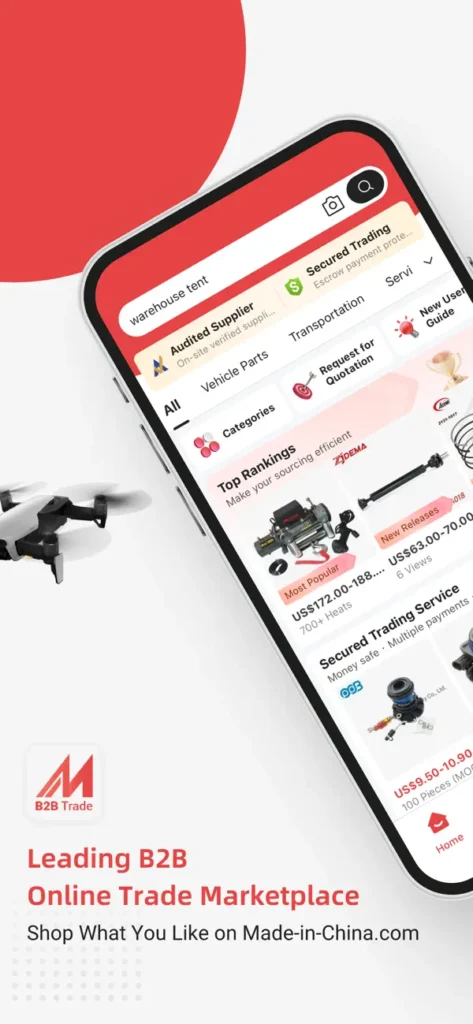
Its buyer app listing describes product search, supplier contact, ordering, and order tracking on mobile. That makes it handy for building a shortlist and following replies. But “audited supplier” does not mean the exact motor, box, or electronic component you chose meets your requirement. Read the available audit scope. Ask which legal entity and site will produce your item.
Send a proper RFQ: drawing or dimensions, material grade, performance requirement, quantity bands, packaging, destination, and expected lead time. If three suppliers answer with three different assumptions, the app has done its discovery job. The next job is to make those quotes comparable. A spreadsheet on a larger screen is often less painful for that part. Yes, a spreadsheet. Sometimes boring wins.
Best fit: Custom or specification-led sourcing where you can evaluate the supplier and sample. Poor fit: One-click purchase of a fully developed private-label product without any supplier conversation.
Global Sources: B2B Sourcing
Global Sources combines digital supplier discovery with trade shows. Its mobile app includes sourcing and event-related tools, so it can be useful before a show, on the exhibition floor, and while following up afterward. Think supplier profiles, contacts, notes, and the sample you actually held in your hand.
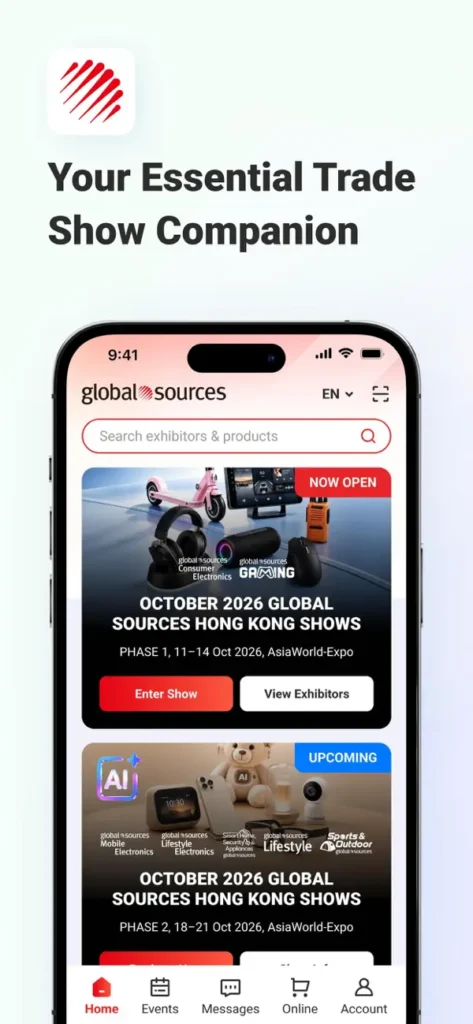
It is a sensible shortlist for electronics, components, mobile accessories, home goods, and other export-oriented categories. Still, a trade-show badge or supplier profile is a screening clue. It does not approve your specific batch. Ask about production location, customization limits, sample lead time, MOQ by variant, test documentation, and who signs the contract.
The app can help you remember which booth showed a promising charger. It cannot decide whether its test report covers your exact model and destination market. Take the conversation out of a rushed message thread and put the product requirement into a shareable file.
Best fit: Buyers who want export-focused suppliers and may meet them in person. Poor fit: Someone expecting a large custom run to behave like a retail checkout.
China domestic sourcing and small test orders
1688: Factory Direct
1688 belongs to Alibaba Group, but it serves a different marketplace from Alibaba.com. It grew around China’s domestic wholesale trade. That can make it valuable for price discovery, ready-made goods, parts, packaging, and suppliers whose export-facing listing is hard to find.
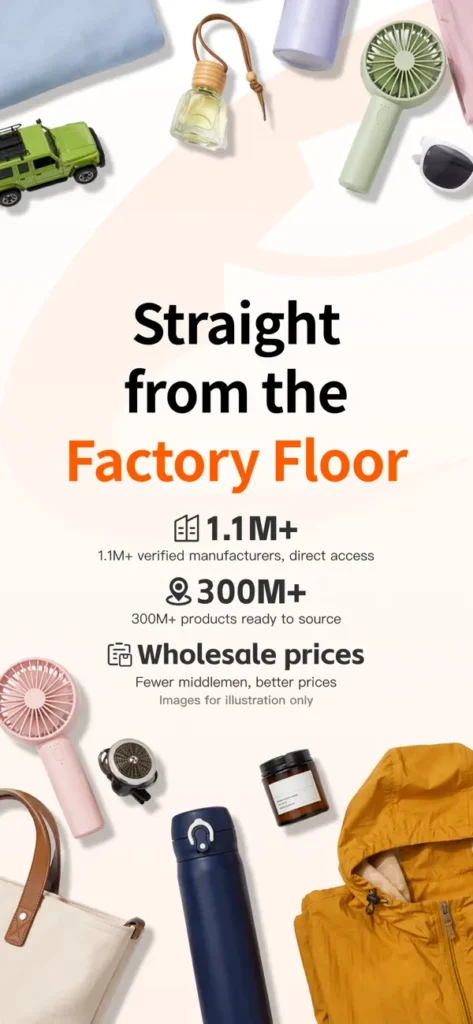
Here is the nuance that older guides often miss: the current 1688 app listing advertises translation, several payment currencies, and shipping to selected countries. Those are developer claims on a store listing, not proof that your country, account, product, seller, and order qualify. The app experience can also differ from what a supplier will actually do. Test the whole path with your details before assuming either that international buying is impossible or that it is effortless.
Ask about the exact variation, domestic freight, tax basis, payment route, delivery address, returns, and who will receive the cartons. If goods arrive at a China warehouse first, someone must count them, check them, combine shipments if needed, and prepare export. Our guide to buying from 1688 without a Chinese company or local bank account explains the access and payment decisions in depth.
Best fit: Buyers willing to test a China-side buying workflow and account for receiving and export. Poor fit: Assuming the lowest displayed RMB price is your delivered per-unit cost.
DHgate
DHgate is easier to use for a small batch of an existing product. You can browse variants, see tiered pricing, and place a test order without preparing a full factory RFQ in many categories. Apparel, accessories, home goods, and simple gadgets are typical browsing territory.
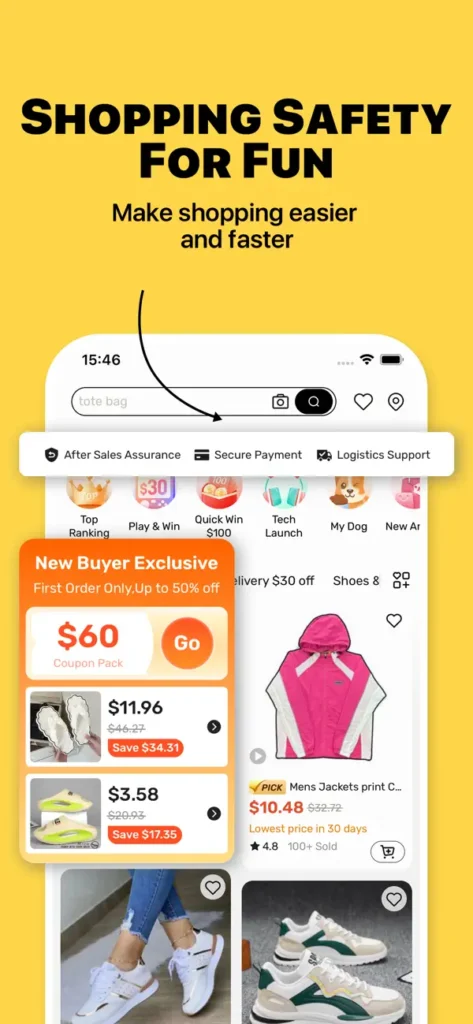
That convenience is exactly why the limits matter. The seller may be a trader handling ready stock, not the factory that made it. The next batch may come from another source. If a product shows somebody else’s famous logo, do not treat a low price as evidence that it is authorized. A test order should be unbranded or backed by a credible rights chain.
Buy the exact variant you might later sell. Check the item, packaging, tracking, and final landed cost. If the test works, ask how a repeat order would be sourced and checked. Your first parcel proves that one parcel arrived. It is useful evidence, just not a lifetime guarantee.
Best fit: A low-commitment test of finished goods. Poor fit: Deep product redesign, tooling ownership, or a stable factory relationship by default.
AliExpress
AliExpress is even closer to consumer shopping. That makes it handy when you need a single sample, a photo-shoot prop, or a real delivery test to your target market. The phone experience is familiar: search, compare variants, place an order, track the parcel.
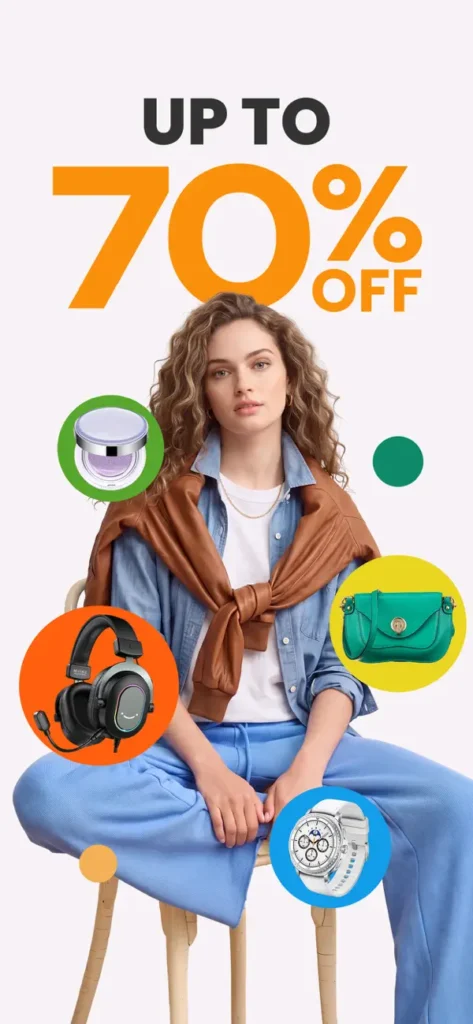
But a retail listing is not a production agreement. A seller can change stock, packaging, or its upstream source. The sample that looks great in March may be unavailable when your ad starts working in June. You may also pay a higher unit price than a wholesale arrangement. None of those points make AliExpress useless. It is a test lane, not automatically the road you’ll drive at scale.
If you want to sell the item under your own brand, move from browsing to a written specification, approved sample, supplier identity, inventory plan, and quality checks. Make that switch before a successful test tempts you to spend hard on ads.
Best fit: One-unit validation and early product research. Poor fit: Assuming a consumer listing will support repeat private-label production.
Ready-to-sell stock and a different supplier region
Faire Wholesale
Faire is for retailers buying products from brands. Its mobile app helps eligible buyers discover lines, order inventory, and track purchases. It can be a good fit for an independent shop that wants home accessories, gifts, beauty products, or other finished stock without inventing a new product from scratch.
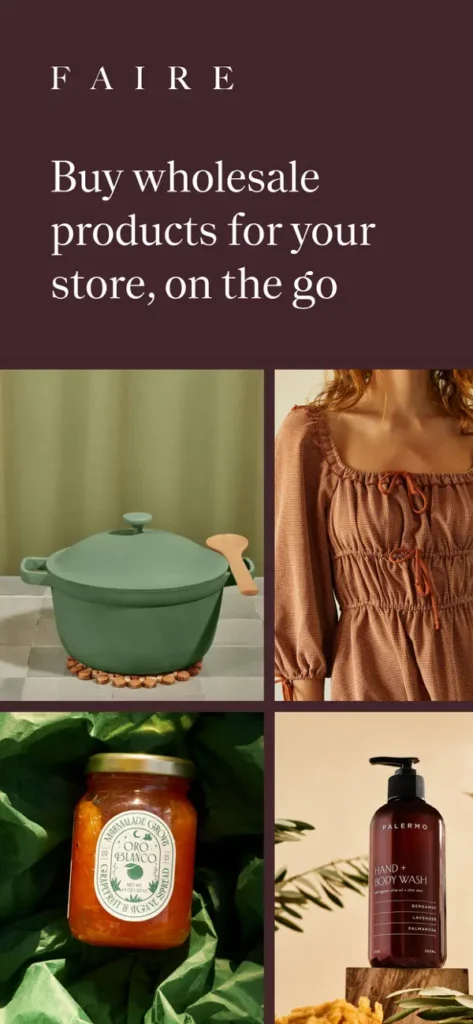
That also means you are generally buying the brand’s product. You are not commissioning a factory to put your logo on its standard unit. Wholesale terms, account eligibility, territory, opening-order conditions, and payment offers depend on the buyer and market. Check them in your account instead of assuming a benefit shown in somebody else’s screenshot applies to you.
Best fit: Retailers wanting authorized, ready-to-sell brands. Poor fit: OEM development or factory-level control over a custom SKU.
Amazon Business
Amazon Business helps organizations buy goods, manage purchases, and replenish ready-stock items. If your warehouse needs tape, shelving labels, or a few units of a commercial product next week, it may be the most convenient app in this group.
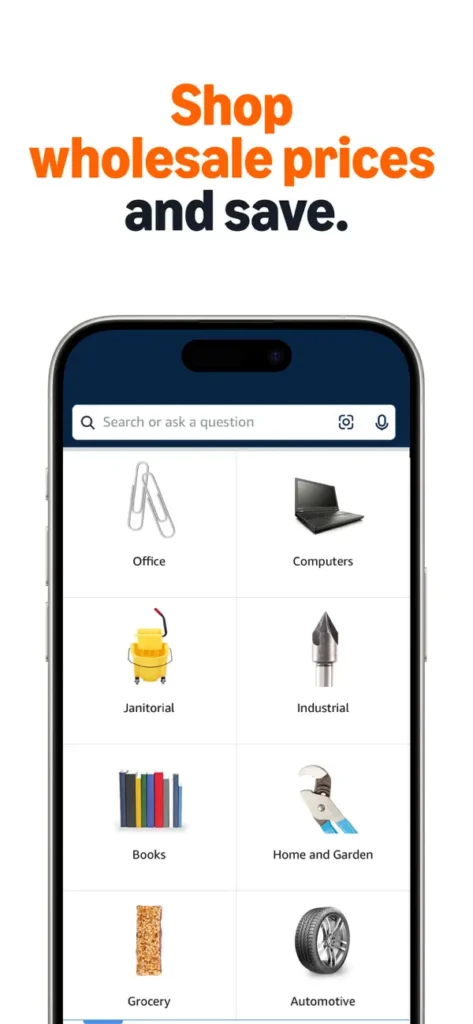
It is not the same as finding the factory that can make your own custom storage box for the next three years. Product listings can involve multiple sellers, and a quick delivery date does not establish manufacturing identity or resale rights. Check the exact offer, seller, invoice, quantity discount, and intended use.
Best fit: Business supplies and stock purchases where convenience matters. Poor fit: Treating a retail-style catalog as a transparent OEM supplier directory.
IndiaMART B2B Marketplace
IndiaMART gives you a different supplier pool. It is useful when your category could be sourced in India, when you want a second country in the shortlist, or when a particular material or manufacturing capability is a better fit there. Textiles, industrial products, packaging, and many other categories appear on the platform.
The app makes inquiries convenient, but a reply is only the start. Check whether the company is the manufacturer or an intermediary, whether it exports to your destination, what documentation the product needs, and how payment and shipping will work. Do not compare an India domestic quote with a China delivered quote and call the lower figure a win.
Best fit: Supplier discovery and regional diversification. Poor fit: Assuming every listed company has a complete international checkout and fulfillment process.
Where a phone helps—and where it makes an order harder
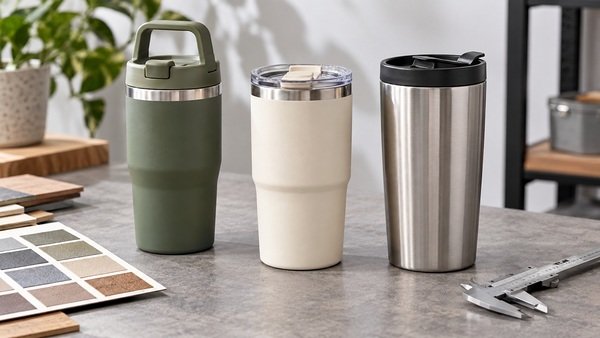
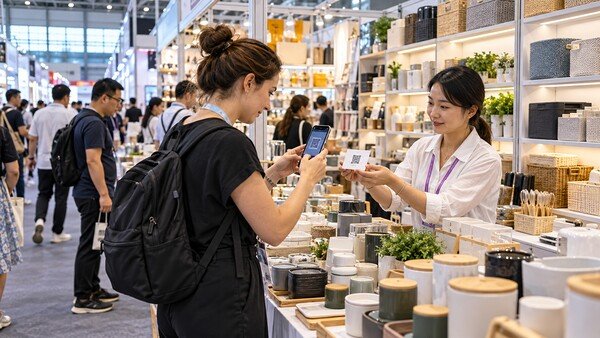
Mobile sourcing is great for the first pass. Use image search to find comparable products, save suppliers, ask whether a material is available, and follow sample or shipment updates. A buyer walking a trade-show aisle can collect contacts and record a quick note before the next booth blurs into the last one.
A phone is less friendly when the deal becomes precise. Two storage boxes may look identical in a thumbnail. One uses a different resin. One ships twelve per carton instead of twenty-four. One quote says FOB Ningbo and another includes delivery to your US warehouse. Zooming in and out of three PDF attachments is a rotten way to settle that comparison.
Move the important parts to a shared brief. Give the product a model or revision number. Record material, dimensions, tolerance, accessories, branding, packaging, carton details, quantity by variant, sample approval, and delivery basis. Keep the supplier’s response beside each requirement. Then your team can compare the same thing across apps.
Company verification, certificates, lab reports, contract wording, and inspection findings also deserve more than a quick glance between meetings. The app should keep conversations accessible; it should not become the only place the agreed specification lives.
A usable first RFQ, even if you send it from your phone
We need 300 and 1,000-unit quotes for a 25-liter storage box. Material: [grade]. Lid and handle: [details]. Retail pack: [details]. Please quote sample cost, MOQ by color, production lead time, carton dimensions, and freight basis to [destination]. Are you the manufacturer or a trading company? Which legal entity will issue the invoice and receive payment?
Replace the brackets before sending. It is a bit less glamorous than “best price?” and a lot more useful. If you have a drawing, attach it with a revision date.
A five-minute app test before you build a shortlist
Five minutes will not verify a factory. It will tell you whether an app suits your first step.
-
Check the developer. Install through an official store listing. Make sure you have the buyer app, not a seller dashboard with a very similar name.
-
Search one real product. Use your actual material or dimensions, not a broad term like “good quality bag.” See whether the results let you separate factories, wholesalers, and retail stock.
-
Send one serious question. Ask for MOQ by variant, sample lead time, and the shipping basis. A reply full of generic greetings tells you something about this interaction, though it does not condemn the whole platform.
-
Inspect the order path. Can you see a written order, supported payment route, invoice, refund or dispute terms, and shipment history? Features may differ by country and seller.
-
Keep the evidence. Save the quote, product version, legal name, and messages in a place your team controls. If the app cannot export them neatly, make a dated record before paying.
Do this for two or three apps, then compare qualified offers. Ten installed icons do not make a sourcing strategy.
Compare total cost, not the number on the small screen
Let’s say you want 300 identical organizers delivered for a small store test. The table below is hypothetical arithmetic, not live platform pricing. It assumes the same product specification and destination. Duties and taxes are estimates used only to show the method; your actual classification, route, and country will change them.
| Illustrative route for 300 units | Goods | Sample, local work, and QC | Freight and estimated import charges | Total | Per unit |
| China domestic app plus receiving/export support | $540 | $210 | $520 | $1,270 | $4.23 |
| Export-facing B2B app | $675 | $135 | $460 | $1,270 | $4.23 |
| Ready-stock wholesale app | $960 | $0 | $190 | $1,150 | $3.83 |
The China domestic route has the lowest goods price in this made-up example: $1.80 each. It does not have the lowest final cost at this quantity. At a larger repeat volume, the math might reverse. The ready-stock option is cheapest in the table, but it may be somebody else’s branded product, not yours. Same cost does not mean same control.
Add the costs your app screen may hide: sample shipping, artwork or mold, packaging, domestic transport, agent fee, international freight, inspection, import charges, warehousing, defects, rework, and returns. Compare final packed weight and dimensions, not a product photo. Ask who handles export clearance and delivery at the named place. Otherwise you are comparing a taxi fare to the price of buying the car.
For an actual order, build a simple landed-cost sheet with the same quantity, specification, destination, and delivery term for every supplier. If one field is blank, the quote is not ready to win.
Supplier checks and product rules travel with you to every app
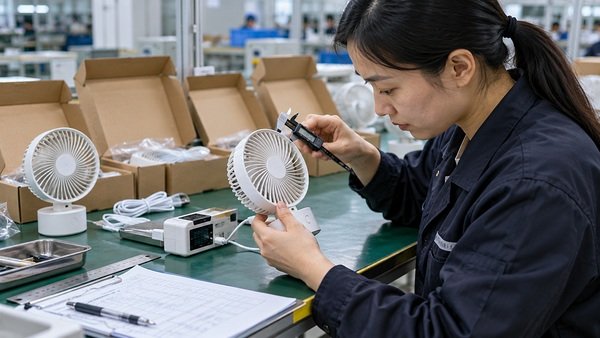
Changing platforms does not change the basic buying problem. A verified-looking profile on any app still needs to match the contracting entity, invoice, and payment beneficiary. Ask who makes the goods, who handles a failed inspection, and whether a subcontractor is involved. For a custom order, the sample and the written specification matter more than a colorful badge.
Our guide to verifying a China manufacturer beyond marketplace badges shows how to link a company claim to legal identity, operating capability, product evidence, and the actual transaction. The same logic works when you compare suppliers found on different apps. If the supplier is in another country, use that country’s appropriate registry and records rather than applying Chinese document fields to everyone.
Look at the product’s destination market too. A household organizer may need material, labeling, and performance checks for its intended use. Electronics and batteries can raise electrical and transport requirements. Children’s products, beauty items, and supplements have category-specific rules. An ISO quality-system certificate is not a product license, and a lab report for one model does not automatically cover a changed version. Ask a qualified compliance specialist when the category demands it.
Be wary of branded-looking copies. A product photo with a famous logo is not authorization to sell it. Equally, do not assume every trading company is a scam. A trader may coordinate factories well. The important questions are whether it identifies its role, accepts clear obligations, and lets you verify the product and payment chain.
Keep the purchase terms inside the relevant platform order when the platform offers a protected transaction, and read its current eligibility and dispute rules. Protection can help with a documented problem; it cannot turn an unspecified product into a clear contract. Save dated messages, the approved sample record, inspection evidence, and payment instructions. If the account changes mid-deal, pause and verify independently.
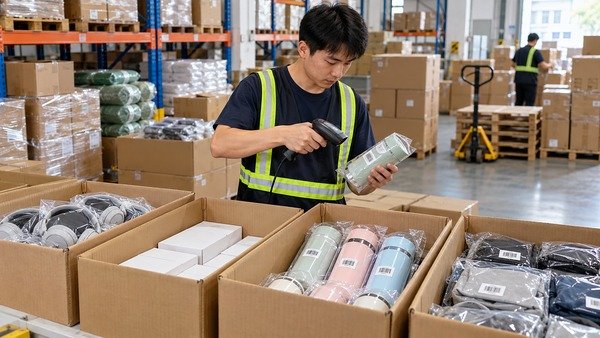
From sourcing app to Shopify delivery: mind the missing step
You found a supplier. Great. Now your Shopify store starts selling 30 units a day. Does the app know which color is in stock? Will someone check the units before packing? Who puts your insert in the box? Where does tracking appear, and who handles a damaged parcel?
Those questions sit after supplier discovery. A buyer app, a Shopify sourcing plugin, and a sourcing or fulfillment partner are three different tools. A plugin may import listings and pass customer orders to a supplier network. It does not automatically prove that your particular factory can repeat a specification. A sourcing partner may compare suppliers, receive stock, inspect goods, consolidate products, and coordinate dispatch, depending on the agreed service. It is not a substitute for you setting the product and customer promise.
If you are considering one-by-one shipping rather than a bulk buy, the guide to dropshipping from China and choosing suppliers covers the stock, shipping, and service questions in more detail. Test a real order to your target market before raising ad spend.
For a China domestic app purchase, there may be another handoff: the seller ships to a local receiving address, and someone must count, inspect, consolidate, and export the goods. Our 1688 sourcing agent guide explains those steps. If the work calls for comparing manufacturers and coordinating samples and checks, China product sourcing support is an option to evaluate by scope and fee. Ask who owns inventory, who approves release, and what happens when a batch fails.
Which app would I open first? Three buyer scenarios
A custom electronic accessory: Start with Made-in-China.com and Global Sources, then compare a few relevant suppliers. Prepare a technical RFQ. Confirm the exact model, components, destination rules, sample tests, and production site. Do not select by a phone screenshot of a certificate.
Twenty unbranded home items for a demand test: DHgate or AliExpress may get a physical sample to you with less negotiation. Check the exact variant, delivered cost, packaging, and IP risk. If demand repeats, move to a supplier and specification that can support it. This test is a beginning, not a procurement plan for the next 10,000 units.
A boutique seeking ready-to-sell beauty and home brands: Faire may be closer to the actual job than a manufacturer app, if your business and location qualify. Check territory rights, wholesale terms, expiration or batch records where relevant, and replenishment. You are buying the brand’s line, not designing a private-label formula.
You can keep Alibaba on the shortlist, by the way. An alternative app is valuable when it reveals a better-fit supplier or order model. Switching icons just to escape a messy RFQ does not fix the RFQ.
Conclusion
The best app like Alibaba depends on what you are buying. Use a B2B sourcing app when you need a manufacturer conversation, a small-order app when you need a test, and a brand wholesale app when you want finished retail inventory. Check country access and the real payment and shipping path with your own account.
Then do the plain, necessary work: write the specification, compare like-for-like quotes, verify the supplier, and plan inspection and delivery. Your phone can help you find the door. It cannot inspect what comes through it.
FAQs
What is the best app like Alibaba for wholesale buying?
There is no single best choice. Made-in-China.com and Global Sources suit manufacturer research; DHgate suits smaller tests; 1688 can suit China domestic sourcing if you can manage the buying and export workflow. Start with your product and order size.
Which apps like Alibaba work on iPhone and Android?
All eight had identifiable buyer-facing listings on both the Apple App Store and Google Play when researched in October 2026. Check the developer, country availability, and current functions for your device before installing; features can differ by platform and region.
Is 1688 an Alibaba alternative or part of Alibaba Group?
Both, in a practical sense. It is part of Alibaba Group but serves a different wholesale workflow from export-oriented Alibaba.com. Compare the full transaction, not just the displayed price.
Can overseas buyers use the 1688 app without a Chinese bank account?
The app currently advertises some international payment and shipping features. Whether they work for your country, account, product, and seller needs a real checkout test. You may still need China-side receiving or export help.
Which app is best for finding Chinese manufacturers?
Made-in-China.com and Global Sources are useful starting points alongside Alibaba. No app can prove that every company calling itself a factory makes your specific product. Verify the entity, site, sample, and production arrangement.
Is Made-in-China safer than Alibaba?
Neither platform name makes every order safe. Review any available supplier audit, then check your exact product, legal parties, written terms, payment route, and inspection plan. Different sellers on the same app can perform very differently.
Is Global Sources good for small orders?
It can be useful for research and samples, but MOQ depends on the supplier, product, and customization. Ask for separate sample and production quantities instead of assuming one platform-wide minimum.
Which Alibaba alternative lets me buy one sample?
AliExpress and some DHgate listings make one-unit purchases straightforward. A manufacturer may also offer a paid sample even when its bulk MOQ is much higher. Confirm that the sample represents the intended production specification.
How is DHgate different from Alibaba?
DHgate often feels closer to small-quantity shopping for finished goods. Alibaba.com is more oriented to supplier contact, RFQs, wholesale, and customization. Individual sellers and listings vary on both.
Is Faire a replacement for Alibaba private-label sourcing?
Usually no. Faire is mainly for eligible retailers buying existing brands for resale. If you need to control formula, design, material, or packaging under your own brand, look for a suitable manufacturer.
Can I find Indian suppliers through an app?
Yes. IndiaMART has a buyer-facing app for supplier discovery. Check each company’s manufacturing role, export experience, product documentation, terms, and shipment arrangements.
Are app badges and ratings enough to trust a supplier?
No. A rating describes an app or past transactions; a badge has a limited scope. Verify the legal entity, sample, product requirements, beneficiary, and order terms for your purchase.
Do these sourcing apps connect directly to Shopify?
Do not assume so. A supplier marketplace, a Shopify plugin, and a fulfillment service do different jobs. Confirm variant sync, stock updates, order routing, tracking, packing, and returns before promising customer delivery.
What if the app’s price changes after I contact the supplier?
Ask which quantity, variant, material, packaging, and shipping basis the displayed price covered. Request a written, itemized quote for your specification and compare it with other offers on the same terms.
How do I compare shipping and duties across wholesale apps?
Use the same destination, packed weight, quantity, and delivery term. Add domestic transport, international freight, import charges, inspection, and local handling to each offer. The cheapest product tile may not produce the cheapest delivered unit.
Table of Content

I’m Cassiel. I’ll help you scale your Shopify business with reliable fulfillment.
Join to newsletter.
Follow us and get more knowledge.