
You approve a mint-green water bottle with a matching sleeve. The factory makes the bottle. A printer makes the sleeve. The first sample looks great. Then the warehouse sends the old navy sleeve with the mint bottle because nobody told the packer the new version was live. The parcel has your logo on it, sure. It is still the wrong parcel.
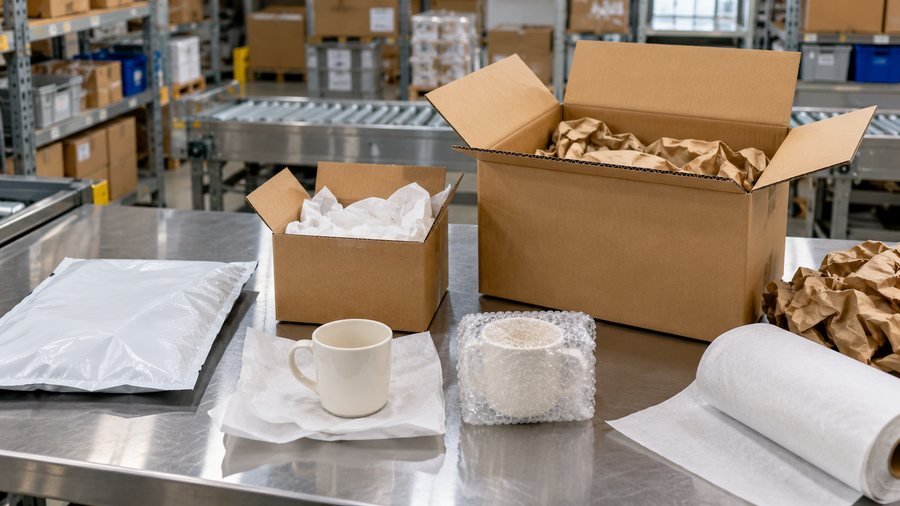
That little mess explains branded dropshipping better than a dozen logo mockups. The customer sees one brand. Behind it, the product, packaging, quality check, and order need to meet at the same packing bench. If one part runs on a different version, the promise falls apart.
This guide follows that work from a tested product to a delivered customer order. You will see what to approve, what to record, where to stop a bad batch, and how to test the whole setup before you scale. The aim is a parcel you can repeat, not a particularly pretty sample that only worked once.
First, decide what you are actually branding
Branded dropshipping means you sell under your own store identity while a supplier or fulfillment partner prepares and sends customer orders. The brand layer can be small or extensive. A printed card inside a neutral parcel is one option. A product made to your specification with a retail box, instructions, and custom outer packaging is another. Both need a reliable packer.
The terms get muddy in supplier chats. Neutral packing removes the supplier’s promotions or branding. White label usually puts your brand on an existing supplier product. Private label may give you more control over the specification, but the term alone does not prove exclusivity or ownership. Print on demand (POD) makes or decorates an item after the order, within the provider’s supported catalog and facilities. For a fuller comparison of control, cash and lead time, see private label versus white label.
| Brand layer | What changes | What must be controlled |
| Neutral parcel | Supplier materials and inserts are removed | The actual packer and sender details |
| Insert or sticker | A branded component joins the order | Printed stock, placement and SKU rule |
| Retail label or box | Customer-facing product presentation changes | Artwork, required information, fit and approved proof |
| Product logo or revision | The item itself changes | Supplier capability, sample, specification and batch identity |
| Full private-label set | Product, retail pack and shipping experience work together | All of the above, plus inventory and change control |
None of these rows has a universal minimum order quantity. A printer may require a batch of boxes while a warehouse can apply one already stocked insert per order. And “dropshipping” does not always mean zero upfront inventory. You may pay for finished products, printed materials, or both before individual orders are placed. Get that cash commitment in writing.
The operating model matters too. A cooperative factory can sometimes print and ship a single product. An agent can coordinate several factories and a packaging vendor. A 3PL can store stock you already own and apply detailed packing rules. Choose by the work involved, not by the grandness of the provider’s title.
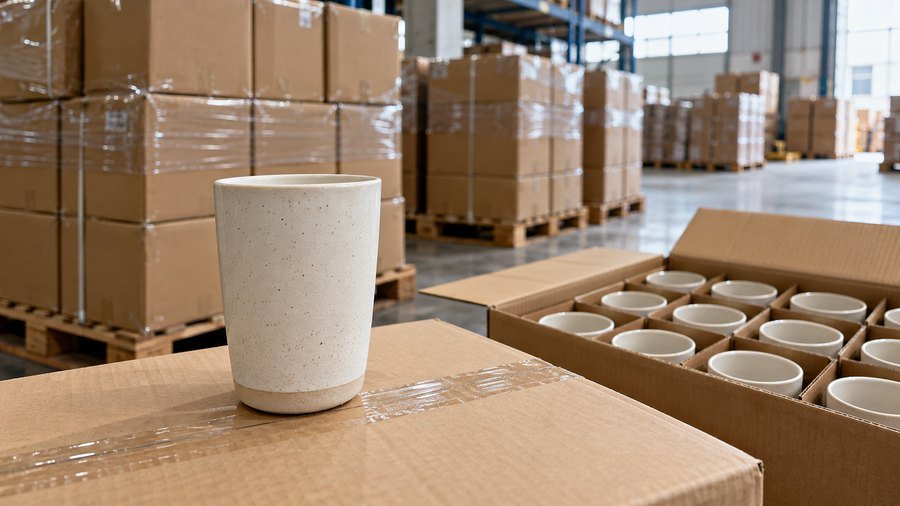
Build the plan backward from what the customer sees
Take the mint bottle again. The product page promises a 750 ml bottle in mint green, a fitted sleeve, and delivery within the window shown at checkout. That sentence already contains several operating requirements. The bottle must match the approved color and capacity. The sleeve must fit. The warehouse must have both pieces. The shipping route must accept the packed item and meet the stated delivery expectation often enough to support it.
Write a one-page brand-and-order brief before asking for a custom box. Include the exact product and variants, target country, approved claims, intended price, expected order mix, known defects, unboxing requirements, shipping protection, and what a customer should do if something is wrong. Add photos of the approved item and a list of things you do not want in the parcel, such as another seller’s card. Small detail, big embarrassment.
Then assign owners. Who approves the product? Who signs off on the artwork? Who decides whether a defective batch can be released? Who updates the warehouse packing rule? Who answers when tracking stops? One company can do several jobs, but each decision needs a named owner and a record. A logo file floating in a WeChat chat is not a packing instruction.
Gate 1: Lock the product customers are paying for
Choose a product with evidence behind it
Branding works best when you already know why customers buy the product and what they complain about. If a generic test has steady orders but customers dislike a weak cap, fixing the cap is more valuable than printing a luxury box around it. If a product sold twice and you have no idea whether it will sell again, a large custom run is a bet, not a workflow.
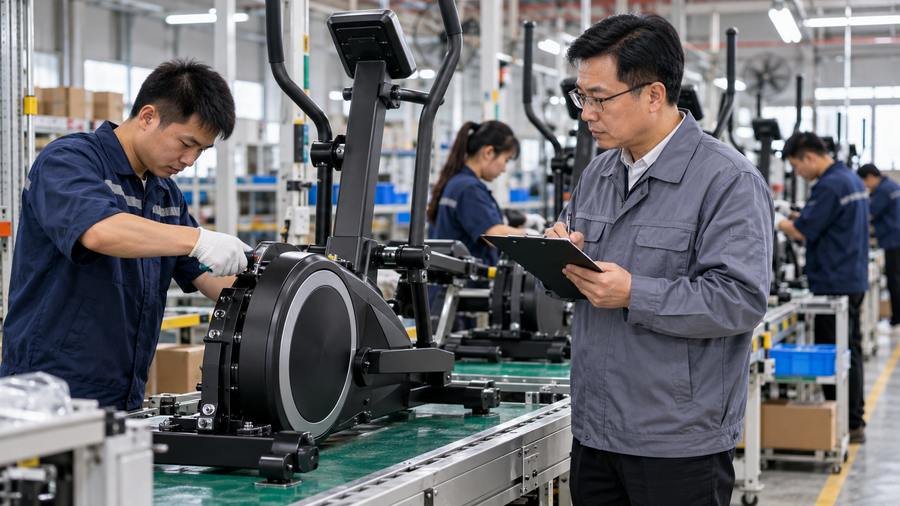
Send a supplier or China product sourcing partner a useful brief: reference sample, dimensions, material, finish, colors, functions, variants, packaging needs, destination market, and likely volumes. Ask who manufactures the product and whether important steps are subcontracted. Compare samples against the same brief. A similar listing photograph is not evidence of the same item.
Keep one approved physical sample, dated photographs, and a written specification. Give each sellable variant a clear internal SKU. The mint 750 ml bottle and navy 500 ml bottle cannot share an ambiguous warehouse name such as “bottle 1.” If your sales channel requires GTINs, check the applicable identification rules: GS1 explains that product variations such as size and color need distinct GTINs. An internal SKU and a GTIN are different things; not every product needs a GTIN for every sales channel.
Put changes and claims through a real approval
Suppose the factory offers a different lid to save a week. Ask for its material, dimensions, fit, leak performance, and a new sample before approving it. Record the version change and the first batch allowed to use it. The warehouse needs to know whether old and new lids may be mixed in one saleable SKU. “Similar enough” is a decision for the brand to make, not a surprise to find in customer photos.
Product claims also depend on category and market. A skincare kit may need ingredient, batch, shelf-life, and label review. A toy may need age-specific safety work. A battery accessory needs the appropriate product and transport assessment. Requirements differ by destination and product; arrange qualified testing or regulatory review when needed. A warehouse visual check cannot grant a certification or turn a claim into a compliant one.
Release point: approve the sellable product, allowed variations, customer-facing claims, and the person authorized to change them. Do this before you print a box that describes yesterday’s version.
Gate 2: Make packaging a counted part of the order
Start with the smallest useful layer
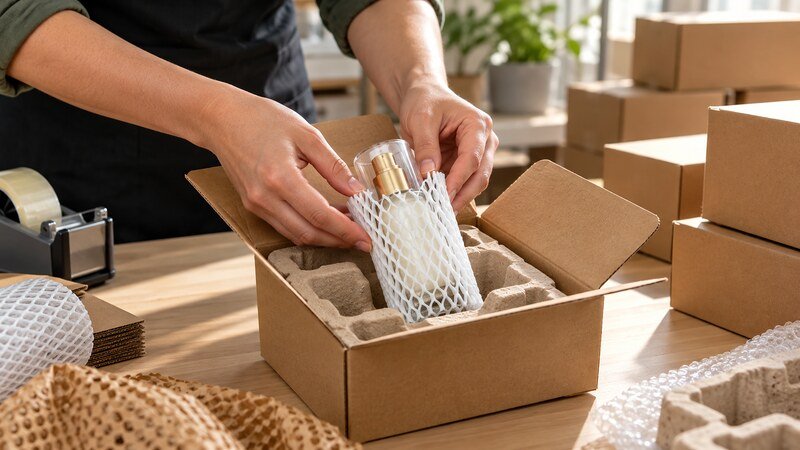
Product packaging sits close to the item: bottle label, sleeve, retail carton, pouch, or instruction card. Shipping packaging protects it in transit: mailer, corrugated box, cushioning, tape, and carrier label. A nice retail carton may still need an outer box. A printed outer box may get scuffed or covered by a shipping label. Decide which layer the customer will actually notice and which layer keeps the goods safe.
For a new brand, a modest insert or label can be a sensible start. If the bottle leaks, no amount of tissue paper will rescue the review. For an established gift set, a fitted retail box and a printed card may be central to the offer. The site’s detailed guide to custom packaging for Shopify dropshipping covers materials, dielines, samples, and supplier options; here the question is how that material enters the order flow.
Get the packaging vendor’s dieline and make a print-ready artwork file. Confirm dimensions, text, color references, finish, barcode position if used, and the exact product version. A screen proof checks the copy and layout. A physical proof checks fit, folds, color in real light, scuffing, adhesive, and whether the item rattles around. Pack and send a trial parcel to a real destination before you decide the protection is sufficient.
Count boxes and inserts like inventory
The printer’s invoice may say 1,000 sleeves. The warehouse must confirm how many arrived, how many passed, and which location holds them. Give each branded component its own internal material code and revision. Map it to the sellable product SKU: mint bottle version B uses mint sleeve version B and care card version 2. State whether a plain sleeve is an allowed fallback when the printed sleeve runs out. If the product page promises the printed one, quietly substituting plain packing is a bad plan.
Packaging has purchase cost, setup, domestic freight, receiving, storage, packing labor, and sometimes disposal cost. Here is a hypothetical calculation, not a supplier quote: a $240 print setup over 400 usable boxes is $0.60 per box. If each box costs $0.45, inbound freight and receiving together add $0.15, and extra packing labor is $0.30, the added cost is $1.50 per shipped order before storage or damaged/unused boxes. At only 200 orders, the same setup alone becomes $1.20 per used box, and the comparable added cost becomes $2.10. The denominator matters.
Ask who owns leftover packaging, when its design might become obsolete, and what happens if sales stop. A branded box is both a marketing asset and a very ordinary item taking up shelf space.
Release point: approve a physical packed sample, final artwork revision, received material quantity, storage location, SKU mapping, reorder trigger, and fallback rule.
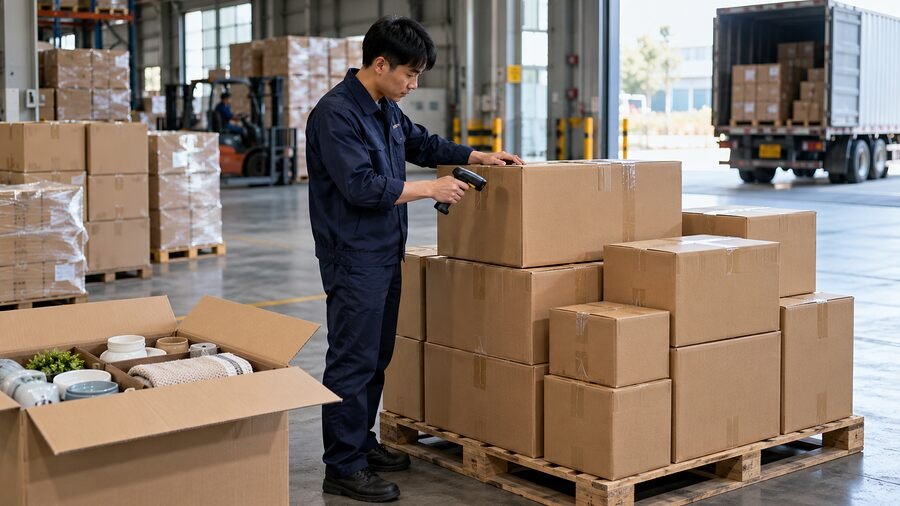
Gate 3: Check quality before a bad unit becomes a customer problem
“QC included” is too vague. Product approval, factory batch inspection, warehouse receiving, and order packing checks answer different questions. A sample tells you what the product can look like. A production check asks whether a batch matches it. Receiving finds shortages or visible damage on arrival. An order-level check catches a wrong variant or missing insert at the packing bench.
Write the checks in plain language. For the bottle: color, capacity, lid fit, leakage test method, surface defects, sleeve version, care-card version, and outer-pack condition. Say which checks apply to each unit and which use a sampling plan. Specify a pass, fail, and hold decision. If an inspection is sampled, do not call it “100% checked.” If every unit is visually checked, do not imply that its material composition or long-term performance was tested.
When a problem appears, keep the goods on hold and capture evidence: supplier, production batch if available, quantity affected, photographs, test result, and the exact approved requirement that failed. Decide whether to rework, replace, reinspect, accept with a documented concession, or reject. Ask who pays for each path before a problem lands. A product quality control plan is most useful when it makes that decision possible, not when it merely produces a pretty pass stamp.
One more easily missed check: the approved product and approved packaging should be tested together. The lid may pass on its own while the insert or retail box presses against it during shipping. The pack-out is part of the product experience.
Release point: only identified, approved stock enters sellable inventory. Failed or uncertain stock stays unavailable until someone with authority resolves it.

Gate 4: Turn approvals into warehouse instructions
Now the work moves from samples and spreadsheets to actual orders. The store says a customer bought mint bottle, 750 ml, with gift sleeve. The warehouse needs a rule that connects that SKU to a specific stock location, product version, sleeve version, card, protective material, and shipping option. “Use branded packing” leaves too much to a tired packer on a busy Friday.
| Order situation | Warehouse rule | Evidence to keep |
| Normal single-item order | Pick approved product and matching package; verify quantity and variant | Pick/pack record and tracking reference |
| Gift bundle | Count every component before closing the parcel | Component checklist and shortage decision |
| Printed sleeve out of stock | Hold or use an expressly approved alternative | Stock alert and brand authorization |
| Address change after release | Check whether the parcel can still be stopped | Timestamp, owner and carrier response |
| Returned or damaged item | Quarantine and decide if it is resellable | Condition photo and disposition |
The dropshipping fulfillment workflow should cover order import, stock reservation, picking, packing, dispatch, and tracking back to the store. Confirm a cutoff time and what happens when an order misses it. Decide whether the order is split or held when a bundle component is missing. If there are two versions of the product in stock, decide which orders are eligible for each and how support can tell them apart later.
An order document can help, but the printed slip does not perform the physical work. Shopify’s packing-slip guidance describes item, SKU, quantity, and address fields. Your warehouse still needs the actual branded-material rule and a check that the right components went into the parcel. Keep the customer-facing sender and return information consistent with what you promise on your site.
Finally, distinguish a tracking number from a moving parcel. Ask for the release timestamp, warehouse dispatch confirmation, first carrier scan, delivery event, and a plan for no-scan cases. When a customer complains, support should be able to see the product version, packing rule, and parcel status without starting a detective story in three supplier chats.
Release point: a test order travels from checkout through packing, carrier handoff, and customer delivery with its correct contents and visible records.
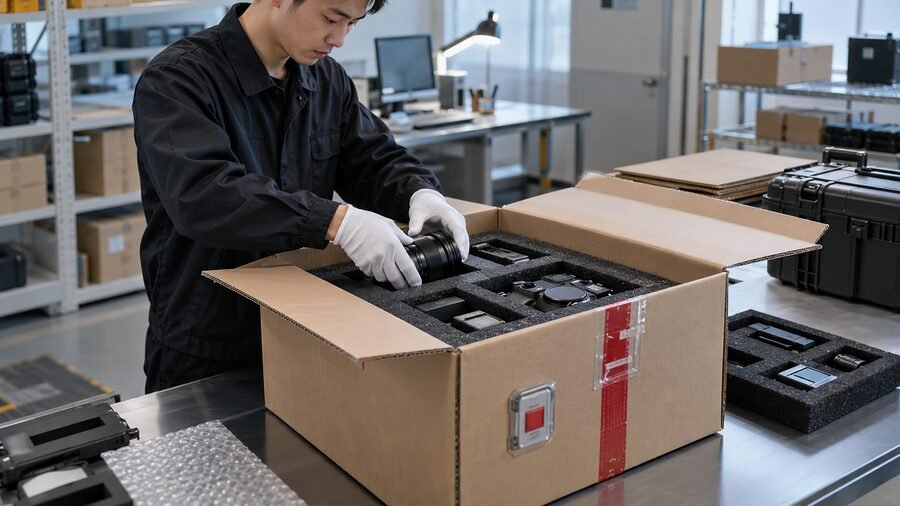
Pilot the parcel before scaling the brand
Run a small pilot with ordinary and awkward orders. Send a mint bottle, a navy bottle, a two-item bundle, and an order with an address edit before the agreed cutoff. Include a deliberately missing packaging component in a controlled test, so you can see whether the warehouse holds the order or improvises. Keep live customer orders out of that failure exercise.
Have the delivered parcels opened by someone who did not write the packing rule. Do the product and packaging match the listing? Is the card present? Did the box protect the item? Is the seller information correct? Do the tracking events line up with what support can see? Note actual cost per order and paid-to-dispatch time. A studio photograph of a sample cannot tell you any of this.
Set go/no-go criteria before the test. A wrong color, unapproved substitute, or missing required label should stop release until fixed. A slightly crooked decorative sticker may call for retraining and a new check, depending on your agreed standard. Keep the old fulfillment path for orders it already accepted while the new path takes a defined group of eligible orders. Mixing owners is how duplicate parcels happen.
After launch, review the wrong-variant rate, packing-rule adherence, damage reports, first carrier scans, refunds by cause, and printed-material balance. Replenish the product and package on separate lead times. Update the spec and pack instruction together when a component changes. Do that boring housekeeping and the brand will look much more effortless than it really is.
Conclusion
Start with a product people want and a version you can describe. Add a packaging layer that your margins and stock can support. Put quality checks at the factory, receiving point, and packing bench where they belong. Then make the store SKU, product stock, packaging stock, and warehouse rule agree on one customer order. A real pilot parcel is the final referee. If it opens the way you intended and the records explain how it got there, you have a workflow worth repeating.
Frequently Asked Questions
Can I do branded dropshipping without buying product inventory?
Sometimes. A supplier may make or buy the product after each sale, while you prepay only for inserts or labels. Other arrangements require finished stock. Confirm both product and packaging commitments separately.
Is branded dropshipping the same as private label?
No. A brand can start with an existing product and a branded insert. Private label usually involves branding or changing the product itself, though suppliers use the term differently. Define the exact specification and rights in writing.
Is a thank-you card enough to start?
It can be, if the product and delivery are dependable. Test whether the card appears in every intended order and whether its message fits the customer experience. Do not promise a full custom box if you are using a card.
Can my existing supplier put my logo on the product?
Possibly. Ask for the marking method, position, durability, MOQ, sample, production lead time, and any effect on warranties or required labeling. Approve a physical sample before the run.
Does Shopify automatically add branded packaging to an order?
No. The store sends product and order information. A supplier or warehouse must own, stock, select, and apply the physical packaging under an agreed rule.
Who should store the printed boxes?
The party packing your customer orders is often the simplest place, provided it can receive, count, protect, and track the material. Confirm the location, storage charges, and who owns unused stock.
What happens if my packaging runs out?
Choose in advance: hold orders, use a specific approved alternative, or pause the branded offer. Set a reorder alert using demand and printing lead time. A packer should not invent the fallback.
Do I need a physical packaging sample?
For a new box, label, or pack-out, yes, it is wise. A screen proof cannot show fit, adhesive, folds, rubbing, or how an item survives a real delivery route.
Is a factory inspection the same as warehouse QC?
No. A factory check reviews the batch at production. Receiving checks what arrived at the warehouse. Order-level checks verify what goes into a customer’s parcel. Agree on the scope of each.
Must every unit be inspected?
That depends on product risk, cost, the defect history, and the agreed plan. Some checks cover every item; others use a defined sample. Ask exactly what was checked and avoid treating a visual check as laboratory proof.
How do I know which product version a customer received?
Record the approved revision and batch or lot where relevant, map them to warehouse stock, and preserve the order’s pick record. Do not mix old and new versions under one untraceable bin.
Can an agent work with my existing manufacturer?
Often. The manufacturer can send approved goods to an agent or warehouse for receiving, branded packing, and dispatch. Agree on purchase terms, stock ownership, inspection, and liability at the handoff.
How much does custom branding add per order?
Add printing and setup divided by expected usable orders, plus inbound freight, receiving, storage, extra labor, and obsolete stock. The number depends on design, quantity, material, and sales pace. Use your own quote.
Will custom boxes slow fulfillment?
They can if the boxes are not stocked at the packing site or the SKU rule is unclear. A prepared, tested process may dispatch just as smoothly as a neutral parcel. Time a pilot rather than guessing.
What should I check in my first branded test order?
-
Check the exact product and variant, logo and artwork version, required inserts, protection, sender and return details, actual weight and dimensions, dispatch timing, tracking scans, and the delivered parcel’s condition.
Table of Content

I’m Cassiel. I’ll help you scale your Shopify business with reliable fulfillment.
Join to newsletter.
Follow us and get more knowledge.