Two agents quote the same phone accessory. Agent A adds a clear $2 handling fee. Agent B says the service is free, yet the product costs $1.20 more and the shipping line is not named. Which quote is cheaper?
Honestly, we cannot tell yet.
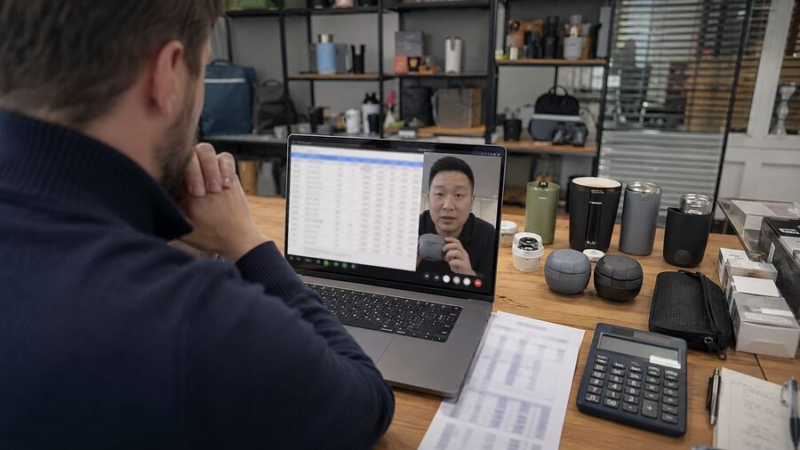
Comparing China dropshipping agent fees is a little like comparing airline tickets. One airline shows the bag and seat fee up front. Another advertises a cheap base fare, then adds the extras at checkout. The smallest number at the top is not always the cheapest trip.
An agent may earn through a fee per order, a sourcing commission, a monthly retainer, a product markup, or a mix of several models. On top of that come product cost, China domestic freight, packaging, quality checks, fulfillment, international shipping, duties, failed deliveries, and rework.
So the useful question is not simply, “What percentage does the agent charge?” It is this: What does one correct, delivered order actually cost?
This guide pulls the bill apart. You will learn how the common pricing models work, what can hide behind an all-in quote, and how to compare two agents without turning the exercise into a spreadsheet nightmare.
What Is a China Dropshipping Agent Fee Actually Paying For?
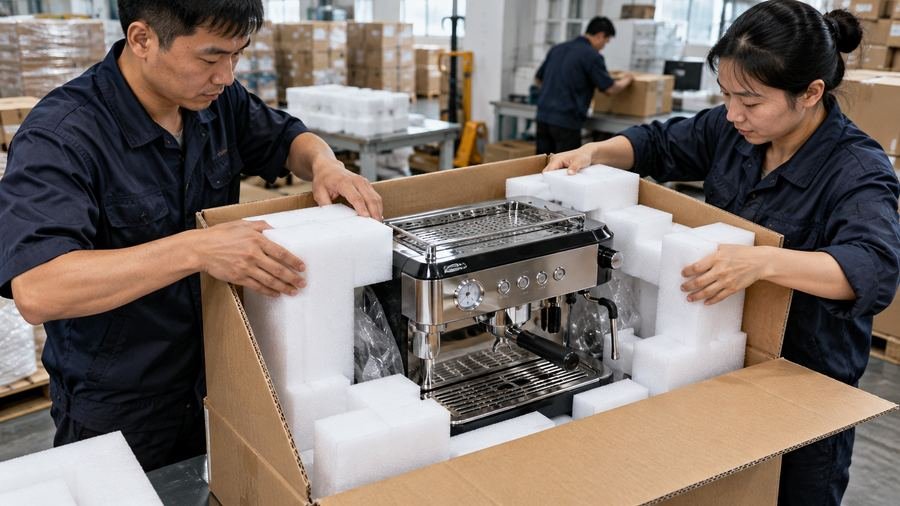
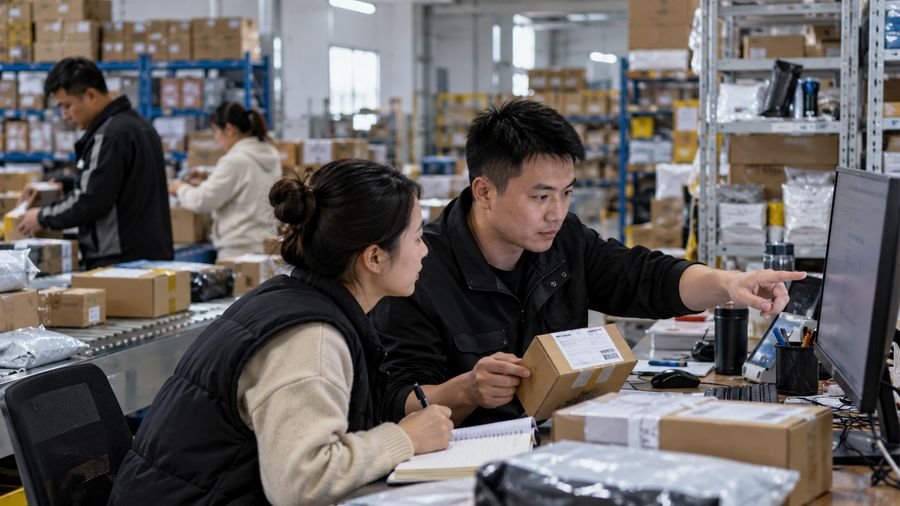
A China dropshipping agent connects your store, factory, warehouse, and carrier. They may source, purchase, inspect, sync orders, pack parcels, arrange shipping, and handle exceptions.
That is why a private dropshipping agent in China can charge differently from a factory or a warehouse. The job covers several moving parts.
| Business type | Main job | Common charging basis | What sellers often overlook |
| Dropshipping agent | Coordinates sourcing and customer-order fulfillment | Per order, markup, retainer, or hybrid | The agent may also earn from product or freight margin |
| Sourcing agent | Finds, checks, and manages suppliers | Percentage commission or project fee | The commission base may include more than factory value |
| Supplier or trading company | Sells the goods | Unit-price margin | The margin is built into the product quote |
| 3PL warehouse | Stores inventory and dispatches orders | Receiving, storage, pick and pack, and shipping | Minimums and exception fees can exceed the basic pick fee |
One company can perform all four roles. That does not make the quote wrong. It does mean the words “agent fee” tell you little on their own. The biggest distinction is between two workflows:
-
On-demand dropshipping: Stock is purchased or allocated as orders arrive, often with an order fee or all-in quote.
-
Bulk sourcing and stocked fulfillment: You buy inventory first, then pay sourcing and warehouse costs.
Comparing a 5% bulk sourcing commission with a $2 single-parcel handling fee is like comparing a grocery cart with a checkout lane. Related, sure. Not the same job.

The Six Main China Dropshipping Agent Pricing Models
There is no universal price sheet. Complexity, volume, destinations, integrations, and scope change the calculation. Most quotes still use these six models.
| Pricing model | How it is calculated | Best fit | Main advantage | Main risk |
| Flat fee per order | Fixed charge for each fulfilled order | Stable daily volume and simple parcels | Easy to forecast | Extra-item or special-handling fees may sit outside it |
| Percentage commission | Percentage of an agreed cost base | Bulk sourcing or larger purchase orders | Cost scales with purchasing | Incentive may favor a higher purchase value |
| Product markup | Agent adds a margin to supplier cost | All-in or reseller-style service | Simple invoice | Factory price and margin may be hard to verify |
| Monthly retainer | Fixed recurring account or service fee | Stable, higher-volume stores | Reserved support and predictable service | Poor value at low volume |
| Flat project fee | One price for a defined sourcing task | New supplier search, samples, audit, or development | Clear project budget | Revisions and follow-up work may cost extra |
| Hybrid or all-in | Combines two or more methods | Complex or customized operations | Flexible and convenient | Cost components can become difficult to compare |
Flat Fee per Customer Order
The agent charges a fixed amount whenever an order is processed. It may cover order sync, the first pick, standard packing, dispatch, and tracking upload. Ask about extra-item picks, bundles, special packaging, and manual orders. This model is easiest to forecast when parcels are similar.
Percentage Commission on Product Value
Sourcing agents often charge a percentage of purchase value. The important question is: a percentage of what? A 5% fee on a $10,000 ex-factory order is $500. Applying it to product, domestic freight, packaging, and shipping creates a very different bill. Define the base in writing and ask how supplier quotes and rebates are disclosed.
Product-Price Markup
Under a markup model, the agent sells the item above supplier cost, so no separate service fee may appear. That is normal if the agent finances stock, guarantees replacement, or takes commercial risk. The problem is an unexplained gap or a promise of open-book pricing that the records do not support.
Monthly Subscription or Retainer
A monthly fee may pay for software, integrations, support, sourcing requests, or reserved capacity. It can lower per-order cost at stable volume but burden a new store. Ask whether it replaces other fees, what happens when volume drops, and whether unused services roll over.
Flat Sourcing or Project Fee
Supplier searches, sample rounds, packaging development, and factory visits can use a project fee. Define supplier options, revisions, verification method, reports, and ownership of supplier details. Without boundaries, “one sourcing project” can mean almost anything.
Hybrid or All-In Pricing
Many quotes combine models. An agent may add a small order fee, product margin, and freight spread. An all-in price is useful when its assumptions can be tested. Record the exact SKU, packed size, destination, route, delivery window, duty arrangement, loss policy, and validity period.

What Public Fee Ranges Do—and Do Not—Tell You
Agent websites publish low-single-dollar handling fees, single-digit sourcing commissions, free plans, monthly accounts, and custom project quotes. Treat these as prompts, not an audited price index.
| Public pricing pattern | Charging unit | Missing context | How to verify it |
| Low-single-dollar handling fee | Per order | Number of items, packaging, integration, volume | Request rate tiers and a sample invoice |
| Single-digit sourcing commission | Percentage of purchase | Calculation base, MOQ, supplier complexity | Define the base and included deliverables |
| Free account or sourcing | No visible fee | Product margin, freight spread, request limits | Benchmark the exact product and route |
| Monthly paid plan | Per month | Included orders, support, software, overage | Divide total monthly cost by delivered orders |
| Custom project fee | Per task | Revision count, travel, samples, report depth | Agree on a written scope and completion test |
A seller with one lightweight SKU and automated orders is easier to serve than a seller with 80 fragile SKUs and manual spreadsheets. Use public ranges to ask questions, not to build a margin before the agent sees your product and destination mix.

A China Dropshipping Agent Cost Is More Than the Agent Fee
The agent fee is only one slice. A useful quote follows the order from the factory floor to the customer’s door.
Product and Procurement Costs
Record the material, dimensions, finish, accessories, variants, packaging, and defect requirements. Two factory prices may describe different specifications. Procurement can include:
-
Unit price and MOQ
-
Samples and courier
-
Tooling or setup
-
Payment and currency conversion
-
Deposit terms
-
Sourcing commission
When one partner handles product sourcing and fulfillment, ask where sourcing ends and recurring fulfillment begins. A one-time supplier search should not quietly become a permanent percentage.
China-Side Freight and Warehouse Costs
Goods must move from the supplier to the warehouse. Then receiving, counting, put-away, SKU labeling, consolidation, and storage may apply. Ask when free storage ends, whether minimums apply, and who handles a shipment that arrives seven units short.
Fulfillment and System Costs
Fulfillment may include the first pick, extra items, packing, inserts, labels, and tracking. Bundles, serial-number recording, and fragile wrapping take extra time. Check onboarding, integrations, extra stores, manual uploads, and reporting. This guide to Shopify fulfillment cost separates those operations from product and freight charges.
International Shipping and Customs
Shipping often becomes the largest variable cost. Destination, chargeable weight, product type, route, season, and volume matter. Fuel, remote-area delivery, insurance, clearance, duty, tax, returns, or disposal may be extra. “Shipping included” does not always include duties.
For US-bound orders, do not assume every parcel under $800 enters duty-free. Current US ecommerce import guidance says the de minimis exemption has been suspended worldwide. Classification, origin, carrier method, and current rules belong in the cost model.
Exception Costs
The average order behaves nicely. The exceptions chew the margin.
Count wrong items, address corrections, losses, defects, reships, returns, and disposal. If 2% of orders require a $9 reship, the expected cost is $0.18 per order before support labor.
| Cost line | Usually charged by | Useful question | Possible surprise |
| Product | Factory, trader, or agent | Is this the exact approved specification? | Lower-cost material or missing accessory |
| China domestic freight | Supplier or carrier | Is delivery to the agent warehouse included? | Multiple supplier shipments |
| Receiving and storage | Warehouse or agent | When does free storage end? | Minimum monthly charge |
| Pick and pack | Warehouse or agent | Does this include extra items and bundles? | Assembly labor |
| International shipping | Carrier or agent | Which named route and chargeable weight? | Peak or remote-area surcharge |
| Duty and tax | Customs, carrier, or agent | Is the quote DDP or unpaid on arrival? | Classification or policy change |
| Exceptions | Several parties | Who pays for each failure type? | Reship plus support and refund |

Hidden Markups: How to Find Them Without Starting a Fight
Waving a random 1688 screenshot at an agent proves little. Accepting every number without checking is no better. There is a sensible middle.
Benchmark the Exact SKU
Match material, size, finish, accessories, packaging, certification, MOQ, and defect allowance. Use the approved sample. The same marketplace photo may hide a lighter specification.
If you compare direct buying, include marketplace payment fees, China delivery, inspection, communication time, and fulfillment. This Alibaba dropshipping cost guide provides more context for that route.
Ask What Price the Agent Controls
Ask:
-
Are the supplier and original quote disclosed?
-
Does the agent receive rebates?
-
Which exchange rate and payment fee apply?
-
What is the commission base?
-
Is freight passed through or resold?
When a Markup Can Be Reasonable
A 60-cent spread may cover supplier management, financing, rejected units, and replacement stock—or none of them. Ask what risk transfers to the agent. A disclosed markup with real responsibility may beat a tiny commission followed by five separate charges.

Freight Is Often the Biggest “Agent Fee” That Is Not an Agent Fee
Sellers sometimes blame an agent for a high quote when the real culprit is a large box, a battery, or a remote postcode. Freight is still part of your delivered cost, but it should not be confused with the agent’s service revenue.
Actual Weight vs Dimensional Weight
Carriers may charge by actual or dimensional weight, whichever is higher. Imagine a 1 kg pet bed in a large carton. The carrier sells aircraft and truck space, not just kilograms, so the billed weight can be much higher.
Use the carrier’s current dimensional-weight calculation and ask the agent for the packed dimensions. Factory product dimensions are not enough. A few centimeters of empty space can bump thousands of orders into a higher band.
Compare Named Routes, Not Vague Labels
“Fast line” and “economy line” are not useful service names. Ask for:
-
Origin, destination, route, and last-mile carrier
-
Weight band and chargeable weight
-
Transit range and processing cutoff
-
Tracking and compensation policy
-
Restricted-product rules
Two routes with the same estimate may have different tracking and compensation. A higher rate can pay off if it reduces support tickets and reships.
Packaging Can Change Freight More Than Material Cost
A rigid presentation box may cost only 40 cents more, yet increase dimensional weight enough to add $2 to shipping. That is a five-times-larger effect hiding behind a tiny packaging decision.
Pack a real sample and quote two configurations. Right-size the shipper and protect what needs protection. Pretty packaging matters. Shipping air around the planet does not.
For more variables by country, speed, and product type, see these international shipping solutions from China.
Duties and Quote Boundaries
Write down who handles export clearance, international transport, import clearance, duty, and final delivery. The ICC Incoterms 2020 rules help allocate tasks, costs, and risks in sales contracts. Use the correct named place and version, such as DAP London, Incoterms 2020.
Incoterms do not replace an agent agreement, but the vocabulary exposes an expensive assumption: whether duty is paid in the quote or waiting at the border.

Packaging Materials, Customization, and the Small Charges That Stack Up
Custom packaging is a pile of materials and tasks: box, mailer, label, insert, proofing, assembly, and storage. Each line looks harmless. Together, they move the margin.
| Material or service | Cost type | Operational effect | Hidden-cost risk |
| Printed product box | Setup plus per unit | Improves presentation and protection | Plate, dieline, proof, MOQ, and unused stock |
| Poly mailer | Per order | Lightweight outer protection | Size changes and extra sealing labor |
| Corrugated shipper | Per order | Protects fragile or boxed goods | Higher dimensional weight |
| Insert or thank-you card | Printing plus insertion | Supports branding and instructions | Version changes make old stock obsolete |
| Label or sticker | Setup plus per unit | Branding, barcode, or compliance | Manual application fee |
| Tissue and void fill | Per order | Presentation and movement control | Material use varies by packer |
| Kitting or assembly | Per unit or hourly | Creates bundles and gift sets | Extra-item picks and error risk |
A branded box, insert, label, and assembly adding $0.68 becomes $3,400 over 5,000 orders. Ask about MOQ, wastage, proof approval, replenishment, and leftover stock. This guide to custom packaging for Shopify dropshipping helps plan the materials before accepting the per-order price.
What Does “Quality Control Included” Really Mean?
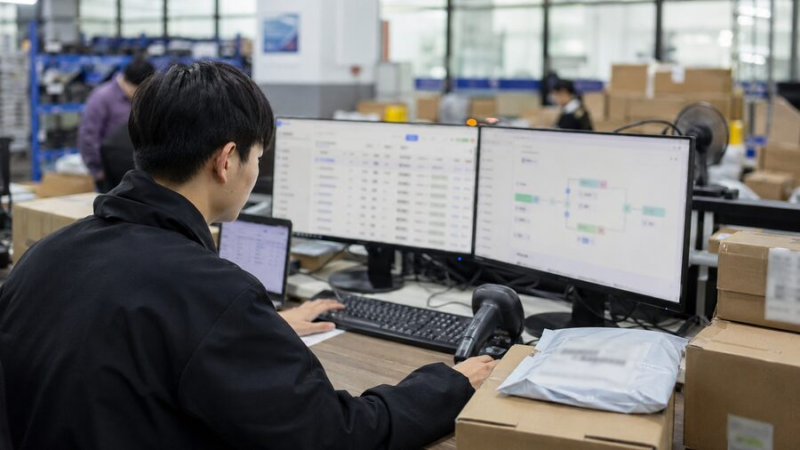
“QC included” sounds reassuring. It is not a complete inspection standard.
Basic Visual Check
A general check may confirm SKU, color, quantity, visible damage, and packaging. It may not reveal a battery that fails after ten minutes or a cap that leaks under pressure.
Random Inspection Using an AQL Plan
An AQL inspection samples a batch using an agreed inspection level, defect categories, and acceptance limits. Define critical, major, and minor defects first.
What an AQL Report Should State
-
Lot size and sample size
-
Sampling level and limits used
-
Product specification and approved sample
-
Tests performed
-
Defects found by category
-
Photos, measurements, and pass/fail results
AQL does not promise zero defects. It is a sampling method for deciding whether a lot meets an agreed quality threshold.
Functional Testing or Full Inspection
Electronics, leak-prone bottles, sized apparel, and valuable goods may need functional or full inspection. Define the test: “turn it on” and “run it under load for 20 minutes” are different jobs.
The product quality inspection process in China should match your risk, not a generic checkbox.
Who Pays After a Failed Inspection?
Agree who pays for sorting, reinspection, rework, replacement, domestic return freight, delayed storage, and missed dispatch. If the factory caused the problem, the agent may help recover the cost, but that responsibility should not be assumed.
How Agent Fees Change by Product and Industry
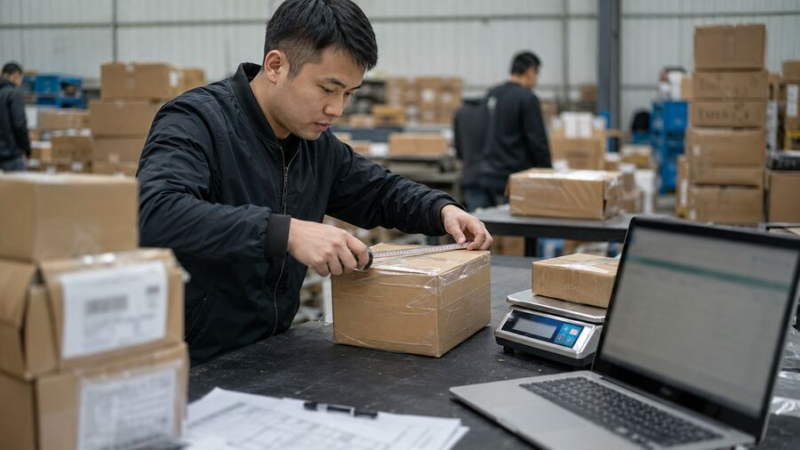
Two stores with identical volume can receive different fees because their products require different work.
| Industry | Extra operational work | Likely cost driver | Example risk |
| Apparel | Variant sorting, measurements, folding, labels | SKU count and inspection time | Wrong size or shade |
| Consumer electronics | Functional tests, battery handling, serial numbers | Test time and restricted routes | Device fails or cannot use a route |
| Beauty and cosmetics | Leak checks, labels, batch details | Packaging care and shipping restrictions | Bottle leaks in transit |
| Supplements | Batch and expiry tracking, documents, storage care | Compliance records and inventory control | Wrong label or short shelf life |
| Pet products | Material checks, variant sizing, durability | Specification and liability risk | Weak fastener or unsafe material |
| Home goods | Protective packing and carton optimization | Fragility and dimensional weight | Breakage or expensive volume |
| Customized goods | Proofing, setup, production follow-up | MOQ, revisions, and lead time | Incorrect artwork across a full batch |
Glass, magnets, batteries, powders, liquids, and branded goods change inspection and shipping options. Show the actual specification before asking for a per-order fee. Otherwise the answer is mostly theater.

How to Compare Two Agent Quotes Apples to Apples
Send every candidate the same request. A bare-product quote and a branded, inspected DDP parcel are not competing numbers.
Build One Identical Quote Request
Include:
-
Written product specification and approved sample
-
Materials, dimensions, weight, and variants
-
Average and peak volume
-
Destination and postcode mix
-
Product and shipping packaging
-
Inspection tests and processing SLA
-
Delivery range and exception rules
-
Advance-stock plan
Ask for a validity date. Exchange rates and parcel routes move. A three-month-old quote may belong in a museum, not your forecast.
Normalize the Cost per Delivered Order
Use this formula:
Cost per delivered order = product + China domestic freight + agent/service fee + QC allocation + packaging + receiving/storage + pick and pack + international shipping + duty/tax allocation + expected exception cost
Use delivered orders as the denominator. Canceled orders may never ship, while failures can require a second parcel.
A Worked Comparison
Consider a small pet accessory sold to US customers. The example below is illustrative, not a live rate card.
| Cost per delivered order | Agent A: itemized | Agent B: “free” service | Agent C: $300 monthly retainer at 600 orders |
| Product | $4.20 | $5.05 | $4.10 |
| China domestic freight | $0.18 | Included | $0.16 |
| Agent or allocated monthly fee | $1.20 | $0.00 | $0.50 |
| QC allocation | $0.12 | Included | $0.10 |
| Packaging | $0.35 | $0.45 | $0.32 |
| International shipping | $5.60 | $6.15 | $5.45 |
| Duty/tax allocation | $0.75 | Included | $0.75 |
| Expected exception cost | $0.18 | $0.25 | $0.15 |
| Normalized total | $12.58 | $11.90 | $11.53 |
Agent B has no visible fee and is still cheaper than A. That does not prove B is better; route, product, liability, and consistency matter. Agent C wins at 600 orders because its retainer allocates to $0.50. At 100 orders, it becomes $3.00. Rather lumpy.
Calculate the Break-Even Volume
Use:
Break-even orders = monthly fixed fee ÷ per-order savings versus the alternative
If a $300 plan saves $0.75 per order, break-even is 400 orders. Add processing, delivery, defects, support time, and inventory cash too. Saving 40 cents while doubling reships is not cheaper.

When Is a China Dropshipping Agent Worth the Fee?
An agent is worth the fee when operational savings and risk reduction exceed the cost. There is no magic order threshold.
Testing Stage
For an unproven product, avoid a large retainer, deep inventory buy, or huge packaging MOQ. Pay for samples and small-batch validation.
Early Traction
An agent becomes useful when repeat orders expose weak consistency, scattered suppliers, or poor tracking. Consolidated sourcing, stock visibility, and one workflow can reduce errors.
Stable Volume and Branded Growth
With repeat demand, you can negotiate tiers, hold buffer stock, standardize inspection, and add branding. Agent cost is still only one input in whether dropshipping is profitable in 2026. Advertising, payment fees, refunds, support, and tax want their share.
When an Agent May Not Be Worth It
You may not need an agent when volume is tiny, a platform already works, or your team can manage factory buying and fulfillment. A middle layer must add useful work.
How to Negotiate Agent Fees Without Buying Worse Service
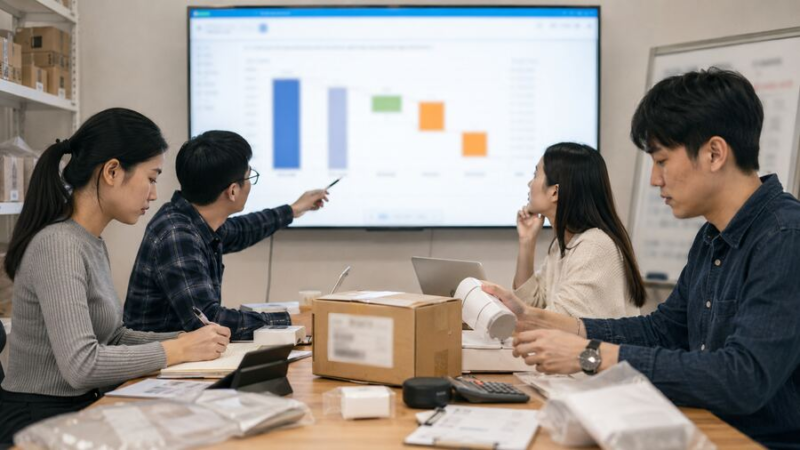
Do not begin with “Make it cheaper.” Negotiate the operating model.
-
Bring real volume data. Stable orders beat promises of future millions.
-
Ask for volume tiers. Let per-order fees step down at clear levels.
-
Separate project and recurring work. Pay once for a supplier search.
-
Standardize packaging. Fewer box sizes reduce labor and errors.
-
Define inspection by SKU. Match the test to the risk.
-
Consolidate carefully. Lower inbound freight may mean more waiting.
-
Agree on currency treatment. Name the rate source and validity period.
-
Set preapproval limits. Approve exceptional work before it happens.
-
Negotiate reporting and SLA. Reliable inventory data can beat a tiny fee cut.
An agent cannot operate on zero revenue. If every visible fee disappears, income will come from somewhere else. That is normal business, but you should understand where.
Run a 30-Order Pilot and Audit the Invoice
A sample can look right once. A small pilot shows whether the system can repeat it. Thirty orders is not a statistical standard, just a practical starting batch. Use more when risk or destination variation is high.
Before the Pilot
Approve the sample, packed dimensions, packing rules, rate card, QC checklist, route, SLA, and exception policy. Test variant mapping too. “Black / Large” becoming “Black / Small” becomes a refund problem.
During the Pilot
Track replenishment, receiving, processing, first scan, delivery, defects, and support. Put promised and actual values side by side.
| Metric | Promised | Actual | Variance to investigate | Corrective action |
| Packed weight | Approved sample value | Average shipped value | Higher billed weight | Repack and remeasure |
| Processing time | Written SLA | Order-to-scan time | Weekend or stock delay | Adjust cutoff and buffer stock |
| Delivery time | Route estimate | Delivered transit | Country or postcode pattern | Change route for affected segment |
| Defect rate | Agreed check standard | Customer and warehouse findings | Repeated defect type | Update inspection checklist |
| Cost per order | Approved quote | Final invoice | New or changed fee line | Correct rate card or approval rule |
After 30 Orders
Reconcile product, inbound freight, handling, packaging, shipping, duty, reships, and refunds. Find drift by SKU and country. Ask about every new fee line and whether it can repeat.
When comparing providers, regional operating knowledge can also matter. This overview of a Yiwu dropshipping company’s pricing and services shows the kind of sourcing and fulfillment details worth checking before a larger commitment.
Red Flags in a China Dropshipping Agent Quote
A red flag calls for evidence, not an automatic accusation. Clarify:
-
“Free” service with no way to benchmark the product or shipping
-
A percentage commission with no calculation base
-
One freight price for every destination and weight band
-
No packed dimensions or named shipping route
-
“QC included” without a checklist or test method
-
Missing storage duration and receiving rules
-
An exchange rate chosen without a stated source
-
Extra work performed before cost approval
-
No policy for wrong, defective, lost, or returned orders
-
Pressure to prepay large inventory before approving a sample
-
Refusal to provide itemized invoices or transaction records
-
Compensation promises that exist only in chat and not in the agreement
Beware a precise quote built on missing information. Nobody can price a battery product to 20 countries without weight, dimensions, capacity, and service level. “We need more details” is often the healthier answer.
Conclusion: Pay for a Measurable Result, Not a Pretty Fee
China dropshipping agent fees can be per order, percentage based, monthly, project based, built into a product price, or bundled. No model is automatically best.
Check the model, calculation base, service scope, and invoice performance. Normalize every option to one correct, delivered order, including product, packaging, QC, freight, duty, and exceptions.
Before buying serious inventory, approve a sample and pilot. Write down the route, packed size, inspection, fees, and responsibility for failures. Compare the estimate with reality.
The goal is a fair, understandable price for work that protects margin and keeps orders moving. A less glamorous invoice can be a good thing.
FAQs About China Dropshipping Agent Fees
How much does a China dropshipping agent charge?
There is no standard rate. Agents may charge per order, by commission, monthly, per project, through markup, or with a hybrid. Complexity, volume, destinations, QC, packaging, and shipping determine the price.
Do dropshipping agents charge a percentage or a flat fee?
They can use either. Commissions suit bulk sourcing; flat fees suit recurring fulfillment. Some agents add product or freight margin, so ask for the complete charging model.
What does a dropshipping agent fee include?
It may include sourcing, purchasing, receiving, inspection, storage, picking, packing, tracking, and support—or only a few. Request written inclusions and exclusions.
Why do some China dropshipping agents say their service is free?
An agent can earn through product markup, freight spread, rebates, or bundled margin. Benchmark the exact product and route, then compare delivered cost and responsibility for mistakes.
How can I tell if an agent adds a hidden product markup?
Compare the exact specification, not a marketplace photo. Ask about supplier quotes, rebates, exchange rates, and payment fees. Open-book pricing should have an invoice trail; otherwise, judge it as a bundled offer.
Is an all-in dropshipping quote a bad sign?
No. An all-in price can make budgeting easier. It becomes risky when the product specification, packed size, route, delivery range, duty treatment, validity period, and failure policy are unclear. A bundle must still be measurable and comparable.
Are shipping fees included in an agent’s service fee?
Usually shipping is a separate cost or part of a bundled product-and-delivery quote. Confirm the named route, chargeable weight, destination, fuel or remote surcharges, and whether duties are included. “Shipping included” does not always mean delivered duty paid.
Do China dropshipping agents charge for product sourcing?
Some offer a limited number of sourcing requests without a separate fee. Others charge a project fee, commission, subscription, or product margin. More complex work—custom molds, supplier audits, repeated sample rounds, or regulated products—is more likely to carry a clear sourcing charge.
Does the agent fee include quality inspection?
It may include a basic visual check, but deeper inspection often costs extra. Define whether you need random AQL sampling, measurements, functional tests, leak tests, or full inspection. Also agree who pays for sorting, rework, reinspection, and return freight after a failure.
How much does custom packaging add to a dropshipping order?
It depends on the box, mailer, insert, label, printing method, MOQ, and assembly. Include one-time plates, dielines, samples, and proofs as well as per-unit materials. Check dimensional weight too; a larger box can add more to freight than to packaging.
Do agents charge storage or warehouse receiving fees?
Some include short-term storage and basic receiving, especially for fast-moving stock. Others charge per carton, unit, bin, cubic meter, or month. Ask when free storage ends, whether a monthly minimum applies, and how slow or abandoned inventory is handled.
When should I switch from AliExpress to a private agent?
Consider switching when you have repeat orders, need better product consistency, want branding, use several suppliers, or spend too much time handling stock and tracking problems. Use a break-even comparison rather than a fixed order threshold. A small unproven store may not need the extra layer yet.
Is a China dropshipping agent cheaper than buying directly from a factory?
Sometimes, but not automatically. A factory may offer a lower unit price while requiring a larger MOQ and leaving you to manage inspection, China freight, warehousing, and fulfillment. Compare total delivered-order cost, inventory risk, internal labor, and failure cost under both models.
Can I negotiate China dropshipping agent fees?
Yes. Stable volume, fewer SKUs, predictable destinations, standardized packaging, consolidated purchasing, and automated order sync can reduce work. Ask for tiered rates and clear approval limits. Cutting inspection or support merely to lower the headline fee may cost more later.
What should I ask for before paying a dropshipping agent?
Request the exact product specification, supplier or pricing model, fee basis, packed weight and dimensions, named shipping route, duty treatment, QC checklist, storage terms, processing SLA, exception policy, quote-validity date, payment terms, and an illustrative invoice. Start with a sample and controlled pilot.
Table of Content

I’m Cassiel. I’ll help you scale your Shopify business with reliable fulfillment.
Join to newsletter.
Follow us and get more knowledge.