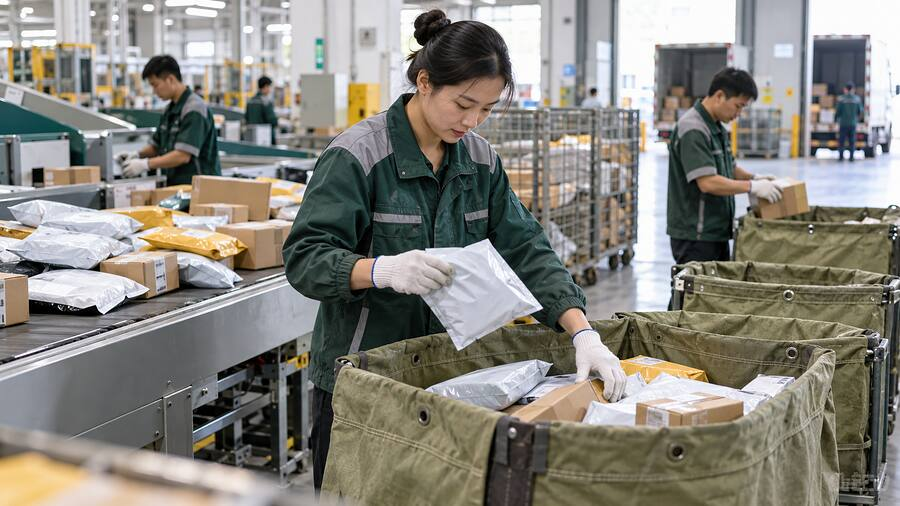
Two stores can sell the same water bottle and need completely different partners. Store A sells one proven bottle that its factory repeats well. Store B sells the bottle in a fitness bundle. Its towel, resistance band, and printed card come from three other factories, then need to be assembled and shipped together.

Store A may be better off working directly with a supplier. Store B probably needs a China-side coordinator and fulfillment operation. Neither model is automatically more professional.
That is the real issue in the China dropshipping agent vs supplier debate. You are deciding who controls the product, performs each handoff, owns the stock and data, and fixes a failure.
The Choice in One Table: Product Source or Operations Layer?
A direct supplier is mainly a source of product capability. A China dropshipping agent usually adds an operations layer around one or more suppliers. A hybrid setup keeps direct factory relationships while using another partner for inspection, packaging, warehousing, or parcel fulfillment.
| Decision factor | Direct supplier | China dropshipping agent | Hybrid setup |
| Product range | Usually strongest within its own production scope | Can source across factories and marketplaces | Direct factories for core SKUs; agent for extra items |
| Supplier identity | Potentially clear if the factory is verified | May be hidden unless disclosure is agreed | Core factories stay visible |
| Unit-price visibility | Often clearer at factory level | May include commission or markup | Clear factory price plus separate service costs |
| MOQ and inventory | Production MOQ may apply | May combine small buys or hold stock, depending on terms | Bulk stock for winners; flexible buying for long-tail SKUs |
| Product development | Strong when engineering or formula knowledge matters | Useful for finding and coordinating options | Factory owns technical work; agent manages handoffs |
| Quality control | Factory checks its own output | Can inspect on receipt or arrange third-party inspection | Factory QC plus buyer-controlled release checks |
| Consolidation | Limited when other factories are involved | Common agent function | Agent or warehouse consolidates direct purchases |
| Branding and kitting | Possible within one factory’s scope | Can coordinate printers, inserts, boxes, and bundles | Specialist suppliers make components; warehouse packs them |
| Store fulfillment | Available from some suppliers, not all | Often includes order sync, picking, packing, and tracking | China warehouse or regional 3PL executes orders |
| Shipping choice | May offer a narrow set of routes | May compare several parcel lines | Routes divided by destination, SKU, or stock location |
| Exceptions and claims | Buyer often coordinates multiple parties | Agent may become the single operational contact | Ownership must be divided in writing |
| Buyer workload | Higher if the supplier only makes goods | Lower only when the agent truly owns the agreed work | Moderate, with more control and more interfaces |
These are patterns, not promises. Some factories run excellent direct-to-consumer fulfillment. Some “agents” are a salesperson and a spreadsheet. Contracted scope beats a homepage label.
First, Define the Partners Without the Marketing Fog
“Supplier” often means anyone who can quote a product. Before comparing partners, ask what the company actually does.
Direct manufacturer or factory
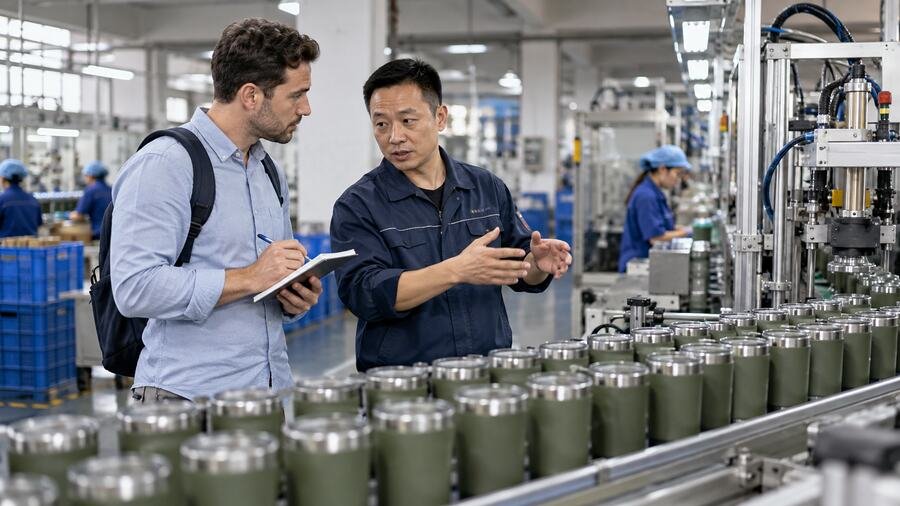
A manufacturer makes the product or performs a meaningful production process. Direct access helps when materials, tolerances, formulas, tooling, firmware, or process changes matter. A factory is not automatically a dropshipping operation, though. It may accept a 1,000-unit PO yet refuse to pick and ship one unit to a customer.
Trading company, wholesaler, or marketplace seller
A trading company buys and resells. A wholesaler may hold ready stock. An Alibaba, AliExpress, or 1688 seller could be a manufacturer, trader, distributor, or small storefront. A good trader may combine products and offer lower starting quantities. The problem is false factory claims. This guide to Chinese dropshipping suppliers and marketplaces maps the broader landscape.
China dropshipping agent
A China dropshipping agent coordinates work that may include supplier search, samples, purchasing, domestic freight, receiving, inspection, storage, packaging, order import, dispatch, and tracking. There is no universal package. One agent uses spreadsheets; another runs a WMS and API; a third outsources the warehouse. “Agent” also does not reveal the legal role. Follow the contract and invoice.
Sourcing agent, fulfillment partner, and 3PL
A sourcing agent focuses on suppliers, negotiation, samples, and production follow-up. A fulfillment partner or 3PL receives, stores, picks, packs, ships, and reports inventory. A dropshipping agent may overlap both. If a company says, “We handle everything,” turn “everything” into tasks, systems, approvals, and remedies.

Map Responsibility Before You Compare Prices
Price comparisons fail when quotes cover different work. A factory may quote an unpacked unit at its gate. An agent may quote a packed parcel after receiving, checking, labeling, and processing. Map responsibility first.
| Workflow stage | Direct-supplier default | Agent-led default | Buyer decision to lock |
| Product brief and specification | Buyer and factory clarify production requirements | Agent translates the brief and gathers offers | Who owns the master specification and revisions? |
| Supplier selection | Buyer chooses and verifies the factory | Agent searches and recommends suppliers | Must supplier identity be disclosed? |
| Sample approval | Buyer approves the factory sample | Agent collects, checks, and forwards samples | Which physical sample is the approved reference? |
| Purchase and payment | Buyer pays supplier | Buyer may pay agent, who then purchases | Who is the contractual seller and payment beneficiary? |
| Material or supplier changes | Factory requests buyer approval | Agent relays or manages change requests | What changes require written approval? |
| Production and release | Factory produces; buyer arranges oversight | Agent follows production and may arrange inspection | Who can release, hold, rework, or reject a batch? |
| Receiving and QC | Buyer or separate warehouse inspects | Agent warehouse checks incoming stock | What is checked, how, and with what evidence? |
| Inventory ownership | Buyer usually owns paid goods | Depends on purchase and stocking terms | When does title transfer, and who bears shrinkage? |
| Packaging and artwork | Factory handles its own pack components | Agent coordinates several vendors and pack rules | Who controls files, versions, molds, and leftover stock? |
| Store order and SKU mapping | Supplier may use an app or manual sheet | Agent maps store SKUs to warehouse inventory | What event creates, changes, or cancels an order? |
| Shipping route | Supplier offers its available lines | Agent selects from contracted routes | Who approves route changes and surcharges? |
| Defects, loss, returns, and claims | Buyer negotiates with each party | Agent may coordinate the case | Who investigates, pays, reships, and closes the claim? |
Five layers sit behind the table:
-
Product authority: Who can change a material, dimension, formula, supplier, or production method?
-
Operational ownership: Who performs and records each physical or digital handoff?
-
Capital ownership: Who pays deposits, owns inventory, and carries obsolete packaging or dead stock?
-
Data ownership: Who controls product files, order history, tracking events, inventory records, and exports?
-
Customer-promise risk: Your customer blames your store, even when a factory, agent, warehouse, or carrier caused the failure.
DHL’s 2026 ecommerce research covered 29,000 shoppers and 5,800 businesses across 29 countries. It found that seven in ten shoppers will not buy if they do not trust the delivery and returns provider. A backend partner choice eventually reaches checkout, support, and reviews.

When a Direct China Supplier Is the Better Partner
For the right store, buying direct is the cleanest model.
One stable product and a capable factory
Suppose you sell one stainless-steel lunch box in four colors. Its drawings, steel grade, finish, gasket, and carton are stable. The factory repeats the approved sample. Direct communication also stops “0.2 millimeters” becoming “roughly the same” halfway down the chain.
Product engineering matters more than per-order flexibility
Direct access suits custom molds, electronic assemblies, firmware, cosmetic formulas, specialty fabrics, and tight tolerances. You need the person who understands a process change, not only the person forwarding a quote. Verify claimed capacity and production control; a video beside a machine does not prove your whole order will run there.
Your team already owns the missing work
A direct factory also fits a business with reliable inspection, freight, warehousing, and order management. A brand may buy from a Shenzhen electronics factory, use an independent inspector, then send bulk cartons to a California 3PL. Each partner keeps a narrow job.
Supplier-direct warning signs
Factory-direct does not guarantee the lowest fulfilled cost, independent QC, honest material disclosure, or one-piece order processing. A factory can be excellent at production and clumsy at parcel work. That is a capability mismatch.
Use a structured product sourcing process from brief to bulk order to compare factories on one specification. Ask about subcontracting, MOQ, samples, packing, domestic delivery, export documents, and change approval.

When a China Dropshipping Agent Earns Its Place
An agent must remove coordination cost, improve execution, or lower failure risk. Otherwise, it is just an extra hop.
Products come from several suppliers
Multi-supplier orders are where a local coordinator shines. A pet travel kit might combine a bottle, silicone bowl, waste-bag holder, and printed guide from four vendors. Someone must identify cartons, reconcile quantities, hold rejects, chase missing pieces, and build the kit. Otherwise, the founder spends Tuesday in supplier chats.
You need local communication and exception ownership
An agent can work local hours, follow domestic shipments, collect samples, and chase incomplete answers. The value is closing loops, not translation alone. A real exception process names the owner, response target, evidence, decision path, and status.
Branding and pack-out cross supplier boundaries
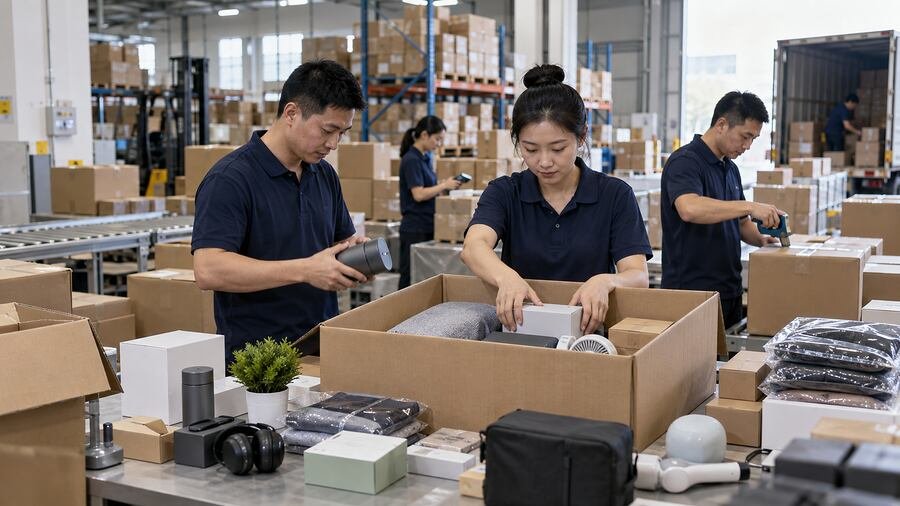
Boxes, mailers, pouches, labels, cards, barcodes, and protective fill may come from separate vendors. An agent can apply one pack rule across products. For private label, subscription boxes, and bundles, the pack station is the last assembly line before the customer.
Per-order fulfillment needs a warehouse workflow
A scalable workflow imports orders, reserves variants, applies pack rules, creates labels, returns tracking, and reconciles inventory. It also handles cancellations, address changes, split orders, and stock gaps.
Agents also help with domestic channels not designed for overseas buyers. A dedicated 1688 sourcing agent workflow explains the buying, inspection, consolidation, and export steps. A cheap listing alone is not a supply chain.
Keep the limitations visible
An agent may hide suppliers, add undisclosed markup, depend on one person, outsource its warehouse, or provide weak data exports. Convenience must remain portable. You should be able to recover files, export records, settle claims, and transfer owned stock.
The Hybrid Model Is Often the Grown-Up Answer
Do not fire a good factory because fulfillment became messy. Add the missing operating layer.
| Hybrid pattern | Seller keeps | Partner owns | Best fit | New risk to manage |
| Direct factory + China operations partner | Factory negotiation, specification, product approval | Receiving, inspection, packaging, storage, parcel dispatch | Stable products needing flexible DTC fulfillment | Disputes at the factory-to-warehouse handoff |
| Direct factories for winners + agent for long-tail SKUs | Core supplier relationships and volume pricing | Discovery and purchasing for new or low-volume items | Catalogs with a few bestsellers and many tests | Different cost and data rules across SKU groups |
| China warehouse + regional 3PL | Network design and inventory allocation | China partner serves long-tail markets; local 3PL serves high-volume regions | Mature international stores | Inventory imbalance and duplicate systems |
For the pet kit, the brand could buy bottles and bowls directly. The agent receives them, sources the low-volume guide, builds kits, and fulfills Shopify orders. Product authority stays with factories; warehouse execution sits with the agent. If sourcing is stable and receiving, storage, pack-out, and dispatch are missing, compare a China dropshipping fulfillment service instead of restarting supplier selection.
Do Not Use Daily Orders as the Only Switching Signal
You may hear that a private agent makes sense at 10, 30, 50, or 100 daily orders. Real operations are less tidy.
Eight orders can be painful when each includes four sourced items and a restricted battery. Forty can be easy when one supplier ships one stable product to one country.
Score operational complexity instead:
| Signal | Lower need for an agent | Higher need for an agent or hybrid layer |
| Suppliers per customer order | One | Several |
| Active SKUs and variants | Small, stable range | Many variants, frequent additions |
| Failure severity | Low-cost, low-risk item | Safety, compliance, high return, or reputation risk |
| Packaging | Standard supplier pack | Custom mailer, insert, kitting, or channel labels |
| Supplier performance | Fast, accurate, stable stock | Slow replies, substitutions, frequent stockouts |
| Internal coordination | A few predictable tasks | Daily chasing across vendors and time zones |
| Shipping network | One simple lane | Multiple countries, lines, and restricted products |
| Inventory capacity | Seller can fund production lots | Seller needs staged buying or shared stock terms |
| Technical control | Off-the-shelf product | Custom engineering, formula, tooling, or testing |
| Portability | Data and stock are easy to move | Provider controls critical records or inventory |
Mark each row low, medium, or high, then study the pattern. One severe issue, such as battery routing or a children’s-product defect, can outweigh five easy rows. Count staff time too, but do not replace a reliable workflow merely because you crossed a fashionable order threshold.

Compare Total Cost per Correct Delivered Order
The cheapest product is not always the cheapest order. Compare the cost of getting the approved item to the customer with usable tracking.
Use this working model:
Total cost per correct delivered order = product + China freight + inspection + warehouse work + packaging + international shipping + payment costs + expected failure cost + seller coordination time
Use your own defect, reship, loss, return, chargeback, and support data for expected failure cost. New stores can estimate it after a pilot.
| Cost line | Direct-supplier quote may include | Agent quote may include | Evidence to request |
| Product | Unit at stated term and MOQ | Product price, possibly with markup | Supplier quotation, specification, quantity tier |
| Domestic freight | Sometimes delivery to warehouse or port | Pickup or supplier-to-agent transport | Origin, destination, carton data, invoice |
| Samples and development | Sample, mold, artwork, setup | Coordination plus third-party charges | Itemized one-time and refundable costs |
| Inspection | Factory’s own QC | Receiving check or arranged inspection | Checklist, sample size, photos, defect record |
| Warehouse work | Often not included | Receiving, labeling, storage, pick and pack | Rate card and event definitions |
| Packaging and kitting | Factory pack for its product | Several materials and assembly steps | BOM, artwork revision, wastage rule |
| International shipping | Available lines from supplier | Route selected through agent accounts | Chargeable weight, zone, fuel and remote fees |
| Failures and claims | Negotiated with supplier | Agent may coordinate or fund a remedy | Written claim window and compensation rule |
| Payment and FX | Bank, platform, or card fees | Transfer, card, wallet, or FX spread | Payment beneficiary and currency calculation |
| Seller labor | More direct coordination | Less only if the agent closes tasks | Hours spent, exception volume, response time |
Here is an illustration, not a market benchmark. Factory A quotes $6.20, then domestic freight, inspection, warehouse work, packaging, and shipping bring the visible total to $11.60. An agent quotes a $6.55 product with its margin, plus receiving, checks, pack-out, and shipping for an $11.30 total. The agent wins here because the workflow differs. Give the factory a better route and an existing warehouse, and it may win. Compare line by line.
Compare commissions, markups, handling, storage, and shipping spreads against the same order profile. The guide to China dropshipping agent fees helps expose charges that a per-order quote may blur.
Product, Materials, and Industry Risk Can Reverse the Decision
The right model for a T-shirt may be wrong for a battery pack. Product risk decides which knowledge stays close to the factory and which controls sit outside it.
| Category | Critical materials or records | When direct supplier helps | When an agent or specialist helps |
| Apparel | Fiber content, GSM, dye, trims, sizing, care labels | Mill and sewing details need direct correction | Mixed styles, size sorting, labels, and bundle packing |
| Electronics and batteries | Components, voltage, firmware, function tests, battery documents | Engineering changes require factory access | Document collection, route selection, and receiving checks |
| Beauty and cosmetics | Formula, container compatibility, hygiene, leakage, batch data, claims | Formulator controls ingredients and filling | Component coordination, lot capture, pack-out, and returns |
| Supplements and pet wellness | Ingredients, COAs, lot numbers, expiry, FEFO, market claims | Qualified manufacturer owns formula and production records | Traceability, storage rules, bundle assembly, and recall support |
| Fragile home goods | Glass, ceramic, padding, carton strength, dimensions | Factory can redesign the product and inner pack | Drop-test feedback, protective repacking, and carrier choice |
| Toys and children’s products | Age grade, small parts, warnings, traceability, test reports | Manufacturer must control materials and construction | Document organization, labeling, inspection, and market routing |
| Print on demand | Blank substrate, ink, artwork, color tolerance | Producer controls print method and repeatability | Order routing, file matching, multi-product consolidation |
| Custom molded goods | Resin, tooling, tolerances, drawings, mold ownership | Direct technical communication is essential | External inspection, spare-part kitting, and export coordination |
If a supplier changes a resin, zipper, battery cell, pigment, liner, or carton grade, the “same SKU” may no longer be the same product. Lock critical attributes and require written change approval.
Packaging affects MOQ, storage, damage, chargeable weight, artwork versions, and leftover stock. Compare boxes, mailers, pouches, labels, and inserts with the custom packaging MOQ guide.
Market requirements vary. A report, label, warning, ingredient file, or battery document for one destination may fail in another. “Other customers ship it” is not compliance advice. Use qualified help for the actual product and market.
Quality Control Is a Process, Not a Checkmark
“QC included” says little until the reference, method, authority, and remedy are clear.
Lock the reference first
Pair an approved sample with a controlled specification, bill of materials, color reference, artwork, packaging rules, functions, and defect definitions. The sample is the recipe photo; the specification is the recipe. You want both.
Separate self-checks from buyer-controlled evidence
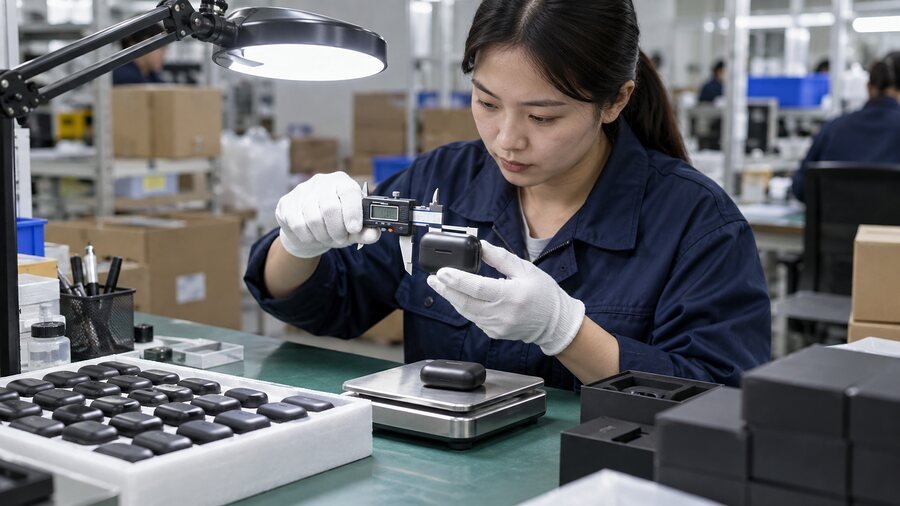
Factory QC covers production. An agent’s receiving check happens later. An independent inspector samples against buyer instructions; a qualified lab tests defined properties. These are not interchangeable. Carton counting cannot validate electrical safety, and one lab sample does not prove every unit matches.
Use sampling where it fits
ISO 2859-1:2026 provides sampling procedures for inspection by attributes, indexed by acceptance quality limit. In practice, a buyer may define critical, major, and minor defects and use a sampling plan to decide whether to accept or reject a lot.
Sampling does not prove every unit is good or establish compliance. Specification, defects, lot, inspection level, criteria, and inspector competence still matter. Critical safety features may need 100% tests or laboratory work.
Define the remedy before failure
Before paying a deposit, define sorting, rework, replacement, remake, discount, hold, or rejection. State who approves the remedy, pays for reinspection and freight, and releases corrected goods. Negotiating a fire extinguisher during the fire is, well, not ideal.

Verify a Supplier and an Agent Differently
Evidence must match the role. A warehouse tour cannot prove manufacturing capability. A factory audit cannot prove Shopify order handling.
| Evidence area | Supplier test | Agent test | Reasonable pass condition |
| Legal identity | Registered name, address, scope, representatives | Registered name, service scope, contracting entity | Contract, invoice, registry, and payment party align |
| Physical operation | Factory location, equipment, workers, process | Warehouse operator, storage, pack stations, systems | Current evidence matches the claimed role |
| Capability | Sample, drawings, process control, capacity | Receiving, SKU mapping, pick-pack, tracking, exceptions | Paid pilot reproduces the promised workflow |
| Third parties | Subcontractors and outsourced processes | Original suppliers, warehouse, carriers, software | Disclosure policy and responsibility are written |
| Quality evidence | Production records and factory QC | Incoming checks, reports, hold and release logs | Records trace to the tested SKU and batch |
| Commercial chain | Factory quote, PO, invoice, beneficiary | Fee schedule, product charge, invoice, beneficiary | Money flow and markups are understandable |
| Data and exit | Drawings, molds, product documents | Inventory, orders, tracking, files, stock transfer | Export and exit test work before scale |
Direct supplier evidence
Check the registered company, manufacturing scope, location, staff, equipment, process, capacity, subcontracting, QC, sample, and payment beneficiary. Rented equipment can produce good goods; truthful control matters. Inspect evidence around your product, not a generic showroom. Follow the guide to verifying a China manufacturer beyond marketplace badges for the deeper workflow.
Agent evidence
Check the contracting entity, invoice chain, beneficiary, supplier-disclosure policy, warehouse, staff coverage, rate card, inspection examples, exports, claims, and stock exit. In a screen-shared test, follow an order through import, SKU reservation, pick, packing, label, dispatch, carrier scan, tracking, and inventory adjustment.
A fuller reliable dropshipping agent verification process covers the background, capability, quote, pilot, and contract checks in more detail.
Checks that apply to both
Align the legal entity, contract, invoice, beneficiary, address, and contacts. The European Commission’s China IP Helpdesk explains basic Chinese company information checks. Registry status proves neither quality nor fulfillment. Test the specification, current price, lead time, change approval, and response to a controlled problem.

Test the Workflow Before You Move Your Store
A good sample does not prove that 200 daily orders will carry the right variant, insert, address, label, and tracking number.
Run a paid pilot that crosses the real handoffs:
-
Use one normal SKU and one important variant.
-
Include a multi-item order if consolidation or kitting matters.
-
Check the product and packaging against approved references.
-
Test order import, cancellation, address change, and tracking return.
-
Confirm the physical carrier handoff and first scan.
-
Raise one controlled exception and watch who owns it.
-
Match the invoice to the approved cost sheet.
-
Export an inventory report and reconcile it with a physical count.
-
Confirm ownership of artwork, packaging stock, open claims, and remaining goods.
Use three release gates: proceed with limited volume, correct and retest, or reject. Start with a narrow order share, compare errors and first-scan time, then expand. Once the model and test are clear, a shortlist of reliable China dropshipping agents can support discovery. A list begins due diligence; it does not finish it.
A Practical Choice for Five Common Store Situations
| Store situation | Likely starting model | Why it fits | Evidence before commitment |
| New store testing one generic product | Capable supplier or managed platform | Low complexity; avoid fixed overhead before demand is proven | Real sample, shipping test, stock truth, refund process |
| Proven single SKU with a capable manufacturer | Direct supplier plus specialist logistics | Product control and repeatability matter most | Factory capability, stable specification, inspection and freight plan |
| Multi-supplier bundle with branded packaging | Agent-led or hybrid | Consolidation and pack-out cross company boundaries | Receiving accuracy, kit BOM, artwork control, pilot orders |
| Private-label technical product | Direct factory plus independent control | Technical communication should stay close to production | Tooling, drawings, change control, testing, batch release |
| Mature international catalog | Hybrid China warehouse and regional 3PLs | Stock can sit near demand while long-tail inventory stays flexible | Allocation rules, synchronized inventory, route SLA, exit plan |
Treat these as starting positions. A supplier with proven one-piece fulfillment may cover more than the table suggests. An agent with weak production visibility may cover less. Capability, evidence, and written responsibility can move a real case into another column.
Conclusion
Choose a direct China supplier when product capability and factory control are the main needs, and your team can own inspection, inventory, fulfillment, and shipping. Choose a dropshipping agent when the missing layer is coordination across suppliers, packaging, warehouse work, parcel dispatch, and daily exceptions. Choose a hybrid when you want direct factory access without running every China-side handoff yourself.
The sensible sequence is simple: map responsibilities, compare total cost per correct delivered order, verify the role actually being sold, test the workflow, and scale in stages. The best partner is not the one with the neatest label. It is the one that can prove ownership of the work your store cannot afford to drop.
Frequently Asked Questions
What is the main difference between a dropshipping agent and a supplier?
A supplier sells or makes products. A dropshipping agent coordinates services around products, such as sourcing, buying, inspection, storage, packaging, fulfillment, and shipping. One company can perform both roles, so check the contracted scope rather than relying on its title.
Is a dropshipping agent just another middleman?
Sometimes. A weak agent only forwards messages and adds margin. A useful agent reduces coordination, consolidates suppliers, controls warehouse handoffs, or improves shipping and exception management. Judge the added work, cost transparency, and evidence.
Do beginners need a China dropshipping agent?
Not automatically. A beginner testing one simple SKU may do well with a capable supplier or managed platform. An agent becomes useful earlier when the order contains several suppliers, custom pack-out, difficult routes, or operational work the seller cannot manage.
How many daily orders should I have before using an agent?
There is no universal threshold. Look at supplier count, variants, packaging, product risk, shipping destinations, coordination hours, and current failure cost. Eight complex orders can justify help; forty simple orders may not.
Can I keep my supplier and use a dropshipping agent for fulfillment?
Yes. The supplier can keep making the product while the agent receives stock, inspects it, adds packaging, processes orders, and ships parcels. Define the factory-to-warehouse handoff and who handles shortages or rejected goods.
Can a China agent source products from 1688 or Taobao?
Many can, but platform access is only one step. Confirm seller verification, payment, domestic freight, product matching, inspection, consolidation, export suitability, and returns. Cheap listings can become expensive when those tasks are missing.
Is a dropshipping agent cheaper than buying directly from a supplier?
It depends on the full workflow. An agent may add commission or markup but reduce domestic freight, warehouse work, shipping cost, failure cost, or staff time. Compare the same product, order profile, service scope, and destination.
Do agents and suppliers have different MOQs?
Often, but not by definition. A factory may set a production MOQ. An agent may buy ready stock in smaller quantities, combine purchases, or require a deposit for reserved inventory. Custom packaging has its own MOQ regardless of who coordinates it.
Who owns the inventory when I use a dropshipping agent?
The contract and payment terms should say. If you paid for specific goods, clarify when title transfers, where they are stored, who bears shrinkage, and how you can remove them. Never assume warehouse possession equals ownership.
Who should handle product quality control?
The factory should control production quality, but the buyer should define the specification and release criteria. An agent can perform receiving checks or arrange inspection. Independent inspectors and qualified labs may be needed for higher-risk products.
Can a direct supplier fulfill Shopify orders automatically?
Some can through an app, API, ERP connection, or order file. Test variant mapping, inventory updates, cancellations, address changes, tracking return, and exceptions. A connector alone does not prove accurate physical fulfillment.
Can an agent manage custom packaging and private-label products?
Many agents coordinate packaging printers, labels, inserts, and kitting. Technical product development may still belong with the factory. Lock artwork versions, material specifications, MOQ, storage cost, wastage, and ownership of unused packaging.
What is the difference between a sourcing agent, dropshipping agent, and 3PL?
A sourcing agent finds and manages suppliers. A dropshipping agent commonly combines sourcing with per-order coordination. A 3PL mainly receives, stores, picks, packs, and ships inventory. Providers overlap, so map tasks one by one.
How do I verify whether a supplier or agent is legitimate?
Match the registered entity, contract, invoice, payment beneficiary, address, and claimed operation. Then test role-specific capability: production evidence for a supplier; live warehouse, system, inventory, and order evidence for an agent. Finish with a paid pilot.
What should I test before switching from a supplier to an agent?
Test product accuracy, packaging, order import, SKU mapping, cancellation, address changes, inventory updates, shipping labels, first carrier scan, tracking return, invoices, claims, data export, and stock exit. Move limited volume first.
Table of Content

I’m Cassiel. I’ll help you scale your Shopify business with reliable fulfillment.
Join to newsletter.
Follow us and get more knowledge.