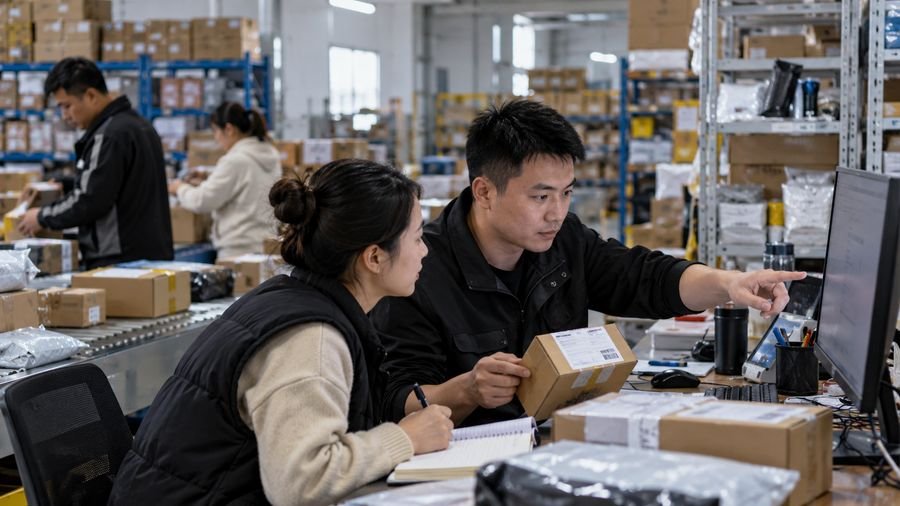
Imagine selling a $900 machine that arrives without a small connector. The expensive parts are fine. The customer still cannot use it.

That missing piece now involves support, another shipment, and a buyer wondering whether to ask for a refund. High-ticket dropshipping from China needs a plan for that moment before the first order goes live.
The opportunity can be real, but a high selling price does not fix a weak supply chain. You need a supplier who can repeat the product, inspections that check the right things, a delivery service that fits the shipment, and an affordable way to put problems right.
First, Decide Whether the Product Can Support Cross-Border Fulfillment
Define the high-ticket business you want to run
High-ticket dropshipping means selling relatively expensive products while a third party fulfills customer orders. There is no universal price cutoff. What matters operationally is how much one failed order could cost your business.
A premium office chair and a designer handbag can both be expensive, but they raise different questions. For branded luxury goods, review the separate requirements for luxury dropshipping. Here, the focus is repeatable product quality and delivery.
Screen the product before choosing the supplier:
| Product type | Main operational concern | Evidence to request |
| Compact, high-value equipment | Function, compatibility, theft exposure | Exact model, test results, serial records, delivery protection |
| Furniture and office products | Dimensions, assembly, surface damage | Material specification, hardware list, packed measurements |
| Fitness and outdoor equipment | Load, stability, weather exposure where relevant | Supported performance claims and serviceable components |
| Professional appliances | Electrical suitability, installation, downtime | Market-specific documentation, installation requirements, repair support |
These are screening questions, not endorsements of whole categories. A product requiring specialist installation may be unsuitable until you have that service in place.
Match the fulfillment model to the product
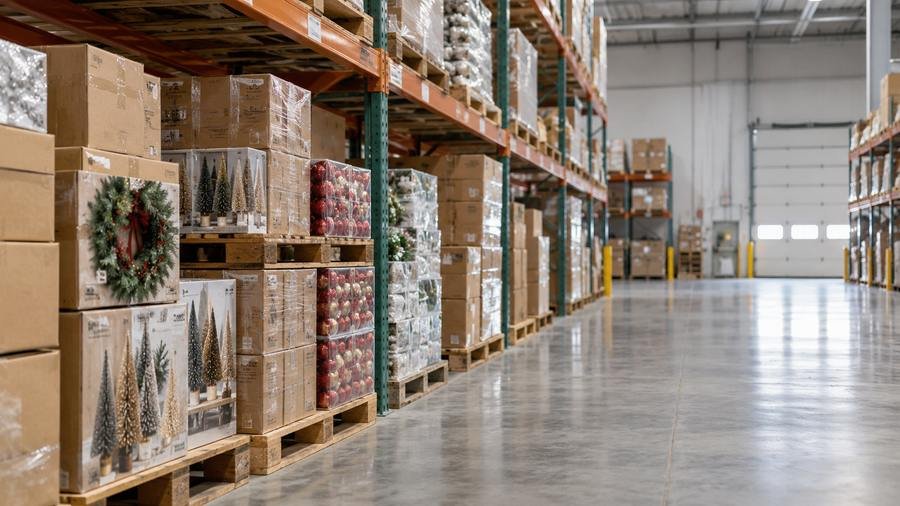
You can buy each order from a supplier for direct dispatch, hold approved inventory with a China fulfillment partner, or import stock into a destination-country warehouse.
The first approach limits stock commitments but depends on supplier availability. China warehousing creates a receiving and inspection point. Local inventory can simplify delivery and returns, while adding import, storage, and unsold-stock exposure.
For US customers, compare China fulfillment with a US fulfillment center using your product’s packed size and service needs. China sourcing does not require every parcel to start its customer journey in China.
Whichever model you choose, record who owns the goods and who funds them. Prepaid local inventory is a different cash commitment from purchasing one unit after each sale.
Require Supplier Evidence Before You Negotiate the Final Price
Identify the manufacturer, seller, and fulfillment operator
Start by asking who does each job. The company sending the quotation may be a factory, trading company, or sourcing agent. Another business may hold the stock and ship individual orders.
That arrangement can work. What you need is a clear chain of responsibility.
Match the legal entity, contract, invoice, payment beneficiary, and operating locations. Ask the seller to explain any differences. Then verify the manufacturer behind the offer against the exact product you want to sell.
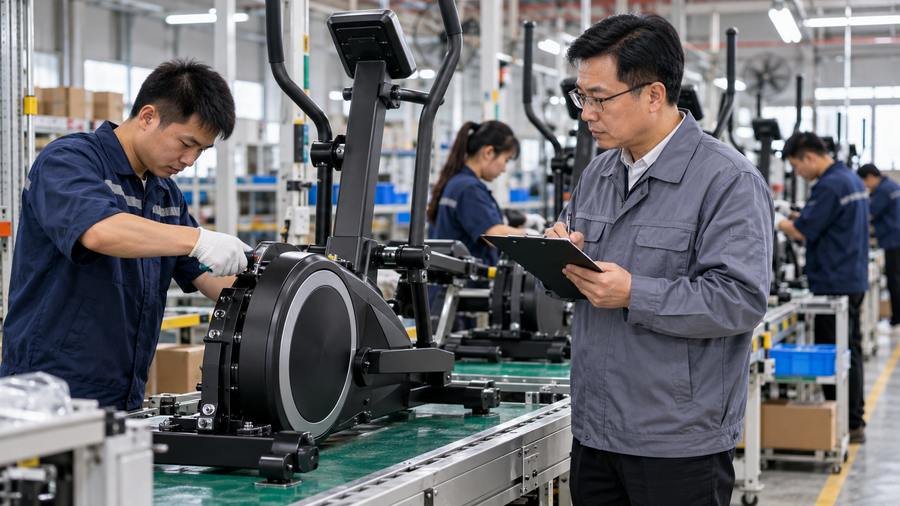
A polished showroom says little about repeat production. Request evidence of relevant equipment, production steps, inspection records, and capacity. Find out which work is subcontracted and whether a change requires your approval.
Lock the exact model and service commitment
Build a product file before accepting the final quote. Include the model, revision, materials, dimensions, finish, accessories, packaging, and approved performance claims. For technical products, identify critical components in the bill of materials, or BOM.
For example, “metal frame” leaves plenty of room for disagreement. Specify the material and relevant construction details. “Works internationally” also needs checking: voltage, plug, controls, instructions, and market requirements must match the destination.
Use a written agreement to connect product promises with evidence:
| Supplier promise | Evidence to keep | Reason to hold approval |
| The production unit matches the sample | Approved specification, sample reference, revision control | Unexplained material or component substitution |
| Stock is available | Dated quantities by model and reservation status | Only an unconfirmed factory estimate |
| Single orders can be fulfilled | Tested order flow, dispatch terms, packing instructions | Wholesale capability without parcel operations |
| Problems will be resolved | Named contact, remedy terms, cost allocation | Vague promises with no process |
Confirm minimum order quantities, replenishment timing, dispatch cutoffs, and out-of-stock handling. “Available” should distinguish finished, inspected stock from goods still being made.
Ask about repair parts before the first breakdown
Request a spare-parts list with part numbers, compatibility, prices, and supply commitments. Ask who diagnoses faults, approves a repair, pays labor, and sends replacement parts.
A replacement control panel is not useful if nobody can install it safely. Check whether qualified service is available where you sell. Where it is not, price the cost of replacement or return before listing the product.
Keep a backup contact for urgent cases. Your warranty process should survive one salesperson being on holiday.
Build a QC Plan That Matches the Cost of Failure

Separate product qualification, batch inspection, and order checks
Quality control is too broad a phrase to put on a purchase order by itself. Break it into three practical jobs.
Product qualification establishes whether the proposed design and sample meet your requirements. This may involve specialist testing beyond what a fulfillment warehouse can perform.
Batch inspection checks production against the approved requirements. If you use sampling, agree on the lot, sampling method, defect definitions, and acceptance rules beforehand. A passing sample does not prove every unit is defect-free.
Order checks confirm that the right approved unit, accessories, documents, and packaging are released for a particular customer. For high-value goods, consider recording the serial number and inspection evidence against that order.
Decide which characteristics warrant checking every unit. Model identity, visible condition, accessory completeness, and selected functional checks may justify that attention. Some durability or destructive tests require a different plan. More inspection is useful only when the check can detect the relevant failure.
Turn materials and performance claims into acceptance criteria
Give inspectors instructions they can measure or observe. “Premium finish” is too open-ended. Define the surfaces that matter, acceptable appearance, measurement method, and comparison sample.
For furniture, the plan might cover dimensions, fabric identity, hardware count, assembly fit, and relevant stability checks. For a powered device, it might cover model identification, connectors, controls, included parts, and a defined functional test performed by competent personnel.
Record the equipment and test conditions too. A video showing that a device lights up does not establish that it delivers the advertised performance.
Group defects by consequence. Cosmetic variation, missing components, and a potential safety fault should not all receive the same treatment. Agree on hold, rework, rejection, and escalation rules before the inspector finds something uncomfortable.
When arranging product inspection and quality-control checks, ask exactly what is included. A visual check, an assembly check, and a laboratory evaluation are different services with different limits.
Keep legal testing separate from warehouse inspection
For US sales, CPSC testing and certification guidance explains responsibilities for products covered by applicable consumer safety requirements. The relevant category determines the testing and documentation needed; there is no single certificate for every high-ticket item.
Have a competent specialist identify the requirements for your exact model and market. Match reports to the product version, components, intended use, and claims. A quality-management certificate or a tidy inspection report does not, by itself, establish product compliance.
Battery products, children’s products, and devices with medical claims require particular attention before they enter your catalog. Do not assume an ordinary sourcing service covers those assessments.
Hold failed goods until the remedy is verified
Give failed goods a clear hold status so they cannot be picked for another customer. Record the defect, affected quantity, proposed remedy, and person authorized to release them.
After correction, verify the relevant checks again. Keep the original failure record rather than replacing it with an unexplained “passed” photo. That history helps you recognize a recurring problem.
Test the Packaging as Part of the Product
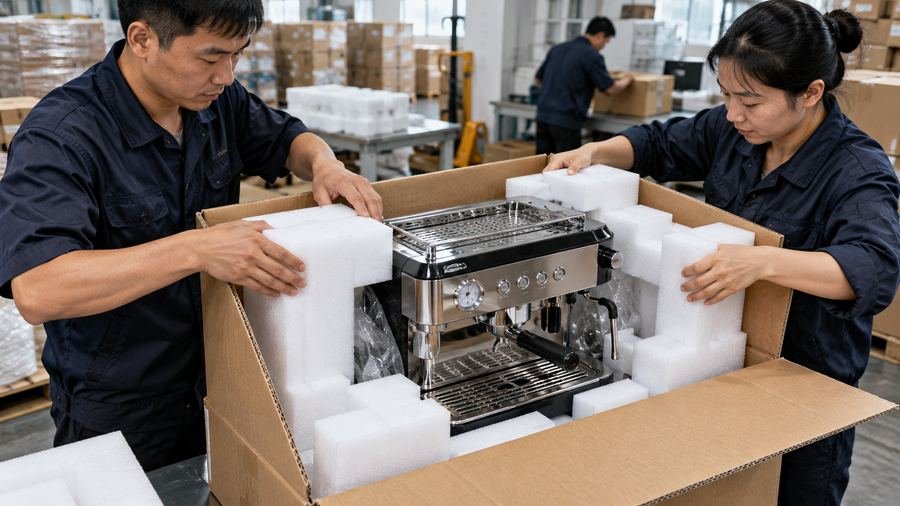
The customer receives a product inside packaging. Both need to survive the journey.
Start with the likely damage: cracked glass, bent corners, rubbed finishes, loose accessories, or a heavy component moving inside the carton. Choose cushioning, support, separation, and carton construction around those risks.
A stronger outer box cannot compensate for a heavy item rattling around inside. Likewise, a wooden crate adds weight and handling requirements; it is not automatically the right answer for every shipment.
Record the packaging design as a controlled specification. Include material types, dimensions, support locations, accessory placement, closures, labels, and packing photographs. The warehouse should be able to repeat it without guessing.
Use ISTA’s transport test procedures to discuss an appropriate test with a capable laboratory. Its procedures distinguish parcel distribution, such as 3A, from less-than-truckload distribution, such as 3B. The correct choice depends on the packaged product and distribution environment.
These procedures are not a blanket legal requirement for all products. Nor does a successful test promise zero damage on every route. Agree on what damage constitutes failure and inspect the product after testing, not just the carton.
Follow laboratory work with controlled shipments through the intended service. Review actual arrival condition and unpacking. Can the buyer remove the item safely? Are the instructions and small parts easy to find?
If the supplier changes the product, protective inserts, carton, or packing method, review whether new validation is needed. Saving a little packaging cost is not a saving if it brings back the same broken corner every week.
Keep spare packaging available for returns where practical. A customer who has discarded the original box may need an approved collection and packing solution.
Specify Shipping Through to the Customer’s Delivery Point

Quote the packed shipment and delivery address
Obtain the packed weight, dimensions, carton count, destination postcode, and product description before comparing rates. For multi-carton products, identify which components are in each package.
Check the actual service’s dimensional-weight calculation, size limits, surcharges, and product restrictions. Do not apply one carrier’s divisor or weight limit to every shipping line.
For bulky goods, ask about residential access, stairs, lifts, parking, appointments, and the person who will receive the delivery. A quote to a commercial loading dock is not a useful comparison with delivery to an upstairs apartment.
Use these details to choose a shipping line by weight, value, and destination. The cheapest suitable service can only be identified after “suitable” is defined.
Compare parcel, freight, and local-stock delivery
| Delivery arrangement | Potential fit | Confirm in writing |
| International parcel service | Products within service limits and acceptable handling risks | Tracking, delivery proof, restrictions, value limits, surcharges |
| Freight with local final-mile service | Oversized or heavy packed goods | Appointments, unloading equipment, residential fees, failed delivery |
| Destination-country stock | Products needing faster local dispatch or a local service network | Stock ownership, receiving, storage, outbound delivery, returns |
Describe the delivery endpoint precisely. Curbside, inside delivery, room-of-choice delivery, assembly, and installation are separate tasks. A service marketed as white-glove still needs a written scope.
Also ask what happens when delivery fails. Storage, a second appointment, collection, or return freight can change the economics of the order. Put the customer-facing access requirements on the product and delivery pages before checkout.
Define customs responsibility and value protection
Ask the provider to name the party handling import formalities and explain which duties, taxes, brokerage, and destination charges the quote includes. If it is described as DDP, obtain the named delivery place and written inclusions. Do not treat that label as a promise of installation or unrestricted product acceptance.
Use accurate product descriptions and values. Have the customs provider confirm the required paperwork and treatment for the specific transaction rather than copying assumptions from another seller’s shipment.
Value protection needs its own discussion. FedEx’s explanation of declared value and insurance makes clear that increasing declared value is not the same as buying shipping insurance. Liability limits, evidence requirements, and exclusions still matter.
For your chosen route, confirm the claimant, covered events, valuation basis, deductible, exclusions, and filing deadline. Ask whether replacement freight and return costs are covered. Never assume the selling price will be reimbursed in full.
Keep usable delivery and damage evidence
Link the order to the product serial or batch, QC result, packing record, carrier reference, and delivery evidence. Save photographs that show the actual item and packaging clearly.
If damage occurs, preserve the available packaging and record the condition promptly. Follow the applicable claim process without making the customer’s remedy depend solely on a carrier payout. Delivery signatures and claims evidence serve specific purposes; they are not a complete after-sales policy.

Price the Failed Order Before Scaling the Successful Ones
A big gap between factory cost and retail price can disappear after delivery and support. Compare agent fees, markups, and extra charges alongside freight and customer acquisition.
Here is an illustrative USD example. These figures are assumptions, not market rates.
| Per-order item | Amount |
| Sales revenue, excluding collected taxes | $900 |
| Product cost | −$420 |
| QC and packaging | −$30 |
| International and final-mile delivery | −$110 |
| Seller-paid import and clearance charges | −$50 |
| Payment processing | −$27 |
| Customer acquisition | −$100 |
| Routine support allocation | −$15 |
| Contribution before exceptional losses | $148 |
Now assume a defined failure occurs on 2% of orders and creates an additional $600 loss compared with a normal completed order. The planning allowance is:
2% × $600 = $12 per order.
Expected contribution becomes $148 − $12 = $136, before fixed overhead and income taxes. Neither the 2% rate nor the $600 loss is an industry benchmark.
Define that additional loss carefully. Model the refund, replacement, freight, recovery value, and any reimbursement together. Do not add the original product cost twice if it is already included in the normal-order baseline.
Run a worse case too: several failures arrive together, while supplier payments are due and reimbursements remain unresolved. An average allowance does not provide the cash needed for a cluster of refunds.
Write a cash calendar covering deposits, inventory payments, payment-processor settlement, customer refunds, and expected recoveries. A profitable forecast can still leave you short of money on the day a customer needs a remedy.
Have a Return, Repair, and Pilot Plan Before Launch
Decide who handles each failure
Create separate instructions for missing parts, transit damage, arrival faults, later warranty failures, and non-defect returns. Each needs an owner, evidence requirements, a customer response path, and a cost allocation.
A missing accessory may justify a parts shipment. A damaged cabinet may need local collection. A powered product with a safety concern needs escalation to qualified personnel, not improvised repair instructions from customer support.
Check that the return address actually accepts the product and can inspect it. A mailing address alone is not a reverse-logistics operation. Confirm receiving, storage, testing, repair, resale, or disposal arrangements as relevant.
Have your customer policy reviewed for the market you serve. Do not assume the supplier’s exclusions settle your store’s obligations to the buyer. Your team also needs authority to make timely decisions when the supplier is slow to respond.
Release a limited pilot when the evidence is complete
Start with approved models and representative destinations. Test the normal order, but also rehearse an exception: a missing part, a failed delivery appointment, or a repair request.
Compare quoted charges with the actual bill. Check the product at receipt, tracking quality, support response, and whether the buyer could assemble or use it as promised.
Before increasing sales, confirm five conditions:
-
The supplier roles and product specification are documented.
-
Applicable product requirements have been assessed and addressed.
-
The agreed QC and packaging checks have passed.
-
Delivery scope and loss-handling arrangements are workable.
-
Returns, repairs, and cash reserves can support the launch.
Treat a critical gap as a stop condition. A low price cannot offset missing safety evidence, and attractive packaging cannot replace a return solution.
A small pilot can expose obvious weaknesses. It cannot establish a dependable long-term damage rate. Continue reviewing defects, delivery exceptions, costs, and warranty cases as real volume grows.
Conclusion
High-ticket dropshipping from China becomes more practical when you can explain what happens before dispatch, during delivery, and after a problem. Start with a product your supplier can repeat and a service promise your operation can support.
Approve the specification, define the inspections, test the packaging, and price the full delivery and remedy process. Expand only after a limited pilot shows that the product and the service work together.
To discuss a project with Friend Dropshipping, prepare the model, specifications, intended selling price, packed dimensions, destination countries, and after-sales requirements. Those details help establish which sourcing, QC, and fulfillment services can support your plan—and what still needs to be arranged before launch.
FAQs
-
What counts as high-ticket dropshipping?
It generally means selling relatively expensive products through third-party fulfillment. There is no universal threshold. Assess the product’s value alongside its delivery, service, and refund exposure. A higher selling price alone does not establish a good business opportunity.
-
Can you dropship expensive products directly from China?
Yes, where the product, destination, delivery service, and after-sales arrangements support it. Validate the actual packed item and route. Some products work better with local inventory or service support, especially when failed delivery or return freight would be expensive.
-
Is high-ticket dropshipping the same as luxury dropshipping?
No. High-ticket describes the price level. Luxury usually involves brand positioning, authenticity, or exclusivity. A professional machine can be high-ticket without being a luxury item. Branded luxury sourcing brings additional authorization and provenance questions.
-
Should I work with a factory or a sourcing agent?
Choose based on the work you need. A factory may suit production, while an agent can coordinate suppliers, inspections, and fulfillment. Verify each party’s actual responsibilities, capabilities, fees, and accountability rather than choosing by the label alone.
-
Can a Chinese manufacturer ship one order at a time?
Some can; others are organized for batch production and wholesale dispatch. Ask about single-order picking, packaging, address handling, tracking, and returns. Demonstrate the workflow with a test order before assuming factory access includes a dropshipping service.
-
What supplier documents should I request?
Request business identity records, a detailed specification, commercial terms, relevant product testing documents, inspection arrangements, and remedy terms. Add model or serial traceability where appropriate. Check that documents match the actual entity, product, revision, and destination market.
-
Is a sample enough to approve a high-value product?
A sample helps establish the intended product, but it does not prove consistent production or future delivery quality. Combine sample approval with controlled specifications, relevant testing, production checks, and an agreed process for handling changes or failed inspections.
-
Do high-ticket products need inspection before every shipment?
Set the scope according to failure risk and what each check can detect. Every order may need identity, condition, and completeness checks. More specialized tests may operate at another stage. Checking every unit does not guarantee zero defects.
-
What is the difference between QC and product certification?
QC checks conformity with defined product requirements. Regulatory testing and certification address applicable legal requirements. They can overlap, but one does not automatically replace the other. Verify what the specific product and destination require before approving sales.
-
Which packaging test should I request?
Give a qualified laboratory the product, packaging, weight, handling conditions, and planned distribution route. Ask it to identify a suitable protocol. A parcel network and a freight network expose packages differently, so selecting by a familiar test name is insufficient.
-
Does declared value mean my shipment is insured?
No. Declared value for carriage and shipping insurance are different arrangements. Read the actual carrier terms and any insurance policy. Check limits, exclusions, evidence, valuation, and claim responsibilities rather than assuming a declared amount guarantees payment.
-
Does DDP include delivery inside the customer’s home?
Do not assume it does. Ask for the named delivery place and a detailed service scope. Inside delivery, stairs, assembly, and installation need explicit confirmation. Make the customer-facing promise match the service purchased for that shipment.
-
When is local inventory better than China direct shipping?
Consider local inventory when delivery speed, heavy-item handling, returns, or repair access justify its added cost. Compare total costs and service capability. Include storage, inventory funding, unsold stock, and local fulfillment rather than comparing transit times alone.
-
Who pays for damage, repairs, and returns?
Responsibility depends on the cause, contracts, service terms, and applicable customer obligations. Set the process before launch. Your store needs a workable customer remedy even when a supplier or carrier reimbursement takes longer to resolve.
-
How much cash should I reserve before launching?
Build a budget around samples, testing, deposits, fulfillment, acquisition, and realistic refund or replacement scenarios. Include overlapping failures and delayed recoveries. The right reserve depends on your exposure and payment timing, not a universal starting amount.
Table of Content

I’m Cassiel. I’ll help you scale your Shopify business with reliable fulfillment.
Join to newsletter.
Follow us and get more knowledge.