You find a promising product on 1688. The price looks good. Then checkout asks for something you do not have, and suddenly a simple purchase feels like an application to open a factory.

Do you really need a Chinese company and a Chinese bank account?
Not for every buying route. You may be able to use supported international checkout, an eligible cross-border payment service, or a buying agent. The right option depends on your location, account, product, and order.
The trick is to separate four things: access, verification, payment, and delivery. Solving one does not automatically solve the others. Here is how to work through them without borrowing an account, inventing company details, or sending money into a dead end.
What You Actually Need—and What You Can Skip
1688 is a China-focused wholesale marketplace within Alibaba Group. It can be useful for sourcing stock, packaging, components, and samples. But finding a listing is not the same as having a complete international purchasing arrangement.
A 1688 account is different from a payment account
Your marketplace account lets you access the shopping experience available to you. A payment service has its own eligibility and verification rules. A receiving address tells the seller where the goods should go.
Think of them as separate keys. The key to the shop does not start the delivery van.
| Item | Do you need it? | What to check |
| A Chinese registered company | Not a universal requirement across these routes | Whether you are selecting a buyer route rather than a domestic seller account |
| Your own Chinese bank account | Not a universal requirement | Whether your chosen payment route supports your overseas setup |
| Accurate identity and account details | Prepare them for any requested verification | Which documents the platform or provider accepts |
| Overseas business information | Depends on the service and your status | Company, sole-proprietor, or other permitted category |
| A working payment method | Yes, before committing the order | Account eligibility and order-level acceptance |
| A receiving arrangement | Yes | Supported overseas delivery or a confirmed China receiving address |
No Chinese company does not mean no identity checks
Three buyers can all lack a Chinese company and still have different options: an overseas limited company, a self-employed seller, and someone buying for personal use.
Do not assume one registration tutorial fits all three. Use your real status. If a field does not fit, ask support what it means rather than entering a made-up Chinese business name.
Prepare your ID, phone, email, trading details where relevant, and a clear explanation of what you are buying. Upload sensitive documents only through a verified official channel.
Also keep the destination side in view. Buying without a Chinese entity does not settle whether your own country requires business registration, import identification, or product-specific paperwork. Confirm those requirements for your situation before a bulk order.
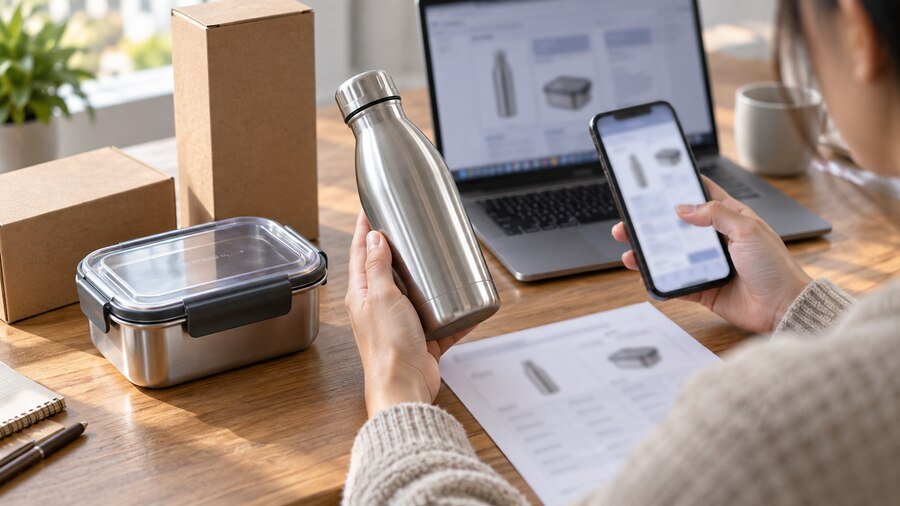
Choose a 1688 Buying Route That Fits Your Setup
Start with the least complicated route that actually supports the transaction. Not the route someone used in an old video. Not the one with the smallest advertised fee.
Check whether official international checkout supports your order
Older guides often say 1688 never accepts international cards or offers overseas shipping. That is too broad for a current buying guide.
As checked in September 2026, the developer’s official 1688 app listing advertises Visa and Mastercard payment options, multilingual assistance, and delivery to selected overseas markets.
Those are advertised capabilities, not a promise that your particular order qualifies. We have not tested a transaction through your account. Availability can differ by market, product, seller, and the purchasing experience you are using.
Before looking for a workaround, check the actual order:
-
Does your destination appear as a supported shipping option?
-
Can you select your own card or another legitimate supported payment method?
-
Are the quantity and product variant correct?
-
What currency, fees, and delivery charges appear?
-
What protection and refund terms apply to this transaction?
If everything fits, an extra purchasing intermediary may be unnecessary. You might still need independent product checks for a commercial order.
If something is missing, pause. A headline about global shopping is not evidence that every domestic listing has become export-ready.
Use WorldFirst and World Pay if you meet the local requirements
For an eligible overseas buyer, a dedicated cross-border payment route may solve the RMB payment problem while you manage procurement yourself.
WorldFirst’s World Pay route, also described as Cross-border Pay or 跨境宝, is one documented option. Payment access does not replace supplier selection, inspections, or shipping arrangements. Treat it as the payment part of the purchase, not the whole purchase.
Check eligibility for your actual country and business status. Being able to create a login is not the same as being approved for the feature you need.
For example, WorldFirst’s Singapore individual onboarding guidance describes a sole-proprietor selection for applicants without a registered business, alongside trading information and identity verification. It does not establish eligibility for every individual worldwide.
This distinction matters if you are just testing an e-commerce idea. You should not create a foreign company simply because a generic guide tells you to. Equally, you should not assume a business payment service accepts casual personal shopping.
Direct payment can be a sensible fit when you already know the supplier, understand the specification, and have a receiving plan. You retain more hands-on control, but you also carry more of the coordination work.
Use a buying agent when payment or procurement still blocks you
A buying agent purchases on your behalf under an agreed service arrangement. You provide the product requirements, pay through an accepted method, and approve the purchase. The agent uses its own legitimate purchasing setup.
That avoids needing your own Chinese bank account for the supplier payment. It does not remove the need to verify the agent, understand its charges, or settle responsibilities.
A basic buying service may only place the order. A broader sourcing service may help compare suppliers, arrange samples, and coordinate checks. A freight forwarder may only move goods you have already bought.
Ask which service you are getting. Otherwise, everyone can assume somebody else checked the goods.
If you need help comparing suppliers and preparing the purchase, FriendDropshipping’s product sourcing support in China is relevant to that stage. Confirm the scope for your product before paying.
| Route | Supplier payment and order control | Delivery arrangement | Main trade-off |
| Supported international checkout | You pay through the options shown for your own order | Use the supported overseas option if available | Simpler access, but order-level availability must be checked |
| Eligible World Pay route | You authorize payment through your approved setup; keep your marketplace order records | Arrange receiving and onward shipping as required | More direct control, with separate eligibility and operational work |
| Buying or sourcing agent | Agent purchases; identify whose account holds the platform order | Receiving, checks, and export services depend on the contract | More assistance, with additional fees and intermediary risk |
For a straightforward sample, simplicity may win. For several suppliers, custom packaging, and tight launch dates, coordination can matter more than a small payment-fee difference.

Buying Direct: Account Setup, Verification, and Payment
Once you have chosen a direct route, keep the process orderly. A small test transaction is more useful than depositing a large balance and hoping the rest works.
Register with your own details and keep the account secure
Use the official marketplace website or app. Select your real country code where supported, enter your own mobile number, and complete the verification steps shown.
Interfaces change. If your screen differs from a tutorial, follow current official prompts rather than trying to force an old sequence.
Keep a private record of your account ID, recovery email, and linked services. Enable available security controls. Do not share your password or one-time codes with a seller or an agent claiming to “activate” the account.
If identity verification is requested, read who is collecting it and why. Check spelling, document validity, and the relationship between the account holder and the purchasing business.
Alipay identity verification and Alipay payment capability are separate questions. Completing an identity check does not prove that a particular card, balance, or purchase category will work. Likewise, using a foreign card for a travel purchase is not a test of your 1688 procurement checkout.
Confirm the available checkout before funding anything
Choose the exact variant and quantity. A listing can show a low starting price for a different size, material, or order tier.
Then verify stock, lead time, the receiving address, and payment availability. Leave yourself a way to stop before money moves.
If international checkout is supported, inspect the final amount and transaction terms. Check whether freight is final or estimated, whether destination charges are included, and what evidence you will receive after payment.
If a card is declined, do not treat repeated attempts as a strategy. Check the issuer’s message and ask the platform or payment provider about the supported route. Changing random account details can create more confusion, not less.
For a first commercial purchase, use a sample or a limited trial that you can afford to troubleshoot. The goal is to test the chain: order accepted, correct goods dispatched, delivery completed, records available.
Link and fund WorldFirst only through the official flow
WorldFirst’s 1688 Cross-border Pay guide describes opening an approved World Account, funding and converting to CNH, authorizing the 1688 account, and paying from that balance. CNH refers to offshore Chinese yuan.
The Singapore page lists a 0.8% WorldFirst payment fee plus a 0.2% 1688 platform fee. That is a regional published example checked in September 2026, not a worldwide all-in quote. Currency conversion, funding, and bank charges need separate confirmation. The guide also notes that funding is for business purposes and supporting records may be requested.
Check account authorization and the CNH balance
Before transferring money, confirm your approval, feature access, account linkage, and the payment option for your intended order.
If an existing account binding conflicts with the new authorization, use provider support or its official unlinking instructions. Do not disconnect accounts blindly, especially while orders remain open.
Check how much usable balance the transaction requires, including applicable fees. A displayed balance in another currency may not yet be ready for the purchase.
Save the order confirmation, fee breakdown, and refund terms
After payment, verify the marketplace order status as well as the payment-service record. A transfer receipt alone does not confirm that the supplier accepted the correct purchase.
Save the agreed specification, amount, order number, recipient details, and seller messages. Note the dispute deadlines shown for your transaction.
Before ordering again, understand where a refund would land and how you could withdraw unused funds. Do not assume conversion costs or every transaction fee will be returned. A successful purchase should leave a paper trail, not just an empty balance.

Buying Through an Agent: Keep the Money and Order Trail Clear
An agent can make buying easier. The arrangement should still be easy to explain in writing: who buys what, using whose account, for which fee, with what happens if it goes wrong.
Send a brief the agent can actually purchase against
“Buy this one” is not much of a specification when the listing contains twelve variants.
Send the product URL, seller name, selected variant, quantity, target material, dimensions, color, packaging requirements, destination, and desired dispatch date. Include screenshots if the selection is hard to identify.
A hypothetical pouch brief might say: “100 black zip pouches, polyester outer fabric, 20 × 12 cm, plain packaging, no logo. Please confirm size tolerance, zipper type, stock, and domestic freight before purchase.”
That is far safer than relying on a photo. It also gives the warehouse something concrete to check.
For private-label goods, separate product MOQ from logo, packaging, and tooling minimums. A seller accepting ten plain items may require a much larger customized order.
Agree on fees, order ownership, and refunds before paying
Request a written quotation that identifies product cost, service fee, payment or FX charges, domestic delivery, checks, storage, and onward freight. Ask which items are estimates.
Then settle these points:
-
Whose account will hold the 1688 order?
-
What purchase records and commercial documents will you receive?
-
Who can open a marketplace dispute?
-
What happens if the seller changes the price or runs out of stock?
-
Where does a supplier refund go, and when does the agent return it to you?
-
Can unspent funds be withdrawn, and what fees apply?
For FriendDropshipping purchases, compare the quoted arrangement with its published payment information. Independently confirm any unexpected change of beneficiary before transferring money.
Do not assume a payment method guarantees protection. Read the applicable terms for the service and transaction. Also distinguish a supplier purchase record, an agent service invoice, and any specific tax document your accounting team requires.
Prepayment is not, by itself, proof of fraud. The bigger issue is whether the recipient is verified, the purchase is documented, and the refund arrangement is workable. Start small enough that the first order proves the process rather than testing your nerves.

Verify the Seller and the Product Before the First Real Order
Removing the payment barrier can make a buyer feel ready to order immediately. Hold on a moment. Access to a supplier is not evidence that the product fits your business.
Match the business identity, then check the actual specification
Ask for the seller’s legal business name and relevant registration details. Compare the identity with the store, quotation, purchasing records, and any direct-payment beneficiary.
If another company receives payment or arranges export, ask for the relationship and supporting explanation. A mismatch deserves investigation; it is not something to ignore because the seller replied quickly.
A business license or marketplace badge is only part of that review. It does not confirm production capacity, batch consistency, or suitability for your destination market. Nor is every seller a factory.
Get a sample that matches the proposed order. Write down what acceptance means: dimensions, material, color, function, finish, packaging, and agreed tolerances. Keep the approved sample details with the order confirmation.
For a Shopify seller, that sample helps check whether product photos and descriptions are realistic. For Amazon FBA, the purchase brief should include the relevant labeling and preparation instructions. Wholesale buyers may need case quantities, assortment ratios, and carton markings instead.
Materials and product categories change what you need to inspect
A cotton pouch and a polyester pouch can look similar in a small image. Stainless steel grades, plastic thickness, and carton strength can also disappear behind a listing photo.
Translate the specification, not just the product name. Ask the supplier to confirm ambiguous material terms in writing.
| Category | Useful purchase checks | Questions to resolve before import |
| Apparel and bags | Fiber composition, dimensions, seams, zippers, color consistency | Which labeling and market requirements apply? |
| Home accessories | Material grade, finish, dimensions, stability, sharp edges | Does the intended use create special safety or food-contact requirements? |
| Packaging | Board or film specification, fit, print, protective inserts | Will it protect the product and meet your destination requirements? |
| Electronics | Model, function, plug, voltage, battery details | What testing, documentation, and transport restrictions apply? |
| Toys or cosmetics | Intended user, composition, warnings, batch details | What product-specific evidence is required for the target market? |
Ask a qualified testing or compliance specialist about regulated products. A generic certificate bundle is not a substitute for checking the exact model and intended use.
Finally, define your quality-control scope before goods arrive. Specify the sample size, checks, defect criteria, and reporting needed. A few warehouse photos can confirm appearance; they cannot prove everything about materials or safety.

Calculate the Cost Beyond the 1688 Listing Price
The listing price is a starting number. It is not the number to use when deciding whether a product is profitable.
You need the cost of obtaining usable stock at the destination you actually need. That may be your office, a local 3PL, or a fulfillment warehouse—not merely a warehouse in China.
Separate payment fees from agent and shipping charges
Request a breakdown instead of one reassuring “all included” sentence. The following buckets are worth checking:
-
Product price for the selected variant and quantity tier.
-
China domestic delivery, if applicable.
-
Card, platform, transfer, or payment-service fees.
-
Agent commission or purchasing charge, if you use one.
-
Currency conversion and any exchange-rate spread.
-
Samples, inspection, storage, handling, and repacking.
-
International freight and delivery surcharges.
-
Destination duty, tax, clearance, and final delivery where applicable.
Do not combine every possible fee from every possible route. If an agent handles the supplier payment, you are not necessarily also paying the direct World Pay fees yourself. Ask whether payment handling is already included in the agent’s quotation.
Keep recurring fulfillment charges separate from the cost of acquiring a batch. A per-customer pick-and-pack fee is a different task from purchasing 100 items for stock.
For more detail on quotation structure, review agent fees and hidden markups. Use it to identify questions, not to assume one advertised percentage applies to your sourcing order.
A worked example: 100 unbranded storage pouches
Here is a hypothetical agent-assisted purchase. These amounts are invented for the calculation; they are not current market rates or a FriendDropshipping quote. All figures are expressed in RMB equivalents for comparison.
| Cost item | Illustrative amount | Assumption |
| Products | RMB 1,200 | 100 pouches at RMB 12 each |
| China domestic freight | RMB 80 | One supplier to the receiving warehouse |
| Agent purchasing service | RMB 120 | Quoted fee for this hypothetical order |
| Buyer payment and FX costs | RMB 40 | Separate from the purchasing fee in this example |
| Agreed inspection | RMB 100 | Limited scope, not laboratory testing |
| Handling and repacking | RMB 60 | Preparing the outbound carton |
| International freight | RMB 500 | Illustrative shipment allowance |
| Destination charges | RMB 200 | Placeholder requiring a destination-specific quote |
| Total | RMB 2,300 | No repeated payment charge |
The estimated cost is RMB 23 per ordered unit, not RMB 12.
Now suppose the order reaches you with 95 sellable pouches after the final count and checks. Without assuming any refund, RMB 2,300 divided by 95 is about RMB 24.21 per sellable unit.
That is the number to compare with another sourcing offer. Use matching materials, quantities, inspection scope, and destination. Comparing a China-warehouse price with a delivered overseas price is like comparing groceries with a restaurant bill. Both include food. They do not include the same work.
Replace every allowance with a real quote before committing volume. Add selling costs—ads, marketplace fees, local fulfillment, and customer returns—separately when you calculate margin.
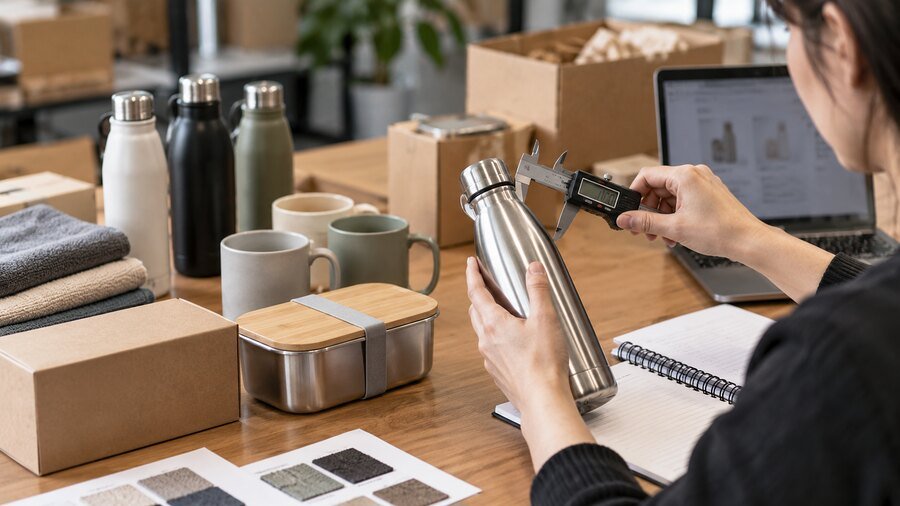
Make Sure the Goods Can Leave China and Reach You
Do not leave delivery until after payment. The supplier may consider its job finished once the parcel reaches a Chinese address.
Use supported international delivery—or a confirmed China warehouse
If your order offers suitable overseas delivery, review the actual route, tracking, charges, and inspection options. You do not need to add a China warehouse merely because an older tutorial used one.
If you are arranging onward shipping, obtain the warehouse’s full address, contact number, customer reference, and receiving instructions before the supplier dispatches.
Send the warehouse an expected-arrival list: seller, order number, SKU, variant, quantity, and domestic tracking. Otherwise, three cartons can arrive and nobody knows which order each belongs to.
Decide what the receiving team should do with shortages or damage. Ask it to retain useful evidence before repacking. Do not authorize outbound release while an unresolved problem still needs supplier attention.
For the broader workflow, see buying, inspection, and consolidation with a 1688 agent. This is where payment access becomes an actual supply-chain handoff.
Confirm inspection release, export paperwork, and import responsibility
Consolidation combines parcels. It does not automatically include inspection, product testing, customs brokerage, or full insurance.
Ask who prepares the commercial invoice, packing list, and accurate product information needed for the shipment. Clarify who coordinates export and who handles destination clearance and import requirements. Do not accept false descriptions or understated values as a cost-saving plan.
If a quote uses an Incoterms term, request the named place and a clear list of included services. Do not infer legal or compliance responsibilities from “door to door” alone. Confirm the importer arrangement with the logistics provider or broker.
Before release, compare shipping arrangements from China for your product and destination. Ask which dates are estimates, which charges can change after weighing, and what happens if the shipment is rejected or delayed.
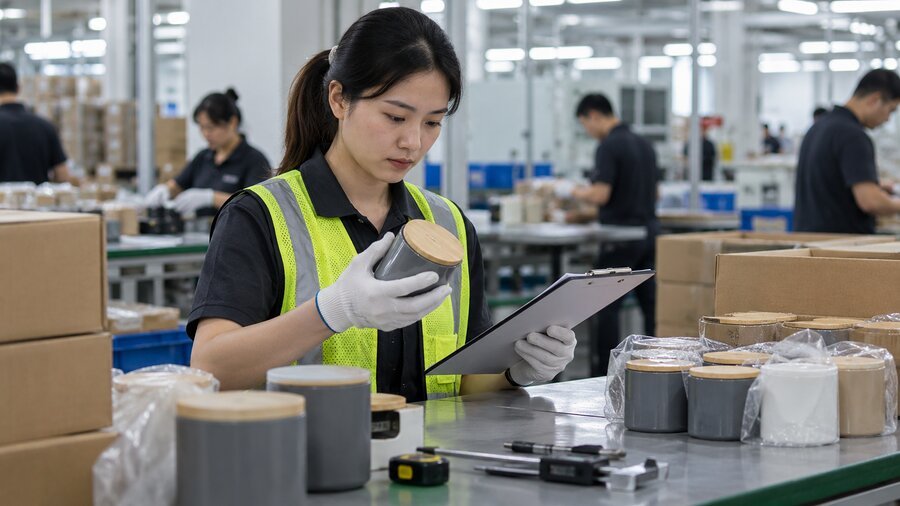
When Registration, Payment, or Refunds Go Wrong
Most problems are easier to manage when you stop at the first unclear step. Keep the original error message and order records. Guessing can turn one issue into several.
| Problem | First checks | Practical next step |
| SMS code does not arrive | Country code, supported number, delivery issue | Use official support; do not buy a borrowed verification account |
| Card or cross-border option is missing | Region, product, account eligibility, checkout route | Confirm supported options before funding or switch to an agreed agent purchase |
| Authorization fails | Linked account identity and existing bindings | Follow official provider instructions; avoid disconnecting accounts blindly |
| Payment does not complete | Available balance, currency, fee allowance, issuer or provider message | Resolve the stated cause before retrying |
| Goods arrive short or incorrect | Order specification, receiving count, parcel evidence | Hold outbound release and ask the order holder to raise the issue promptly |
| Agent has received the supplier refund | Refund record, agreed settlement method, remaining charges | Request a reconciled statement and return of funds under the agreement |
A blocked account does not justify pretending to be someone else. Use the appeal or support process. If the route cannot support your situation, choose another legitimate purchasing arrangement.
If an agent suddenly requests payment to a different beneficiary, verify through a previously confirmed channel. Do not rely on a new chat message alone.
Keep refund stages separate: the seller agrees, the platform processes it, the payment account receives it, and—where an agent purchased—the agent settles with you. Those are not always one event.
Ask for dates, amounts, and records at each stage. Also check whether currency movements, non-refundable services, or transaction charges affect the amount returned.
Before scaling, reconcile your first order from quotation to delivery. A small unresolved balance or repeated missing record is worth fixing now. More volume does not usually make a confusing process clearer.
Conclusion: Choose the Route Before You Commit the Money
You do not need to start by setting up a Chinese company just to explore a 1688 purchase. Start by checking what your real account and intended order support.
If international checkout works, review its full costs and terms. If you qualify for a cross-border payment route, confirm access before funding it. If you need an agent, agree on the purchase, checks, fees, delivery, and refund trail first.
Then order a sample and test the complete chain. The win is not simply paying a Chinese supplier. It is receiving the right goods with a cost and process you can repeat.
Need help with the procurement side? Share your product links and destination, along with quantities and specifications, to discuss the sourcing support your order needs.
FAQs About Buying From 1688 Without a Chinese Bank Account
Can I buy from 1688 without a Chinese company?
Yes, there are buying routes that do not require your own Chinese company. Your options depend on account access, payment eligibility, and order support. Use accurate overseas or personal details, and confirm requirements for the route you choose.
Do I need a Chinese bank account to pay on 1688?
Not for every route. Supported international checkout, an eligible cross-border payment setup, or a buying agent may let you purchase without one. Confirm your own order’s options rather than assuming every domestic checkout supports overseas payment.
Can I register a 1688 account with a foreign phone number?
Check whether your country code and number are supported in the current registration flow. You must be able to receive the verification code. If registration fails, use official support instead of purchasing an account registered to somebody else.
Can I buy from 1688 as an individual rather than a registered business?
Possibly, but marketplace access and payment-service eligibility are separate. Some regional onboarding flows accommodate sole proprietors without registered companies. That does not guarantee approval for personal shopping or applicants in every country. Confirm your status with the provider.
Can I use Visa or Mastercard to buy from 1688?
The official app listing advertises these options. Check whether they appear for your account, destination, and chosen order. Do not assume card support applies to every listing or purchasing flow, and review the final charges before paying.
Does linking a foreign card to Alipay let me pay for any 1688 order?
No universal assumption is safe. Card linking, identity verification, and permission to pay a particular merchant transaction are different. Confirm the payment method at checkout; a successful travel payment does not establish support for your wholesale purchase.
What is the difference between World Pay and paying through an agent?
World Pay is a payment route for eligible users managing their purchase. An agent purchases under a service agreement and may coordinate sourcing or logistics. Compare account eligibility, order ownership, service scope, and total fees—not just the payment step.
Is WorldFirst available for 1688 purchases in my country?
Confirm both regional account eligibility and access to the specific 1688 payment feature. General provider coverage does not prove that every service is available locally. Ask about your country, business status, funding method, and intended transaction before transferring money.
Can I pay a 1688 supplier with PayPal?
Do not assume PayPal is offered in your platform checkout. An agent or supplier may separately accept it under another arrangement. Clarify who receives the payment, what transaction you are entering, and which protection and refund terms actually apply.
Do I need a Chinese warehouse address for every order?
Not necessarily. Suitable supported international delivery may remove that need. If your supplier ships domestically and you arrange onward freight, you need a confirmed receiving address in China, with customer identification and clear handling instructions.
Can a freight forwarder buy the products for me?
Only if it also offers a purchasing service. Forwarding and buying are different jobs. Ask whether the quotation includes supplier payment, order placement, inspections, and dispute handling, or simply receiving and shipping goods you have already purchased.
Can I order one sample before buying in bulk?
Ask the seller about sample availability, price, and minimum quantity. A sample can have different pricing from a wholesale tier. Confirm that it represents the material, size, function, and packaging you intend to approve for the larger order.
How much extra should I budget beyond the listed price?
There is no useful universal percentage. Itemize payment and FX costs, agent services where used, domestic freight, checks, handling, international delivery, and destination charges. Divide the final cost by sellable units to compare sourcing offers fairly.
Who handles a refund when my agent placed the 1688 order?
The platform order holder will generally need to manage the marketplace claim. Your agreement should explain how the agent reports and returns recovered funds. Ask about deadlines, deductions, currency conversion, and unspent balances before the original purchase.
What should I do if my 1688 account or payment is blocked?
Save the error details and contact the official support channel. Check identity information, account authorization, and payment eligibility. Do not buy replacement identities or share passwords. If the route is unavailable, use another legitimate, documented purchasing arrangement.
Table of Content

I’m Cassiel. I’ll help you scale your Shopify business with reliable fulfillment.
Join to newsletter.
Follow us and get more knowledge.