
The basic Temu dropshipping idea sounds almost too easy. Find a $7 product, put it on your store for $29, and order it from Temu after somebody buys. Temu ships the parcel. You keep the difference. Nice little machine, right?
Well, sort of. The order can physically move from Temu to a customer, but that does not make Temu an official dropshipping supplier. Its current terms, retail packaging, changing stock, limited business integrations, and awkward return flow create problems that a neat six-step TikTok video tends to skip.
This guide takes the useful part of the idea and leaves the shaky part alone. You will learn how to use Temu for product discovery, price research, samples, and small demand tests. You will also learn when to move a proven item to a supplier or fulfillment partner built for commercial orders.
What “Temu Dropshipping” Can Mean
People use the phrase Temu dropshipping for two different business models. Mixing them up is the first pothole.
Sourcing a product from Temu for your own store
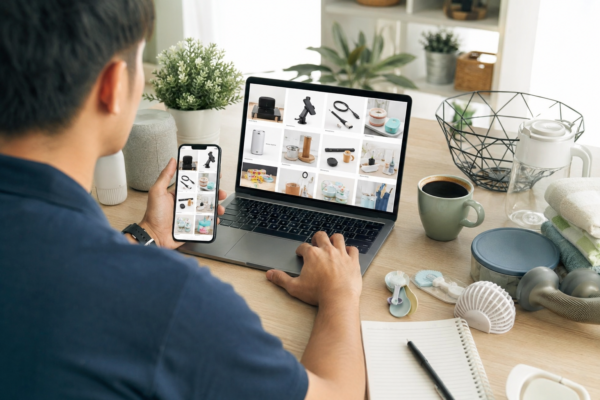
In this model, you run a Shopify, WooCommerce, Wix, or other ecommerce store. You spot an item on Temu, create a separate listing on your site, and market it to your audience. When a customer pays you, somebody purchases the Temu item and enters the customer’s delivery address.
That looks like dropshipping because you do not hold the item. Operationally, though, it is closer to retail arbitrage with a retailer handling the parcel. You have no formal wholesale agreement, dependable stock feed, native supplier API, or promise of neutral packaging.
Selling your own products on the Temu marketplace
This runs in the other direction. You register through the official Temu Seller Center, submit the requested identity or business documents, create a Temu shop, list your products, and fulfill orders under Temu’s seller program.
|
Question
|
Sourcing from Temu
|
Selling on Temu
|
|
Where is the customer shopping?
|
Your independent store
|
Temu marketplace
|
|
Who owns the product listing?
|
You own the listing on your store
|
You manage a listing in Temu Seller Center
|
|
Where does the product come from?
|
A retail purchase made on Temu
|
Your approved seller inventory
|
|
Is it an official Temu program?
|
No dedicated dropshipping program
|
Yes, an official seller program
|
|
Main goal
|
Use Temu as a product source
|
Reach shoppers already using Temu
|
If your goal is to open a Temu shop, you need a selling-on-Temu guide. The rest of this article focuses on using Temu during research and validation for an independent store.
Does Temu Allow Dropshipping in 2026?
There are three separate questions here: Can you do it? Is it legal? Does Temu permit it?

Possible, legal, and permitted are different questions
It is technically possible to buy an item and enter somebody else’s address. That describes what a checkout page can do. It says nothing about whether the account is being used as agreed.
Reselling a lawfully purchased, genuine product is not automatically illegal. Yet the full sale can still create legal duties involving trademarks, copyright, product safety, taxes, customs declarations, privacy, advertising, delivery promises, and refunds. Rules also change by product and destination. A phone stand and a children’s teething toy do not sit in the same risk bucket.
Platform permission is another matter. The current US-facing Temu Terms of Use say the consumer services are for personal and non-commercial use, not for the benefit of a third party. The terms also restrict commercial use of site information, copying significant portions of platform content, and certain automated or programmatic interactions unless Temu expressly permits them.
What that means for a store owner
Temu is not offering the consumer account as a normal wholesale or dropshipping account. Treating it as the automated backend of a commercial store can conflict with the agreement governing that account. Unusual buying patterns, repeated deliveries to unrelated addresses, promotion abuse, or automated purchasing may also create cancellations or account friction.
An unofficial browser extension does not change that relationship. It may copy listing data or help fill an address, but software cannot grant supplier authorization on Temu’s behalf.
So, do not build a store that depends on finding a clever way around platform controls. Review the terms for your own market before using Temu, because local versions and policies can change. Use Temu’s public marketplace as a demand and price signal. For ongoing commercial fulfillment, work with a supplier that knowingly accepts that role.
Is Temu a Good Dropshipping Supplier?
Temu is useful, just not always in the way beginners expect.
|
Factor
|
Where Temu can help
|
Where the model becomes fragile
|
|
Product discovery
|
Huge catalog and fast-moving consumer trends
|
A bestseller may already be saturated elsewhere
|
|
Price research
|
Shows what shoppers can buy at retail
|
The visible price may be promotional and can change
|
|
Samples
|
Easy way to order one unit
|
One good sample does not guarantee the next seller or batch
|
|
Inventory
|
Many products appear readily available
|
No dependable business stock reservation or variant feed
|
|
Fulfillment
|
Temu can deliver a retail order
|
No formal dropshipping workflow or supplier-side automation
|
|
Branding
|
Useful for seeing common product presentation
|
Temu packaging can reveal the original marketplace
|
|
Returns
|
Consumer return tools exist for the Temu buyer
|
Your customer bought from you, creating a mismatched return chain
|
|
Scaling
|
Fine for learning what buyers notice
|
Manual orders, cancellations, support work, and stock changes pile up
|
Using a retail marketplace as the backend of a growing store is a bit like using a grocery checkout as a restaurant wholesaler. It might rescue tonight’s dinner service. The cashier is not promising that 80 identical avocados will be there every morning.
Temu makes the most sense for product research, competitor-price checks, ordering samples, and tiny validation tests that do not depend on direct Temu fulfillment. It is a poor fit for subscriptions, bundles, regulated products, high daily volume, strict delivery promises, or a brand that cares about every unboxing detail.
What You Need Before You Test a Temu Product
You do not need a giant office or a wall of blinking dashboards. You do need a few boring pieces in place. Boring is good here. Boring stops a small delivery problem from becoming 47 angry emails.

Business and storefront basics
Prepare:
-
A focused Shopify, WooCommerce, Wix, or comparable storefront
-
A domain and branded support email
-
A payment gateway available in your country
-
Analytics for visits, add-to-carts, purchases, and acquisition cost
-
Clear shipping, refund, privacy, and contact pages
-
Basic tax and business registration appropriate to your location
-
A customer-service process for tracking, delays, damage, and cancellations
Your shipping page must reflect the fulfillment route you actually use. “Fast worldwide delivery” is not a delivery estimate. It is fog wearing a tie.
Product and operations checklist
For each test item, create a simple product brief. Record the material, size, weight, variants, target customer, intended use, supplier link, sample findings, and restricted-product concerns. Keep a cost sheet with product price, freight, duties, payment fees, expected refunds, and advertising.
You will also want original product images or permission to use supplied assets, an SKU and variant map, a tracking workflow, a return address, and a small refund reserve. Choose a backup business-ready supplier before spending heavily on ads. Finally, define your migration threshold—perhaps five steady orders per day, a certain contribution margin, or two weeks of repeatable conversions.
That threshold matters. Without it, a temporary test quietly becomes permanent manual chaos.
How to Start a Temu-Informed Dropshipping Test, Step by Step
The safer plan is not “make Temu your secret warehouse.” It is “use Temu to read the market, test the offer, and build a supply chain once the signal is real.” Here is the workflow.

Step 1: Choose one customer problem, not a random general store
Start with a person and a situation. “Pet products” is too broad. “Simple travel organizers for people taking small dogs on weekend car trips” gives you something to work with.
Define the buyer, the annoying moment they want to fix, what they use now, and why your offer would beat buying directly from a marketplace. Favor a problem that happens often and a product that can be demonstrated clearly.
A focused use case helps you choose coherent products, write believable copy, and build bundles later. A random store with a neck fan, vegetable chopper, LED moon, and dog toothbrush feels like a garage sale organized by an algorithm.
Step 2: Use Temu to discover demand and price pressure
Browse the relevant category, bestseller pages, search suggestions, customer photos, and recent reviews. Look beyond star ratings. A 4.7 score can hide a repeated complaint about sizing, weak adhesive, confusing instructions, or a part that breaks after two weeks.
Record the current price, signs of temporary discounting, review recency, common use cases, repeated complaints, variants, estimated delivery, identical competing listings, and the lowest price a shopper can easily discover.
Cross-check demand outside Temu. Search Amazon, TikTok Shop, Google Trends, Reddit, and niche communities. One viral listing is a clue, not a market. This broader guide to finding products with overlapping demand signals provides a useful validation framework.
Treat the Temu price as a competitive benchmark, not your wholesale cost. A higher price needs a reason: better education, an original bundle, verified quality, clearer sizing, useful support, faster delivery, or a brand buyers trust.
Step 3: Score products before importing anything
Use the same scorecard for every candidate. Otherwise, the product with the cutest video wins the meeting.
|
Criterion
|
Good signal
|
Warning signal
|
|
Demand
|
Search, marketplace, and social signals overlap
|
One short-lived viral post
|
|
Margin
|
Room remains after all variable costs
|
Profit depends on a temporary coupon
|
|
Shipping fit
|
Light, durable, compact, simple
|
Heavy, fragile, liquid, sharp, or battery-powered
|
|
Quality
|
Specifications are clear and samples are consistent
|
Reviews report different materials or sizes
|
|
Differentiation
|
Better bundle, content, design, service, or packaging
|
Same photos and offer as dozens of stores
|
|
IP risk
|
Generic item with original content
|
Logos, characters, copied artwork, or suspicious designs
|
|
Safety
|
Low-risk use with clear instructions
|
Children, health, electrical, skin, food, or safety claims
|
|
Supply
|
Several business-ready sources exist
|
Only one retail listing can be found
|
|
Repeat value
|
Refill, accessory, collection, or natural cross-sell
|
One novelty purchase with no follow-up
|
Reject a product if you cannot explain its material, intended use, delivery cost, and safety concerns. Cheap mystery plastic is not a positioning strategy.
Step 4: Find the underlying product through business-ready sources
Once a product passes the scorecard, look for the factory or a supplier prepared for ecommerce fulfillment. Search using the generic product name, specifications, and reverse-image tools. Compare Alibaba, 1688, manufacturer directories, dropshipping platforms, and private sourcing agents.
Do not compare photos alone. Two listings can use the same picture while selling different versions. Confirm material, dimensions, weight, included accessories, packaging, MOQ, sample cost, lead time, defect policy, single-order capability, stock integration, and tracking. For electrical or regulated goods, verify the exact model’s specifications and supporting reports.
A partner offering China product sourcing and supplier comparison can contact several factories, check specifications, negotiate an MOQ, and consolidate products. That is different from buying one more retail unit from an unknown marketplace seller.
Step 5: Order and inspect a sample
Always order the product before selling it. If the item touches skin, plugs into a wall, carries weight, goes near food, or is intended for a child, this step becomes even more important.
Check actual transit time, tracking, parcel condition, material, dimensions, fit, performance, labels, warnings, and instructions. Look for odors, sharp edges, loose parts, leaks, overheating, or unsupported claims. Note how much explanation or assembly the item needs.
Take your own photos and short videos. Write down defects rather than trusting memory. One sample cannot prove that every unit will be perfect, but it can stop an obviously poor product from reaching customers. When volume grows, define a repeatable product quality inspection checklist for inbound stock and pre-shipment checks.
Step 6: Calculate the selling price from landed contribution
Do not price by taking the Temu amount and multiplying it by three. Start with the money that remains after serving an order.
Use this simplified formula:
Contribution per order = selling price − product cost − shipping and duties − payment fee − ad cost − expected refund/reship cost − variable fulfillment/support cost
Suppose you sell an item for $29.99. The product looks like it costs $7.50. That is not a $22.49 profit. A sample calculation might look like this:
|
Illustrative cost item
|
Amount
|
|
Selling price
|
$29.99
|
|
Product
|
−$7.50
|
|
Shipping and duty allocation
|
−$5.40
|
|
Payment processing
|
−$1.17
|
|
Advertising
|
−$9.00
|
|
Refund and reship reserve
|
−$1.50
|
|
Variable support/tools
|
−$0.75
|
|
Contribution before fixed overhead and tax
|
$4.67
|
These are examples, not a promise. Destination, classification, carrier, returns, payment fees, and ads change the result. Model a bad week too: a 20% product-price increase, more support, or $13 acquisition cost instead of $9.
For a wider comparison of marketplace, agent, and warehouse cost components, see this Shopify fulfillment cost breakdown.
Step 7: Build an original product page and offer
Do not copy and paste Temu’s product title, description, photos, or reviews. Platform content can be protected by copyright, and customer reviews belong in their original context. More importantly, copied pages make your store look exactly like the cheap listing you are trying to outperform.
Build the page from your sample and product brief. Include an understandable name, original or licensed visuals, benefits, materials, dimensions, box contents, care instructions, honest limitations, realistic delivery, return conditions, and original customer-focused FAQs.
Your offer might combine two complementary items, add a useful guide, provide clearer size selection, or include a replacement guarantee. Value is not created by hiding where a generic item can be found. It is created by making the purchase easier, safer, better explained, or genuinely different.
Step 8: Set fulfillment, tracking, and return rules before traffic
Map the journey before launch: payment, address check, supplier release, correct SKU pick, packaging, tracked dispatch, tracking sync, exception handling, and written return or reship rules.

Direct retail ordering from Temu does not give you this controlled chain. The parcel may use marketplace branding. Multiple items may arrive separately. Stock or price can change after your customer pays. A Temu return may also require action by the account that made the original retail purchase, while your buyer expects help from your store.
Build the workflow around a business-ready provider and compare international parcel and bulk shipping options by destination, product type, cost, and actual transit performance. Keep one owner for exceptions. When everybody assumes somebody else is watching a stuck parcel, nobody is.
Step 9: Run a small, measurable validation test
Start with one to three related products, not 40. Use a capped ad budget or publish organic demonstrations. Test a clear audience and offer for enough time to collect useful behavior, but keep the downside small.
Track click-through and conversion rates, checkout abandonment, acquisition cost, contribution per delivered order, refunds, cancellations, chargebacks, delivery time, first tracking scan, support time, and complaint themes.
Revenue is not the score. Delivered orders with positive contribution and manageable support are the score.
Read customer messages like research notes. If five people ask whether a travel bowl fits a cup holder, add the measurement and a photo. If buyers click but do not purchase, your offer or trust signals may be weak. If they buy and then complain, the problem is further downstream—often product quality, delivery, or a promise the page should never have made.
Step 10: Move the winner to controlled fulfillment
When a product sells consistently, get quotes from several business suppliers. Send the same product brief to each one so you are comparing the same item. Confirm samples again if the source changes.
Then agree on specifications, QC, reserved stock, SKU mapping, packaging, order and tracking synchronization, shipping routes, damage and return rules, reorder points, and safety stock. Use neutral packaging first; add branded materials after demand is stable.
Moving away from per-order retail purchasing is not “giving up on dropshipping.” It is the moment the business stops balancing on somebody else’s shopping cart. If the unboxing experience matters, plan custom packaging for dropshipping only after the product proves itself. Start with a label, card, sleeve, or simple mailer before ordering a warehouse full of elaborate boxes.
Temu Dropshipping Costs and Profit: A Realistic Example
Return to the $29.99 item. The first scenario left $4.67 before fixed overhead and tax. That is a 15.6% contribution margin, not a 75% profit margin. One reship can erase the contribution from several normal orders.

Now imagine the item is validated and a supplier quotes a consistent version at $6.20. A fulfillment partner charges $0.65 for handling, while a documented route and duty allocation costs $5.10. Better packaging and inspection add $0.35. Suppose original creative lowers advertising cost to $8.25, and improved quality reduces the refund reserve to $1.
|
Illustrative cost item
|
Retail-source test
|
Controlled supplier setup
|
|
Selling price
|
$29.99
|
$29.99
|
|
Product
|
$7.50
|
$6.20
|
|
Shipping/duty allocation
|
$5.40
|
$5.10
|
|
Handling, QC, packaging
|
Included/unclear
|
$1.00
|
|
Payment processing
|
$1.17
|
$1.17
|
|
Advertising
|
$9.00
|
$8.25
|
|
Refund/reship reserve
|
$1.50
|
$1.00
|
|
Other variable support/tools
|
$0.75
|
$0.60
|
|
Contribution before fixed overhead and tax
|
$4.67
|
$6.67
|
The controlled option is not automatically cheaper. Some products require a higher MOQ, custom inspection, or more expensive freight. The point is control: you can verify the product, reserve stock, forecast costs, and improve the customer experience. Compare complete landed quotes, not the loudest price on a product card.
Rules, Standards, and Product Risks You Still Own
A supplier ships the box. Your store makes the promise. That distinction follows you through delivery, compliance, and customer support.
Shipping promises and refunds
For US-facing stores, the Federal Trade Commission explains that online sellers must ship within the time they state. If no time is stated, the general rule is within 30 days. When a delay occurs, the seller may need to notify the buyer, offer a revised date, and give the buyer a chance to cancel for a prompt refund. The FTC’s guidance on orders that do not arrive or ship on time is worth reading before writing a shipping policy.
Do not borrow Temu’s estimated arrival date and present it as your guarantee. Your order may be placed later, routed differently, split, or delayed. Use performance data from your actual supply chain.
Customs and landed cost
US import economics changed materially. US Customs and Border Protection states that, from August 29, 2025, duty-free de minimis treatment for low-value shipments was suspended for goods from all countries, subject to stated exceptions and other applicable provisions. Check the current CBP duty-waiver guidance when modeling US orders.
Do not paste a universal tariff percentage into every product calculation. Duty depends on origin, classification, value, current trade measures, and entry method. Other destination markets have their own VAT, customs, product-registration, and importer rules. Ask a qualified customs or tax professional when the exposure is material.
Intellectual property and product safety
Avoid products carrying logos, fictional characters, sports marks, celebrity images, copied artwork, or designs that look suspiciously identical to a known brand. A listing being live does not prove that the seller owns the rights.
Product safety needs the same skepticism. These categories deserve deeper, market-specific checks:
-
Toys, children’s products, and baby items
-
Chargers, plugs, batteries, and wireless electronics
-
Cosmetics and products applied to skin
-
Supplements, foods, and medical or health claims
-
Food-contact materials
-
Helmets, protective equipment, and load-bearing items
-
Products with magnets, lasers, blades, liquids, or heating elements
Ask for product-specific reports, labels, traceability, and instructions where required. Check whether the exact tested model matches the unit being sold. A PDF with a similar product name is not a magic safety shield.
When to Replace Temu With a Supplier or Dropshipping Agent
The move should happen before manual work begins damaging customers, not after the payment processor starts sending nervous emails.
|
Trigger
|
What it tells you
|
Next move
|
|
Sales repeat for two or more weeks
|
Demand may be forecastable
|
Request comparable factory and fulfillment quotes
|
|
Manual ordering takes daily staff time
|
The workflow cannot scale cleanly
|
Add authorized order synchronization
|
|
Prices change during active campaigns
|
Margin is uncontrolled
|
Agree on quote validity or reserve stock
|
|
Variants go out of stock
|
The listing feed is unreliable
|
Use physical variant-level inventory
|
|
Orders are canceled or flagged
|
Retail checkout is not a commercial backbone
|
Stop depending on consumer-account fulfillment
|
|
Buyers mention Temu packaging
|
The original marketplace is damaging trust
|
Use neutral, then branded packaging
|
|
Tracking starts late
|
Procurement delay is hiding inside “shipping time”
|
Pre-stock winners near the dispatch point
|
|
Refunds or defects rise
|
Supplier photos are not enough
|
Add inbound and pre-shipment QC
|
|
You need bundles or inserts
|
Several suppliers must be coordinated
|
Consolidate inventory in one warehouse
|
A supplier makes or sells the product. A sourcing agent finds and coordinates suppliers, samples, negotiation, QC, packaging, and replenishment. A 3PL stores inventory and processes orders. Some private agents combine these roles, which can be useful when a growing Shopify brand is not ready to manage three separate companies.

Once demand becomes stable, reduce shipping time as orders grow by reserving a sensible amount of stock, setting reorder points, and separating supplier lead time from carrier transit time. A coordinated ecommerce order fulfillment service from China can then pick, pack, dispatch, and return tracking to the store.
Temu Alternatives by Business Stage
There is no universal “best supplier.” The right structure changes as evidence improves.
|
Option
|
Best use
|
Automation
|
MOQ and branding
|
Main trade-off
|
|
Temu retail marketplace
|
Trend research, price checks, one sample
|
No official dropshipping API
|
One-unit buying; little brand control
|
Consumer terms and retail fulfillment are poor foundations for scale
|
|
AliExpress-style marketplace
|
Early catalog testing
|
More third-party tools
|
Often low MOQ; seller-dependent packaging
|
Variable supplier quality, stock, and shipping
|
|
Dropshipping platform
|
Fast testing with catalog products
|
Store and order tools may be built in
|
Usually low commitment; limited customization at first
|
Product and route pricing can be less transparent
|
|
Alibaba or 1688 sourcing
|
Factory search, bulk orders, private label
|
Usually requires another operations layer
|
Negotiable MOQ and strong customization
|
Supplier vetting, communication, QC, and fulfillment require work
|
|
Private sourcing agent
|
Validated products needing coordination
|
Can connect sourcing with store fulfillment
|
Flexible path from small stock to custom packaging
|
Quote-based service and active communication are required
|
|
Destination-market 3PL
|
Stable volume needing fast local delivery
|
Strong warehouse/order integration
|
Inventory must be imported and forecast
|
Storage, inbound freight, and dead-stock exposure
|
A practical path is Temu for market observation, a sample from the likely source, a small validation launch, and then controlled sourcing. Once one country produces stable volume, local inventory may make sense. Until then, a China-based warehouse can offer more international flexibility.
Conclusion
Temu is a useful window into consumer demand and brutal price competition. It is not an officially supported, scalable dropshipping supplier for an independent store. Current account terms, branded parcels, unstable stock, weak business integration, and awkward returns make direct retail fulfillment a fragile setup.
The sturdier route is simple: find a customer problem, research the market, score the product, order a sample, calculate complete costs, test a small offer, and move a winner to a supplier that knowingly supports commercial fulfillment. Then add QC, reserved stock, packaging, tracking, and faster routes as demand earns them.
If you already have a product link and sales destination, you can request a sourcing and fulfillment quote to compare the Temu-visible price with a business-ready supply chain.
FAQs About Starting Temu Dropshipping
1. Can you dropship from Temu?
You can order an item to another address, but Temu offers no normal consumer dropshipping program. Its current terms restrict consumer services to personal, non-commercial use. Use it for research and samples, then choose an authorized business supplier.
2. Does Temu officially allow dropshipping in 2026?
No official reseller or dropshipping account is offered to consumer buyers. The separate Seller Center lets approved merchants sell their own inventory on Temu; it does not import Temu’s retail catalog into Shopify.
3. Is Temu dropshipping legal?
Retail resale is not automatically illegal. Still, IP, safety, tax, customs, advertising, and consumer laws may apply. Platform terms are a separate contractual issue. Seek qualified advice for regulated products or material exposure.
4. Is selling on Temu the same as dropshipping from Temu?
No. Selling on Temu means listing your inventory through its seller program. Sourcing from Temu means offering an item on your own store and relying on a Temu retail purchase. The order directions are opposite.
5. Can I connect Temu directly to Shopify?
There is no official supplier-side connection turning consumer listings into authorized Shopify fulfillment. Third-party tools may import data, but listing import is not supplier approval, reserved inventory, or automated order fulfillment.
6. Is there an official Temu dropshipping app or API?
Temu does not provide independent stores with a standard dropshipping API for its retail catalog. Check any extension’s permissions, data handling, stock functions, and actual fulfillment source before using it.
7. Does Temu ship products in unbranded packaging?
Do not assume so. Orders may use recognizable marketplace packaging or materials. Direct retail ordering is unsuitable when neutral packaging is essential. Confirm the packing method with a business supplier before promising it.
8. Will Temu include a receipt or price in the parcel?
Practices vary by seller, warehouse, route, and market. You cannot promise that no Temu identifier, promotion, or price reference will appear. Use controlled fulfillment when a neutral parcel is required.
9. How long does Temu shipping take for dropshipping orders?
There is no dependable universal number. Delivery varies by stock location, destination, customs, carrier, and season. Publish a range based on your tested route, not a marketplace estimate copied earlier.
10. What happens if Temu cancels an order after my customer pays?
Your store still owes the customer a solution. Use a backup supplier, obtain consent for a delay where required, offer an approved alternative, or issue a prompt refund. Do not send the buyer to Temu.
11. Can I use Temu product photos, descriptions, or reviews on my store?
Not automatically. Photos, copy, and reviews may be protected. Use original sample photography and copy, or obtain permission from the rights holder. Never present Temu customer reviews as reviews collected by your store.
12. How do Temu returns work when the buyer purchased from my store?
The buyer follows your policy, while a Temu return belongs to the original purchasing account. This mismatch complicates addresses, timing, and refunds. Establish your own return process and include its expected cost in pricing.
13. How much money do I need to test a Temu product?
Budget for samples, the store, payment fees, creative work, limited marketing, refunds, and reships. Set an affordable loss limit. Testing a few related products is usually more informative than filling a giant catalog.
14. Is Temu or AliExpress better for dropshipping?
Temu is useful for retail trend and price research. AliExpress has a more established dropshipping-tool ecosystem, although suppliers still vary. A vetted supplier or agent gives growing brands more control over stock, QC, packaging, and fulfillment.
15. When should I move a winning product to a private supplier or agent?
Move when sales repeat, manual work grows, prices or stock shift during campaigns, packaging causes complaints, or refunds reveal quality problems. Shortlist the replacement before testing so the handoff happens early.
Table of Content

I’m Cassiel. I’ll help you scale your Shopify business with reliable fulfillment.
Join to newsletter.
Follow us and get more knowledge.