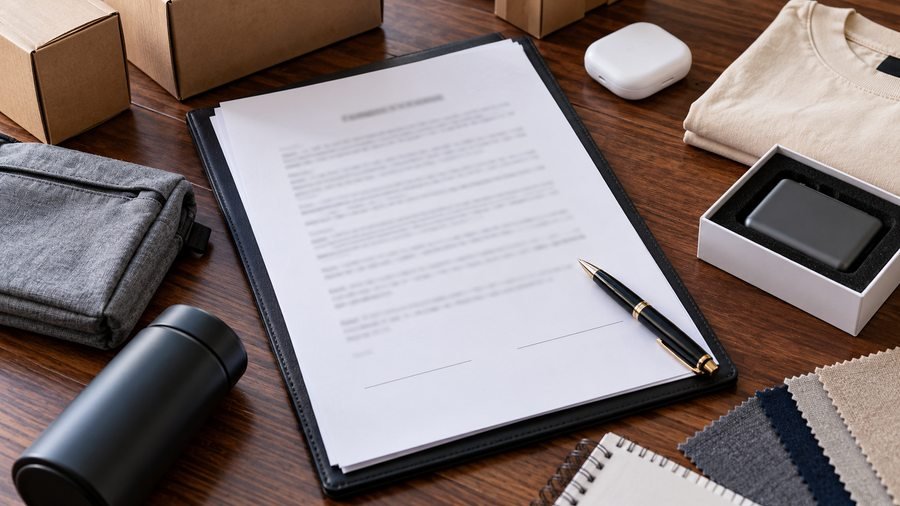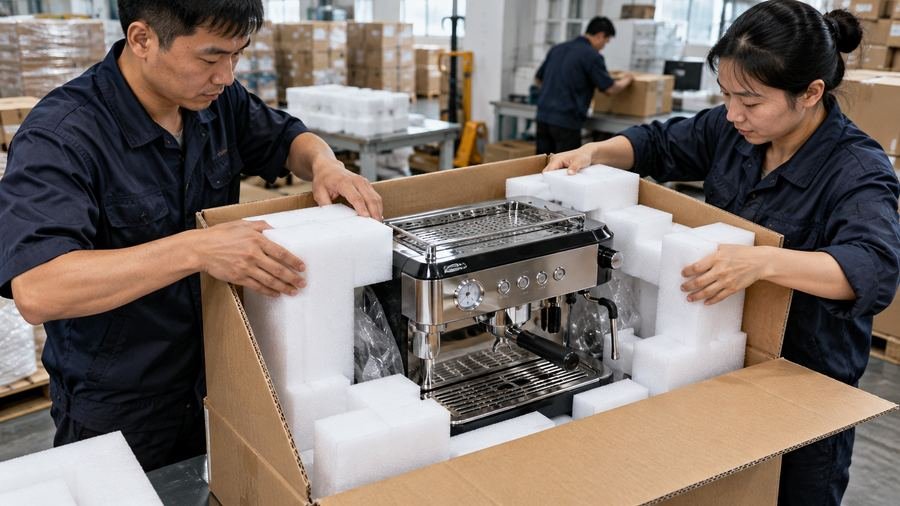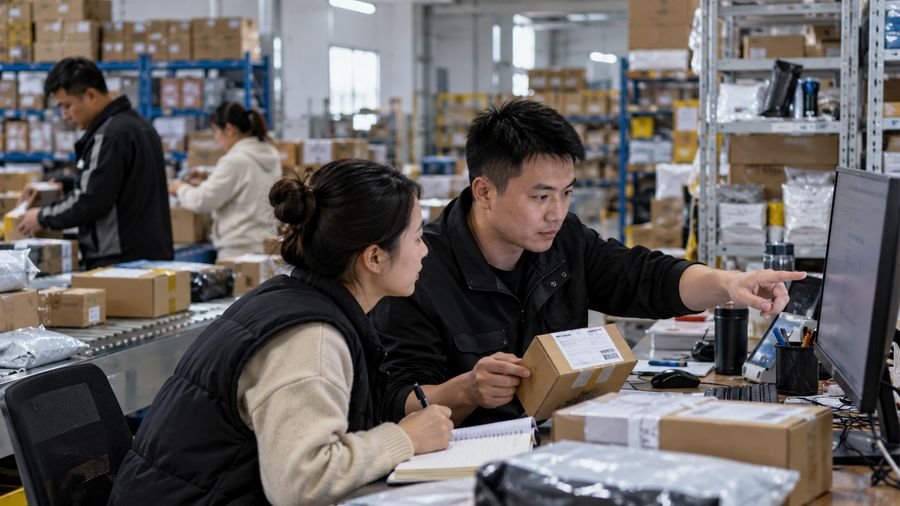
A marketplace badge is a bit like a hotel photo taken on inspection day. It can show that the place exists and has certain facilities. It cannot tell you what your room will look like six months later.
The same goes for a manufacturer profile. A badge, a busy showroom, and a folder of certificates may all be useful. None of them answers every question about your order.

Before paying a deposit, you need a connected set of evidence. Who is the legal seller? Where will production happen? Can that site make your product? Do its documents match your model and materials? Who receives the money?
This guide shows how to answer those questions and turn the findings into a practical Go, Conditional, or Stop decision.
What a Marketplace Badge Can Tell You—and What It Cannot
Supplier badges help with early filtering. Throwing them away would make little sense. Treating them as final approval would make even less sense.
Alibaba.com’s Verified Supplier program says its verification process produces an assessment report from a third-party inspection company. That report is more useful than the icon beside the supplier’s name. Open it and read what was checked, where it was checked, and when.
Look for the legal business name, inspected address, factory type, main products, equipment, staffing, quality procedures, and report date. Compare these details with the supplier’s current claims.
A supplier profile may also show years on the platform, transaction activity, reviews, response data, or Trade Assurance availability. These signals add context. Their scope is limited.
| Marketplace signal | What it may help you learn | What remains unproven |
| Verified Supplier badge | A third-party assessment was completed for the listed supplier | Current quality, capacity, and performance for your order |
| Assessment report | The locations, equipment, people, and systems observed within its scope | Conditions outside the scope or changes after the visit |
| Years on a platform | How long that account has operated on the marketplace | The age or history of every related legal entity and factory |
| Reviews and transaction data | Past activity through the platform | Whether the same product, site, specification, or team was involved |
| Trade Assurance availability | A platform transaction route may be available | Automatic recovery, legal compliance, or acceptable product quality |
The key word is “may.” Even genuine information can be misunderstood.
An assessment is a snapshot. Equipment may move. Staff may change. A factory may become overloaded. The supplier may send a new product to a subcontractor. Your order may also require a process the assessor never reviewed.
Use badges to build a shortlist, then verify the evidence that matters to the order. FriendDropshipping’s guide to Alibaba supplier checks and platform basics covers the platform-specific sourcing stage in more detail.

First, Define What You Are Trying to Verify
“Is this supplier legit?” sounds like one question. In practice, it hides four:
-
Does the company legally exist and remain active?
-
What is its relationship with the claimed production site?
-
Can that site make your exact product at the required volume?
-
Can the supplier repeat the approved result and take responsibility for the order?
A legal company can be unsuitable for your product. A real factory can have weak quality control. A capable factory can become unreliable when an order is far above its normal volume.
Define the intended order before deciding what to check. Your verification brief should include:
-
product and intended use;
-
destination market and sales channel;
-
materials, components, dimensions, and tolerances;
-
order quantity by SKU or color;
-
required manufacturing processes;
-
packaging and labeling;
-
product-specific testing or documentation;
-
target schedule and likely repeat volume.
Suppose you want 3,000 private-label stainless-steel tumblers. A supplier that makes plastic sports bottles is not a fit simply because “drinkware” appears in its catalog. You need evidence related to metal forming, welding, polishing, coating, lid fit, leak testing, logo application, and packing.
Match verification depth to your exposure. A ready-made carton of low-risk accessories may justify a document review, samples, and inspection. New tooling, safety-sensitive goods, complex electronics, or a large custom order may justify deeper technical and on-site work.
If your specification is still fuzzy, China product sourcing support can help organize the brief, supplier options, and samples. Verification works much better when the target is clear.
Confirm the Chinese Legal Entity Behind the English Name
Ask for the full business license and legal name
Start with the company, not its storefront name.
Ask the supplier for a clear, complete copy of its Chinese business license. Record the full registered Chinese name and Unified Social Credit Code. The English name used on a website may be a translation, brand, or sales label. It is not a reliable search key by itself.
Review the license fields with someone who can interpret them accurately. Useful items usually include the registration status, legal representative, establishment date, registered address, and business scope.
Business scope can support or challenge the supplier’s story. Manufacturing language relevant to the product is a stronger sign than a profile that merely says “factory.” Still, a line on a license does not prove that machines, staff, or production are present today.
Registered capital also needs careful treatment. A larger number does not automatically mean a stronger factory. It does not tell you how much cash is available for your order, either.
Check the record through an independent route
Do not verify a supplier’s license by asking the same supplier whether it is genuine.
China’s National Enterprise Credit Information Publicity System is commonly known as GSXT. The EU IP Helpdesk’s company-search walkthrough explains how to search basic Chinese company information through the official system.
Search with the exact Chinese legal name or Unified Social Credit Code. Compare the public record with the license copy. Look for the company’s status, name, code, date, address, scope, and relevant disclosed risk information.
The system is designed for Chinese-language use, and access can be awkward from some locations. Browser translation can help with navigation. For a meaningful commercial decision, have a competent Chinese reader check fields that remain unclear.
Commercial databases such as QCC and Tianyancha can help organize additional company signals. They are secondary tools. Reconcile important findings with appropriate official records or qualified professional research.
Investigate mismatches without rushing the conclusion
A mismatch needs an explanation. It does not always mean fraud.
A company may have a registered office and a separate production address. A mainland factory may use a related Hong Kong company for export sales. A trading company may contract with the buyer while another business runs the production site.
Ask the supplier to map the relationship and provide supporting evidence. Then decide whether that structure gives you enough visibility and contractual control.
Pause if the exact legal entity cannot be found, the registration status creates a serious unresolved concern, or the supplier keeps changing its explanation. Save screenshots, license copies, dates, and notes in an entity verification sheet.
It is boring work. Yep. It is also much easier than chasing an unidentified company after a payment disappears.
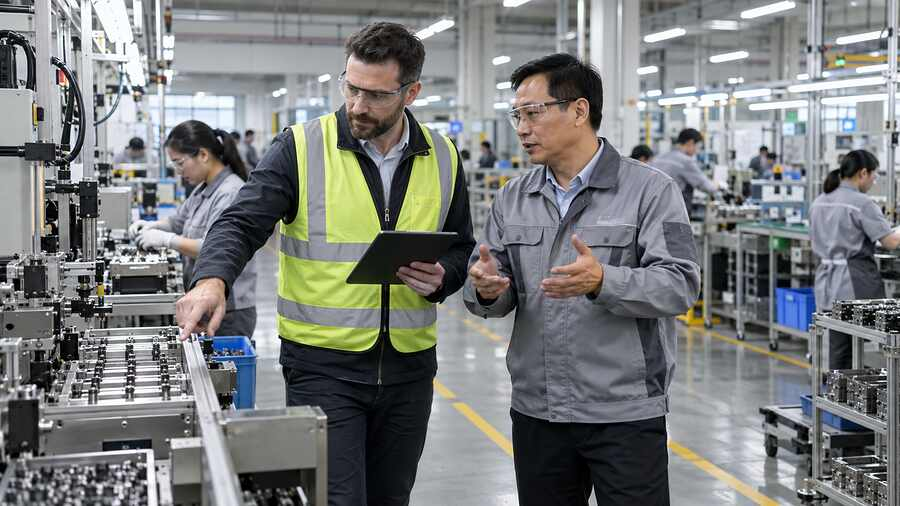
Map Who Sells, Manufactures, Exports, and Receives Payment
Factory versus trading company is only part of the story
Buyers often try to sort every supplier into two boxes: factory or middleman.
Real supply chains are messier. A factory may own its core production but outsource coating or packaging. A trading company may coordinate several good factories and maintain strong quality controls. A manufacturer may use an export affiliate because the production entity does not manage overseas sales directly.
The useful questions are:
-
Who owns or controls each critical process?
-
Which entity signs the agreement?
-
Which entity appears on the invoice?
-
Who receives payment?
-
Who accepts responsibility if production fails?
-
Which relationships can be independently supported?
Hidden intermediation is a concern because it blocks visibility. Transparent intermediation may add real value.
Draw a simple entity and process map
Make the supplier show how the order moves. The map may be simple, or it may contain several parties:
| Role | Entity or site to identify | Evidence to request | Responsibility to clarify |
| Seller | Contracting legal company | License, quotation, agreement | Product and commercial obligations |
| Manufacturer | Actual production site | Site evidence, process records, audit | Core manufacturing and quality control |
| Subcontractor | Coating, printing, components, or other outside process | Name, location, approval and control records | Critical-process quality and timing |
| Exporter | Entity handling export where different | Relationship explanation and shipping documents | Export documentation |
| Warehouse | Consolidation or dispatch location | Address and service scope | Receiving, storage, and handoff |
| Beneficiary | Account receiving payment | Bank details and entity relationship | Receipt and allocation of buyer funds |
This matters in sourcing centers such as Yiwu, where a showroom, market seller, factory, and warehouse may be separate. Yiwu sourcing and supplier coordination can help buyers understand and manage those connections.
Ask who supplies the tumbler lid, silicone seal, coating, gift box, and printing. If the factory outsources the lid, that is not automatically a problem. You need to know how the supplier approves that source, checks incoming parts, and handles changes.
Stop if critical production remains deliberately hidden or the seller refuses to explain who does the work. You cannot verify a manufacturing chain that no one will describe.
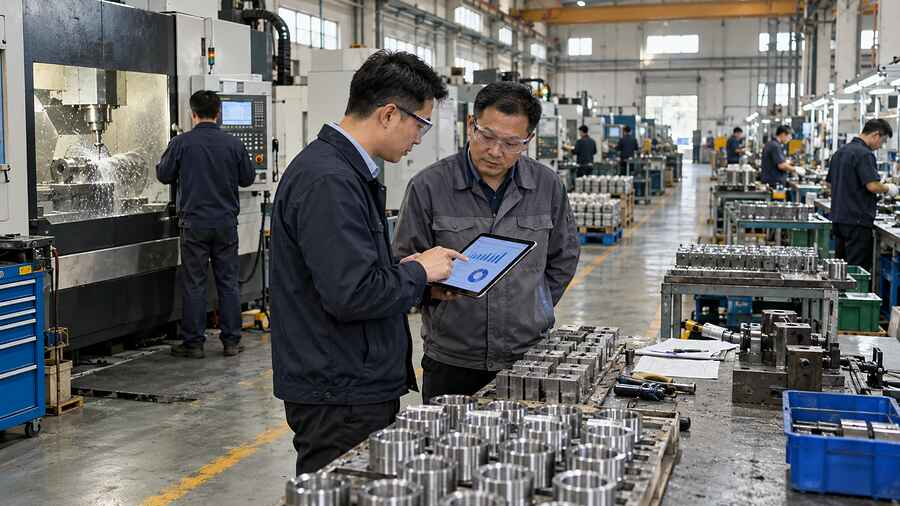
Prove the Factory Can Make Your Exact Product
Follow the process instead of admiring the showroom
A wall of samples is good for ideas. It does not prove how your product will be made.
Ask the supplier to walk through the production process from incoming material to packed goods. For the tumbler, the route might include stainless-steel material receiving, tube or sheet forming, welding, vacuum construction, polishing, cleaning, coating, printing, lid assembly, leak testing, inspection, and packing.
At each stage, ask four simple questions:
-
Is this work done here?
-
Which equipment and people do it?
-
What requirement controls the result?
-
What record shows that the check happened?
You are looking for connections. If the supplier claims vacuum performance but cannot show the relevant production or test process, the story has a hole in it.
Connect equipment and people to realistic capacity
Counting machines is not enough. A machine may be idle, broken, shared across products, or limited by another stage.
Ask about normal output, available shifts, changeover time, maintenance, current workload, yield, and the slowest process. Compare the answers with what you can observe and with past production records for a similar item.
For example, a coating line may handle plenty of units, while lid assembly or gift-box production controls the actual order schedule. A monthly capacity number on a profile often hides these bottlenecks.
Also ask how the factory plans materials. Can its steel and coating suppliers support the required batch? Are color minimums different from product MOQs? How will the factory separate your approved material from other stock?
If you are still building the shortlist, you can compare Chinese dropshipping suppliers before spending money on deeper checks. Discovery and verification are separate jobs.
Use the sample as one piece of evidence
A sample tells you about that unit. It may also show how well the supplier listens and records changes.
Ask whether it is a stock sample, development sample, handmade prototype, or pre-production sample. Record the material, dimensions, construction, finish, and production method it represents.
The supplier may create a lovely sample through extra handwork. Bulk units may run through different equipment at a faster pace. Ask how the approved result will transfer into work instructions, material controls, tooling, and inspection criteria.
Keep an approved physical sample where practical, together with photos and a numbered specification. If the written spec and sample conflict, resolve the conflict before production.
For custom or process-sensitive goods, a pilot batch can test repeatability. Define what the pilot must prove. Ordering twenty units without acceptance criteria just gives you twenty objects to stare at.
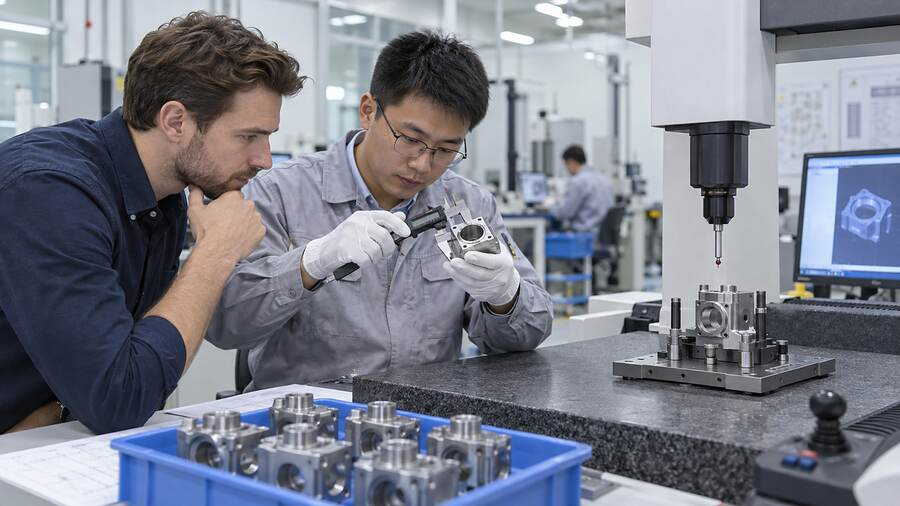
Verify Certificates and Test Reports by Matching Six Fields
Certificates look official. That makes them powerful sales tools and easy sources of false comfort.
Check the issuer and current validity
Ask for the complete certificate or test report. Cropped images, cover pages, and logo collections leave out the information you need.
Identify the issuing certification body or laboratory, certificate or report number, issue date, expiry or surveillance status where applicable, and document scope. Verify the record with the issuer or another suitable authoritative route when available.
Do not assume every logo has a public lookup page. Contact the named body if necessary and make sure you are using its real website and contact details.
Match the entity, site, scope, model, material, and date
A genuine document can still be irrelevant. Check these six fields:
| Field | Example mismatch | Why it matters |
| Legal entity | Certificate names another company | The document may not cover your supplier |
| Production site | Address differs from the proposed factory | The assessed system or test sample may come from elsewhere |
| Scope | Certificate covers trading or another product category | The relevant process may sit outside the certified scope |
| Product/model | Report covers an older tumbler or different lid | Design differences can change performance or applicable requirements |
| Material/component | Report covers another steel grade, coating, fabric, or battery | The tested construction does not match what you will buy |
| Date/version | Document expired or uses an outdated specification | Current validity and relevance remain unresolved |
ISO’s explanation of ISO 9001 describes a quality management system standard. Certification, when chosen, involves an independent certification body evaluating the organization’s management system.
An ISO 9001 certificate does not certify that one tumbler is leakproof, that a toy meets every destination requirement, or that a cable uses the claimed copper. It can provide evidence about the management system within its stated scope.
Keep different evidence types separate:
-
A quality-system certificate concerns an organizational system and scope.
-
A laboratory report records tests on identified samples using stated methods.
-
A material certificate or declaration addresses specified material information.
-
A factory audit records observed site and process evidence within an audit scope.
-
A product inspection report records checks on a defined production lot.
For regulated goods, determine the applicable requirements for the destination, product, use, and claims. Then check whether the evidence matches. Generic promises such as “CE certified” or “FDA approved factory” often need careful unpacking.
Pause if a critical report belongs to another entity, site, model, or material and the supplier cannot close the gap.
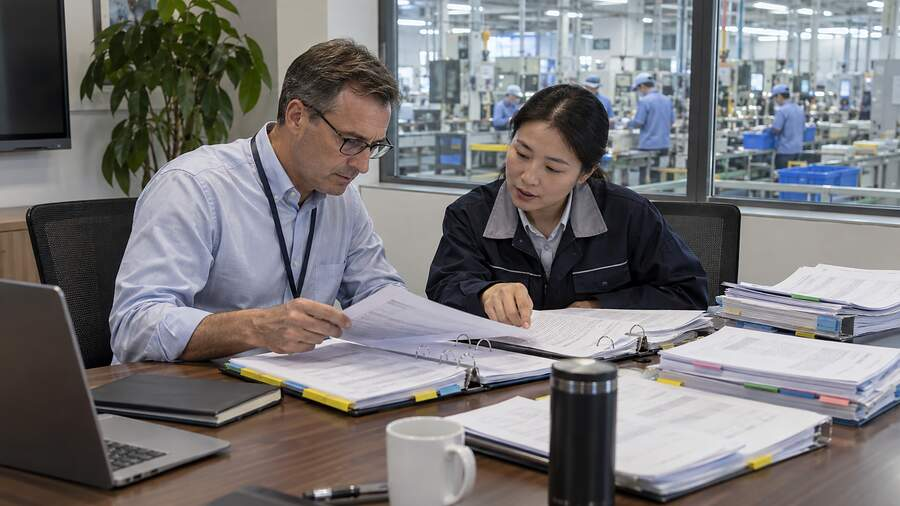
Choose the Right Level of Factory Verification
The best verification method depends on what you need to establish.
| Method | Useful for | Main limitation |
| Desktop document review | Early screening and legal-entity checks | Cannot directly observe current site conditions |
| Live video walkthrough | Checking current people, areas, equipment, and workflow | The supplier controls where the camera goes |
| Focused on-site verification | Testing specific claims about identity and capability | Provides point-in-time evidence |
| Quality-system or process audit | Custom, complex, or higher-exposure production | Value depends on scope and auditor competence |
| Social or security audit | Buyer, retailer, ethical, or supply-chain requirements | Does not replace technical product assessment |
Write the audit scope around the order
“Please audit this factory” is too broad to be useful.
Give the auditor your product specification, process assumptions, supplier claims, expected quantity, and main risks. For the tumbler, ask the auditor to verify relevant forming and vacuum processes, coating controls, component sourcing, leak-test method, traceability, packaging, and realistic capacity.
Request evidence, not only checkmarks. A useful report should separate:
-
what documents were reviewed;
-
what the auditor directly observed;
-
what the supplier stated without independent confirmation;
-
what did not match;
-
what could not be checked;
-
what needs further action.
Photos should be dated and tied to findings where possible. Equipment names, observed quantities, sampled records, and staff roles give a reviewer something concrete to assess.
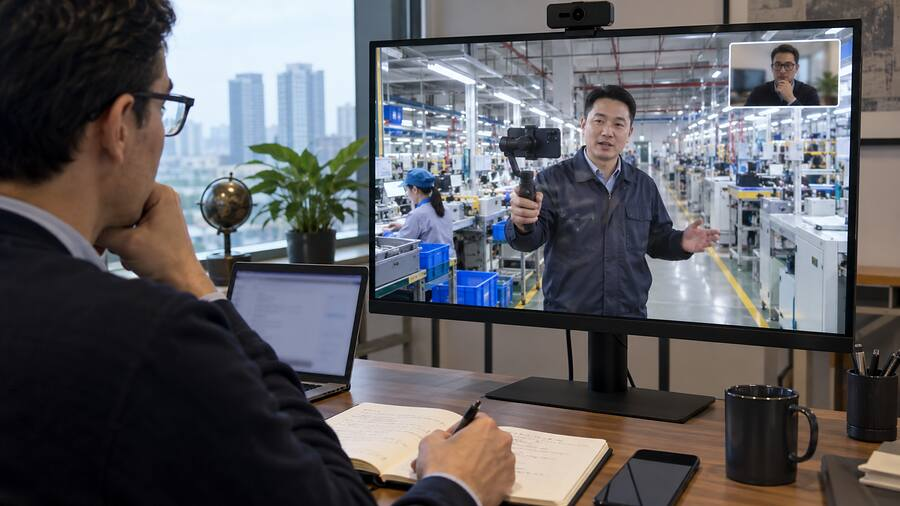
Watch a real process, not a staged route
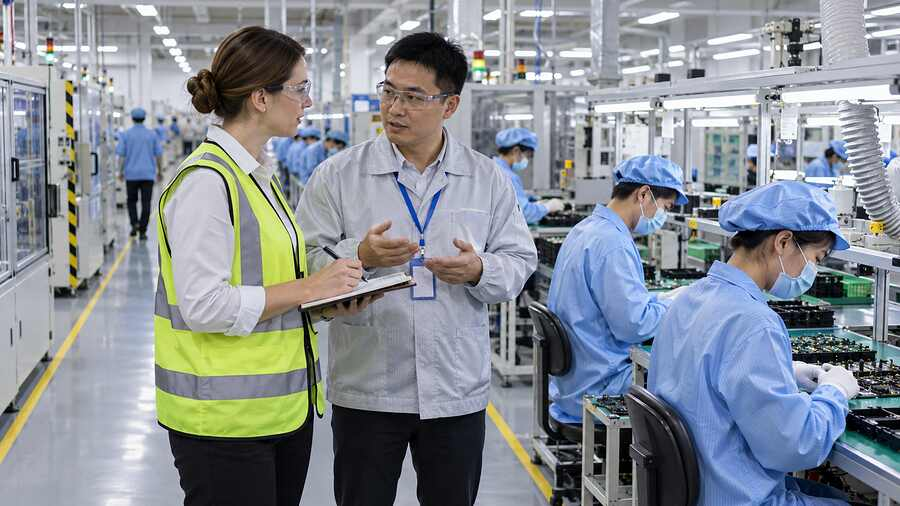
During a live or physical visit, start at the company sign and relevant office records. Then follow material receiving, production, quality checkpoints, rework, finished goods, and packing.
Ask a production or quality employee to explain the process. Salespeople can be excellent communicators, but they may not know the technical detail.
Factories have legitimate confidentiality and safety rules. Respect them. If a camera cannot enter an area, agree on another form of evidence rather than accepting a blank space.
A factory audit helps qualify a supplier. A shipment inspection checks defined goods from a specific order. If you need product quality inspection in China, provide the approved specification, sample reference, and acceptance criteria. An inspector cannot convert “premium quality” into a measurable test on the spot.
Check Materials, Quality Controls, and Subcontractors
The factory tour shows what exists. Quality records show how the operation is meant to stay under control.
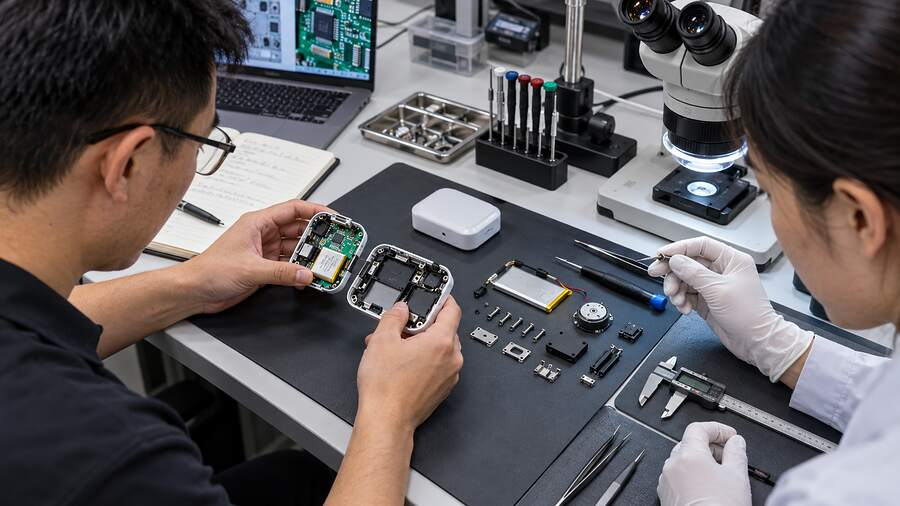
Start with incoming materials. Ask how purchases are approved, identified, checked, stored, and released. For the tumbler, confirm the required steel grade and thickness, coating system, plastic lid material, silicone seal, ink, and packaging substrate.
Trace one recent or sample order through the records. Can the supplier connect received material to production, inspection, rework, and finished goods? The necessary depth depends on the product, but the story should make sense.
Review how measuring and test equipment is controlled where accuracy matters. A calibration sticker looks reassuring. Check whether the equipment ID, status, range, records, and actual use support the test.
Ask to see examples of nonconforming work. A factory that claims it never has defects is telling you very little. A stronger system identifies problems, contains affected goods, investigates causes, records corrective action, and checks whether the fix worked.
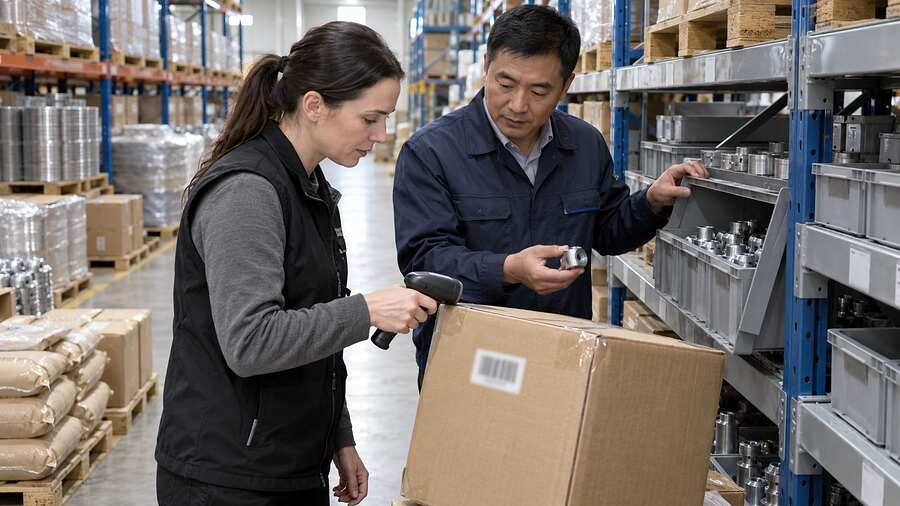
Subcontractors deserve the same practical thinking. Find out which processes are external, who approves the outside source, what specification it receives, and how returned work is checked. Critical subcontracting that appears only after a deposit is a serious warning.
Different industries change the verification focus:
| Industry or application | Materials and processes to examine | Evidence that helps | Common false comfort |
| Home and kitchen | Metals, plastics, coatings, food-contact surfaces, assembly | Material identity, process controls, model-specific tests | A generic “food grade” statement |
| Apparel | Fiber composition, fabric weight, dye lots, seams, trims | Approved fabric, measurement chart, wash or performance results | A perfect salesman sample |
| Electronics | Components, firmware, power supply, batteries, assembly | BOM control, model-specific reports, functional-test records | A report for a similar model |
| Pet accessories | Webbing, coatings, fasteners, stitching, intended load | Material spec, durability checks, size and use definition | A broad pet-product catalog |
| Supplements and personal care | Actual facility, formula, ingredients, batch controls, hygiene | Facility and product records, batch-specific testing plan | An unrelated quality logo |
| Children’s products | Age grading, accessible materials, small parts, traceability | Product-specific safety evidence for the target market | A factory certificate used as product approval |
A visual audit cannot establish every chemical, electrical, microbiological, or regulatory requirement. Use competent laboratories and compliance professionals for the checks that require them.
Reconcile the Contract, Invoice, and Bank Beneficiary Before Payment
The factory can be real and the payment request can still be wrong.
Verify the payment path twice
Before sending a sample payment or deposit, place these details side by side:
-
Chinese legal name on the verified business record;
-
seller named in the quotation and agreement;
-
supplier named on the pro forma invoice;
-
bank beneficiary and account information;
-
production site and any export-company relationship.
Exact alignment is easy to understand. A different beneficiary may also have a legitimate explanation. Ask for the relationship in writing and verify it through appropriate independent evidence.
Avoid personal accounts for business purchases unless qualified advice and strong evidence establish a valid reason and acceptable risk. Be especially careful when bank details change late in the conversation.
Confirm any change through contact information you already established. Do not use only the email or chat message that announced the new account. An account takeover can produce very convincing instructions.
Understand what platform protection depends on
If you use a marketplace payment or protection program, read the current terms for your transaction. Check eligible payment routes, order coverage, evidence requirements, deadlines, exclusions, and dispute procedures.
Make the online order describe the product you actually expect. Include current specifications, quantities, packaging, timing, inspection or acceptance conditions, and relevant attachments. A detailed conversation stored elsewhere may be difficult to rely on if the marketplace order says only “3,000 tumblers.”
Payment structure matters, but a familiar deposit split does not verify the supplier. Link payment milestones to agreed evidence where commercially and legally suitable. Get qualified legal advice for important custom manufacturing contracts, intellectual property, tooling, and remedies.


Turn the Evidence Into a Go, Conditional, or Stop Decision
A spreadsheet score can help organize information. It should not hide a critical failure.
Go
A Go decision means the legal identity, factory relationship, product capability, critical documents, and payment route are sufficiently supported for the planned exposure. Remaining normal business risks are addressed through specifications, contract terms, production controls, testing, and inspection.
Conditional
Conditional means a gap is explainable and has a defined way to close it before exposure increases.
Examples include a certificate that needs issuer confirmation, a new coating that needs a sample and test, or capacity that needs a pilot order. Record the owner, evidence required, deadline, and action if the condition is not met.
“We’ll sort it out later” is not a condition. It is a loose end.
Stop
Stop when a critical problem remains unresolved. Examples include:
-
the legal entity cannot be identified;
-
a license or report appears altered, borrowed, or materially irrelevant;
-
the supplier conceals a critical manufacturer or subcontractor;
-
capacity claims conflict with the evidence and cannot be explained;
-
the beneficiary has no verified relationship with the seller;
-
the supplier refuses reasonable access to relevant production or inspection;
-
product-specific safety or compliance evidence cannot be established.
You can score ordinary factors from 0 to 2 for visibility, relevance, and confidence. Keep critical Stop conditions outside the total. Ten reassuring minor points should not cancel one unexplained bank beneficiary.
Write a short decision memo. State what was verified, what was not, the order exposure approved, and the next controls. This gives a colleague or future you a sensible record to review.

Verification Continues After Supplier Approval
Supplier approval has a date and scope. It is not a lifetime membership card.
Recheck important information when the legal entity, ownership, factory, bank account, key staff, material, process, subcontractor, certificate, or order volume changes. Long inactivity and repeated quality problems also justify another look.
For the first order, monitor material readiness, first production output, key milestones, inspection results, and corrective actions. Compare the finished batch with the approved specification and sample.
Track performance across orders: defects, late changes, delivery reliability, response quality, and problem resolution. Small unexplained changes can reveal a larger process shift.
Once the supplier and product are approved, a wider plan for sourcing and fulfillment from China can connect production controls with receiving, inventory, packaging, and customer delivery.

Conclusion: Approve the Evidence Chain, Not the Profile
Marketplace badges are useful starting signals. A buying decision needs evidence that connects the legal seller, production site, exact product, quality controls, documents, and payment route.
Define the order first. Check each link in that chain. Investigate mismatches. Then choose Go, Conditional, or Stop based on the exposure you are about to take.
No review removes every future risk. A clear verification file makes the risk visible and gives later inspections, contracts, and production controls something solid to work from.
FAQs About Verifying China Manufacturers
What does an Alibaba Verified Supplier badge actually mean?
It indicates that a third-party verification process has been completed and an assessment report should be available within the program. Read the report’s date, company name, address, scope, and findings. The badge does not establish current product quality, available capacity, compliance for your model, or reliable performance on a future order.、
Is a Gold Supplier the same as a verified manufacturer?
Do not rely on similar-sounding labels. Check Alibaba’s current definition for the exact badge shown on the profile and open any supporting assessment. A supplier’s marketplace membership does not by itself prove that it manufactures the product. Verify the legal entity, actual site, process, and relationship separately.
How can I check a Chinese manufacturer’s business license?
Request the complete license and record the Chinese legal name and Unified Social Credit Code. Search those details through China’s official enterprise information system. Compare the status, name, code, address, date, and business scope. Use competent Chinese-language help if translated fields or legal meanings remain unclear.
Can I verify a China factory without visiting it?
You can complete meaningful early checks through official records, document verification, samples, references, live video, and independent research. Remote work has limits because the supplier controls much of what you see. Larger, custom, technically complex, or safety-sensitive orders may justify focused on-site verification or a process audit.
How do I tell whether a supplier is a factory or a trading company?
Check the business scope, claimed production address, equipment, process knowledge, product range, and relationship with the actual site. Ask who owns each critical process and inspect relevant evidence. MOQ, catalog breadth, or an office address may provide clues, but none of them proves company type by itself.
Is a trading company always a bad choice?
No. A trading company may manage multiple factories, smaller quantities, components, packaging, or export work effectively. Evaluate transparency, technical understanding, quality controls, total cost, and contractual responsibility. The concern is an intermediary that hides its role or cannot control the work promised to the buyer.
What should I ask to see during a live factory video call?
Ask to see the company sign, relevant office records, incoming materials, working production areas, quality stations, test equipment, rework area, warehouse, and packing. Follow the real product flow. Ask a technical or quality employee to explain current work, capacity, subcontracting, and the records used for control.
How do I verify an ISO 9001 certificate from a Chinese supplier?
Obtain the complete certificate. Check the named legal entity, site, certified scope, standard version, certificate number, issuing certification body, and validity. Verify it through a trustworthy route associated with the issuer or relevant accreditation system. Remember that ISO 9001 concerns a quality management system, not approval of your individual product.
Can a genuine test report still be irrelevant to my product?
Yes. A real report may cover another company, factory, model, component, material, date, or test standard. Compare the report’s sample description with your approved specification and planned production. Ask how the tested sample was selected and whether later changes affect the result.
Does a good product sample prove the factory is reliable?
It proves only what you can establish about that sample. Ask whether it came from stock, a prototype bench, or the intended mass-production process. Record its specification and test results. Then check how the factory transfers that approved result into materials, work instructions, tooling, production, and inspection.
Should the supplier’s bank account name match its business license?
Direct alignment is easier to verify, but legitimate export or group structures can involve another entity. Ask for a written explanation and evidence of the relationship. Reconcile the seller, invoice, contract, factory, and beneficiary. Independently confirm unexpected bank changes through contact details established before the change.
Is it safe to pay a supplier through Trade Assurance?
It can provide a structured marketplace transaction route, subject to current terms, eligibility, evidence, and deadlines. It does not replace supplier verification. Make the marketplace order accurately describe the product, specifications, quantity, packaging, schedule, and acceptance conditions. Use an eligible payment route and understand the dispute process before paying.
How much does a China factory audit cost?
There is no useful universal price. Cost depends on location, travel, audit length, technical scope, auditor qualifications, reporting, and whether specialist testing is included. Ask for a written scope and deliverables before comparing quotes. A cheap generic checklist can be poor value if it misses the claim you need verified.
When is a third-party factory audit worth paying for?
Consider one when the order value, product risk, customization, tooling, compliance exposure, or cost of switching makes a weak supplier decision expensive. It is also useful when remote evidence conflicts. Define the technical and commercial questions first so the auditor checks the factory against your proposed order.
How often should I reverify an approved manufacturer?
Use change and risk as triggers. Reverify after a site, ownership, bank, process, material, subcontractor, certificate, or major volume change. Repeated defects, unexplained delays, or a long gap between orders also deserve attention. Set a periodic review interval that fits the product and exposure, then document each update.
Table of Content

I’m Cassiel. I’ll help you scale your Shopify business with reliable fulfillment.
Join to newsletter.
Follow us and get more knowledge.