Yes, Alibaba.com is a legitimate B2B marketplace. Real manufacturers and trading companies use it to meet buyers around the world. But that answer only gets you so far. A real marketplace can still have a supplier who sends the wrong product, misses a deadline, or asks you to pay an account you have never seen before.
Picture this: you find a storage box for $2.10 a unit. The photos look fine. The supplier has badges. Then the invoice arrives with a different company name, and the salesperson says, “That is our finance office. Please pay today.” Hmm. Maybe there is a sensible explanation. Maybe there isn’t. The badge cannot answer that question for you.
The useful question is: Can you verify this company, this product, and this particular order before money moves? This guide walks through those checks. It covers supplier profiles, samples, Trade Assurance, payment, shipping, and what to do when a deal starts to wobble. The goal is a clear buying decision, not a promise that every order will be perfect.
A real marketplace can still host a risky deal
Alibaba.com connects businesses. It provides listings, messaging, order tools, and payment options. It is not the factory that made every item in its catalog. Nor is every seller a factory. Some are trading companies that work with several plants. That can be perfectly legitimate, and sometimes useful. The question is whether the seller’s role, responsibility, and capabilities are clear.
It also helps to keep similarly named channels straight. Alibaba.com is geared toward business sourcing and wholesale. AliExpress is more consumer oriented. 1688 serves China’s domestic wholesale market. They sit in the wider Alibaba ecosystem, but their buyers, payment setup, supplier habits, and shipping expectations differ. If you want 300 custom cartons or a repeat private-label run, the details you need are quite different from a casual one-piece purchase.
Here is a simple way to examine an Alibaba deal. Think of it like a four-legged table: if one leg is shaky, don’t put the whole order on it.
| Layer | Evidence to collect | Question it answers |
|---|---|---|
| Company | Legal name, current registry, company role, invoice and beneficiary | Who is actually selling to me and taking payment? |
| Product | Written specification, approved sample, relevant test records | What exactly will I receive, and can it be sold in my market? |
| Transaction | Platform order, terms, milestones, payment record | What was agreed, and what protection may apply? |
| Shipment | Inspection, packing list, freight and import plan | Will the goods and documents match the order? |
A polished profile speaks mostly to the first impression. You still need the other legs. That is especially true if your money is tied up in stock, packaging, ads, or an upcoming launch date.

What Alibaba supplier badges actually tell you
Badges are useful filters. They are not a substitute for checking the order in front of you. Treat each one as an invitation to read the underlying information.
Gold Supplier is not a product guarantee
Gold Supplier is a paid supplier membership that includes platform verification requirements. It does not mean every product has passed a lab test. It does not prove the company owns a factory, has spare capacity next month, or will meet your packaging instructions. A seller can be real and still be the wrong fit for your order.
That is a common trap. A badge feels like the green sticker on a restaurant window. You glance at it and stop looking at the kitchen. Instead, ask what the seller is offering today: the precise material, production site, price basis, lead time, and person responsible for resolving a problem.
Verified Supplier: read the report, not just the icon
Alibaba says its Verified Supplier program involves third-party checks and makes verification information available. Read the report itself. Note the date, legal entity, address, business type, and scope of the check. Was it about company identity, on-site operations, manufacturing capability, or something narrower? Does the company named there match the one asking for payment?
Even an on-site assessment is a snapshot. Equipment can change. A factory can subcontract. A legitimate trader may show an office rather than a production line. If a supplier claims to make your exact product, ask which facility will do the work and what evidence links that facility to the order. For larger or custom orders, our guide to verifying a China manufacturer beyond marketplace badges goes through those checks in more detail.
Reviews and response rates are clues
Look for recent feedback about products similar to yours. A seller who delivered plain boxes last year may still struggle with a custom battery-powered item. Ask about repeat orders, complaint handling, and how the company deals with a failed inspection. You can request a relevant customer reference, though many buyers will not share private details.
A fast reply feels good. It does not prove capability. A slow reply could simply be a holiday, time difference, or busy season. Use profile age, reviews, communication, and the report together. None of them should make the decision alone.

Check the company behind the listing before the first deposit
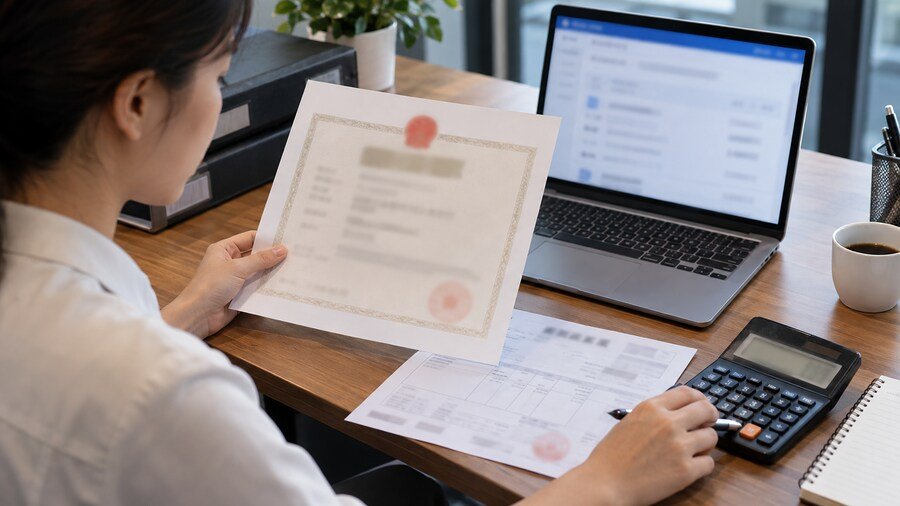
Start with the full legal name, not the English brand on the banner. For a mainland Chinese company, request its Chinese registered name and Unified Social Credit Code. Ask for a readable business license and the address of the office, factory, or warehouse involved. Then look up the current company record independently. A cropped screenshot from a salesperson is a starting point, not an independent check.
Now line up the names. Compare the Alibaba profile, license, registry result, proforma invoice, purchase contract, and proposed payment beneficiary. Record any mismatch. An export company, sister company, or authorized payment entity can be legitimate, but the seller should explain its role in writing. You shouldn’t have to play detective with three different names and a deadline hanging over you.
A license proves that an entity was registered under certain details. It does not prove it manufactures your product or that its latest catalog photo is genuine. The practical field-by-field process is in our guide to checking a Chinese supplier’s business license. It covers the legal name, code, registration status, and the other parties in the deal.
Ask whether the seller is a factory, a trader, or a service company coordinating production. A trader may be better at combining products from multiple plants or handling smaller quantities. A factory may offer closer control over tooling and process. Neither label makes a company safe by itself. What matters is who takes contractual responsibility for quality, timing, and a fix if something fails.
A short message to send a shortlisted supplier
We are considering an order for [product and quantity]. Please send your full Chinese legal name, business license, factory or production partner address, and the entity that will appear on the invoice and receive payment. Can you also confirm the product specification, sample lead time, MOQ, and whether the final order can be placed through Alibaba.com with those terms written into it?
This is a normal business request. A seller may need time to gather documents. That is fine. A seller who refuses to identify the contracting party, keeps changing the payment account, or pushes a deposit before answering the basics deserves a pause.
Test the product, not the product photo
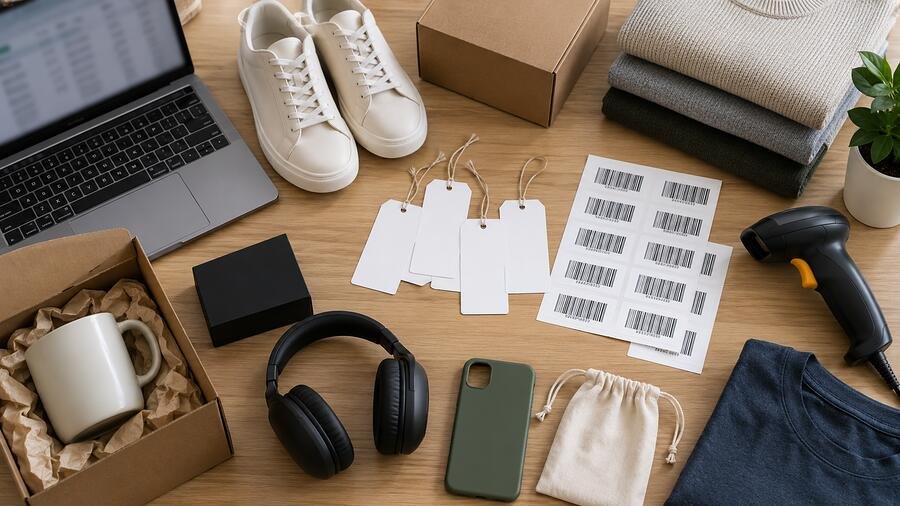
Product photos are useful for finding candidates. They are weak purchase specifications. “Blue storage box” leaves a lot of room for surprises: resin grade, wall thickness, lid fit, dimensions, color, label, and the number packed in each carton. Write these down before comparing quotes. Otherwise, the $2.10 offer and the $2.30 offer may describe two different products.
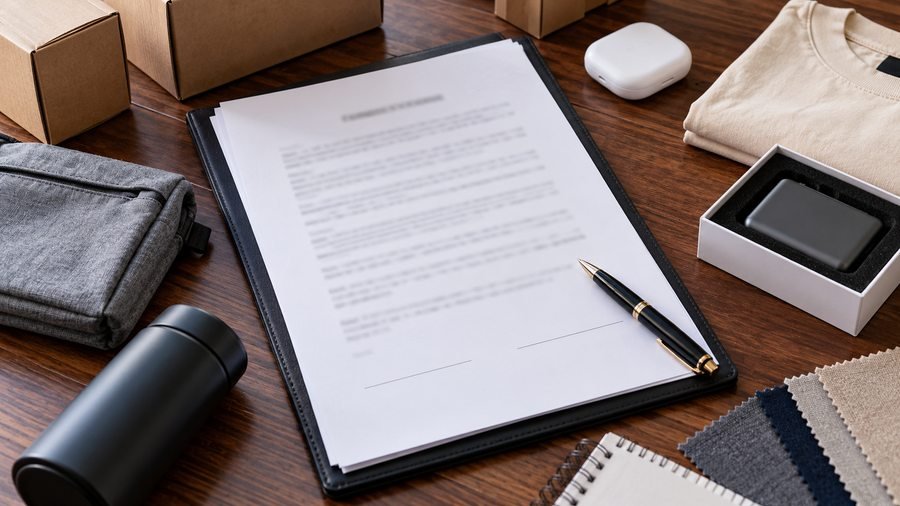
For a custom item, make a simple specification sheet. Include material, measurements and tolerance where it matters, finish, accessories, packaging, labeling, acceptable defects, and the approved sample reference. Attach drawings or photos with annotations. Confirm which version controls if the chat, invoice, and drawing disagree. This is the unglamorous paperwork that saves an expensive argument later.
Samples and inspections answer different questions
A sample asks, “Can this supplier make one unit close to what I want?” A pre-production approval asks, “Are we both using the same target for the run?” A pre-shipment inspection asks, “Do the completed goods appear to match that target?” These are related checks, not interchangeable ones.
Suppose a sample bottle has a snug cap, but the production batch has a loose cap on one color variant. A photo of the original sample will not catch that. You need the variant and cap-fit requirement in the specification, plus an inspection method. Sampling plans such as AQL can help define which units are checked and how defect counts are judged. They do not certify every unit, and they do not replace product safety testing.
Agree on the inspector, timing, checklist, sampling method if used, and what happens after a failure. For example: rework, reinspection, replacement, or a negotiated remedy. Get the agreement into the order documents before the balance is due. Our quality-control process shows where checks can fit between supplier production and dispatch.
Different industries add different obligations. A plain household organizer needs material and performance checks suited to its use. Electronics or batteries may need electrical, transport, and destination-market evidence. Cosmetics, supplements, and children’s items raise their own labeling, ingredient, testing, and importer questions. A CE mark, FCC reference, factory ISO certificate, or a single lab report is not an all-purpose passport. Confirm the exact product and target market requirements with a qualified specialist when needed.
And yes, be careful with branded goods. A supplier showing a familiar logo in a listing is not proof of authorization to make or sell it. Ask for a legitimate rights chain, or choose an original design with clear ownership terms.

Does Trade Assurance make an Alibaba order safe?
Trade Assurance is a useful transaction tool, but the phrase is easy to overread. Alibaba’s Trade Assurance workflow ties buyer protection to an eligible order, its terms, a supported payment path, and the applicable rules. That does not make every quality complaint an automatic refund. Read the current terms for your order before paying, especially coverage, evidence, claim grounds, and deadlines.
The most important practical move is to put the promise into the official order. If you agreed to 1,000 pieces of 2 mm material but the order just says “1,000 accessories,” a later conversation about thickness gets harder. Save the messages too, but make the order documents stand on their own.
Put the negotiable details where a dispute can see them
Include the product model, version, quantity, approved sample or drawing, material, pack-out, price, lead time, inspection step, and remedy for nonconforming goods. Name the ship-to destination and the agreed delivery term. If the supplier is arranging freight, establish who handles export, customs clearance, duties, and local delivery. A purchase order and a proforma invoice can support the record, but make sure the platform transaction and attachments reflect the actual deal.
Don’t casually accept a vague “same as sample.” Which sample? Who has it? What changed after approval? Give the sample an ID, date, and photo set. Small detail, big difference.
When the payment request changes mid-deal
Alibaba may support several payment methods, including an on-platform wire or bank-transfer flow. A bank transfer is not automatically outside the platform. The question is whether the instructions came through the official order and point to the correct designated account under that workflow.
If a salesperson sends a new beneficiary through email or a messaging app, stop. Independently confirm the change through the platform and a known company contact. Check the legal names and invoice. A request to send funds to a personal account or a company with no explained connection is a serious warning. Don’t let “the price expires in an hour” turn a verification step into a guess.
Payment in stages can limit exposure, but it should be tied to real milestones. For a custom run, that might mean a deposit after approved documents and a balance after an agreed inspection. The exact arrangement depends on the supplier, the product, and your bargaining position. Write down what evidence triggers each payment.
If the goods arrive wrong
Open the boxes carefully and document the issue right away. Keep the platform order, dated messages, payment record, approved sample photos, inspection report, carton labels, and clear photos or video of the received goods. Count affected units and separate defects from shipping damage if you can. Then follow Alibaba’s current dispute steps and time limits for that transaction. Do not ship everything back or accept an off-platform settlement that you do not understand simply because the seller sounds reassuring.
A dispute may be resolved by replacement, rework, partial refund, or another agreement. The outcome depends on the order terms and evidence. No marketplace tool can retroactively add a specification you never wrote down.

The listing price is not your landed cost
A surprisingly cheap quote may be real. It may also leave out packaging, tooling, sample charges, freight, inspection, or taxes. Compare like with like. “What is included?” is often more useful than “Can you do $0.05 less?”
Here is a hypothetical 1,000-unit order. These figures are only arithmetic for planning, not a supplier quote or market average. Duty and tax treatment depend on the product, destination, classification, and import setup.
| Illustrative cost item | Amount (USD) | Why to confirm it |
|---|---|---|
| Goods: 1,000 × $2.10 | $2,100 | Does this include the approved material and finish? |
| Retail packaging: 1,000 × $0.28 | $280 | Printed box, insert, barcode, or plain bag? |
| Sample and test shipment | $85 | Credited toward bulk order, or separate? |
| Pre-shipment inspection | $220 | Which checklist, who pays for reinspection? |
| Freight and local handling | $640 | Which origin, destination, and shipping term? |
| Estimated import charges | $180 | Who acts as importer and who advances charges? |
| Illustrative total | $3,505 | $3.505 per unit before selling costs and returns |
The product price was $2.10. The illustrated landed figure is roughly $3.51 per unit. Ads, platform fees, damaged goods, warehousing, and customer returns would sit on top. One small omission can eat the margin you thought you had.
Shipping language matters here. Under EXW, FOB, DAP, and DDP, seller and buyer responsibilities differ, and the named place matters too. The ICC Incoterms® rules are the standard reference for those delivery terms. Ask for a quote that names the rule, location, transport route, shipment weight and dimensions, and any excluded charges. An Incoterm allocates certain delivery obligations and risks; it does not prove product quality or guarantee an Alibaba refund.
MOQ adds another layer. A low unit price at 5,000 pieces can be worse for your cash flow than a higher price at 300 pieces. Likewise, a tooling fee may be sensible for a real custom mold but deserves a written ownership and maintenance agreement. Price is a piece of the deal. It is not the whole puzzle.

Common Alibaba scams—and the less dramatic ways a deal fails
Some problems look like obvious fraud: a copied factory profile, a fake certificate, a familiar brand logo with no authorization, or an email that changes the payment account just before the deposit. Others are messier. A supplier may be real but quote the wrong grade of plastic, promise a date its factory cannot meet, or use a subcontractor without telling you.
Here are the patterns worth watching:
- Identity mismatch: The profile, license, invoice, and payment account tell four different stories.
- Bait-and-switch specification: The bulk material or packaging is cheaper than the approved sample, and the change was never approved.
- Pressure to leave the documented order: The seller wants payment or a side agreement that does not appear in the official transaction.
- Counterfeit or unsupported certification: A logo, test report, or certificate belongs to another product, company, or model.
- Surprise release fee: Someone demands an unexpected payment to move already-paid goods, without a contractual basis or verifiable freight record.
- Plain operational failure: Inventory, production capacity, labeling, packing, or freight planning was weaker than the sales pitch.
Not every delay is a scam. Chinese holidays, material shortages, a failed test, and a legitimate export-document correction can delay an order. The right response is to request evidence, a revised plan, and written responsibility. A seller who identifies a problem early and proposes a measurable fix may be more reliable than one who says “no problem” to everything.
Go, resolve first, or stop?
| Signal | Decision | Next move |
|---|---|---|
| Names and payment route match; sample and written terms are approved | Go, with controls | Place the documented order and schedule the agreed checks. |
| Export affiliate or bank beneficiary differs but relationship is explained | Resolve first | Obtain written authority and verify through the platform and independent contact. |
| Sample differs from the quote or a test report covers another model | Resolve first | Correct the specification, retest if needed, and approve a new sample. |
| Seller refuses legal identity or insists on an unrelated personal account | Stop | Do not pay; shortlist another supplier. |
| A branded product has no credible authorization | Stop | Avoid the listing until rights are established. |
That table is a decision aid, not a magic score. Risk is about the exact product and deal. A minor carton typo and an unexplained beneficiary are not the same kind of problem.
A safer buying sequence for your first and second order
You do not need a detective agency for every sample order. You do need a repeatable process. Keep a small folder for each supplier and a record of the decision at every step.
- Write a short brief. State the product, intended market, quantity range, materials, must-have features, packaging, and target timeline. A vague brief attracts vague quotes.
- Shortlist a few relevant sellers. Compare exact capability, MOQ, sample policy, and communication. Do not choose by the lowest number alone.
- Verify the company. Match legal name, current registry, operating role, contracting party, and payment beneficiary. Explain any affiliate relationship before money moves.
- Request comparable quotes. Use the same specification and ask each seller to state exclusions, tooling, sample cost, lead time, and shipping basis.
- Order and evaluate a sample. Measure it, use it, photograph it, and record what you approve. If the color is wrong, say so now.
- Check the market rules. Decide what labeling, testing, product records, and import obligations apply to this product in this destination. Get specialist help where the category calls for it.
- Put the deal in writing. Align the official order, specification, PI, purchase terms, payment milestones, inspection, shipping term, and remedy.
- Pay through the agreed, verified route. Confirm any platform protection eligibility and retain the receipt. Pause when the account or instructions change.
- Check production progress. For a custom order, confirm material procurement, production start, and any approved deviations. A friendly status photo is useful but does not replace inspection.
- Inspect before releasing the balance. Compare the actual batch against the approved reference. Agree in advance who pays when an inspection fails.
- Reconcile the shipment. Match cartons, quantities, packing list, weights, tracking or freight documents, and import details to the order.
- Review the delivery. Log defects, transit damage, and customer complaints. Use that evidence before reordering.
If you need a fuller sequence for a new SKU, our product sourcing process from brief to bulk order covers the RFQ, sampling, approval, and production handoffs.
A small test and a custom run need different controls
Imagine a hypothetical $500 test order of ordinary household organizers. You may start with company checks, a physical sample, clearly written order terms, and a simple incoming inspection. Now imagine a hypothetical $20,000 custom run with printed packaging, a proprietary mold, and a fixed launch date. Add documented tooling ownership, an agreed pre-production sample, a production checkpoint, appropriate independent inspection, and a realistic remedy for missed specifications. These amounts are examples, not official risk thresholds.
Second orders need checks too. Confirm that the product revision, factory, contracting entity, and payment details have not changed. “They were good last time” is useful history, not a current purchase order.
If coordination is consuming more time than you can give it, product sourcing support in China can help with supplier comparisons, samples, quality checks, and handoffs. Ask any partner to state its scope, fees, reporting, and who makes the final release decision. You should still own the product requirements and the decision to approve the goods.
What if you plan to dropship from Alibaba?
Alibaba can be a good place to find a product or negotiate a wholesale supply arrangement. That does not mean every catalog supplier is set up to ship one customer order at a time. A Shopify store needs more than a unit price. It needs stock visibility, accurate variant mapping, timely order intake, packaging, tracking, customer-service rules, and a way to handle returns.
Ask the seller whether it can ship blind, meet daily processing windows, manage branded inserts, and report stock before your ads create demand. Test a real order to your target country. Look at the box your customer sees, not just the seller’s warehouse photo. A factory may make the product well but have no per-order fulfillment system. A sourcing agent or fulfillment partner may coordinate that layer; the roles and fees need to be explicit.
Our Alibaba dropshipping guide walks through the supplier, cost, and operational questions for that model. For this article, the central point stays the same: confirm who is responsible for every handoff before the first customer order goes live.
Conclusion
Alibaba is legit. Your particular deal still has to earn your trust.
Check the legal party and the account taking payment. Define the product in writing, test a sample, and inspect the batch where the stakes justify it. Keep the platform order and supporting records aligned. Then sort out freight, duties, and delivery before you assume the listing price is your final cost.
There is no badge that does all of that for you. The reassuring part is that you can take these steps one by one. Start small, make the unclear bits clear, and pay when the evidence—not the urgency in a chat message—supports the decision.
FAQs
Is Alibaba a scam or a legitimate company?
Alibaba.com is a legitimate B2B marketplace. Individual sellers and transactions still need checking. Treat the platform, the supplier, and the actual order as separate questions.
Is Alibaba safe to buy from for the first time?
It can be, if you verify the seller, specify the product, use the correct documented payment route, and start with a manageable order. No buying channel removes all quality or delivery risk.
Why are some Alibaba prices so low?
Wholesale quantities, different specifications, plain packaging, and direct sourcing can lower a quote. A displayed price may also exclude freight, tooling, inspection, and import charges. Ask for the full basis before comparing.
Can I trust a Verified Supplier badge?
Use it as a prompt to read the underlying report. Check the entity, date, and scope. Then verify that the company, product, and payment details for your order match what you found.
Does Gold Supplier mean the seller is a factory?
No. Gold Supplier is a paid membership with verification requirements, not proof of factory ownership or product quality. Ask who will actually manufacture the goods and who is responsible for the contract.
Is Alibaba Trade Assurance guaranteed to refund me?
No. Eligibility, covered grounds, order terms, evidence, and current dispute rules matter. Put the product requirements in the official order and read the applicable terms before paying.
Is it safe to pay an Alibaba supplier by bank transfer?
An officially supported transfer tied to an eligible platform order is different from paying an unrelated account from a message. Check the payment instructions in the official workflow and independently verify any changes.
What if the supplier asks me to pay outside Alibaba?
Pause and ask why. An off-platform payment may change what protections apply. Do not send money to an unexplained company or personal beneficiary under time pressure.
How can I verify a Chinese supplier’s business license?
Get the complete Chinese legal name and Unified Social Credit Code, then compare them with a current independent registry record. Match the same company against the contract, invoice, and payment beneficiary. A license alone does not prove manufacturing capability.
Should I order a sample before buying in bulk?
Usually, yes. Evaluate the sample against written requirements and keep an approved reference. For a larger order, add production and pre-shipment checks; a good sample does not guarantee a good batch.
Can a trading company on Alibaba be legitimate?
Absolutely. Traders may coordinate several factories and smaller orders. Make sure they identify the production arrangement, own the contractual obligation, and can manage the quality and delivery you need.
What if my goods arrive damaged or different?
Document the condition, counts, labels, packaging, and differences against your agreed specification. Preserve messages and inspection records, contact the seller through the order, and follow the current dispute process promptly.
Are products on Alibaba authentic?
Many listings are for legitimate unbranded or authorized goods, but a famous logo in a photo proves nothing about rights. Seek credible authorization for branded goods or source an original product with clear ownership terms.
Can I use Alibaba for one-by-one dropshipping?
Some suppliers offer it; many mainly handle wholesale orders. Confirm inventory sync, order processing, packaging, tracking, shipping time, and returns with a test shipment before relying on them for customer orders.
Who pays import duties and taxes on an Alibaba order?
That depends on the destination, product, import arrangements, and agreed delivery term. Record the exact Incoterm and named place, then confirm who acts as importer and who pays each charge before the order is placed.
Table of Content

I’m Cassiel. I’ll help you scale your Shopify business with reliable fulfillment.
Join to newsletter.
Follow us and get more knowledge.